Dr. Annabella Astorino is a researcher at ICAR-CNR (Italian National Research Council) in Rende, Italy, with expertise in machine learning, optimization, and computational biology. Her work focuses on classification algorithms using nonsmooth optimization, spherical separation, and multiple instance learning (MIL) approaches. Key Research Themes Geometric separation techniques (polyhedral, spherical) Multiple instance learning for biomedical applications Nonsmooth optimization in semisupervised learning Clustering methods for edge detection in images Recent publications highlight her development of Lagrangian relaxation for MIL, kernel-enhanced spherical separation algorithms, and DC optimization for computer vision tasks. Her collaborations include researchers like A. Fuduli, M. Gaudioso, and P. Veltri.
Alice Reinbacher-Köstinger is an Associate Professor at the Institute for Fundamentals and Theory of Electrical Engineering, Graz University of Technology, Faculty of Electrical Engineering. Her research focuses on computational electromagnetics, inverse problems, and bioimpedance analysis. Role: Research and Teaching Research Areas: Transformer modeling, NFC systems, aortic dissection detection, and surrogate-based optimization Email: alice.koestinger@tugraz.at Her work combines advanced modeling techniques with machine learning, particularly in magnetic material characterization and bioimpedance signal analysis. Recent publications emphasize physics-informed neural networks, harmonic balance methods, and Bayesian experimental design. Current projects include optimizing sensor placement for magnetic property measurements and developing simulation tools for medical diagnostics. Her research bridges electrical engineering with biomedical applications through multiphysics simulations and data-driven methods.
Chang-Jae Chun is a Professor and researcher at Sejong University , affiliated with the AI Convergence Research Center and the Department of Artificial Intelligence & Data Science . With a strong academic foundation and extensive research contributions, he has established himself as a leading figure in the integration of artificial intelligence with communication systems and industrial applications. Education: B.A. in Engineering, Hanyang University (2009) M.A. in Engineering, KAIST (2011) Ph.D. in Engineering, KAIST (2018) Research Interests: His work spans across machine learning , deep learning , prognostics and health management , and communications signal processing . He is particularly focused on applying AI to solve real-world problems in industrial systems, wireless communications, and IoT networks. Key Research Areas: Predictive maintenance for smart factories, large ships, and electric motors Deep learning-based signal processing technologies Machine vision and pattern recognition Research Trends: His recent publications reflect a strong focus on deep learning applications in IoT , fault diagnosis , resource allocation , and wireless communication systems . The work consistently integrates AI methodologies with engineering challenges, such as energy-efficient networks, sensor-based diagnostics, and real-time data processing. Labs & Links: Personal Lab Website Google Scholar Profile
Dr. Jarle André Johansen serves as an Associate Professor in the Department of Automation and Process Technology within the Faculty of Engineering Science and Technology at UiT The Arctic University of Norway. His academic profile demonstrates sustained research activity from 2000 through 2021, with recent publications indicating ongoing scholarly work. His institutional affiliation appears consistently across university platforms, with contact information listing his office at Teknologibygget Tromsø 4.011 and direct communication channels including email and telephone. Professor Johansen's research focuses primarily on semiconductor physics and sensor technology, with particular expertise in low-frequency noise analysis in silicon-germanium heterojunction bipolar transistors (SiGe HBTs). His work spans fundamental device physics, noise characterization methodologies, and more recent applications in maritime navigation systems. The evolution of his research shows progression from pure semiconductor device analysis toward applied sensor systems, including biosignal processing for maritime applications as evidenced by his 2021 publication. His publication record reveals consistent scholarly output with particular concentration between 2003-2004 and 2015, suggesting periods of intensive research activity. The articles collectively demonstrate expertise in both theoretical modeling and experimental characterization of electronic devices, with strong international collaboration patterns evident in the author lists. His work bridges fundamental semiconductor physics with practical engineering applications, particularly in harsh environments as suggested by maritime-focused research. Professor Johansen's teaching responsibilities include Electronics, Control Engineering, Industrial Data Communication, and LabVIEW Programming, indicating a well-rounded engineering education profile that complements his research specialties. His position within the Automation and Process Technology department suggests integration of his semiconductor expertise with broader automation systems engineering.
Dr Sam Kirkham is a Senior Lecturer in the Phonetics Lab at the Department of Linguistics and English Language and a member of the Data Science Institute at Lancaster University. He earned his PhD from the University of Sheffield in 2014 and serves as Associate Editor for the Journal of Phonetics. PhD in Linguistics, University of Sheffield (2014) His research explores the dynamics of spoken language through experimental and computational approaches, focusing on: Articulatory phonetics and vocal tract movement Sound change mechanisms Computational modeling of speech production Application of physics-informed machine learning The 15 most recent articles (2025-2023) span: Vowel articulation and gender differences Dynamical systems in speech Nonlinear control models Open-source speech hardware Bilingual speech patterns Evolutionary phonetics Scientific recognition includes: AHRC Fellowship (2024-25) Supervision includes PhD students Maya Dewhurst, Lois Fairclough, Emily Gorman, and Seren Parkman. Current projects like Royal Society-funded 'Interpretable acoustic-articulatory relations' (2025-27) and AHRC-funded initiatives examine speech production dynamics and phonological evolution.
Yasuhiro Oikawa is a Professor at the School of Fundamental Science and Engineering, Faculty of Science and Engineering, Waseda University. He holds a Doctor of Engineering degree from Waseda University and has been actively contributing to acoustics, signal processing, and optical measurement techniques. His research spans Sound field visualization using parallel phase-shifting interferometry Phase-aware audio signal processing algorithms Acoustic calibration and microphone sensitivity analysis Real-time sound event localization systems His recent publications focus on advanced time-frequency analysis, optical methods for sound measurement, and deep learning applications in acoustics. Key trends include Improving resolution in spectrogram-based signal processing Integration of physical models with neural networks Development of wearable acoustic sensor arrays Scientific awards recognizing his work include The Fumio Okano Best 3D Paper Awards CSS2018 Best Paper Award Acoustical Society of Japan Contribution Award Institute of Electronics, Information and Communication Engineers Human Communication Award He has served as a committee member for the Acoustical Society of Japan and is affiliated with organizations such as ACM, IEEE, and Acoustical Society of America. His research has been supported by collaborations with institutions like Technical University of Denmark and applications in robotics, museum exhibits, and consumer electronics.
Prof. Dr. Badri Krishnan is a long-term visitor at the Max Planck Institute for Gravitational Physics (Albert Einstein Institute) in Hannover, Germany, affiliated with the Observational Relativity and Cosmology department. His research centers on gravitational wave astronomy and theoretical general relativity, with a focus on compact binary systems and black hole dynamics. His primary research interests include black hole spectroscopy, ringdown physics, quasi-local horizon dynamics, and gravitational wave data analysis. He has pioneered work in black hole tomography and the detection of sub-dominant quasi-normal modes, contributing significantly to LIGO/Virgo data interpretation and tests of general relativity through gravitational wave observations. Analysis of his 2023-2025 publications reveals intense focus on binary black hole merger ringdown phases, with recurring themes of horizon dynamics, tidal effects in neutron star systems, and mathematical frameworks for gravitational waveforms. His work bridges numerical relativity, observational data, and theoretical predictions to probe black hole properties. Scientific Awards: No specific awards or fellowships were documented in the provided materials. Advising and Grants: The source text contains no information regarding student supervision, doctoral advisees, or research funding sources. Labs and Teams: Krishnan actively participates in Einstein@Home (distributed computing for gravitational wave/pulsar searches), Pulsar Timing Arrays, and the Atlas computing cluster at AEI, leveraging these infrastructures for large-scale gravitational wave data analysis.
Hyeonu Heo is an Assistant Professor in the Mechanical Engineering Department at the University of Akron 's College of Engineering and Polymer Science. He joined the faculty in 2024 after serving as a postdoctoral scholar at Penn State University 's Graduate Program in Acoustics (2022-2024) and a postdoctoral fellow in Physics at the University of North Texas (2017-2022). Education: Ph.D. in Mechanical Engineering, University of North Texas (2016) M.E. in Mechanical Engineering, Korea Aerospace University (2012) B.E. in Aerospace Engineering, Korea Aerospace University (2010) Dr. Heo's research focuses on acoustic metamaterials , phononic crystals , and advanced manufacturing techniques for applications in tire noise reduction, vibration control, and ultrasonic technologies. His work explores computational and experimental acoustics, non-reciprocal wave propagation, and thermomechanical properties of hierarchical structures. Recent publications highlight his contributions to contactless ultrasonic power transfer , nonlinear acoustic manipulation , and metamaterials for underwater sensing . His research has theoretical and practical implications in mechanical engineering, biomedical applications, and materials science. Scientific Awards: Early Career Travel Award from the Acoustical Society of America (2022) Postdoctoral Fellowship from the Japan Society for the Promotion of Science (2021) Outstanding Graduate Student Scholarship from the Korea-American Scientists and Engineers Association ASME North Texas Chapter Outstanding Graduate Student Scholarship (2016) Society of Plastics Engineers Scholarship (2015)
Michela Masè is an Assistant Professor in the Department of Industrial Engineering at the University of Trento , Italy. Her research bridges biomedical engineering and clinical applications, with laboratories located at Via Sommarive, 9 in Povo. She teaches core courses including Advanced Signals Processing and Modeling of Physiological Systems , Artificial Intelligence for Biomedical Problems Solving , and Fondamenti di Tecnologie Biomediche . Her research focuses on: Computational modeling of cardiac electrophysiology, particularly atrial fibrillation mechanisms and fibrosis dynamics Development of wearable medical devices (e.g., MedSENS in-ear multisensor for vital monitoring) High-altitude physiology and cognitive performance in extreme environments Advanced signal/image processing techniques for biomedical data Publication analysis reveals strong emphases on: translational cardiac research (45%), biomedical instrumentation (30%), and environmental physiology (25%), with consistent interdisciplinary integration of engineering principles. Her work frequently involves clinical collaborations and validation studies.
Anne Wald is an Assistant Professor at the University of Göttingen since 2020, specializing in inverse problems and imaging. She previously worked as a postdoc in Saarbrücken and Helsinki (2017-2020) after earning her PhD in Mathematics from Saarland University (2017) and M.Sc. in Mathematics (2012) along with a Diploma in Physics (2013). Education: PhD in Mathematics (2017), Saarland University M.Sc. in Mathematics (2012), Saarland University Diploma in Physics (2013), Saarland University Her research focuses on inverse problems involving dynamic imaging , parameter identification , and motion compensation , particularly in nano-CT and hyperelastic materials. She applies advanced mathematical frameworks like Lebesgue-Bochner spaces and Tikhonov regularization. Current projects include: SFB 1456 Project B06: Compensation of motion and modeling inexactness in nano-CT and local tomography GRK 2756 Project A4: Multiscale rheological inverse problems and active processes in cells Anne's publications highlight work on time-dependent inverse problems , sequential subspace optimization , and anomaly detection . She develops algorithms for dynamic imaging and parameter estimation under uncertainty.
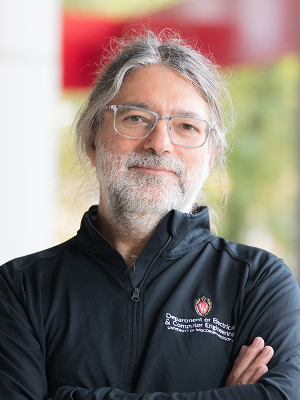
William Sethares is a Professor in the Department of Electrical and Computer Engineering at the University of Wisconsin-Madison College of Engineering. His research combines system identification, adaptive algorithms, and signal processing with unique applications in musical acoustics and perception-based audio systems. Primary Affiliation: Electrical and Computer Engineering Research Interests: Adaptive learning systems, acoustical signal processing, musical scale modeling, rhythmic structure analysis, and computational music composition His recent publications focus on multimodal data analysis, medical imaging applications, and cultural music studies. Scientific contributions include innovative approaches to speech emotion recognition, historical paper analysis, and inharmonic musical instrument modeling. Teaching responsibilities include courses like ECE401: Electroacoustic Engineering and ECE415: System Modeling and Identification. As a musician, he explores algorithmic composition and alternative tuning systems, authoring books like "Tuning Timbre Spectrum Scale" and "Rhythm and Transforms". Additional creative endeavors encompass inventing the Fibonacci Checkers board game, developing interactive Fourier Transform educational materials, and pioneering computational tools for art authentication through watermark analysis in Leonardo da Vinci's manuscripts.
David Christopher Balderas-Silva serves as a Research Professor at Tecnológico de Monterrey's Institute for Advanced Materials for Sustainable Manufacturing in Mexico City. His interdisciplinary work bridges biomedical engineering, computer science, and advanced manufacturing with emphasis on sustainable industrial solutions and accessibility. His educational credentials include: B.Eng. in Mechatronics Engineering from Universidad Panamericana MSc in Biomedical Engineering from Delft University of Technology PhD in Engineering Sciences from Tecnológico de Monterrey Dr. Balderas-Silva's research centers on computer vision , artificial intelligence , and brain-computer interfaces , with applications in healthcare accessibility, robotics, and Industry 4.0. His work on EEG-based speech decoding and 3D-printed assistive devices demonstrates commitment to inclusive technology, while metaheuristic optimization research advances sustainable manufacturing. Recent publications reveal strong focus on neural signal processing (40% of 2022-2024 output) and computer vision for robotics (30%), with growing emphasis on UN Sustainable Development Goals related to disability inclusion and clean energy. His recognition includes: Mexican Researcher Certification - Level 1 As a member of the Mexican National Researchers System, he has co-authored over 20 publications and multiple inventions. His Education 4.0 pedagogy initiatives for machine learning and neurotechnology training highlight academic leadership. While specific grant details aren't provided, his Institute affiliation indicates active participation in collaborative research addressing sustainable manufacturing and assistive technology gaps. He contributes to the Institute for Advanced Materials for Sustainable Manufacturing through projects integrating brain-computer interfaces with industrial robotics, developing low-cost eye-tracking systems, and optimizing PCB manufacturing via digital twins. His lab work emphasizes cross-disciplinary teams focused on translating AI research into practical solutions for Industry 4.0 challenges.
Professor Lukas Eng leads the Chair of Experimental Physics / Photophysics at the Institute of Applied Photophysics, Dresden University of Technology. His research focuses on nanoscale characterization combined with advanced materials science, spanning multiple disciplines including photo-physics, nano-optics, plasmonics, and scanning probe microscopy. The Eng group maintains active collaborations and hosts numerous research projects including FERROIX, SKY, and SNOM. Research Group: Eng, King Available Projects: Nanoscopy of Topological Phases in Polaritonic Media Current PhD Projects: Engineering the band-structure in 2-dimensional quantum conductors Professor Eng's research interests center on the intersection of nanoscale characterization techniques and advanced materials science. His group specializes in studying ferroelectric materials, particularly lithium niobate and its domain wall properties. They employ sophisticated techniques including scanning near-field optical microscopy, Raman spectroscopy, and second harmonic generation to investigate quantum conductors and polaritonic media. Recent work has focused on domain wall conductivity in ferroelectric crystals, phonon polaritons in 2D materials, and nonlinear optical phenomena at the nanoscale. The Eng group's publication trends reveal a strong focus on ferroelectric materials, particularly lithium niobate and related compounds. Recent publications demonstrate expertise in domain wall physics, nanoscale characterization techniques, and 2D quantum materials. The group consistently applies advanced optical and scanning probe methods to investigate material properties at unprecedented resolution. Key research themes include electronic transport in domain walls, nonlinear optical phenomena, and phonon polariton behavior in van der Waals materials. Professor Eng actively supervises numerous PhD and Master's students, with a consistent output of high-quality theses in the fields of nanoscale characterization, ferroelectric materials, and optical microscopy. His group provides opportunities for Bachelor's, Master's, and PhD students across multiple research areas including FERROIX, SKY, and SNOM projects. The Eng group operates advanced laboratories for nanoscale characterization, including facilities for scanning probe microscopy, nonlinear optical microscopy, and spectroscopic analysis of materials. Their research infrastructure supports investigations into quantum materials, ferroelectric systems, and nanophotonic structures.
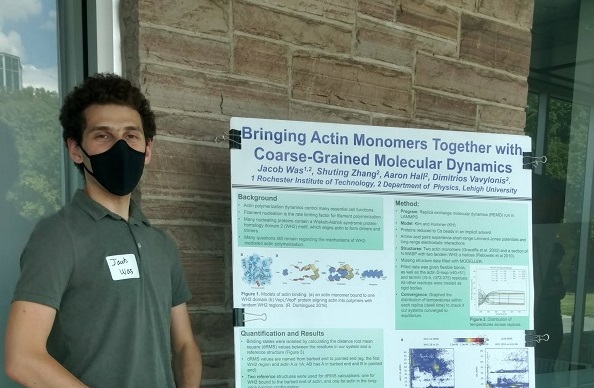
Dimitrios Vavylonis is a Professor of Physics at Lehigh University's College of Arts and Sciences, specializing in cellular biophysics. He is currently a Visiting Scholar at the Center for Computational Biology at the Flatiron Institute in New York, with previous visiting positions at the University of Lausanne, AMOLF (Amsterdam), and Kyoto University. His research is supported by NIH/NIGMS grants, and he serves on the editorial boards of Biophysical Journal, Cytoskeleton, and Scientific Reports. Bachelor's degree in Physics from the University of Athens Master's and Doctorate in Physics from Columbia University Postdoctoral work at Columbia's Department of Chemical Engineering and Yale's Department of Molecular, Cellular, and Developmental Biology Vavylonis's research focuses on developing mathematical and computational models to understand the physical principles underlying cellular organization and function. His group investigates the actin cytoskeleton, cytokinesis (cell division), cell motion, cell polarization, and actin dynamics. They apply methods from statistical physics, soft matter physics, and nonlinear dynamics to biological processes such as the function of the actomyosin contractile ring during cytokinesis and cell polarization for motion, mating, and growth. Their work combines theoretical modeling with experimental collaborations to study how networks and bundles of actin filaments form subcellular structures with mechanical integrity that provide cells with shape, generate mechanical forces, and serve as tracks for motor proteins. Analysis of Vavylonis's recent publications (2021-2024) reveals a continued focus on actin cytoskeleton dynamics, particularly in fission yeast models. His work explores contractile ring assembly during cytokinesis, cell polarization mechanisms, and the physical principles governing actin network organization. Key themes include the role of Cdc42 in cell polarity, force transmission through actin networks, molecular mechanisms of actin filament branching, and the interplay between membrane dynamics and cytoskeletal organization. His group increasingly employs advanced computational methods including coarse-grained molecular dynamics and discrete mechanical modeling to investigate these complex biological systems. Libsch Early Career Research Award Vavylonis has mentored numerous PhD students, postdocs, and undergraduate researchers through programs like Research Experiences for Undergraduates (REU) and the Biosystems Dynamics Summer Institute (BDSI). His current research group includes Research Assistant Professor David Rutkowski and several PhD students. His lab has developed significant computational tools including SOAX, TSOAX, JFilament, Speckle TrackerJ, and LEAP for analyzing biopolymer networks and cellular dynamics. These software tools have become important resources for the cell biology community, enabling quantitative analysis of filamentous structures in biological images. Vavylonis's laboratory operates as an interdisciplinary research team combining physics, biology, and computational science. The group develops mathematical models while collaborating closely with experimental biologists to test theoretical predictions. Their work spans from fundamental physical principles of cytoskeletal dynamics to specific biological processes in model organisms like fission yeast. The lab maintains strong international collaborations, particularly with groups in Switzerland, Japan, and the Netherlands, reflecting the global nature of modern biophysics research.
Dr. Alexander Silchenko is a Senior Researcher at the Forschungszentrum Jülich, affiliated with the Institute of Neuroscience and Medicine (INM) within the Brain and Behaviour (INM-7) department. His work focuses on neuromodulation techniques, computational modeling of neural systems, and the application of mathematical frameworks to understand neurological disorders. Key areas include effective connectivity analysis in brain networks, acoustic coordinated reset therapy for tinnitus and Parkinson’s disease, and modeling glial responses to neural implants. His research integrates experimental and theoretical approaches, with publications addressing topics such as stochastic dynamics, neural synchronization, and neuroinflammation. Notable contributions include studies on long-term effects of coordinated reset stimulation and computational models of chemotaxis around implanted electrodes. Dr. Silchenko’s interdisciplinary work bridges neuroscience, biomedical engineering, and mathematical biology. He has authored over 40 peer-reviewed articles, emphasizing translational research between computational models and clinical applications. Current efforts involve developing novel neuromodulation protocols and understanding the biophysical mechanisms underlying phantom sound perception and neurodegenerative processes.