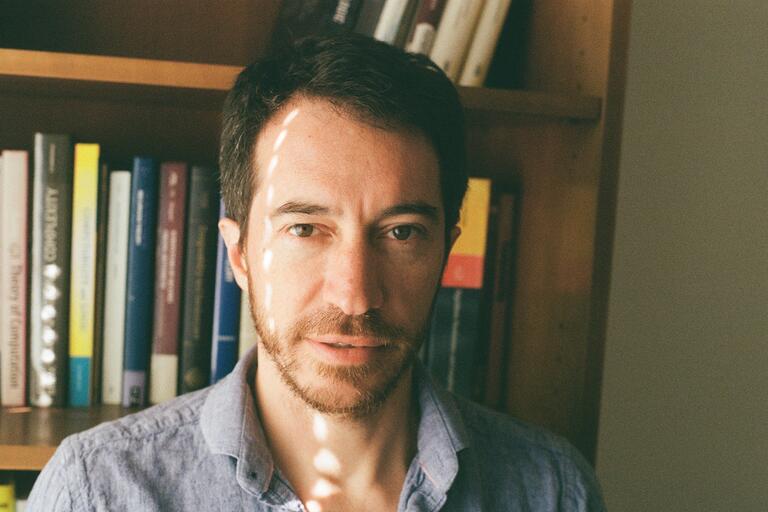
Elisa Davoli is a Professor at TU Wien, affiliated with the Multiscale Calculus of Variations Research Group (E101-01-3). Her work focuses on calculus of variations, micromagnetics, and material science, with applications in phase transitions, nonlocal models, and stochastic homogenization. She collaborates extensively with researchers such as Irene Fonseca, Manuel Friedrich, and Ulisse Stefanelli. Her recent research includes studies on fractional Cahn-Hilliard systems, sharp-interface limits, and optimal control in nonlocal frameworks. She also investigates stochastic homogenization in micromagnetics and structural changes in nonlocal denoising models through bilevel learning. Key contributions include existence results in large-strain magnetoelasticity, two-scale convergence methods for composite materials, and the derivation of linearized fracture models under non-interpenetration constraints. Her work bridges mathematical analysis with applications in solid mechanics and image processing.
Mustak Erhan Yalcin is a Professor at Istanbul Technical University within the Department of Electronics and Communication Engineering. His research spans hardware security, chaos theory, and signal processing, with a focus on FPGA-based systems, GPS spoofing detection, and image encryption. Key research areas: FPGA, neural networks, hyperchaotic systems, TRNG, GPS security. Recent publications (2023-2024) address encryption designs, spoofing detection, and radiation-tolerant hardware. Active in project leadership, including FPGA-based communication blocks and GPS security systems. Recipient of the 2016 Graduation Design and Project Awards in Electronics-Communication-Biomedical. Contact: yalcinmust@itu.edu.tr
Vedat Ziya Doğan is a Professor at Istanbul Technical University , specifically in the Department of Aeronautical Engineering . His research spans structural dynamics, composite materials, and aerospace engineering, with a focus on hypersonic vehicles, flutter analysis, and functionally graded materials. Research Highlights: Advanced studies in Multiphysics Simulations for high-speed vehicles Innovative work on Flutter Analysis and aerodynamic stability Expertise in Functionally Graded Materials under random excitation Projects: 2024-2025: Optimization of Impact Performance of Metal Composite Bonded Structures (Principal Investigator) 2020: R&D Consultancy on Elasticity and Stress Concentrations 2017-2018: Revolving Fund R&D Consultancy
Antonio Montalbán is a Professor of Mathematics at the University of California, Berkeley , where he has been affiliated since 2012. His research focuses on Mathematical Logic and Computability Theory , analyzing the interplay between complexity and mathematical structures, particularly in countable objects and Turing degrees. Research areas include Computability Theory , Reverse Mathematics , and Structural Complexity . His publications span topics like Lower Cones of Degrees , Equimorphism Types , and Automorphism Problems . He has supervised PhD students such as James Walsh , James Gardner Moody , Matthew Harrison-Trainor , and Noah Schweber . He contributes to outreach through a column in Uruguay Ciencia , creating math puzzles in Spanish. Montalbán's teaching includes courses on Set Theory and Mathematical Logic , with public YouTube playlists. His work bridges foundational logic, algorithmic complexity, and applications in mathematics.
Jiang Xuejun is an Associate Professor in the Department of Statistics and Data Science at Southern University of Science and Technology (SUSTech). He has been with SUSTech since 2013, initially as a Tenure-Track Assistant Professor and promoted to Associate Professor in 2019. Prior to joining SUSTech, he served at Zhongnan University of Economics and Law. His educational background includes: Ph.D. in Statistics from The Chinese University of Hong Kong (2009) M.Sc. from Yunnan University B.Sc. from National University of Defense Technology Jiang Xuejun's research focuses on advanced statistical methodologies with applications in various domains. His work spans statistical theory development and practical applications in finance, economics, and risk assessment. He has made significant contributions to quantile regression, variable selection, survival analysis, and nonparametric regression methods. His research publications demonstrate a strong trend toward developing innovative statistical methods for high-dimensional data analysis, Bayesian modeling approaches, and applications in financial econometrics and disaster risk assessment. Many of his recent papers focus on quantile regression techniques, dimension reduction methods, and robust statistical testing procedures. Jiang Xuejun has received several prestigious awards: Shenzhen Outstanding Teacher (2018) Southern University of Science and Technology "Outstanding Teaching Award" (2018) "Excellent Mentor Award" from Southern University of Science and Technology (2016) Selected for Shenzhen's "Peacock Plan" for overseas high-level talents He has successfully secured multiple research grants as Principal Investigator, including projects funded by the National Natural Science Foundation of China (both General and Youth programs), Guangdong Provincial Natural Science Foundation, and Shenzhen Science and Technology Innovation Commission. His research portfolio includes work on likelihood inference for high-dimensional models, statistical methods for epidemic disease control, and quantitative trading systems using machine learning. Jiang maintains an active research group focusing on statistical methodology development and applications, with particular emphasis on financial statistics and econometrics. His team collaborates with researchers across multiple disciplines to address complex data analysis challenges in economics, finance, and public health.
Andrzej T Galecki is a Research Professor in both the Department of Internal Medicine, Geriatric and Palliative Medicine and the Department of Biostatistics at the University of Michigan. He serves as the Director of the Design, Data and Biostatistics Core of the Older Americans Independence Center at the University of Michigan. His academic credentials include an MD from the Medical Academy of Warsaw (1981), a PhD from the Institute of Mother and Child Care in Warsaw (1987), and an MS in Applied Mathematics from the Technical University of Warsaw (1977). Dr. Galecki's research focuses on the application of modern statistical methods to studies in geriatrics and gerontology. His expertise spans nonlinear mixed effects models, population pharmacokinetics and pharmacodynamics analysis, modeling of covariance structure in longitudinal data analysis, and generalized linear models for categorical data. He has developed computational methods for analyzing correlated and overdispersed data, with applications across pharmacokinetic and pharmacodynamic studies, longitudinal research, survey sampling, and genetic studies. His work with mixed-effects models has led to significant methodological advancements, including extensions that allow between-subject variation to be modeled as mixtures of underlying distributions. He developed the SAS/IML NLMEM for computational methods in PK/PD population studies and contributed to the implementation of covariance structure modeling in PROC MIXED. His recent publications demonstrate a strong focus on aging research, particularly examining cognitive impairment in older adults, kidney function in diabetes, and interventions in nursing home settings. His work often involves complex statistical modeling of longitudinal data and has been applied to important clinical questions in geriatrics and chronic disease management. Dr. Galecki has published influential methodological books including 'Linear Mixed-Effects Models Using R. A Step-by-Step Approach' (2013) and the third edition of 'Linear Mixed Models: A Practical Guide Using Statistical Software' (2022), which have become standard references in the field. As Director of the Design, Data and Biostatistics Core of the Older Americans Independence Center, Dr. Galecki leads a team providing statistical expertise for aging research. His work involves both methodological development and collaborative research across multiple disciplines, particularly in geriatrics, diabetes, and kidney disease. Through his leadership, he has secured NIH funding for multiple projects focused on aging and independence in older adults. His research has been widely cited and has influenced statistical practice in biomedical research, particularly in the analysis of longitudinal data in geriatric and clinical studies.
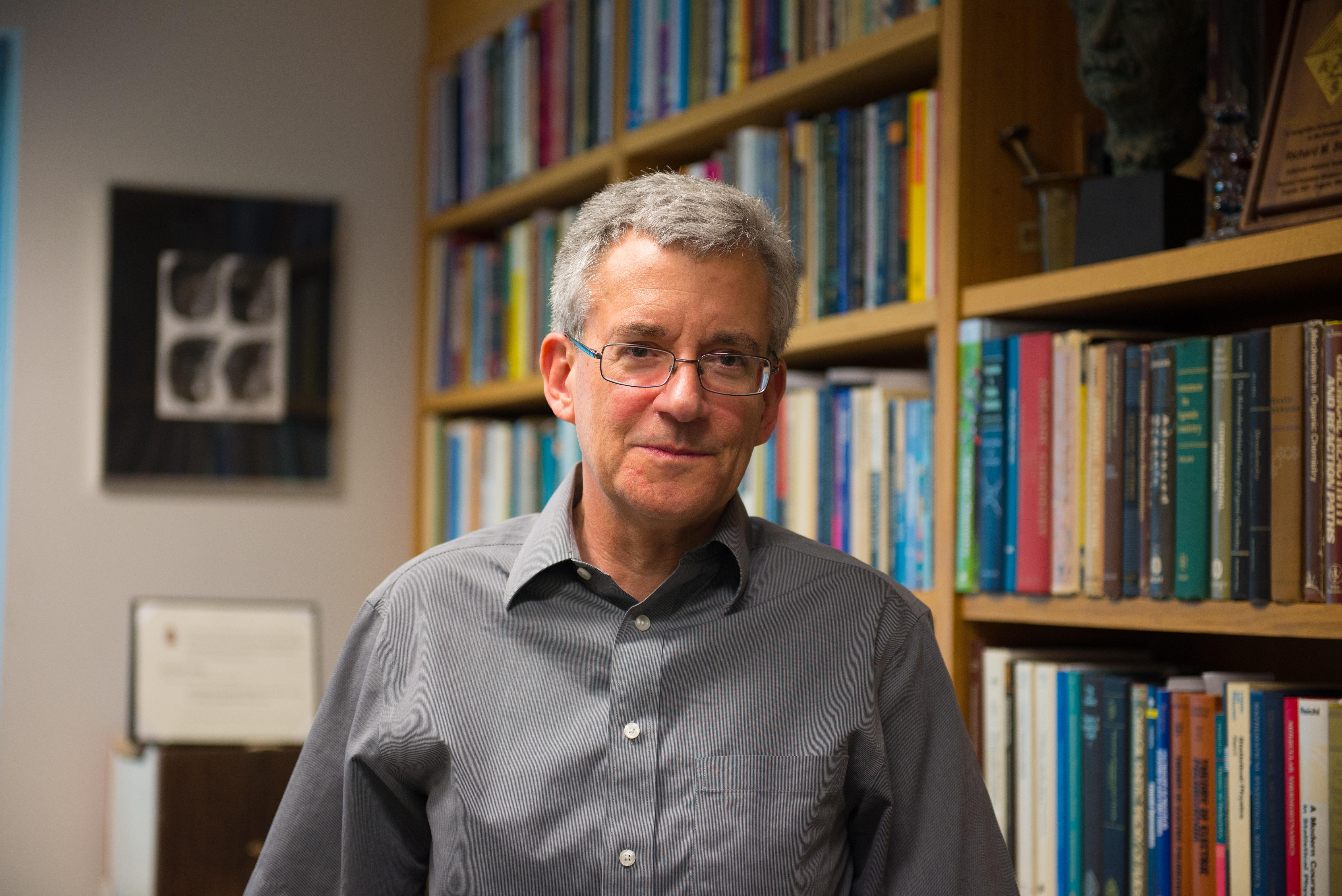
Richard Mark Stratt is the Newport Rogers Professor of Chemistry and Professor of Physics at Brown University, holding a joint appointment in the departments of Chemistry and Physics. He received his S.B. in Chemistry from MIT in 1975 and his Ph.D. in Chemistry from UC Berkeley in 1979. His research focuses on the theoretical understanding of ultrafast molecular dynamics in liquids, emphasizing solvation, vibrational relaxation, and the role of potential energy landscapes. Key achievements include the development of instantaneous-normal-mode analysis to study elementary liquid dynamics and the exploration of nonlinear spectroscopies such as optical Kerr effect and two-dimensional Raman spectroscopy. The 15 most recent publications reflect his work on disordered systems, solvation mechanisms, and ultrafast spectroscopic techniques. His research employs geodesic pathways and random matrix theory to analyze liquid dynamics, with implications for nonlinear response in polar and nonpolar solvents. Scientific Awards: National Science Foundation Postdoctoral Fellowship (1980) Alfred P. Sloan Foundation Fellow (1985-1989) Fulbright Scholar (1991-1992) Elected Fellow of the American Physical Society (1997) Harrison S. Kravis University Professor (1999-2000) Newport Rogers Professor in Chemistry (2004-present) Philip J. Bray Award for Excellence in Teaching (2010) Elected Fellow of the American Chemical Society (2013) American Chemical Society Joel Henry Hildebrand Award (2022) He has served as Chair of the Brown chemistry department (1996-1999), the American Chemical Society Theoretical Subdivision (1998-1999), and the Physical Chemistry Division (2001-2002). He teaches courses ranging from introductory chemistry to advanced physical chemistry and statistical mechanics.
Zaher Hani is a Professor of Mathematics at the University of Michigan, holding the Frederick W. and Lois B. Gehring Professorship. He previously served as an assistant professor at Georgia Tech (2014-2018) and as a Courant Instructor/Simons Fellow at NYU's Courant Institute (2011-2014). He earned his Ph.D. (2011) and M.A. (2008) in Mathematics from UCLA under Terence Tao. Research Focus: Nonlinear partial differential equations (PDE), particularly dispersive wave equations, turbulence theory, and connections to harmonic analysis, dynamical systems, probability, and mathematical physics. Editorial Roles: Editor for Archive for Rational Mechanics and Analysis and Ars Inveniendi Analytica . His work explores the behavior of solutions to nonlinear dispersive PDEs in deterministic and probabilistic frameworks, with applications in quantum mechanics, nonlinear optics, plasma physics, and general relativity. Recent publications focus on wave kinetic equations, turbulence derivation, and Sobolev norm growth. He has collaborated extensively with Yu Deng, Pierre Germain, Jalal Shatah, and others. Scientific Awards: Courant Instructor/Simons Fellow at NYU Frederick W. and Lois B. Gehring Professorship He contributes to expository works and curriculum development, including a Ph.D. thesis on nonlinear Schrödinger equations. His teaching and administrative contact details are listed at the University of Michigan's Mathematics Department.
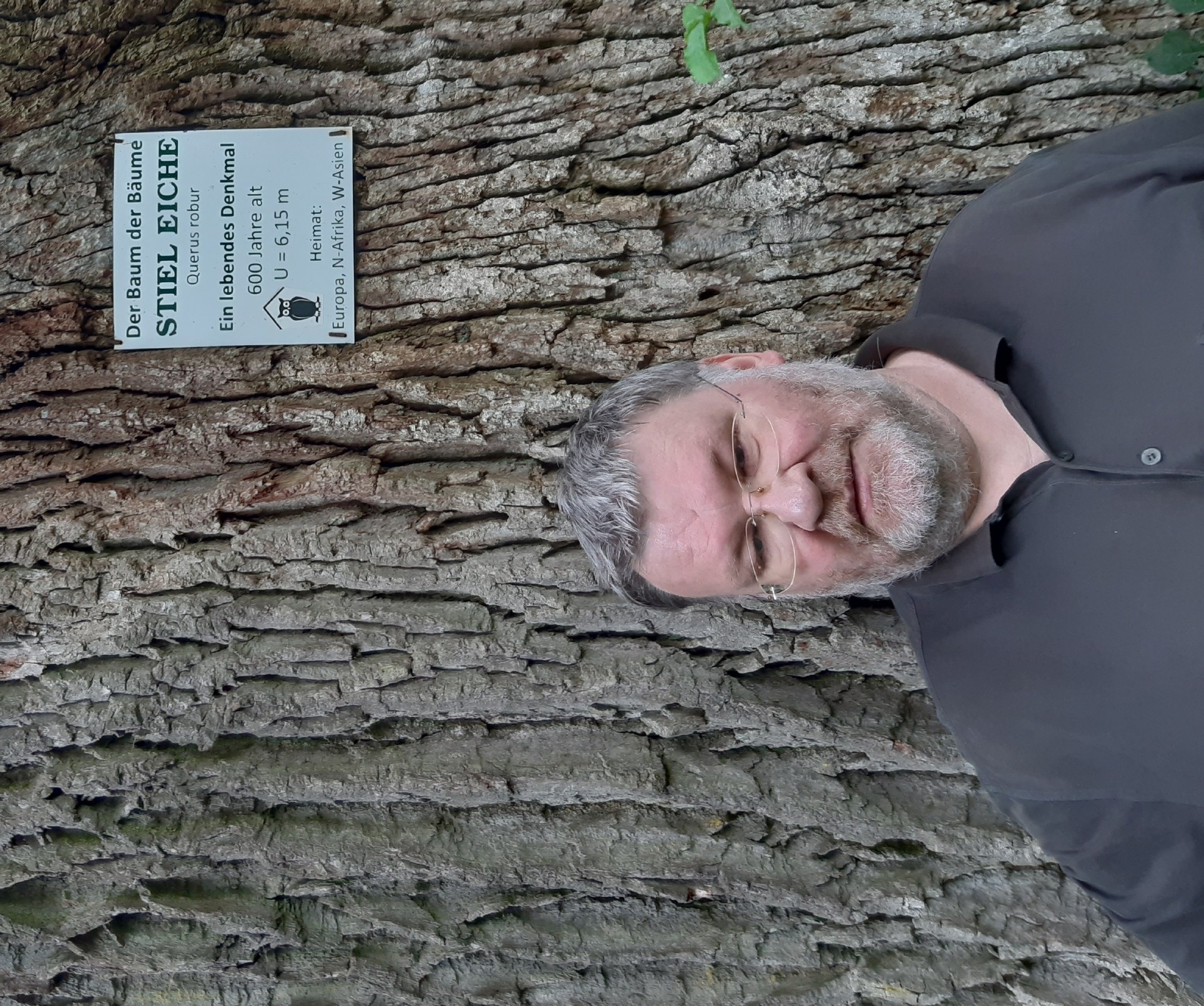
Meik Hellmund is a theoretical physicist and Research Fellow at the Numerical Mathematics group in the School of Mathematics at University of Leipzig. He also serves as the administrator of the institute's computer network. His research spans multiple areas in theoretical physics, including Quantum Physics (quant-ph) Statistical Mechanics (cond-mat.stat-mech) High Energy Physics - Theory (hep-th) Mesoscale and Nanoscale Physics (cond-mat.mes-hall) High Energy Physics - Phenomenology (hep-ph) His publications focus on quantum entanglement, high-temperature series expansions for lattice models, and topological defects in field theories. Key trends include entanglement quantification, critical phenomena in spin systems, and effective mass analysis in quantum Hall systems. Meik Hellmund has no recorded scientific awards in the provided texts, but his work is supported by the Simons Foundation.
Jack Feldman is Distinguished Professor of Neurobiology at the David Geffen School of Medicine, University of California, Los Angeles (UCLA). He leads research on respiratory neurobiology from his laboratory at CHS, Los Angeles, focusing on the preBötzinger complex and its role in breathing rhythm generation. Research Focus: Respiratory rhythmogenesis, neural circuits, opioid/nicotine effects on breathing, sighing mechanisms, and neurophysiological plasticity Lab: PreBötzinger Complex Research Laboratory, CHS, UCLA His scientific contributions include discovering fundamental neural mechanisms for respiratory control, with recent work examining synchronization in microcircuits and clinical implications for disorders like congenital central hypoventilation syndrome. Publications span high-impact journals in Neuroscience , Nature , Science , and The Journal of Physiology . Major Scientific Awards: NIH MERIT Award (1991-2001) NIH Outstanding Investigator Award (2017-2023) Hodgkin Huxley Katz Prize (2016) UCLA Faculty Research Lecture (2018) David Geffen School of Medicine Chair in Neuroscience (2022---)
Jason Abrevaya serves as Associate Dean for Graduate Education and holds the Murray S. Johnson Chair in Economics at the University of Texas at Austin within the College of Liberal Arts and Department of Economics. His research spans econometric methodology, applied microeconomics, and demography, with significant contributions using U.S. birth databases to study birthweight inequality, smoking effects, and gender selection practices among ethnic groups. Dr. Abrevaya's work centers on econometrics (panel data analysis, treatment effects, missing data), health economics (birth outcomes, vaccination), labor economics, and sports economics. His methodological innovations address data challenges in causal inference and microeconomic applications, characterized by rigorous statistical approaches to real-world problems. Recent publications demonstrate continued emphasis on theoretical econometrics with empirical applications in public health and sports analytics. His article trends reveal sustained focus on treatment effects under heteroskedasticity, partial effects in nonlinear models, and applications to vaccine uptake and sports (e.g., penalty calls in hockey). Methodological contributions frequently bridge theoretical econometrics with empirical practice in health and social sciences. Dr. Abrevaya has secured research funding from the National Science Foundation and Robert Wood Johnson Foundation. He is author of the textbook Probability and Statistics for Economics and Business: An Introduction Using R . No scientific awards are explicitly mentioned in available sources. As Associate Dean for Graduate Education, he oversees graduate programs while maintaining active research and mentorship. His warning about scam impersonation attempts (via Gmail addresses posing as research opportunities) underscores the importance of verifying communications through his official university email.
Antonio Moro is an Associate Professor of Mathematics at Northumbria University's School of Engineering Physics and Mathematics. He co-founded the Mathematics of Complex and Nonlinear Phenomena (MCNP) group and previously held research roles at the University of Salento, University of Loughborough, SISSA Trieste, and University of Milano-Bicocca. PhD in Physics (University of Salento, 2004) Former Senior Lecturer at Northumbria (2013–present) His research focuses on nonlinear partial differential equations, integrable systems, and critical phenomena in statistical mechanics. He develops unified approaches to complex systems across nonlinear mathematics , integrable systems , dispersive hydrodynamics , and random matrix theory . Recent articles explore biaxial nematic systems, KP equation reductions, and phase transitions in mean-field models. Scientific contributions include Fellow of the Higher Education Academy Member of the London Mathematical Society Fellow of the Institute of Mathematics and its Applications Organizer, Isaac Newton Institute thematic programs (2022) As Head of Mathematics and Statistics (2019–2022), he restructured undergraduate programs and introduced Northumbria's first Mathematics MSc. He teaches with a research-led approach connecting classical problems to contemporary research.
Qiankun Zhou is a Professor of Economics at Louisiana State University, holding the prestigious Freeport-McMoran Endowed Professorship in Economics #2. Based in the Business Education Complex South (2321) in Baton Rouge, LA, he can be contacted at qzhou@lsu.edu or 225-578-5211. Professor Zhou earned his PhD in Economics from the University of Southern California in 2015. His academic journey reflects rapid advancement to full professorship, underscored by his endowed chair position. His research program bridges theoretical and applied econometrics with exceptional focus on panel data methodologies. Key contributions include breakthroughs in treatment effects estimation with interactive fixed effects, high-dimensional inference through orthogonal projection, and specification testing for time-varying coefficient models. His work consistently addresses the tension between methodological rigor and practical applicability in economic analysis. Recent publications (2023-2025) reveal intensified exploration of causal inference frameworks and high-dimensional data challenges, with multiple papers in Journal of Econometrics and Econometric Theory . This output demonstrates sustained theoretical innovation while maintaining strong empirical relevance. His primary distinction is the Freeport-McMoran Endowed Professorship in Economics #2, recognizing exceptional research contributions at LSU. Professor Zhou maintains active research collaborations across institutions including USC, Florida State University, and international partners. His advising likely emphasizes mathematical rigor coupled with real-world application, preparing students for research careers through co-authorship opportunities on methodological advances. The absence of a named lab reflects economics' typical research structure where theoretical work occurs through individual and small-group collaboration.
Brian Wells serves as Associate Professor of Physics in the College of Arts and Sciences at the University of Hartford, with research spanning computational photonics and low-dimensional magnetic systems. His collaborative work bridges theoretical modeling and practical undergraduate-accessible experimentation. Education PhD, University of Massachusetts, Lowell MS, University of Massachusetts, Lowell BS, Clark University Professor Wells' research bifurcates into two synergistic domains. His photonics work develops theories and numerical simulations for optical metamaterials—particularly plasmonic nanowire assemblies—using MATLAB and Finite Element Method software, while establishing an undergraduate-focused lab for microwave-scale metamaterials fabrication via silk-screen printing. This enables investigations into cloaking, negatively indexed materials, and super-lensing. Concurrently, he studies spin-spin interactions in frustrated magnetic systems using ALPS simulation codes and MATLAB, comparing results with quantum Monte Carlo data and experimental validation from Clark University's magneto-Chemistry group. His publication trajectory reveals a strategic evolution: early work (2005-2009) centered on quantum magnetic systems in copper compounds, while recent publications (2013-2017) demonstrate deep engagement with nonlocal effects in metamaterials, plasmonic waveguide dynamics, and spontaneous emission phenomena—showcasing consistent application of computational physics across domains. No scientific awards were documented in available sources. Professor Wells' lab development indicates active research funding, though specific grants aren't detailed. His collaborations with UMass Lowell and Clark University enhance resource access, while the microwave metamaterials approach creates exceptional undergraduate research opportunities—students participate in full experimental cycles from fabrication to validation, gaining skills typically reserved for graduate programs. The emerging microwave metamaterials lab utilizes conductive ink and traditional printing techniques to democratize advanced research, allowing students to investigate cloaking mechanisms and super-lensing effects through hands-on experimentation. This practical framework transforms theoretical concepts into tangible learning experiences while advancing frontier research in accessible ways.
Lars Erik Holmedal is a Professor in the Department of Marine Technology at the Norwegian University of Science and Technology (NTNU), Faculty of Engineering. His office is located at the Marine Technology Center (Marinteknisk senter), room C2.080, on the Tyholt campus at Otto Nielsens veg 10. With a continuous publication record spanning over two decades from 2004 through 2025, Professor Holmedal maintains an active research program in marine hydrodynamics and fluid mechanics. Professor Holmedal's research focuses on fluid dynamics , marine hydrodynamics , and coastal engineering , with particular emphasis on boundary layer flows, wave mechanics, and sediment transport phenomena. His work examines complex flow interactions around marine structures, wave-induced scour mechanisms, and sediment transport in combined wave-current environments. He employs sophisticated computational fluid dynamics approaches to investigate oscillatory flows, vortex dynamics, and seabed boundary layer processes under various environmental conditions. Analysis of his recent publications (2021-2025) reveals continued focus on cylinder flow dynamics, wave-structure interactions, and sediment transport mechanisms. His research has evolved to address increasingly complex scenarios including bichromatic and bidirectional waves, combined wave-current interactions, and more sophisticated geometries. His work appears in prestigious journals including Journal of Fluid Mechanics, Physics of Fluids, and Coastal Engineering. Professor Holmedal maintains active collaborations with colleagues at NTNU, particularly with Dag Myrhaug, Jianxun Zhu, and Cai Tian, as evidenced by his extensive co-authored publications. His research contributes significantly to understanding fundamental fluid mechanics processes relevant to offshore structures, coastal protection, and marine infrastructure design. His publication 'From Teaching as Transmission to Constructive Alignment: A Case Study of Learning Design' (2021) indicates engagement in pedagogical research and curriculum development within engineering education. As a professor at NTNU, he likely supervises graduate students working on computational fluid dynamics and marine structure-related research projects.