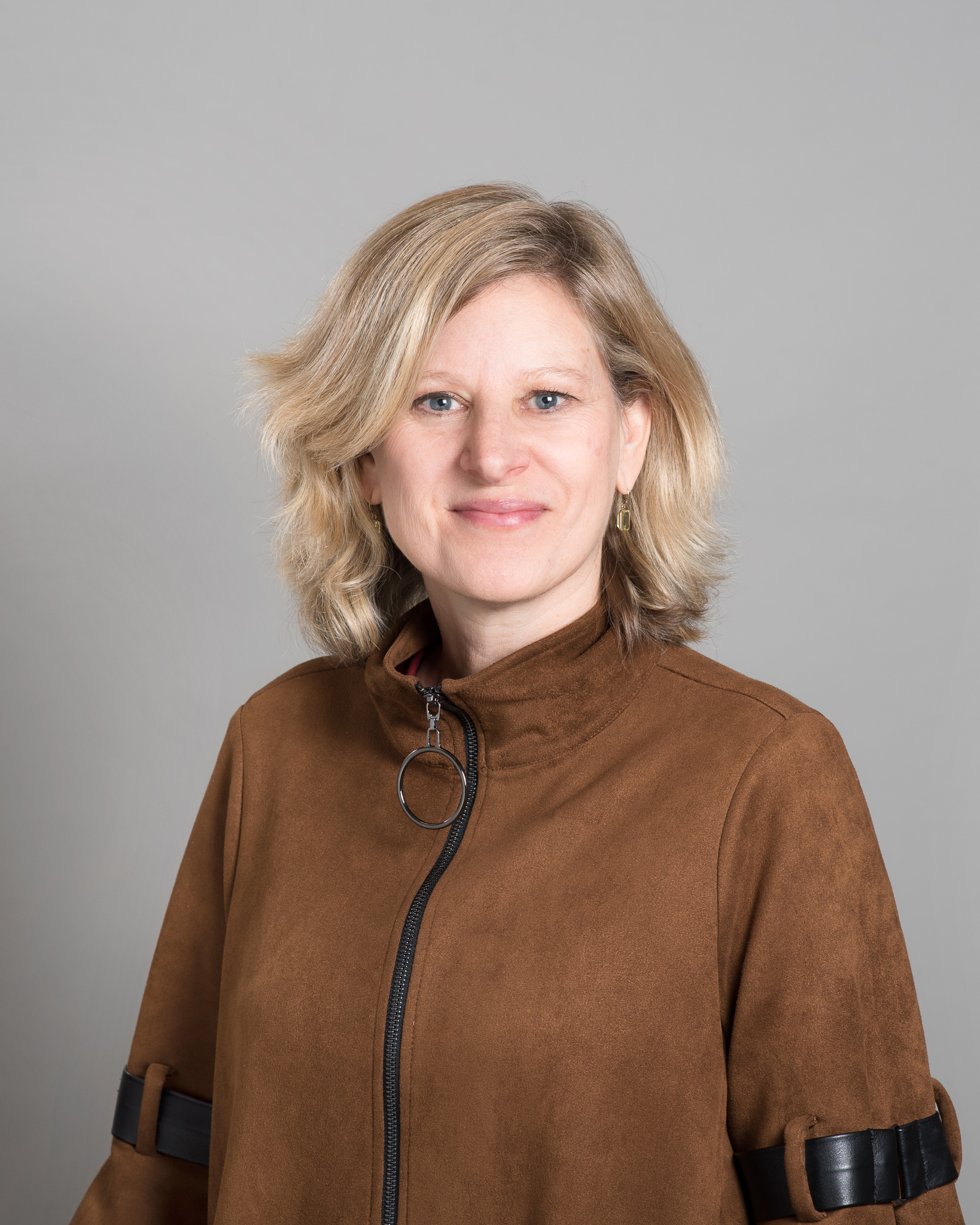
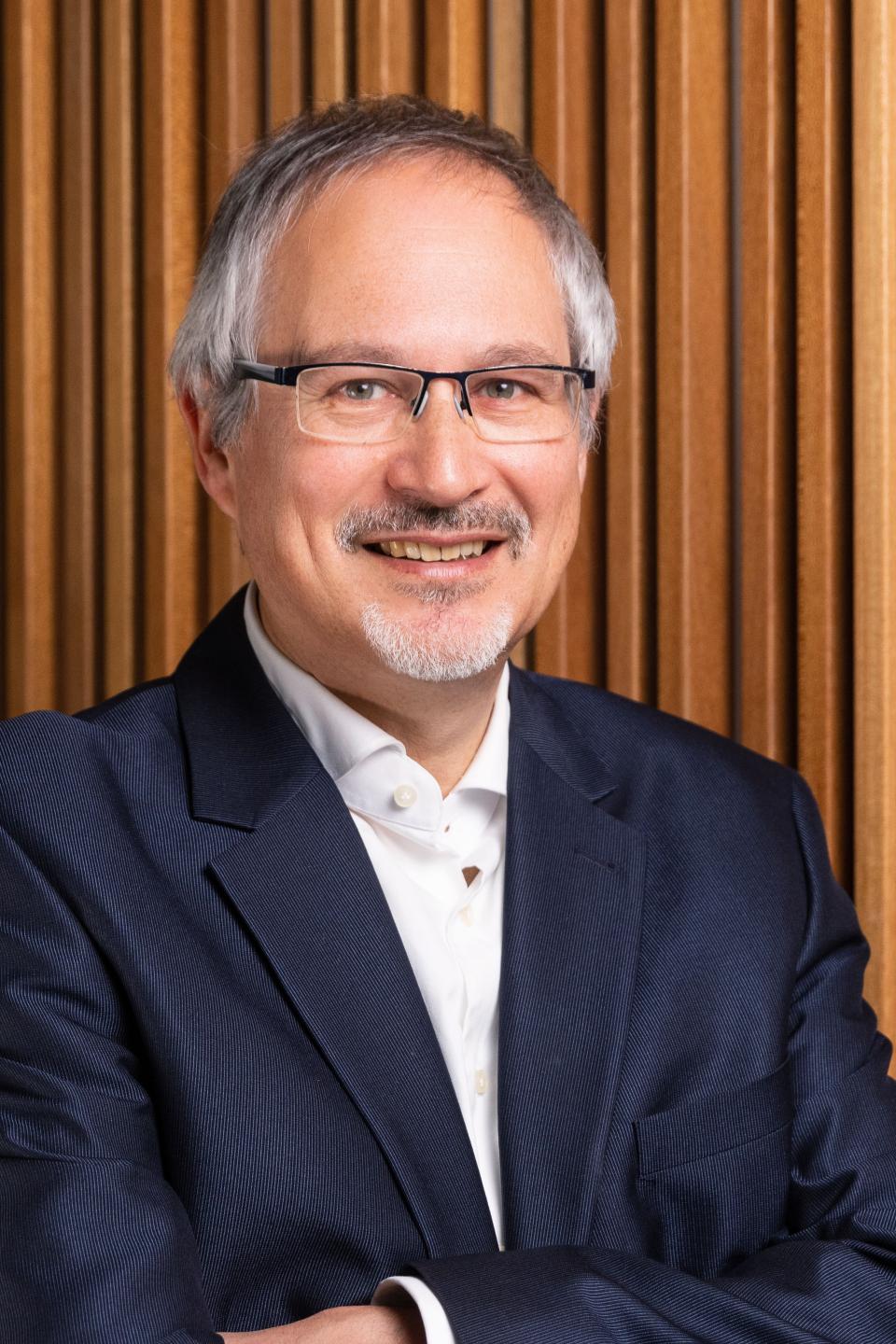
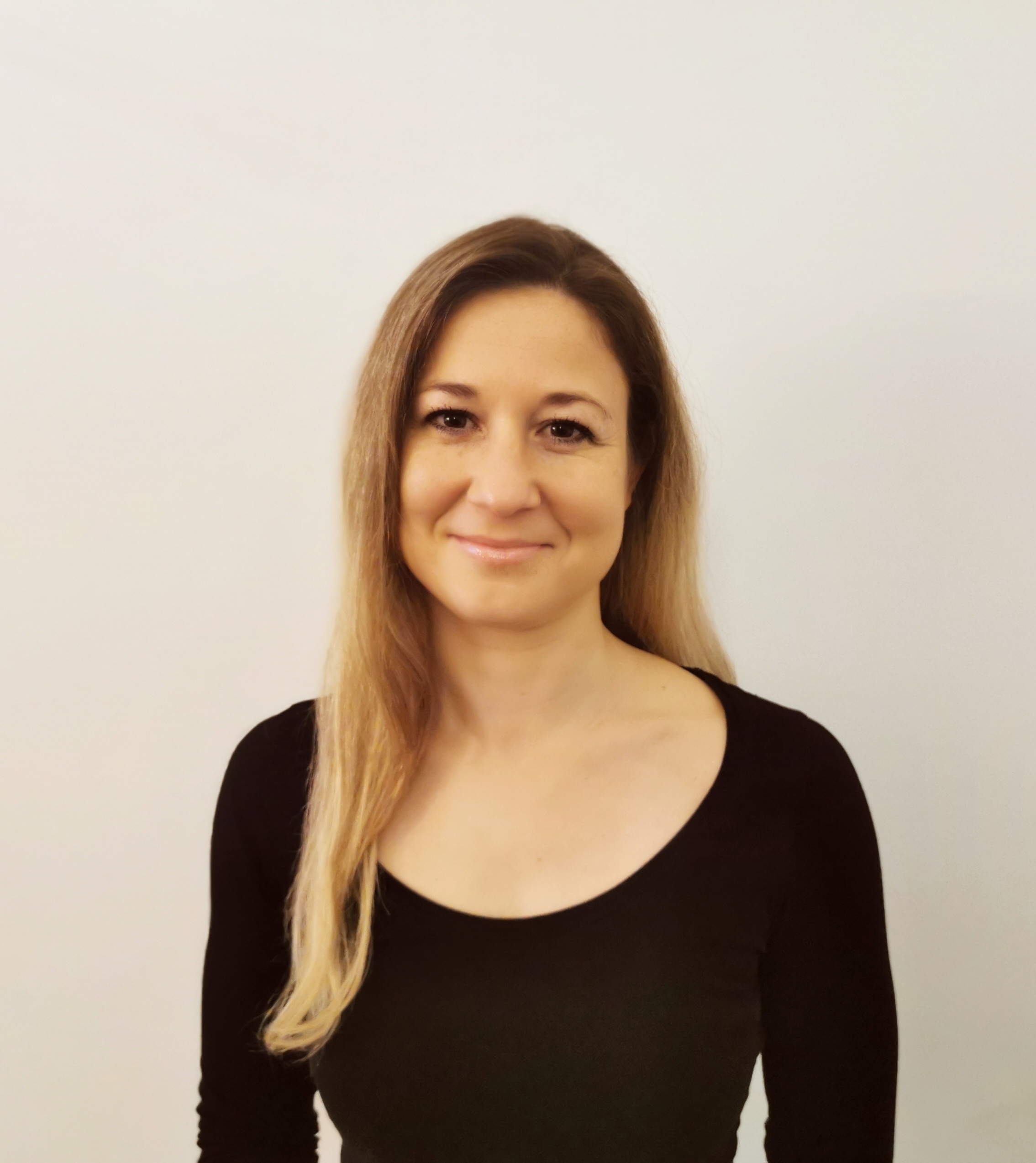
Tegoeh Tjahjowidodo is a Senior Lecturer at the Faculty of Industrial Engineering Sciences , KU Leuven , affiliated with the Department of Mechanical Engineering and the Manufacturing Processes and Systems (MaPS) unit at Campus De Nayer. He serves as Head of Education for Electromechanics programs and leads Subdivision 17 at the campus. Research Areas: Additive Manufacturing (Wire-Arc Additive Manufacturing), Process Monitoring, Control Systems, Laser Micromanufacturing, Wear Analysis, Robotics, and Condition Monitoring. Publication Trends: Focus on in-situ monitoring of laser micromanufacturing, machine learning for abrasive belt grinding, WAAM parameter optimization , and multi-sensor fusion for process control. Scientific Contributions: Co-promotor for MultiTRIBO (tribology), Promotor for WAAM structural integrity and pedicle screw surgical simulators . Active in international collaborations (e.g., 25th International Symposium on Laser Precision Microfabrication, Spain 2024).
Mireille E. Broucke is a Professor in the Department of Electrical and Computer Engineering at the University of Toronto, where she is a member of the Systems Control Group within the Faculty of Applied Science and Engineering. She teaches various undergraduate and graduate courses including Adaptive Control and Reinforcement Learning, Robot Modeling and Control, and Introduction to Nonlinear Systems, demonstrating her commitment to education in control systems engineering. Professor Broucke's research focuses on mathematical system theory with particular emphasis on Systems Neuroscience, Reach Control Problems, and Patterned Linear Systems. Her work bridges theoretical control theory with applications in neuroscience and robotics. She has developed theoretical frameworks for understanding neural adaptation through control theory principles and has applied reach control theory to robotics problems including motion control of quadrocopters. Her research demonstrates how control theory can provide insights into biological systems while also advancing engineering applications. Her recent publications show a clear trend toward applying control theory to neuroscience, particularly in understanding adaptive internal models in the brain. The publications span from theoretical reach control problems on simplices and polytopes to practical applications in robotics and neural systems. Her work increasingly focuses on the intersection of control theory and neuroscience, examining how the brain implements adaptive control mechanisms for motor functions. This represents a significant shift from her earlier work which was more focused on pure control theory problems. Professor Broucke has advised several PhD students including Fatima Ghadieh, Erick Mejia Uzeda, and Mohamed Hafez. Her research has been supported by various grants that enable her work in control theory and its applications to neuroscience and robotics. She maintains an active research program with numerous publications in top control theory journals including IEEE Transactions on Automatic Control, Automatica, and Systems and Control Letters.
J. Stewart Aitchison is a Professor at the University of Toronto's Department of Electrical & Computer Engineering, holding the Nortel Chair in Emerging Technology. He serves as Associate Scientific Director for the Network Centre of Excellence, IC-IMPACTS, fostering Canada-India research collaborations. Aitchison co-founded ChipCare Corporation, developing portable HIV monitoring systems, and previously directed the Emerging Communications Technology Institute. He received a BSc (1984) and PhD (1987) in Physics from Heriot-Watt University, UK, followed by a postdoctoral position at Bellcore. His research focuses on: Nonlinear optics and plasmonics for optical signal processing Micro/nano-scale photonic devices and integrated circuits Optical biosensors for healthcare applications (e.g., HIV monitoring) Algal biofilm photobioreactors for sustainable energy His 250+ publications emphasize semiconductor waveguides, quantum optics, and lab-on-chip systems, with recent work advancing polarization management, entanglement generation, and point-of-care diagnostics. Awards & Fellowships: Fellow of Royal Society of Canada, Royal Society of Edinburgh, AAAS, OSA, and Institute of Physics Professional Engineering Ontario Research Medal (2016) IEEE Photonics Society Distinguished Lecturer (2016-2017) University of Toronto Inventor of the Year (2012) NSERC Synergy Award (2006) He leads the Aitchison Group, supervising over 60 PhD/Master's students in photonics and microfabrication. His team collaborates globally and utilizes the Toronto Nanofabrication Centre. ChipCare, his spin-off, secured $7M+ funding for blood-testing platforms enhancing healthcare in remote communities.
Mahdi Soltanolkotabi is a Professor in the Departments of Electrical and Computer Engineering, Computer Science, and Industrial and Systems Engineering at the University of Southern California's Viterbi School of Engineering. He serves as the inaugural Director of the USC Center on AI Foundations for Science (AIF4S). His academic journey includes a Ph.D. in Electrical Engineering from Stanford University (2014) under Emmanuel Candes, followed by a postdoctoral position at UC Berkeley's AMPLAB mentored by Ben Recht and Martin Wainwright. Dr. Soltanolkotabi's research spans both theoretical and applied dimensions of data science. On the theoretical side, he develops mathematical foundations for modern data science, focusing on generative AI, deep learning, machine learning, signal processing, and computational imaging. His work draws upon nonconvex optimization, high-dimensional probability, statistical estimation, empirical processes, and learning theory. On the applied side, he develops reliable AI systems for healthcare and scientific applications, collaborating with physicians and domain scientists to enhance AI reliability, develop new architectures, and create rigorous evaluation frameworks. His recent publications demonstrate strong focus on medical AI applications, image reconstruction, and theoretical foundations of deep learning. His work bridges the gap between theoretical guarantees and practical implementations, particularly in medical imaging where reliability is critical. His research group has made significant contributions to understanding the behavior of nonconvex optimization algorithms in high-dimensional settings. David and Lucile Packard Fellow Information Theory Society Best Paper Award NIH Director's new innovator award Sloan Research Fellowship NSF Career award Airforce Office of Research Young Investigator award (AFOSR-YIP) Viterbi school of engineering junior faculty research award Faculty awards from Google and Amazon Dr. Soltanolkotabi has received multiple research grants including Amazon Research Awards for projects on "Artificial intelligence for fast and portable medical imaging" and "Reliable AI for Generation of Medical Reports from MRI Scans." He actively collaborates with medical professionals and leads educational outreach initiatives with local schools through USC's Viterbi Adopt-a-School program. His work demonstrates a strong commitment to translating theoretical advances into practical healthcare solutions while maintaining rigorous mathematical foundations.
Sairaj Dhople is the Oscar A. Schott Professor in the Department of Electrical and Computer Engineering at the University of Minnesota. His research focuses on renewable energy systems, particularly modeling and control of grid-connected inverters, power-system reliability, and distributed energy resources. University: University of Minnesota Department: Electrical and Computer Engineering Academic Rank: Professor His work spans power systems, power electronics, and control theory, with recent publications examining grid-forming inverters, stability analysis, and hybrid computing solutions for optimization problems. Key research themes include: Equivalent-circuit modeling for renewable systems Large-signal stability assessment inverter-based resources Grey-box system identification of power networks Interoperability standards for grid-forming technologies Scientific awards include the Institute for Advanced Study Faculty Fellowship (2018). Current projects funded by the National Science Foundation and U.S. Department of Energy explore analog/hybrid computing and universal interoperability for grid-forming inverters (UNIFI Consortium). His Dhople Research Group investigates power-system architecture and sustainability challenges.
Jia-Jie Zhu is a machine learner and applied mathematician currently serving as head of an independent research group at the Weierstrass Institute for Applied Analysis and Stochastics in Berlin, with an upcoming appointment as tenured associate professor at KTH Royal Institute of Technology in Stockholm. Previously, he conducted postdoctoral research in machine learning at the Max Planck Institute for Intelligent Systems in Tübingen, Germany, following doctoral studies in optimization and numerical analysis at the University of Florida. His research focuses on the mathematical foundations of machine learning and optimization, particularly at the intersection of computational algorithms, dynamical systems, and probability theory. Key areas include: Robust probabilistic machine learning algorithms Kernel methods for distribution manipulation Variational methods for optimization over probability distributions Gradient flows and optimal transport theory Wasserstein and Fisher-Rao geometry Applications in generative modeling and causal inference Dr. Zhu's recent work reveals deep connections between partial differential equations, kernel methods, and machine learning, resulting in theoretically grounded algorithms for handling distribution shifts. His publications demonstrate a consistent trajectory from foundational optimization theory to cutting-edge applications in robust learning and generative modeling, with increasing emphasis on the mathematical structures underlying modern ML systems. He has secured significant research funding, including a DFG Project on 'Optimal Transport and Measure Optimization Foundation for Robust and Causal Machine Learning' within the Priority Program 'Theoretical Foundations of Deep Learning' (SPP 2298), and actively organizes academic events such as the Workshop on Optimal Transport from Theory to Applications (OT-DOM) and upcoming sessions at ICSP 2025 and SwissMAP. As an educator, Dr. Zhu teaches nonparametric statistics at Humboldt University of Berlin and serves as area chair for major conferences including AISTATS 2025. He maintains an active research group with opportunities for master's students, PhD candidates, and postdoctoral researchers interested in the mathematical frontiers of machine learning.
Rodrigo González is an Assistant Professor at the Department of Mechanical Engineering, Eindhoven University of Technology, since 2022. His research focuses on data-driven modeling, estimation, and control methods for high-tech precision systems, with applications in motion control and continuous-time system identification. Education: Ph.D. in Electrical Engineering (KTH Royal Institute of Technology, 2022) M.Sc. in Electronic Engineering (Universidad Técnica Federico Santa María, 2016) His work emphasizes continuous-time system identification, state-space modeling, and Bayesian estimation techniques. Key research themes include motion control tuning, multivariable systems, and noise/disturbance modeling in precision engineering applications. Rodrigo has received the Best Electronic Engineering Student Award (2016) and Best Thesis Award from Universidad Técnica Federico Santa María. He has active collaborations with institutions like Universidad Técnica Federico Santa María through visiting researcher appointments. Scientific awards include: Best Electronic Engineering Student Award (2016) Best Thesis Award (Universidad Técnica Federico Santa María)
Ali Akhavan is an Assistant Professor at the Faculty of Engineering and Science , Aalborg University, specializing in Electric Power Systems and Microgrids . His work focuses on grid-connected inverters, microgrid stability, and advanced control algorithms. Research Interests: Control systems for power electronics, stability analysis in asymmetrical grids, passivity-based control, and harmonic compensation. Projects: Participated in CROM (Villum Foundation), SYNCHRONY (private funding), and ASSET (Horizon Europe) to develop high-performance converter systems for renewable energy integration. Scientific Awards: Recipient of the Best Paper Award (May 2021). Email: alak@energy.aau.dk Publications Trend: 15 recent works emphasize grid-forming inverters, harmonic voltage compensation, and stability analysis in renewable energy systems. Key subfields include power quality, passivity enhancement, and dynamic response optimization.
Ralf Peeters is a Full Professor in Mathematics of Knowledge Engineering at Maastricht University's Faculty of Science and Engineering , Department of Advanced Computing Sciences. He serves as Vice-Dean of Research and Director of the STEM Graduate School, while leading the university's team at the inter-university research school DISC and co-chairing the Mathematics Centre Maastricht. Education: PhD in Mathematics (Free University, Amsterdam, 1994) Technical Mathematics (Delft University of Technology, 1988) Research Interests span applied mathematics, systems and control theory, signal/image processing, artificial intelligence, and biomedical engineering applications. His work bridges mathematical techniques with real-world challenges in healthcare and industrial systems. Recent Publications highlight advancements in deep learning for cardiac signal reconstruction, tensor-based signal decomposition, and recurrence plot analysis. These works integrate machine learning with clinical diagnostics, particularly in electrocardiographic imaging and arrhythmia characterization. Key Collaborations: Mathematics Centre Maastricht Dutch Mathematics Platform Dutch Institute of Systems and Control Leadership Roles: Vice-Dean of Research (FSE), Director of STEM Graduate School, Head of DISC-affiliated team, and Co-Chair of Mathematics Centre Maastricht. He has supervised over 25 PhD projects, emphasizing applied research across health and industrial domains.
Kohei Nakajima is an Associate Professor at the Department of Intelligent Mechano-Informatics, Graduate School of Information Science and Technology, The University of Tokyo. He holds concurrent positions at the Department of Creative Informatics and the Next Generation Artificial Intelligence Research Center (AI Center). As an Endowed Chair in Advanced Artificial Intelligence Education, he leads the Physical Intelligence Lab, which focuses on the intersection of soft robotics, nonlinear dynamics, and physical computing. His research interests center on Physical Reservoir Computing (PRC), a paradigm that exploits the natural dynamics of physical systems for computation, with applications in soft robotics, spintronics, and quantum machine learning. Nakajima's work demonstrates how physical systems can inherently process information without traditional digital computation, leveraging phenomena like chaos, bifurcations, and embodied intelligence. Nakajima's publications reveal a strong focus on understanding how physical systems can perform computational tasks. His recent work spans from biological applications (jellyfish cyborgs, ostrich-inspired robotics) to fundamental theoretical advances in reservoir computing. The research demonstrates how physical phenomena can be harnessed for information processing, with implications for energy-efficient computing and novel robotic control paradigms. As the organizer of the Reservoir Computing Seminar, Nakajima has built a vibrant research community exploring the nature of information processing across disciplines. His lab actively recruits graduate students and postdocs, indicating strong research momentum and institutional support for his work in physical intelligence.
Cihan Tepedelenlioglu is an Associate Professor at Arizona State University's School of Electrical, Computer and Energy Engineering. His work bridges wireless communications, statistical signal processing, and renewable energy systems, with a focus on photovoltaic array monitoring, fault detection, and optimization. PhD, MS, and BS in Electrical Engineering from University of Minnesota, University of Virginia, and Florida Institute of Technology 2001 NSF CAREER Award recipient Research interests span wireless communications , graph signal processing , stochastic optimization , and machine learning applications to solar energy systems . Key projects include quantum machine learning for PV topology optimization, consensus algorithms for distributed networks, and real-time fault detection using neural networks. Recent articles emphasize machine learning in energy systems (2023-2025), with 12 publications on photovoltaic monitoring and 3 on consensus algorithms. Earlier work focused on channel estimation in OFDM systems and fading models in wireless communications. Scientific awards : NSF CAREER Award (2001) Major grants include NSF funding for networked solar array management (2013-2016), nonlinear distributed consensus (2013-2016), and statistical processing of solar data (2009-2012). Teaching roles include EEE 350 Random Signal Analysis and graduate research supervision in signal processing and wireless communications. Collaborates extensively with Andreas Spanias, Mahesh Banavar, and other researchers on cyber-physical systems for energy applications.
Roberto Garello is a Tenured Associate Professor at the Department of Electronics and Telecommunications (DET) of Politecnico di Torino . He specializes in Communication Systems , Satellite Networks , and Channel Coding , with a focus on 5G/6G Technologies and Non-Terrestrial Networks . His work aligns with the School of Master’s Programmes and Lifelong Learning . Research Interests: Satellite communications systems, Direct-to-Satellite IoT constellations, Mega-constellation services in space, and physical layer advancements for 5G/6G. Teaching: Offers courses like Information Theory for Data Science , Communication and Network Systems , and Space Exploration and Resources , while supervising Applied Signal Processing Laboratory . Projects: Leads initiatives such as DitDSSS (satellite localization), RESTART (future telecommunications), and TESL@ (ICT energy efficiency). Scientific Awards: Received Best Paper Awards at CTRQ 2010 and COCORA 2013. Students: Supervises PhD candidates including Alessandro Compagnoni, Agbotiname Lucky Imoize, and Riccardo Tuninato, focusing on topics like Wireless Communication, Machine Learning, and Non-Terrestrial Networks. Publications: His recent work explores OTFS vs. OFDM, spectrum sensing algorithms, MIMO with cylindrical arrays, and 5G NTN synchronization, reflecting trends in satellite IoT and machine learning integration.
Amy Wagoner Johnson is a Professor in the Department of Biomedical and Translational Sciences at the Carle Illinois College of Medicine, University of Illinois Urbana-Champaign, with secondary appointments in Mechanical Science and Engineering. She leads the Applied Biomaterials and Biomechanics Lab (ABBL), conducting interdisciplinary research spanning bone tissue engineering, women's reproductive health, and coral reef restoration. Her educational background includes: Ph.D. in Materials Science from Brown University (2002) M.S. in Materials Science from Brown University (1998) B.S. in Materials Science and Engineering from The Ohio State University (1996) Professor Wagoner Johnson's research focuses on biomaterials and biomechanics, particularly: Developing multiscale bone scaffolds for trauma repair Investigating cervical biomechanics in pregnancy and preterm birth Creating coral settlement substrates for reef restoration Designing hydroxyapatite-based systems for stem cell delivery Her work integrates materials science, mechanical engineering, and clinical medicine to address critical challenges in tissue regeneration. Analysis of her recent publications reveals strong trends in translational biomaterials development, with increasing emphasis on women's health applications and marine ecosystem restoration. Her bone scaffold research has evolved toward multi-material systems with spatially graded architectures, while her reproductive health work increasingly employs advanced imaging techniques like second-harmonic generation microscopy. Her scientific honors include: Fellow of the American Institute for Medical and Biological Engineering (2021) Grainger College DEI Award (2022) Andersen Faculty Scholar (2020) Dean's Research Excellence Award (2018) As an educator, she has received multiple teaching awards including the Society of Women Engineers Outstanding Engineering Educator Award (2020) and multiple 'Teachers Ranked as Excellent' recognitions. She serves as MechSE Pre-Med Advisor and actively mentors undergraduate researchers, receiving the Campus Award for Guiding Undergraduate Research (2013). Her lab has secured significant funding for projects including NSF's 'Collaborative Research: ECO-CBET' and NIH-supported work on preterm birth mechanisms. The Applied Biomaterials and Biomechanics Lab maintains strong collaborations with veterinary medicine, surgery departments, and international partners including the NanoSciences Foundation in Grenoble, France. Current projects focus on developing tools to track inflammation in human tissue as Chan Zuckerberg Biohub Chicago Investigators.
Christa Cuchiero is a Professor at the Department of Statistics and Operations Research , University of Vienna , and an elected member of the Austrian Young Academy (Junge Akademie) since 2020. Her research bridges rigorous mathematics and cutting-edge applications in finance, machine learning, and stochastic analysis. Education: Christa earned her M.Sc. in 2006 from TU Wien with a thesis on affine interest-rate models, her Ph.D. in 2011 from ETH Zürich on affine and polynomial processes, and completed her Habilitation at the University of Vienna in 2018 on high-dimensional finance beyond classical paradigms. Research Interests: Her work centers on affine and polynomial processes , stochastic portfolio theory , signature methods , and infinite-dimensional stochastic analysis . Recent projects explore signature-based neural SDEs for option calibration, measure-valued diffusions for energy markets, and universal approximation properties of signature transforms. Awards & Recognition: Among her accolades are the FWF START Award 2019 , the Bruti-Liberati Visiting Fellowship 2018 , the ETH Medal 2012 for an outstanding Ph.D. dissertation, and the Prix de l’Institut Europlace de Finance 2017 for the best paper in finance. Contact: christa.cuchiero@univie.ac.at , Kolingasse 14-16, 05.47, 1090 Wien, Austria.
Xuming He is an Associate Professor at the School of Information Science and Technology (SIST), ShanghaiTech University, where he leads the PLUS Lab. His research spans computer vision and machine learning with a focus on developing algorithms that operate effectively under limited supervision and evolving data conditions. His core research interests include weakly-supervised and few-shot learning for scenarios with sparse annotations, continual learning frameworks for knowledge retention during sequential task acquisition, semantic segmentation techniques for scene understanding, and multimodal vision-language representations. He emphasizes interpretable machine learning to build transparent AI systems capable of human-understandable reasoning, addressing critical challenges in model trustworthiness and deployment reliability. Recent publications reveal strong trends toward novel class discovery in long-tailed recognition scenarios, physics-informed generative modeling for scientific applications, and robust segmentation under distribution shifts. His work increasingly integrates large language models for multimodal reasoning while maintaining focus on efficiency in resource-constrained environments like robotic grasping and medical imaging analysis. He actively mentors students, having supervised Qian He to PhD completion and Chuanyang Hu to Master's degree in 2023. He welcomes prospective graduate students through ShanghaiTech's Computer Science & Technology program and offers undergraduate research projects requiring minimum six-month commitments. The PLUS Lab under his direction drives innovation in learning under supervision constraints, with recent work spanning medical tumor analysis, cross-view geolocation, photonic computing, and semiconductor design verification. The lab's research bridges theoretical advances with practical applications across healthcare, robotics, and scientific discovery domains.