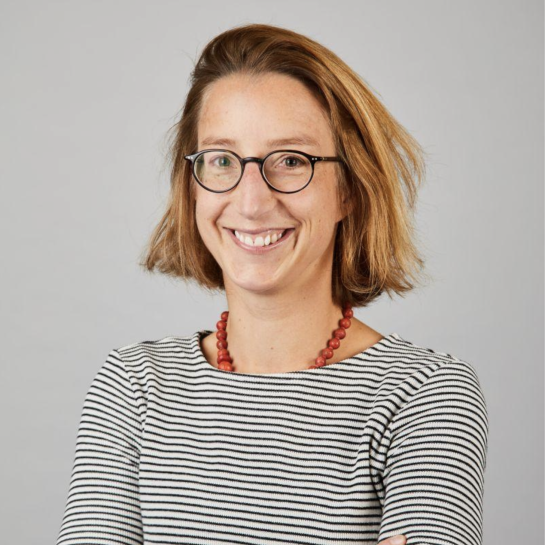
Geert Deconinck is a full professor at KU Leuven , leading the Electrical Energy Systems and Applications (ELECTA) research group within the Department of Electrical Engineering (ESAT). He also serves as scientific leader of the EnergyVille research center's algorithms domain, focusing on smart electrical networks and thermal systems. M.Sc. and Ph.D. from KU Leuven Head of ELECTA since 2012 (10 professors, 8 postdocs, 70+ PhDs) Over 8 million EUR research budget in last 5 years 44 completed PhDs and 10 current advisees IEEE Transactions editorial board member His research spans smart grid architectures , distributed control , and cyber-physical security , with recent focus on EV-grid integration , renewable energy democratization , and multi-carrier energy systems . Current projects include: Smart Charging - E-Mobility meets Renewable Energy Early Detection and Defense Systems for Smart Grids Open-source P2P energy sharing platforms Microgrid control strategies for PV-battery systems Awarded IET Fellow and IEEE Senior Member status, his work combines machine learning with power systems engineering through both theoretical modeling and experimental validation . He has contributed over 575 publications with 9800+ Google Scholar citations.
Tegoeh Tjahjowidodo is a Senior Lecturer at the Faculty of Industrial Engineering Sciences , KU Leuven , affiliated with the Department of Mechanical Engineering and the Manufacturing Processes and Systems (MaPS) unit at Campus De Nayer. He serves as Head of Education for Electromechanics programs and leads Subdivision 17 at the campus. Research Areas: Additive Manufacturing (Wire-Arc Additive Manufacturing), Process Monitoring, Control Systems, Laser Micromanufacturing, Wear Analysis, Robotics, and Condition Monitoring. Publication Trends: Focus on in-situ monitoring of laser micromanufacturing, machine learning for abrasive belt grinding, WAAM parameter optimization , and multi-sensor fusion for process control. Scientific Contributions: Co-promotor for MultiTRIBO (tribology), Promotor for WAAM structural integrity and pedicle screw surgical simulators . Active in international collaborations (e.g., 25th International Symposium on Laser Precision Microfabrication, Spain 2024).
Konstantinos Gryllias is a Professor in the Department of Mechanical Engineering at KU Leuven's Faculty of Engineering Sciences. He leads research in the Mechatronic System Dynamics (LMSD) unit at the Arenberg campus. His academic affiliations extend across multiple KU Leuven institutes including Leuven.AI, Leuven.AM (Additive Manufacturing), and the Gravitation Institute. He serves on important governance bodies as a member of the Faculty Council of Engineering Sciences, Faculty Doctoral Committee of Engineering Sciences, and Departmental Council of Mechanical Engineering. Dr. Gryllias specializes in signal processing, fault detection and diagnosis of rotating machinery, condition monitoring, and machine learning applications in structural health monitoring. His research spans linear and nonlinear vibrations, anomaly detection, rotordynamics, and pattern recognition. His work bridges theoretical signal processing with practical engineering applications in wind turbines, marine propulsion systems, and industrial machinery. His recent publications demonstrate strong focus on deep learning approaches for wind turbine anomaly detection, bearing diagnostics, stern bearing lubrication optimization, and structural health monitoring using advanced signal processing techniques. The research shows increasing integration of explainable AI methods with traditional vibration analysis. Dr. Gryllias teaches advanced courses including Monitoring & Prognostics, Structural Dynamics, Smart Sensing Technologies, and Applied AI perspectives. His teaching portfolio reflects the interdisciplinary nature of his research, connecting mechanical engineering fundamentals with cutting-edge AI methodologies. He currently leads multiple research projects through 2025-2029, primarily as Promotor, focusing on fault detection in gears using fiber optic sensors, multi-sensor monitoring of drivelines, physics-inspired machine learning for condition monitoring, and digital twin applications for wind turbine efficiency improvement.
Pierre-Antoine Absil is a Full Professor at the Louvain Polytechnic School (EPL) , part of the Université catholique de Louvain (UCLouvain) , affiliated with the Mathematical Engineering Center (INMA) and the Institute of Information and Communication Technologies, Electronics and Applied Mathematics (ICTEAM) . His research spans Riemannian optimization , matrix manifolds , and low-rank approximation with applications in astronomical imaging , signal processing , and environmental data imputation . His work emphasizes Riemannian optimization algorithms matrix and tensor completion geometric data analysis applications in astrophysics and bioinformatics Recent publications focus on Stiefel and Grassmann manifolds , variable projection methods , and exoplanet detection via alternating minimization . While no explicit scientific awards are listed, his collaborations with institutions like IEEE and Springer highlight his impact in computational mathematics and engineering. He has supervised researchers such as Simon Vary , Guillaume Olikier , and Valentin Christiaens through projects in direct imaging , economic dispatch , and graph-based data processing . His laboratory, INMA , drives methodological advances in manifold-valued data analysis and nonlinear optimization .
Lesley De Cruz is a Research Fellow at Vrije Universiteit Brussel's Electronics and Informatics department within the School of Electronics and Computer Science, with concurrent research affiliation at the Royal Meteorological Institute of Belgium since 2012. Current projects include climate-resilient urban modeling through BRGEOZ464 and flood prediction systems under FWOAL1127. Research focuses on AI-driven climate modeling with expertise in nonlinear dimension reduction (DIRESA framework), urban climate resilience, and renewable energy meteorology. Key methodologies integrate deep learning with environmental physics for applications including real-time flood prediction offshore wind farm optimization LEGO-based urban climate prototyping regional climate downscaling Recent publications (2023-2025) demonstrate strong trends in geospatial AI for environmental systems, with 64% focusing on climate change impact analysis, 54% on urban applications, and 51% on control measure development. The DIRESA framework represents a significant contribution to nonlinear dimension reduction in climate informatics. Awards include: Matìère Grise Science Communication Trophy (2024) Major media recognition for breakthrough rainfall prediction model (2021) Supervises multiple PhD candidates and leads public engagement initiatives including CurieuCity and Dag Van de Wetenschap. Current grants total 12 active projects (2021-2029) with €2.8M+ funding, primarily focused on climate adaptation and sustainable technology development. Labs and teams include the Climate Informatics Group at VUB and collaborative networks with Ghent University and the Flemish Institute for Carbon-Aware Technologies.
Rishikesh Yadav is a postdoctoral researcher at the Department of Mathematics and Mathematical Statistics, Umeå University, Sweden , and previously held a postdoctoral position at the Namur Institute for Complex Systems (naXys), University of Namur, Belgium . He earned his Ph.D. in Approximation Theory from Sardar Vallabhbhai National Institute of Technology Surat, India. His research focuses on Approximation Theory, Functional Analysis, Dynamical Systems, Operator Theory, and Optimization Theory. Notable contributions include work on Koopman operators, control theory, and compressed sensing. He has received awards such as the V. M. Shah Prize (2020) and Best Oral Presentation Award (2019). Recent research emphasizes developing algorithms for convex optimization on measure spaces, supported by the Kempe Foundation (2024–2026). His work bridges approximation theory with dynamical systems, including publications on Szász-Mirakjan operators, statistical convergence, and Koopman operator approximations via Bernstein polynomials. Grants/Fellowships: Kempe Foundation (2024–2026) Labs/Teams: naXys Institute (Belgium), Umeå University's Department of Mathematics
Gerd Vandersteen is a Professor at the Vrije Universiteit Brussel (VUB) in the Department of Electronics and Informatics within the Faculty of Engineering. He serves as part-time Director (30%) of the Doctoral School of Natural Science and (Bio)Engineering (NSE) at VUB. His career spans academic research and industry collaboration, with significant contributions to nonlinear systems analysis and RF circuit design. His research interests focus on Nonlinear Systems Analysis , RF Circuit Design , System Identification , and Microwave Engineering . Vandersteen combines theoretical expertise in modeling nonlinear systems with practical experience in analog and RF design. His work emphasizes simulation-based analysis techniques, particularly using the Best-Linear-Approximation method for nonlinear system characterization. Vandersteen's publication record shows consistent output with 363 research outputs, including 103 articles and 164 conference papers. His recent work spans diverse areas from Arabic language processing to advanced RF measurement techniques, demonstrating interdisciplinary reach while maintaining core expertise in electronic systems. Key trends include nonlinear distortion analysis, frequency response characterization, and system identification methodologies. Best Paper Award (2002) Best Paper Award for 'Synchronizing modulated NVNA measurements on a dense spectral grid' (2012) IEEE Senior Member (2007) IEEE Instrumentation and Measurement Society Outstanding Reviewer (2014) As an educator, Vandersteen teaches CAE tools for electronic design, microwave design, and telecommunication techniques at VUB. He mentors PhD students through the international spring school on system identification and modeling techniques. His research is supported by multiple active projects including SRP78 (Center for Model-Based Systems Improvement), HERC61 (110 GHz real-time oscilloscope development), and VLOV106 (Flemish AI Academy establishment).
Hafsa Nouhi is a doctoral researcher at the ORCID -affiliated Faculty of Engineering Sciences, Vrije Universiteit Brussel, Belgium. Her research focuses on control systems for flexible robotics and collaborative robots (cobots). Doctoral scholarship recipient Active in robotics research since 2025 Research Interests Flexible link manipulator control Vibration suppression in robotic systems Safety protocols for human-robot interaction Dynamic modeling of cobots Scientific Awards Doctoral Scholarship Conference Participation 44th Benelux Meeting on Systems and Control (March 18–20, 2025) - Presented "Safe control for flexible link manipulators"
Sophie de Buyl is an Associate Professor at the Vrije Universiteit Brussel (VUB), actively contributing to interdisciplinary research bridging theoretical physics and biological systems. She is affiliated with the Department of Bio-engineering Sciences and the VUB Data Lab, focusing on mathematical modeling of biological processes, synthetic biology, and biophysics. PhD in Theoretical Physics (2006, Université Libre de Bruxelles) Postdoctoral experience at IHES, UC Santa Barbara, Harvard University Her research spans cosmological singularities, gauge/gravity correspondence, and black hole entropy in her early career, evolving to integrate theoretical physics with experimental biology. Current projects include synthetic gene regulatory circuits, microbial community dynamics, and embryonic development precision. Key publication trends (2025–2019) reflect dual expertise in mathematical physics (Kac-Moody algebras, black holes) and biological systems (microbial ecology, synthetic biology, circadian clocks). Awards highlight early-career recognition by the Belgian Physics Society and Belspo. Supervised FWO PhD projects on dynamic pathway regulation and microbial systems Director of the Interuniversity Institute of Bioinformatics in Brussels since 2020 Her work emphasizes data-driven discovery of general laws in biological systems, with collaborations spanning bioinformatics, microbiology, and computational modeling.
Raphaël Van Laer is currently an Assistant Professor at the Department of Microtechnology and Nanoscience (MC2) at Chalmers University of Technology, Sweden. His research focuses on optomechanics, quantum photonics, and integrated photonics, with applications in quantum transducers, Brillouin scattering, and nanoscale optical systems. Previously, he held postdoctoral positions at Stanford University (USA) and Ghent University-imec (Belgium), and conducted a BAEF Fellowship at Cornell University (USA). Education: PhD in Information Technology (Ghent University-imec, 2012–2016), BAEF Fellowship at Cornell University (2011). His work bridges quantum optics and nanophotonics, with recent contributions in quantum transducers for microwave-to-optical conversion, piezoelectric optomechanical systems, and lithium niobate-based integrated photonics. Key themes include room-temperature quantum control, ultra-low-loss photonic circuits, and cryogenic optomechanical interfaces. Publications highlight advancements in quantum transducer design, optomechanical crystals, and Brillouin scattering mechanisms, reflecting a focus on practical quantum systems and scalable photonic platforms. His research has applications in quantum communication, sensing, and hybrid quantum networks.
Hugues Bersini is a Professor at Université Libre de Bruxelles (ULB) and Co-Director of the IRIDIA laboratory, the Artificial Intelligence research laboratory of ULB. His academic career spans over three decades, with significant contributions to the fields of artificial intelligence, complex systems, and biological networks. Bersini earned his MS degree in 1983 and his Ph.D. in engineering in 1989, both from Université Libre de Bruxelles. After working as a researcher with an EEC grant from the JRC-CEE in Ispra (1984-1987), he joined the IRIDIA laboratory at ULB, where he has remained throughout his career, eventually becoming a full professor. His research spans a diverse range of topics within artificial intelligence and complex systems. Bersini is particularly known for his work on modeling and control of complex systems, neural networks, fuzzy control, data mining, autonomous agents, and biological networks. He pioneered the exploitation of biological metaphors, especially from the immune system, for engineering and cognitive sciences applications. His research has evolved to include computational chemistry, immune engineering, cognitive sciences, bioinformatics, and object-oriented technology. In recent years, he has focused on business intelligence applications and public goods through the Brussels Institute FARI. Throughout his career, Bersini has published approximately 300 papers, demonstrating consistent productivity and evolving research interests. His early work focused on optimization algorithms and immune-inspired computing, which gradually expanded to include fuzzy and neuro control systems, biological networks, and more recently, applications to real-world problems through spin-off companies and the FARI institute. His publications show a clear trajectory from theoretical foundations to practical applications, with growing emphasis on interdisciplinary approaches that bridge computer science with biology, chemistry, and cognitive sciences. Bersini has been actively involved in the academic community, having co-organized major conferences including the Parallel Problem Solving from Nature (PPSN), European Conference on Artificial Life (ECAL), European Workshops on Reinforcement Learning (EWRL), and International Competitions on Evolutionary Optimization (ICEO). He also organized tributes to Francisco Varela and the International Conference on Artificial Immune Systems (ICARIS). As an educator, Bersini teaches artificial intelligence, object-oriented programming (C++, Java, .Net, Kotlin, UML, Django/Python), and design patterns to both university students at Solvay and Polytechnic Schools and for industry professionals. He has authored fourteen French books covering computer science fundamentals, complex systems, and the intersection of computer science with other fields. His books range from technical manuals to philosophical explorations of complex systems and emergence. Bersini has coordinated significant research projects including the FAMIMO LTR European Project on fuzzy control for multi-input multi-output processes and participated in ESPIRIT projects NEMORETS and METHODS. His work has led to practical applications through spin-off companies such as Cluepoints, Tevizz, and In Silico DB, and more recently through the Brussels Institute FARI which addresses public goods like mobility, epidemics, access to jobs and schools, and energy transition.
Dries Peumans serves as a Research Fellow at the Department of Electronics and Informatics within the Faculty of Engineering at Vrije Universiteit Brussel (VUB), Belgium. His research spans RF engineering, microwave systems, and nonlinear signal processing with significant contributions to measurement instrumentation and 6G technology development. Based at the Pleinlaan 2 campus in Brussels, he maintains an active research profile with an h-index of 139 according to institutional metrics. Peumans' research focuses on RF/microwave systems engineering and nonlinear distortion analysis , particularly in power amplifiers and time-varying systems. His work integrates intelligent instrumentation techniques using reinforcement learning and big data approaches to reduce measurement complexity. Key application areas include 6G communications, beamforming transmitters, and EMI shielding materials. His fingerprint analysis reveals dominant expertise in frequency response (100%), power amplifiers (58%), and nonlinear distortion (47%). Recent publications demonstrate strong trends in real-time signal processing for 5G/6G systems, with particular emphasis on digital predistortion techniques using ROVA modeling. His 2025-2024 output shows increasing diversification into materials science (EMI shielding composites) and geophysical applications (lava lake thermal sensing), while maintaining core expertise in RF measurement optimization and time-varying system modeling. Scientific contributions include: Development of scalable models for linear periodic time-varying (LPTV) systems Innovations in power sweep stitching for modulated RF experiments Compact impedance sensors for 24-31GHz beamforming transmitters Equivalent modeling of multilayered conductive composites Peumans actively supervises doctoral research, notably guiding Amedeo Varano's work on ROVA modeling applications. His current projects include OZR4181 (Reducing measurement complexity through intelligent instrumentation, 2023-2027) and SRP78 (Center for Model-Based Systems Improvement, 2022-2027), which integrate photonics, reinforcement learning, and transceiver design. He participates in the FOD168 initiative for 6G leadership development and maintains collaborations across European research institutions through the VUB's Center for Model-Based Systems Improvement. His laboratory work centers on advanced RF measurement systems, with emphasis on time-domain characterization of nonlinear systems and development of intelligent instrumentation frameworks. Current team projects focus on scaling LPTV modeling techniques to incorporate system parameter variations, enabling predictive design of rotating mechanical systems and electronic oscillators.
Olivier Deparis is a Researcher at the University of Namur , affiliated with the Namur Institute of Structured Matter and Namur Institute for Complex Systems . He holds a Doctor of Science degree from Université de Mons (awarded on 30 Jun 1997) and has been actively involved in interdisciplinary research since the early 2000s. Education Doctor of Science in Physical and Experimental Study of Optical Fiber Radiation Resistance by Visible-Infrared Spectrometry, Université de Mons (UMons), 1997 His research spans photonic crystals , spectroscopy , and machine learning applications in heritage science. Key projects include PHOENIX (Physics & Computational Intelligence in History) and PERGAMENUM21 (interdisciplinary parchment study). He applies computational methods to analyze historical materials and investigates light-matter interactions in natural nanostructures. Recent work focuses on bioinspired photonic structures (2024), genetic algorithm optimization of light absorbers (2024), and FDTD modelling for plasmonic systems (2024). His publications frequently address chirality , refractive index , and animal species in historical contexts. He collaborates with institutions across Belgium and internationally, supervising projects like MODPHOT (photocatalyst modelling). His datasets on beetle fluorescence (2016-2019) remain widely accessed in open-access repositories. Deparis frequently participates in heritage science symposia and is an organizer of events like the 2024 'Physicochimie du parchemin' workshop. His work was highlighted in 2024 press coverage by University of Namur on emerging technologies in parchment analysis.
Juan Diego Torres García is a postdoctoral researcher at KU Leuven's Numerical Analysis and Applied Mathematics (NUMA) unit, specializing in control theory and time-delay systems. His work focuses on delay-based controllers and stability analysis of dynamical systems. PhD in Control and Systems Science, University of Paris-Saclay PhD in Electrical Engineering, Autonomous University of San Luis Potosí (UASLP) MSc in Electrical Engineering, UASLP BSc in Electronics Engineering, UASLP General Engineering, École Centrale de Lyon (exchange) His research spans the design of low-order controllers for time-delay systems, addressing stability challenges and singularities in implementation. Publications highlight applications in PD-controller delay-difference approximations, spectral abscissa optimization for non-minimum phase systems, and switched delay systems analysis. Scientific contributions include: 2024: Stability analysis for linear systems with rapidly varying delays (Automatica) 2024: Delay-difference approximations of PD-controllers (IJRNC) 2024: Stabilization of non-minimum phase systems via PI controllers (IEEE Access) 2023: Derivative action implementation via delay-difference approximations (ECC) Torres García's work combines theoretical analysis with practical applications in control engineering, emphasizing robustness and performance in systems with inherent delays.
Gertjan Coudyzer is a Postdoctoral Researcher at Ghent University's Faculty of Engineering and Architecture , working within the Department of Information Technology (EA05) and affiliated with IMEC. His work focuses on optical receiver design, burst-mode signal processing, and passive optical network (PON) systems. Key research areas: Optical Fibre Communications, Burst-Mode Receivers, and Photonic Integrated Circuits Recent publications highlight advancements in high-speed optical transceivers , PAM-4 signaling , transimpedance amplifier design , and neuromorphic photonic functions . His work addresses critical challenges in next-generation PON systems, including upstream distortion mitigation , metro/access network convergence , and low-latency optical switching . Collaborative projects span hardware design, system integration, and optical-electronic co-design. As PhD supervisor for Cheng Wang (2021-2025), he leads research on Optical I/O Front-Ends for Low-Latency Optical Switched Networks . Funding sources include regional Special Research Fund grants for projects like Burst-mode partial response compensating techniques for next-generation optical access networks (2015-2019).