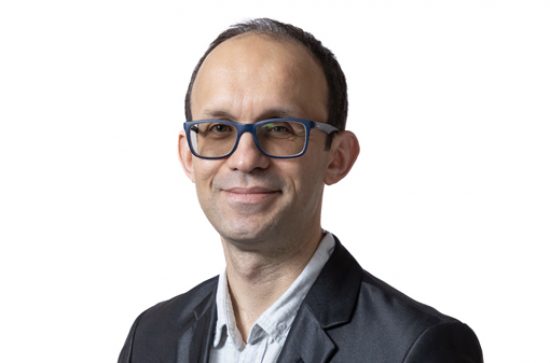
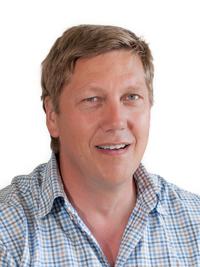
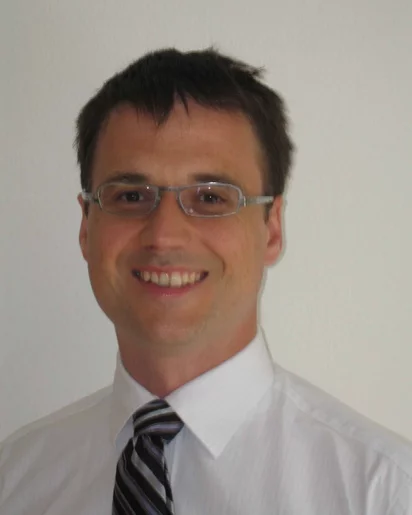
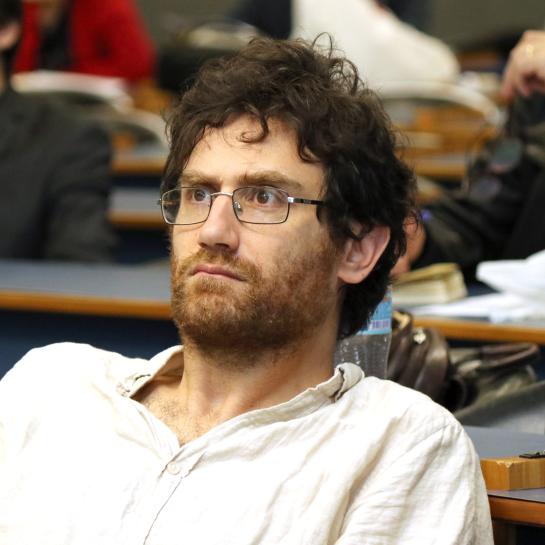
İsmail Onur KIYMAZ is a Professor at the Faculty of Arts and Sciences, Kırşehir Ahi Evran University , Turkey. His academic journey includes a PhD in Mathematics from Gazi University (2003) and an MSc from Hacettepe University (1997). Research Interests: Applied Mathematics, Fractional Calculus, Special Functions, Differential Equations, Integral Transforms, Numerical Analysis. Students: Supervised 11 theses, including Enes Ata (PhD, 2024), Fatma Karaca Vural (PhD, 2022), and Gizem Tümer (MSc, 2022). Projects: Led 23 projects, such as generalized fractional operators and image encryption algorithms. Collaborated on SEIR epidemic models for vaccine impact analysis. Awards: Recipient of TÜBİTAK UBYT Awards (2013, 2006, 2005, 2003, 2001) and Gazi University Publication Incentive Awards (2005, 2003, 2001). Publications: 40+ articles, focusing on fractional differential equations, generalized special functions, and computational methods.
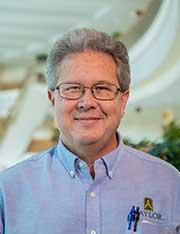
Dr. Jeffrey S. Olafsen is an Associate Professor in the Department of Physics and Astronomy at Baylor University. He holds a Ph.D. in Physics from Duke University (1994) and has conducted postdoctoral research at the University of Massachusetts-Amherst (thin films) and Georgetown University (granular physics). His academic journey includes faculty roles at the University of Kansas and Baylor University since 2006. Education: Ph.D. in Physics, Duke University (1994) M.A. in Physics, Duke University (1991) B.S. in Physics and Mathematics, University of Southern Mississippi (1989) Research Interests: Dr. Olafsen specializes in nonlinear dynamics and non-equilibrium systems, with a focus on granular physics and condensed matter. His interdisciplinary work bridges physics with engineering and biology, exploring phenomena like molecular chaos in granular gases, 2D melting dynamics, and gravitational billiards. Collaborations span departments and institutions, emphasizing cross-disciplinary innovation. Publication Trends: His research spans granular materials, non-equilibrium statistical mechanics, and experimental physics, with notable contributions to velocity distributions, thermal transport, and polymer-like folding in granular chains. Publications appear in premier journals like Physical Review Letters and Nature , reflecting both theoretical and applied approaches. Teaching & Service: Dr. Olafsen teaches graduate and undergraduate courses in physics, including Statistical and Thermal Physics, Nonlinear Dynamics, and Honors-level classes. He actively promotes integrating classroom learning with research laboratory experiences and serves as Editor for the Physics Department Newsletter. Contact: Jeffrey_Olafsen@baylor.edu | (254) 710-2280
Gil Bub is an Associate Professor in the Department of Physiology at McGill University, focusing on cardiovascular research and cardiac dynamics. His lab develops advanced imaging and computational methods for studying excitable cell networks in heart and brain tissues. Current research involves high-speed microscopy technologies (Temporal Pixel Multiplexing, RAP imaging, remote focusing) and optogenetic techniques to control and image cardiac excitation patterns. Teaching includes the course Mathematical Models in Biology (BIOL 309) , with supplementary tools like cellular automata and logistic map iterators. Research themes explore excitable media, spiral wave dynamics, and real-time optical control of cardiac tissue. The lab combines bioengineered myocyte sheets, co-cultures, and whole-heart models with novel microscopy and simulation programs. Instrumentation projects include ultra-fast sensors, three-photon microscope prototypes, and parallel imaging systems for high-throughput screening. Optogenetics work collaborates with Emilia Entcheva's COOL lab to sensitize tissues to light control, enabling precise manipulation of wave patterns and rhythms. Lab members include postdocs, PhD/MSc students, and undergraduate trainees. Prior students have pursued careers in academia, medicine, and industry. Collaborators span institutions including Oxford, UBC, and industry partners like Cordin Scientific Imaging.
Erivelton Nepomuceno is an Associate Professor at Maynooth University's Faculty of Science & Engineering , affiliated with the Hamilton Institute and Centre for Ocean Energy Research . He holds a PhD in Electrical Engineering from UFMG (2005) and has held visiting positions at Imperial College London, Saint Petersburg Electrotechnical University, and City, University of London. Educational Background BEng, UFSJ (2001) PhD, UFMG (2005) Research Interests Computer Arithmetic Chaotic Cryptography Green Computing Ocean Energy Sustainable Circuits and Systems System Identification His recent publications focus on computational chaos, reinforcement learning applications, and sustainable energy systems. His work bridges chaos theory , cybersecurity , and renewables , with a strong emphasis on energy transition and finite-precision arithmetic challenges. Scientific recognitions include Senior Member of IEEE and Chair-Elect of IEEE Technical Committee on Nonlinear Circuits and Systems . He has served as Deputy Editor-in-Chief for multiple IEEE journals and currently holds associate editor roles. Erivelton supervises 5 active PhD students and has advised 7 PhD completions. His funded projects include studies on hybrid wind-wave energy control (€587,975.18), green computing (€3,700), and chaotic system simulation (€7,500). He leads the Hamilton Institute's research group on computational chaos and sustainable systems.
Susanne Pettersson is a Researcher at the Department of Physical Resource Theory , Chalmers University of Technology , Sweden. Her work focuses on the theoretical foundations of complex systems , particularly in ecological and sustainability contexts. Key research themes: ecosystem stability, spatial heterogeneity, species interactions, agent-based modeling, and sustainability science. Projects: Involvement in climate impact assessments for aviation emissions (2024–present) and policy analysis for alternative fuels (2023–2026), funded by VINNOVA and Swedish Energy Agency. Methodologies: Mathematical modeling, computational simulations, and interdisciplinary approaches bridging physics, ecology, and resource management. Her publications reveal a consistent focus on ecological complexity , with recent work extending to transport sustainability through modeling electric truck charging infrastructure. Collaborations span departments like Fluid Dynamics and Technology Management, reflecting cross-disciplinary engagement.
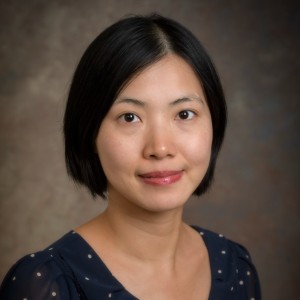
Jingmei Qiu is a Unidel Professor of Mathematical Sciences at the University of Delaware , where she co-leads the Center for Hierarchical and Robust Modeling of Non-Equilibrium Transport (CHaRMNET) - a Department of Energy Mathematical Multifaceted Integrated Capability Center. She specializes in high-order numerical methods for multi-scale kinetic models and plasma physics simulations. Education : B.S. from University of Science and Technology of China (2003), Ph.D. in Applied Mathematics from Brown University (2007) Her research focuses on: High-dimensional sampling and data compression Low-rank tensor approximation for PDEs Multi-scale kinetic modeling Structure-preserving algorithms Applications to plasma physics, astrophysics, and climate modeling Recent publications highlight her work on: Low-rank tensor methods for kinetic equations Semi-Lagrangian discontinuous Galerkin approaches Adaptive-rank implicit time integrators High-order WENO schemes for conservation laws Awarded the 2024 MURI grant for tensor networks research, she has also received recognition through: AFOSR Young Investigator Award (2012-2015) University of Houston Research Excellence Award (2017) Ostrach Fellowship at Brown University (2006) She serves on editorial boards for Kinetic and Related Models and CSIAM Transactions on Applied Mathematics , and actively participates in international conferences like ICOSAHOM 2025 and Midwest Numerical Analysis Day 2025 .
Bin Li is an Associate Professor at the School of Electrical Engineering and Computer Science. His research focuses on wireless networks, network scheduling, sufficient dimension reduction, and statistical inference. NSF-funded projects: EAGER: TaskDCL, CAREER: Wireless Collaborative Mixed Reality Networking, CNS Core: Scalable Algorithms for Virtual Reality Over Wireless Networks. Grants include foundational work in AI-driven task training, geospatial digital twins, and joint communication-computation-learning systems. His research spans wireless scheduling algorithms, data freshness optimization, and nonlinear sufficient dimension reduction. Recent work explores Fréchet regression, functional graphical models, and kernel-based hypothesis testing. Articles highlight interdisciplinary applications in computer science, statistics, and mathematics. Statistical methods dominate his contributions, including Bayesian credible sets, copula models, and additive independence frameworks. Collaborations extend to multi-source genomic data analysis and immersive educational platforms via augmented reality. With an h-index of 16 and 74 research outputs, Bin Li’s expertise intersects wireless network optimization and statistical learning. His work addresses challenges in edge computing, cloud offloading, and cyber-physical systems through algorithmic innovation and theoretical rigor.
Frank Melandsø is a Professor at the Department of Physics and Technology, UiT The Arctic University of Norway. His research focuses on ultrasound, microwaves, and optics, particularly in nondestructive testing and acoustic imaging technologies. Key research interests include: Development of advanced ultrasound and acoustic microscopy techniques Finite element modeling for wave propagation and transducer design Image processing algorithms for noise reduction and defect visualization Applications in materials science, marine biology, and biomedical imaging Recent publications highlight trends in deep learning applications, tilt compensation methods, and 3D imaging of complex materials. His collaborative work spans institutions and disciplines, with extensive contributions to sensors, imaging systems, and computational analysis. Professor Melandsø is actively involved in the Ultrasound, Microwaves and Optics research group and the VirtualStain project, based at Teknologibygget Tromsø 2.053.
Sherwin T. Love is a Professor of Physics at Purdue University, where he has been a faculty member since 1984, progressing from Assistant Professor to Associate Professor and finally to Professor in 1991. His academic journey began with undergraduate and master's studies at Drexel University, where he graduated with highest honors in Physics in 1973, followed by a Ph.D. in Physics from Stanford University in 1978. Prior to joining Purdue, he held research associate positions at the University of Washington, Purdue University, Max-Planck-Institut für Physik, and Fermilab. Dr. Love's primary research interests lie in quantum field theory and its applications to elementary particle physics, with a particular focus on dynamical symmetry breaking, supersymmetric field theories, and the renormalization group. His work bridges theoretical frameworks with potential experimental implications, exploring both fundamental aspects of quantum field theory and their applications to phenomena beyond the Standard Model of particle physics. Over his career, he has made significant contributions to understanding symmetry breaking mechanisms, brane world models, holographic theories, and connections between particle physics and cosmology. His extensive publication record, spanning several decades, reveals a consistent focus on theoretical particle physics with evolving interests that have incorporated contemporary developments in the field. Early work concentrated on chiral symmetry breaking and scale invariance in quantum electrodynamics, while more recent publications explore brane world phenomenology, holographic walking technicolor, and connections between the Higgs boson, inflation, and dark matter. His research often involves collaborations with other prominent theoretical physicists, demonstrating the interdisciplinary nature of modern particle physics research. Fellow, American Physical Society, 1999 DOE Outstanding Junior Investigator, 1985-87 Monbusho (Ministry of Education, Science and Culture) of Japan Visiting Professor, 1990 Throughout his career, Dr. Love has maintained an active research program, securing funding from major agencies including the Department of Energy. His work has influenced both theoretical developments and potential experimental signatures in particle physics. While specific details of his mentoring activities are not provided in the available information, his long-standing position as a professor suggests significant contributions to educating and training the next generation of physicists.
Martin Densing is a Scientist at the Paul Scherrer Institute (PSI) in Switzerland, working within the Energy Economics Group of the Laboratory for Energy Systems Analysis. He has maintained this position since 2009 and has also served as a lecturer at both ETH Zurich and the University of Zurich, teaching courses in energy systems analysis and portfolio optimization. His work bridges academic research and practical energy policy applications through collaborations with Swiss government agencies and international energy organizations. Education: Dr.sc.ETH (2008) from the Institute for Operations Research and Mathematical Methods in Economics (IOR), University of Zurich, together with the Institute for Operations Research (IFOR), Department of Mathematics, ETH Zurich MSc ETH Physics in Theoretical Physics (1996) from ETH Zurich Dr. Densing's research focuses on the intersection of mathematical optimization, energy economics, and power system analysis. His work spans from fundamental methodological developments in stochastic programming to practical applications in electricity market design, renewable energy integration, and long-term energy scenario analysis. He has made significant contributions to understanding hydropower optimization, flexibility requirements in decarbonizing electricity systems, and the economic implications of energy policy decisions. His current research emphasizes Swiss energy transition pathways, storage valuation, and the role of Power-to-X technologies in future energy systems. An analysis of his recent publications reveals a consistent focus on mathematical modeling of energy systems with increasing emphasis on decarbonization challenges. His work demonstrates sophisticated methodological approaches to energy system optimization under uncertainty, with growing attention to risk management in energy markets and the integration of variable renewable energy sources. Recent publications particularly highlight Swiss energy transition challenges, flexibility requirements in low-carbon systems, and the economic valuation of storage and other flexibility options. Dr. Densing has been actively involved in multiple significant research projects including The role of storage in risk-averse market equilibria (SNF Project), Cross-Border Electricity Market Modeling (BEM Model), SWEET-CoSi (Co-evolution of Swiss energy scenarios), SHELTERED (Global synfuel pathways for Switzerland), and IRGC (Risk-mapping and evaluation of energy transition risks). His work has been supported by Swiss funding agencies including the Swiss National Science Foundation and the Swiss Federal Office of Energy, as well as international collaborations through the World Energy Council. As part of the Energy Economics Group at PSI's Laboratory for Energy Systems Analysis, Dr. Densing collaborates with researchers across Switzerland and internationally. His work frequently involves interdisciplinary teams combining expertise in engineering, economics, and policy analysis to address complex energy system challenges. His research outputs regularly inform Swiss energy policy discussions and contribute to international energy scenario development efforts.
Björn de Rijk is a Junior Research Group Leader at the Karlsruhe Institute of Technology (KIT), affiliated with the Institute for Analysis within the Department of Mathematics. He leads the research group 'Stability of Nonlinear Waves' and serves as a principal investigator in the Collaborative Research Center (CRC) 'Wave Phenomena'. His editorial responsibilities include membership on the board of Nonlinearity , and he is part of the KIT Young Investigator Network and KIT Center MathSEE. Dr. de Rijk holds a PhD in Mathematics from Leiden University (2016), an MSc in Mathematics from Leiden (2012), and a BSc in Mathematics from Leiden (2010). He previously held positions as Acting Professor at Technical University of Munich (2020) and Postdoctoral Researcher at University of Stuttgart (2017-2021). His research focuses on nonlinear PDEs, stability analysis, pattern formation, traveling waves, and reaction-diffusion systems. Key themes include spectral analysis of wave solutions, multi-scale dynamics in dissipative systems, and modulational instabilities in optical and fluid systems. His work bridges mathematical theory with applications in optics, fluid mechanics, and biological modeling. Recent publications (2022-2025) demonstrate a consistent focus on wave stability in nonlinear systems, with advancements in understanding periodic wave trains, soliton dynamics, and shock extinction mechanisms. Common themes include rigorous analysis of spectral stability, asymptotic behavior of perturbations, and bifurcations in spatially extended systems. Awards & Grants: GQT Student Prize for Master's thesis (2012) DFG Individual Research Grants (2021, 2025 renewal) CRC 1173 Project Funding (2023) DFG EXC 2075 Collaborative Grant (2019) He mentors students through Master's and Bachelor's projects at KIT and Stuttgart, covering topics like pattern stability and wave equations. His research group is funded by the German Science Foundation via individual and collaborative grants.
Professor Gaetano Continillo is a Full Professor at the Department of Engineering (DING) of the University of Sannio (Italy), specializing in combustion modeling, simulation dynamics, and reduced-order modeling techniques. His research spans chemical reactor analysis, flame propagation, and application of advanced mathematical methods like Proper Orthogonal Decomposition (POD) and Independent Component Analysis (ICA) to combustion processes in internal engines. Department of Engineering (DING), Università degli Studi del Sannio Key research areas: Combustion analysis, Bifurcation dynamics, Model reduction, Chemical reactor simulation His work focuses on developing computational methods for analyzing combustion processes, flame dynamics, and emission control in energy systems. He has contributed to both theoretical and applied studies across chemical and mechanical engineering domains. 15+ publications demonstrate expertise in combustion modeling, periodic reactor analysis, and advanced data decomposition techniques Recent articles emphasize reduced-order modeling strategies and multi-physics combustion analysis Professor Continillo actively collaborates with researchers in engine diagnostics and chemical process optimization. His studies have direct applications in energy efficiency, emission reduction, and combustion stability analysis for various engine and reactor systems.
Professor Michael Balikhin is a distinguished academic in the Space Systems Laboratory at the University of Sheffield's School of Electrical and Electronic Engineering . With over 30 years of research experience, his work focuses on space plasma physics , collisionless shocks , plasma turbulence , and radiation belt dynamics . He serves as Principal Investigator for the Digital Wave Processor instruments on ESA's Cluster satellites and as editor of Journal of Geophysical Research: Space Physics . PhD in Physics (1989) Joined Sheffield in 1995 Key contributor to Cluster mission Leading expert in nonlinear space plasma systems Research Areas His research spans space weather , solar-terrestrial relations , and spacecraft instrumentation , with particular emphasis on electron heating mechanisms , shock structures , and nonlinear system identification . The 15 most recent articles demonstrate his expertise in gamma-ray burst analysis , magnetospheric wave dynamics , and multi-point space plasma observations . Scientific Recognition Leverhulme Grant (2024-2027) STFC/NERC grants exceeding £1.5M EPSRC Platform Grant (2010-2015) Over 20 years of ESA Cluster mission involvement Key Collaborations Extensive collaborations with ESA , STFC , AGU , and international space agencies. Currently working with University of Michigan , Space Research Institute (Austria) , and Skobeltsyn Institute (Russia) .
Thomas Rylander is an Assistant Professor in the Signal Processing research group at Chalmers University of Technology. His research focuses on electromagnetics, computational methods, and microwave engineering, with applications in antenna modeling, wireless power transfer, and electromagnetic compatibility. He has led projects such as Modeling of RF emissions from e-axis (MORFex) (2024–2028) and Säker induktiv energiöverföring för elfordon (2014–2017). His work integrates advanced numerical techniques like the Method of Moments (MoM) and Finite Element Method (FEM) to solve complex electromagnetic problems. Education: PhD in Electromagnetics (2001, Chalmers University) Research Keywords: Electromagnetics, Computational Electromagnetics, Microwave Engineering, Signal Processing, Wireless Power Transfer, Finite Element Method, Method of Moments Projects: MORFex (2024–2028, funded by Energimyndigheten), Virtual Electric Driveline (2018–2022, Vinnova), FFI SAWE (2014–2017, Energimyndigheten), Model-Based Reconstruction (2011–2014, VR) His recent publications emphasize efficient electromagnetic modeling techniques, including macro basis functions for wire antennas and compressed sensing for microwave imaging. Despite extensive collaboration with researchers like Matthys M. Botha and Johan Winges, no specific scientific awards or advisees are mentioned in the provided data.
Federico Holik serves as a Research Fellow at Argentina's National Scientific and Technical Research Council (CONICET) with primary affiliation to Vrije Universiteit Brussel (VUB) in Belgium. His institutional presence is anchored through VUB's CRIS profile and publications portal, reflecting active engagement in quantum research despite the absence of specified departmental or school affiliations within the university structure. His research program critically examines the logical, algebraic, and geometrical frameworks underpinning quantum mechanics, with concentrated efforts in quantum information theory and foundational probability interpretations. Key investigations include quantum resource management for NISQ-era devices, ontological indistinguishability of quantum entities, and the development of quantum mereology to address part-whole relationships in quantum systems. His interdisciplinary reach extends to quantum-inspired AI through quasi-set theory and epidemiological applications via information quantifiers in pandemic data analysis. Analysis of his 2023-2025 publications reveals two dominant trajectories: (1) practical quantum computing challenges centered on resource optimization, error mitigation, and software engineering frameworks for noisy hardware, and (2) deep foundational inquiries into quantum ontology, probability structures, and mereological paradoxes. This dual focus bridges theoretical rigor with emerging quantum technologies while maintaining strong connections to philosophical questions about quantum identity and agency.