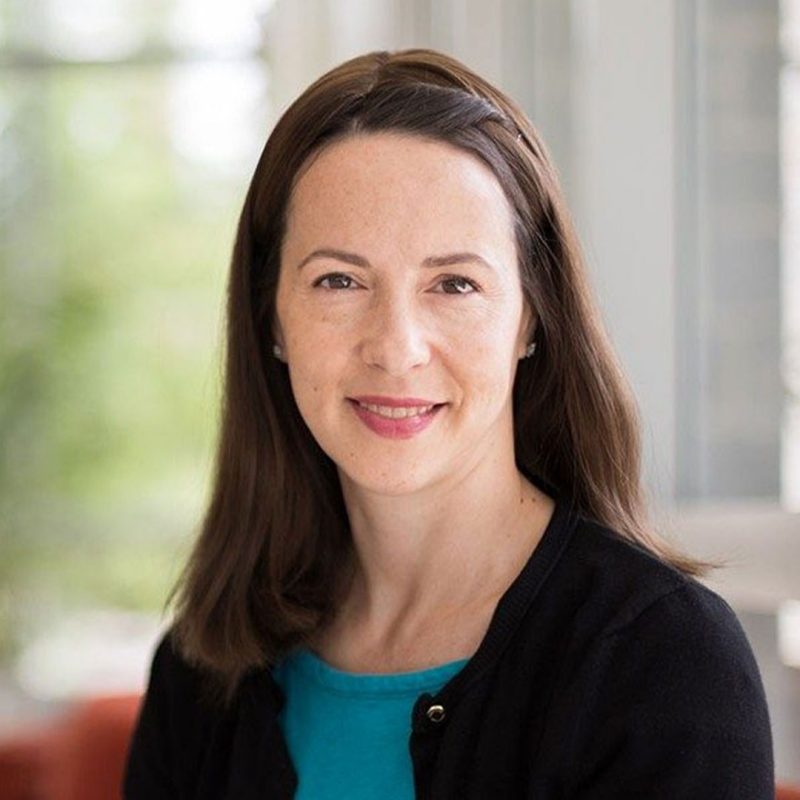
Anne Staples is an Associate Professor in the Department of Mechanical Engineering at Virginia Tech, leading the Laboratory for Fluid Dynamics in Nature (FINLAB). Her research focuses on fluid mechanics in biological systems, medical fluid dynamics, and bioinspired engineering, leveraging computational modeling and microfluidic technologies to innovate in healthcare and engineering. Education: B.S. in Mechanical and Aerospace Engineering, Cornell University (2000) M.Eng. in Mechanical and Aerospace Engineering, Princeton University (2001) Ph.D. in Mechanical and Aerospace Engineering, Princeton University (2006) Postdoctoral Researcher at the Naval Research Laboratory (2006–2008) Research Interests: Her work spans bioinspired microfluidics, medical device design, and fluid dynamics in biological systems. Notable projects include developing pulse-driven micropumps for drug delivery and studying insect respiratory systems to inform engineering solutions. Publications: Over 50 peer-reviewed articles, focusing on topics like microfluidic systems, insect-inspired flow control, and hemodialyzer modeling. Recent work emphasizes wearable drug delivery and biomechanical innovations. Awards & Service: NIH Trailblazer Award (2024) Virginia Tech Dean’s Fellow (2023–present) Editorial Board Member, PLOS ONE and Scientific Reports (2021–present) Fulbright Scholar (2016) Grants & Collaborations: Leads a NIH-funded project to develop lightweight drug delivery devices. Collaborates with statisticians and biomedical engineers to simulate and optimize prototypes. Active in interdisciplinary teams at Virginia Tech and Georgia Tech. Labs & Teams: Directs the FINLAB, which integrates computational modeling, experimental microfluidics, and biological principles to address challenges in healthcare and environmental engineering.
Christopher Rycroft is a Professor and Associate Chair in the Department of Mathematics at the University of Wisconsin–Madison. He leads the Rycroft Group, which focuses on mathematical modeling and scientific computation for interdisciplinary applications in science and engineering. Prior to joining UW-Madison in summer 2022, he was a professor at Harvard University's School of Engineering and Applied Sciences from 2014-2022, and before that a Morrey Assistant Professor at UC Berkeley from 2010-2013. Professor Rycroft's research spans three main areas: numerical methods for material mechanics, data-driven discovery, and computational geometry. His group develops new computational methods while working directly with domain scientists. Key achievements include the development of the reference map technique for fluid-structure interaction, Voro++ software library for Voronoi tessellation, and novel approaches to understanding crumpling physics. His work combines traditional analysis and modeling with machine learning methods to extract scientific insights from complex data. The Rycroft Group's publication record demonstrates a strong trajectory of interdisciplinary research bridging mathematics, physics, materials science, and biology. Recent work has focused on fluid-structure interaction, computational geometry applications, mechanical metamaterials, and biological fluid dynamics. The group develops both theoretical frameworks and practical software tools that have found applications across diverse scientific domains from materials science to virology. Everett Mendelsohn Award for Excellence in Mentorship (2021) Professor Rycroft has advised numerous PhD and master's students who have gone on to postdoctoral positions at institutions including MIT, EPFL, and Cornell. His teaching includes advanced scientific computing courses that have quadrupled in enrollment during his tenure. He has secured research funding supporting his group's work on computational methods and interdisciplinary applications. The Rycroft Group consists of graduate students, postdocs, and collaborators with diverse backgrounds in applied mathematics, physics, engineering, and computer science. The group maintains active collaborations with researchers across multiple institutions and participates in centers such as the Harvard Quantitative Biology Initiative.
Boris Buffoni is a Senior Lecturer at École Polytechnique Fédérale de Lausanne (EPFL) in the School of Basic Sciences, Institute of Mathematics, specifically within the Chair of Partial Differential Equations. He maintains his office at MA C2 605 (MA Building), Station 8, 1015 Lausanne, Switzerland, and can be contacted at boris.buffoni@epfl.ch or +41 21 693 49 87. His academic role spans both teaching responsibilities across multiple mathematics programs and active research in theoretical and applied mathematics. Dr. Buffoni's research program centers on the calculus of variations applied to Lagrangian and Hamiltonian systems, with significant contributions to optimal transportation in Lagrangian dynamics and hydrodynamics. His work explores semi-global minimization methods for quasi-linear elliptic variational problems and the variational approach to capillary-gravity water waves and their energetic stability. Additional research foci include local bifurcation and center-manifold theory for elliptic PDEs, the configurations of infinite elastic cylinders under compression or traction, and the analytic theory of global bifurcation with applications to gravity waves and their secondary bifurcations. The trajectory of his recent publications reveals a deepening focus on three-dimensional water wave phenomena, particularly steady rotational flows, gravity-capillary solitary waves, and advanced mathematical techniques for analyzing these complex systems. His 2025 publications demonstrate continued innovation in applying Kato's approach to locally coercive problems and developing the theoretical foundations of global bifurcation. The consistent application of variational methods and bifurcation theory across his work represents a unifying theme in addressing challenging problems in fluid dynamics and nonlinear partial differential equations. Dr. Buffoni has received research support including an EPSRC grant (GR/L41059) for work on 'Multibump localised solutions for spatially homogeneous partial differential equations,' reflecting the significance of his contributions to the field. His teaching portfolio at EPFL includes foundational courses such as Analysis II, Functional Analysis I, and Partial Differential Equations of Evolution, where he imparts knowledge of differential and integral calculus of real functions of several variables, linear functional analysis, and fundamental techniques for solving evolution equations.
Dr. Andrea K. Rorrer is a full-time Professor at the University of Utah's College of Education, Department of Educational Leadership and Policy, and serves as Director of the Utah Education Policy Center (UEPC). With 35 years of education experience, she has held roles as a teacher, principal, policy analyst, and researcher. Her academic career at the University of Utah includes promotions from Assistant Professor (2002-2009) to Associate Professor (2009-2014) and Professor since 2014, alongside serving as Associate Dean for Research from 2014-2023. PhD in Educational Leadership & Policy, University of Texas at Austin (2001) MS in Educational Leadership & Policy, University of Virginia (1995) Dr. Rorrer's research focuses on the intersection of educational leadership, policy implementation, and systemic change with equity as a central theme across early childhood, K-12, and higher education. Her work examines leadership preparation programs, charter school effectiveness, policy mediation, and institutional factors affecting educational outcomes. Recent publications highlight: Leadership preparation program features influencing career intentions (2025) Personalized learning software's impact on teacher-student dynamics (2024) Turnaround reform frameworks (2018) Charter school mobility patterns (2019) Homeschool policy analysis (2012) Scientific recognition includes: UCEA Master Professor Award (2020) College of Education Research Award AERA Dissertation Award (2001) Culbertson Award for early-career contributions Mentorship has been central to her career, with 35 doctoral chairs and 44 committee memberships since 2002. Current teaching activities include Thesis Research and Ed.D. Capstone Project courses.
Pouya Bashivan is an Assistant Professor in the Department of Physiology at McGill University's Faculty of Medicine. His research focuses on developing computational models to explain and regulate neural responses during visual tasks requiring memory, combining machine learning, neuroscience, and cognitive science. Education : Ph.D. in Computer Engineering (2016), Postdocs in Machine Learning (2020) and Computational Neuroscience (2016-2020) His lab investigates: Topographical neural networks for visual cortex simulation Massively-multitask models for prefrontal cortex Saccade-driven visual exploration models Predictive hippocampus models for episodic memory Recent publications explore adversarial robustness, memory-augmented networks, and brain-state decoding. Current projects emphasize causal models, brain-AI alignment, and translating computational neuroscience into therapeutic applications. The lab is located in the McIntyre Medical Sciences Building, Room 1117, Montreal, Quebec.
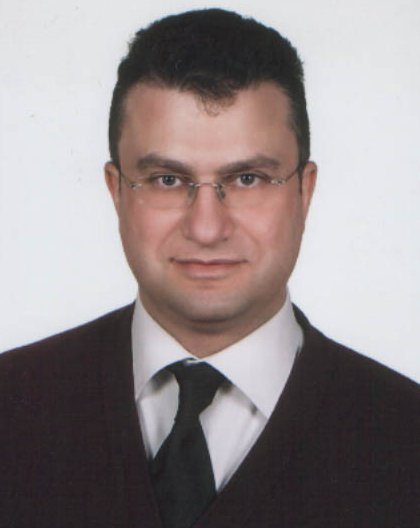
Professor Serdar Özoğuz is a full faculty member at the Department of Electronics and Communication Engineering , Istanbul Technical University . Holding a Ph.D. from ITU (2000) and a M.Sc. from ITU (1993) , he has taught courses like Active Network Synthesis , Basics of Electrical Circuits , and Scientific Research Ethics since 2014. His research focuses on Active RC filters Nonlinear electronic circuits Analog integrated circuit design Network synthesis . His recent publications emphasize machine learning applications in RF/microwave design , quantum computing for CAD tools , and emerging memory devices . The department's Devreler ve Sistemler Laboratuvarı Çok Geniş Ölçekli Tümdevre (VLSI) Tasarımı Laboratuvarı likely support his work. Despite no explicit awards listed, his 15+ recent articles in high-impact journals underscore his technical contributions.
Dr. Sameer Mulani is an Associate Professor, Associate Department Head, and Director of Graduate Programs in the Department of Aerospace Engineering and Mechanics at the University of Alabama's College of Engineering. He leads the Stochastic Mechanics and Multi-Disciplinary Optimization Laboratory (SMO Lab) and is an integral part of the Remote Sensing Center and Alabama Materials Institute. Dr. Mulani's research spans uncertainty quantification, random vibrations, multi-disciplinary optimization, and composite structures' multi-scale analysis and design. His work combines computational methods with machine learning to develop innovative solutions for aerospace engineering challenges. He has made significant contributions to self-healing composite materials, uncertainty quantification techniques, and optimization of composite structures. His research group has published extensively on topics including polynomial chaos expansion for uncertainty quantification, self-healing composites, stochastic buckling analysis, and machine learning applications in structural mechanics. The publications demonstrate a strong trend toward integrating probabilistic methods with traditional engineering analysis to improve reliability and safety of aerospace structures. AIAA Associate Fellow, Class of 2025 2025 Department of the Air Force Summer Faculty Fellowship Program 2024 Department of the Air Force Summer Faculty Fellowship Program MSC Software Contest Winner (2011) Night on the Town: General Electric Award (2007) DAAD Fellowship (1999-2000) Dr. Mulani has advised numerous graduate students who have gone on to successful careers at institutions including Los Alamos National Laboratory, Cirrus Aircraft, L3Harris, and Lockheed-Martin. His lab collaborates with various research centers including the Remote Sensing Center where they work on antenna design, manufacturing, and integration for aircraft systems. The SMO Lab utilizes advanced software including MSC NASTRAN/PATRAN, ANSYS Mechanical/FLUENT, ABAQUS, SOLIDWORKS, and CATIA for their simulations and analyses.
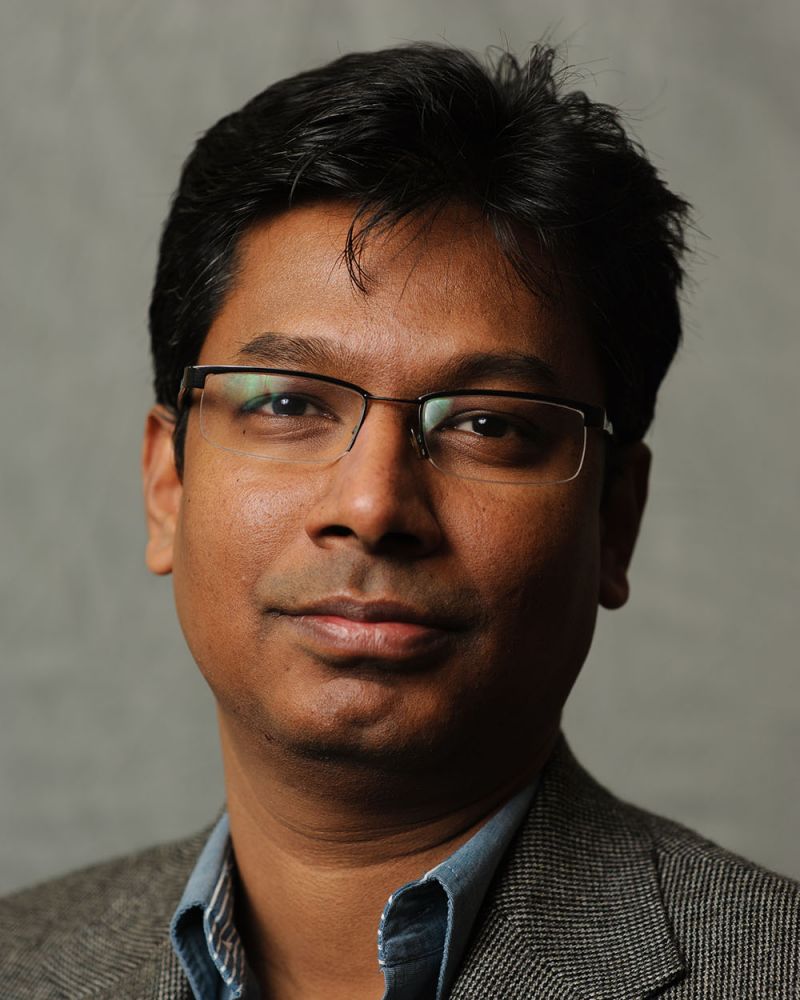
Naren Naik is a Professor in the Department of Electrical Engineering at the Indian Institute of Technology (IIT) Kanpur, specializing in computational tomographic reconstructions and analysis for subsurface imaging and shape/target tracking. His educational background includes: PhD from the Indian Institute of Science (IISc) Bangalore in 2000 M.E. in Electronics and Communication Engineering from IISc Bangalore in 1992 B.Sc. from Bangalore in 1988 Professor Naik's research focuses on development and analysis of reconstruction algorithms for nonlinear tomography , with particular emphasis on shape-based and dynamic tomography, tracking and battlefield surveillance, and numerical solutions to partial differential equations in electromagnetics. His work spans multiple imaging modalities including subsurface imaging with Ground Penetrating Radar (GPR), fluorescence optics, electrical impedance tomography, and photoacoustic tomography. His research bridges theoretical mathematics with practical applications in electromagnetic imaging and target tracking systems, addressing complex inverse problems in computational imaging. His publication record shows a clear progression from electromagnetic tomography to advanced Kalman filtering techniques for target tracking applications. The most recent works focus on wireless sensor networks and maneuvering target tracking, demonstrating his ability to adapt theoretical frameworks to evolving technological contexts while maintaining mathematical rigor in solving inverse problems. His professional recognition includes: Invited presentation at the special session on advances in model based inversion at the 2011 IEEE AP-S International Symposium on Antennas and Propagation Professor Naik maintains an active research program with consistent publication output in high-impact journals and conferences. His work demonstrates strong interdisciplinary collaboration, particularly with researchers in electromagnetics, signal processing, and imaging sciences. His research has significant applications in defense technology (battlefield surveillance), medical imaging, and subsurface exploration systems, contributing to both theoretical advances and practical implementations in these fields. He is based in Office 303A ACES (Advanced Centre for Electronic Systems) at the Department of Electrical Engineering, IIT Kanpur, where he leads research activities in computational imaging and tomographic reconstruction.
Govind Sharma is a Professor in the Department of Electrical Engineering at the Indian Institute of Technology Kanpur. He holds a PhD from the University of Southern California, Los Angeles, and completed both his M.Tech. (1984) and B.Tech. (1979) in Electrical Engineering from IIT Kanpur. His research interests span multiple areas of signal processing and communications, with a focus on: Signal Processing Communication Systems Video signal processing Medical image processing Professor Sharma has published numerous research papers in prestigious journals and conferences. His work primarily focuses on signal processing techniques, including time delay estimation in acoustic channels, direction of arrival estimation, adaptive filtering algorithms, wavelet transforms, and spectrum estimation. His research has contributed significantly to both theoretical foundations and practical applications in these fields, with publications spanning from 1986 to 2011. He can be reached at his office in ACES-205A, Department of Electrical Engineering, Indian Institute of Technology, Kanpur, UP, India-208016, or by phone at 0512-259-7922.
Professor Quanmin Zhu is a Professor in Control Systems at the School of Engineering, University of the West of England (UWE), Bristol, UK, holding this position since 2004. His academic career spans over four decades, including roles as Lecturer at Qiqihar University (China, 1983-1986), Post-doctoral Researcher at University of Sheffield (UK, 1989-1994), Lecturer at University of Brighton (UK, 1994-1997), and Lecturer/Reader at Aston University (UK, 1997-2004). His educational background includes: MSc in Engineering from Harbin Institute of Technology, China (1980-1983) PhD from University of Warwick, UK (1986-1989) Professor Zhu's research centers on dynamic system modeling, identification, control, and simulation, with pioneering contributions to nonlinear control systems, robust control methodologies, and U-model based control frameworks. His work bridges theoretical advances with practical applications in robotics, renewable energy systems, and industrial automation, emphasizing model-free and adaptive control solutions for complex nonlinear dynamics. Analysis of his 2021-2025 publications reveals a dominant focus on robust control for uncertain nonlinear systems, with significant contributions to sliding mode control, multi-agent coordination, and cyber-physical security. His research increasingly integrates machine learning techniques (e.g., actor-critic reinforcement learning) while maintaining core expertise in optimization-based control algorithms applied to UAVs, robotic manipulators, and wind energy systems. His professional honors include: Chartered Engineer (CEng) Fellow of the Institution of Engineering and Technology (FIET) Fellow of the Higher Education Academy (FHEA) As an academic leader, Professor Zhu serves as President/Founder of the International Conference on Modelling, Identification and Control (ICMIC), Editor/Founder of Elsevier's Book Series on Emerging Methodologies in Modelling and Control, and University Ambassador for UK-China educational collaboration. His research group secures substantial grants in control theory applications, with ongoing projects in U-model control platforms and international partnerships. He leads the Control Systems research group at UWE, driving innovation in the U-control platform and its industrial applications. His team maintains strong international collaborations, particularly with Chinese institutions, and actively develops the Elsevier Book Series as a key publication channel for emerging control methodologies.
Jean-Luc Thiffeault is a Professor of Applied Mathematics at the University of Wisconsin-Madison, serving as Chair of the Department of Mathematics. His research spans applied mathematics, fluid dynamics, and topological chaos, with a focus on mixing mechanisms in viscous flows, biogenic mixing by microorganisms, and computational modeling. Key research themes include: Topology-driven fluid mixing via braid theory; Chaotic advection in low-Reynolds environments; Microswimmer interactions with boundaries and waves; Development of numerical tools for dynamical systems analysis. He has authored significant software packages like braidlab (braid analysis), rodent (ODE integration), and jlt lib (utility functions for scientific computing). Collaborative projects include studies on hagfish slime unraveling, burger flipping dynamics, and Brownian particle winding around vortices. His work is supported by NSF grants DMS-0806821 and CMMI-1233935, emphasizing interdisciplinary approaches combining mathematics, physics, and computational methods.
Peter A. Tass is a Professor of Neurosurgery at Stanford University's School of Medicine, where he leads the Tass Lab within the Department of Neurosurgery. His research focuses on developing groundbreaking neuromodulation techniques designed to impact the course of neurological diseases including Parkinson's disease, stroke, epilepsy, and tinnitus. The Tass Lab is part of several prestigious Stanford initiatives including Bio-X, the Wu Tsai Human Performance Alliance, the Maternal & Child Health Research Institute (MCHRI), and the Wu Tsai Neurosciences Institute. MD from Universities of Ulm and Heidelberg, Germany (1989) PhD in Physics from University of Stuttgart, Germany (1993) Diploma (master's degree) in Mathematics from University of Stuttgart, Germany (1993) Habilitation thesis in Physiology from RWTH Aachen University, Aachen, Germany (2001) Dr. Tass's primary research interests center around computational neuroscience approaches to understanding and treating neurological disorders. His lab pioneers neuromodulation techniques based on thorough computational modeling that employs dynamic self-organization, plasticity, and other neuromodulation principles to produce sustained therapeutic effects after stimulation. He specifically focuses on developing stimulation methods that cause sustained neural desynchronization by unlearning abnormal synaptic interactions. His work spans both invasive techniques like deep brain stimulation and non-invasive approaches such as vibrotactile and acoustic stimulation. Current projects involve developing novel therapies for Parkinson's disease, epilepsy, tinnitus, and other neurological conditions using comprehensive computational neuroscience methods derived from non-linear dynamics, statistical physics, and numerics. Analysis of Dr. Tass's recent publications reveals a strong focus on coordinated reset stimulation techniques, neural network modeling with plasticity mechanisms, and computational approaches to brain stimulation. His work consistently bridges theoretical computational neuroscience with clinical applications, particularly for Parkinson's disease treatment. A significant portion of his recent research examines how stimulation parameters, sequences, and timing affect long-lasting desynchronization effects in neural networks. His publications demonstrate an interdisciplinary approach combining physics, mathematics, neuroscience, and clinical medicine to develop novel therapeutic interventions. Member of the European Academy of Sciences and Arts (2012) Nicolaus August Otto Innovation Prize (2011) German Innovation Award in Medicine (2011) Rapid Response Innovation Awards from The Michael J. Fox Foundation (2009, 2010) Runner-up for the German future prize (2006) Erwin Schrödinger prize (2005) Fritz Winter prize (2000) Dr. Tass actively mentors a diverse team of researchers including staff scientists, postdoctoral fellows, clinician-scientists, and students. His lab currently includes researchers with backgrounds in physics, computational neuroscience, biomedical engineering, and clinical neurology. The lab is involved in multiple clinical trials, including studies on coordinated reset spinal cord stimulation and vibrotactile coordinated reset stimulation for Parkinson's disease. His research is supported by various funding sources including foundations focused on neurological disorders and innovation in medical technology. Dr. Tass collaborates extensively with both internal Stanford researchers and external collaborators worldwide. The Tass Lab at Stanford is a multidisciplinary research group comprising physicists, neuroscientists, engineers, and clinicians working together to develop novel neuromodulation therapies. The lab team includes staff scientists like Justus Kromer (theoretical physicist), postdocs like Daniel Ehrens and Kanishk Chauhan, clinician-scientists like Tina Munjal, and clinical research coordinators. The lab maintains active collaborations with Stanford colleagues across departments including Kwabena Boahen, Vivek P. Buch, and Jaimie Henderson, as well as external collaborators like Alexander Neiman and Kęstutis Pyragas. Current research directions include developing non-invasive vibrotactile treatments for Parkinson's disease, acoustic coordinated reset therapy for tinnitus, and responsive deep brain stimulation for conditions like loss-of-control eating.
Christine Cheng serves as Assistant Professor of Accountancy at the University of Mississippi's Patterson School of Accountancy, specializing in Tax and Data Analytics. She previously held a visiting scholar position at the Securities and Exchange Commission Division of Economic and Risk Analysis (2020-2022) and currently contributes to the Financial Accounting Standards Board Taxonomy Advisory Group. Her academic credentials include: Ph.D. in Business Administration from Pennsylvania State University (2011) M.B.A. in Business Administration from Pennsylvania State University Harrisburg (2003) Dr. Cheng's research examines machine-readable financial reporting determinants, tax-influenced decision making, and the intersection of tax analytics with corporate strategy. Her work bridges theoretical accounting frameworks with practical data science applications, particularly in post-Wayfair e-commerce taxation and marriage tax policy analysis. She employs advanced tools like Alteryx and robotic process automation to model complex tax scenarios. Publication trends reveal a strategic shift toward data-driven tax education and regulatory compliance, with 60% of recent work integrating analytics into financial reporting. Her articles frequently address real-world policy impacts, such as same-sex marriage tax implications and hail damage fraud detection, demonstrating applied relevance to both academic and practitioner audiences. Major recognitions include: 2023 Public Interest Section Best Paper Award (American Taxation Association) 2023 Graduate Teacher Award (American Accounting Association) Three ATA/Deloitte Teaching Innovation Awards (2019-2022) 2019 Best Article Award from The Tax Adviser As an educator, she pioneered Ole Miss's Master's of Taxation and Data Analytics program and maintains a YouTube channel with 200+ instructional videos. Her advising includes master's student Taylor, J. (lead author on a 2015 publication), and she has secured multiple curriculum development grants through Deloitte partnerships. Current projects focus on SEC disclosure analytics and blockchain-based tax compliance systems.
Dr. Minkwan Kim is an Associate Professor at the University of Southampton's Department of Engineering and the Environment. His research focuses on advanced plasma technologies, CubeSat propulsion systems, and aerospace engineering solutions for space exploration and environmental challenges. He currently supervises seven PhD students in the fields of engineering and environmental science. Research Interests: CubeSat Propulsion Systems, Plasma Sterilization, Hypersonic Vehicle Shielding, In-Situ Resource Utilization, and Environmental Plasma Applications. His work combines experimental and computational approaches to address real-world problems such as space debris mitigation and atmospheric protection. Publications highlight innovations in plasma-driven water treatment, hypersonic magnetic shielding, and CubeSat mission design. Collaborations include projects on air sterilization systems and nanosatellite architectures. Dr. Kim has received recognition for an innovative idea addressing pandemic-related challenges through the AHSN Regional Competition (2020). Teaching responsibilities include modules like Advanced Astronautics and Spacecraft Systems Engineering. His supervision record spans diverse topics from plasma reactor design to CubeSat disposal strategies.
Federico Belli is a Researcher at Heriot-Watt University's School of Engineering & Physical Sciences and the Institute of Photonics and Quantum Sciences. His work focuses on ultrafast optics, nonlinear photonics, and gas-filled fiber technologies. He has contributed to over 50 research outputs since 2015, with notable expertise in supercontinuum generation, optical solitons, and laser pulse dynamics in hollow-core fibers. His research interests include the development of broadband radiation sources, nonlinear frequency conversion in novel materials, and the application of gas-filled fibers for advanced laser systems. Collaborations span international teams in photonic crystal fiber design, ultrafast laser engineering, and quantum optics. Belli's recent work emphasizes high-power ultra-flat supercontinuum generation in molecular gas-filled fibers, optimizing spectral phase transfer in gas-filled capillaries, and exploring Raman-induced phenomena in hollow-core systems. His contributions bridge theoretical modeling with experimental validation, advancing applications in molecular spectroscopy and ultrafast laser technology. He co-created the 'Near-zero-index ultra-fast pulse characterization' dataset (2022), highlighting his role in advancing ultrafast pulse measurement techniques.