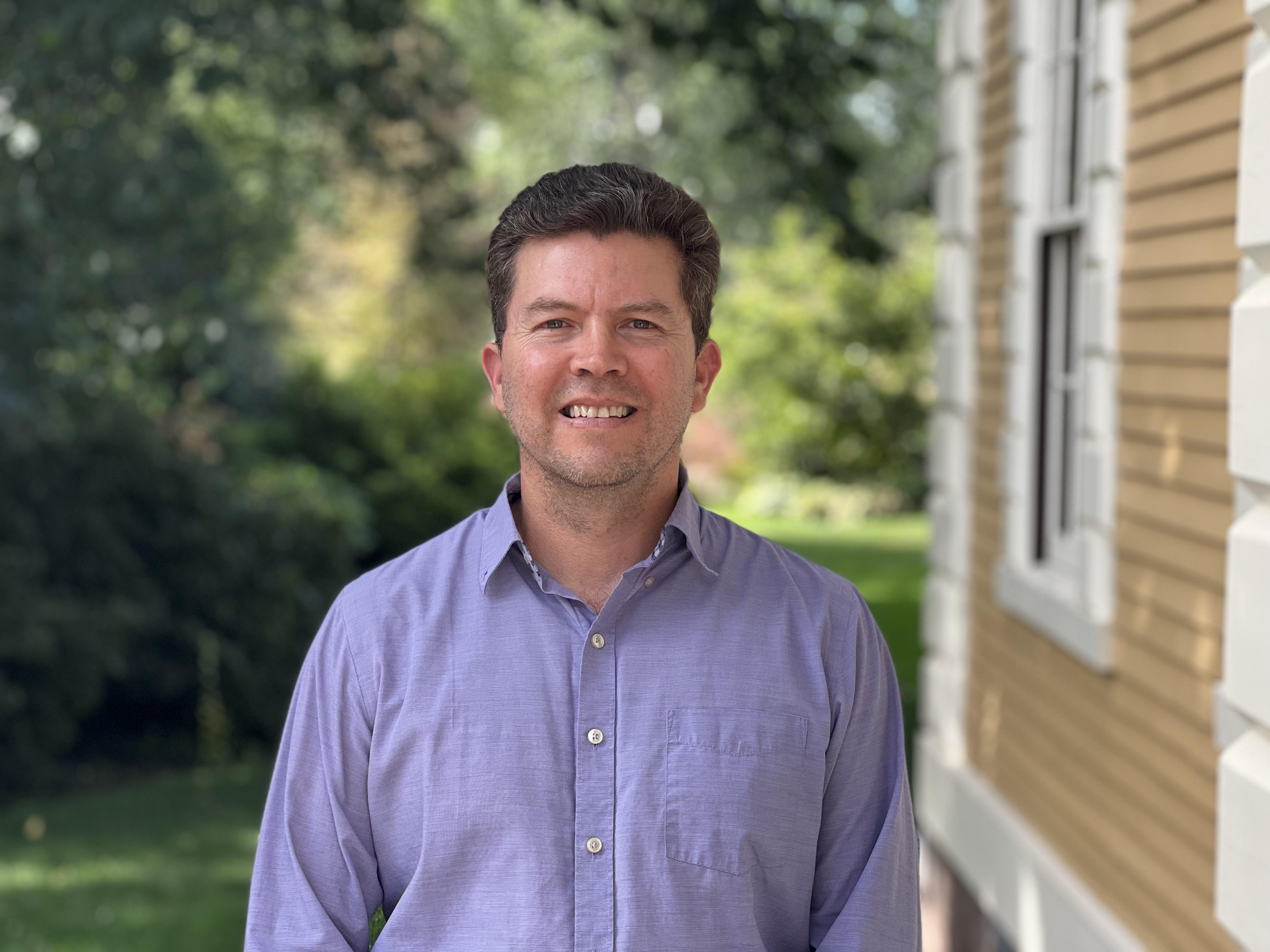
Johnny Guzmán is a Professor of Applied Mathematics at Brown University, specializing in numerical analysis of partial differential equations and scientific computing. He holds a Ph.D. in Applied Mathematics from Cornell University (2005) and a B.S. in Mathematics from California State University, Long Beach (1999). His research focuses on numerical methods for PDEs, including discontinuous Galerkin methods, mixed finite element methods, and fluid-structure interaction problems. Key contributions include work on hybridizable and mixed finite element methods, discontinuous Galerkin discretizations, and stability analysis of numerical schemes. He has been funded by multiple NSF grants, including a Postdoctoral Fellowship (2005–2008) and awards totaling over $1M in research support. Notable recognitions include the Comfort and Urry Family Fund Prize (2013). Guzmán collaborates with institutions globally and serves on editorial boards for journals like Journal of Numerical Mathematics and Calcolo . His teaching spans computational linear algebra, numerical methods for differential equations, and finite element analysis.
PD Dr. Christian Zillinger is a researcher at the Karlsruhe Institute of Technology (KIT), specifically within the Department of Mathematics. He leads the Junior Research Group "Stability and Instability in Fluids and Materials" (AP6) as part of the CRC 1173. His office is located at Kollegiengebäude Mathematik (20.30), room 2.024 in Karlsruhe, Germany. Dr. Zillinger obtained his PhD under the supervision of Herbert Koch at the University of Bonn. Following his doctorate, he served as an assistant professor (NTT) at the University of Southern California and was a postdoctoral fellow at BCAM (Basque Center for Applied Mathematics). He recently completed his habilitation thesis titled "On Mixing and Resonances in Fluid Systems" at KIT in 2023. Dr. Zillinger's research focuses on partial differential equations motivated by physical problems, particularly in fluid dynamics and material sciences. His work encompasses several key areas: Mixing as a (de)stabilizing mechanism in fluids and inviscid damping Cascades of resonances and instabilities in fluids and plasmas Convex integration and microstructures in materials, including rigidity and flexibility phenomena Magnetic fluids and magnetohydrodynamics Partial dissipation in the Boussinesq equations His recent publications demonstrate a strong focus on stability and instability phenomena in fluid systems, with particular attention to mathematical analysis of PDEs governing fluid behavior. He has made significant contributions to understanding echo chains, resonance phenomena, and damping mechanisms in various fluid models. His work bridges theoretical mathematics with applications in physics and materials science, often employing advanced analytical techniques to address challenging problems in nonlinear PDEs. Dr. Zillinger actively teaches courses at KIT, including "Klassische Methoden für partielle Differentialgleichungen" (Classical Methods for Partial Differential Equations), "Introduction to convex integration," "Introduction to Kinetic Equations," and seminars on microstructure in materials and fluid dynamics. He leads the Junior Research Group "Stability and Instability in Fluids and Materials" which is part of the Collaborative Research Centre (CRC) 1173 at KIT, focusing on wave phenomena. This research group investigates mathematical aspects of stability and instability in physical systems, with applications to fluid dynamics and material science.
Kai Xu is a Morrey Visiting Assistant Professor in the Mathematics department at the University of California, Berkeley, mentored by Richard Bamler. Appointed in 2025, he holds a PhD from Duke University supervised by Hubert Bray. His research addresses foundational problems at the intersection of differential geometry and analysis. His educational background includes: PhD in Mathematics, Duke University (2025), supervised by Hubert Bray Xu's research spans geometric analysis, calculus of variations, and metric geometry with concentrated focus on 3D scalar curvature geometry, weak inverse mean curvature flow, nonlinear potential theory (p-harmonic functions for $1 \leq p \leq \infty$), and spectral Ricci curvature bounds. His work systematically explores connections between curvature constraints, topological properties, and geometric flows through rigorous analytical methods. His publication record (2022-2025) reveals consistent advancement in scalar curvature theory, inverse mean curvature flow, and spectral Ricci geometry. Key contributions include spectral splitting theorems, drawstring constructions for scalar curvature constraints, and topological gap theorems for positive scalar curvature 3-manifolds. His collaborative work with leading mathematicians appears in journals including Duke Mathematical Journal and Calculus of Variations and Partial Differential Equations. No scientific awards are mentioned in the provided text. Teaching responsibilities include Math 104 in Fall 2025. Information regarding student advising and grant funding is not specified in available materials. No dedicated laboratory or research team structure is described in the source text.
Andrew M. Stuart is a Professor at the California Institute of Technology's Division of Engineering and Applied Science. His research bridges computational mathematics, machine learning, and physical modeling, focusing on inverse problems, partial differential equations, and multiscale systems. He has pioneered methodologies integrating Gaussian processes, Kalman inversion, and neural operators for scientific computing. His recent publications highlight innovations in competitive protein dimerization networks, nonlinear Bayesian inference, and operator learning. Articles span applications in materials science, geophysics, and biochemical signal processing, emphasizing data-driven discovery of differential equations and scalable algorithms for high-dimensional problems. Stuart's work addresses challenges in structural error modeling, uncertainty quantification, and graph-based learning, with implications for climate modeling and dynamical systems. Despite extensive contributions, the scraped data does not specify students, awards, or contact details.
John Evans is an Associate Professor and Jack Rominger Faculty Fellow in the Department of Aerospace Engineering Sciences at the University of Colorado Boulder, affiliated with the Applied Mathematics program. He serves as Associate Chair for Undergraduate Curriculum and is part of the Aerospace Mechanics Research Center (AMREC). His research focuses on computational mechanics, particularly fluid dynamics, fluid-structure interaction, and turbulence modeling using high-order and structure-preserving methods. Evans holds a PhD (2011) and MS (2008) in Computational and Applied Mathematics from the University of Texas at Austin, and dual BS/MS degrees in Mathematics and Applied Mathematics from Rensselaer Polytechnic Institute (2006). Before joining CU Boulder, he was a postdoctoral fellow at the Institute for Computational Engineering and Sciences (ICES). His research interests include isogeometric analysis, immersed methods, and data-driven turbulence modeling. Notable contributions include development of divergence-conforming discretizations for incompressible flows, stabilized collocation methods, and invariant subgrid stress models. He leads the AMREC lab and collaborates on plasma-fueled propulsion systems and geometrically sensitive simulations. Key Awards: 2021: Rocky Mountain AIAA Educator of the Year 2021: Gallagher Young Investigator Medal 2019-2021: Clarivate Highly Cited Researcher Professional Activities: Editor of Engineering Computations, Senior AIAA Member, Simons Visiting Professor (2019) Evans' work bridges advanced numerical methods with real-world engineering challenges. His lab develops open-source tools like XIGA for multi-material problems and focuses on immersive simulation environments. Current projects explore turbulence closure models, plasma propulsion, and topology optimization with B-spline-based approaches.
Peter K. Kitanidis is a Professor in the Department of Civil and Environmental Engineering and the Institute for Computational and Mathematical Engineering at Stanford University . His research focuses on groundwater flow , hydrologic forecasting , and stochastic inverse modeling , with applications to pollutant remediation and CO₂ storage monitoring . Education : Diploma, National Technical University of Athens (1974) M.S., MIT (1976) Ph.D., MIT (1978) Research Interests : Groundwater modeling and contaminant transport Hydraulic tomography and aquifer characterization Stochastic methods for uncertainty quantification Bioremediation and enhanced in-situ pollutant decay Dilution and mixing processes in heterogeneous media Real-time river flow forecasting Scientific Awards : L.G. Straub Award (1979) W.L. Huber Research Prize (1994) ISI Highly Cited Researcher (2001) AGU Hydrologic Sciences Award (2011) ASCE Pioneers in Groundwater Lecturer (2011) Advising and Grants : Advised 20+ PhD and MS students (1978–2018) Principal investigator on NSF, EPA, and DOE-funded projects Developed software for groundwater data analysis and CO₂ monitoring Contributed to bioremediation protocols and hydraulic tomography algorithms Labs and Teams : Kitanidis Laboratory for groundwater crisis solutions Collaborated with Oak Ridge National Laboratory and Stanford Hydrogeology Group Mentored postdocs (2000–2017) in reactive transport and inverse modeling
Dr. Jean-Christophe Nave is an Associate Professor in the Department of Mathematics and Statistics at McGill University, specializing in applied mathematics, numerical analysis, and computational methods. His research focuses on numerical methods for partial differential equations, fluid mechanics, interface problems, and computer graphics. He holds a PhD from UCSB (2004) and has held academic positions at MIT and McGill since 2005. Currently, he serves on committees such as the Steering Committee of the Institut des Sciences Mathematiques and the CRM Applied Mathematics Lab. His educational background includes a PhD under Professors Xu-Dong Liu and Sanjoy Banerjee. Key research areas include level set methods, fluid-structure interaction, and invariant numerical methods. Notable works include the Correction Function Method for interface problems and the Characteristic Mapping Method for advection problems. Nave’s publications span topics like Poisson equations with discontinuous coefficients, fluid dynamics simulations, and high-order numerical schemes. He has advised numerous graduate and undergraduate students, contributing to their research in applied mathematics and computational science. His work bridges theoretical rigor and practical applications in engineering and physics. He teaches advanced courses such as Numerical Analysis I/II and Computational Methods in Applied Mathematics. His research group collaborates on projects involving fluid dynamics, elasticity, and geometric algorithms, with a focus on developing robust numerical tools for complex systems.
Mohamed Amara is a full-time Professor at the University of Pau and the Pays de l'Adour (UPPA) since 1996, affiliated with the Laboratory of Mathematics and their Applications (CNRS-UMR 5142). He served as its director (1999-2007), Director of the Doctoral School of Exact Sciences (ED211, 2007-2008), and UPPA's Scientific Council Vice-President (2008-2012). He has been UPPA's President since 2012 (re-elected until 2020). Education: Mathematics from University of Algiers (1973), Pierre and Marie Curie University (DEA 1974, Doctorate 1978, State Doctorate 1983) Academic Roles: Research Associate at Ecole Polytechnique (1978-1982), Algerian Electricity and Gas Company (1983-1992), Professor in Algiers (1988-1994), Tunis (1994-1995), and Associate Professor at Paris 6 (1995-1996) His research focuses on numerical simulation of partial differential equations for environmental/energy applications, including mechanics in porous media (petroleum engineering, geoscience), fluid mechanics (aerodynamics, estuarine hydrodynamics), non-Newtonian flows, and wave propagation. Articles highlight expertise in discontinuous Galerkin methods, Helmholtz problems, finite element discretization, and multiphysics systems. He managed 20 doctoral theses and led national mathematics programs at ANR (2007-2011). He chairs the Cocktail association for higher education IT systems and collaborates with INRIA's Magique 3D team (since 2006).
Manuel Del Pino is Professor at the University of Bath's Department of Mathematical Sciences and Royal Society Professor specializing in nonlinear partial differential equations. His research focuses on singularity formation, geometric evolution equations, and asymptotic analysis in fluid dynamics and mathematical physics. His investigations encompass blow-up phenomena in heat equations, vortex dynamics in Euler flows, and minimal surface theory. Current projects examine infinite-time singularity formation in parabolic equations and asymptotic properties of vortex configurations. Del Pino has received the Royal Society Professorship and leads multiple grants including 'Asymptotic patterns in nonlinear evolution problems' (EPSRC). He maintains collaborations with researchers globally through projects on singularity formation in PDEs.
Maarten de Hoop is the Simons Chair and Professor of Computational and Applied Mathematics at Rice University, part of the George R. Brown School of Engineering. He holds visiting roles at MIT and the Chinese Academy of Sciences. His research spans seismic wave analysis, inverse problems, deep learning, and planetary seismology. He earned his Ph.D. in Technical Sciences from Delft University of Technology (1992), and earlier degrees from Utrecht University. Notable awards include the 1996 J. Clarence Karcher Award and 2001 Fellowship from the Institute of Physics. His work integrates computational mathematics with geophysics, focusing on extracting signal information from large datasets, developing novel inverse scattering methods, and applying deep learning to geoscience challenges. Recent studies include transformer models for in-context learning, semialgebraic neural networks, and seismic waveform foundation models like SeisLM. He leads the Geo-Mathematical Imaging Group, fostering interdisciplinary projects in planetary missions and data-driven discovery.
Howard Elman is a Professor in the Department of Computer Science at the University of Maryland, with affiliations to the Institute for Advanced Computer Studies (UMIACS) and as an Affiliate Professor in the Department of Mathematics. His research spans numerical analysis, computational fluid dynamics, and uncertainty quantification, focusing on iterative solvers for partial differential equations. Education: PhD in Computer Science, Yale University (1982); BA in Mathematics, Columbia University (1975); Stuyvesant High School (1971) Elman's research integrates Scientific Computing with Numerical Linear Algebra , Computational Fluid Dynamics , and Uncertainty Quantification . His work addresses Stochastic Galerkin Methods , Reduced-Order Modeling , and Low-Rank Approximations for PDEs with random data. Recent publications emphasize Surrogate Models and Deep Learning in Bayesian inverse problems. His scientific awards include SIAM Fellowship (2009) and roles as Associate Editor for journals like Mathematics of Computation and SIAM Journal on Scientific Computing . He served as SIAM Editor-in-Chief (1998-2004) and Vice President for Publications. Contact: helman@umd.edu | Office: 4210 Iribe Center | Courses: AMSC/CMSC 460 Computational Methods
Oscar P. Bruno is a Professor of Applied and Computational Mathematics at the California Institute of Technology (Caltech). He holds a Licenciado from the University of Buenos Aires (1982) and a Ph.D. in Mathematics from New York University's Courant Institute (1989). Since 1998, he has been a Professor at Caltech, previously serving as Associate Professor (1995–98) and Executive Officer for Applied Mathematics (1998–2000). His research focuses on developing high-performance numerical methods for solving partial differential equations (PDEs), addressing challenges in complex geometries, singularities, and high-frequency phenomena. Key contributions include the Fourier Continuation (FC) method and integral-equation techniques, enabling solutions to previously intractable PDE problems in science and engineering. Prof. Bruno's expertise spans computational electromagnetics, computational fluid dynamics (CFD), solid mechanics, and mathematical physics. His work integrates numerical analysis, multiphysics modeling, and computational science to solve real-world problems in geophysics, optics, and fluid dynamics. He has received numerous awards, including membership in the National Academy of Sciences of Argentina (2020), the Vannevar Bush National Security Science and Engineering Fellowship (2016), and SIAM Fellow (2013). Bruno serves on editorial boards for journals like SIAM Journal on Scientific Computing and SIAM Journal on Applied Mathematics, and participates in national science advisory roles. His teaching includes advanced courses on applied mathematics methods (ACM/IDS 101 ab), emphasizing theoretical foundations and numerical techniques for PDEs. His research group develops cutting-edge solvers with applications in shock dynamics, optical tomography, and geophysical fluid dynamics.
Peter Benner is a Professor and Director at the Max Planck Institute for Dynamics of Complex Technical Systems in Magdeburg, where he leads the Computational Methods in Systems and Control Theory group. He also holds an Honorarprofessor position for Mathematics at Otto-von-Guericke Universität Magdeburg since 2011. Benner has previously served as Managing Director of the Max Planck Institute during multiple periods (2013-2014, 2021-2022, and 2025-2026), demonstrating his leadership in the field. Benner's research focuses on Scientific Machine Learning, Numerical Linear and Multilinear Algebra, Model Order Reduction and Reduced-order Modeling, Numerical Methods in Systems and Control Theory, PDE Constrained Optimization, High-performance and Power-aware Computing, and Mathematical Software development. His work bridges theoretical mathematics with practical engineering applications, particularly addressing challenges in large-scale dynamical systems. Analysis of his recent publications reveals a strong emphasis on developing efficient computational methods for complex systems. Benner has pioneered approaches combining model order reduction with tensor methods to tackle high-dimensional problems in uncertainty quantification and PDE-constrained optimization. His work shows a consistent trend toward integrating data-driven techniques with traditional model-based approaches, particularly for nonlinear and parametric systems. Throughout his career, Benner has actively mentored students and collaborated with researchers worldwide, delivering numerous invited talks at prestigious institutions and conferences across Europe, North America, and Asia. His research has received significant funding, supporting the development of mathematical software and computational methods for industrial applications. Benner leads the Computational Methods in Systems and Control Theory department at the Max Planck Institute, which focuses on developing and implementing advanced numerical methods for large-scale dynamical systems. The group maintains strong connections with both theoretical mathematics and practical engineering applications, particularly in fluid dynamics, energy systems, and control theory.
Professor Ben Goldys is a distinguished academic at The University of Sydney's School of Mathematics and Statistics, where he conducts research at the intersection of pure mathematics and applied sciences. His work spans multiple disciplines including stochastic analysis, partial differential equations, and financial mathematics, with significant contributions to both theoretical frameworks and practical applications in science and finance. Goldys' research interests center on stochastic (ordinary and partial) differential equations and their applications. His specific focus areas include stochastic partial differential equations, stochastic geometric PDEs, stochastic boundary value problems, stochastic fluid dynamics, ergodic theory of infinite-dimensional diffusions, and applications in financial mathematics such as interest rate derivatives, credit risk, and stochastic volatility. His work bridges pure mathematical theory (Functional Analysis, PDEs, Ergodic Theory) with complex real-world problems across multiple domains. His research aligns with the University of Sydney Faculty of Science Research Strengths including Understanding the Universe, Fundamental Laws of Nature, Complex Systems, and Next Generation Materials. Professor Goldys has secured multiple significant research grants from the Australian Research Council, including recent projects such as 'Mathematics for future magnetic devices' (2024), 'Mathematics for breaking limits of speed and density in magnetic memories' (2019), and 'Novel Approaches for Problems with Uncertainties' (2015). His current research projects focus on geometric stochastic partial differential equations and applications in micromagnetism, mean field games in finance, stochastic boundary value problems, and stochastic Navier-Stokes equations on the rotating sphere. He maintains extensive international collaborations with institutions in Germany (University of Tuebingen), Italy (LUISS University), Poland (Institute of Mathematics Polish Academy of Sciences), and the United Kingdom (University of York), working on projects involving optimal control, stochastic systems with memory, and geometric stochastic PDEs. Goldys is an active member of the Applied Mathematics Research Group and The University of Sydney Nano Institute, contributing to interdisciplinary research initiatives that connect mathematical theory with cutting-edge technological applications.
Prof. Dr. Michael Ulbrich is a full professor and Chair of Mathematical Optimization at the Technical University of Munich (TUM), within the School of Computation, Information and Technology. He has held this position since 2006 and previously served as Dean of Studies (2007–2010) and Vice Dean of the Faculty of Mathematics (2012–2015). His research focuses on nonlinear optimization, optimal control, and numerical analysis, with applications in fluid dynamics, shape optimization, and PDE-constrained systems. He leads projects in the DFG SPP 1962 and IGDK 1754, and has received prestigious awards including the Howard Rosenbrock Prize (2015) and the Doctoral Award from the TUM Association of Friends (1996). Ulbrich is Editor-in-Chief of Optimization and Engineering and contributes to multiple journals. His work bridges theoretical foundations and practical applications, including CO2 sequestration, fluid-structure interaction, and distributed optimization algorithms. Education: PhD (1996), Habilitation (2002) in Mathematics at TUM. Research stays at Rice University (USA) under DFG funding. Research Areas: Semismooth Newton methods, PDE-constrained optimization, optimal control of Navier-Stokes equations, and distributed parameter systems. Awards: Rosenbrock Prize, Teaching Excellence Awards, and recognition for doctoral work. Leadership Roles: Department Head of Mathematics (2022–), Member of TUM Senate (2019–2022), and Co-Chair of GAMM 2018. Ulbrich has authored influential textbooks like Semismooth Newton Methods for Variational Inequalities and Nichtlineare Optimierung . His recent projects include OptiGeoS (2024–2026) and collaborations on nonsmooth optimization and stochastic algorithms. His academic contributions span over 100 publications, emphasizing both algorithmic innovation and rigorous mathematical analysis.