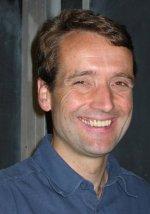
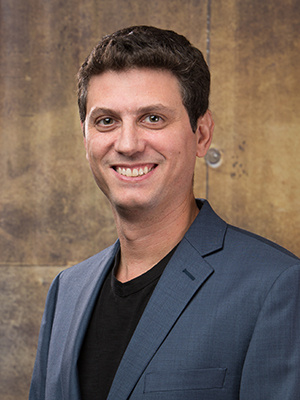
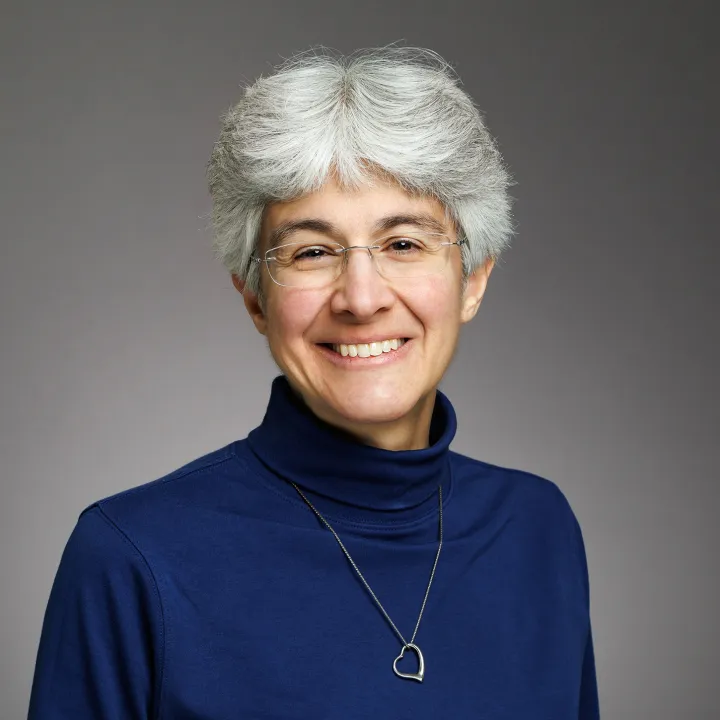
Ankush Agarwal is an Associate Professor in the Department of Statistical and Actuarial Sciences at the University of Western Ontario. His research focuses on mathematical finance, financial statistics, and Monte Carlo methods, with applications to risk management and derivatives pricing. He supervises PhD students in quantitative finance and has taught courses on Monte Carlo methods and advanced financial modeling at Western University. Education: PhD in Mathematics from Tata Institute of Fundamental Research (2015) Research interests span regime-switching models, longevity risk hedging, stochastic differential equations, and rare event simulation. His work combines theoretical probability with computational techniques for financial applications. Recent publications include studies on McKean-Vlasov SDEs, implied Sharpe ratio estimation, and optimal portfolio strategies under stochastic volatility. These works demonstrate his expertise in stochastic processes and financial engineering. Supervision: Current PhD advisees include Ying Liao, Buchun Wang, and Shuya Zhang at the University of Glasgow. Former advisees include Yongjie Wang and Yihan Zou.
Susanne Ditlevsen is a Professor at the Department of Mathematical Sciences , University of Copenhagen. Her research focuses on statistical inference for stochastic processes , mathematical modeling of physiological systems , nonlinear dynamics , neuroscience , and biomathematics . Research : She develops statistical methods for diffusion processes, hidden Markov models, and stochastic differential equations, with applications in biomedical data and marine mammal behavior. Teaching : Covers basic statistics, probability, stochastic processes, regression, and generalized linear models. Publications highlight her work on climate tipping points (2023, Nature Communications ), nonlinear neuronal systems (2017), and statistical ecology (2020). Her collaborations span Denmark, France, and international institutions.
Professor Matthew Simpson is a leading figure in applied mathematics at the School of Mathematical Sciences, Faculty of Science, Queensland University of Technology (QUT). He holds the position of Professor of Applied Mathematics and is an Australian Research Council (ARC) Future Fellow, reflecting his sustained research excellence. His work bridges mathematical theory and biological applications, particularly in cell migration, tissue invasion, and multiscale modeling. BE (Environmental) Honours 1, University of Newcastle (1995–1998) PhD (with Distinction), Environmental Engineering, University of Western Australia (2000–2003) Research Fellow, Department of Mathematics and Statistics, University of Melbourne (2003–2006) ARC Postdoctoral Fellow, University of Melbourne (2006–2009) Lecturer (2010–2011) and Senior Lecturer (2011–2013), QUT Associate Professor (2013–2014), QUT Professor and ARC Future Fellow (2014–present), QUT Matthew Simpson’s research focuses on mathematical and computational modeling of biological systems , particularly collective cell motion, diffusion processes, and reaction-diffusion dynamics. His interests span multiscale modeling , random walk processes , cell biology , and numerical and computational mathematics . He develops and analyzes models to understand phenomena such as wound healing, cancer progression, and tissue engineering. His recent publications (2023–2025) demonstrate a strong trend toward integrating data-driven modeling , likelihood-based inference , and equation learning with traditional mechanistic models. These works emphasize parameter identifiability , uncertainty quantification , and prediction robustness in biological contexts. Themes include sharp-fronted wave propagation, mechanical cell interactions, tumor spheroid formation, and generalized diffusivity in food drying, showcasing the breadth and depth of his modeling expertise. Among his key accolades are: J.H. Michell Medal (2012) – Awarded by ANZIAM for distinguished research by an early-career applied mathematician in Australia and New Zealand. ARC Future Fellowship (2013–2017) – For the project 'New data-driven mathematical models of collective cell motion' (FT130100148). Professor Simpson has also played significant editorial and leadership roles, including: Executive Associate Editor, Journal of Engineering Mathematics Academic Editor, PLoS ONE Editorial Board Member, ANZIAM Journal Co-chair of the 2015 ANZIAM meeting He has supervised PhD students on topics such as moving boundary problems, first-passage times, stochastic simulations, and curvature-dependent growth in biological systems. His research projects have been funded by competitive Australian grants (ARC DP and FT schemes), including studies on 3D cell migration, ghrelin’s role in cell invasion, and epithelial-to-mesenchymal transition in cancer and wound healing. He is actively involved in developing computational tools for biological modeling and promoting best practices in scientific publishing.
Alain Durmus is a Professor at École Polytechnique, affiliated with the applied mathematics department (CMAP). His research focuses on computational statistics, machine learning, and stochastic methods, including Monte Carlo algorithms, Bayesian inference, and optimization. He explores topics such as Markov chain Monte Carlo (MCMC), stochastic approximation, and generative models. His work emphasizes theoretical guarantees for algorithms like Langevin Monte Carlo and Hamiltonian Monte Carlo, with applications to high-dimensional Bayesian inference and inverse problems. Key contributions include hypocoercivity analysis of piecewise deterministic MCMC processes, convergence guarantees for stochastic gradient methods, and the development of efficient sampling techniques. He has also contributed to Bayesian imaging and federated learning through works like the QLSD algorithm. Awarded the Best Student Paper Award at ICASSP 2020 for his work on the Sliced-Wasserstein distance. His teaching spans mathematical statistics, stochastic methods, and probability at École Polytechnique and ENS Paris-Saclay. He has also contributed to conferences and workshops on topics ranging from MCMC convergence to optimization in machine learning.
Jean-Luc Thiffeault is a Professor of Applied Mathematics at the University of Wisconsin-Madison, serving as Chair of the Department of Mathematics. His research spans applied mathematics, fluid dynamics, and topological chaos, with a focus on mixing mechanisms in viscous flows, biogenic mixing by microorganisms, and computational modeling. Key research themes include: Topology-driven fluid mixing via braid theory; Chaotic advection in low-Reynolds environments; Microswimmer interactions with boundaries and waves; Development of numerical tools for dynamical systems analysis. He has authored significant software packages like braidlab (braid analysis), rodent (ODE integration), and jlt lib (utility functions for scientific computing). Collaborative projects include studies on hagfish slime unraveling, burger flipping dynamics, and Brownian particle winding around vortices. His work is supported by NSF grants DMS-0806821 and CMMI-1233935, emphasizing interdisciplinary approaches combining mathematics, physics, and computational methods.
Rupert Klein is a Professor at Freie Universität Berlin in the Department of Mathematics and Computer Science , specializing in Geophysical Fluid Dynamics . His research spans atmospheric dynamics, numerical methods, and gas dynamics of combustion. Research Interests : Geophysical Fluid Dynamics and Atmospheric Modeling Multiscale Asymptotic Analysis Wave Propagation and Turbulence Combustion and Pressure Gain Combustion Climate Dynamics and Data Assimilation Scientific Awards : DRS Award for Excellent Supervision (2014) ECMWF Fellowship (renewed 2017) His recent work includes multiscale models for atmospheric flows, vortex dynamics, and combustion processes. Key collaborations involve DFG SPP 1276, CRC 1029 (TurbIn), and CRC 1114 (SCCS) projects. He contributes to numerical methods for low-Mach-number flows and geophysical simulations.
Dr. Fengyan Li is a Professor in the Department of Mathematical Sciences at Rensselaer Polytechnic Institute (RPI). She holds a PhD in Applied Mathematics from Brown University (2004) and previously held a postdoc at the University of South Carolina. Her research focuses on numerical analysis and scientific computing, particularly discontinuous Galerkin methods for applications in wave propagation, fluid dynamics, plasma physics, and nonlinear optics. She has received prestigious awards including the NSF-CAREER Award (2009) and Alfred P. Sloan Fellowship (2008). Dr. Li serves on editorial boards of journals like SIAM Journal of Numerical Analysis and IMA Journal of Numerical Analysis. Education: PhD in Applied Mathematics (Brown University, 2004); MS & BS in Computational Mathematics (Peking University, 2000 & 1997). Research interests emphasize multi-scale simulations, reduced-order modeling, and high-order methods. Her work addresses challenges in kinetic transport, nonlinear optics, and plasma dynamics. She has delivered plenary talks at major conferences, including ICOSAHOM (2018) and NAHOMCon (2022). Professional service includes leadership roles in the Association for Women in Mathematics (AWM), co-organizing symposiums, and mentoring. She is a 2025 AWM Fellow and advises RPI's AWM Student Chapter.
Mauro Maggioni is a Professor in the Departments of Mathematics and Applied Mathematics and Statistics at Johns Hopkins University. His research focuses on the mathematical foundations of Data Science, with applications in molecular dynamics, hyperspectral imaging, and reinforcement learning. He employs techniques from Harmonic Analysis, Approximation Theory, and Probability to develop scalable algorithms, particularly multiscale methods for analyzing high-dimensional data. Maggioni’s work bridges theoretical mathematics and practical applications, including cardiac electrophysiology modeling, unsupervised segmentation of hyperspectral images, and reduced-order modeling of complex systems. Education: B.S. in Mathematics from Università degli Studi in Milan, Italy; Ph.D. in Mathematics from Washington University in St. Louis. He held a Gibbs Assistant Professorship at Yale before moving to Duke University and later becoming a Bloomberg Distinguished Professor at JHU. Research Interests: Mathematical foundations of Data Science, Machine Learning, Partial Differential Equations, and their applications in physical and biological systems. Notable contributions include diffusion wavelets, interaction kernel learning, and multiscale geometric analysis of molecular dynamics data. Scientific Awards: Popov Prize in Approximation Theory (2007), NSF CAREER Award and Sloan Fellowship (2008), Fellow of the American Mathematical Society (2013), Simons Fellowship (2020). Advising & Grants: Maggioni mentors postdocs and students in areas like stochastic systems and signal processing. His group’s work is supported by Simons Foundation grants, NSF funding, and collaborations with institutions like MINDS and CIS at JHU. Labs/Teams: Leads a research group focused on data-driven discovery in mathematics and applied sciences, emphasizing interdisciplinary collaboration across computational methods, statistics, and domain-specific applications.
Diego Donzis is a Professor in the Department of Aerospace Engineering at Texas A&M University, affiliated with the College of Engineering. He holds the Presidential Impact Fellow title. His work focuses on high-performance computing for fluid dynamics, particularly compressible turbulence, turbulent mixing, and shock-turbulence interactions. Donzis earned his Ph.D. and M.S. in Aerospace Engineering from the Georgia Institute of Technology. Research interests include large-scale simulations of turbulent flows, thermal boundary condition effects on turbulence, and the development of advanced numerical methods like Selected-Eddy Simulations (SES) for extreme-scale computing. His studies explore universality in turbulence scaling, energy spectra dynamics, and the interplay between compressibility and fluid mixing. Publications emphasize turbulence decay laws, shock-turbulence interactions, and the role of thermal non-equilibrium in turbulent flows. Notable contributions include advancing asynchronous algorithms for exascale CFD and analyzing density gradient statistics in compressible turbulence. Awards include the Presidential Impact Fellow distinction. Donzis collaborates on grants such as the Frontera Travel Grant for compressible turbulence research. His work bridges computational methods with fundamental fluid dynamics, addressing challenges in both numerical accuracy and physical modeling.
Beth Anne Bennett is a Senior Lecturer in the Department of Mechanical Engineering at Yale University. Her research focuses on computational methods for solving complex fluid dynamics and combustion problems, particularly involving adaptive grid refinement techniques for nonlinear PDEs. She holds a Ph.D. from Yale University, where her doctoral work centered on developing efficient numerical algorithms for multidimensional combustion phenomena. Her research interests include laminar combustion, fluid dynamics, heat transfer, and solidification processes. She has pioneered solution-adaptive gridding techniques like Local Rectangular Refinement (LRR) for both nonreacting and reacting flows, with applications to steady and unsteady multidimensional systems. Bennett has been recognized with the National Science Foundation ADVANCE Fellows Award (2002-2006). Her publications span computational studies of ethanol/dimethyl ether blending effects in flames, oxygen-enhanced methane flames, and axisymmetric coflow flames. She actively contributes to professional societies including The Combustion Institute, ASME, SIAM, ASEE, and SWE. Her work integrates computational innovation with experimental validation, addressing challenges in parallelization, sparse matrix treatments, and algorithm optimization for convection-diffusion problems. Bennett's research bridges fundamental numerical methods and applied combustion engineering, advancing both theoretical frameworks and practical applications in energy systems.
George Haller is a Professor at the Department of Mechanical and Process Engineering at ETH Zurich . He leads the Institute of Mechanical Systems and holds the Chair in Nonlinear Dynamics . His research focuses on: Nonlinear dynamical systems theory Data-driven model reduction Spectral submanifolds (SSMs) Coherent structure identification in fluids and solids Control of complex nonlinear systems His recent work emphasizes equation- and data-driven modeling across solids, fluids, and control systems . Key contributions include: SSMTool - a MATLAB package for nonlinear model reduction SSMLearn - open-source software for data-driven modeling Transport barrier detection algorithms with oceanographic applications Scientific accolades include: 2025 Lyapunov Award (ASME) 2023 Stanley Corrsin Award (APS) Fellowships: ASME, APS, SIAM External Member, Hungarian Academy of Sciences His group has trained notable alumni: Thomas Breunung (Assistant Professor, University of Wisconsin-Madison) Shobhit Jain (Assistant Professor, Delft University of Technology) Mattia Serra (Assistant Professor, UCSD) Publications span Nonlinear Dynamics, Nature Communications , and Physical Review Fluids , with a 2025 book Modeling Nonlinear Dynamics for Equations and Data (SIAM Press). Current projects include: Reduced-order modeling of fluid-structure interactions Control of soft robots via nonlinear dynamics Identifying material barriers in turbulence
Wouter Bos is a Research Director at CNRS working at the Laboratory of Fluid Mechanics and Acoustics (LMFA) at École Centrale de Lyon, France. He leads research within the Turbulence & Instabilities team, focusing on fundamental aspects of fluid dynamics with applications spanning from plasma physics to epidemiology. His academic journey reflects a deep engagement with theoretical and computational fluid mechanics, particularly in turbulence phenomena. Dr. Bos's research interests center on fluid dynamics, with particular emphasis on turbulence in various contexts including two-dimensional flows, magnetohydrodynamics, plasma physics, and statistical mechanics of fluids. His work explores fundamental questions about energy transfer, coherent structures, and statistical properties of turbulent flows. He has made significant contributions to understanding turbulence without vortex stretching, two-dimensional turbulence, and the application of fluid dynamics principles to epidemiological modeling. Analysis of his recent publications reveals a strong focus on theoretical and computational approaches to turbulence. His work spans from fundamental questions about equilibrium states in two-dimensional turbulence to practical applications in plasma confinement and epidemic modeling. The publications demonstrate consistent innovation in turbulence theory, with particular attention to statistical mechanics approaches, spectral analysis, and the development of reduced-order models for complex fluid phenomena. His research shows growing interdisciplinary connections, especially between fluid dynamics and epidemiology as evidenced by his work on modeling the spread of infectious diseases. Dr. Bos actively supervises doctoral students and postdoctoral researchers, with recent students including Tong Wu, Ryo Araki, Smiron Varghese, Wesley Agoua, and Bruce (Xi Yuan) Yin. He participates in collaborative research projects such as the ANR CM2E project (2021-2025) on Characteristic Mapping Method for the Euler Equations, working with researchers from Aix-Marseille University and McGill University. His laboratory work involves both theoretical analysis and computational simulations, with applications ranging from fundamental fluid mechanics to practical problems in energy research (particularly related to ITER and fusion plasma physics) and public health. The interdisciplinary nature of his research demonstrates the broad applicability of fluid dynamics principles across seemingly disparate scientific domains.
Indranil Chowdhury is an Assistant Professor in the Department of Mathematics and Statistics at the Indian Institute of Technology Kanpur. He holds a Ph.D. from Tata Institute of Fundamental Research, Centre for Applicable Mathematics in Bengaluru (2017) and has previously served as a Postdoctoral Researcher at University of Zagreb, Croatia (2020-2022) and Norwegian University of Science and Technology, Trondheim, Norway (2018-2020). Ph.D: Tata Institute of Fundamental Research, Centre for Applicable Mathematics, Bengaluru, India (2017) PG: Tata Institute of Fundamental Research, Centre for Applicable Mathematics, Bengaluru, India (2012) UG: St. Xavier's College, Kolkata, India (2010) Dr. Chowdhury's research focuses on the theory and numerical analysis of partial differential equations, with particular expertise in nonlocal and fractional order problems and fully nonlinear equations. His work bridges theoretical mathematics with practical applications in areas such as mean field games, optimal control, and mathematical modeling. His research program demonstrates a consistent trajectory of advancing the mathematical understanding of complex nonlocal phenomena through rigorous analytical techniques and innovative numerical methods. His publication record reveals a strong focus on fractional calculus, nonlocal diffusion processes, and mean field games. The research shows progression from foundational work on fractional Poincaré inequalities to increasingly sophisticated studies of fully nonlinear mean field games with both local and nonlocal diffusions. His recent work (2023-2025) demonstrates continued innovation in the field, particularly in addressing strongly degenerate cases and establishing precise error bounds for numerical approximations. Dr. Chowdhury maintains an active research program with consistent publication output in high-impact journals such as Foundations of Computational Mathematics, SIAM Journal on Numerical Analysis, and Discrete and Continuous Dynamical Systems. His collaborative work with researchers across international institutions reflects the global significance of his contributions to the field of nonlocal partial differential equations.
Katya Krupchyk is a Professor in the Department of Mathematics at the University of California, Irvine (UCI). Her research focuses on inverse problems, partial differential equations (PDEs), microlocal analysis, and spectral theory. She holds a position in the Analysis and Partial Differential Equations group at UCI. Her work often involves collaborations with leading institutions and researchers globally, addressing challenges in mathematical physics, geometric inverse problems, and nonlinear analysis. Dr. Krupchyk teaches advanced courses in real analysis, functional analysis, and partial differential equations. She has contributed to editorial boards for journals such as Journal of Spectral Theory , SIAM Journal on Mathematical Analysis , and Inverse Problems and Imaging . Her research spans theoretical and applied aspects of inverse problems, including studies on fractional operators, magnetic Schrödinger equations, and anisotropic media. Recent work emphasizes high-frequency analysis, nonlinear perturbations, and reconstruction algorithms for geometric inverse problems.
Dr. Giang Tran is an Associate Professor in the Department of Applied Mathematics at the University of Waterloo, where she leads research in sparse modeling and computational mathematics. She holds a PhD from UCLA and previously served as a Bing Instructor at the University of Texas at Austin. Her research explores sparse optimization techniques with applications in medical imaging, dynamical systems, and data science. Recent publications focus on developing novel algorithms for sparse random feature expansions and dynamical system identification. She mentors numerous graduate and undergraduate researchers through projects on neural networks, transformers, and epidemic forecasting. Awards include the NSERC Discovery Grant and SIAM Student Paper Prize. Dr. Tran teaches advanced courses in numerical methods and functional analysis, contributing to curriculum development in computational mathematics.