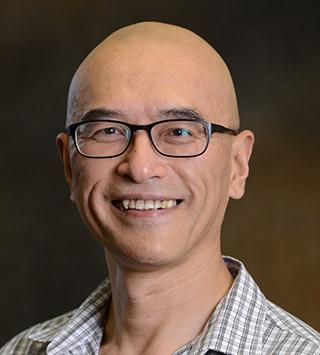
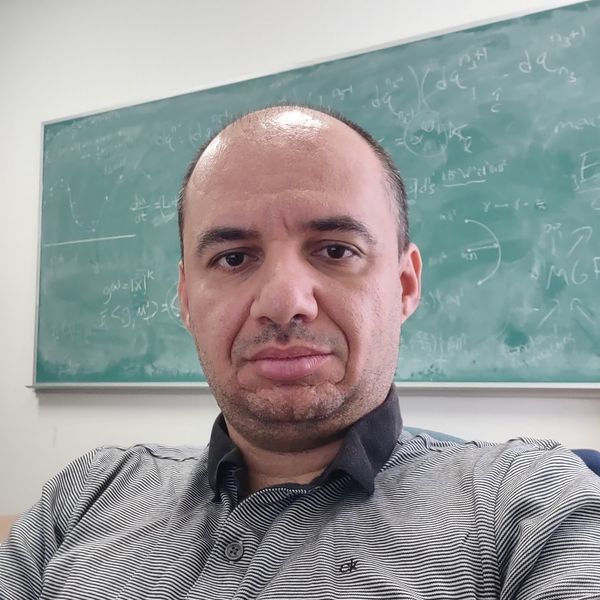
Chun Liu is Chair and Professor of Applied Mathematics at the Department of Applied Mathematics, Illinois Institute of Technology (IIT), within the College of Computing. His research focuses on Nonlinear Partial Differential Equations , Complex Fluids , and Multiscale Modeling , with applications in electrophysiology and materials science. He earned a Ph.D. from New York University’s Courant Institute, an M.S. from Duke University, and a B.S. from Fudan University. Prof. Liu leads projects on General Diffusion Systems , Ion Channel Dynamics , and Viscoelastic Fluids . He has secured grants from NSF, BSF, and DAAD for research in energetic variational approaches, multiscale materials modeling, and biomolecular systems. Key contributions include the development of Poisson-Boltzmann models , coarse-grained dynamics , and energetically stable numerical methods . He serves on editorial boards for Communications in Mathematical Sciences , SIAM Journal on Mathematical Analysis , and others. His work bridges applied mathematics with engineering and biophysics, addressing challenges in fluid mechanics, ion transport, and nonlinear systems.
Richard Nickl is a Professor of Mathematical Statistics at the University of Cambridge, affiliated with the Department of Pure Mathematics and Mathematical Statistics (DPMMS) and the Statistical Laboratory. His research focuses on high-dimensional inference, Bayesian nonparametrics, statistics for partial differential equations, and inverse problems. He has held significant grants, including an ERC Advanced Grant (2024–2029) and an EPSRC Programme Grant (2022–2027). His work bridges statistics, probability, and analysis, with contributions to theoretical foundations and computational methods in non-linear inverse problems. Key research interests include Bayesian posterior consistency, statistical inference for diffusions, and polynomial-time algorithms for high-dimensional posteriors. Notable publications include foundational monographs such as Mathematical foundations of infinite-dimensional statistical models (2016), which earned a PROSE Award, and recent advancements in Bayesian nonparametric inference for McKean-Vlasov models (2025). His group organizes workshops, such as the 2024 Statistical Aspects of Non-Linear Inverse Problems conference. Awards: 2017 PROSE Award in Mathematics. Grants: ERC Advanced Grant, EPSRC Programme Grant. Lab/Team: Research Group in Mathematical Statistics at DPMMS, focusing on inverse problems and Bayesian methodology.
Lenya Ryzhik is a Professor in the Department of Mathematics at Stanford University, specializing in analysis and partial differential equations with applications in various physical contexts. His research spans stochastic processes, wave propagation, and front dynamics in random media, with significant contributions to understanding reaction-diffusion systems and their applications in mathematical biology and physics. Professor Ryzhik's research interests focus on the mathematical analysis of partial differential equations arising in physical systems. His work particularly emphasizes stochastic PDEs, wave propagation in random media, front propagation in reaction-diffusion systems, and homogenization theory. He investigates how randomness and complex structures affect wave propagation, front speeds, and transport phenomena, with applications ranging from combustion theory to population dynamics and quantum mechanics. The publication record demonstrates a consistent focus on understanding propagation phenomena in complex environments. Ryzhik's research shows a progression from classical PDE analysis toward increasingly sophisticated stochastic frameworks, particularly examining high-dimensional systems and random media. His recent work has focused on KPZ fluctuations, random heat equations, and non-local reaction-diffusion models, revealing deep connections between probability theory and partial differential equations. Alfred P. Sloan Research Fellowship (2002-2004) AFOSR NSSEFF Fellowship (2010-2015) Ryzhik has advised graduate students including Alexandra Stavrianidi, and has secured substantial research funding throughout his career. His grant history includes multiple NSF awards (DMS-9971742, DMS-0203537, DMS-0604687, DMS-0908507, DMS-1311903), ONR funding (N00014-02-1-0089, N00014-04-1-0224), and FRG support for collaborative research on nonlinear evolution problems. He co-organized a Summer School and Workshop on 'Recent Advances in PDEs and Fluids' at Stanford in 2013. Ryzhik maintains an active research group collaborating with leading mathematicians worldwide, particularly with researchers at institutions like NYU, Chicago, and various European universities. His work frequently involves interdisciplinary collaborations bridging mathematics with physics and biology.
Alex Dunlap is an Assistant Professor in the Department of Mathematics at Duke University. His research focuses on probability theory, partial differential equations (PDEs), and applied mathematics, particularly the asymptotic behavior of stochastic PDEs. Before joining Duke in 2023, he was an NSF postdoctoral fellow at NYU Courant, sponsored by Jean-Christophe Mourrat and Yuri Bakhtin. He earned his Ph.D. from Stanford University in 2020 under the supervision of Lenya Ryzhik. His work involves studying nonlinear stochastic PDEs such as the KPZ equation, stochastic Burgers equation, and stochastic heat equations. He is particularly interested in universality phenomena, fluctuation scaling, and invariant measures. Dunlap co-organizes the Duke Probability Seminar and has published extensively in top journals including Annals of Probability , Communications on Pure and Applied Mathematics , and Archive for Rational Mechanics and Analysis . His research is supported by NSF grant DMS-2346915. Notable contributions include work on viscous shock fluctuations, Edwards-Wilkinson universality in 2D systems, and stationary solutions of stochastic Burgers equations. He has collaborated with leading researchers such as Cole Graham, Yu Gu, and Lenya Ryzhik.
Prof. Dr. Martin Burger is a leading scientist at DESY and a Full Professor in the Department of Mathematics at Universität Hamburg, where he leads the Computational Imaging Group. His research bridges applied mathematics, imaging sciences, and machine learning, with a focus on inverse problems, mathematical modeling, and partial differential equations. He has held professorial positions at Universität Münster and FAU Erlangen-Nürnberg prior to his current dual appointment. Full Professor, Universität Hamburg (2023–present) Leading Scientist, DESY, Hamburg (2023–present) Full Professor, FAU Erlangen-Nürnberg (2018–2023) Full Professor, Universität Münster (2006–2018) His research interests include inverse problems, variational regularization, optimal transport, kinetic models, and mathematical modeling in biology and social sciences. He has made significant contributions to imaging reconstruction, sparse neural networks, and the analysis of transformer architectures. His work often integrates theoretical analysis with computational methods, influencing both pure and applied mathematics. The most recent articles reflect a strong trend toward interdisciplinary applications, combining deep learning with PDE-based modeling, analyzing social and biological systems via kinetic and mean-field models, and advancing mathematical imaging through graph-based and optimal transport methods. His publications span high-impact venues in applied mathematics and computational science. Calderon Prize, Inverse Problems International Association (IPIA) ERC Consolidator Grant (2014) Invited speaker at ECM (2021), ICM (2022), and ICIAM (2023) Editor-in-Chief, European Journal of Applied Mathematics (since 2017) Prof. Burger has supervised numerous PhD students and postdoctoral researchers, many of whom appear as co-authors in his publications. His research is supported by major grants, including funding from the German Federal Ministry of Education and Research (BMBF). He is actively involved in collaborative projects across mathematics, physics, and engineering disciplines. He leads the Computational Imaging Group at DESY, fostering a collaborative environment for developing novel mathematical tools in imaging science. The group works on both theoretical foundations and practical implementations, contributing to advancements in tomography, machine learning, and data analysis.
Professor Paul C. Bressloff holds the Chair in Applied Mathematics and Stochastic Processes at Imperial College London's Department of Mathematics within the Faculty of Natural Sciences. His research focuses on stochastic and non-equilibrium processes, particularly in molecular and cell biology, utilizing tools from probability theory, statistical physics, and dynamical systems. He authored a seminal textbook Stochastic Processes in Cell Biology (Springer), with a 2nd edition published in 2022. Previously, he led the graduate program in mathematical biology at the University of Utah from 2001 to 2023. Research interests include stochastic multi-particle systems, active particles, phase separation, and diffusion across semi-permeable interfaces. His work spans applications in neural field theory, cytoneme-mediated morphogenesis, and protein trafficking. He is affiliated with the Biomathematics Group and Mathematical Physics Group at Imperial. Recent articles explore stochastic resetting in search processes, narrow-capture problems, and hybrid models of switching diffusions. His advising includes over 20 graduate students, many now faculty in mathematical biology. His contributions bridge applied mathematics and biological systems, emphasizing interdisciplinary approaches to complex stochastic phenomena.
Prof. Rama Cont is a Statutory Professor of Mathematics at the University of Oxford and a Professorial Fellow at St Hugh's College . He serves as Director of the Centre for Doctoral Training in Mathematics of Random Systems , Faculty Member of the Stochastic Analysis Group , and Senior Research Fellow at the Institute for New Economic Thinking . Additional roles include Director of the Oxford Martin Programme on Systemic Resilience , Principal Investigator at the Oxford Suzhou Centre for Advanced Research , and Editor-in-Chief of Mathematical Finance . His research interests span pathwise methods in stochastic analysis, rough analysis, functional Ito calculus, mathematical modeling in finance, systemic risk, and data-driven decision systems. Recent publications focus on causal transport, rough volatility, and deep residual networks, reflecting his interdisciplinary approach to mathematics and finance. Functional Ito calculus and pathwise integration Rough volatility and financial market dynamics Systemic risk in financial networks Deep learning applications to finance and stochastic processes He has received prestigious awards including the Louis Bachelier Prize , SIAM Fellowship, Royal Society APEX Award, and IMA Fellowship. His editorial roles and seminar leadership underscore his influence in mathematical finance and stochastic analysis.
Bjorn Sandstede is the Alumni-Alumnae University Professor of Applied Mathematics at Brown University. His research focuses on applied dynamical systems, nonlinear waves, pattern formation, and computational biology. He holds a PhD from the University of Stuttgart and has held faculty positions at The Ohio State University and the University of Surrey before joining Brown in 2008. Sandstede has received numerous awards, including the SIAM J.D. Crawford Prize and the Royal Society Wolfson Research Merit Award. He served as Department Chair at Brown and directed the Data Science Initiative. His work involves interdisciplinary collaborations, such as modeling zebrafish stripe formation and developing computational tools like SCOT for single-cell data integration. Sandstede also mentors extensively, advising over 30 PhD students and postdoctoral researchers. He leads the NSF-funded Institute for Computational and Experimental Research in Mathematics (ICERM) and contributes to initiatives promoting diversity and inclusion in STEM. Education: PhD in Mathematics, University of Stuttgart Undergraduate Degree, University of Heidelberg Research Interests: Applied Dynamical Systems Nonlinear Waves and Pattern Formation Computational Biology Data Science PDE Analysis Awards and Recognition: Alfred P. Sloan Research Fellowship SIAM J.D. Crawford Prize Royal Society Wolfson Research Merit Award Elsevier Jack Hale Award Teaching Excellence Awards from Brown University Fellow of the AMS and SIAM Grants and Leadership: Principal Investigator of NSF grant establishing ICERM Director of Brown's Data Science Initiative Member of Research Advisory Board and Tenure Committees Labs and Teams: Leads the Sandstede Lab at Brown, focusing on computational biology and dynamical systems. Collaborates with the Volkening Lab on zebrafish pattern modeling and the Singh Lab on optimal transport methods.
Prof. Andrea Mondino is a Professor at the University of Oxford 's Mathematical Institute , where he conducts research at the intersection of Analysis and Geometry with applications to Physics , Biology , and Economics . His work leverages techniques such as optimal transport , partial differential equations , and calculus of variations . His recent publications focus on synthetic Ricci curvature bounds , Lorentzian geometry , and RCD spaces , reflecting his expertise in geometric analysis and nonlinear PDEs . He has contributed to advancements in isoperimetric inequalities , Willmore surfaces , and metric measure spaces . Scientific Awards : Whitehead Prize 2020 ERC Starting Grant 2018 Bartolozzi Prize 2017 Huneke Fellow at MSRI-Berkeley 2016 Gioacchino Iapichino Prize 2014 ETH Fellow 2013-2015 Oberwolfach Leibniz Graduate Student 2012-2013 Benedetto Sciarra International Prize 2010 Marco Reni Prize 2009 Optime Prize 2007
Richard B. Sowers is a Professor at the University of Illinois at Urbana-Champaign, holding joint appointments in the Department of Industrial and Enterprise Systems Engineering, Mathematics, and Statistics (courtesy). He has held faculty positions since 1996, starting as an Assistant Professor in Mathematics and advancing to Professor across multiple departments. His research spans stochastic processes, financial engineering, and data analytics. He also serves as a Research Principal at the Office of Financial Research since 2012. Education: B.S. in Electrical Engineering (Drexel University, 1986), M.S. and Ph.D. in Applied Mathematics (University of Maryland, 1988 and 1991). Research Interests: Financial networks, stochastic systems, and applications in decision-making and control. His work bridges theoretical probability with practical domains like finance and healthcare. Recent articles focus on machine learning applications in gait analysis for neurological disorders and stochastic modeling in financial systems. Professional Contributions: Taught courses in stochastic calculus, deep learning, and financial mathematics. His research often involves interdisciplinary collaboration, including projects on credit risk, algorithmic trading, and wearable technology for health monitoring. Labs/Teams: Active in the Institute for Predictive and Computational Science, focusing on data-driven solutions for complex systems.
Luis F. Ayala H. is the Department Head and William A. Fustos Family Professor in the John and Willie Leone Family Department of Energy and Mineral Engineering at Penn State University. He holds dual summa cum laude degrees in Chemical and Petroleum Engineering from Universidad de Oriente (Venezuela), and M.S. and Ph.D. degrees from Penn State. His research focuses on computational fluid dynamics modeling of multiphase flow in unconventional reservoirs, hydrocarbon thermodynamics, and reservoir simulation. Education: Ph.D. (Petroleum and Natural Gas Engineering), Penn State University M.S. (Petroleum and Natural Gas Engineering), Penn State University Petroleum Engineering Degree, summa cum laude, Universidad de Oriente Chemical Engineering Degree, summa cum laude, Universidad de Oriente Research Interests: Advanced reservoir simulation, unconventional gas reservoir analysis (shale gas, tight sands), multiphase flow in porous media, hydrocarbon thermodynamics, and lattice Boltzmann methods. His work aims to improve predictive capabilities for unconventional reservoirs through quantitative modeling of multiphase transport dynamics. Key Awards: SPE Distinguished Member (2022) Fulbright-Colciencias Innovation Award (2016-2017) Howard B. Palmer Faculty Mentor Award (2022) Wilson Award for Excellence in Teaching (2008) Grants & Advising: He has led numerous research projects funded by industry and federal agencies, advising graduate students in energy systems and reservoir engineering. His administrative roles include service as executive editor for the SPE Journal and as an Administrative Fellow at Penn State’s Office of Research. Labs & Teams: His research group collaborates on projects involving advanced simulation tools for unconventional reservoirs, with a focus on multiphase flow dynamics and thermodynamic interplay in nano-pore systems.
Konstantinos Spiliopoulos is a Professor and Director of Statistics at Boston University's Department of Mathematics and Statistics, part of the College of Arts & Sciences. He leads research in Applied Mathematics and Probability and Statistics groups, focusing on stochastic processes, machine learning, and mathematical finance. His research interests include stochastic analysis of complex systems, multiscale phenomena, and their applications to neural networks, PDEs, and financial modeling. Notable areas of study involve mean-field limits, rare event simulation, and asymptotic methods in stochastic differential equations. He has received grants such as DMS-EPSRC funding for analyzing online training algorithms in recurrent and deep neural networks. His work bridges theoretical advancements with practical applications in data science and computational methods. Spiliopoulos maintains an active presence in interdisciplinary research, addressing challenges in systemic risk, network dynamics, and optimization. His contributions span from fundamental probability theory to applied problems in engineering and finance.
Gheorghe Craciun is a Professor in the Department of Mathematics and the Department of Biomolecular Chemistry at the University of Wisconsin-Madison. His research focuses on mathematical and computational models in biology and medicine, particularly dynamical systems models of biological interaction networks. He has been a visiting researcher at the Max Planck Institute for Mathematics in the Sciences during the 2019-2020 academic year and has organized the Madison Workshops on Mathematics of Reaction Networks. Craciun's primary research interests include Mathematical Biology, Dynamical Systems, Chemical Reaction Networks, Computational Biology, Systems Biology, and Algebraic Geometry. He investigates systems of differential equations with polynomial right-hand sides, which are common in biochemical reaction networks, ecological interactions, and epidemiological models. His work often involves proving global stability, analyzing multistability, and characterizing steady states using tools from algebraic geometry and combinatorics. Recent publications demonstrate his focus on toric differential inclusions, endotactic networks, and the global attractor conjecture, extending to applications in biochemical networks and discrete Boltzmann equations. His extensive publication record reveals a strong trend toward algebraic and geometric methods for analyzing complex biological networks, with significant contributions to reaction network theory, stability analysis, and parameter characterization. Craciun's work bridges abstract mathematical concepts with practical applications in biochemistry, ecology, and medicine, including modeling vitellogenin production in trout and peptide mass distributions. He has collaborated extensively with international researchers including Alicia Dickenstein, Anne Shiu, Bernd Sturmfels, Casian Pantea, and Miruna-Stefana Sorea. In education, Craciun teaches graduate courses such as Math 703 and mentors students through the Madison Math Circle and Putnam Club, while organizing specialized workshops that foster collaboration in reaction network theory.
Michele Dolce is a Lecturer and Scientist at the École Polytechnique Fédérale de Lausanne (EPFL), affiliated with the School of Basic Sciences (SB) and the Chair of Mathematical Analysis, Calculus of Variations and PDEs (AMCV). He previously held positions as a Postdoc at EPFL and a Research Associate at Imperial College London, where he worked under Prof. Michele Coti Zelati. His academic journey includes a PhD from the Gran Sasso Science Institute. Current affiliation: EPFL, School of Basic Sciences (SB), Department of Mathematics (MATH), AMCV Past affiliation: Imperial College London His research focuses on the mathematical analysis of Partial Differential Equations (PDEs) in fluid dynamics and kinetic theory. Key areas include hydrodynamic stability, long-time behavior of viscous vortex systems, and time-decay properties of kinetic models like the Boltzmann and Wave Kinetic Equations. Recent work explores vortex merging phenomena and Taylor dispersion in rotationally symmetric flows. Scientific activities include organizing workshops such as "Long time dynamics in random and deterministic systems" (2025) and co-organizing events like the "Deterministic and random features of fluids" summer school (2023) and the "Enjoying Probability and Fluids in Lausanne" workshop (2023). His publications span journals including Communications in Mathematical Physics, Archive for Rational Mechanics and Analysis, and Journal of Mathematical Fluid Mechanics. Supported by Swiss National Science Foundation (SNF Ambizione grant PZ00P2_223294) Partially funded by GNAMPA (INdAM group)
Dr. Jean-Christophe Nave is an Associate Professor in the Department of Mathematics and Statistics at McGill University. He holds a PhD from the University of California, Santa Barbara (2004), under advisors Xu-Dong Liu and Sanjoy Banerjee. Prior to McGill, he served as a Lecturer and Instructor at MIT's Mathematics Department (2005-2010). His research focuses on numerical analysis, partial differential equations, fluid mechanics, and computational methods for interface problems. He has led research groups involving postdocs, PhD, and undergraduate students, collaborating on projects like the Correction Function Method for PDEs and the Characteristic Mapping Method for advection problems. Education: Ph.D. in Applied Mathematics from UCSB (2004). Affiliations include the Institut des Sciences Mathematiques Steering Committee, Centre de Recherches Mathematiques Applied Math Lab, and CNRS-UMI. Active in teaching courses like Numerical Analysis I/II and Non-Linear Dynamics at McGill, with sabbatical periods noted in recent years. Research interests span numerical methods for PDEs, fluid-structure interaction, and multi-phase flows. His work integrates computational geometry and invariant numerical techniques, addressing challenges in complex fluid dynamics and interface-driven phenomena. Over 40 peer-reviewed publications and continuous contributions to the field of computational applied mathematics. Scientific advising includes over 20 graduate and undergraduate students, with notable alumni now in academia and industry. Collaborations include projects on volcano dynamics, fiber drawing instabilities, and concentrated solar power systems. His methods have advanced numerical simulations for engineering and physical systems involving discontinuous coefficients and sharp interfaces.