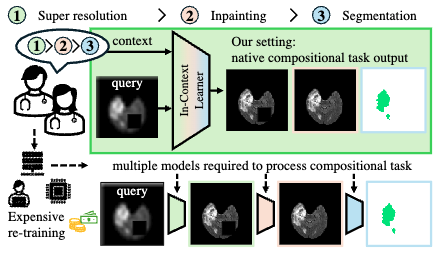
Prof. Dr. Erik Rodner is a faculty member at the University of Applied Sciences Berlin (HTW Berlin), where he serves as a Professor for Machine Learning and Data Science. He also contributes to the School of Engineering Sciences - Technology and Life. His research spans computer vision, machine learning, and biomedical applications, with a focus on learning with limited data, robust visual recognition models, and medical image analysis. He has developed innovative methods for medical diagnostics, industrial classification, and anomaly detection. Recent publications (2025-2016) highlight his expertise in visual in-context learning, semi-weakly segmentation, and active learning frameworks. He has collaborated with institutions such as ZEISS Group, Friedrich Schiller University Jena, and UC Berkeley. Scientific Awards: Award for Excellent Teaching (2023)
Professor Ralf Werner serves as Professor of Business Mathematics at the University of Augsburg, where he leads the Computational Statistics and Data Analysis working group within the Institute of Mathematics at the Faculty of Mathematics, Natural Sciences and Technology. His academic career spans both theoretical research and practical industry applications in quantitative finance. Werner's research interests encompass: Computational Statistics and Data Analysis Optimization under Uncertainty Financial Engineering and Risk Management Actuarial Science and Insurance Mathematics Portfolio Optimization and Asset Allocation His scholarly output demonstrates a consistent focus on robust mathematical methods applied to financial problems, particularly in replicating portfolios for insurance applications, credit risk modeling, and statistical approaches to financial risk management. Werner's publications appear in leading journals across operations research, mathematical finance, and actuarial science. Professional qualifications include his habilitation at the Karlsruhe Institute of Technology (2011) and doctorate from Friedrich-Alexander University Erlangen (2001). He maintains active industry connections through his role as Scientific Advisor for DEVnet since 2010. Werner serves as Internship Coordinator and DAV (German Actuarial Society) correspondent, supporting students pursuing actuarial careers. He is an active member of multiple professional organizations including the Society for Operations Research (GOR), German Mathematical Society (DMV), and German Society for Insurance and Financial Mathematics (DGVFM).
Prof. Dr. Florian Jarre is affiliated with the Mathematical Institute at Heinrich-Heine-Universität Düsseldorf, specializing in mathematical optimization. His research spans conic optimization, interior point methods, semidefinite programming, and nonlinear optimization with applications in computational mathematics. Research interests focus on theoretical and applied aspects of optimization algorithms, including convergence analysis of iterative methods, complexity theory for convex problems, and development of efficient computational techniques for large-scale optimization challenges. Work extends to applications in machine learning and systems biology. Publications demonstrate consistent focus on optimization theory advancements, particularly in interior-point methods and convex programming. Recent work explores connections between optimization and machine learning, including SVM training methods and stochastic gradient descent variants.
Prof. Dr. Elmar Schrohe is a faculty member at the Institute for Analysis within the Faculty of Mathematics and Physics at Leibniz University Hannover . His academic career has been closely tied to the university, where he has contributed to research and graduate training programs. Email: elmar.schrohe@math.uni-hannover.de Location: Welfengarten 1, 30167 Hanover, Building 1101, Space F123 Research Interests : His work focuses on analysis on manifolds with conical singularities , partial differential equations , spectral theory , and operator algebras . He explores geometric and analytic aspects of differential operators, index theorems, and quantum field theory on singular spaces. Key keywords: Conical singularities, Elliptic operators, Spectral triples, Noncommutative residues, Boundary value problems, Fourier integral operators Collaborations : Schrohe is affiliated with the Riemann Center for Geometry and Physics and has participated in interdisciplinary research initiatives at Leibniz University.
Bruno F. Lourenço serves as Associate Professor at The Institute of Statistical Mathematics (ISM) and SOKENDAI (The Graduate University for Advanced Studies), holding dual appointments in the Department of Fundamental Statistical Mathematics and Department of Statistical Science. He concurrently holds a Visiting Associate Professor position at RIMS-Kyoto University through March 2026. His research centers on conic optimization theory, with specialized focus on conic linear programming (including regularization techniques and ill-posedness treatment), nonlinear conic programming (algorithm development and optimality conditions), and the geometric properties of convex sets. His work consistently addresses error bounds in optimization frameworks and extends into nonsmooth optimization methodologies, contributing to both theoretical foundations and computational applications in mathematical programming. Recent publications (2024-2025) reveal concentrated research on specialized cone structures including hyperbolic, copositive, and homogeneous cones. Key thematic trends encompass facial geometry analysis, duality gap resolution in semidefinite programming, constraint qualification-free error bounds, and projection methods for hyperbolicity cones. His work demonstrates strong integration of algebraic geometry with optimization theory, particularly through polynomial representations and symmetry properties of cones. Scientific Awards: No scientific awards were documented in the provided materials. Advising and Grants: The source documentation contains no explicit references to graduate students supervised, research grants administered, or external funding sources. His active publication record and leadership of the Statistical Decision-Making Group suggest ongoing research activity, but specific mentorship or grant details remain unreported in this context. Labs and Teams: Dr. Lourenço leads the Statistical Decision-Making Group at ISM, which focuses on developing optimization frameworks for statistical inference problems. The group's recent output indicates strong emphasis on conic programming applications to statistical modeling, with particular attention to computational tractability and theoretical guarantees in high-dimensional settings.
Thorsten Theobald Thorsten Theobald is a Professor of Mathematics at the Goethe University Frankfurt am Main, affiliated with the Institute of Mathematics within the Department of Mathematics and Computer Science. His research focuses on discrete and computational geometry, algebraic geometry, optimization, and their applications. He has held visiting positions at institutions such as the Simons Institute for the Theory of Computing (Berkeley), the Mittag-Leffler Institute (Sweden), and Yale University. Education and Career Ph.D. (Dr. rer. nat.) in Computer Science, University of Trier (1997) Habilitation in Mathematics, Technical University of Munich (2003) Professor (W3) at Goethe University Frankfurt since 2006 Research and Awards His work bridges algebraic geometry and optimization, with contributions to polynomial optimization, tropical geometry, and semidefinite programming. Key awards include the Felix Klein Teaching Award (2003), Walther von Dyck Award (2000), and recognition as a Fellow of the German National Merit Foundation (1991–1995). Teaching and Mentorship He teaches courses on optimization, algebraic geometry, and discrete mathematics, and has mentored over 70 students (Bachelor, Master, and Ph.D.). Notable Ph.D. students include Constantin Ickstadt and Timo de Wolff. He has also mentored postdoctoral researchers such as Giulia Codenotti and Mahsa Sayyary Namin. Professional Activities Principal Investigator in DFG Priority Program 2458 (Combinatorial Synergies) Editorial Board Member of Beiträge zur Algebra und Geometrie and SIAM Journal on Applied Algebra and Geometry Organizer of conferences such as the Summer School on Nonlinear Optimization and Combinatorics (2025) and the Frankfurt-Darmstadt Afternoons on Optimization Labs and Collaborations He co-leads the DIGO Research Seminar (Discrete Mathematics, Geometry, and Optimization) and collaborates with institutions like École Polytechnique (Paris) and the Simons Institute. His work integrates theoretical advances with computational tools, emphasizing interdisciplinary applications.
Mirjam Dür is a Full Professor (W3) at the Department of Discrete Mathematics, Optimization and Operations Research within the Faculty of Mathematics, Natural Sciences and Technology at the University of Augsburg (since 2017). Previously, she held Full Professor positions at the University of Trier (2011-2017) and other academic roles in Groningen, Darmstadt, and Vienna. Her research focuses on mathematical optimization, particularly copositive programming, quadratic optimization, matrix theory, and conic optimization. Born in Vienna, Austria M.Sc. in Mathematics (1996) and PhD in Applied Mathematics (1999) from University of Trier Positive Habilitation evaluation at TU Darmstadt (2005) Research Interests : Global optimization, quadratic and combinatorial optimization, conic optimization and matrix theory, copositive programming, and applications to graph theory and discrete problems. She has pioneered methods like factorization-based approaches for completely positive matrices and cutting plane techniques in copositive programming. Scientific Awards : 2013 Optimization Letters Best Paper Award 2010 VICI Grant (NWO) 2012 GIF Research Grant (German-Israeli Foundation) Key Contributions : Development of algorithms for copositive optimization, theoretical advances in matrix cones, and novel applications to problems like graph stability and discrete optimization. She serves as Senior Editor for Optimization Methods and Software and editorial board member for multiple optimization journals.
Dr. Pavel Dvurechensky is a Research Fellow at the Weierstrass Institute for Applied Analysis and Stochastics (WIAS) since 2015 and a member of Math+, the Berlin cluster of excellence. His research focuses on theoretical and applied aspects of optimization algorithms, particularly first- and second-order methods for convex and non-convex large-scale problems. 2023: Habilitation in mathematics at Humboldt University Berlin 2014-2015: Research assistant at Institute for Information Transmission Problems, Moscow 2009-2015: Junior researcher at Moscow Institute of Physics and Technology His work addresses stochastic optimization, optimal transport, distributed computing, and applications in machine learning, energy systems, and traffic modeling. He has contributed to complexity analysis of mirror descent variants, barrier methods for non-convex problems, and high-probability bounds in heavy-tailed noise scenarios. Recent publications appear in top venues like ICML, NeurIPS, and Mathematical Programming. Selected Scientific Awards: Habilitation in mathematics (2023) He has taught courses on modern optimization at Humboldt University and Higher School of Economics, covering gradient methods, mirror descent, and optimal transport. Collaborations include projects with Math+ cluster on energy system equilibria and brain signal analysis.
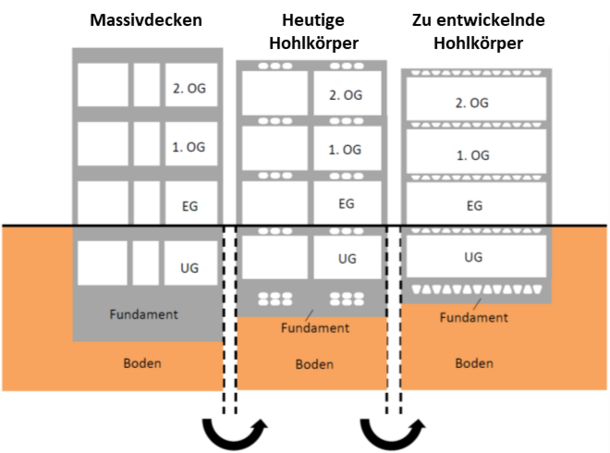
Professor Andrei Albert from Bochum University of Applied Sciences is a leading expert in Structural Engineering within the College of Civil and Environmental Engineering. His work focuses on optimizing reinforced concrete systems for sustainability and structural performance, including pioneering research on void formers in concrete slabs to reduce CO₂ emissions by up to 40%. Developed new conical void former geometry for enhanced shear capacity Quantified resource savings in foundation slabs and ceilings Created practical design models for biaxial voided slabs His research integrates advanced computational methods like genetic programming and FEM analysis to solve critical challenges in: Shear force optimization Thermal stress modeling Earthquake-resistant design Prestressed concrete systems Material-efficient construction Structural failure analysis Active in both teaching and practical implementation, he supervises engineering projects and leads research teams in developing next-generation construction technologies.
Shu-Cherng Fang is a prominent academic in the fields of Operations Research , Optimization , and Machine Learning . His work spans theoretical advancements and practical applications in Mathematical programming Supply chain network design Fuzzy systems Support vector machines Algorithm development . While specific institutional affiliations and academic rank are not explicitly stated in the provided text, his extensive publication record in high-impact journals indicates a faculty-level role. Research interests include optimization under uncertainty , supply chain logistics , and kernel-free machine learning models . Key trends in recent articles focus on fourth-party logistics (4PL) network design distributionally robust optimization for machine learning mathematical modeling of customer behavior stochastic programming . Co-authors frequently include Min Huang, Zhibin Deng, Jian Luo, and Wenxun Xing, reflecting sustained collaborations. Articles emphasize interdisciplinary approaches combining fuzzy logic , game theory , and computational geometry to solve complex decision-making problems.