Ali Mostafazadeh is a Professor at the Department of Mathematics, College of Sciences, Koç University. His research spans Mathematical Physics, focusing on Quantum Mechanics, Scattering Theory, and PT-Symmetry. He has made significant contributions to understanding non-Hermitian Hamiltonians, electromagnetic wave propagation, and geometric scattering phenomena. Education: PhD in Physics (1994) from The University of Texas, BA in Physics and Mathematics (1989) from Boğaziçi University His work explores the intersection of mathematics and physics, particularly through spectral singularities, transfer matrix methods, and nonlinear optical systems. Recent publications highlight advancements in broadband directional invisibility, exact Born approximations, and time-dependent Hilbert spaces in quantum systems. 2011 Outstanding Success Award 2007 TÜBİTAK Science Award 2006 Werner-von-Siemens Excellence Award 2001 TÜBA Outstanding Young Scientists Award 2001 Parlar Foundation Research Incentive Award
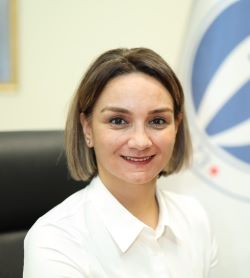
Mine Menekse Yilmaz is an Associate Professor at Gaziantep University , Faculty of Arts and Sciences , Department of Mathematics , with a career spanning over two decades. She holds a PhD in Mathematics from Ankara University (2011) and has been actively researching approximation theory, singular integral operators, and functional analysis.
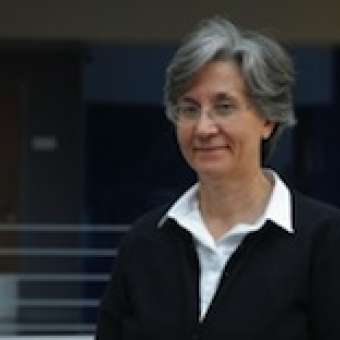
Saadet Erbay is a Professor in the Department of Mathematics at Özyeğin University's School of Arts and Sciences. Her career spans institutions like Istanbul Technical University, Isik University, and University of Victoria (Canada). She specializes in Applied Mathematics, focusing on nonlinear wave equations and elasticity theory, with significant contributions to modeling wave propagation in elastic media. PhD (1988): Mathematics, Istanbul Technical University MSc (1982): Mathematical Engineering, Istanbul Technical University BSc (1980): Mathematical Engineering, Istanbul Technical University Her research explores nonlinear wave dynamics, including the Camassa-Holm and Boussinesq equations, with applications in elasticity and fluid mechanics. Recent publications analyze convergence properties, numerical methods, and stability of wave equations. Notable awards include the TUBITAK Incentive Award (1994) and the Sedat Simavi Science Award (1996). She serves in professional societies such as the Turkish Mathematical Society, AMS, and SIAM.
Professor Reşat Kasap is a distinguished academic at Gazi University, Faculty of Science, Department of Statistics, where he has served since 1993, achieving the rank of Professor in 2004. He holds a Ph.D. from the University of Wales, Aberystwyth, and has over 90 scientific publications, many in high-impact international journals. His institutional affiliation remains active, and he continues to contribute to research and education in applied statistics. Research Interests: His work spans a broad spectrum of statistical and computational disciplines, including time series analysis, chaos theory, data science, artificial intelligence, neural networks, biostatistics, and financial modeling. He applies these methods to real-world problems in public health, finance, and uncertainty management. The recent publications, particularly his 2021 article on COVID-19 in Turkey, reflect a strong trend toward data-driven analysis of complex systems, leveraging time series and efficiency models to understand pandemic dynamics. His work bridges theoretical statistics with practical applications in health and economics. Ranked 1st in Statistics in Turkey Academic Performance Analysis-2021 Prof. Kasap has advised 15 postgraduate theses and participated in approximately 100 projects. His leadership extends to editorial roles, including Biostatistics Editor for Türkiye Klinikleri Journals, and numerous committee and coordination roles at the university and national level, such as ÖSYM Executive Board and YÖK Bologna Expertise. He served as Mayor of Rize from 2014 to 2019, balancing public service with academic engagement. He is actively involved in academic labs and research teams focusing on data science, statistical modeling, and AI applications, contributing to a dynamic research environment at Gazi University.
Professor Yücel Ercan is affiliated with the Department of Mechanical Engineering at TOBB University of Economics and Technology (TOBB ETÜ). He previously held academic positions at Middle East Technical University (METU) and Gazi University, including roles as assistant professor, associate professor, and professor of mechanical engineering. His career spans over 40 years, with a focus on system dynamics, control systems, and industrial applications. Education : B.Sc., M.Sc., and Sc.D. in Mechanical Engineering from MIT (1966, 1968, 1971) Leadership Roles : Vice-Chairman at METU (1974-1977), Vice-President of METU (1977-1978), Dean of Gazi University School of Engineering (1982-1992), and held similar roles at TOBB ETÜ. His research interests lie in system dynamics, control systems, fluid power control, and industrial emission control. He has developed advanced methodologies for nonlinear vibration analysis and time-suboptimal control of industrial manipulators, contributing significantly to manufacturing and mechanical systems optimization. The 8 recent publications demonstrate expertise in nonlinear vibrations, control algorithms, and computer-aided manufacturing. Key trends include modeling machine tool vibrations, optimizing robotic task sequencing, and enhancing industrial machinery control systems through innovative theoretical frameworks and software development. Scientific Awards : Alexander von Humboldt Fellowship (research in Germany, 1979-1981) Academic Leadership & Contributions : Supervised 28 master’s and 5 doctoral theses, led approximately 80 research projects, and provided consulting services to 250 industrial companies. He is a member of professional societies including TMMO, TOK, TIBTD, and MATİM.
Res.Asst.Dr. Hami GÜNDOĞDU is a researcher at the Faculty of Science, Department of Mathematics, Sakarya University. His academic career spans applied mathematics, focusing on nonlinear differential equations, fractional calculus, and nanofluid dynamics. Education : PhD in Applied Mathematics (2020), MS in Applied Mathematics (2017), BS in Mathematics (2011). Research interests include fixed point theory in modular metric spaces, numerical solutions for fractional PDEs, and analysis of slip boundary conditions in hybrid nanofluids. Recent publications explore ternary hybrid nanofluids in rocket cooling, fractal fractional approaches, and 2D Volterra equations. Scientific work integrates mathematical modeling with engineering applications, particularly in entropy generation, Casson fluids, and dusty flow dynamics. No explicit awards or student advisement details are mentioned in the available data.
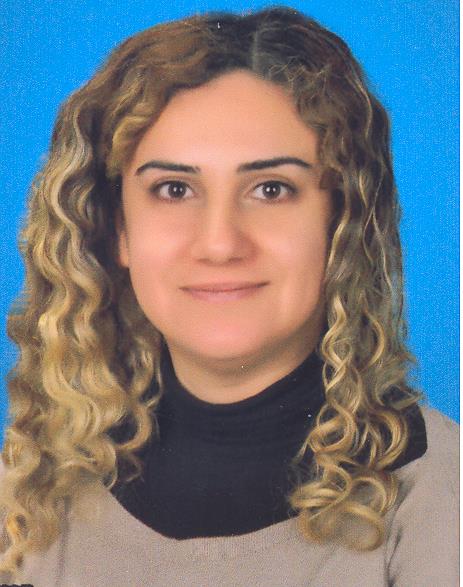
Nida Pala Mut Koşar is an Associate Professor at the Department of Mathematics and Science Education , Nizip Faculty of Education , Gaziantep University , Türkiye. Her academic career spans research and teaching in applied mathematics, spectral theory, and mathematics education. She has held administrative roles such as Member of the Faculty Board of Directors and Vice Dean. Education: Ph.D. in Mathematics (2010), Mersin University M.Sc. in Mathematics (2004), Mersin University B.Sc. in Mathematics (2000), Ankara University Research Interests: Her work focuses on Sturm-Liouville operators with discontinuous coefficients, inverse scattering problems , q-calculus , and mathematics education . She explores spectral analysis, transmission conditions, and approximation theorems, contributing to both theoretical mathematics and pedagogical frameworks. Scientific Contributions: She has published extensively on Sturm-Liouville spectral theory, nonself-adjoint operators, and Korovkin-type approximation theorems. Her projects include TÜBİTAK-funded science festivals and international collaborations under the H2020 program. Notable Projects: Coordinator for Gaziantep Bilim Şenliği (2017) Principal Investigator for international events like Researchers' Night (2024) Her teaching portfolio includes courses such as Applied Functional Analysis , Partial Differential Equations , and advanced mathematics education topics, reflecting her commitment to both research and pedagogy.
Hüsnü Ata Erbay is a Professor of Mathematics at Ozyegin University, Istanbul, Turkey, and a member of the Science Academy of Turkey. He has held academic positions at Istanbul Technical University, TUBITAK Marmara Research Institute, University of Victoria (Canada), and Isik University. He served as Director of the Graduate School of Science and Engineering at Isik University from 2004 to 2010 and joined Ozyegin University in 2011, where he is currently the head of the Department of Natural and Mathematical Sciences. B.S., M.S., and Ph.D. in Mathematics from Istanbul Technical University (1980, 1982, 1988) His research focuses on applied mathematics, particularly the analysis of nonlinear partial differential equations, numerical methods for nonlinear PDEs, nonlinear dispersive and hyperbolic waves, and continuum mechanics with an emphasis on nonlinear elasticity. His recent work involves strain-limiting elasticity, nonlocal wave equations, and solitary wave solutions. The latest articles highlight trends in modeling strain-limiting materials, dispersive wave dynamics, and numerical schemes for nonlinear elasticity. These studies often bridge mathematical theory with physical applications in continuum mechanics. Scientific awards include: TUBITAK Incentive Award (Mathematics, 1994) Sedat Simavi Science Award (1996) Ozyegin University Faculty Excellence Award in Research (2016) Ozyegin University Faculty Excellence Award in Service (2023) He is affiliated with the Turkish Mathematical Society, the Turkish National Committee for Theoretical and Applied Mechanics, and SIAM (Society for Industrial and Applied Mathematics).
Atilla HEPKORUCU serves as a full-time Lecturer at Kastamonu University's Taskopru Vocational School within the Banking and Insurance Program. With over a decade of academic service since 2011, his career spans teaching 21 distinct courses including Financial Management, Portfolio Management, Risk Management, and Financial Markets. His educational background includes a PhD in Econometrics from Bursa Uludağ University (2012-2020), a Master's in Finance from Dokuz Eylül University (2008-2010), and a BSc in Food Engineering from Ege University (2003-2008). His research focuses on advanced econometric methodologies applied to financial markets and economic indicators. HEPKORUCU's scholarly work centers on time series analysis and econometric theory, particularly developing and testing novel unit root methodologies. His research examines nonlinear reversion patterns, seasonal unit roots, and structural breaks in financial time series data. Recent publications analyze cryptocurrency markets (especially Bitcoin), consumer confidence indices across G-7 nations, and tourism revenue dynamics. His publication portfolio includes 25 total works comprising 11 journal articles, 12 conference papers, and 2 book chapters. Notable contributions include developing the Fourier-Sollis unit root test and analyzing volatility breaks in low-frequency financial assets. His work appears in journals such as ESKISEHIR OSMANGAZI UNIVERSITY JOURNAL OF ECONOMICS AND ADMINISTRATIVE SCIENCES and Afyon Kocatepe Üniversitesi İktisadi ve İdari Bilimler Fakültesi Dergisi. HEPKORUCU collaborates extensively with researchers including Öznur Doğan, Mehmet Çınar, and Sevdanur Genç across institutions like Uludağ University and Dokuz Eylül University. His metrics show a Google Scholar h-index of 5 with 104 citations, reflecting significant impact in econometrics methodology development.
Dr. Hakan I. Tarman is a Professor at the Mechanical Engineering Department of Middle East Technical University (METU) , Ankara, Turkey. He is also affiliated with the Department of Engineering Sciences and interdisciplinary graduate programs in Biomedical Engineering (Biomechanics Group member since 2006, Program Coordinator 2015-2017) and Earth System Sciences. B.Sc. in Mechanical Engineering and Mathematics (Boğaziçi University, 1982) M.Sc. in Mechanical Engineering (Boğaziçi University, 1984) Ph.D. in Applied Mathematics (Brown University, 1989) His research focuses on Computational Mechanics , Hydrodynamic Stability , and Spectral Methods , including applications to thermal convection under magnetic fields, fluid-structure interactions, and biomedical flows. Recent publications highlight spectral solenoidal-Galerkin methods for convection and pipe flows, drag reduction via phase randomization, and photonic nanojet analysis. Key scientific contributions include projects funded by TÜBİTAK (e.g., 109M435) and METU-BAP (e.g., 2004-03-10-01). He has supervised numerous M.S. and Ph.D. theses on topics like Uncertainty Quantification , Shell Optimization , and Lattice Boltzmann Modeling . Courses taught : Numerical Methods, Spectral Methods, Hydrodynamic Instability, PDE Numerical Methods Labs/teams : Collaborates with Biomechanics Group; integrates spectral methods with biomedical and geophysical applications
Assoc. Prof. Meltem Adıyaman is a faculty member at Dokuz Eylül University, Department of Mathematics, College of Science. She has held academic positions since 2006, advancing from Research Assistant (2006-2011), Assistant Professor (2011-2024), and currently Associate Professor (2024-present). Her research focuses on numerical methods for differential equations, eigenvalue problems, and computational mathematics, with an emphasis on residual methods, Bézier curve applications, and nonlinear systems. Doctorate in Mathematics (2009), Dokuz Eylül University Postgraduate in Mathematics (2005), Dokuz Eylül University Undergraduate in Mathematics (2003), Dokuz Eylül University Her research interests include numerical analysis, differential equations, eigenvalue problems, and computational mathematics, particularly applied to nonlinear and singular systems. She has published 25 WoS-indexed articles and 6 in Scopus, with a Scopus h-index of 38. Her work frequently employs residual methods, Bézier control points, and Taylor decomposition techniques. Assoc. Prof. Adıyaman has advised 5 theses, including doctoral and master’s students A. Beler, M. Kemal, V. Öğer, and B. Noyan. She has served as a peer reviewer for journals like Computational Methods for Differential Equations and participated in 15+ international conferences. Her career spans teaching across all levels, from calculus to advanced numerical methods.
Kadir Can Erbaş serves as a Lecturer in the Biomedical Engineering Program at Başkent University, Ankara, Turkey. Holding a PhD in Physics from Middle East Technical University (METU), he bridges theoretical physics with practical engineering applications across diverse domains including materials science, biomedical engineering, and computational geometry. His academic foundation includes: PhD in Physics (2013), METU Master's Degree in Physics (2008), METU Master's Degree in Physics Education (2005), METU Bachelor's Degree in Physics Education (2001), METU Dr. Erbaş specializes in Mathematical Physics and Thermal Analysis , with pioneering work on Newtonian thermal analysis for casting processes. His research has expanded into Chaos Theory applications for modeling romantic relationships and Geometric Pattern Design in Islamic art. His methodology consistently combines analytical solutions with experimental validation, demonstrating exceptional versatility across physics subdisciplines. Analysis of his 15 most recent publications reveals a clear trajectory from core materials science (2014-2016) toward interdisciplinary applications. Early work focused on solidification modeling in metallurgy, while recent publications explore geometric algorithms and emotional dynamics, indicating strategic expansion into computational art and social physics. This evolution highlights his ability to transfer fundamental physics principles to novel domains. Scientific recognition: No formal awards documented in current records Teaching responsibilities include General Physics I/II and associated laboratory courses. No information is available regarding graduate student supervision, research grants, or dedicated laboratory facilities. His active publication record through 2025 confirms ongoing research productivity within Başkent University's academic framework.
Nizami Mustafa is a Professor in the Department of Mathematics at Kafkas University, Faculty of Arts and Sciences, Turkey. With a career spanning since 2006, he has served as a Department Head and specializes in Mathematical Analysis , particularly in geometric function theory, fixed point theory, and singular integral equations. Research Focus: Bi-univalent functions, q-calculus, coefficient estimates, Fekete-Szegö problem, fixed point properties in Banach spaces, singular integral equations. Students: Supervised 20+ MSc/PhD theses on topics like pseudo-starlike functions, singular integral approximations, and q-polynomials. Projects: Led two research projects, including "Newton-Kantorovich Method for Nonlinear Singular Integral Equations" (2017-2018) and "Fixed Point Theory and Nonexpansive Mappings" (2014-2016). Publications: 163+ works, including 83 citations, focusing on Wright functions, Chebyshev polynomials, and boundary value problems.
Assoc. Prof. Elif Başkaya holds a position at Karadeniz Technical University (KTÜ), Faculty of Science, Department of Mathematics. She has been an Associate Professor since 2024, following roles as Assistant Professor (2022–2024) and Lecturer PhD (2014–2022). Her academic journey began as a Research Assistant at KTÜ's Institute of Science (2007–2013). Dr. Başkaya's research focuses on differential equations, spectral theory, and eigenvalue problems, with notable contributions to Sturm-Liouville theory and numerical methods like the Galerkin method. Education: PhD in Mathematics (2008–2013), KTÜ MSc in Mathematics (2006–2008), KTÜ BSc in Secondary School Mathematics Education (2001–2006), KTÜ Research interests include boundary value problems, operator theory, and applied mathematical modeling. Her publications span journals like Mediterranean Journal of Mathematics and Rocky Mountain Journal of Mathematics, emphasizing spectral analysis and computational techniques. She has reviewed for SCI-indexed journals and participated in international conferences. Professional development includes international scholarships and guest scientist programs. No specific awards are listed, but her h-index reflects impactful contributions in her field.
Burcu Tunga is an Associate Professor in the Department of Mathematics at Istanbul Technical University, Faculty of Science and Letters. She holds a PhD in Computational Science and Engineering from the same institution and has been an active academic since 2005, progressing from Lecturer to her current rank. She has held key administrative roles, including Deputy Head of Department and membership in university-wide promotion and doctoral committees. PhD: Computational Science and Engineering, Istanbul Technical University (2004–2010) BS: Mathematics, Istanbul Technical University (1995–2000) Her research lies at the intersection of applied mathematics and computer science, with a strong emphasis on image processing, data modeling, and High Dimensional Model Representation (HDMR) . She develops and applies advanced mathematical models for image denoising, color-to-gray conversion, hyperspectral analysis, and machine learning-based diagnostics. Her work integrates fractional calculus, deep learning, and tensor decomposition to solve complex problems in medical imaging, agriculture, and materials science. Recent publications (2022–2025) show a strong trend toward hybrid models combining HDMR with deep learning and fractional operators , applied to tasks such as coffee leaf disease detection, wood defect imaging, and hyperspectral anomaly detection. These reflect a consistent focus on enhancing image quality, feature extraction, and pattern recognition through novel mathematical frameworks. Her scientific contributions are recognized through active research funding and a growing publication record. Key projects include: Anomaly Detection in Hyperspectral Images with HDMR (BAP-funded, 2024–2025) Disease Detection in Coffee Leaves with Deep Learning (completed, 2024) Content-Based Image Retrieval with HDMR (completed, 2018–2021) Burcu Tunga advises several graduate students and collaborates widely across disciplines. She leads research involving tomographic reconstruction, stress wave analysis in trees, and financial time series prediction. Her lab focuses on developing non-destructive evaluation techniques, medical CAD systems, and intelligent image processing algorithms , often leveraging HDMR as a core methodological framework.