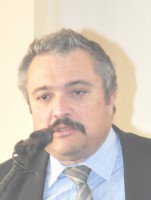
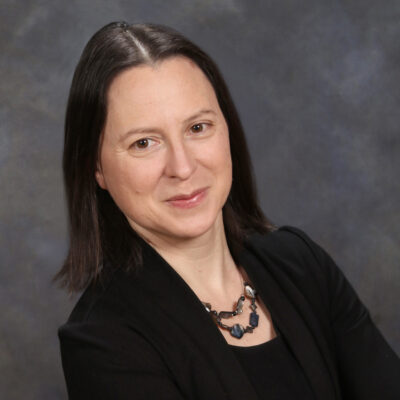
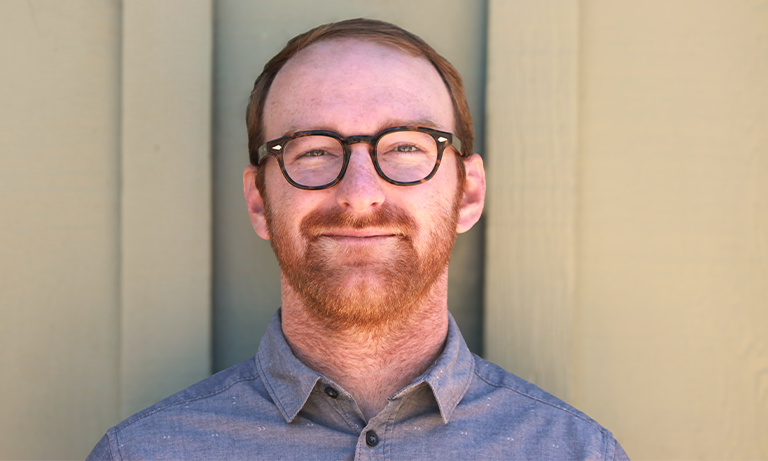
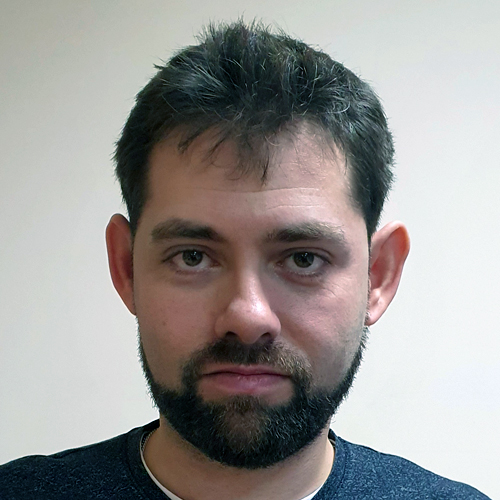
Riccardo Felicetti is a Research Fellow at the Department of Information Engineering, Università Politecnica delle Marche, within the Faculty of Engineering. He holds a Master's Degree (cum laude) in Computer and Automation Engineering (2016) and a Ph.D. (cum laude) in Information Engineering (2021) from the same university, with a thesis on “Active fault tolerant control for overactuated unmanned vehicles.” He also serves as Senior Tutor, coordinating tutor activities in the Faculty of Engineering. His research focuses on fault detection and diagnosis, fault-tolerant control, and optimization, with applications to unmanned vehicles (e.g., drones, ROVs) and energy management systems. He has contributed to advancements in systems like actuator fault tolerance, vibration-based fault detection, and energy optimization in smart grids. Key technical areas include disturbance observer-based control, adaptive Kalman filtering, and machine learning integration for system identification. His work bridges theoretical control frameworks with practical implementations in aerospace and marine robotics.
Dr. Niel Van Engelen is an Associate Professor in the Department of Civil and Environmental Engineering at the University of Windsor, Faculty of Engineering. His research focuses on structural control, seismic isolation systems, vibration mitigation, and pedestrian-induced building dynamics. He holds a BEng & Mgt and PhD from McMaster University. Education: Bachelor of Engineering (BEng) and Management, McMaster University Doctor of Philosophy (PhD), McMaster University Research Interests: Development of advanced seismic isolation systems using fiber-reinforced elastomeric materials Analysis of pedestrian-induced vibrations in building floors Optimization of concrete-filled steel tube structures Seismic fragility assessment of isolation systems Recent Work Trends: His publications emphasize experimental and computational studies of fiber-reinforced elastomeric isolators (FREIs), including their adaptability under seismic loads and material variability. He also explores practical applications like low-rise building code compliance and pandemic-era construction scheduling innovations. Professional Affiliations: Professional Engineers Ontario (PEO) Canadian Society for Civil Engineering (CSCE) Canadian Association for Earthquake Engineering (CAEES) Labs/Teams: Active in the Civil and Environmental Engineering department’s research groups focusing on structural dynamics and sustainable materials.
Dr. Miroslaw Pawlak is a Professor in the Department of Electrical and Computer Engineering at the University of Manitoba’s Price Faculty of Engineering. He holds a Ph.D. and D.Sc. in Computer Engineering from Wrocław University of Technology, Poland. As a Professional Engineer registered in Manitoba, he has held visiting positions at multiple institutions worldwide, including the University of Ulm and University of Göttingen as an Alexander von Humboldt Foundation Fellow. His research focuses on statistical signal processing, machine learning, nonparametric modeling, and system identification. He authored/co-authored influential books like Nonparametric System Identification (Cambridge University Press, 2010) and over 100 peer-reviewed publications. Dr. Pawlak has served as an Associate Editor for journals such as Pattern Recognition and IEEE Transactions on Information Theory , and was recognized in Stanford University’s World’s Top 2% Scientists list. Education: 1985: Ph.D. in Computer Engineering, Wrocław University of Technology 1999: D.Sc. in Computer Engineering, Wrocław University of Technology Research Interests: Dr. Pawlak specializes in advanced signal processing techniques, including nonparametric system identification, statistical analysis of stochastic signals, and machine learning applications in engineering systems. His work bridges theoretical foundations (e.g., operator theory with Hermite polynomials) and practical implementations (e.g., wind farm modeling and power system stability prediction). Publications: His recent work emphasizes nonparametric methods for system testing (e.g., Hammerstein systems) and interdisciplinary applications like power grid oscillation prediction using LASSO algorithms. He frequently collaborates with international researchers to advance signal processing theory and energy systems modeling. Awards: World’s Top 2% Scientists (Stanford University, 2021/2022) Professional Contributions: Dr. Pawlak’s editorial roles and visiting fellowships demonstrate his global influence. He has advised numerous graduate students and contributed to key textbooks shaping the field of system identification.
Stavroulakis Georgios is a Professor at the School of Production Engineering and Management, Technical University of Crete. His research focuses on smart structures, vibration control, finite element methods, and advanced materials. He leads interdisciplinary projects in structural mechanics, acoustics, and computational mechanics with applications in engineering systems and heritage preservation. Key areas include: (1) Development of robust control systems for smart structures, (2) Numerical modeling of masonry and composite materials, (3) Applications of artificial intelligence in structural analysis and material science. Office: Δ5.109, DPEM Building. Research activities emphasize: Active vibration suppression using piezoelectric systems and auxetic materials Advanced finite element analysis for biomedical and historical structures Data-driven computational methods for material characterization Acoustic comfort optimization in urban environments Structural health monitoring through physics-informed neural networks His work bridges traditional engineering disciplines with modern AI tools, addressing challenges in infrastructure resilience and sustainable design. Publications span smart materials innovation, nonlinear mechanics, and heritage building restoration.
Elisabeth Gilmore serves as an Associate Professor in the Department of Civil and Environmental Engineering at Carleton University with a formal appointment in the School of Public Policy and Administration. Her interdisciplinary research bridges engineering, social sciences, and public policy to address climate change and environmental challenges at local to global scales, particularly focusing on air pollution and societal responses to environmental transformations. Her core research integrates integrated assessment modeling with socio-political analysis to develop climate scenarios, examine human adaptation behaviors, and identify technological-societal transformation pathways. Key interests span climate governance mechanisms, conflict-climate interactions, migration dynamics, and equity-focused adaptation strategies, with emphasis on vulnerable populations and fragile contexts. Recent work critically examines tipping point discourse, rebel governance in climate-vulnerable regions, and place-based convergence research methodologies. Analysis of her 2024-2025 publications reveals dominant trends in climate policy innovation (particularly state-level fiscal tools), climate-security linkages in conflict-affected regions, and adaptation barriers for marginalized communities. Her work consistently integrates political development frameworks into climate scenarios while challenging deterministic narratives around climate tipping points, emphasizing actionable governance pathways over catastrophic projections.
Brendon Anderson is an Assistant Professor in the Department of Mechanical Engineering at Cal Poly San Luis Obispo's College of Engineering. His research focuses on developing safety guarantees for machine learning systems, bridging advanced mathematics, computer science, and engineering principles like optimization and control theory. He emphasizes interdisciplinary approaches to address limitations in AI deployment for safety-critical applications such as autonomous vehicles. Academic Rank: Assistant Professor Department: Mechanical Engineering University: Cal Poly San Luis Obispo Anderson's recent publications highlight expertise in neural network robustness certification, adversarial defense mechanisms, and evolutionary game theory applications. Key trends include randomized smoothing techniques, structure-aware computation, and min-max optimization frameworks. While no scientific awards are explicitly mentioned in this dataset, his work demonstrates a strong focus on cutting-edge machine learning safety research and student mentorship. His teaching philosophy emphasizes hands-on problem-solving and fostering 'aha!' moments in students. Outside academia, Anderson connects engineering principles to personal hobbies like skateboarding and vintage vehicle restoration, viewing these activities as practical applications of optimization and dynamics analysis.
Nikola B. Dankovic is an Assistant Professor at the Faculty of Electronics in Niš, part of the University of Niš, within the Department of Automation. He earned his PhD in Systems Management from the same faculty in 2018, following a Master's degree from the Faculty of Electronics' Department of Telecommunications in 2009. His academic career began with an appointment as an Assistant Professor in 2013, reaffirmed in 2020. Research interests include dynamical systems modeling, orthogonal filter design, control systems, and thermodynamic applications. He has contributed to fields like DPCM system analysis, nonlinear MIMO control, and cascade filter optimization. His work frequently integrates mathematical techniques such as Monte Carlo methods and bilinear transformations. Publications span journals like International Journal of Electronics , Acta Polytechnica Hungarica , and Filomat , focusing on theoretical and applied aspects of signal processing and systems engineering. He collaborates on national and international research projects, though no specific awards are noted. Contact information includes his email nikola.dankovic@elfak.ni.ac.rs and institutional address in Niš.
Milan R. Dincic is an Associate Professor at the University of Niš, Faculty of Electronic Engineering, Department of Telecommunications. He holds a PhD in Metrology and Measurement Technology (2017) and a Master’s degree in Telecommunications (2012), both from the same institution. His academic career includes research on quantization techniques, signal processing, and metrology applications. Dr. Dincic’s research focuses on optimizing quantizers for measurement signals, including Gaussian and Laplacian distributions. He has contributed to adaptive quantization, lossless coding algorithms, and hybrid systems integrating codecs like ITU-T G.711. His work bridges theoretical signal processing with practical applications in telecommunications and sensor systems. His publications (26 journal articles) emphasize quantizer design, image sampling, and compression techniques. He co-authored the textbook "Sensors in Vehicles" (2014). Current projects include national/international collaborations in metrology and measurement technology. His lab focuses on advancing signal processing methodologies for precision measurement systems.
Dr. Joel Mobley is a Professor in the Department of Physics and Astronomy at the University of Mississippi and a Senior Scientist II at the Jamie Whitten National Center for Physical Acoustics. He specializes in biomedical ultrasonics, opto-acoustics, and physical acoustics, with a focus on applications in medical imaging, material characterization, and nuclear storage systems. Education: B.S. (Physics, University of Kentucky, 1989), M.A. (Physics, Washington University in St. Louis, 1991), Ph.D. (Physics, Washington University in St. Louis, 1996). Postdoctoral and research roles include Oak Ridge National Laboratory (1997-2004) and the U.S. Army Research Laboratory (2004-2005). Research Interests: Dr. Mobley’s work spans ultrasonic beamforming in biomedical contexts, acoustic lens design, nuclear cask structural integrity analysis, and microsphere-based metamaterials. His recent projects include droplet manipulation via acoustic tweezers, vibration-based monitoring of nuclear storage systems, and multiphase fluid dynamics. Teaching: Courses include Physics for Engineering, Optics, Biophysics, and Acoustics. He actively contributes to the development of graduate programs in physical acoustics. Lab/Affiliations: Primary affiliations include the National Center for Physical Acoustics (NCPA) and the University of Mississippi’s Department of Physics and Astronomy. His research integrates interdisciplinary approaches across physics, engineering, and environmental science.
Hung Luyen is an Assistant Professor in the Department of Electrical Engineering at the University of North Texas, affiliated with the College of Engineering. His research focuses on advanced antenna systems, microwave engineering, and biomedical applications of electromagnetic technology. He holds a position in Discovery Park B232 and can be contacted at Hung.Luyen@unt.edu . Research Interests His work emphasizes innovative antenna designs, including reconfigurable phased arrays, 3D-printed components, and microwave ablation technologies for medical treatments. Key areas include: Phased array and reflectarray antenna systems Dielectric resonator antennas and material science applications Microwave ablation for minimally invasive cancer treatment RF system optimization (e.g., Doherty amplifiers) Biomedical engineering integration with antenna technologies Recent Research Trends Recent publications highlight advancements in antenna miniaturization, reconfigurability, and AI-driven design methodologies. His work bridges traditional antenna engineering with emerging fields like additive manufacturing and biomedical electronics. Awards & Grants No scientific awards were explicitly mentioned in the provided information. Funding sources and grant details are not listed here. Labs & Teams Research activities are centered in the University of North Texas labs affiliated with the Electrical Engineering department, though specific lab names or collaborative teams were not detailed in the text.
Raúl Ordóñez is a full professor and Director of Graduate Programs in the Department of Electrical and Computer Engineering at the University of Dayton’s School of Engineering. He holds a Ph.D. and M.S. in Electrical Engineering from The Ohio State University (2001 and 1996) and a B.E. from Monterrey Institute of Technology. His research focuses on nonlinear control, adaptive systems, extremum-seeking control, and applications in aerospace, robotics, and power systems. Professional highlights include serving as Associate Editor for Automatica since 2006, co-authoring textbooks on adaptive control and extremum-seeking techniques, and holding editorial roles for IEEE conferences. Awards include the Boeing Welliver Faculty Fellowship (2008) and AFRL Summer Faculty Fellowship (2014). He has conducted research collaborations at institutions like Université de Picardie Jules Verne (France) and TU Wien (Austria). Key research areas include control of hypersonic vehicles, industrial robots, scramjets, and power generators. His work integrates advanced control methodologies with practical systems, emphasizing real-time optimization and robustness. Courses taught span control systems, nonlinear dynamics, and adaptive control. Education: Ph.D./M.S. (Ohio State), B.E. (Monterrey Tech) Professional Activities: IEEE Control Systems Society, CCCS Collaborative Center Recent Awards: AFRL (2014), Boeing (2008) Labs/Teams: Collaborates with robotics and aerospace teams at UD and international institutions
Bas Overvelde is the Group Leader of the Soft Robotic Matter Group at AMOLF in Amsterdam and an Associate Professor (part-time) at Eindhoven University of Technology (TU/e) . His research focuses on embodied intelligence in soft robotic systems, combining mechanics, metamaterials, and nonlinear dynamics to create autonomous, adaptive machines. He leads a multidisciplinary team working on applications like soft robotic hearts, grippers, and smart architectural facades. Education: BSc and MSc in Mechanical Engineering (cum laude) from TU Delft (2004–2012) PhD in Applied Mathematics from Harvard University (2016), under Prof. Katia Bertoldi Research Interests: Soft robotics and bio-inspired design Mechanical metamaterials and nonlinear dynamics Autonomous systems and environmental feedback Applications in biomedical engineering and sustainable architecture Key Achievements: Developed programmable fluidic robots using pneumatic coding blocks Designed a soft robotic artificial heart prototype Explored synchronization in modular soft robotic limbs Labs/Teams: Leading the Soft Robotic Matter Group at AMOLF Collaborates with TU/e’s Institute for Complex Molecular Systems
Pengfei Li is a prolific researcher affiliated with multiple academic institutions, including Harbin Medical University, Yale University, Beihang University, Zhejiang University, and others. His work spans interdisciplinary domains such as machine learning, robotics, remote sensing, and biomedical engineering. Research interests focus on Machine learning and deep learning for industrial and medical applications Signal processing and sensor technologies Remote sensing and geospatial data analysis Robotic control systems and exoskeleton design Code search and software engineering optimization His recent publications highlight trends in FPGA-based real-time systems, multimodal machine learning, and AI-driven diagnostics. While awards and student advising details are absent in the provided data, his contributions to IEEE journals and conferences underscore his expertise in algorithm design and applied informatics.
Dr. Tim Burg is a Professor in the Department of Biomedical Sciences at the University of Georgia. His research focuses on bioengineering solutions for biomedical applications, including tissue engineering, biomaterials, and surgical simulation. He leads the Harbor Lights Research Laboratory, which integrates engineering, science, and clinical expertise to develop innovative medical technologies. Key areas of investigation include non-circular fibers for drug delivery, 3D bioprinting of tissue test systems, and bone density models to study tumor metastasis. Dr. Burg holds a PhD and has contributed to over 50 peer-reviewed articles, spanning surgical simulation, biomaterials, and control systems. His work emphasizes interdisciplinary collaboration and education through initiatives like the EQPoint research mentorship program. The laboratory is equipped with advanced tools such as 3D bioprinters, cell culture facilities, and analytical instrumentation to support cutting-edge research. Current projects include optimizing bio-loom systems for bone tissue engineering, enhancing haptic feedback in surgical training simulators, and developing in vitro bone microenvironment models for cancer studies. The lab also prioritizes undergraduate and graduate student research opportunities through structured modules in bioprinting and tissue engineering.
Peter H. Aaen is a Reader in Microwave Semiconductor Device Modeling at the University of Surrey, with expertise in RF and microwave device modeling and characterization. His work focuses on developing advanced methodologies for high-power and high-frequency electronic devices, with applications in telecommunications and quantum technologies. Dr. Aaen received his B.A.Sc. in Engineering Science and M.A.Sc. in Electrical Engineering from the University of Toronto, Canada, and his Ph.D. in Electrical Engineering from Arizona State University, USA, in 1995, 1997, and 2005 respectively. Prior to joining the University of Surrey, he was the manager of the RF Modeling and Measurement Technology team at Freescale Semiconductor Inc (formerly Motorola Inc.), bringing significant industry experience to his academic work. Dr. Aaen's research spans several critical areas in microwave engineering, with a particular emphasis on developing multi-physics based modeling methodologies for high-power and high-frequency electronic devices. His expertise includes calibration techniques for microwave measurements, package modeling, development of compact models for microwave power transistors and RFICs, and efficient electromagnetic simulation methodologies for complex packaged environments. He has made significant contributions to understanding frequency dispersion in RF LDMOS transistors, electro-thermal modeling, and the development of measurement techniques for extreme impedance devices. His publication record demonstrates a clear progression from fundamental device modeling to advanced measurement techniques and applications in next-generation communications systems. Recent work has focused on multiphysics measurements, electro-optic field imaging, and the application of nanowire technologies to microwave switches, reflecting the evolving challenges in 5G and beyond communications infrastructure. Dr. Aaen is a Senior Member of the IEEE and active in several technical committees including the IEEE Technical Committee (MTT-1) on Computer-Aided Design, the technical program committee of the IEEE Conference on Electrical Performance of Electronic Packaging and Systems (EPEPS), and the executive committee of the Automatic RF Techniques Group (ARFTG). Dr. Aaen has supervised numerous PhD students whose research has advanced the field of microwave engineering, particularly in areas related to measurement uncertainty, multiphysics characterization of high-power transistors, and nanoscale device integration. His collaborative work spans multiple institutions and has resulted in significant advancements in understanding device behavior under complex operating conditions. His laboratory work focuses on developing novel measurement techniques that combine electro-optic systems with nonlinear vector network analyzers and load-pull measurement systems, enabling unprecedented visualization of electromagnetic field distributions within operating transistors. This work has led to breakthroughs in understanding oscillation mechanisms and thermal behavior in high-power devices.