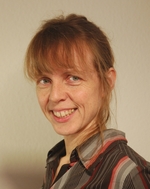
Sidney Redner is a Professor in the Department of Physics at Boston University, with affiliations to the Center for BioDynamics, the Center for Polymer Studies, and as External Faculty at the Santa Fe Institute. He holds a B.A. from UC Berkeley (1972) and a Ph.D. from MIT (1977). His research focuses on non-equilibrium statistical physics, chemical kinetics, diffusion processes, and social dynamics. He has held visiting positions at institutions including Université Pierre et Marie Curie (Paris) and the Los Alamos National Laboratory. Redner is an author of influential textbooks, including A Kinetic View of Statistical Physics (2010) and A Guide to First-Passage Processes (2001). His work spans topics like coarsening in Ising models, social balance dynamics, and reaction-diffusion systems. He has contributed to editorial roles at journals such as the Journal of Statistical Physics and Journal of Informetrics .
Jörn Dunkel is the MathWorks Professor of Mathematics and Professor of Applied Mathematics at the Massachusetts Institute of Technology (MIT), where he has been faculty since 2013. He holds appointments in the Department of Mathematics, with research spanning biological physics, active matter, and nonlinear dynamics. His work integrates theoretical modeling, computational approaches, and collaborative experiments to study complex systems across scales. Education: Dr. rer. nat. in Physics, Universität Augsburg (2008) Dipl. Math & Dipl. Phys, Humboldt-Universität zu Berlin (2004-2005) Visiting Student, University of Oxford (2000-2001) Research Focus: Dunkel's group develops mathematical frameworks for biological and soft matter systems, with emphasis on: emergent order in active materials; topological methods in biophysics; nonequilibrium statistical mechanics; and hydrodynamic theories of living systems. Recent breakthroughs include programmable active matter, topological control of biological networks, and entropy dynamics in living cells. Publication Trends: His 15 most recent works (2021-2024) reveal strong focus on: 1) Mechanobiology of cellular structures (membranes, nuclei), 2) Collective dynamics in active matter and biofilms, 3) Topological analysis of biological organization, and 4) Machine learning approaches for complex systems modeling. These consistently bridge mathematical theory with experimental biophysics. Awards & Honors: Schmidt Science Polymath Award (2023) Complex Systems Scholar Award, McDonnell Foundation (2016-2020) Alfred P. Sloan Research Fellowship (2015-2017) Gustav Hertz Prize, German Physical Society (2011) Multiple MIT-specific research and teaching awards Research Infrastructure: Leads the Physical Mathematics Group at MIT, collaborating with experimental labs worldwide. Regular group meetings (Thursdays) and seminar series (Physical Mathematics Seminar Tuesdays) anchor interdisciplinary research in mathematical biophysics.
M. Cristina Marchetti is a Professor of Physics and Director of the Biomolecular Science and Engineering Program at the University of California, Santa Barbara (UCSB). She holds a PhD from the University of Florida and has been at UCSB since 2018, following a 30-year tenure at Syracuse University where she served as Department Chair and Associate Director of the Syracuse Biomaterials Institute. Her research focuses on the emergent behavior of active matter, including biological tissues, collectively migrating cells, and nonequilibrium systems. She employs theoretical and computational approaches to study self-organization in complex systems, particularly in active nematics and epithelial mechanics. Marchetti is a co-Lead Editor of *Physical Review X* (2016–2021) and *Annual Reviews of Condensed Matter Physics*, and serves on the Leadership Board of the Boulder School for Condensed Matter and Materials Physics since 2005. Education: PhD in Physics, University of Florida, USA Bachelor's/Master's at University of Pavia, Italy Marchetti has received prestigious honors including Fellowships from the American Physical Society and AAAS, membership in the American Academy of Arts and Sciences and US National Academy of Sciences, and the 2019 Leo P. Kadanoff Prize. Her work bridges statistical physics, soft matter, and biological systems, with applications to tissue mechanics, collective dynamics, and nonequilibrium phenomena. Her research group investigates active matter systems using bottom-up modeling and top-down phenomenology, exploring topics like defect dynamics, phase separation, and fluid-structure interactions in biological contexts. Current projects include studying epithelial rigidity, active nematic flows, and the interplay between mechanics and biological processes.
Prof. Dr. Heiko Rieger is a full Professor in the Department of Theoretical Physics at Saarland University , within the Faculty of Natural Sciences and Technology . He leads a research group focused on theoretical biophysics, statistical physics, and computational physics, with significant involvement in the Collaborative Research Center SFB 1027, which investigates the physical principles of biological functioning. His research interests lie primarily in non-equilibrium systems , encompassing a broad range of phenomena including: The biophysics of killing , particularly how cytotoxic T cells eliminate infected or cancerous cells. Tumor growth dynamics , vascularization, interstitial fluid flow, and drug delivery. Active matter , collective behavior of self-propelled particles, and pattern formation. Stochastic search processes and optimization strategies in biological and physical contexts. Quantum phase transitions , relaxation, and thermalization in isolated quantum systems. Imbibition and fluid flow in nano-porous media. His recent publications (2024–2025) demonstrate a strong trend toward interdisciplinary modeling at the interface of physics and biology. Key themes include non-reciprocal interactions in flocking and active matter, stochastic thermodynamics in particle-field systems, collective chemotactic search , and crosstalk in cytoskeletal components during cell migration. His work combines analytical theory with computational simulations, often in collaboration with experimental groups. Prof. Rieger actively supervises a team of postdoctoral researchers and PhD students, contributing to the training of the next generation of theoretical physicists. His group members include Astik Haldar, Anil Kumar Dasanna, Marc Thome, Atul Tanaji Mohite, Jiwon Choi, Barbara Schmidt, Johannes Sicks, Marwa Hijazi, and Ivan Hornak. His research is supported through institutional affiliations and collaborative grants, notably within SFB 1027. He has no listed scientific awards in the provided text, but his extensive publication record in high-impact journals such as Physical Review Letters , Nature Communications , Biophysical Journal , and European Physical Journal underscores his scientific impact. The Rieger group is based at Campus E2.6, Room 4.17, Saarbrücken, and is part of a vibrant theoretical physics community at Saarland University.
Shi Youling is an Associate Research Fellow at the Institute of Biochemistry, Academia Sinica, specializing in bacterial physiology and host-pathogen interactions. Her research investigates bacterial growth, division mechanisms, and surface molecule modifications in pathogens like Listeria monocytogenes . She employs bacterial genetics, proteomics, and biochemistry to study metabolic regulation of cell division and peptidoglycan synthesis complexes. Her publications emphasize bacterial divisome structure, Min protein dynamics, and innovative imaging techniques for cell wall studies. Recent work (2023) reveals structural insights into bacterial division machinery, while earlier studies (2010-2019) focus on self-organizing protein systems governing membrane transport and spatial regulation in E. coli .
Lauren Zarzar is a Professor in the Department of Chemistry at Penn State University, affiliated with the Eberly College of Science. Her research intersects chemistry, materials science, and fluid dynamics, focusing on microscale systems and advanced synthesis techniques. Key research themes include surfactant chemistry , direct laser writing , and structural color . She explores nonequilibrium droplet systems, hybrid materials, and interfacial actuation mechanisms, with applications in water sustainability and energy systems. Recent publications highlight innovations in nanophase engineering , multi-bounce interference optics , and active droplet patterning . Trends show a strong emphasis on catalysis , microscale manufacturing , and dynamic emulsion systems . 2022 : Camille Dreyfus Teacher-Scholar Award 2025 : Presidential Early Career Award for Scientists and Engineers (seed grant recipient) 2022 : Eberly Distinguished Faculty Mentoring Award (seed grant recipient) Zarzar’s work involves collaborations with interdisciplinary teams across materials synthesis, optical engineering, and environmental research. Her lab develops lithography methods and photonic materials with support from grants like the NSF CAREER award (2021) and Penn State seed grants.
Pedro J. Sáenz is an Associate Professor in the Department of Mathematics at the University of North Carolina at Chapel Hill (UNC-Chapel Hill). He directs the Physical Mathematics Laboratory (PML), which explores physical applied mathematics and fluid mechanics through interdisciplinary collaboration between theoretical and experimental approaches. M.Sc & B.Sc, University of La Rioja, 2008 Ph.D., University of Edinburgh, 2014 Postdoctoral Fellow, Imperial College London, 2015 Instructor in Applied Mathematics, Massachusetts Institute of Technology (MIT), 2015–2019 Assistant Professor, UNC-Chapel Hill, 2019–present His research bridges physics, applied mathematics, and engineering, focusing on hydrodynamic quantum analogs, soft/active matter, and nonequilibrium physics. Key themes include wave-particle interactions, symmetry breaking, and self-propulsion mechanisms in classical systems. Recent publications highlight universal scaling laws in fluid dynamics, quantum-classical analogs in pilot-wave systems, and symmetry-driven phenomena in Faraday waves and droplet localization. These works integrate mathematical theory with experimental validation. 2025 Kavli Fellowship NSF CAREER award (2021) Alfred P. Sloan Fellowship (2023) Van Dyke Gallery of Fluid Motion Award (2022) APS Gallery of Fluid Motion Award (2024) Pedro's lab (PML) trains students and researchers in theoretical modeling, numerical simulations, and experimental design. His work has secured major grants, including the NSF CAREER award, and has been featured in Nature , Science Advances , and Physical Review X .
Erwin Frey is a Professor of Theoretical Physics at the Faculty of Physics, Ludwig Maximilian University of Munich (LMU), where he leads the Frey Group. His research focuses on the physics of living systems, statistical physics, and emergent phenomena in complex systems. He is particularly known for his interdisciplinary approach connecting theoretical physics with biological processes. His research interests encompass statistical physics, biophysics, and nonequilibrium systems, with specific focus on active matter, self-organization in biology, and the fundamental principles underlying complex biological systems. His work bridges theoretical physics with biological applications, exploring how physical principles govern living systems at various scales. Frey's research group investigates diverse phenomena including protein pattern formation, cell division mechanisms, morphogenesis, and synthetic biology. His work demonstrates how fundamental physical principles can explain complex biological processes, with applications ranging from bacterial cell division to immune system organization. His scientific contributions include significant advances in understanding pattern formation in biological systems, particularly the Min protein system in E. coli and thymic architecture development. His group's work shows how robust spatial organization emerges from simple physical principles in living systems. As an educator, Frey teaches advanced topics in theoretical physics, including his lecture series on 'Nonequilibrium Field Theories and Stochastic Dynamics,' which covers Langevin equations, Fokker-Planck formalism, and path integrals with applications to active matter and soft condensed matter physics. He actively collaborates with experimental groups, including Suckjoon Jun's lab at UCSD, and participates in international research networks and conferences, such as the upcoming conference on 'Emerging Trends in Physics of the Cell' at TUM in October 2025.
Friederike Schmid is a Professor (W3) of Theoretical Physics at the Institute of Physics, Johannes Gutenberg University Mainz (JGU). Her research group focuses on statistical physics and soft matter theory, with affiliations including the Collaborative Research Center CRC-TRR 146 'Multiscale simulation methods for soft matter systems' where she serves as spokesperson. Education includes a Habilitation (1997) and PhD (1991) from the University of Mainz under Kurt Binder, and a Diploma in Physics from Heidelberg University/LMU Munich (1989). Research spans multiscale modeling , nonequilibrium phenomena , and biological physics . Key interests include: Polymer dynamics and self-assembly Lipid membranes and nanomaterial design Biological interfaces and phase transitions Advanced simulation methods for soft matter Her publications demonstrate strong emphasis on computational approaches to polymer physics, biomolecular systems, and interfacial phenomena, with recent work exploring RNA delivery systems and biomolecular condensates. Honors include: APS Fellow (2023) JGU Teaching Award (2021) DFG Gerhard Hess Award (1998) Heisenberg Fellowship (1998) She leads the Schmid Group and coordinates major grants including DFG-funded projects. Editorial roles include Senior Editor for The Journal of Physical Chemistry and Divisional Associate Editor for Physical Review Letters . Her laboratory conducts interdisciplinary research in soft matter theory, collaborating with experimental groups and maintaining computational infrastructure for large-scale simulations.