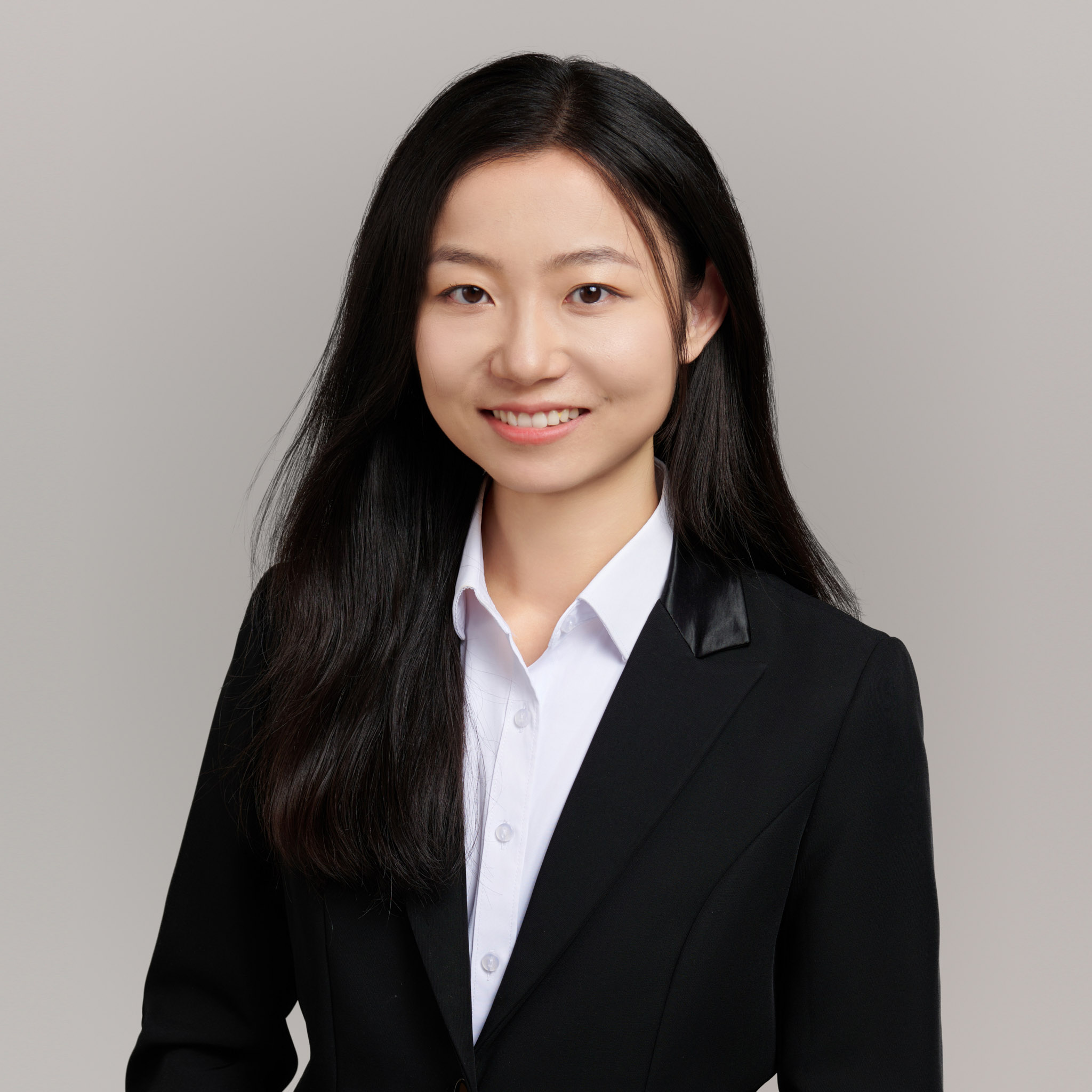
Aida Khajavirad is an Assistant Professor in the Department of Industrial and Systems Engineering at Lehigh University. Her research focuses on advancing Mixed-Integer Nonlinear Optimization (MINLP) at theoretical, algorithmic, and software levels, integrating convex analysis, integer programming, and constraint programming. She has recently expanded her work to optimization algorithms for data science and machine learning applications. Education: Ph.D. in Mechanical Engineering from Carnegie Mellon University (2012). Research Interests : Mixed Integer Nonlinear Optimization Nonconvex Optimization Algorithm Development Convex Analysis Combinatorial Optimization Her work emphasizes bridging theoretical foundations with practical algorithm design for real-world challenges. Awards : 2023 INFORMS Computing Society Prize This prestigious award recognizes her contributions to optimization theory and applications. Grants & Funding : Air Force Office of Scientific Research ($1M award, 2023) This funding supports her research on advanced optimization algorithms. Labs and Affiliations: Based in the Harold S. Mohler Laboratory, she leads interdisciplinary efforts in optimization and data science.
Veronica Piccialli is a Full Professor at the Department of Computer, Control and Management Engineering "Antonio Ruberti" (DIAG) at Sapienza University of Rome. She teaches Geometry I for Management Engineering and Optimization Methods for Machine Learning for Data Science. Previously, she was Associate Professor at the University of Rome Tor Vergata (2020-2021) and Researcher there from 2008 to 2020. She serves as Associate Editor for INFORMS Journal on Computing (since 2019) and EURO Journal on Computational Optimization (since 2021). Dr. Piccialli earned her degree in Computer Engineering (summa cum laude) and PhD in Operations Research from Sapienza University of Rome in 2000 and 2004 respectively. In 2006, she completed a postdoc at the Combinatorics & Optimization department of the University of Waterloo, Canada. She obtained Italian national scientific qualifications as Associate Professor in 2013 and as Full Professor in 2017. Her research focuses on the intersection of optimization and machine learning, with particular expertise in nonlinear optimization, semidefinite programming, and mixed integer nonlinear programming. She applies these methods to diverse areas including Brain Computer Interfaces, electric consumption disaggregation, and process engineering for membrane systems. Her work demonstrates how advanced optimization techniques can enhance machine learning algorithms and solve complex engineering problems. Her recent publications show a strong trend toward integrating optimization with machine learning, particularly in clustering algorithms, support vector machines, and neural networks. She has developed exact algorithms for semi-supervised learning problems and applied optimization techniques to real-world challenges in logistics, energy systems, and process engineering. Her interdisciplinary approach bridges theoretical advances in optimization with practical applications across multiple domains. Dr. Piccialli has authored or co-authored over 40 articles in prestigious journals including Mathematical Programming, SIAM Journal on Optimization, IEEE Transactions on Neural Networks and Learning Systems, and Computational Optimization and Applications. She has also contributed 3 refereed book chapters to international publications. As an educator, she supervises student research and teaches advanced courses in optimization methods and geometry. Her teaching materials demonstrate a commitment to connecting theoretical concepts with practical applications, particularly in data science and machine learning contexts. Her current research involves collaborations with Université de Lorraine on membrane systems for gas filtration and with RFI (Rete Ferroviaria Italiana) on optimizing last-mile facilities for freight trains, demonstrating the real-world impact of her optimization expertise.
Nevin Mutlu is an Assistant Professor in the Operations Planning, Accounting & Control (OPAC) Group within the School of Industrial Engineering at Eindhoven University of Technology (TU/e). She is affiliated with multiple research centers including the Data Science Center Eindhoven (DSC/e), Efficient Consumer Response (ECR) Community, Retail Operations Lab, and Freight Transport & Logistics Research Group. Her industry partnerships include Nike and the ECR Community, demonstrating strong connections between her academic research and practical retail applications. Dr. Mutlu received her PhD and MSc degrees in Industrial and Systems Engineering from Virginia Tech, USA in 2016 and 2013, respectively. She also holds a BSc degree in Industrial Engineering and a BA degree in Economics from University at Buffalo, State University of New York, USA. Prior to joining TU/e in 2016, she served as a graduate teaching assistant and instructor at Virginia Tech, teaching courses in operations research and working with the Office of Emergency Management on real-world applications. Her research bridges optimization, economics, and marketing to address industry-relevant problems in retail operations and logistics. She specializes in modeling how operational decisions impact consumer behavior, with particular focus on retail pricing, experiential retail, e-commerce adoption, and transportation systems. Her interdisciplinary approach combines theoretical optimization techniques with practical business considerations, resulting in impactful research that addresses current challenges in retail and supply chain management. Analysis of her publications reveals a strong trajectory in operations research with increasing focus on consumer behavior dynamics. Her work spans theoretical optimization methods (resource allocation, production-routing problems) and applied retail contexts (experiential retail, dual-channel strategies). Recent publications show growing interest in sustainability aspects of retail operations and transportation, reflecting contemporary industry challenges. Her research consistently addresses the complex interplay between operational decisions and consumer responses, providing valuable insights for both academia and industry. EU Horizon 2020 Marie Curie Individual Fellowship (2018-2020) Dr. Mutlu actively contributes to research funding through projects like SYNERCIZE: SYnchromodal Transport NEtworks for a Construction Industry towards Zero Emissions (2025-2027), where she serves as a project member. Her teaching portfolio includes Supply Chain Management, Revenue Management and Pricing Analytics, and Project and Process Management courses. She has also served on committees such as the AI Planner of the Future program, demonstrating engagement with emerging technologies in her field. Her research is supported by multiple affiliations including the Data Science Center Eindhoven, ECR Community, and Retail Operations Lab, providing collaborative environments for interdisciplinary work. Her industry partnerships, particularly with Nike, facilitate the translation of academic research into practical retail solutions. The SYNERCIZE project demonstrates her expanding research scope into sustainable transportation networks for construction industries.
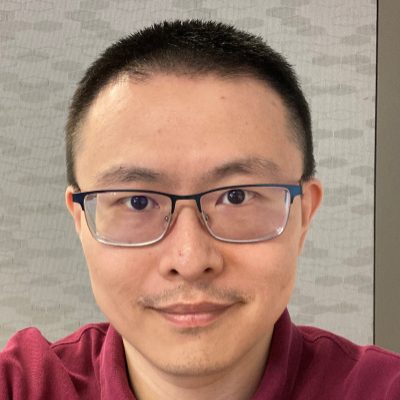
Cheng Guo is an Assistant Professor in the School of Mathematical & Statistical Sciences at Clemson University (Subfaculty: Operations Research). His research focuses on the intersection of optimization and economics, particularly in energy markets and power systems. He addresses challenges such as nonconvex physical constraints and renewable energy uncertainty using advanced optimization techniques like copositive programming and decomposition algorithms. Education: Ph.D. in Industrial Engineering (University of Toronto, 2021), M.S. in Operations Research (Columbia University, 2017), B.A. in Economics and B.S. in Mathematics (Wuhan University, 2015). Research interests include energy markets, power systems, copositive programming, stochastic programming, integer programming, and decomposition methods. His work bridges economic equilibrium models with computational methods to solve large-scale, nonlinear power system optimization problems. Selected publications highlight contributions to risk-aware unit commitment, copositive duality in energy markets, and stochastic scheduling in healthcare. Upcoming engagements include the IEEE Power & Energy Society General Meeting (2025) and the POMS Conference (2025). Awards: Bert Wasmund Graduate Fellowship in Sustainable Energy Research (2018) Research emphasizes mechanism design for nonconvex markets, computational methods for large-scale systems, and applications in healthcare operations.
Jon Lee is the G. Lawton and Louise G. Johnson Professor of Engineering at the University of Michigan's College of Engineering. He previously held faculty positions at Yale University and the University of Kentucky, and served as an adjunct professor at New York University. Before his academic career, he was a Research Staff member at IBM T.J. Watson Research Center where he managed the mathematical programming group. Lee's research focuses on mathematical optimization, particularly combinatorial optimization, integer programming, and maximum-entropy sampling. His work bridges theoretical foundations with practical applications in experimental design, statistical modeling, and computational mathematics. He has made significant contributions to D-optimal design theory, perspective relaxations for nonconvex optimization, and generalized inverse computations. His recent publication trends (2022-2025) show consistent work in maximum-entropy sampling problems, D-optimal design algorithms, convex relaxations for nonconvex optimization, and generalized inverse computations. The articles demonstrate increasing sophistication in handling large-scale optimization problems while maintaining theoretical rigor, with particular emphasis on algorithmic efficiency for real-world applications. Lee has received notable recognition including: INFORMS Computing Society Prize (2010) Fellow of INFORMS (since 2013) As an academic leader, Lee has served as founding Managing Editor of Discrete Optimization (2004-06), currently serves as Co-Editor of Mathematical Programming, and is on editorial boards for Optimization and Engineering and Discrete Applied Mathematics. He chaired the Mathematical Optimization Society (2008-10) and the INFORMS Optimization Society (2010-12). His textbook A First Course in Combinatorial Optimization (Cambridge University Press) and open-source book A First Course in Linear Optimization have become standard references in the field. Lee maintains active research collaborations through his work with the Mathematical Optimization Society and INFORMS, and has participated in significant research programs including the Fall 2017 program on Bridging Continuous and Discrete Optimization at the Simons Institute.
Wang Guanyi is an Assistant Professor in the Department of Industrial Systems Engineering and Management at the National University of Singapore (NUS). He is affiliated with the Institute of Operations Research and Analytics (IORA), part of NUS’s Smart Nation Research Cluster. His research focuses on Mixed Integer Programming, Nonlinear Optimization, and Statistical Learning with applications in Machine Learning. Guanyi holds a Ph.D. from Georgia Institute of Technology (2016–2022), advised by Prof. Santanu S. Dey, an M.S. from Johns Hopkins University (2014–2016), advised by Prof. Amitabh Basu, and a B.S. from University of Science and Technology, Beijing (2010–2014). His work bridges optimization theory and machine learning, with notable contributions to sparse principal component analysis (PCA), algorithm design for high-dimensional problems, and approximation algorithms for mixed-integer nonlinear optimization. Recent research trends include adversarial robustness in PCA, fair decision-making frameworks, and efficient stochastic optimization methods. Guanyi’s publications appear in top-tier journals like Mathematical Programming, Operations Research, and IEEE Transactions on Signal Processing. He has developed novel algorithms for sparse regression, group sparsity regularization, and neural network pruning. His research emphasizes both theoretical guarantees and practical computational efficiency.
Prof. Dr. Oliver Stein is a faculty member at the Karlsruhe Institute of Technology within the School of Business , specifically the Department of Operations Research . His research focuses on Continuous Optimization , Non-smooth Optimization , and Multiobjective Optimization , with applications in Operations Research , Game Theory , and Engineering Design . Stein has contributed extensively to semi-infinite programming , bilevel optimization , and mixed-integer nonlinear optimization . His work includes theoretical advancements in constraint qualifications , projected gradient flows , and epigraph reformulations , alongside practical applications in gemstone cutting and modular system design . His 15 most recent publications span topics such as non-convex Nash equilibrium problems , granularity in polynomial optimization , and branch-and-bound algorithms , reflecting a blend of theoretical rigor and real-world impact. Stein has received prestigious awards including the Heisenberg fellowship (2005-2006) and Feodor Lynen fellowship (1999-2000). He serves on editorial boards of journals like the Journal of Global Optimization and Optimization .
Dr. Jie Li is a Senior Lecturer at the Department of Chemical Engineering, University of Manchester, affiliated with the EPSRC Peer Review College. His expertise spans mathematical modeling, machine learning, and data-driven optimization applied to process systems engineering, including energy efficiency, CO2 capture, renewable energy storage, and Industry 4.0 integration. Research interests focus on Process Systems Engineering (PSE), addressing sustainability challenges through optimization of complex systems. Key areas include data-driven optimization, machine learning for process synthesis, multi-scale modeling of energy systems, and carbon capture technologies. Awards: EPSRC New Investigator Award, Best Poster Awards (ChemEngDayUK22, CSCST-SCI), and 'One-hundred Talents' from Chinese Academy of Sciences. Editorial Roles: Guest editor for Processes and Frontiers in Chemical Engineering . Labs/Teams: Leads the Process Development and Integration group, contributing to UN SDGs related to energy and sustainability. Recent publications emphasize AI-assisted process design, rescheduling strategies for batch processes, and CO2/CH4 separation via MOF membranes. His work bridges chemical engineering, applied mathematics, and computer science to advance sustainable industrial practices.
Ambros Gleixner is a Professor at HTW Berlin since 2020 and an affiliated researcher at the Zuse Institute Berlin (ZIB) since 2008. His research focuses on computational aspects of mixed-integer linear and nonlinear programming, with emphasis on exact rational arithmetic and algorithm verification. PhD in Mathematics (2015), Technische Universität Berlin Diplom (MSc) in Mathematics (2008), Technische Universität Berlin Vordiplom (BSc) in Mathematics (2004), Universität Bayreuth His work spans mathematical optimization, operations research, and computational mathematics. At ZIB, he leads projects like developing the MINLP solver SCIP , the LP solver SoPlex , and verifying integer programming results through VIPR . Recent publications highlight advancements in exact rational MIP, GPU-parallel algorithms, and energy system optimization. Scientific Awards : MERIT Visiting Scholar at University of Melbourne (2013) Teaching : Offers bachelor's theses in optimization and computational mathematics. Requires students to have attended relevant seminars and possess programming skills. Office hours by email appointment through Ambros.Gleixner@HTW-Berlin.de . Labs & Teams : Principal investigator at ZIB's Mathematical Algorithmic Intelligence division, Research Campus MODAL , and Linear, Integer, and Constraint Programming project.
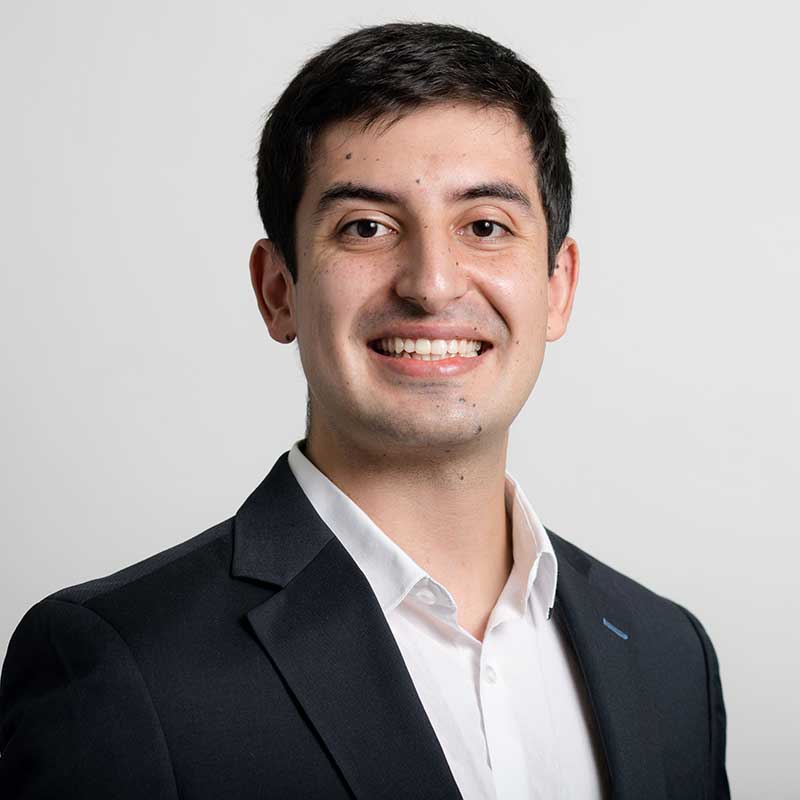
David E. Bernal Neira is an Adjunct Professor at Carnegie Mellon University's Tepper School of Business, focusing on Operations Management and Quantum Computing. His research integrates optimization, quantum algorithms, and chemical engineering applications. Education: PhD in Chemical Engineering, Carnegie Mellon University (2021) BS in Physics, Universidad de los Andes (2018) MS in Chemical Engineering, Universidad de los Andes (2016) BS in Chemical Engineering (Cum Laude), Universidad de los Andes (2014) Research Interests: He specializes in Process Intensification, Quantum Algorithm Design, Nonlinear Optimization, and Machine Learning applications in chemical systems. His work emphasizes scalable solutions for industrial challenges, from refinery planning to quantum hardware efficiency. Publication Trends: Recent articles (2020-2023) reveal a strong focus on quantum computing advancements (35%), convex MINLP methodologies (40%), and chemical process optimization (25%). Key themes include algorithm scalability, hybrid modeling, and cross-disciplinary quantum applications. Awards: Best Talk Award, Quantum Computing Workshop (AIChE/DTU, 2022) AIChE CAST Directors’ Student Presentation Finalist (2020) Mark Dennis Karl Teaching Award (CMU, 2019) Cum Laude in Chemical Engineering (UniAndes, 2014) Advising and Labs: While specific student engagements are undisclosed, his research involves collaborations across computational chemistry and quantum information groups. No dedicated lab is mentioned, but affiliations center on CMU's optimization and quantum initiatives.
Yibo Xu is a Visiting Assistant Professor in the Department of Mathematics & Statistics at the University at Albany, State University of New York , holding this position since August 2024. PhD in Mathematical Sciences (2018) from Clemson University Postdoctoral Fellow at Clemson University (2021-2024) Postdoctoral Research Associate at Rensselaer Polytechnic Institute (2018-2021) His research focuses on continuous optimization , mixed-discrete programming , and large-scale optimization methods for machine learning . He has also explored convex analysis, game theory, computational algebraic geometry, and cryptography. Recent publications highlight trends in stochastic gradient methods , distributed optimization , accelerated algorithms , and polyhedral analysis for nonconvex problems. Teaching : Courses include Optimization Methods, Machine Learning, and Mathematics for Data Science Advising : Mentored PhD students Yuheng Jiang and Tina Yidan Guo Professional Activities : Session chair roles at INFORMS and Continuous Optimization conferences
Edward P. Gatzke is an Associate Professor and Undergraduate Program Director in the Department of Chemical Engineering at the Molinaroli College of Engineering and Computing, University of South Carolina. He holds a Ph.D. from the University of Delaware (2000) and a B.Ch.E. from Georgia Institute of Technology (1995). His research focuses on process modeling, control, and optimization, emphasizing dynamic and nonlinear characteristics of chemical processes. Key areas include controller formulations to reduce product variability, estimation/diagnostic methods for indirect process data, parallel programming for mixed-integer optimization (e.g., nonconvex outer approximation and branch-and-reduce methods), and applications in particulate processing, bio-processes, and large-scale systems. Recent publications span electrochemical device design, nonlinear model predictive control (NMPC), metabolic system optimization, and electrochemical modeling. His work bridges theoretical advancements with practical industrial applications. Dr. Gatzke directs undergraduate programs, overseeing curriculum and student development. His research group explores cutting-edge computational methods for complex systems, supported by collaborative efforts in energy and biotechnology sectors.
Mariagrazia Dotoli is a Full Professor in Systems and Control Engineering at the Polytechnic University of Bari, Department of Electrical and Information Engineering, where she has been serving since 1999. She previously held the position of Vice Rector for Research (2011-2013) and served as a member elect of the Academic Senate (2012-2015). Currently, she coordinates the interuniversity PhD course in Industry 4.0 between the Polytechnic University of Bari and the University of Bari Aldo Moro. Her research interests span across multiple domains of systems engineering, with particular focus on discrete event industrial systems, Petri nets, manufacturing systems, supply chains, logistics and transportation systems, traffic networks, and energy systems. Her work bridges theoretical control systems with practical industrial applications, especially in the context of Industry 4.0 and smart manufacturing. Her extensive publication record demonstrates consistent contributions to automation science and engineering, with recent work focusing on warehouse optimization, collaborative robotics, supply chain management, and smart energy systems. Her research shows a clear trend toward integrating classical control theory with modern computational approaches, including machine learning and optimization algorithms for industrial applications. Prof. Dotoli maintains significant editorial responsibilities as Senior Editor of the IEEE Transactions on Automation Science and Engineering and Associate Editor for multiple IEEE journals. She has organized and chaired numerous international conferences including CASE2024, MED2021, and CODIT2020, demonstrating leadership in the automation community. Her academic career shows continuous progression from Assistant Professor (1999) to Full Professor, with additional leadership roles in university administration and international professional organizations. She remains actively engaged in both theoretical research and practical industrial applications of control systems engineering.
Nikola Markovic is an Associate Professor in the Civil & Environmental Engineering Department at the University of Utah, specializing in applications of operations research and data science to transportation problems. His research spans paratransit optimization, work zone safety, airport operations, and disaster response logistics. Dr. Markovic earned his educational qualifications in Transportation Engineering, including a BS from the University of Belgrade, and both MS and PhD degrees from the University of Maryland. His research focuses on applying advanced computational methods to solve practical transportation challenges. Key areas include optimizing paratransit services for individuals with disabilities, improving snowplow routing in Utah, enhancing work zone safety through computer vision, and developing systems for airport operations monitoring at non-towered airports. His work often involves collaboration with transportation agencies and industry partners to ensure practical applicability. Analysis of his recent publications reveals a strong trend toward integrating machine learning techniques with traditional transportation engineering problems. His work frequently employs advanced methods like generative adversarial networks, deep learning, and optimization algorithms to address complex transportation challenges across multiple domains including paratransit, work zones, airports, and disaster response. Nominated for the Early Career Teaching award (2023 and 2021) Ranked among top 15% instructors in the College of Engineering (2022) Winner of Transportation Science and Logistics Best Paper Award from INFORMS (2022) Winner of National ACRP student design competition (2021) Dr. Markovic has advised numerous graduate students through thesis research courses in transportation engineering. His grant portfolio includes significant funding from the Utah Department of Transportation, Utah Transit Authority, and National Science Foundation, supporting research in accessibility, work zone safety, and paratransit service improvement. Current projects include enhancing accessibility for individuals with limited mobility using AI and cycling data, measuring roadside feature impacts on crashes, and developing technology integration for disadvantaged communities. His laboratory work focuses on transportation data analytics, with emphasis on computer vision applications for infrastructure monitoring and optimization algorithms for transportation operations. Current team projects involve developing systems for non-towered airport monitoring, improving paratransit services through technology integration, and optimizing emergency response after seismic events.
Samuel A. Burer is the Tippie-Rollins Professor and Departmental Executive Officer in Business Analytics at the University of Iowa's Tippie College of Business. He earned his Ph.D. in Algorithms, Combinatorics, and Optimization from Georgia Institute of Technology and a B.S. in Mathematics from the University of Georgia. Research Interests: Optimization, operations research, management sciences, discrete and continuous optimization, decision making under uncertainty. Editorial Roles: Area Editor for Operations Research (2020-2026), Associate Editor for SIAM Journal on Optimization, Mathematical Programming, and others. Teaching: Teaches across all business education levels and received multiple teaching awards, including the University of Iowa President & Provost Award for Teaching Excellence. Scientific Awards: INFORMS Computing Paper Prize (2020) SIAM Optimization Test of Time Award (2023) President & Provost Award for Teaching Excellence (2022) Collegiate Teaching Award (2020) Optimization Prize for Young Researchers (2002) Grants: Principal Investigator for NSF CAREER grant (2006-2012) and collaborative NSF grants (2002-2005) focused on nonconvex quadratic and conic optimization theory. Projects: Developed optimization algorithms for Trader Joe's warehouse location analysis, college football rankings, and created software tools like QuadProgBB and OPTDNN for solving semidefinite programs.