Prof. Lev Vaidman is a theoretical physicist at the School of Physics and Astronomy , Tel Aviv University , where he holds the Alex Maguy-Glass Chair in Physics of Complex Systems. His research focuses on the foundations of quantum mechanics and quantum information , with significant contributions to many-worlds interpretation , weak measurements , and quantum paradoxes . He actively collaborates with institutions like Chapman University and the John Bell Institute. Academic Roles: Professor at Tel Aviv University, Fellow at Chapman University, Honorary Fellow at John Bell Institute Leadership: Moderator of quant-ph arXiv, Editorial Board member of International Journal of Quantum Information, Managing Editor of Quantum Studies: Mathematics and Foundations Research Themes: Vaidman’s work bridges quantum foundations (e.g., resolving paradoxes in interferometry) and applied quantum information (e.g., counterfactual communication protocols). He pioneered concepts like teleportation of continuous variables and interaction-free measurements , influencing experimental implementations worldwide. Scientific Recognition: Holds prestigious fellowships and contributes to major quantum mechanics encyclopedias. His recent publications analyze quantum particle trajectories and weak value controversies , often co-authored with experimental collaborators.
Ichiro Hasuo is a Professor at the National Institute of Informatics (NII) in Tokyo, Japan, where he serves as Director of the Research Center for Mathematical Trust in Software and Systems. He holds a joint appointment at The Graduate University for Advanced Studies (SOKENDAI). Since 2016, he has been the Research Director of the JST ERATO Metamathematics for Systems Design Project, and founded Imiron Co., Ltd. in 2024. Education: PhD in Computer Science (cum laude) from Radboud University Nijmegen (2008) MSc in Mathematical and Computing Sciences from Tokyo Institute of Technology (2004) BSc in Mathematics from University of Tokyo (2002) His research focuses on foundational aspects of software science, particularly formal verification techniques using mathematical structures from category theory and coalgebra. He develops methods for ensuring reliability in cyber-physical systems and systems incorporating machine learning components. Current work emphasizes logical frameworks for autonomous vehicle safety and mathematical trust in complex systems. Hasuo's publications demonstrate consistent focus on theoretical foundations with practical applications. His recent work spans coalgebraic verification methods, temporal logic for hybrid systems, quantum programming semantics, and applications to autonomous driving systems. Key themes include compositional reasoning, probabilistic modeling, and the integration of discrete and continuous system verification. Awards and Honors: Best Paper Award at ICTAC 2024 Minister of Education, Culture, Sports, Science and Technology Commendation (2024) Distinguished Paper Award at CAV 2023 Outstanding Reviewer Award at EMSOFT 2022 Best Paper Award at ICECCS 2018 Best Paper Award at CONCUR 2014 Hiroshi Fujiwara Encouragement Prize (2012) PhD cum laude (2008) He leads multiple major research grants including: JST ASPIRE (2024-2029) for international collaboration on software trust JST START (2022-2025) for autonomous driving verification JST ERATO Metamathematics for Systems Design (2016-2025) Several JSPS KAKENHI grants As head of the MMM laboratory (Hasuo-Lab) at NII, he supervises PhD students and postdoctoral researchers in formal methods and mathematical systems design.
Carlo Nicolai is Reader in Logic at King's College London's Department of Philosophy. He holds a DPhil from the University of Oxford and a Master's in Logic and Philosophy of Science from Catholic University Milan. Previously, he held positions at LMU Munich (Marie Skłodowska-Curie Fellow) and Utrecht University (VENI NWO Fellow). His research focuses on: Formal theories of truth and consequence Predicate approaches to modality Mathematical explanation and commitment Formal approaches to de re modality Truth-theoretic deflationism Nicolai's recent publications (2019-2023) demonstrate a consistent focus on truth theories, logical paradoxes, and mathematical foundations, with significant contributions to non-classical logics, proof theory, and formal semantics. His work frequently explores the intersection of logic and philosophy of mathematics. Major awards and grants: Horizon MSCA Staff Exchanges (Co-investigator, 2023-2027) AHRC Starting Grant (Principal Investigator, 2022-2024) VENI NWO Individual Fellowship (2017-2020) Marie Skłodowska-Curie Fellowship (2016-2017) He supervises doctoral and master's students in philosophy, logic, and metaphysics. Nicolai leads the AHRC project "Properties, Paradox, and Circularity" and co-leads the Horizon project on substructurality. He founded the London Group for Formal Philosophy and serves as Associate Editor for Journal of Logic, Language, and Information and Journal for the Philosophy of Mathematics. Nicolai is an external member of Munich Centre for Mathematical Philosophy.
Frederick Maier serves as the Associate Director for Academic Programs at the University of Georgia's Institute for Artificial Intelligence and holds the role of Assistant Research Scientist. His research focuses on logic and artificial intelligence, particularly knowledge representation and nonclassical reasoning. He earned a PhD in Computer Science from the University of Georgia, following degrees in Philosophy from Tulane University and Spring Hill College. Education: Doctor of Philosophy in Computer Science, University of Georgia Master of Science in Artificial Intelligence, University of Georgia Master of Arts in Philosophy, Tulane University Bachelor of Arts in Philosophy (summa cum laude), Spring Hill College Research Interests: Dr. Maier’s work spans artificial intelligence, logic systems, knowledge representation, and their applications in domains like agriculture, healthcare, and environmental science. He explores nonclassical reasoning paradigms and integrates semantic web technologies with machine learning. Publications Overview: His recent work emphasizes machine learning applications in precision agriculture (e.g., biomass prediction), logic-based AI systems, and medical informatics. Key themes include data synthesis, sensor-based activity recognition, and solar radiation forecasting. Advising & Grants: No formal advisees or grant details listed in the provided text. Labs/Teams: Affiliated with the Institute for Artificial Intelligence at UGA.
Gillian Russell is a Professor at the Australian National University and a Part-time Professorial Fellow at the University of St. Andrews. She received her PhD in Philosophy from Princeton University in 2004. Her academic work focuses on the intersection of logic, language, and knowledge, with significant contributions to philosophical debates about analyticity, logical consequence, and epistemology. Her research spans several interconnected areas in analytic philosophy. Russell is particularly known for her work on the analytic/synthetic distinction, defending its viability against Quinean criticisms while accommodating insights from semantic externalism, as evidenced in her book Truth in Virtue of Meaning: A Defence of the Analytic/Synthetic Distinction (2011). Her recent book Barriers to Entailment: Hume's Law and other limits on logical consequence (2023) explores logical barriers such as Hume's Law (the inability to derive 'ought' from 'is') and develops a unified logical account of various entailment barriers. She has made significant contributions to debates about logical pluralism, arguing for non-normative versions of logical pluralism and examining the relationship between logic and feminist philosophy in her forthcoming paper 'From Anti-exceptionalism to Feminist Logic.' Her work often bridges technical formal logic with broader philosophical questions about language, knowledge, and rationality, demonstrating how developments in formal logic can illuminate traditional philosophical problems. Russell's scholarly output reveals consistent engagement with foundational questions in logic and language. Her work shows particular interest in how formal logical systems relate to natural language reasoning, the epistemological status of logical laws, and the boundaries of logical consequence. She has edited significant reference works including the Routledge Companion to Philosophy of Language (2011, 2014) and New waves in philosophical logic (2012), helping to shape contemporary discourse in these fields. Her research demonstrates a sustained commitment to clarifying conceptual boundaries while remaining attentive to the practical implications of logical theory.
Arne Meier is a Professor at Leibniz Universität Hannover, affiliated with the Faculty of Electrical Engineering and Computer Science and the Institute of Theoretical Computer Science. He heads the Algorithms research group, focusing on theoretical aspects of computer science with applications to artificial intelligence and database systems. Meier obtained all his academic degrees—Bachelor's, Master's, PhD, and Habilitation—at Leibniz Universität Hannover, establishing a strong foundation in theoretical computer science. His academic journey at the same institution reflects his deep commitment to advancing research in computational theory. Meier's research spans several interconnected areas in theoretical computer science. His primary focus is on complexity theory, particularly the parameterized complexity of problems in non-classical logics with applications to AI. He also investigates enumeration algorithms and the logical foundations of artificial intelligence. His work bridges theoretical computer science with practical applications in knowledge representation and reasoning systems. He has a notable interest in LaTeX and typography, having developed the 'timeline' package for creating timelines in LaTeX documents. His recent publications (2023-2025) demonstrate a consistent focus on the intersection of logic, complexity, and artificial intelligence. Meier's work shows progression from foundational research in dependence and team logics toward more applied areas in argumentation theory and database systems. His research increasingly addresses computational challenges in AI systems, particularly in reasoning under uncertainty and handling inconsistent information. Meier actively contributes to the academic community through extensive program committee service for major conferences including AAAI (2021, 2023, 2024, 2025), IJCAI (2021-2025), and FoIKS (2024 as Co-Chair, 2026). He has also served as a reviewer for numerous conferences and journals in theoretical computer science and artificial intelligence. His current research projects include the DAAD-funded 'Applications and Complexity of Logics in Semiring-Team-Semantics' (2024-2025) and the DFG project 'Team Logics: New Bridges to Database Repairs' (2023-2026). Previously, he led the DFG project 'Nonclassical logics: parametrised and enumeration complexity' (2013-2022) and the MWK project 'Innovation Plus: Komplexität von Algorithmen' (2020-2022). Meier leads the Algorithms research group at Leibniz Universität Hannover, which focuses on theoretical aspects of algorithms with applications to logic and artificial intelligence. The group's work spans complexity theory, logical formalisms, and their applications to computational problems in knowledge representation and database systems.
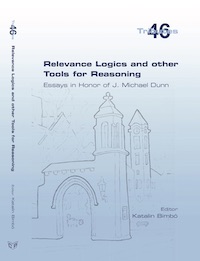
Professor Katalin Bimbo is a distinguished faculty member in the Department of Philosophy at the University of Alberta, where she teaches courses in logic, philosophy of mathematics, and related areas. She is an active researcher with numerous publications and significant contributions to the field of nonclassical logics, particularly relevance and substructural logics. University of Alberta, Department of Philosophy Active faculty member teaching courses through 2026 Principal investigator on SSHRC-funded research projects Organizer of the Third Workshop series on nonclassical logics Professor Bimbo's research focuses on the theoretical foundations of logic and its applications across multiple disciplines. Her work bridges philosophy, mathematics, and computer science, with particular emphasis on the connections between formal logical systems and computational theory. She has made significant contributions to our understanding of relational semantics, proof theory, and the algebraic structures underlying nonclassical logics. Analysis of Professor Bimbo's recent publications reveals a consistent focus on the theoretical underpinnings of nonclassical logics, particularly relevance and substructural logics. Her work demonstrates deep connections between proof theory, model theory, and algebraic structures. A notable trend is her exploration of the historical development of logical systems alongside their contemporary applications, especially in theoretical computer science. Her research shows increasing integration of computational perspectives with traditional philosophical approaches to logic. SSHRC Insight Grant: 'From the Routley–Meyer semantics to gaggle theory and beyond' SSHRC Insight Grant: 'The third place is the charm: The emergence, the development and the future of the ternary relational semantics' Professor Bimbo has secured significant research funding through SSHRC grants and has mentored numerous students through her teaching and research supervision. She actively organizes academic workshops including the Third Workshop series (2016, 2024), which brings together leading researchers in nonclassical logics. Her collaborative work with J. Michael Dunn represents a significant contribution to the field, spanning multiple decades and resulting in numerous joint publications and edited volumes. Professor Bimbo is actively involved in the Third Workshop research group, which focuses on the evolution and application of relational semantics for substructural and other intensional logics. This collaborative effort brings together researchers from multiple institutions and countries to advance our understanding of nonclassical logical systems and their applications.