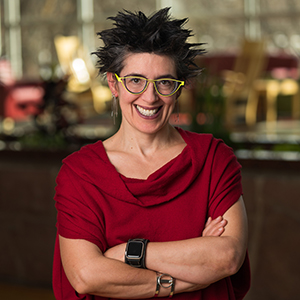
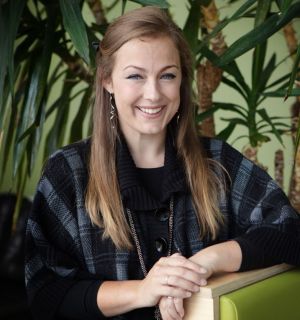
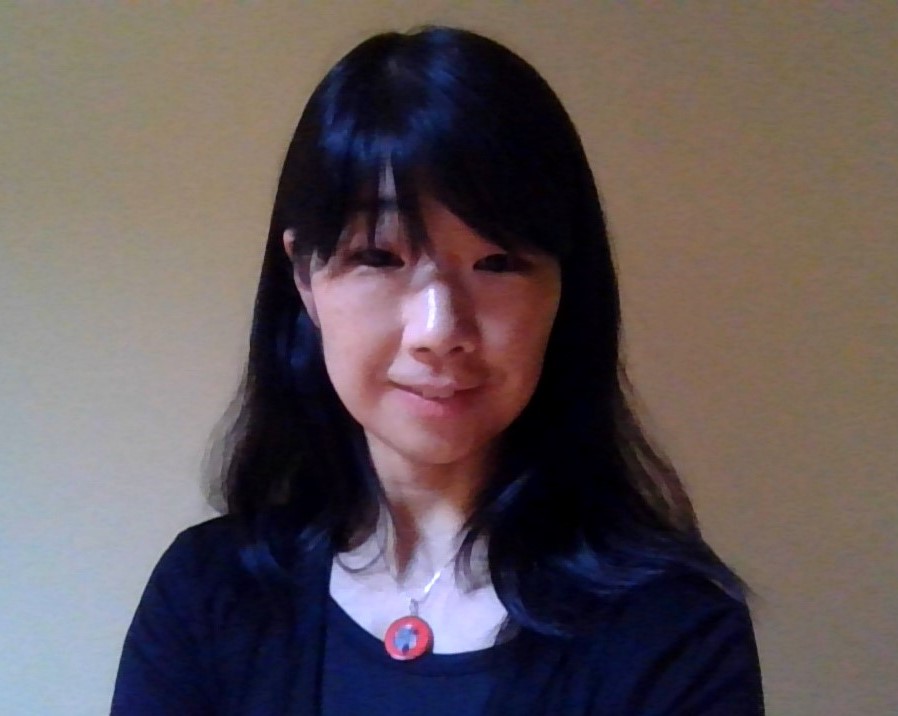
Lisa Diamond is Professor of Developmental Psychology, Health Psychology, and Gender Studies at the University of Utah. Her research examines sexuality, gender expression, and intimate relationships across the lifespan, with particular focus on fluidity in sexual and gender identities and their health implications. Research investigates biopsychosocial mechanisms linking early adversity to sexual development, neuroendocrine correlates of sexual experience, and health disparities affecting sexually- and gender-diverse populations. Current projects examine menstrual cycle influences on sexual motivation and inflammation pathways in minority stress. Publications demonstrate methodological diversity including longitudinal observation, biomarker analysis, and laboratory experiments. Recurrent themes include sexual fluidity measurement, relationship maintenance in diverse populations, and reconceptualizing minority stress through safety frameworks. Current graduate advisees include Raven Burton, Angel Villicana, and Katie Wyant-Stein. Dr. Diamond leads research on sexual well-being as a determinant of physical and mental health outcomes.
Juno Jill Richards is an Associate Professor of English and affiliated faculty in Women, Gender, and Sexuality Studies at Yale University. They hold a Ph.D. from the University of California, Berkeley (2014) and a B.A. from New York University (2006). Their research centers queer/trans studies, the history of sexuality, and transnational social reproduction, with a focus on archival recovery and intersectional frameworks. Current projects include The XYZ Murders: Life and Death in the Transgender Archives , exploring early 20th-century trans archives through a case of serial murders, and Oceans, Archives, Perverts: An Imperial History of Trans Identity , examining British colonial legacies on non-normative gender. Richards teaches undergraduate and graduate courses on modernism, queer theory, feminist literature, and transnational citizenship. Their publications include The Fury Archives (Columbia UP, 2020) and The Ferrante Letters (Columbia UP, 2020), alongside articles in GLQ , Modernism/modernity , and LA Review of Books . Their work bridges literary analysis with activism, emphasizing the politics of historical memory and marginalized voices. Research interests span global modernism, critical disability studies, and avant-garde cinema. Their writing often critiques colonial and imperial frameworks while centering gender non-conformity as a site of resistance. No scientific awards are explicitly listed, but their contributions to queer scholarship are widely recognized in academic circles.
Laura Black is a Professor of Education at the Manchester Institute of Education, University of Manchester. Her research focuses on inequalities and social justice in education, particularly within mathematics education. She employs frameworks like Cultural Historical Activity Theory (CHAT) and Bourdieu’s concepts of capital to examine how pedagogical practices reproduce or challenge educational disparities. Her current projects include the Very Local Maths project , which explores community-based mathematics through art collaborations, and the Nonbinary Mathematics Project , addressing gender nonconformity in STEM education. She has supervised over a dozen PhD students, many focusing on issues of equity, pedagogy, and marginalized communities. Key research themes include: Mathematical identities in schools and universities Gender and non-binary experiences in mathematics education Funds of Knowledge approaches to curriculum design Home-school relationships and class dynamics Her work contributes to UN Sustainable Development Goals related to quality education (SDG 4) and reduced inequalities (SDG 10). Recent publications analyze caregiver perspectives on school mathematics and queer students’ experiences in mathematical spaces.
Shanna K. Kattari is an Associate Professor at the University of Michigan's School of Social Work with a courtesy appointment in the Department of Women’s and Gender Studies. They direct the [Sexuality|Relationships|Gender] Research Collective and identify as a white, Jewish, nonbinary, disabled, chronically ill, neurodivergent (AuDHD), polyamorous, queer fat Femme academic. As a board-certified sexologist and social justice activist, their research spans three key areas: Disability and ableism (including neurodivergence and disability justice) Sexuality and sexual health (reproductive justice, kink/BDSM, non-monogamy) Queer and trans-affirming practice in health spaces Their recent work combines community-based participatory research with arts-based methods to examine health disparities among trans/nonbinary communities across physical, behavioral, and sexual health. They also investigate weight stigma, anti-carceral pedagogy, and institutional ableism in social work education. Scientific recognition includes: 2025 : CSWE Disability Manuscript Award 2024 : AAECT Book Award for their work on trans health Kattari champions translational research that directly benefits communities and advocates for accessible academic practices. They serve on the Council on Social Work Education’s Council on Disability and Persons with Disabilities and previously co-chaired the CSWE Council on Sexual Orientation and Gender Identity and Expression.
Dr. Andrea Meyertholen is an Associate Professor at the University of Kansas, specializing in German and European visual culture and literature since 1700. Her research bridges literature, art history, and museum studies, focusing on intermedial encounters and representations of body, gender, and fashion from Romanticism. She teaches at all undergraduate levels and has taught in Germany and Austria. Her work explores topics like the Altes Museum in Berlin, Goethe’s cloud poetry, and using social media to engage students with classic texts. Education: Ph.D. in Modern German Literature and Culture from Indiana University (2014). She studied at universities in Berlin and Würzburg, and worked in Munich. Research Interests: Meyertholen analyzes how visual arts and literature intersect, particularly in museums and monuments, and examines discourses of gender and body representation. Her work often reveals hidden queer and nonbinary narratives in classical texts like Grimm’s fairy tales. She advocates for innovative pedagogy, such as integrating art and digital media into language learning. Awards: Finalist for the Waterloo Centre for German Studies Book Prize and the Richard Sussman Essay Prize (2020). Teaching and Pedagogy: She emphasizes intermedial approaches, including film and social media, to energize language learning. Her 2021 chapter in Outreach Strategies and Innovative Teaching for Small German Programs highlights creative teaching methods rooted in DDR-era cultural materials. Labs/Teams: Affiliated with the Slavic, East European, and Eurasian Studies unit at KU, though her primary focus remains Germanic studies.
Laura Stephenson is a Professor and Department Chair in the Department of Political Science at Western University's Faculty of Social Science. With a PhD from Duke University, she has established herself as a leading scholar in political behavior research, particularly focusing on Canadian and comparative electoral politics. Her work examines how institutions and context influence political attitudes, electoral preferences, and citizen engagement with the political process. Dr. Stephenson's educational background includes: PhD in Political Science from Duke University Professor Stephenson specializes in political behavior, with research focused on understanding how institutions and context influence attitudes, electoral preferences, and engagement with politics. Her work spans multiple areas including strategic voting, municipal elections, gender and politics, and electoral systems. She employs both quantitative and qualitative methodologies to examine voting behavior across different political contexts, with particular expertise in Canadian federal and municipal politics. Her current research projects include the Canadian Election Study, Canadian Municipal Election Study, and Consortium on Electoral Democracy (C-Dem). Her recent publications demonstrate a strong focus on contemporary political challenges including democratic norms, electoral reform, gender and nonbinary identities in politics, and the impact of the pandemic on political behavior. These works reflect her commitment to understanding evolving political landscapes and citizen attitudes in both Canadian and comparative contexts. Dr. Stephenson leads several major research initiatives: Canadian Election Study Canadian Municipal Election Study Consortium on Electoral Democracy (C-Dem) Her previous research projects include the Toronto Election Study and Making Electoral Democracy Work. Through these projects, she has secured significant research funding and built extensive collaborative networks across North America and Europe. Professor Stephenson is actively involved in mentoring graduate students and has contributed to methodology training in Canadian universities. Her work on the Canadian Election Study provides vital infrastructure for political scientists studying Canadian electoral behavior.
Dr Laura Bissell is an Athenaeum Research Fellow and Lecturer in Contemporary Performance Practice at the Royal Conservatoire of Scotland . Her work bridges performance research, feminist theory, and ecological studies, with a focus on matrescence, technology, and interdisciplinary mobilities. PhD, MPhil by Research, and MA (Hons) in English Literature and Theatre Studies from University of Glasgow Senior Fellow of the Higher Education Academy Research Interests include: Contemporary performance practices Gender and technology Eco-critical and posthuman frameworks Interdisciplinary mobilities Recent Publications span topics from pandemic performance to ecological narratives, with a forthcoming monograph on Matrescence and Performance (Intellect). Her supervision includes PhD projects on video game performance, ecological theatre, and neuroqueer choreography. Engagement highlights her role in sustainability initiatives and editorial work.
Meredith G. F. Worthen is a Professor of Sociology at the University of Oklahoma and an affiliate faculty member in the Department of Women’s and Gender Studies and the Center for Social Justice. She holds a Ph.D. in Sociology from the University of Texas at Austin (2009) and has been at OU since 2009, achieving Full Professor status in 2019. Her work focuses on stigma, prejudice, LGBTQ rights, and sexual violence, with a particular emphasis on intersectionality and norm-centered stigma theory. Dr. Worthen is a co-founder of the Division on Queer Criminology within the American Society of Criminology and leads initiatives like The Welcoming Project, supporting LGBTQ students, and #MeTooMeredith, advocating for sexual assault survivors. Her scholarly contributions include seminal works such as *Sexual Deviance and Society* (2021), which integrates criminology, gender studies, and deviance theory to analyze societal constructions of sexual norms and deviance. Her research explores LGBTQ stigma, gender expression (e.g., femme, butch, twink identities), and the impact of adverse childhood experiences on marginalized groups. She has been recognized for her academic contributions, including ranking #1 in Human Sexuality by ScholarGPS (2024) and being featured in *The Norman Transcript* for her early Full Professor promotion. Dr. Worthen’s activism includes the LGBTQ Ally Program at OU and collaborations with survivor advocacy groups. Her work bridges academia and activism, emphasizing social justice and empirical rigor in understanding systemic prejudice and violence.
Dr. Kathleen Bryson is a Postdoctoral Research Associate at the Oxford Martin School’s Programme on Women’s Equality. She holds a PhD in Evolutionary Anthropology from University College London (UCL), an MA in Independent Film from the University of the Arts London (UAL), and dual BA degrees in Anthropology and Swedish from the University of Washington. Her research focuses on androcentrism, dehumanization, ambiguity tolerance, and the intersections of evolutionary theory with social identity. She is co-authoring The Quiddity Question: Essentialism, Ambiguity Tolerance and Ultrahumanisation with Volker Sommer, analyzing cultural dichotomies and their temporal patterns. Her academic career includes teaching roles at UCL, the City Literary Institute, and Westminster School, covering topics like human evolution, primatology, and extraterrestrial bioanthropology. Bryson’s interdisciplinary approach bridges anthropology, media studies, and artistry, exemplified by her novel The Stagtress (2019) and media appearances discussing evolutionary perspectives on dance and fictive othering. Her current research investigates women’s unpaid labor and bias in education/employment contexts within the WEIR programme. She has contributed to journals like Society & Animals and Journal of Posthuman Studies , exploring themes ranging from speciesism to AI ethics in mixed reality platforms.
Dr. Dustin Z Nowaskie is a Clinical Assistant Professor of Psychiatry and Behavioral Sciences at the University of Southern California (USC), affiliated with USC Counseling and Mental Health (CMH). They hold a nonbinary identity and focus on LGBTQ+ healthcare equity, particularly gender-affirming care and systemic disparities. Dr. Nowaskie completed their undergraduate studies in Neuroscience, Psychology, and Biology at USC before attending Indiana University School of Medicine for medical training and residency. As a clinician-educator, they prioritize improving LGBTQ+ health outcomes through OutCare Health, a nonprofit providing education, resources, and mentorship for healthcare providers. Their work includes developing online training programs and national directories of LGBTQ+-competent providers. Research interests encompass healthcare disparities, provider cultural competency, and the intersectionality of race, gender, and sexual orientation in healthcare access. Publications highlight systemic barriers faced by LGBTQ+ communities, including medical gaslighting and lack of gender affirmation. Their articles analyze disparities across specialties like pediatrics, dermatology, and surgery, emphasizing the need for standardized education. Current initiatives include evaluating provider directories and promoting equitable care for nonbinary individuals. Dr. Nowaskie’s efforts extend to pandemic impacts on LGBTQ+ populations and faith-based identity challenges, with a focus on actionable solutions through digital platforms and community engagement. They collaborate with multidisciplinary teams to advance person-centered dementia care and LGBTQ+ health equity.
Beans Velocci is an Assistant Professor in the Department of History and Sociology of Science and Core Faculty in Gender, Women's, and Sexuality Studies at the University of Pennsylvania. Their work focuses on how classification systems become entrenched as biological truths, particularly regarding sex, gender, and sexuality in 19th- and 20th-century U.S. contexts. They employ queer, trans, and feminist methodologies to analyze intersections of race science, eugenics, and medical history. Education: Ph.D., M.A., M.Phil. in History of Science & Medicine, Yale University Graduate Certificate in Women’s, Gender, and Sexuality Studies, Yale University M.A. in History, University of Utah A.B. in History, Smith College Research Interests: Queer feminist STS, trans history as method, histories of sex science and race science, classification systems, uncertainty in scientific inquiry, and Cold War-era post-disaster repopulation imaginaries. Their first book project Binary Logic: The Power of Incoherence in American Sex Science (Duke UP, 2026) traces how scientific norms of binary sex were constructed despite inherent contradictions. Awards: Supported by the American Philosophical Society, Kinsey Institute, and Yale Fund for Lesbian and Gay Studies. Grants & Collaborations: Works with biologists/ecologists to reimagine contemporary sex research. Co-designs projects promoting socially just science through STS frameworks. Labs/Teams: Engaged in interdisciplinary collaborations bridging history of science and contemporary scientific practice through the Penn Gender, Sexuality, and Women’s Studies program.
Quinn Albaugh is an Assistant Professor in the Department of Political Studies at Queen’s University and a Fellow at the Centre for the Study of Democracy and Diversity. She holds a Ph.D. in Politics and Social Policy from Princeton University, and degrees from McGill University (B.A., M.A.). Her research focuses on Canadian political parties, elections, and representation with a comparative perspective, emphasizing themes of gender, sexuality, race, ethnicity, and class inequalities. She is currently working on a book project examining how party organizations improve marginalized group representation and multiple LGBTQ2S+ politics projects, including candidate representation, political behavior, and public opinion on LGBTQ2S+ rights. Education : B.A., McGill University M.A., McGill University Ph.D. in Politics and Social Policy, Princeton University Research Interests : Her work explores LGBTQ2S+ politics (especially trans/nonbinary issues), political parties and candidate selection in Canada, representation of marginalized groups, public opinion on LGBTQ2S+ rights, and voting behavior. Methodologically, she employs qualitative, quantitative, and mixed methods approaches. Teaching and Supervision : She supervises students in Canadian political parties, gender and sexuality in party politics, marginalized group representation, and LGBTQ2S+ political behavior. She prioritizes students with strong academic records and clear research proposals. Service and Affiliations : Departmental Committee and Graduate Committee roles at Queen’s University Queen’s University Faculty Association (QUFA) Representative Affiliated with the Centre for the Study of Democracy and Diversity Labs/Teams : Engaged with the Department of Political Studies and interdisciplinary networks focused on democracy, diversity, and LGBTQ+ studies.
Dr. Satveer Kler is an Assistant Professor in the Department of Clinical Psychology at Palo Alto University (PAU), where he teaches in the Clinical Psychology PhD program and leads the Substance use and Intergenerational Trauma Social processes (SITS) Research Team. His work centers on intergenerational trauma, substance use, and systemic oppression among marginalized communities, particularly BIPOC and LGBTQ+ BIPOC individuals. Education: Ph.D. in Counseling Psychology, Southern Illinois University Carbondale (2024) M.A. in Psychology, Southern Illinois University Carbondale (2021) B.A. in Psychology and B.A. in Literature, University of California, Santa Cruz (2018) Dr. Kler’s research is grounded in critical qualitative methodologies, including critical constructivist grounded theory, reflexive thematic analysis, and community-based participatory action research. He emphasizes the role of colonialism, cultural dispossession, and institutional oppression in shaping trauma and substance use. His teaching includes the Cross-Cultural Issues in Psychology course, where he fosters cultural humility and self-awareness among future clinicians. The recent publications of Dr. Kler reflect a strong focus on intersectionality, gender identity, racialized experiences, and mental health disparities. His work spans topics such as transgender and nonbinary experiences of gender dysphoria, alcohol use disorder among gender-minoritized people of color, validation of social support scales, and racialized dating preferences among queer Asian American men. These studies demonstrate a consistent commitment to amplifying marginalized voices through rigorous qualitative inquiry. Scientific Awards: Barbara Smith and Jewell E. Horvat Award (2024) from APA Division 45 Dr. Kler mentors PhD students and is deeply committed to training the next generation of culturally responsive clinicians and researchers. He was a fellow in the NIAAA-funded Enhancing Diversity in Alcohol Research (EDAR) program at the Medical University of South Carolina. His research is not only academically rigorous but also ethically grounded in co-constructing knowledge with participants. He advocates for integrating personal narratives into clinical interventions to honor unique cultural, familial, and social contexts. He leads the SITS Research Team, which aims to contextualize substance use and intergenerational trauma within historical and systemic frameworks such as colonialism and displacement. The team emphasizes communal healing and uses qualitative methods to explore family histories and cultural socialization messages.
Tomoyo Kawano, PhD, is an Associate Professor in Applied Psychology at Antioch University New England and Program Director of the Dance/Movement Therapy program. Her work bridges clinical practice, social justice, and embodied learning through dance epistemology, emphasizing the integration of traditional and indigenous healing practices. Education: PhD in Expressive Therapies (Lesley University), MA in Somatic Counseling Psychology (Naropa University), BA in International Relations (International Christian University) Her research focuses on Dance Epistemology (body as a source of knowledge), DMT as Social Action (community healing via movement), and Social Justice in DMT (addressing systemic exclusion). Recent articles highlight racial equity in education, cultural responsiveness, and hybrid learning practices. Key scientific awards include the 2024 Exceptional Service Award (American Dance Therapy Association), 2022 Excellence in Education Recognition, and a 2015 Research Fellowship from Lesley University. She actively collaborates on embodied research and serves on editorial boards and committees advancing critical pedagogy in the arts therapies.
David Getsy is the inaugural Eleanor Shea Professor of Art History at the University of Virginia, where he teaches in the Department of Art History within the College of Arts and Sciences. He previously held the Goldabelle McComb Finn Distinguished Professor position at the School of the Art Institute of Chicago from 2011 to 2021. His work bridges art history, queer studies, and transgender studies, with a focus on performance and sculpture from the 19th century to the present. Ph.D., Northwestern University, 2002 M.A., Northwestern University, 1996 B.A. with Highest Honors, Oberlin College, 1995 Getsy's research centers on queer and transgender art histories, particularly in 1970s and 1980s New York City. He explores how non-normative genders and sexualities have shaped art history, with major projects on figures like Scott Burton and Stephen Varble. His work emphasizes recovery of marginalized narratives and the development of transgender methodologies in art historical analysis. His recent publications reflect a strong focus on queer abstraction, transgender visibility, and performance art. Themes include the intersection of embodiment and sculpture, pedagogical approaches to canonical works through a transgender lens, and the political dimensions of queer performance. His articles appear in leading journals such as Art Bulletin , Art History , GLQ , and TSQ . Robert Motherwell Book Award (2023) College Art Association Award for Distinction (2021) University of Virginia Award for Excellence in the Arts and Humanities (2023) Guggenheim Fellowship (2025) Fellowships from the Getty, Terra, Graham, Clark, and Dedalus Foundations Getsy has advised numerous students through graduate seminars on queer art history and transgender studies. He has received major research grants and fellowships supporting his work. He serves on the editorial board of American Art , the Publications Committee of the Paul Mellon Centre, and advisory boards for the Fire Island Artist Residency, the Scott Burton Estate, and the Faulkner-Morgan Archive. He leads major curatorial projects, including the retrospective Rubbish and Dreams: The Genderqueer Performance Art of Stephen Varble and the accompanying exhibition The Gutter Art of Stephen Varble , which toured internationally. His current book project, Street Addresses: Performing the Queer Life of the Street in 1970s New York , is supported by his Guggenheim Fellowship.