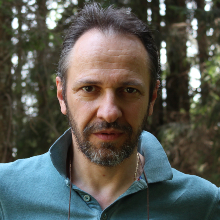
Jane-ling Wang is a Professor in the Department of Statistics at the University of California, Berkeley. She graduated with a Ph.D. in Statistics in 1982 under the advisement of Lucien Le Cam, contributing to statistical theory with her dissertation on Asymptotically Minimax Estimators for Distributions with Increasing Failure Rate . University : University of California, Berkeley Email : wang@wald.ucdavis.edu Academic Rank : Professor Research Focus : Probability, Non-parametric Inference, and Statistical Estimation Her research interests align with foundational areas in statistics, including statistical theory and estimation methods, with connections to broader fields like Machine Learning and Causal Inference as highlighted in the department’s research overview. Jane-ling Wang’s academic work emphasizes theoretical and applied statistics, particularly in developing robust estimators for distributions with increasing failure rates. Her expertise intersects with probability theory and non-parametric methods, contributing to both classical and modern statistical challenges. While specific scientific awards or recent publications are not detailed in the provided text, her role as a Professor underscores her leadership in advancing statistical science through research, teaching, and mentorship.
Ian Stephen Abramson is a Professor at the University of California, San Diego. He graduated from the UC Berkeley Statistics Ph.D. Program in 1981 under the advisement of Peter Bickel, contributing to the field of non-parametric statistics through his dissertation on Kernel Estimates of Probability Densities. Education: Ph.D. in Statistics from UC Berkeley (1981) Research Interests: Specializes in non-parametric inference and kernel density estimation, focusing on statistical methods for probability density analysis.
Jenher Jeng serves as an Associate Professor in the Department of Statistics within the College of Letters and Science at the University of California, Berkeley. His academic appointment reflects active faculty status with no indication of emeritus or former positions. His research centers on advanced statistical methodologies, particularly focused on nonparametric curve estimation and wavelet-based adaptive techniques . Based on his dissertation work under Peter Bickel, his expertise includes developing confidence bands and sharp adaptation frameworks for complex data analysis. While specific recent publications aren't detailed in available sources, his methodological focus suggests contributions to high-dimensional data analysis and non-parametric inference domains within statistics. His work intersects with Berkeley's research strengths in statistical computing and probability theory.
Manolis Zampetakis is an Assistant Professor of Computer Science at Yale University. Previously, he was a postdoctoral researcher in the EECS Department at UC Berkeley working with Michael Jordan. He earned his Ph.D. and M.S. from the EECS Department at MIT, where he was advised by Constantinos Daskalakis. His undergraduate education was completed at the National Technical University of Athens (NTUA). His research interests span Theoretical Machine Learning, Statistics, Optimization, Computational Complexity, Game Theory, Mechanism Design, and Sublinear Algorithms. His work bridges theoretical computer science with practical applications in machine learning and economics. His research consistently appears in top-tier conferences such as STOC, FOCS, COLT, NeurIPS, and EC, with a strong focus on the theoretical foundations of machine learning and game theory. Zampetakis has received numerous prestigious awards including the ACM SIGEcom Doctoral Dissertation Award and the Google Ph.D. Fellowship. His publications from 2023-2025 demonstrate a consistent output of high-quality research across multiple domains, with a notable emphasis on bridging statistical theory with algorithmic approaches. His work shows increasing integration of robust statistics with mechanism design and game-theoretic approaches. ACM SIGEcom Doctoral Dissertation Award Google Ph.D. Fellowship Special Issue at SAGT 2015 Special Issue at WINE 2013 Second Prize in IMC 2012 Top 5 in Panhellenic Physics Competition 2008 Zampetakis actively advises multiple graduate students including Anay Mehrotra, Jane Lee, Vikram Kher, Katerina Mamali, Shuchen Li, and Nikolaos Koumpis. He has served on program committees and organized workshops including the Workshop on Algorithms for Learning and Economics (WALE 2019, WALE 2022). His research has been supported by grants from Google and likely other major funding agencies given his publication record in top venues. His research group focuses on theoretical aspects of machine learning with connections to statistics and game theory. He collaborates extensively with researchers across institutions including MIT, UC Berkeley, and Yale colleagues.
Dipak Dey is a Professor in the Department of Statistics at the University of Connecticut . His work bridges theoretical and applied statistics, with a focus on Bayesian methodologies and computational statistics. Affiliations : University of Connecticut, Department of Statistics Contact : dipak.dey@uconn.edu , Office: AUST 327, Phone: (860) 486-4755 His research interests span Bayesian analysis , Biostatistics , Computational statistics , Statistical genetics , and Spatio-temporal modeling . He has pioneered techniques in spatial curvature processes and scalable Bayesian algorithms for large datasets. Recent publications highlight his contributions to Bayesian spatial modeling (blockNNGP, curvature processes), survival analysis (skew-t distributions, cure rate models), and computational statistics (variable selection in Gaussian processes, fast inference algorithms). Applications include insurance data , epidemiology , and environmental statistics . Scientific Awards : Board of Trustees Distinguished Professor (University of Connecticut) He actively collaborates on interdisciplinary projects and mentors researchers in advanced statistical methodologies for complex data structures.
Laurent Donzé is a Professor of Applied Statistics and Modelling at the Department of Informatics, Faculty of Economics and Social Sciences, University of Fribourg. He is also a Research Professor at KOF ETH Zurich and a Professor of Econometrics at the University of Neuchâtel. He leads the ASAM research group and has extensive experience in teaching mathematics, econometrics, and statistics. His educational background includes a Ph.D. in Econometrics from the University of Fribourg, followed by research roles at IRE and KOF ETH Zurich. His academic journey reflects deep engagement with statistical methodology and applied economic research. Donzé's primary research interests lie in applied statistics, particularly survey methodology, fuzzy statistics, imputation, causal inference, matching techniques, and wage discrimination analysis . He has made significant contributions to the development and application of fuzzy statistical tools, especially in defuzzification and fuzzy regression. His recent publications (2019–2025) demonstrate a consistent focus on fuzzy confidence intervals, fuzzy p-values, fuzzy ANOVA, and fuzzy regression models , often applied to real-world datasets like SHARE and Swiss SILC. These works emphasize robust statistical inference under uncertainty and contribute to both theoretical and applied advancements in fuzzy statistics. Among his scientific recognitions is the Best Student Paper Award at IJJCI 2020 . He has also edited special issues and contributed to leading journals and conferences in computational intelligence and fuzzy systems. Donzé has been involved in numerous research and teaching initiatives, including grants from the Swiss National Science Foundation, mentoring at the Swiss Study Foundation, and leadership in statistical societies. He has supervised research projects and collaborated with institutions such as Nestlé, the Swiss Federal Statistical Office, and pharmaSuisse. He is actively involved in academic and professional communities, serving as president of the Education and Research section of the Swiss Statistical Society and contributing to the development of statistical infrastructure in social sciences.
Ewa Tomczak-Łukaszewska is a Senior Lecturer at the Faculty of English, Adam Mickiewicz University in Poznań, Poland. Her research integrates psycholinguistics, bilingualism, translation studies, and cognitive science, employing empirical methods such as eye-tracking, key-logging, and statistical modeling. She is actively involved in major research projects funded by the National Science Centre and collaborates with leading scholars in cognitive translation studies. B.A. in English, Poznań, 2008 M.A. in English, Poznań, 2010 M.A. in Psychology (Clinical Psychology), Poznań, 2018 Postgraduate degree in Management and Organisational Psychology, Poznań, 2018 Her research focuses on psycholinguistics, bilingualism, eye-tracking in reading and translation, figurative language processing, visual perception in sports, and applied statistics . She explores how cognitive processes shape language use, translation decisions, and perception in both academic and athletic contexts. Her methodological expertise includes R, Python, and advanced statistical analyses. Her recent publications reveal a strong trend in cognitive translation studies , particularly the impact of translation direction on lexical selection and information behavior. She also investigates visual perception strategies in fencing , comparing experts and novices, and left- vs right-handed opponents. Another key area is language teaching innovation , such as using songs to teach multi-word units. Her interdisciplinary approach bridges linguistics, psychology, and sport science. Her scientific awards include: Scholarship from the Minister of Science and Higher Education for outstanding young researchers (2023–2026) Prize of the Rector of Adam Mickiewicz University for Excellence in Teaching (2023) Award for best M.A. thesis in linguistics (2010) Multiple travel grants and scholarships for conference participation Ewa Tomczak-Łukaszewska has extensive teaching experience in TEFL, academic English, and statistics. She has served as a statistical analyst and co-investigator in major research projects and has presented her work at numerous international conferences. She is a member of professional organizations including the European Society for Translation Studies (EST), EUROSLA, and EMRA. She has received specialized training in eye-tracking, R, Python, and Bayesian statistics, and has contributed to editorial work as a guest editor for Poznań Studies in Contemporary Linguistics . She is affiliated with the Psycholinguistics Reading Group and has organized international events such as EUROSLA 22 and RaAM Seminar 4. Her lab work involves the EYE-LANG – Eye-tracking Laboratory for Research in Language , where she conducts experiments on language and cognition.
Florian Schuberth is an Associate Professor at the Chair of Product–Market Relations within the Faculty of Engineering Technology at the University of Twente. His research focuses on composite-based structural equation modeling (SEM), particularly Partial Least Squares (PLS) methods, with applications across Information Systems, Social Sciences, and Computer Science. He actively contributes to quantitative research methodology and open science. Bachelor's and Master's in Business Administration and Economics, University of Würzburg PhD in Econometrics, summa cum laude, University of Würzburg (2017) His research interests center on advancing composite-based SEM, including model specification, fit assessment, higher-order constructs, and robust estimation techniques. He emphasizes methodological rigor and reproducibility in social science research. His recent work, reflected in publications and software development, demonstrates a strong trend toward improving the transparency, validity, and accessibility of composite modeling techniques, particularly through R-based tools. He has made significant contributions to model evaluation, measurement invariance, and endogeneity correction in PLS-SEM. Florian Schuberth is a passionate educator, coordinating and teaching courses on quantitative research methods. He is also deeply committed to open science, serving as coordinator of the Open Science Community Twente. Notable contributions include the development and maintenance of the cSEM R package, which enables researchers to perform composite-based SEM in R, promoting open, reproducible research practices. Maintainer of the R package cSEM Coordinator, Open Science Community Twente (since 2022) Active contributor to methodological software and open science infrastructure
Hannah Comiskey is a Research Fellow in the Department of Econometrics and Business Statistics at Monash University, within the Faculty of Business and Economics. Her research focuses on advanced statistical methods applied to global health and demographic data, particularly in reproductive health contexts. Her primary research interests lie in Bayesian hierarchical modeling, statistical demography, and public health analytics. She develops and applies sophisticated statistical models to estimate health indicators, especially related to contraceptive use and healthcare system contributions across countries. The recent publication in the Journal of the Royal Statistical Society Series A demonstrates a strong trend in using flexible Bayesian non-parametric models for health estimation, particularly in low-data settings. Her work integrates survey data from multiple sources to disentangle public and private sector roles in modern contraceptive supply. Hannah has actively contributed to academic discourse through presentations, including at the Annual Meeting of the Population Association of America (2022). While no formal advising or grant information is available, her collaborations with researchers like Leontine Alkema and Niamh Cahill suggest involvement in large-scale demographic estimation projects. She is part of an international research network focused on population health statistics, with external collaborations across multiple countries. Her work contributes to evidence-based policy in reproductive health through rigorous statistical inference.
Pradeep Singh is a tenured Professor of Statistics and Interim Chair in the Department of Mathematics at Southeast Missouri State University , Cape Girardeau, Missouri. He earned his Ph.D. in Statistics from Missippi State University in 1999. With over 20 years of university-level teaching experience, he has taught courses ranging from college algebra to advanced graduate statistics and mentored multiple Master's thesis committees. Research Focus: Machine learning for predictive modeling, missing data imputation in categorical variables, statistical genetics, and medical/biostatistical applications. Key Trends: Publications span machine learning in public health, ecological modeling, critical care analytics, and infectious disease immunology, with recurring emphasis on statistical methodology and real-world data challenges. Committee Involvement: Active in departmental, college, and university governance. His current work explores machine learning applications in cancer outcome prediction and missing data solutions.
Claudio Pizzi is an Associate Professor of Economic Statistics at the Department of Economics within Ca' Foscari University of Venice . He also participates in the Interdepartmental School of Economics, Languages and Entrepreneurship for International Exchanges at the Treviso campus. With over two decades at the institution (since 2004 as faculty), he has extensive experience in quantitative methods and their applications to economic/financial phenomena. Academic affiliation: Department of Economics & SELISI Interdepartmental Center Research locations: San Giobbe (Venice) and Palazzo San Paolo (Treviso) Office hours: Venice (Wednesdays) and Treviso (Thursdays) via in-person or virtual meetings His research integrates statistical modeling with artificial intelligence , focusing on: Financial time series analysis (parametric/non-parametric) Machine learning applications in economic and financial contexts Technical analysis trading strategies Emotional/social/cognitive competency measurement Nonlinear cointegration and hidden dependency detection Article analysis reveals consistent themes in computational finance , evolutionary algorithms , and organizational behavior . He frequently employs Particle Swarm Optimization for financial modeling, explores emotional intelligence in career development, and contributes to actuarial science through derivative pricing and risk modeling techniques. As part of his academic service, Pizzi: Participates in the SELISI Joint Commission Organizes international conferences (MAF2008, MAF2012) Collaborates across disciplines with institutions like the Department of Management Teaches computational methods to economics students
Dr. Jason Schenker is an Associate Professor and Program Coordinator for the 100% Online Master’s in Research, Measurement, and Statistics at Kent State University’s College of Education, Health and Human Services. He specializes in quantitative research, advanced statistics, and program evaluation. Ph.D. in Evaluation and Measurement from Kent State University (2007) M.A. in Industrial/Organizational Psychology from the University of Akron B.A. from Heidelberg College The program he coordinates emphasizes applied skills in assessment , research design , and psychometrics , catering to educators and professionals in K-12, higher education, and psychometric careers. Courses include: Quantitative Research ANOVA and Non-parametric tests Multivariate Statistics Value-Added Assessment Evidence-Based Practice Meta-Analysis Students complete a capstone project instead of a formal thesis, with flexibility to finish in 1–2 years.
Dr David Hofmeyr serves as a Senior Lecturer in Statistics at Lancaster University's School of Mathematical Sciences, specializing in advanced statistical methodology and machine learning applications for complex data analysis. His research focuses on: Estimation of complexity for non-standard estimators (clustering models, linear projections) Non-parametric regression and classification methodology Cluster analysis and unsupervised dimension reduction theory Spatial, temporal, and spatio-temporal applications of flexible regression models Recent publications demonstrate his interdisciplinary approach bridging machine learning with environmental science (soil mapping via survival analysis) and theoretical classification improvements. His work consistently emphasizes practical implementation of statistical theory in real-world data challenges. Dr Hofmeyr actively supervises PhD candidates through the STOR-i Centre for Doctoral Training and collaborates with the Statistical Artificial Intelligence research group. He maintains an open invitation for potential PhD students in his core research areas. No scientific awards were documented in the provided materials.
Maciej Smołka, PhD hab., serves as a University Professor at the Institute of Computer Science within the Faculty of Computer Science at AGH University of Science and Technology in Kraków, Poland. His office is located at D-17, Kawiory 21, room 2.25, and he actively contributes to academic governance through the Computer Science Discipline Council and College of the Faculty of Computer Science. His research centers on computational optimization, specializing in metaheuristics, evolutionary algorithms, and inverse problems. He addresses complex challenges in non-convex optimization, time-delay systems, and stabilization of forward solvers, with significant contributions to hierarchical memetic strategies including the pyHMS Python library. His interdisciplinary work extends to Music Informatics, where he investigates urban soundscapes as carriers of local identity and applies computational methods to musical harmonization. Recent publications (2022-2025) demonstrate advancements in auto-configured metaheuristics for engineering optimization, socio-cognitive approaches to time-delay control, and LLM-generated algorithm design. His work bridges computational intelligence with practical applications in thermal systems and Gaussian mixture modeling, while maintaining a parallel research thread on musicology and urban acoustic ecology.
Dr. Manaf Zargoush serves as Associate Professor of Health Policy & Management and Associate Dean at McMaster University's DeGroote School of Business. His academic appointments span health systems research, operations management, and data-driven healthcare policy. Education: Ph.D. in Healthcare Operations and Information Management, McGill University Ph.D. in Decision Science and Statistics, ESSEC Business School M.Phil. in Decision Sciences, ESSEC Business School M.Sc. in Socio-Economic Systems Engineering, Sharif University of Technology B.Sc. in Mechanical Engineering, Jundi-Shapoor University His research integrates data science and stochastic optimization to solve healthcare challenges, with focus areas including chronic disease management (hypertension/diabetes), aging research (disability trajectories, ALC), and causal analytics. Current projects leverage machine learning for personalized medication prescription, climate-resilient elderly care, and hospital discharge optimization. His work bridges operations research with clinical implementation through predictive-prescriptive analytics frameworks. Recent publications demonstrate strong trends in gerontechnology applications (wearable monitoring), health equity analysis (care fragmentation), and pandemic response systems . Key thematic clusters include: aging population health modeling, climate-health intersections, and AI-driven clinical decision support systems across 15 high-impact publications from 2023-2025. Teaching Portfolio: Decision Analysis for Healthcare (BUSADMIN BL718) Analytics and Decision Making in Healthcare (BUSADMIN C755) Operations Management (BUSADMIN O650) Research Issues in Health Management (BUSINESS C783) Dr. Zargoush actively leads interdisciplinary research through McMaster's health analytics initiatives, with current projects examining climate impacts on elderly care infrastructure and machine learning applications for hospital discharge optimization. His work connects mathematical modeling with real-world healthcare policy implementation.