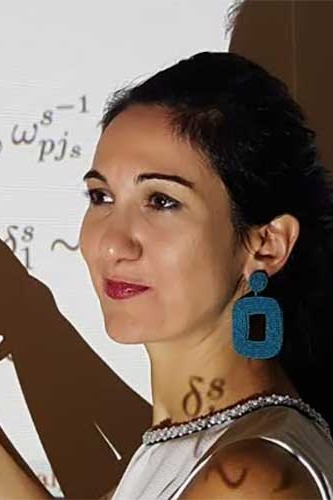
Cristiano De Marchis is an Assistant Professor at the Department of Engineering, University of Messina. He holds a PhD in Bioengineering from Roma Tre University (2013). His research focuses on neuro-mechanical control of human movement, neuro-rehabilitation, and biomedical signal processing. He teaches 'Neural Engineering' in Roma Tre's Master’s Program in Biomedical Engineering. Education: PhD in Bioengineering (Roma Tre University, 2013). Research Interests: Muscle Synergies, Motor Control, Gait Analysis, Electromyography, Functional Electrical Stimulation, Neuro-rehabilitation, and Stroke Recovery. He has authored over 30 contributions in biomedical engineering, with recent work on prosthetic gait analysis, muscle synergy extraction, and machine learning applications in healthcare. His articles explore topics like sit-to-stand mechanics, prosthetic limb control, and modular motor adaptations. He collaborates with international journals as a referee and is affiliated with IEEE, EMBS, and BoHNES. He has participated in EU projects like the FP7-funded 'TREMOR' (2008-2011). His lab focuses on wearable sensors, gait biomechanics, and computational models for motor behavior analysis.
Yue Joseph Wang is a Professor at Virginia Tech's Department of Electrical and Computer Engineering , with a focus on bioinformatics, computational biology, and medical imaging. His work bridges machine learning with biomedical applications, particularly in cancer research, neuroimaging, and metabolomics. Research areas include: Unsupervised deconvolution of mixed gene expressions Development of radiogenomic frameworks 3D neuronal and cellular image analysis Optimization of biomarker discovery Computational tools for LC-MS and DCE-MRI data Recent publications demonstrate his expertise in: Multi-omics data integration Algorithm design for medical image segmentation Machine learning in biomedical signal processing Network-constrained statistical models Time-warping techniques for metabolomic analysis Pharmacokinetic modeling in cancer studies Collaborations span institutions like University of North Carolina, National University of Singapore, and Georgetown University Medical Center. His work often involves R-package development (e.g., debCAM) and high-impact contributions to journals such as Bioinformatics, IEEE Transactions, and Nature Machine Intelligence.
Jill Mesirov is a Professor in the Department of Medicine at the University of California San Diego (UCSD), affiliated with the Vc-health Sciences-schools. Her research focuses on cancer genomics, bioinformatics, and computational biology, with a particular emphasis on developing tools like the Integrative Genomics Viewer (IGV) and GenePattern Notebook. She has held significant roles as Principal Investigator (PI) or co-investigator on numerous NIH-funded grants, including projects related to cancer therapy pathway identification, genomic data visualization, and molecular signatures databases. Her work spans cancer research, including studies on medulloblastoma, pancreatic cancer, and gastrointestinal stromal tumors. Mesirov has contributed to advancing methods for analyzing single-cell data, copy number variations, and genomic interactions. Her publications highlight advancements in genomic analysis tools and their applications in understanding cancer heterogeneity and therapeutic resistance. Mesirov’s grants include leadership in initiatives like the MIT-Harvard Center of Cancer Nanotechnology Excellence and the Broad Institute’s Cancer Systems Biology efforts. She has collaborated extensively with researchers in oncology, immunology, and computational biology to drive translational research and precision medicine.
Nilufer Ertekin-Taner, M.D., Ph.D., is a Professor of Neurology and Neuroscience at Mayo Clinic in Jacksonville, Florida, within the College of Medicine. She leads the Genetics of Alzheimer's Disease and Endophenotypes Laboratory and is a practicing board-certified behavioral neurologist in the Memory Disorders Clinic. Her work bridges clinical neurology and advanced genetic research, focusing on uncovering the genetic architecture of Alzheimer’s disease and related dementias. Dr. Ertekin-Taner earned her M.D. from Hacettepe University Medical School in Turkey and her Ph.D. in Molecular Neuroscience from Mayo Graduate School. She completed neurology residency at Mayo Clinic in Rochester and a fellowship in behavioral neurology in Jacksonville. Her research interests center on the complex genetics of Alzheimer’s disease, utilizing endophenotypes such as amyloid β peptide levels, gene expression, and cognitive traits. She employs integrative approaches combining genomics, transcriptomics, and epigenetics to identify and characterize genetic risk factors, with a focus on late-onset AD, progressive supranuclear palsy, and underrepresented populations like African Americans. Her lab investigates functional consequences of genetic variants in genes such as CTNNA3 and LRRTM3 using molecular and animal models. The 15 most recent publications highlight a strong trend in multi-omics integration, including transcriptomic deconvolution, glial and vascular cell-specific signatures, epigenetic regulation, and systems-level analysis of AD pathways. Her work increasingly emphasizes resilience mechanisms, therapeutic target discovery, and health equity in neurodegenerative disease research. Investigator of the Year Award, Mayo Clinic, 2018 Alzheimer’s Association Zenith Fellows Award, 2022 Health Care Hero, Jacksonville Business Journal, 2008, 2018 Fellow of the American Academy of Neurology (FAAN), 2017 Roy E. and Merle Meyer Professor of Neuroscience, Mayo Clinic, 2025 Dr. Ertekin-Taner has been Principal Investigator on major NIA-funded projects, including the Accelerating Medicines Partnership Alzheimer's Disease (AMP-AD) and the Molecular Mechanisms of the Vascular Etiology of Alzheimer's Disease Consortium. She mentors students and early-career researchers, serves as Director of the KL2 Mentored Career Development Program, and chairs the Mayo Graduate School Thesis Advisory Committee. Her lab collaborates extensively with Mayo Clinic’s brain bank and multi-site research consortia to translate genetic findings into clinical insights. She leads the Genetics of Alzheimer's Disease and Endophenotypes Laboratory, which uses cutting-edge genomic and computational tools to dissect the molecular underpinnings of neurodegenerative diseases. The lab is deeply integrated into Mayo Clinic’s Alzheimer’s Disease Research Center and contributes to national and international research networks.
Kuno Kurzhals is a Research Fellow at the Institute for Visualization and Interactive Systems (VISUS) of the University of Stuttgart , affiliated with the Cluster of Excellence IntCDC . His work focuses on video visualization , eye tracking evaluation , and visual analytics for dynamic data. Research Interests : Video visualization, eye tracking, human-computer interaction, spatio-temporal analysis, and immersive environments. Recent Trends : Publications emphasize collaborative gaze analysis in AR/VR, mobile eye-tracking data processing, and gaze-adaptive interfaces. Key subfields include non-negative matrix factorization , user behavior in immersive systems , and evaluation of visualization literacy . Collaborative Work : Co-author in studies on projection displays for group gaze , collaborative molecular learning , and manufacturing process monitoring . Technical Focus : Innovations in fixation-image charts , gaze spiral visualization , and AOI transition trees for analyzing eye movement patterns. Applications : Tools developed for dance choreography planning , music practice reflection , and public transport map analysis . Labs & Teams : Affiliated with the Weiskopf Group at VISUS, contributing to the Cluster of Excellence IntCDC . Collaborates with researchers like Daniel Weiskopf , Maurice Koch , and Nelusa Pathmanathan on interdisciplinary projects.
Frederick C Harris, Jr. serves as Associate Dean for Faculty and Academic Affairs in the College of Engineering at the University of Nevada, Reno, where he holds the Foundation Professor title in the Department of Computer Science and Engineering. He additionally directs the Nevada State EPSCoR program and leads the Nevada NSF EPSCoR project, focusing on statewide research infrastructure development. His research spans Virtual Reality, Robotics, and Machine Learning with significant applications in educational technology, mining safety, and environmental monitoring. Key projects include Project Drider for tick monitoring education, FORE for robotics instruction frameworks, and METS VR for mining evacuation training. His work integrates simulation technologies with data science to solve real-world problems in infrastructure and healthcare training. Recent publications (2024-2025) reveal a concentrated focus on VR-based educational tools, personalized learning algorithms, and smart infrastructure systems. Dominant themes include optimizing human-VR interaction for skill transfer, developing adaptive machine learning models for environmental analysis, and creating accessible robotics curricula for diverse student populations. Dr. Harris advises graduate students in Computer Science and Engineering on VR, robotics, and data science projects. His research group secures substantial funding through the NSF EPSCoR program, supporting interdisciplinary collaborations across Nevada institutions. He leads the Nevada State EPSCoR initiative and coordinates multiple research teams developing VR frameworks like ScryVR and Eureka VR, while maintaining active partnerships with mining safety organizations and smart city infrastructure projects.
Gerdus Benade is an Assistant Professor in the Information Systems department at Boston University's Questrom School of Business and a Junior Faculty Fellow at the Rafik B. Hariri Institute for Computing and Computational Science & Engineering. His research sits at the intersection of computer science and economics, focusing on making group decisions under uncertainty and the fair division of resources in dynamic settings. Boston University, Questrom School of Business (Current) Carnegie Mellon University, Tepper School of Business (PhD) Stellenbosch University (MSc) Benade's research primarily explores computational social choice, fair division and discrete optimization, with particular interest in applications to traditionally political issues like voting, participatory budgeting and political districting or gerrymandering. His work spans theoretical foundations of fair allocation mechanisms and practical implementations addressing real-world problems in democratic decision-making processes. He has made significant contributions to understanding how to achieve Rawlsian justice in food rescue systems, develop fair redistricting algorithms that balance optimization with partisan fairness, and design participatory budgeting methods that work effectively in practical settings. Analysis of Benade's recent publications reveals a consistent trajectory toward increasingly practical applications of computational social choice theory. While early work focused on theoretical foundations of fair division and social welfare functions, recent papers address concrete implementation challenges in participatory budgeting, political redistricting, and food distribution systems. His research demonstrates a distinctive approach that bridges theoretical computer science with real-world policy implications, particularly in democratic processes where computational methods can enhance fairness and representation. Benade's work has been recognized through presentations at major conferences including the ACM Conference on Economics and Computation (EC), NeurIPS, and AAAI. His research on political redistricting has been mentioned in The Washington Post, and his work on sortition was featured in Bloomberg. Benade has advised on projects involving Amazon's supply chain optimization technologies and collaborated with researchers at institutions including Harvard University and the MGGG Redistricting Lab. His teaching includes Machine Learning for Business Analytics courses at Boston University. As a Junior Faculty Fellow at the Rafik B. Hariri Institute, Benade contributes to interdisciplinary research at the intersection of computing and societal challenges, working alongside researchers addressing complex problems through computational approaches.
James J. Gallagher, M.D. is an Associate Professor of Clinical Surgery and Director of the William Randolph Hearst Burn Center at NewYork-Presbyterian Weill Cornell Medicine. As a board-certified surgeon, Dr. Gallagher specializes in burn surgery, critical care medicine, and trauma. He serves as the Aronson Family Foundation Associate Professor in Burn Care at Weill Cornell Medical College, Cornell University, and is an Associate Attending Surgeon at NewYork-Presbyterian Hospital. Dr. Gallagher's educational background includes: M.D. from State University of New York Upstate Medical University (1992) B.S. Summa Cum Laude in Biochemistry from State University of New York at Buffalo (1988) Dr. Gallagher's research and clinical interests focus on improving burn care globally, particularly in resource-limited settings. His work spans multiple domains including: Burn Care and Treatment: Developing innovative approaches to burn management, fluid resuscitation, and wound healing Global Surgery: Building surgical capacity in underserved regions, particularly through his work in Tanzania Health Disparities: Examining racial and socioeconomic factors affecting burn outcomes Mass Casualty Response: Improving triage and transfer protocols for burn patients during disasters His extensive publication record demonstrates a clear trajectory from fundamental burn treatment techniques to broader systems-level approaches for improving burn care worldwide. Recent research particularly emphasizes global burn registry development, burn care in resource-limited settings, and addressing health disparities in burn outcomes across different demographic groups. Dr. Gallagher has received notable recognition for his work: New York SuperDoctor: an Honor given to 5% of all New York physicians Board Certification from the American Board of Surgery As an educator and mentor, Dr. Gallagher has developed international surgical exchange programs that have trained numerous young burn surgeons. His work in Tanzania has created a sustainable model for burn care development in resource-limited settings. Dr. Gallagher has secured research funding, including a 2024-2026 grant from the National Institute of Biomedical Imaging & Bioengineering as Co-Investigator for "Surgical drape with a releasable acrylic adhesive for atraumatic negative pressure wound therapy." Dr. Gallagher leads the William Randolph Hearst Burn Center, the only burn center in New York City verified by the American Burn Association. He has established strong collaborative relationships between the Tanzanian burn team and the New York burn team, resulting in the opening of pediatric and adult burn centers in Mwanza, Tanzania that are staffed entirely by local healthcare professionals. His "BurnED" initiative continues to work toward improving burn care throughout Tanzania and participating in the World Health Organization's Global Burn Registry.
Alexandre Aubry is a Research Director at CNRS affiliated with the Institut Langevin in Paris. His work focuses on imaging through complex media using wave physics principles, with applications in ultrasonic imaging, optical microscopy, seismic imaging, and radar technology . He leads projects supported by the ERC Consolidator Grant REMINISCENCE and ANR COPPOLA , and has co-founded the biomedical imaging company OWLO . Education: Habilitation à Diriger des Recherches, Université Paris Sciences & Lettres (2022) Post-Doc under John Pendry, Imperial College London (2008-2010) PhD under Arnaud Derode, Université Pierre et Marie Curie (2008) Engineer's Degree, ESPCI ParisTech (2005) Research Highlights: He developed 3D ultrasound matrix imaging to overcome wavefront distortions in biomedical applications, and pioneered passive seismic matrix imaging for volcanic structure mapping. His theoretical contributions include distortion matrix formalism for aberration correction and multiple scattering analysis in heterogeneous media. Scientific Awards: ERC Consolidator Grant REMINISCENCE ANR COPPOLA grant Research Team: Currently supervising 9 active PhD students and 5 postdoctoral researchers , with a track record of mentoring 12 former team members including prominent researchers like François Legrand and Laura Cobus.
Piyush Rai is an Associate Professor in the Department of Computer Science and Engineering at the Indian Institute of Technology Kanpur. He also holds an Adjunct Assistant Professor position in Electrical and Computer Engineering at Duke University. His academic journey includes postdoctoral research at Duke University and the University of Texas at Austin, following his PhD from the University of Utah. His research interests focus on Machine Learning and Bayesian Statistics, with specializations in Latent Variable Models, Probabilistic Modeling, Approximate Inference, and Nonparametric Bayesian Methods. His work bridges theoretical foundations with practical applications in artificial intelligence and data science. Dr. Rai's publication record shows a consistent focus on tensor factorization, Bayesian nonparametrics, and scalable algorithms for large datasets. His work spans conferences including NIPS, ICML, UAI, and AISTATS, demonstrating strong contributions to both theoretical and applied machine learning. Best Student Paper Award at ECML-PKDD (2015) National Science Foundation (USA) EAGER Award (2015) Dr. Deep Singh and Daljeet Kaur Faculty Fellowship at IIT Kanpur (2015) NIPS 2013 Reviewer Award Sheldon Ekland-Olson Postdoctoral Fellowship (2012) He teaches advanced courses in Machine Learning and Probabilistic Machine Learning at IIT Kanpur, mentoring the next generation of researchers in statistical machine learning techniques. His collaborative work with Lawrence Carin and other researchers demonstrates strong interdisciplinary connections between institutions.
Soban Umar serves as a Professor-in-residence within the Department of Anesthesiology at the David Geffen School of Medicine at the University of California Los Angeles (UCLA). His research program bridges anesthesiology, cardiology, and pulmonary medicine with a specialized focus on pulmonary hypertension and right ventricular failure mechanisms. Dr. Umar's work is characterized by its translational approach, moving from basic molecular mechanisms to potential clinical applications. Dr. Umar's research interests encompass several interconnected domains in cardiovascular pathophysiology. His primary focus centers on pulmonary arterial hypertension, particularly investigating the molecular mechanisms underlying right ventricular failure. His work has made significant contributions to understanding sexual dimorphism in pulmonary hypertension, demonstrating the protective roles of both estrogen and the Y chromosome in disease pathogenesis. More recently, his laboratory has pioneered research on endothelial-to-mesenchymal transition (EndMT) in right ventricular failure, identifying Snai1 as a critical transcription factor and LOXL2 as a key mediator in this process. His work on neuroinflammation in the thoracic spinal cord represents a novel frontier in understanding neural regulation of pulmonary vascular tone. Analysis of Dr. Umar's publication trajectory reveals a clear evolution from foundational work on cardioprotection mechanisms (particularly with lipid emulsions) to increasingly sophisticated investigations of molecular pathways in pulmonary hypertension. His recent publications demonstrate a strong emphasis on multi-omics approaches, single-cell analysis, and targeted therapeutic strategies. The research shows growing methodological complexity with integration of advanced imaging, transcriptomic, and epigenetic analyses to uncover disease mechanisms. Thomas M. Grove Chair in Anesthesiology, UCLA, 2023 Assembly on Pulmonary Circulation Early Career Research Achievement Award, American Thoracic Society (ATS), 2021 Dillon Award For outstanding performance as an Assistant Professor, UCLA Department of Anesthesiology and Perioperative Medicine, 2019 Junior Faculty Research Award, Association of University Anesthesiologists (AUA), 2017 Dr. Umar has secured substantial research funding to advance his work, including an NIH R01 grant (1R01HL161038-01A1, 2022-2027) as Principal Investigator investigating molecular mechanisms of right ventricular failure in pulmonary hypertension, and an NIH K08 grant (K08HL141995, 2019-2024) focused on the role of microRNA-125b in pulmonary hypertension associated with pulmonary fibrosis. His collaborative approach is evident in numerous multi-investigator studies across UCLA departments and institutions. Dr. Umar leads the Umar Lab at UCLA, which employs a multidisciplinary research strategy combining molecular biology, physiology, genetics, and advanced imaging techniques to investigate pulmonary hypertension pathogenesis and identify novel therapeutic targets. The lab's work has significant translational potential, with several recent findings pointing toward promising new treatment approaches for pulmonary hypertension and right heart failure.
Paris Smaragdis is a Professor and Associate Head in the Department of Computer Science at the University of Illinois Urbana-Champaign, with a secondary affiliation in Electrical and Computer Engineering. His research focuses on audio processing, machine listening, and signal processing using machine learning. He holds over 40 patents and has led major initiatives in IEEE Signal Processing Society roles. Notable roles include Editor-in-Chief of the ACM/IEEE Transactions on Audio, Speech, and Language Processing, and former leadership in MERL and Adobe Research. Education: PhD (2001), MS (1997), and postdoc at MIT under Barry Vercoe, specializing in computational audition. Research Interests: Audio source separation, deep learning for signal processing, on-device processing, graph models, and neural network efficiency. His work has been commercialized in products used by millions. Awards: IEEE Fellow (2015), TR35 (2006), multiple Best Paper Awards, and recognition for teaching excellence. Professional Activities: Chair of multiple IEEE committees, including Audio and Acoustics Signal Processing, and leadership roles in data science initiatives. Collaborates with Fortune 500 companies on audio technologies.
Sebastian Krämer is a researcher at the Institute for Geometry and Practical Mathematics at RWTH Aachen University, working under the supervision of Prof. Markus Bachmayr and Prof. Lars Grasedyck. His research focuses on tensor networks, low-rank approximations, and numerical methods for high-dimensional problems. He has made significant contributions to the field of tensor train formats and rank minimization techniques. Dr. Krämer's research interests span tensor networks, low-rank approximations, numerical linear algebra, high-dimensional approximation, tensor train formats, and machine learning optimization. His work centers on developing efficient algorithms for tensor decompositions, particularly focusing on alternating least squares methods, iteratively reweighted least squares approaches, and geometric constraints for tensor singular values. His research bridges theoretical numerical analysis with practical applications in high-dimensional data processing and scientific computing. His publication record shows a consistent output of high-quality work in top numerical analysis journals, with recent publications in 2024 demonstrating ongoing active research. His work demonstrates expertise in both theoretical aspects of tensor decompositions and practical implementation of numerical algorithms. He has developed several open-source toolboxes for tensor network arithmetic and tensor train feasibility problems, which have been widely used by the research community. Dr. Krämer has been actively involved in teaching, serving as a lecturer and assistant for various mathematics courses at RWTH Aachen, including Numerical Mathematics for mathematicians and civil engineers. He has also contributed to specialized research schools on high-dimensional approximation and deep learning, developing course materials and providing instruction. His professional activities include regular participation in the GAMM conference since 2017 and peer review activities for SIAM journals since 2015.
Johannes Maly is an Assistant Professor at Ludwig Maximilian University of Munich (LMU) since October 2022, holding the Bavarian AI Chair for Mathematical Foundations of Artificial Intelligence. Previously, he held PostDoc positions at Catholic University of Eichstaett-Ingolstadt (2020-2022) and RWTH Aachen University (2019-2020). His educational background includes: PhD in Mathematics from Technical University of Munich (TUM), 2019 (supervised by Prof. Massimo Fornasier) M.Sc. in Mathematics from TUM, 2015 B.Sc. in Mathematics from TUM, 2013 Prof. Maly's research centers on mathematical data science with core focus areas in covariance estimation , neural network approximation properties , implicit bias of gradient descent , and multi-structured signal recovery . A unifying theme across his work is the theoretical investigation of coarse quantization effects , building on his foundational contributions to compressed sensing and extending into modern AI architectures. Analysis of his recent publications reveals consistent exploration of quantization constraints in high-dimensional statistics and neural network training. Key trends include development of tuning-free covariance estimators using dithering techniques, characterization of implicit regularization in overparameterized models, and novel quantization approaches for neural networks that balance hardware efficiency with theoretical guarantees. His scientific recognition includes: relAI Fellow (Zuse School for Reliable AI) MCML Associate (Munich Center for Machine Learning) Prof. Maly's research is supported through his Bavarian AI Chair appointment and fellowships. He teaches advanced courses including Convex Optimization, High-dimensional Probability, and Mathematical Introduction to Data Science at LMU Munich, with prior teaching roles at Catholic University of Eichstaett-Ingolstadt and RWTH Aachen University. While specific student names are not listed in the source material, his position involves supervision of graduate researchers. He leads the Mathematical Data Science and Artificial Intelligence research group at LMU Munich under the Bavarian AI Chair, collaborating with MCML and relAI networks. The group investigates theoretical challenges in quantization, low-rank matrix recovery, and optimization dynamics for next-generation AI systems.
Roberta De Vito is an Assistant Professor at Brown University , jointly affiliated with the Data Science Institute and the Department of Biostatistics . She specializes in developing statistical methods for analyzing high-dimensional biological and epidemiological datasets, with a focus on Bayesian approaches and machine learning. Her research addresses critical health issues such as cancer prevention, depression in adolescents, and genomic data integration. Education : B.S. in Statistics, University of Rome La Sapienza (Italy) Ph.D. in Statistics, University of Padua (Italy) Visiting Ph.D. Student at Harvard T.H. Chan School of Public Health Postdoctoral Fellow under Barbara Engelhardt at Princeton University Research Interests : Her work centers on statistical methodologies for big data, including multi-study factor analysis and Bayesian modeling. Current projects include: Methylation patterns linked to depression and early puberty Correlations between maternal and teen depression Autoantibody signatures in diseases like rheumatoid arthritis and post-COVID syndrome Awards & Recognition : ISBA Travel Support (2018), ISBA Travel Award (2017) Best Poster Award at Reproducibility in Personalized Medicine (2016) WiML Travel Grant (2016) Advising & Grants : While no specific students are listed, her research has been supported by grants from institutions including Google (ISBA 2016) and the National Institutes of Health. She collaborates with labs focused on genomic and epidemiological data analysis. Labs & Teams : Active in Brown’s Data Science Initiative and collaborates with global institutions on projects involving multi-study data integration and statistical methodology development.