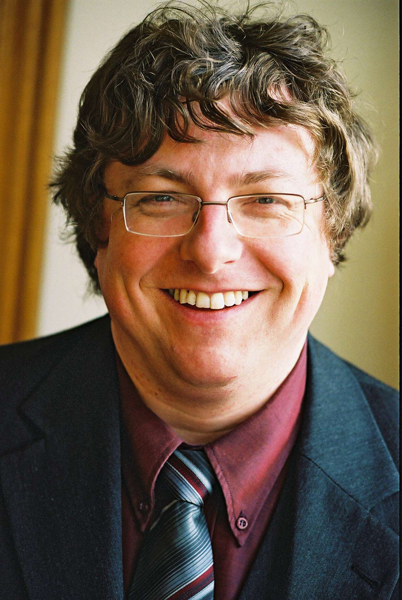
Samuel R. Buss is a Professor of Mathematics and Computer Science at the University of California, San Diego (UCSD). He holds a Ph.D. in Mathematics from Princeton University (1985) and has expertise spanning mathematical logic, proof complexity, computational complexity, and computer graphics. His work bridges foundational mathematics with theoretical computer science, particularly in formal systems, automated reasoning, and algorithm design. Key research areas include proof complexity (e.g., resolution and extended resolution systems), computational logic, and applications in computer graphics (e.g., OpenGL implementations and ray tracing). He authored influential books such as 3D Computer Graphics: A Mathematical Introduction with OpenGL and Introduction to Mathematical Logic . His software contributions include OpenGL-based tools and algorithms for computer graphics and satisfiability solving. Buss has advised notable Ph.D. students, including David Robinson and Nathan Segerlind, and has received funding from NSF grants and other institutions. His research often intersects interdisciplinary topics like bounded arithmetic, computational geometry, and formal verification.
Bart De Moor is a Full Professor at the Department of Electrical Engineering, KU Leuven, Belgium, and a guest professor at the University of Siena. He leads the STADIUS research group and has supervised 85 PhD students. His roles include chairman of Health House (2016–present), member of the Board of VIB (Biotech Institute), and former Vice-Rector for International Policy (2009–2013). Education: Master Degree in Electrical Engineering (1983), KU Leuven PhD in Engineering (1988), KU Leuven Research Interests: His work spans numerical linear algebra, optimization, algebraic geometry, systems and control theory, data-driven AI, machine learning, and applications in process industry and biomedical big data. He has contributed to subspace identification, tensor decomposition, bioinformatics, and quantum computing. Publications Trends: His publications highlight subspace identification methods, tensor decomposition, bioinformatics, and biomedical data analysis. These reflect interdisciplinary advancements in control theory, quantum physics, and mathematical engineering, with applications in industrial and healthcare domains. Scientific Awards and Honors: Leslie Fox Prize (1989) Laureate of the Belgian Royal Academy of Sciences (1992) Bi-annual Siemens Award (1994) Fellow of IEEE (since 2004) Member of the Royal Academy of Belgium for Science and Arts (since 2000) Fellow of IFAC (since 2022) Commander in the Order of King Leopold I (2020) Fellow of SIAM (since 2017) FWO Excellence Award (2010) Advising and Grants: He has led a research group of 20 PhD students and postdocs, co-founded 8 spinoff companies, and secured the ERC Advanced Grant ‘Back to the roots’ (2020–2025). He also co-holds the KU Leuven Chair on healthcare systems (2018–present). Labs and Organizations: Active in the STADIUS research group (KU Leuven), he has served on boards of the Flemish Interuniversity Institute for Biotechnology (VIB), the Alamire Foundation, and the Health Tech Experience Center Health House. His spinoffs include Trendminer, Cartagenia, and Ugentec.
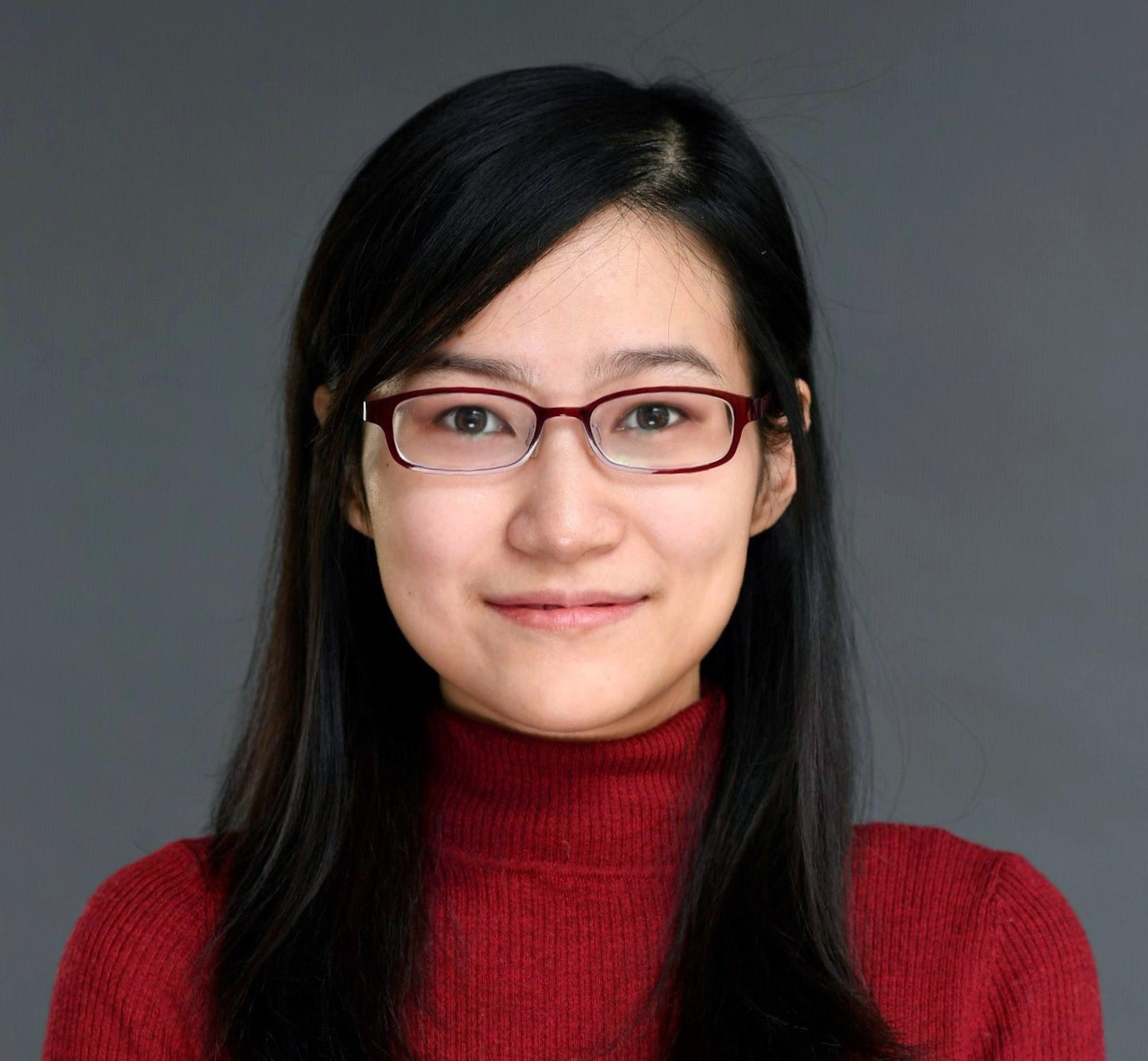
Tsui-Wei Weng is an Assistant Professor at the Halıcıoğlu Data Science Institute, affiliated with the Department of Computer Science and Engineering at the University of California, San Diego (UCSD). Her research focuses on enhancing the robustness, reliability, and safety of AI systems and deep learning models. Education: Ph.D. in Electrical Engineering and Computer Science (EECS), Massachusetts Institute of Technology (MIT), 2020; M.S. in Communication Engineering, National Taiwan University, 2013; B.S. in Electrical Engineering, National Taiwan University, 2011. Her research interests span neural network robustness, AI safety, adversarial robustness certification, control policy verification, and theoretical machine learning. She has contributed foundational work on probabilistic and deterministic robustness certification frameworks like PROVEN and CNN-Cert, with a focus on improving the scalability and efficiency of verification methods. Her publications from 2018–2021 reveal a trajectory in adversarial robustness, randomized smoothing, deep reinforcement learning, and interpretable AI. Collaborative efforts with institutions like MIT-IBM Watson AI Lab, Google DeepMind, and IBM Research further underscore her interdisciplinary approach. Scientific awards include the Best Paper Award at IEEE Components, Packaging and Manufacturing Technology (2016). She actively collaborates with students and postdocs, emphasizing mathematical and machine learning rigor in their research contributions.
Sam Power is a Lecturer in the School of Mathematics at the University of Bristol . He holds a PhD in Mathematics from the University of Cambridge (awarded January 2021) and an MMath. His research focuses on computational statistics, Monte Carlo methods, and probabilistic modeling. Education PhD, University of Cambridge (30 Aug 2016 – 30 Jan 2021) MMath, University of Cambridge Research Interests Dr Power’s work lies at the intersection of probability theory , statistics , and machine learning . He investigates advanced Monte Carlo techniques including Markov Chain Monte Carlo (MCMC), particle methods, and piecewise-deterministic Markov processes. His recent projects explore convergence guarantees via functional inequalities such as Poincaré and log-Sobolev inequalities, state-space models for online learning, and uncertainty quantification. Publication Trends Across 20+ publications (2019–2025), Power has consistently advanced theoretical understanding and practical performance of sampling algorithms. Key themes include error bounds for particle and gradient-based methods, weak Poincaré inequalities, and applications in machine-learning systems such as online skill rating and Bayesian active learning. Scientific Awards No awards explicitly listed in the provided material. Students & Grants No explicit information on supervised students or funded grants is present. Labs & Teams Dr Power is affiliated with the School of Mathematics at Bristol; no specific laboratory or research group name is provided.
Oberto Marrama is a Marie Skłodowska-Curie Postdoctoral Fellow at Ca' Foscari University of Venice's Department of Philosophy and Cultural Heritage. He holds a PhD in Philosophy from the University of Groningen and Université du Québec à Trois-Rivières, with a focus on Spinoza’s theory of the human mind. His academic career includes postdoctoral roles at the University of Oulu and Bar-Ilan University, alongside teaching positions in Canada and Italy. Educational Background: PhD in Philosophy (cum Laude, 2014–2019), University of Groningen/Université du Québec à Trois-Rivières MLitt by Research (with Distinction, 2013–2015), University of Aberdeen Master's Degree in Philosophical Sciences (with honors, 2009–2012), Ca' Foscari University of Venice Bachelor of Philosophy (with honors, 2003–2008), Ca' Foscari University of Venice Research Interests: Marrama specializes in 17th/18th-century philosophy of mind, with a focus on Spinoza, Margaret Cavendish, and Hobbes. His work explores panpsychism, consciousness, memory, and the intersection of rationality and affective states. He investigates how early modern thinkers conceptualized mind-body relationships and the ethical implications of deterministic frameworks. Article Trends: His publications emphasize comparative analyses of early modern philosophies, particularly Spinoza’s panpsychist materialism, Cavendish’s universal self-knowledge, and Hobbes’ materialist anthropology. Recent work addresses memory’s role in virtuous behavior and the historical networks surrounding the Cavendish Circle. Scientific Awards: Marie Skłodowska-Curie Postdoctoral Fellowship (2023–2025) Jenny and Antti Wihuri Foundation Grant (2021–2023) FRQSC Doctoral Scholarship (2016–2018) Advising and Grants: Marrama has co-organized workshops and conferences, including the Cavendish Circle and Hobbes collaborative events. He has curated digital archives like PhilPapers and served as a reviewer for journals such as British Journal for the History of Philosophy and Philosophies . Labs and Teams: He is affiliated with the Center for Renaissance and Early Modern Thought , New Voices on Women in the History of Philosophy , and the Groningen Centre for Medieval and Early Modern Thought , contributing to early modern philosophical discourse and collaborative research projects.
Darko Marinov is a Professor in the Siebel School of Computing and Data Science at the University of Illinois Urbana-Champaign, where he conducts research focused on improving software quality through advanced testing techniques. His work addresses fundamental challenges in software testing including flaky tests, regression test prioritization, and configuration testing. Dr. Marinov's research interests span multiple areas of Software Engineering , with particular emphasis on: Software Testing and Quality Assurance Regression Test Prioritization and Selection Flaky and Non-Deterministic Tests Configuration and Variability Testing Test Suite Optimization Software Reliability and Defect Detection His extensive publication record demonstrates consistent contributions to the field, with research trends showing evolution from foundational testing techniques to addressing modern challenges in software testing, particularly focusing on reliability issues in continuous integration environments and the growing complexity of test suites in large software systems. Dr. Marinov has received numerous prestigious awards recognizing the impact of his work: Two ACM SIGSOFT Impact Paper awards (2012, 2019) ASE Most Influential Paper Award (2015) FSE Test-of-Time Honorable Mention (2024) Seven ACM SIGSOFT Distinguished Paper awards CHI Best Paper Award (2017) Elected Fellow of Automated Software Engineering (2023) His research has been generously supported by major technology companies and government agencies including NSF, Boeing, Facebook, Google, Huawei, IBM, Intel, Microsoft, Qualcomm, Samsung, and SRC. Dr. Marinov actively contributes to the academic community through conference organization, serving as Area Chair for ASE 2025 and Program Committee member for multiple conferences including FSE 2026. His mentoring excellence has been recognized through various awards, highlighting his commitment to guiding the next generation of software engineering researchers.
Professor Christopher Nemeth of Lancaster University's School Of Mathematical Sciences is a leading researcher in computational statistics and probabilistic machine learning. His work focuses on Markov chain Monte Carlo (MCMC), sequential Monte Carlo (SMC), Gaussian processes, and approximate Bayesian computation, with applications in environmental science, target tracking, and econometrics. He currently holds a UKRI Turing AI Acceleration Fellowship and leads the ProbAI research hub. Research Interests: Development of probabilistic AI algorithms for large-scale learning, state-space modeling, and intersections between sampling and optimization algorithms. Grants: £9M UKRI-EPSRC ProbAI hub (2024-2029), £1.1M Turing AI Acceleration Fellowship (2021-2026), and multiple NERC grants. Academic Roles: Turing University Academic Liaison (2023-present), Associate Editor for ACM Transactions on Probabilistic Machine Learning (2023-present), and leadership roles in the Royal Statistical Society. Supervision: Completed supervision of 7 PhD students with projects on scalable Gaussian processes, Monte Carlo methods, and network modeling.
Ignacio Rios Uribe is an Assistant Professor at the Naveen Jindal School of Management (University of Texas at Dallas) specializing in Operations Management . He holds a PhD in Operations, Information and Technology (2020) from Stanford University, with additional MA in Economics from Stanford and MS/BS in Operations Research and Industrial Engineering from Universidad de Chile. PhD in Operations, Information and Technology (2020) - Stanford University MA in Economics (2020) - Stanford University MS in Operations Management (2014) - Universidad de Chile BS in Industrial Engineering (2014) - Universidad de Chile His research focuses on Behavioral Operations Management , particularly in matching markets , college admissions systems, and online platform optimization . Current projects examine mechanism design for dating apps, strategic behavior in college applications, team-building incentives, and charity donation systems. He employs mathematical modeling, field experiments, and structural estimation techniques. Recent publications analyze platform design for curated dating markets (M&SOM, 2023), stable matching with contingent priorities (Management Science, 2023), and capacity planning in school choice (Operations Research, 2022). His work combines theoretical analysis with empirical validation using real-world data from Chilean education systems and industry partners. Awards include First Place in Doing Good with Good OR (2018) and BOM Best Working Paper Competition (2023) Published in top journals like Management Science, M&SOM, Operations Research Professional affiliations with INFORMS and Manufacturing & Service Operations Management Society
Athanasios G. Kanatas is a Professor at the Department of Digital Systems, University of Piraeus, Greece, and Director of the Telecommunication Systems Laboratory. He holds a Ph.D. in Mobile Satellite Communications from NTUA (1997), and has held roles such as Dean of the School of Information & Communication Technologies (2013–2017) and IEEE Communications Society Chairperson (1999). Education: Diploma in Electrical Engineering (NTUA, 1991), M.Sc. in Satellite Communication Engineering (University of Surrey, 1992), Ph.D. in Mobile Satellite Communications (NTUA, 1997). Research focuses on V2X communications, UAV-assisted networks, antenna design, stochastic geometry, and cybersecurity. He has published over 200 papers and authored 6 books, and leads projects in 5G/6G systems and integrated sensing-communication networks. His work includes pioneering contributions to aerial relay placement, fluid antenna systems, and hybrid beamforming techniques. He serves as Editor of IEEE Transactions on Wireless Communications, Associate Editor of IEEE Transactions on Antennas and Propagation, and is a Senior IEEE Member since 2002. Recent activities include extending the deadline for M.Sc. program applications and promoting internships for students. Labs/Teams: Directs the Telecommunication Systems Laboratory, collaborating on projects like ARGOS RFI monitoring and UAV corridor-assisted IoT networks. His research emphasizes practical implementation through prototyping and experimentation, with applications in aerospace, IoT, and intelligent transport systems.
Dr. Elliot Carr is a Senior Lecturer in the School of Mathematical Sciences at Queensland University of Technology (QUT), Faculty of Science. He holds a PhD in Mathematics from QUT and has been a faculty member since 2015, progressing from Lecturer to his current rank. His research and teaching focus on applied and computational mathematics, with strong interdisciplinary applications. Education: PhD in Mathematics, Queensland University of Technology, 2009–2012 Bachelor of Applied Science (Honours) in Mathematics, QUT, 2008 Bachelor of Mathematics, QUT, 2005–2007 Elliot Carr's research lies at the intersection of applied mathematics and real-world physical systems. His work centers on developing and analyzing mathematical models of advection, diffusion, and reaction processes, particularly in heterogeneous media. He employs both deterministic (PDE-based) and stochastic (random walk) frameworks, contributing to analytical solutions, multiscale modeling, surrogate models, and numerical methods such as finite volume and Newton-Krylov techniques. His research has been applied to diverse fields including groundwater contamination, drug delivery, heat transfer, and tumor spheroid modeling. The latest publications reflect a consistent focus on transport phenomena in complex geometries and heterogeneous environments. Key themes include dual-grid mapping for contaminant transport, analytical modeling of drug release from spherical capsules, thermal diffusivity in shell geometries, and stochastic models of biological systems. His methodological contributions span analytical, numerical, and statistical approaches, demonstrating versatility across applied mathematics. Scientific Awards and Recognitions: JH Michell Medal, ANZIAM (2022) ARC DECRA Fellowship (2015) QUT Outstanding Doctoral Thesis Award (2012) University Medal, QUT (2008) Dean’s Award for top graduate in both Honours and Bachelor programs Keynote and plenary speaker at major conferences including ANZIAM and Forum “Math-for-Industry” Dr. Carr actively supervises PhD and Masters students, with completed and ongoing projects on diffusive transport, tumor modeling, and sports analytics. He has secured competitive research funding, including an ARC Discovery Project on multiscale modeling. His teaching includes computational mathematics, linear algebra, and differential equations, with a focus on MATLAB-based implementation. He is a member of the Australian Mathematical Society (AustMS) and ANZIAM. Research Labs and Teams: While not explicitly tied to a named lab, Carr is part of the broader Applied Modelling and Computation research environment at QUT. He collaborates extensively with researchers such as Ian Turner, Matthew Simpson, and Chris Drovandi, contributing to interdisciplinary teams in mathematical biology, environmental modeling, and statistical computation.
Pierre Nyquist is an Associate Professor and docent in the Department of Mathematical Sciences at Chalmers University of Technology and Gothenburg University. His research is sponsored by the Swedish Research Council, the Swedish e-science Research Center (SeRC), and the Wallenberg Artificial Intelligence, Autonomous Systems and Software Program (WASP). He is also an elected member of the Young Academy of Sweden for the period 2024-2029 and has served as a scientific ambassador for EURANDOM since November 2021. Dr. Nyquist's research interests lie at the intersection of probability theory, mathematical statistics, and applied mathematics. His main expertise is in probability theory, with a focus on large deviations theory and stochastic numerical methods. He has a general interest in all aspects of probability theory and much of what is categorized as applied mathematics, particularly questions related to partial differential equations, optimization, and stochastic optimal control. Recently, he has become increasingly interested in the mathematical foundations of complex data analysis and modeling, and the interplay with ideas from physics. His current research interests include large deviations, gradient flows and their generalizations, stochastic numerical methods, statistical learning theory, stochastic processes, and random dynamical systems. Pierre Nyquist has received research funding from several prestigious sources including the Swedish Research Council, the Swedish e-science Research Center (SeRC), and the Wallenberg Artificial Intelligence, Autonomous Systems and Software Program (WASP). His publications demonstrate a consistent focus on theoretical aspects of probability with applications to computational methods and data analysis, showing increasing integration with machine learning techniques in recent years. elected member of the Young Academy of Sweden (2024-2029) scientific ambassador for EURANDOM (since November 2021) Dr. Nyquist is actively involved in mentoring the next generation of researchers. He currently supervises several PhD students including Cinja Arndt (starting Aug. 2025), Niki Wilhemlson (started Aug. 2024), and Viktor Nilsson (started Aug. 2020). He has previously supervised successful PhD students such as Federica Milinanni (Aug. 2020-May 2025) and Carl Ringqvist (Aug 2015-June 2021). He regularly teaches graduate-level courses including "Modern methods of statistical learning" and has supervised numerous MSc theses on topics ranging from deep learning for time-series radar signals to neural network embedding in insurance pricing. His research group is active in both theoretical developments and practical applications, with current projects spanning from mathematical foundations of probability to applications in machine learning and data science. Dr. Nyquist maintains strong international collaborations, as evidenced by his frequent travel for conferences and research visits to institutions such as Brown University and TU Delft.
Leon Bungert is a Professor of Mathematics of Machine Learning at the University of Würzburg, working in applied analysis and numerics with a particular focus on data science and machine learning. His research investigates PDEs and variational models on graphs, adversarial robustness of machine learning, variational regularization, and nonlinear optimization. Dr. Bungert serves as a guest editor for the European Journal of Applied Mathematics, an associate editor for Advances in Continuous and Discrete Models: Theory and Applications, and is a member of the program committee at SSVM 2025. He is also an ELLIS member and actively organizes conferences and workshops, including "MIA'25" at IHP in Paris (January 13-15, 2025), "Synergies of Machine Learning and Numerics" in Osaka (March 11-13, 2025), and "Mathematical Analysis of Adversarial Machine Learning" in Oaxaca (August 17-22, 2025). Research Interests Dr. Bungert's primary research areas include: PDEs on graphs Adversarial robustness in machine learning Inverse problems Optimization Variational problems in L-infinity Nonlinear eigenvalue problems Image reconstruction with structural priors His work bridges theoretical mathematics with practical applications in machine learning, particularly focusing on the mathematical foundations of deep learning and developing robust algorithms that can withstand adversarial attacks. He has made significant contributions to understanding the connections between partial differential equations and machine learning algorithms. Research Trends Analysis of Dr. Bungert's recent publications reveals a strong focus on the intersection of machine learning and mathematical analysis. A key theme is the application of variational methods and partial differential equations to machine learning problems, particularly in understanding and improving the robustness of neural networks against adversarial examples. His work on Lipschitz learning on graphs has established important theoretical foundations for graph-based semi-supervised learning. Additionally, his research on the infinity Laplacian and p-Laplacian equations provides deep insights into the mathematical structure of machine learning algorithms. The development of Bregman learning frameworks for sparse neural networks represents a significant contribution to efficient deep learning model training. Professional Activities Dr. Bungert is actively involved in the academic community through editorial roles and conference organization. His current professional activities include: Guest editor for the European Journal of Applied Mathematics Associate editor for Advances in Continuous and Discrete Models: Theory and Applications Member of the program committee at SSVM 2025 ELLIS member Co-organizer of multiple international conferences and workshops Technical Contributions Dr. Bungert has developed several open-source software packages that implement his theoretical contributions, including: Code for convergence rates of Lipschitz learning on graphs A Bregman training framework for sparse neural networks CLIP: Cheap Lipschitz Training of Neural Networks Nonlinear Power Method for Proximal Operators and Neural Networks Robust Image Reconstruction with Misaligned Structural Information These implementations are primarily in Python and MATLAB, demonstrating his commitment to making theoretical advances accessible for practical applications.
Giuseppe De Giacomo is a Professor of Computer Science at the University of Oxford's Department of Computer Science and a Governing Body Fellow at Green Templeton College. Previously, he held a Professorship at the University of Roma 'La Sapienza'. His research focuses on Knowledge Representation, Automated Planning, Reactive Synthesis, and Formal Verification, with notable contributions to LTLf-based systems and service composition. He leads the ERC Advanced Grant project WhiteMech, exploring self-programming mechanisms. His research interests span Artificial Intelligence, including formal methods for autonomous systems, temporal logic synthesis, and multi-agent systems. He serves on the Board of EurAI and chairs the steering committee of ESSAI. Notable awards include AAAI Fellow, ACM Fellow, and EurAI Fellow. Recent work emphasizes LTLf extensions, environment specifications in planning, and resilient manufacturing via Markov Decision Processes. He advises students like Christoph Weinhuber and collaborates on projects such as Digital Twin Composition in Smart Manufacturing. His publications explore topics like LTLf synthesis under unreliable inputs, temporal abstraction in planning, and ethical responsibility attribution in autonomous systems. Professional service includes Program Chair roles for ECAI 2020 and KR 2014, and contributions to conferences like IJCAI and ICAPS. His research bridges theoretical foundations with practical applications in AI and formal verification.
Rasha Karakchi serves as a Lecturer in the Department of Computer Science and Engineering at the University of South Carolina's Molinaroli College of Engineering and Computing, where she teaches diverse courses while maintaining an active research program in hardware acceleration and embedded systems. Her academic foundation includes: Ph.D. in Computer Science and Engineering, University of South Carolina (2020) M.E. in Computer Engineering, University of South Carolina (2016) Dr. Karakchi's research centers on high-performance reconfigurable embedded systems, with particular focus on hardware acceleration for automata processing, spiking neural networks, and genomic sequence alignment. Her work bridges theoretical computer science with practical hardware implementation, emphasizing energy efficiency and real-time performance in security-critical applications. Analysis of her 2023-2025 publications reveals a dominant research trajectory applying machine learning to optimize hardware configurations for domain-specific tasks. Key thematic clusters include ML-enhanced automata processors for pattern matching, lightweight encryption engines for embedded security, and specialized architectures for spiking neural network acceleration—all demonstrating consistent innovation in hardware-software co-design for computationally intensive workloads. Her research excellence has been recognized through: SPARC Award (South Carolina's Program to Advance Research and Creativity)
Qiudong Wang is a Professor in the Department of Mathematics at the University of Arizona, where he conducts research and teaches in the field of dynamical systems and differential equations. His work spans theoretical and applied aspects of nonlinear dynamics, celestial mechanics, and chaotic systems. Education: Ph.D., University of Cincinnati, 1994 B.S., Nanjing University, China, 1982 His research focuses on homoclinic tangles, Melnikov methods, rank one attractors, twist maps, and the N-body problem . He has made significant contributions to the understanding of chaotic behavior in both deterministic and stochastically perturbed systems. His work often involves deep analytical techniques and has been published in premier journals such as Annals of Mathematics , CPAM , and JDE . He has also contributed expository works on rank one chaos and homoclinic tangles, including a Scholarpedia article. The trends in his recent publications emphasize nonautonomous and stochastic perturbations, geometric methods in dynamical systems, and the statistical properties of chaotic attractors . His research bridges pure mathematics with applications in physics and engineering, particularly in celestial mechanics and circuit systems. Scientific Contributions: Development of high-order Melnikov methods Theory of rank one attractors with Lai-Sang Young Analysis of homoclinic tangles and their chaotic dynamics Study of the N-body problem and integral manifolds Investigations into twist maps and variational methods Wang advises students in mathematics and has mentored work in dynamical systems, though specific names are not listed. He has received recognition through publications in top journals, though formal awards are not mentioned. He teaches undergraduate courses such as Math 254 and maintains comprehensive lecture notes on dynamical systems, homoclinic tangles, and rank one chaos. He is actively involved in research and continues to publish preprints and expository works, indicating ongoing scholarly activity. He leads a research group focused on nonlinear dynamics and chaos theory, with a strong emphasis on rigorous mathematical analysis. His team explores theoretical frameworks for understanding complex dynamical behavior in both finite and infinite-dimensional systems.