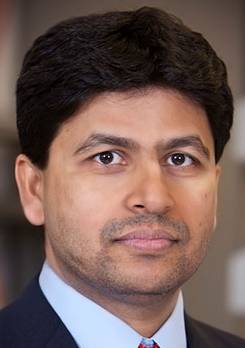
Tara Dhakal is an Associate Professor and Director of the Electrical and Computer Engineering department at Binghamton University, leading the Center for Autonomous Solar Power (CASP). He holds a BS from Tribhuvan University (Nepal), MS from Shimane University (Japan), and PhD from the University of Florida. His research focuses on renewable energy systems, particularly solar cell technologies using earth-abundant and non-toxic materials to achieve cost-effective energy solutions. Key areas include perovskite solar cells, energy storage (supercapacitors/batteries), and thin film semiconductor devices. Education: BS, Tribhuvan University MS, Shimane University, Japan PhD, University of Florida Research Interests: His work bridges material science and device engineering, emphasizing: Perovskite solar cell stability and efficiency Lead-free alternatives for photovoltaics Atomic layer deposition for thin film optimization Supercapacitor electrode materials Transparent conductors for optoelectronics Spintronic materials for multifunctional devices Awards: NSF CAREER Award (2018) for hermetic sealing of perovskite solar cells Labs/Teams: Directs the CASP center, collaborating on autonomous solar power systems. His lab focuses on scalable manufacturing processes and material innovation for renewable energy applications.
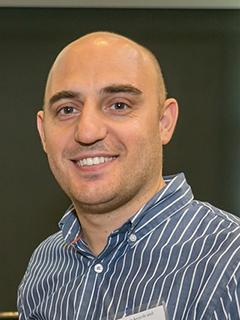
Emrah Celik is an Associate Professor in the Department of Mechanical & Aerospace Engineering at the College of Engineering, University of Miami. His research focuses on advanced manufacturing techniques, particularly in the area of additive manufacturing of composite materials and their multifunctional properties. Dr. Celik's research interests span multiple cutting-edge areas of materials science and engineering: Additive manufacturing of polymer and fiber-reinforced composites Electrical and mechanical properties of 3D printed composites Carbon fiber reinforced polymer (CFRP) composites Thermoelectric materials and energy harvesting Multi-functional composite structures Advanced characterization techniques for composite materials Analysis of Dr. Celik's recent publications reveals a strong focus on pushing the boundaries of additive manufacturing for composite materials. His work demonstrates significant advancements in controlling fiber alignment in 3D printed thermoset composites, developing novel methodologies for electrical network activation, and enhancing mechanical performance through innovative printing techniques. A notable trend is his exploration of in-situ activation of electrical properties in printed composites, which opens new possibilities for structural health monitoring and self-sensing capabilities. His research also extends to thermoelectric materials, where he has achieved record-breaking performance metrics for 3D printed copper sulfide materials. Dr. Celik's work bridges fundamental materials science with practical aerospace applications where lightweight, high-performance materials are critical. Dr. Celik has established himself as a leading researcher in advanced composite manufacturing with numerous publications in high-impact venues. His innovations include the development of nozzle oscillation infill patterns that improve electrical conductivity by 27% while enhancing dimensional accuracy, and bi-modal fiber alignment approaches that increase mechanical performance by 16% with improved fracture resistance. His laboratory at the University of Miami focuses on Direct Ink Writing processes for thermoset composites, investigating how process parameters affect microstructure formation and resulting material properties. Current research explores new frontiers in multifunctional composite systems with integrated sensing capabilities and spatially controlled electrical properties.
Necip Altay Eren serves as an Assistant Professor in the Construction Technology Department at Gaziantep University's Islahiye Vocational School, where he has held academic positions since 2014 (Lecturer until 2022, promoted to Assistant Professor in 2022). His institutional affiliation spans multiple units within Gaziantep University, including the Technical Sciences Vocational School (2014-2022) and current appointment at Islahiye Vocational School, with administrative duties as Head of Department since 2024. His educational background includes: Doctorate (2021): Gaziantep University, Institute of Science, Civil Engineering Master's-equivalent (2009): University of Connecticut, USA Bachelor's (2002): Gaziantep University, Faculty of Engineering, Civil Engineering (English Program) Dr. Eren's research centers on advanced concrete technologies, with emphasis on geopolymer concrete systems, fiber reinforcement mechanisms, and nano-material applications. His work investigates critical performance aspects including mechanical properties under extreme conditions (acid/sulfate attack, thermal exposure), impact resistance, and structural behavior of innovative concrete composites. His methodology integrates experimental testing with computational approaches like artificial neural networks for strength prediction. Analysis of his 11 journal publications (2021-2024) reveals consistent focus on sustainable construction materials, particularly alkali-activated systems using industrial byproducts (slag), with increasing sophistication in hybrid reinforcement strategies combining steel fibers, nano-silica, and recycled materials like tire rubber. His work bridges fundamental material science with practical structural applications, predominantly targeting flat slab systems and shear-critical elements. Dr. Eren actively supervises graduate research, having completed two master's theses in 2023 on geopolymer concrete fire resistance and fiber-reinforced concrete shear strength. He secured national research funding for the project 'Investigation of the Impact Behavior of Geopolymer Concretes' (2017-2020), demonstrating capacity for independent research leadership. His teaching portfolio spans structural mechanics, concrete technology, and building materials across 57 course instances since 2013, maintaining continuous instructional engagement through 2024-2025. While no formal laboratory affiliation is specified, his project management and publication record indicate active involvement in concrete materials testing facilities. His research trajectory shows progression toward sustainable material systems with enhanced multifunctional properties, particularly for infrastructure resilience under dynamic loading conditions.
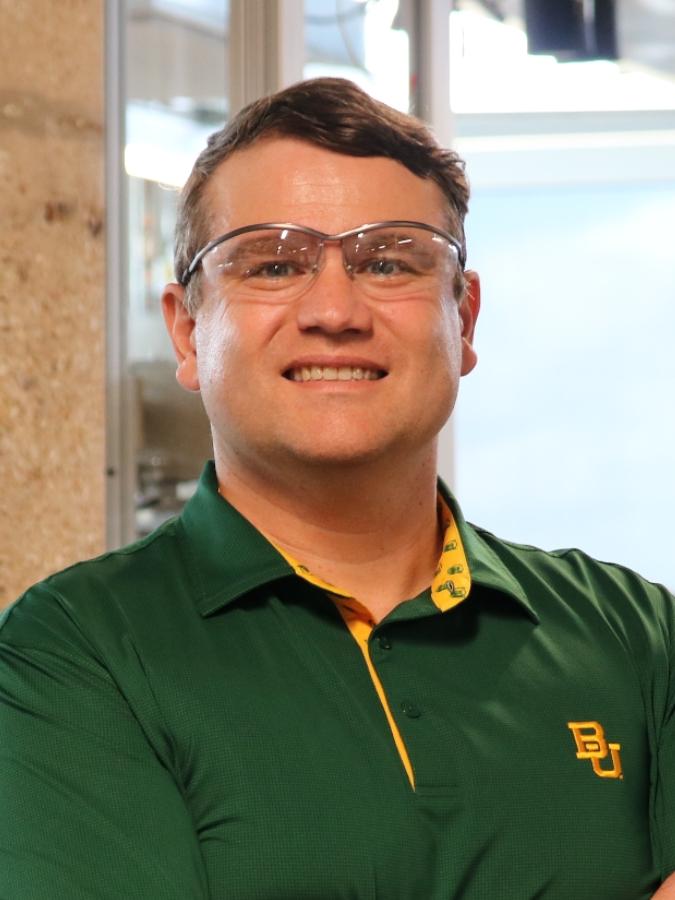
Dr. David Jack is a Professor in the Department of Mechanical Engineering at Baylor University’s School of Engineering & Computer Science. He leads the Scientific Innovations in Complex Engineering Materials (Sic'em) research group, focusing on advanced composite materials, numerical modeling, and non-destructive evaluation (NDE). His teaching includes core mechanical engineering courses such as Dynamics, Strength of Materials, and Finite Element Methods at both undergraduate and graduate levels. PhD, Mechanical and Aerospace Engineering, University of Missouri-Columbia (2006) MS, Applied Mathematics, University of Missouri-Columbia (2006) MS, Mechanical and Aerospace Engineering, University of Missouri-Columbia (2003) BS, Mechanical Engineering, Colorado School of Mines (2001) BS, Engineering Physics, Colorado School of Mines (2001) Dr. Jack’s research centers on constitutive modeling of composites, fiber orientation in polymer systems, non-destructive evaluation using ultrasonic and imaging techniques, and multifunctional materials including carbon nanotube networks. His work spans from micro-scale modeling to full-scale structural performance, with applications in aerospace, automotive, and energy sectors. He specializes in predictive modeling of composite processing and performance, and in developing novel NDE methods such as quantitative ultrasound and phased array inspection. His recent publications highlight advancements in finite element modeling of woven composites, fiber orientation prediction in injection molding, electrical conductivity of nanotube networks, and cure-induced deformation in laminates. These works reflect a strong trend in computational mechanics, multiscale modeling, and experimental validation of advanced materials. FAA 8100-9 Statement of Compliance with Airworthiness Standards (6 completed) 6 issued patents in NDE technology 18 pending patents in NDE and composite inspection Dr. Jack advises multiple PhD and master’s students and leads a large research team within the Sic'em lab. His group has secured significant research outcomes, including technology transfer through Verifi Technologies and the establishment of the ISO 17025-accredited MTAC (Materials Testing and Characterization) facility. The lab operates within the 12,000 sq. ft. BRIC facility, with plans to expand by 7,000 sq. ft., and is equipped with advanced imaging, structural testing, and materials fabrication systems. The Sic'em research group maintains dedicated facilities for materials synthesis, manufacturing, NDE/NDI, and high-resolution imaging. It hosts Baylor’s MTAC facility and supports industry collaboration through shared prototyping and testing infrastructure. The lab employs advanced equipment including micro-CT systems, scanning electron microscopes, robotic ultrasonic inspection, rheometers, and large-scale additive manufacturing systems.
Vincenzo Maria Sglavo is a Full Professor of Materials Science and Technology at the Department of Industrial Engineering , University of Trento , Italy. He coordinates the Doctoral Program in Industrial Innovation (M.D. 45/2013) and has held academic appointments at The Pennsylvania State University (Postdoctoral Fellow, 1993-1994) and as Adjunct Professor there (2001). His career spans over three decades, including roles as Assistant Professor (1989-1999) and Associate Professor (1999-2018) at the University of Trento. Education: Master’s in Materials Engineering (cum laude), University of Trento (1988) Research Interests focus on glasses and ceramics , with expertise in fatigue and fracture mechanics , chemical strengthening , high-strength ceramics , flash and cold sintering , solid oxide fuel cells (SOFC/SOEC), and 3D printing of inorganics . His work bridges fundamental material behavior and industrial applications, particularly in energy, construction, and biomedical fields. Recent publications highlight innovations in ultrafast high-temperature sintering for ceramics, 3D-printed alumina , alkali-activated limestone for construction, and plasma-assisted ammonia synthesis . He explores entropy-stabilized composites, glass joining techniques, and iron speciation effects in aluminosilicates. Scientific Awards include the AIMAT Prize (1996) AIAS Prize (2000) Outstanding Reviewer Award, Scripta Materialia (2019) Pfeil Award (2022) Nanomaterials 2023 Best Paper (Second Award) Fellow, European Ceramic Society (2023) Advising and Grants: He has advised 34 PhD students and over 100 Master’s theses , managing 50+ research projects funded by NATO, the EU, MUR, and private companies. His editorial roles include Associate Editor for the Journal of the American Ceramic Society and Frontiers in Ceramics . Labs and Teams: He collaborates with institutions like the Joint Research Centre (EC) , Universidade de San Carlos , and Instituto de Cerámica y Vidrio . His work integrates academic research with industrial consultancy, addressing technical challenges in ceramics, glass, and sustainable materials.
Mohammad Islam is a Professor in the Department of Materials Science and Engineering at Carnegie Mellon University's College of Engineering. He holds a Ph.D. in Physics from Lehigh University (2000) and completed postdoctoral work at the University of Pennsylvania's Department of Physics and Astronomy. His research spans additive manufacturing EVs and mobility micro/nano manufacturing sustainable energy storage bioactive materials with focus on carbon nanotube aerogels and graphene composites. Islam's work reveals self-healing materials for sensing/actuation interfaces superelastic aerogels with extreme thermal stability bio-compatible carbon nanotube delivery systems high-efficiency supercapacitors through collaborations in physics, biomedical engineering, and chemistry. Scientific recognition includes National Science Foundation CAREER award Alfred P. Sloan Research Fellowship Kavli Frontiers Fellowship George Tallman Ladd Research Award with patents on carbon nanotube aerogel composites. He leads the Islam Group, which investigates soft matter-nanomaterial synergies for applications in tissue engineering, stretchable electronics, and energy systems.
Christos Markos is an Associate Professor and Group Leader of the Neural Devices & Gas Photonics group at the Department of Electrical and Photonics Engineering, Technical University of Denmark (DTU). His research integrates advanced photonics with biomedical and environmental applications, focusing on hollow-core fiber lasers, chalcogenide glasses, and multimaterial fiber optics for neural interfaces and sensing systems. His research interests lie at the intersection of photonics, materials science, and neuroengineering. He specializes in experimental optics , optical materials , fiber sensors , and multimaterial fiber devices , with applications in neurophotonics and gas sensing . His work emphasizes the development of biocompatible and biodegradable optical fibers for implantable neural devices and hollow-core fiber lasers for methane detection. The 15 most recent publications highlight a strong trend toward biomedical photonics and environmental sensing , combining infrared neural stimulation , calcium dynamics , and neurotoxicity studies with engineering advances in soft glass synthesis , fiber fabrication , and photoacoustic detection . The keywords span Neuroscience , Photonics , Materials Science , and Environmental Engineering , reflecting interdisciplinary innovation. Christos Markos has received no explicitly mentioned scientific awards in the provided text. He actively supervises multiple PhD students including Pouya Abdollahian, Kaiyuan Sui, and Cheng Zhang, and serves as main or co-supervisor on several funded research projects. His group has secured significant research grants related to neural devices , gas photonics , and quantum photonic systems , indicating strong external funding support. He also contributes to academic service as an editor for Optical Materials Express . Christos Markos leads the Neural Devices & Gas Photonics research group at DTU Fotonik, where he has established three advanced laboratories for soft glass synthesis, extrusion, and fiber fabrication, and two additional labs dedicated to neurophotonics. His team works on cutting-edge projects involving biodegradable optical fibers, infrared neurostimulation, and hollow-core fiber lasers, positioning the lab at the forefront of multifunctional fiber-based biomedical devices .
Sadik Omairey is a Senior Research Fellow at Brunel Composites Centre (BCC), a joint venture between Brunel University London and The Welding Institution (TWI) since June 2019. He serves as technical lead for collaborative projects involving automotive crash structures, all-composites aircraft fuselage assembly, and thermoplastic additive manufacturing. Affiliated with Brunel University London's College of Engineering, Design and Physical Sciences, he represents BCC at academic conferences and contributes to postgraduate student training. His research spans composite materials reliability, metamaterials, biomechanics, and sustainable manufacturing. Key interests include computational homogenization (notably through his EasyPBC tool), crashworthiness optimization, adhesive bonding, and additive manufacturing. His work integrates experimental testing with advanced finite element modeling, focusing on applications in aerospace, automotive, and biomedical engineering. Recent publications (2021-2025) reveal strong trends in multiscale modeling of composites, life cycle analysis for sustainable design, and bio-inspired metamaterials. His collaborative work frequently addresses industrial challenges in automotive crash structures and aircraft fuselage assembly, with growing emphasis on recyclability and environmental impact assessment in materials engineering. Awarded significant professional recognitions: PRINCE2® Foundation Project Management certification (2023) Chartered Engineer and Fellow of IMechE (CEng FIMechE, 2018) Fellow of the Higher Education Academy (FHEA, 2018) Omairey actively supervises postgraduate students and leads multiple funded research projects including HyPStore (hydrogen storage), modular crash boxes, and PADICTON (distortion compensation in additive manufacturing). His work bridges academic research with industrial applications through partnerships with automotive and aerospace sectors. He contributes to BCC and IMM research groups, focusing on experimental validation and computational modeling of advanced composite systems.
Lect. Dr. Anca Croitoru is a faculty member at the Department of Mathematics, Faculty of Mathematics, Al.I.Cuza University of Iasi, Romania. She holds a Ph.D. in Mathematics (2000) under the supervision of Prof. Anca-Maria Precupanu. Her research focuses on set-valued analysis, non-additive multifunctions, fuzzy mathematics, and integration theory. She has held visiting positions at Université de Bretagne Occidentale (Brest, France) in 2003 and 2005. Education: Bachelor's/Master's: Faculty of Mathematics, Al.I.Cuza University (details not specified). Ph.D. (2000): Thesis titled Non-additive and additive set multifunction , advised by Prof. Anca-Maria Precupanu. Research Interests: Continuity, measurability, and fuzzy properties of multifunctions. Non-additive set multifunctions, set-valued integrals, and their applications. Atomicity, pseudo-atoms, and Darboux properties in set-valued analysis. Awards & Memberships: Member of the Al. Myller Mathematical Seminary Foundation. AMS, EWM (European Women in Mathematics), ROMAI, ISCB, and WSEAS. Reviewer for Mathematical Reviews and WSEAS journals. Recent Article Trends: Her work emphasizes integrability theories (Riemann-Lebesgue, Aumann-Pettis-Sugeno), comparison of nonlinear integrals, and applications in reaction-diffusion models. She explores inequalities, convergence theorems, and fuzzy measure-theoretic frameworks.
Tyler Tallman is an Associate Professor in the School of Aeronautics and Astronautics at Purdue University. His research focuses on multifunctional materials, embedded sensing, and inverse problems, with applications in smart structures and nondestructive evaluation. He holds a PhD in Mechanical Engineering from the University of Michigan (2015) and has received multiple awards, including the NSF CAREER Award (2023) and the Elmer F. Bruhn Teaching Award (2016). His work integrates advanced materials with cutting-edge methods like electrical impedance tomography and machine learning for structural health monitoring. Education: BS in Physics and Mathematics, University of Wisconsin-Eau Claire, 2010 BS in Engineering Mechanics, University of Wisconsin-Madison, 2010 MS in Mechanical Engineering, University of Michigan, 2012 PhD in Mechanical Engineering, University of Michigan, 2015 Research Interests: Development of self-sensing materials for real-time damage detection Integration of inverse problem techniques with machine learning Advanced manufacturing of multifunctional composites Applications in aerospace, biomedical, and structural systems Awards: National Science Foundation CAREER Award (2023) Air Force Office of Scientific Research Young Investigator Program Award (2023) Faculty Excellence Award for Early Career Teaching (2021) Elmer F. Bruhn Teaching Award (2016) Grants & Labs: Principal Investigator of NSF CAREER Grant for inverse mechanics research Lead of TNTLabs (Tallman NanoTechnology Lab) at Purdue Air Force Summer Faculty Fellowships (2022–2023) Labs/Teams: His TNTLabs specialize in smart materials, embedded sensing systems, and advanced composites research.
Dr. El Barbary Hassan is a Professor in the Department of Sustainable Bioproducts at Mississippi State University, affiliated with the College of Forest Resources. His research focuses on biomass conversion, catalytic processes, and sustainable materials development. He holds a PhD in Chemistry from Ain Shams University, with additional degrees in the same field. His work emphasizes biofuel production, carbon materials for environmental remediation, and nanocellulose-based composites. Education: PhD, MS, and BS in Chemistry from Ain Shams University. Research interests include biomass pyrolysis/liquefaction, catalytic conversion to fuels, carbon materials for water purification and CO2 capture, and nanocellulose composites. He teaches Wood Chemistry, Sustainable Bioproducts, and Biorefinery Processes. Recent articles highlight advancements in adsorbent materials, bio-oil upgrading, and supercapacitor design using lignin. His work addresses environmental challenges such as PFAS removal and oil spill remediation. Awards: Not explicitly listed, but his contributions to sustainable chemistry are notable. He collaborates with the Sustainable Chemistry Group and the Forest and Wildlife Research Center.
Dr. Maria Konsta Gdoutos is a Professor of Civil Engineering and Materials Science and Engineering at The University of Texas at Arlington. She serves as the co-founder and Associate Director of the Center for Advanced Construction Materials (CACM), a state-of-the-art interdisciplinary center advancing smart materials for infrastructure. Her research focuses on sustainable concrete, nanotechnology, and multifunctional cement-based composites, with emphasis on CO2 sequestration, renewable energy integration, and infrastructure durability. Affiliations: CACM Director, ACI 241 Committee Chair, RILEM Technical Committee member, and Associate Editor of Cement and Concrete Composites . Leadership: UTC Director of the $10M DuRe-Transp Center, NSF PIRE grant recipient, and recipient of international awards including Fellowships from European and Russian Academies. Research interests span advanced nanocomposites, smart concrete for real-time monitoring, and eco-efficient materials. Her work addresses societal needs through nanotechnology-enabled solutions for construction sustainability and resilience. Over 150 peer-reviewed publications and patents on CNT-reinforced concrete and smart materials highlight her contributions. Grants include NSF PIRE (#2230747) for CO2 sequestration and a DOT Tier 1 UTC. Awards include Empirikion (2017) and Fulbright (2005). She advises multiple PhD and MS students, leading projects on carbon-negative concrete and waste material utilization. Labs/Teams: CACM, where interdisciplinary teams develop nanoengineered materials for infrastructure. Current projects include thermoelectric concrete for anti-icing and additive manufacturing of cementitious materials.
Dr. Daniel Prati is a plant population biologist and postdoctoral researcher at the University of Bern's Institute of Plant Sciences, Department of Plant Ecology. His research focuses on ecological genetics, life-history evolution, and species interactions, particularly in the context of belowground interactions of non-indigenous invasive species. He is a project leader involved in the Biodiversity Exploratories initiative, studying plant diversity mechanisms and coexistence in grassland ecosystems. Combining observational and experimental approaches, his work utilizes field and common garden studies to address ecological dynamics under environmental pressures like drought and land-use changes. He is affiliated with the University of Bern, where his role emphasizes collaborative, large-scale research projects. His contributions span over 100 publications, covering topics such as biodiversity effects on ecosystem resilience, land-use impacts on plant communities, and the interplay between plant traits and environmental conditions. Research interests include understanding how biodiversity influences ecosystem functioning, particularly under extreme conditions like drought, and the role of invasive species in altering ecological interactions. His work bridges theoretical and applied ecology, informing strategies for biodiversity conservation and sustainable land management.
Jinsong Leng is a Full Professor and Director of both the International Center for Applied Mechanics and the Center of Smart Materials and Structures at Harbin Institute of Technology (HIT). His research focuses on smart materials, 4D printing, and advanced composites with applications in aerospace, biomedical engineering, and robotics. He has held leadership roles since 2004, including directing major research centers since 2007. His honors include membership in the Chinese Academy of Sciences (2021) and fellowships from AAAS (2018), RAeS (2013), and IOP (2011). His work bridges fundamental material science with practical innovations, such as deployable space structures and biodegradable medical devices. He collaborates globally, having held postdoctoral positions in the UK and Singapore before returning to HIT. Notable contributions include pioneering 4D-printed metamaterials and shape-memory polymer composites for space and biomedical uses. His labs focus on advancing smart materials for next-generation technologies, with a strong emphasis on interdisciplinary research.
Katherine Dafforn is a Senior Lecturer in the Department of Earth and Environmental Sciences at Macquarie University and holds an adjunct position as Adjunct Associate Professor in the School of Biological, Earth & Environmental Sciences at UNSW Sydney. She is also a researcher at the Sydney Institute of Marine Sciences, serving as Deputy Director of the Sydney Harbour Research Program. Her work integrates marine environmental science with science communication, addressing challenges in urbanized coastal ecosystems. Her research focuses on human impacts in marine environments, including the effects of contaminants, invasive species, and habitat modification. She investigates eco-engineering solutions for coastal infrastructure, light pollution’s ecological consequences, and microbial responses to environmental stressors. Her contributions span interdisciplinary collaborations, such as the Centre for Smart Green Cities, emphasizing sustainable urban development and marine conservation strategies. In addition to her academic roles, Dr. Dafforn leads projects that bridge research and practical applications, such as designing multifunctional seawalls and mitigating biological invasions in ports. Her work highlights the importance of scaling up interventions to enhance biodiversity and ecosystem services in urban marine settings.