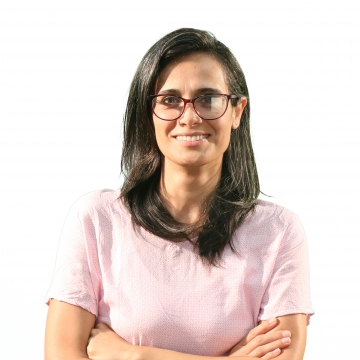
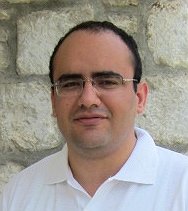
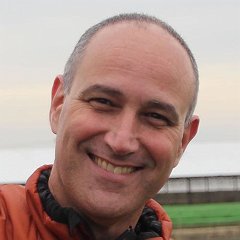
Bryan Strange is a Professor at the Department of Photonic Technology and Bioengineering, Universidad Politécnica de Madrid (UPM), and a member of the Center for Biomedical Technology (CTB) since 2011. His research focuses on neuroscience, particularly in memory mechanisms, neurodegenerative diseases, and neuroimaging techniques. Neuroscience Clinical Neurology Cognitive Neuroscience Neuroimaging Neurodegenerative Diseases Medical Imaging His work explores hippocampal-amygdala interactions in emotional memory, deep brain stimulation (DBS) for psychiatric disorders, and neuroimaging biomarkers for Alzheimer's disease and aging. Recent studies address superagers' resistance to age-related brain changes, genetic factors in hippocampal atrophy, and advanced MEG/CT/MRI methodologies. Analysis of his 15 most recent publications reveals trends in neuroimaging (MRI, MEG, CT), DBS applications, and computational psychiatry, with subfields spanning dementia risk prediction, emotional memory modulation, and cortical connectivity modeling. His contact email is bryan.strange@upm.es . He has not received explicit awards or honors in the provided data and has no listed advisees.
John Morgan Sampson is an Associate Professor in the Department of Computer Science and Engineering. His research focuses on energy-efficient computing, neuromorphic systems, and memory safety. Active in energy harvesting systems and in-memory computing Specializes in dark silicon, non-volatile memory, and deep neural networks Collaborates on projects related to distributed sensor networks and secure architectures Research Trends: Recent articles highlight advancements in energy-efficient computer architecture , memory safety validation , and neuromorphic computing . Key subfields include spiking neural networks , edge-cloud partitioning , and heap memory protection .
Asal Kiazadeh is an Assistant Professor at the Faculty of Science and Technology (FCT), Universidade Nova de Lisboa, specializing in memristor devices, thin-film transistors, and neuromorphic computing. His research focuses on advancing flexible amorphous oxide materials for resistive switching devices and IoT applications. PhD in Electronics and Optoelectronics from the University of Algarve (2013) Collaboration with Philips Research Laboratories Principal Investigator for NeurOxide (PTDC/NAN-MAT/30812) and OPERA (2022.08132.PTDCO) Local coordinator for TERRAMETA (European Project No. 101097101) His work bridges device physics and system-level innovation, with a particular emphasis on memristor-based neuromorphic computing , reconfigurable smart surfaces , and low-power RF solutions . Recent publications highlight advancements in printed electronics, 2D materials, and sustainable in-memory computing edge devices. Kiazadeh supervises PhD and Master’s students in Micro and Nanotechnology, Electronics, and Materials Science. He has served on the organizing committee of DoCEIS (Doctoral Conference on Computing, Electronics, and Industrial Systems) since 2016 and leads the 'Resistive Switching Technologies for Neuromorphic and RF Solutions' research group.
Dimitrios Soudris is a Professor at the School of Electrical and Computer Engineering, National Technical University of Athens (NTUA), leading the Microprocessor and Digital Systems Lab (MicroLab). Previously, he served as Lecturer, Assistant, and Associate Professor at Democritus University of Thrace from 1995 to 2008. Diploma in Electrical Engineering (1987), University of Patras PhD in Electrical Engineering (1992), University of Patras His research focuses on Embedded Systems , Reconfigurable Architectures (FPGAs) , Hardware Accelerators for data centers/space/cloud, Edge Computing , and Low Power VLSI Design . Recent publications highlight trends in: AI/ML acceleration for edge and space applications Secure FPGA architectures for 6G networks Energy-efficient heterogeneous memory systems Approximate computing techniques Transformer optimization for low-power contexts Scientific Awards: INTEL and IBM awards (project LPGD #25256) HiPEAC, DAC, and ISCA awards (2010–2024) XILINX Open Hardware Design Contest (2017, 2019, 2021) He has coordinated >70 R&D projects funded by the European Commission, ENIAC-JU, ESA, and industry partners. As Associate Editor of ACM TODAES and conference chair (PATMOS, VLSI-SOC), he contributes to academic leadership. His lab, MicroLab, specializes in hardware-software co-design for emerging computing paradigms.
Tae Wan Kim is a Professor in the Department of Nanotechnology and Advanced Materials Engineering at Sejong University, where he has been serving since 2006. Prior to his academic appointment, he worked as a Principal Researcher at Samsung Advanced Institute of Technology from 1999 to 2006 and served as Director of the national Resistive RAM program under the Tera-level nano-devices initiative from 2001 to 2006. Education: Ph.D. (1997) from SUNY at Stony Brook M.S. (1992) from Stevens Institute of Technology M.S. (1988) and B.S. (1985) from Kwangwoon University Professor Kim's research focuses on advanced magnetic materials and devices, with particular emphasis on magnetic sensors utilizing Giant Magnetoresistance (GMR), Tunneling Magnetoresistance (TMR), and the Spontaneous Hall effect. His work encompasses both soft and hard magnetic thin films as well as Magnetic Random Access Memory (MRAM) technologies. His fingerprint analysis reveals deep expertise in Magnetic Tunnel Junction Engineering, Thin Films, Anisotropy, and Tunneling Magnetoresistance. His recent publications demonstrate a strong focus on cutting-edge magnetism research, particularly in 2D van der Waals materials, chiral spin structures in synthetic antiferromagnets, and novel spintronic computing architectures. His work bridges fundamental physics with practical applications in memory and logic devices, showing consistent citation impact with his Nature Materials paper on chiral exchange interactions accumulating 113 Scopus citations. Professor Kim maintains an active research profile with 109 total research outputs documented, including significant media attention with coverage in 16 news outlets and reference in patents. His h-index of 15 with 843 citations reflects substantial scholarly impact in the field of nanomagnetic materials and spintronics. His research has attracted considerable attention in the scientific community with 173 Mendeley readers for his Nature Materials paper, and he has established international collaborations as evidenced by his multi-national co-authorship patterns. His work on reconfigurable logic using magnetic tunnel junctions demonstrates practical applications of his fundamental research in computing technologies.
Won-Jun Lee is a Professor at the Department of Nano Technology and Advanced Materials Engineering, Sejong University, Korea. He specializes in atomic layer deposition (ALD) and semiconductor material development, with a focus on dielectrics, interconnects, and phase-change materials for next-generation devices. Education: B.A., KAIST, 1991 M.A., KAIST, 1993 Ph.D., KAIST, 1996 His research spans process development, precursor evaluation, and reaction mechanism studies via density functional theory (DFT) simulations and in situ monitoring . Key areas include silicon oxide/nitride , metal deposition (Cu, Co, Ni, W) , and GeSbTe alloys for memory applications. Recent publications highlight ALD of titanium oxide (2022), GeSbTe composition control (2022), silicon oxide with ozone (2022), and selective etching mechanisms (2023). These works integrate computational modeling with experimental validation, emphasizing semiconductor fabrication.
Taekjib Choi is a Professor in the Department of Nano Technology and Advanced Materials Engineering at Sejong University, South Korea, holding this position since 2011 after serving as a Research Fellow at Oak Ridge National Laboratory (2010-2011). He earned his Ph.D., M.S., and B.S. from Sungkyunkwan University in 2007, 2002, and 2000 respectively. His educational background includes: Ph.D. from Sungkyunkwan University (2007) M.S. from Sungkyunkwan University (2002) B.S. from Sungkyunkwan University (2000) Dr. Choi's research focuses on nanotechnology and materials science with specialization in transition metal oxide systems . His core work spans: Fabrication of ferroelectric oxide thin films for non-volatile memory and photovoltaic devices Photoelectrochemical water splitting using oxide semiconductors and nanomaterials Electronic properties analysis of nanodevices via scanning probe microscopy Recent publications (2024-2025) reveal dominant trends in memristive neuromorphic computing and advanced semiconductor materials , featuring HfO2-based trilayer memristors with oxygen vacancy engineering, high-κ SrTiO3 gate dielectrics for β-Ga2O3 transistors, low-k SiCOH film optimization, and NiMOF-LDH photocatalytic systems. With 75 research outputs demonstrating consistent productivity (including 4 publications in 2025 alone), Dr. Choi maintains active supervision of graduate students and secures research funding, though specific grant details remain unreported. His work directly supports UN Sustainable Development Goals through clean energy and materials innovation.
Yousra Nahas serves as an Assistant Professor in the Department of Physics at the University of Arkansas, College of Arts and Sciences, where she has been a core member of Professor Laurent Bellaiche's research group since 2014. Education: Master of Fundamental Physics, University of Paris-Sud (France) PhD in Physics, Ecole Centrale Paris University (Supervisor: Prof. Igor Kornev; research on gauge theory for relaxor ferroelectrics) Research Expertise: Dr. Nahas specializes in topological phenomena within condensed matter systems, employing differential geometry and computational methods to investigate ferroelectric and multiferroic materials. Her work focuses on disorder-induced critical phenomena, phase transitions, and nanoscale domain structures, with current emphasis on leveraging topological excitations for next-generation nanotechnologies through large-scale ab-initio simulations. Publication Trends: Her high-impact publications (2015-2020) in journals like Nature and Physical Review Letters demonstrate a cohesive research trajectory centered on topological domain engineering—including skyrmions, bubble nanodomains, and labyrinthine patterns—in low-dimensional ferroelectrics. This work bridges fundamental topology with applications in nanoelectronics and memory devices. Research Environment: She operates within the computational physics group of Prof. Laurent Bellaiche, utilizing advanced simulation frameworks to decode microscopic mechanisms in complex ferroic systems while exploring pathways for technological implementation of topological states.
Trilochan Tripathy is a Professor at Xavier School of Management in Jamshedpur, India, with prior positions including Professor at IBS India Economics (Hyderabad) and Xavier School of Management. His academic focus centers on Financial Econometrics, Quantitative Finance, and emerging markets analysis, with particular expertise in Indian financial systems. Research interests include sophisticated analysis of market microstructure, volatility modeling in equity and commodity markets, microfinance sustainability, and intellectual capital efficiency. His work employs advanced econometric techniques to investigate: Price clustering and trade size dynamics in stock markets Long-memory processes and structural breaks in financial time series Regulatory impacts on microfinance institutions Commodity price behavior (metals and agricultural products) Momentum effects and volatility persistence His publications demonstrate consistent focus on emerging market finance, particularly India's National Stock Exchange, with recent work examining metal price structures (2022) and earlier contributions on liquidity spirals, intellectual capital, and microfinance securitization. Research consistently incorporates methodological innovations in time-series analysis and panel data modeling.
Dr. Anna Palau Masoliver is a Tenured Scientist at the Institute of Materials Science of Barcelona (ICMAB-CSIC), where she leads the SuperQMat research group focused on Nanoengineered Superconductors and Quantum Materials. She holds affiliations with CSIC and previously served as a Research Associate at the University of Cambridge (2005-2007). Education: Physics Degree, University of Barcelona (1999) Materials Science Engineering, Polytechnic University of Catalonia (2000) PhD in Materials Science, ICMAB-CSIC (2005) Her research explores fundamental phenomena in functional oxides and superconducting systems, with emphasis on: Modulation of superconducting order parameters via nanostructuring Field-induced quantum phase transitions Vortex dynamics and pinning mechanisms Magnetic metasurfaces for energy-efficient ICT Hybrid superconductor/spintronic devices Current projects include the MetaMagIC initiative developing microscale magnetic field control technologies. Publications demonstrate strong focus on: Advanced characterization of vortex matter Nanocomposite superconducting films Quantum transport in oxide heterostructures Non-equilibrium phenomena in superconductors Magnetoresistive sensor development with recent advances in cryogenic computing applications and metasurface engineering. Research Group: The SuperQMat lab hosts 3 PhD students, 1 postdoctoral researcher, and multiple undergraduates. Current projects involve international collaborations with Cambridge, Leipzig, and European quantum consortia.
Dr. Johannes Pfau serves as a Scientific Assistant at the Institute for Information Processing Technology (ITIV) within Karlsruhe Institute of Technology (KIT), working in Prof. Becker's research group. His position combines postdoctoral research in advanced FPGA architectures with teaching responsibilities including System-on-Chip internships and academic advising for specialized engineering tracks. Education: Doctorate (Dissertation) in Electrical Engineering and Information Technology, Karlsruhe Institute of Technology, 2024 Research Interests: Pfau's work centers on reconfigurable computing with three interconnected pillars: (1) Next-generation FPGA architectures using emerging technologies like RFETs that require fundamental toolchain redesigns; (2) Digital beamforming systems for satellite Earth observation that replace analog processing with FPGA-based solutions to enable on-orbit data compression; and (3) High-throughput data acquisition systems for 6G prototyping handling multi-100Gbps streams through RFSoC platforms. His research bridges semiconductor physics, hardware architecture, and practical applications in communications and remote sensing. Publication Trends: Pfau's 15 most recent publications (2021-2024) reveal a strong focus on practical FPGA implementations addressing real-world constraints. His work increasingly integrates power management (7 papers), 6G infrastructure (5 papers), and novel semiconductor technologies (4 papers), with a clear trajectory toward hardware solutions for satellite communications and next-generation wireless systems. The research demonstrates consistent progression from architectural innovations (RFET, V-FPGAs) to applied systems (beamforming, 6G testbeds). Advising and Mentorship: Pfau maintains an active student supervision portfolio with documented guidance of 7+ Bachelor's and Master's theses since 2021. His projects emphasize hands-on hardware development, spanning power management techniques, beamforming filter design, and prosthetic control systems. The academic advising role for specializations 13 and 21 positions him at the intersection of computer science and electrical engineering education. Research Context: As a core member of Prof. Becker's group at ITIV, Pfau contributes to KIT's leadership in reconfigurable systems research. The group maintains strong industry connections through 6G initiatives and satellite technology development, with Pfau's work directly supporting German and European efforts in secure communications infrastructure and Earth observation systems.
Mohamed Faouzi Atig is a Professor in Computer Systems at Uppsala University's Department of Information Technology since July 2021, following a progression from Assistant Professor (2014-2018) to Associate Professor (2018-2021). His academic career began with a post-doctoral position at Uppsala University (2010-2012) after earning his PhD from University of Paris Diderot-Paris 7 in 2010, followed by a docent degree (habilitation equivalent) from Uppsala University in 2017. His research focuses on formal verification of concurrent and infinite-state systems, with particular expertise in model checking , weak memory models (including x86-TSO, Release-Acquire), and automata theory applied to string constraints. His work bridges theoretical foundations with practical verification techniques for modern hardware and programming language semantics. Analysis of his publication record reveals a sustained focus on verification challenges in concurrent systems, evolving from foundational work on memory models (2015) to sophisticated techniques for string constraints (2017) and persistent memory (2024-2025). His research demonstrates consistent contributions to top venues like PLDI and POPL, with increasing complexity in handling real-world memory models while maintaining theoretical rigor. At Uppsala University, he has served on program committees for major conferences including POPL, VMCAI, and SPLASH, demonstrating active engagement with the programming languages research community.
Sang-Hoon Kim is an Associate Professor in the Department of Software and Computer Engineering and Department of Artificial Intelligence at Ajou University, South Korea. He leads the Systems Software Lab (Paldal Hall 1004-2) and maintains active collaborations with Virginia Tech as a Visiting Scholar since August 2024. His academic journey includes a Ph.D. in Computer Science from KAIST (2016) under advisors Seungryoul Maeng and Jin-Soo Kim, and a B.S. in Computer Science from KAIST (2002). His research spans operating systems, memory management, and storage systems with focus on mobile platforms, heterogeneous architectures, and SSD technologies. Key interests include memory fragmentation control , distributed thread execution , key-value storage optimization , and resource disaggregation . His work bridges theoretical innovation with practical system implementations, particularly for mobile and datacenter environments. Kim's publication portfolio shows consistent output in top-tier venues including USENIX FAST, VLDB, ICDCS, and ASPLOS. His research demonstrates evolution from mobile memory management (2015-2017) toward distributed systems and hardware-aware software (2019-present), with recent emphasis on resource-disaggregated environments and heterogeneous-ISA computing. The 2024 Best Paper Award at USENIX FAST highlights his impact in storage systems research. Best Paper Award at USENIX FAST'24 Multiple patents including US-9588912B2 for memory control He directs significant research projects funded by ETRI, NRF, and US ONR, including current work on memory-centric computing systems (2020-2023) and disaggregated non-volatile memory systems using RDMA (2018-2020). His Systems Software Lab maintains strong industry partnerships with Samsung Electronics and NHN, with prior projects improving Android memory management and developing SSD-based storage systems for large-scale internet services.
Erez Petrank is a Professor of Computer Science at the Technion - Israel Institute of Technology, where he holds the Andrew and Erna Viterbi Chair. His academic career spans decades with significant contributions to systems research, particularly in memory management and concurrent programming. He has maintained continuous academic service through leadership roles in major conferences including SPAA'24, ISMM 2023, and PPOPP 2021. His research focuses on concurrent computing, programming languages, and systems with special emphasis on memory management. Additional interests include parallelism, cryptography, data structures, approximation algorithms, and distributed computing. Petrank's work bridges theoretical foundations with practical systems implementation, particularly evident in his persistent memory research and garbage collection innovations. Petrank's publication record shows consistent contributions to ACM SIGPLAN conferences over two decades, with recent work focusing on non-volatile memory systems, lock-free data structures, and memory reclamation techniques. His research demonstrates a clear trajectory from foundational memory management concepts toward modern persistent memory architectures, reflecting adaptability to evolving hardware paradigms while maintaining theoretical rigor. H-index: 41 (Google Scholar) Erdos number: 2 62 co-authors across diverse research collaborations Petrank has mentored numerous researchers through his academic position and conference leadership roles, serving on program committees for major venues including PLDI, PPoPP, and ISMM. His professional service includes executive committee membership in ACM SIGPLAN (2009-2012) and steering committee roles for multiple conferences. He maintains active research collaborations with institutions worldwide, as evidenced by his extensive co-author list spanning theoretical computer science to practical systems implementation. His academic lineage traces back through Oded Goldreich, Shimon Even, and Hao Wang to intellectual giants including Isaac Newton and Galileo Galilei, reflecting deep roots in theoretical computer science and mathematics.
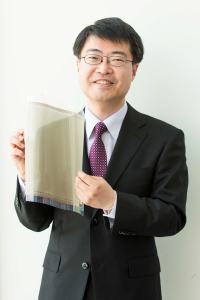
Professor Takao Someya serves as Executive Director, Vice President, and Professor at the University of Tokyo, where he leads research in the Department of Electrical and Electronic Engineering within the School of Engineering. He additionally oversees startup initiatives as Director General of the Division of University Corporate Relations. Recognized globally as an inventor of electronic skins (featured in TIME Magazine as one of the best inventions of 2005), Professor Someya is a pioneer in organic and flexible electronics research. He earned his Ph.D. in Engineering from the University of Tokyo and has held prestigious international positions including Global Scholar at Princeton University, GlobalFoundaries Visiting Professor at National University of Singapore, and Hans Fisher Senior Fellow at Technical University of Munich. In 2024, he became the first person from Asia elected as President of the Materials Research Society in the US. Professor Someya's research focuses on developing next-generation wearable technologies using organic electronics for healthcare, biomedical applications, and robotics. His work spans organic transistors, flexible electronics, plastic integrated circuits, large-area sensors, and plastic actuators. His research group has pioneered innovations in electronic skins, ultraflexible photonic devices, and stretchable electronics that bridge the gap between conventional rigid electronics and biological systems. His publication record reveals a clear progression from fundamental research on organic transistors to sophisticated integrated systems for healthcare monitoring and human-machine interfaces, with increasing emphasis on practical biomedical applications in recent years. 65th Fujihara Award (2024) 16th Leo Esaki Prize (2019) Commendation for Science and Technology by the Minister of Education (2019) Clarivate Highly Cited Researcher (2018, 2021, 2022, 2024) IEEE/EDS Paul Rappaport Award (2009, 2010) Young Scientist Award (2005) Professor Someya has mentored numerous successful researchers including Tomoyuki Yokota (now Associate Professor), Tsuyoshi Sekitani, and Martin Kaltenbrunner. His research has been supported by substantial grants including JST ERATO funding for 'Bio-harmonized Electronics' and various industry collaborations. He actively recruits graduate students and postdoctoral fellows through programs like the International Multidisciplinary Engineering (IME) Graduate Program and JSPS fellowships. The Someya Group Organic Transistor Lab maintains active international collaborations and continues to push boundaries in flexible and wearable electronics, with recent projects focusing on ultra-soft electronics for monitoring cardiomyocytes, breathable wearable electronics for long-term health monitoring, and advanced electronic skins with multi-modal sensing capabilities.