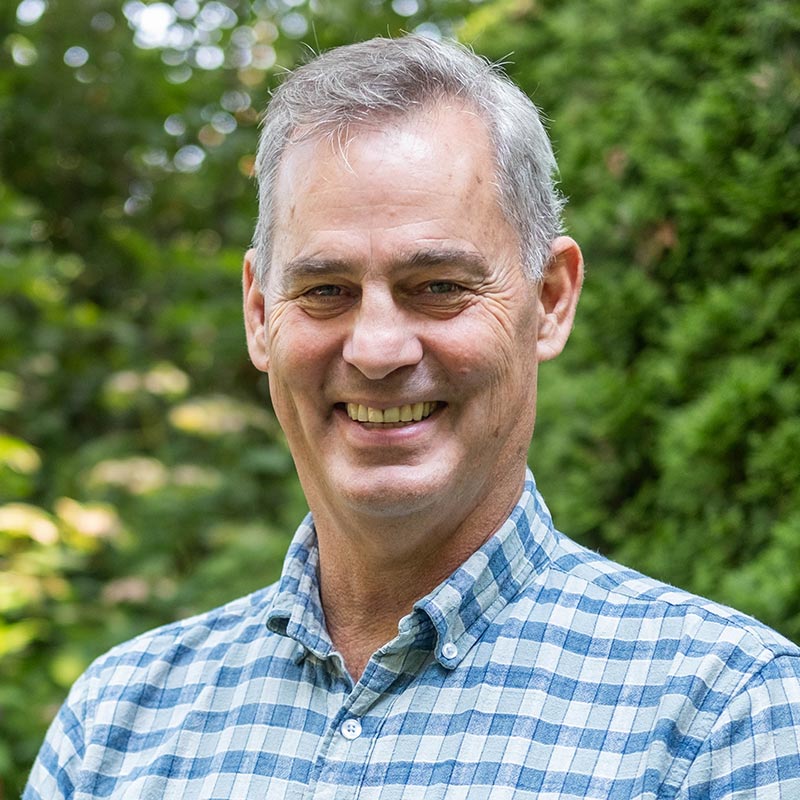
Harry Nelson is an Associate Professor at the University of British Columbia (UBC) within the Faculty of Forestry , specifically the Department of Forest Resources Management . His work focuses on natural resource policy, climate change adaptation, and sustainable forest management in Canada. Research Themes : Ecosystems and Climate Change, Sustainable Forest Management, Indigenous Governance Key Interests : Climate change impacts on forestry, ecosystem services, policy development Nelson’s research explores the structural transformation of the forest sector under changing markets and public expectations. He investigates ecosystem services as a business model for Indigenous forest management in BC and analyzes global climate adaptation strategies. Recent publications highlight cross-border forestry challenges, wildfire risks, and socio-economic dynamics in forest enterprises. His 15 most recent articles (2019–2025) span interdisciplinary topics such as climate change adaptation, Indigenous governance, bioeconomy, and global forest policy. These works emphasize the integration of ecological and economic frameworks to address sustainability. Scientific awards and recognitions: No awards explicitly mentioned in the provided texts. Nelson’s email address ( harry.nelson@ubc.ca ) and research areas are publicly available. No student advisement details or grant information is provided in the scraped data.
Dr. Nanda Kaji Budhathoki is a Postdoctoral Research Fellow at the School of the Environment , University of Queensland, with expertise in environmental economics, climate change adaptation, and behavioral economics. He completed his PhD in Agriculture and Environmental Economics from Charles Darwin University in 2020. Education : PhD in Agriculture and Environmental Economics (2020), Charles Darwin University Research Interests : Focus on climate risk mitigation for agricultural communities, behavioral aspects of climate adaptation, socio-economic impacts of extreme weather events, and economic modeling for private land conservation. His work integrates environmental, economic, and social data to develop sustainable solutions. Publication Trends : Recent work explores climate risk management in agriculture (2025-2020), with specific focus on index-based insurance, farmer risk perception, and adaptation strategies. Earlier publications examine rural development economics (2017-2010), including microcredit impacts and crop innovation adoption.
Dr. David Connell is an Associate Professor in the Ecosystem Science and Management program within the Faculty of Environment at the University of Northern British Columbia (UNBC). He is affiliated with the Natural Resources and Environmental Studies (NRES) Graduate Program and is actively involved in research, teaching, and graduate supervision. His office is located in the Teaching and Learning Building on the Prince George campus, and he is available for collaboration and media inquiries. His educational background, while not explicitly detailed in the text, is inferred to include advanced degrees in environmental planning or a related field, given his academic position and research output. His research expertise centers on agricultural land use planning and farmland protection, with additional interests in local food systems, community development, Luhmann social theory, and the conservation of British Columbia’s inland temperate rainforest, particularly the Ancient Cedars of the Fraser River Valley. Dr. Connell’s research program is highly applied and policy-relevant, focusing on evaluating legislative frameworks for farmland protection across Canadian jurisdictions, assessing the socio-economic benefits of farmers markets, and exploring non-timber uses of forest ecosystems. His work integrates social science perspectives with environmental planning to address complex sustainability challenges. His recent publications reveal a consistent trend toward policy analysis, interdisciplinary research, and community-based solutions in environmental management. UNBC Award of Excellence in Research (2017) UNBC Award of Excellence in Teaching (2014) Dr. Connell is a dedicated mentor, supervising numerous MA and PhD students in the NRES program on topics ranging from farmland protection to food sovereignty and ecotourism. His research is supported by competitive grants from SSHRC, Agriculture and Agri-Food Canada, and other funding agencies. He leads a research program on agricultural land use planning and has developed practical resources such as strategic planning guides for farmers markets and assessment toolkits for farmland protection. His work contributes significantly to both academic discourse and practical policy development in sustainable land use and community resilience.
David J. Connell is a Professor at the University of Northern British Columbia (UNBC), affiliated with the School of Environmental Planning. His work bridges environmental planning, agricultural policy, and community sustainability, with a strong emphasis on farmland protection, local food systems, and the conservation of British Columbia’s inland rainforest ecosystems. He has led national and provincial research initiatives and is recognized for excellence in both research and teaching. University: University of Northern British Columbia School: School of Environmental Planning Academic Rank: Professor Email: david.connell@unbc.ca Education and Professional Background: While specific educational credentials are not detailed in the provided texts, Dr. Connell’s extensive research, publications, and leadership in policy-oriented projects indicate a strong academic foundation in environmental planning, community development, and policy analysis. His professional experience includes work in business development, economic development, and nonprofit management, which he integrates into his teaching and research. Research Interests: Dr. Connell’s research centers on agricultural land use planning, farmland protection, and the socio-economic dynamics of local food systems. He investigates how legislative frameworks at local, regional, provincial, and federal levels influence farmland conservation. He also explores the role of farmers markets in community economic development and the non-timber values of ancient cedar ecosystems in BC’s inland rainforest. His interdisciplinary approach combines social science, policy analysis, and environmental studies to promote sustainable community development. Publication Trends: His recent publications focus on evaluating the strength of legislative frameworks for farmland protection across Canadian jurisdictions, analyzing federal policy roles, and assessing the quality of agricultural planning. He also contributes to understanding ecotourism, forest values, and the business models of farmers markets. His work is published in high-impact journals such as the Journal of Planning Education and Research , Canadian Planning and Policy , and Society and Natural Resources , reflecting a consistent scholarly trajectory in environmental and planning policy. Scientific Awards: UNBC Award of Excellence in Research (2017) UNBC Award of Excellence in Teaching (2014) Advising and Grants: Dr. Connell has supervised numerous graduate students in the Natural Resources and Environmental Studies program, focusing on topics such as farmland protection, food sovereignty, ecotourism, and beginner farming. His research has been supported by major funding bodies including SSHRC (Insight Grant), Agriculture and Agri-Food Canada, and the Investment Agriculture Foundation of British Columbia. He has led projects on farmland policy integration, farmers market impacts, and the conservation of ancient forests, demonstrating strong grant acquisition and project management capabilities. Labs and Research Teams: While no formal lab is mentioned, Dr. Connell leads a research program on Agricultural Land Use Planning and Farmland Protection, including collaborative work with the BC Association of Farmers Markets and government agencies. His work involves interdisciplinary teams and knowledge mobilization through workshops and policy briefs, contributing to practical outcomes in community planning and sustainability.
Professor Dietrich Darr is a faculty member at Hochschule Weihenstephan-Triesdorf (HSWT), specifically within the Department of Agriculture, Food, and Nutrition. His academic journey includes previous professorship at Hochschule Rhein-Waal (2012-2024) and visiting positions at Universidade de Brasília (2023-2024), Vietnam National University of Forestry (2020), and ICRAF Central Asia office (2018). Dr. Darr's research focuses on sustainable and resilient farming and food systems with particular expertise in agribusiness, corporate management, and sustainable resource utilization. His work prominently features baobab tree applications in African and European food industries, agroforestry systems, non-timber forest products, and sustainable land management. His international research projects span Sub-Saharan Africa, Central Asia, and Southeast Asia. His recent publications reveal strong trends in sustainable value chain development, climate-smart agriculture, and innovative approaches to rural livelihood improvement. The articles demonstrate consistent focus on practical applications of agroforestry systems, analysis of non-timber forest products commercialization, and sustainable land management solutions for smallholder farmers in developing regions. Dr. Darr leads numerous research projects including SUFACHAIN (2022-2025) on sustainable agroforestry value chains in Central Asia, CONFARMED (2024) on edible insects for circular food economy in Uganda, and previously led BAOQUALITY (2019-2022) on baobab quality improvement for food security in Africa. His projects are primarily funded by German institutions including BMBF, BMEL, and DFG. As an active member of professional organizations including ATSAF, EFARD, IUFRO, DeFAF, and EURAF, Dr. Darr contributes to international agricultural research communities with focus on tropical and subtropical agriculture, agroforestry, and forest research.
Michael Burton is an Associate Professor at the University of Western Australia (UWA) in the School of Agriculture and Environment, affiliated with the UWA Oceans Institute and the Centre for Environmental Economics and Policy. He holds a BSc from Bath University, an MA from Manchester University, and a PhD in Agricultural Economics from Manchester. Previously, he served at the University of Manchester as a Lecturer and Senior Lecturer. His research focuses on applied economics in agriculture and natural resources, emphasizing quantitative methods for environmental valuation, particularly marine biodiversity. Key projects include the NERP Marine Biodiversity Hub and work on coastal ecosystems. He teaches Agricultural Policy, Econometrics, and Natural Resource Economics. Burton has secured 46 grants, including projects on biosolids transformation and coastal values. His awards include the UWA School of Agriculture and Environment Research Mentorship Award (2023) and collaborative research recognitions. He collaborates internationally on topics like habitat dependency indices and stakeholder engagement in marine management. Education: BSc in Economics, Bath University (1981) MA in Agricultural Economics, Manchester University PhD in Agricultural Economics, Manchester University Research Interests: His work spans agricultural policy, bio-economic modelling, non-market valuation, and sustainable resource management. He applies choice experiments and willingness-to-pay analyses to evaluate environmental and policy impacts. Current emphases include marine ecosystem valuation, urban waterways management, and stakeholder-driven decision support systems. Grants & Projects: Valuation of marine biodiversity (NERP Marine Biodiversity Hub) Coastal Values Project (WA Department of Planning) Industrial Transformation Training Centre for Biosolids (ARC) Awards: School of Agriculture and Environment Award for Research Mentorship (2023) Quality of Research Discovery Award (2021) Quality of Research Communication Award (2014) Labs/Teams: He leads research through the UWA Centre for Environmental Economics and Policy and collaborates with the UWA Oceans Institute. His work integrates interdisciplinary teams for marine spatial planning and ecosystem service valuation.
Prof. Lars Hein is a Professor of Ecosystem Services and Environmental Change at Wageningen University & Research, serving as Deputy Chair of the Environmental Systems Analysis Group. He focuses on ecosystem accounting methodologies, contributing to the UN's System of Environmental-Economic Accounting (SEEA). His research bridges ecological economics, natural resource management, and sustainable development. Previously, he worked at Shell International and the FAO/World Bank, gaining industry and international policy experience. He has authored over 100 articles and received the prestigious European Research Council Personal Grant (2010). His work emphasizes integrating environmental data into national accounting frameworks to inform policy decisions. His research interests include ecosystem valuation, climate adaptation, and land-use planning. He collaborates on projects like NATURELAB (EU-funded) and has advised on natural capital accounting for governments and international organizations. Prof. Hein's expertise spans GIS applications, biodiversity assessment, and the socio-economic impacts of environmental policies. He teaches courses in environmental systems analysis and regional environmental management, fostering the next generation of sustainability scholars. Prof. Hein's awards include the ERC Grant and recognition for advancing ecosystem accounting standards. His projects address global challenges such as peatland restoration, deforestation impacts, and sustainable resource use. He actively participates in advisory roles for industry and NGOs, ensuring research translates into actionable strategies for environmental stewardship.
Prof. Dr. Michel Becker serves as a part-time consultant at the Institute for Environmental Social Sciences and Geography, University of Freiburg since October 2004, following his tenure as Professor and Dean of the Faculty of Forestry (1983-2004) where he led the Working Group 'Market and Marketing'. His academic credentials include a Post Doctorate in Forest and Timber Policy (1981), PhD in timber demand forecasting methodology (1970), and timber industry studies at Hamburg University (1958-1963). Becker's research integrates environmental policy, forestry economics, and sustainable regional development with emphasis on wood certification systems, activation of endogenous forestry potentials, and tropical forest governance. His work bridges German forestry practices with international contexts, particularly Bolivian Amazon communities, examining socio-economic dimensions of forest management. Analysis of his 2000-2007 publications reveals strong interdisciplinary trends connecting decentralized forest governance, community-based resource management, and poverty reduction frameworks. Key thematic clusters include certification market dynamics, non-timber forest product valuation, institutional innovation impacts, and cooperative models in wood industries across European and tropical settings. No formal scientific awards are documented in the source material. Becker has contributed to the Karl-Abetz-Preise documentation for private forest development and participated in BW-PLUS environmental research initiatives. His advisory capacity extends to policy frameworks developed through international collaborations, particularly with CIFOR on forest community wellbeing metrics and governance models. He directs the 'Market and Marketing' working group focusing on wood industry economics and maintains active research partnerships with Bolivian institutions through the CIFOR network, examining forest governance decentralization impacts on rural communities.
David J. Connell is a Professor at the School of Environmental Planning, University of Northern British Columbia (UNBC), where he conducts research and teaches in agricultural land use planning, farmland protection, local food systems, and conservation of British Columbia’s inland rainforest. He is actively involved in policy research, graduate supervision, and community-engaged scholarship. University: University of Northern British Columbia School: School of Environmental Planning Position: Professor Email: david.connell@unbc.ca Office: Room 10-3060, Teaching and Learning Building Education: While specific educational background is not detailed in the provided text, his research and academic leadership suggest a PhD in planning, environmental studies, or a related field. Research Interests: Dr. Connell's research centers on agricultural land use planning and farmland protection in Canada, with a focus on policy analysis of legislative frameworks across governmental levels. He also studies local food systems, farmers markets, and the socio-economic benefits of non-timber forest uses, particularly in the Ancient Cedars of the Upper Fraser River Valley. His work integrates community development, sustainability, and policy innovation. Publication Trends: His recent publications emphasize farmland protection policy at provincial and local levels, evaluation of legislative strength, and the federal role in agricultural planning. He also contributes to understanding ecotourism, ancient forest values, and strategic development of farmers markets. His interdisciplinary approach bridges planning, environmental policy, and community economics. Scientific Awards: UNBC Award of Excellence in Research (2017) UNBC Award of Excellence in Teaching (2014) Advising and Grants: Dr. Connell has supervised numerous MA and MBA students on topics including farmland protection, food sovereignty, ecotourism, and rural development. He has led major research projects funded by SSHRC, Agriculture and Agri-Food Canada, and the Investment Agriculture Foundation of British Columbia. His work includes national studies, policy briefs, and knowledge mobilization through workshops and toolkits. Labs and Teams: While no formal lab is mentioned, he leads a research program on Agricultural Land Use Planning: Strengthening Farmland Protection and collaborates with the BC Association of Farmers' Markets and government agencies. His team includes graduate students and research partners across Canada.
Rajan Parajuli is an Associate Professor and Extension Specialist in the Department of Forestry and Environmental Resources at North Carolina State University, specializing in forest economics and management with active extension services. His educational background includes: Ph.D. in Forest Economics and Policy, Louisiana State University (2015) M.S. in Finance, Louisiana State University (2014) M.S. in Forestry, Louisiana State University (2011) B.S. in Forestry, Tribhuvan University, Nepal (2005) Dr. Parajuli's research spans forest product market modeling, trade policy analysis, carbon/bioenergy markets, and forest finance, addressing climate change and pandemic impacts on timber supply chains and rural livelihoods. His 2024-2025 publications analyze timber price dynamics, forest employment under climate change, bioenergy potential from loblolly pine, and community forestry impacts in Nepal and the US, highlighting policy-economy-ecology interconnections. He leads $1.4M+ in active grants including NSF-funded community forestry research in Nepal, USDA projects on hurricane damage assessment, pandemic impacts on southern forest economies, and sustainable forest management criteria development.
Dr. Stella Zucchetti Schons Do Valle serves as Assistant Professor of International Forest Economics and Management within the Department of Forest Resources and Environmental Conservation at Virginia Tech's College of Natural Resources and Environment. Her work bridges economic theory with on-the-ground conservation challenges, particularly in tropical forest contexts. Educational background: B.S. in Economics, Universidade Estadual de Campinas (UNICAMP, 2005) M.E.M. and M.B.A., Yale School of Forestry & Management (2010) Ph.D. in Forestry, Virginia Tech (2017) Her research centers on natural resource economics with emphases on community-based forest enterprises, forest finance mechanisms, and policy instruments for sustainable development. Key interests include rural credit systems, international conservation frameworks, and community monitoring of forest resources—particularly in Brazilian Amazon and Indian contexts. She employs mixed-method approaches combining econometric modeling with field data collection to analyze landowner behavior and policy effectiveness. Analysis of her 15 most recent publications (2020-2025) reveals consistent focus on economic drivers of forest conservation: 60% examine Brazilian Amazon cases (governance, land conflict, migration), 25% address Indian agroforestry systems, and 15% cover U.S. forestry applications. Methodologically, 70% utilize quantitative economic modeling while 30% incorporate remote sensing or policy analysis. Recurring themes include incentive design for smallholders, carbon program optimization, and post-pandemic urban forestry challenges. No scientific awards were documented in the source materials. Professional activities include advising on forest policy instruments and community enterprise development, though specific grant details or student mentorship records weren't provided. Her work demonstrates strong institutional collaboration with Brazilian environmental agencies and Indian agricultural research bodies.
Dr Sarah Munks is a Research Fellow in the Department of Zoology at the University of Tasmania, with an adjunct role in Biological Sciences (2017-2024). Her career spans over 30 years in research and natural resource management, focusing on wildlife and habitat conservation. Field of Expertise: Wildlife and habitat management, Terrestrial ecology, Conservation and biodiversity Education: PhD in Zoology (University of Tasmania, 1986-1990), BSc (Hons) in Zoology (UCNW, 1981-1983) Dr Munks has led and co-supervised numerous projects on threatened species, freshwater habitats, and forest fauna. Her work bridges ecological research with policy implementation in agricultural and forestry sectors. Her funded research spans 2004-2010, covering topics like bat ecology, platypus energetics, and possum physiology. She has co-supervised 21 higher-degree students and delivered annual lectures to third-year Tasmanian Fauna students (2000-2019). She serves as a referee for scientific journals and sub-editor for Australian Forestry , affiliated with the CRC for Forestry and Centre for Forest Value. Her supervision includes 9 doctoral and master's students in conservation, ecology, and wildlife management.
Christoph Schunko is an Associate Professor at the Institute of Organic Farming within the University of Natural Resources and Life Sciences, Vienna (BOKU) . His research focuses on local knowledge systems related to wild plant gathering, emphasizing biocultural diversity , ecological and socio-political sustainability , and human-plant relationships in both European and non-European contexts. Key research areas include: Biocultural diversity of wild plant uses Value chains of organic wild plant products Participatory research and citizen science Climate change impacts on indigenous communities His recent publications highlight urban wild food foraging, stewardship practices, and climate change adaptation strategies. He has supervised numerous theses on topics like organic certification, rice agroecosystems, and wild plant commercialization. Schunko actively contributes to peer review for journals such as Environmental Research Letters and Human Ecology , and organizes sessions at international conferences including the Tage der Biodiversität .
Souvik Ray is a Researcher at Linnaeus University's Department of Forestry and Wood Technology within the Faculty of Technology. He actively contributes to the Forest Products research group and collaborates with industry partners through The Bridge initiative (Södra, IKEA, Linnaeus University partnership). Focuses on wood-adhesive interactions for durable bonding Specializes in bioprospecting of forest-derived materials Works on sustainable wood preservation techniques Investigates enzymatic and dielectric wood modification His research particularly examines species like Pterocarpus santalinus (Red Sanders) and Hevea brasiliensis (Rubber Wood), with recent publications analyzing chemical profiles of Santalum album and bamboo preservation techniques. Current projects focus on understanding adhesive interactions in solid wood applications, aiming to develop long-term bonding solutions through material science approaches.
Dr. Gerhard Weiß is a researcher at the Institute of Forest, Environmental and Natural Resource Policy (BOKU Vienna) since 1999. His work focuses on social innovation in forestry, governance of forest ecosystem services, and policy frameworks for rural development across Europe, particularly in Central Eastern Europe and the Balkans. Education : Master's Degree (1993), Doctorate (1999) Research Interests : Social innovation systems in forestry Forest ownership transitions and institutional frameworks Governance of ecosystem services Policy design for rural sustainability Innovation adoption in small-scale forestry Scientific Awards : Klimaschutzpreis der Österreichischen Hagelversicherung (2003) Key Contributions : Collaborative research on social farming in Austria, carbon-efficient wood construction (ECO2-Project), and cross-European analyses of forest ownership dynamics. He has delivered over 50 lectures in 13 countries, emphasizing stakeholder engagement and policy coherence.