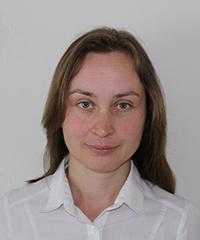
Ludmila Prikazchikova is a Lecturer in Applied Mathematics at Keele University's School of Computer Science and Mathematics. She holds an MSc in Applied Mathematics from Saratov State University and a PhD from the University of Salford focused on dispersion of elastic waves in pre-stressed compressible layers. Her research explores wave propagation phenomena, asymptotic methods for elastic structures, and non-local elasticity theory, with applications in nano-material modeling and composite structures. She develops mathematical frameworks for analyzing dynamic behavior of inhomogeneous materials and fluid-structure interactions. Publications primarily focus on elastic wave dynamics in complex material systems, featuring advanced asymptotic techniques and non-local continuum formulations. Recent articles analyze vibration behavior in layered composites, seismic metasurfaces, and fluid-loaded structures. Teaching: Dynamics and Differential Equations courses Administrative: Deputy Director of Recruitment for Mathematics
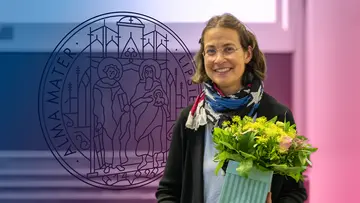
Anna Wienhard is an Honorary Professor at the University of Leipzig's Mathematical Institute and Director of the 'Geometry, Groups, and Dynamics' division at the Max Planck Institute for Mathematics in the Sciences. Her research focuses on geometric structures, representation varieties, and their applications in mathematics and data science. She leads collaborative initiatives like the International Max Planck Research School and ScaDS.AI, integrating geometric methods with machine learning. Research Interests: Her work spans higher Teichmüller theory , Anosov representations , and geometric structures on manifolds. Recent projects explore applications of Higgs bundles, moduli spaces, and persistent homology in quantum dynamics and data analysis. Publications: Her 2025 papers advance Anosov representation theory and total positivity, while 2021 works apply geometric methods to machine learning. Earlier contributions include foundational studies on maximal surface group representations and Hitchin components. Awards: Membership in the Hector Fellow Academy (2021). Grants: Leads AEI-DFG projects on stability and representation varieties, and coordinates DFG-funded clusters like STRUCTURES and SFB/TRR 191. Teaching: Oversees doctoral training programs and collaborates with Leipzig University’s Mathematical Institute. Labs/Teams: Directs the Max Planck division, collaborates with ScaDS.AI, and chairs international workshops on Teichmüller theory and geometric dynamics.
Chris Wojtan is a Professor at the Institute of Science and Technology Austria (IST Austria), leading the Visual Computing Group. His research focuses on geometric and numerical algorithms for computer animation and geometry processing, particularly in simulating fluid dynamics, solid materials, and 3D shape manipulation. Key contributions include methods for realistic water surface animation, cloth simulation, and fracture mechanics. He has received prestigious awards such as the ERC Consolidator Grant (2022), ERC Starting Grant (2014), SIGGRAPH Significant New Researcher Award (2016), and Eurographics Young Researcher Award (2015). Education: PhD in Computer Science from Georgia Institute of Technology (2010). Research Group: Current PhD students include Georg Sperl, Peter Synak, and Sadashige Ishida. Former students and postdocs include Morten Bojsen-Hansen (now at Autodesk) and David Hahn (TU Wien). Grants: Principal Investigator for ERC grants and other funding initiatives. Scientific Awards: Highlighted awards include ERC grants, SIGGRAPH, and Eurographics recognitions. Publications span advanced fluid simulation techniques, topology optimization, and procedural materials. The lab actively recruits PhD students and postdocs, emphasizing English-language research collaboration.
M. Lisa Manning is the William R. Kenan, Jr. Professor of Physics at Syracuse University, with affiliations in Biology, Biophysical Science, and Biotechnology. She leads the Manning Research Group, focusing on theoretical and computational approaches to understanding collective behavior in biological tissues and disordered solids, using tools from statistical and soft matter physics. Her work emphasizes emergent phenomena in non-equilibrium systems through experimental collaborations globally. Research Interests: Defects in disordered solids/glasses Surface tension in embryonic tissues Mitotic wave dynamics Constitutive models for friction/shear Recent Scientific Contributions: 2025 PNAS paper on dynamical forces in zebrafish organ morphogenesis 2024 PRX Life study on vertex model universality 2024 Nature Cell Biology work on mechanical forces in tissue architecture Honors: APS Fellow (2021) Chancellor’s Citation for Excellence (2022) Simons Investigator (2016-2022) Grants: NSF NRT-URoL grant (2024-2029) NICHD R01 grant (2020-2025) Simons Foundation awards Leadership: Director, BioInspired Institute (2019-2023) Chair, Physics Department Chair Search Committee (2024) Co-lead, Mechanisms of Development and Disease Focus Group Her group develops computational models for biological tissues and disordered materials, working closely with experimentalists. Recent work explores how vertex models predict tissue rigidity despite oversimplified assumptions, and how dynamical forces shape developing organs.
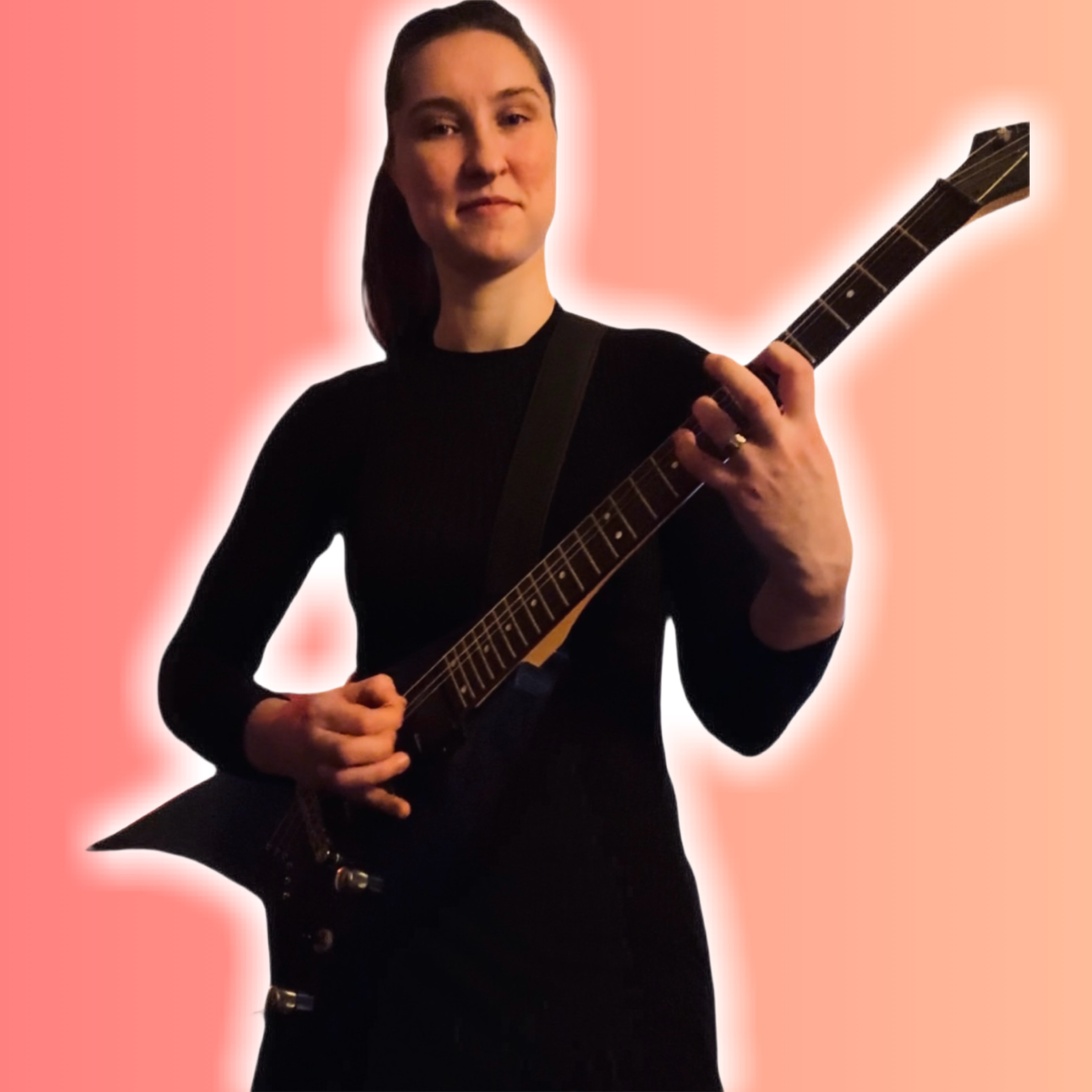
Kathlén Kohn is an Associate Professor in Mathematics at KTH Royal Institute of Technology in Stockholm, Sweden (since December 2024). She holds a PhD from Technische Universität Berlin (2018) and dual Master's degrees in Mathematics and Computer Science from Paderborn University (2015). Her research bridges algebraic geometry, geometric deep learning, and computer vision, focusing on algebraic structures in neural networks and geometric problems in AI. Education: PhD in Mathematics, TU Berlin (2015–2018) Master of Science in Mathematics & Computer Science, Paderborn University (2013–2015) Bachelor of Science in Mathematics & Computer Science, Paderborn University (2009–2013) Research: Kohn explores neural algebraic geometry , applying algebraic techniques to analyze deep learning architectures like polynomial neural networks and self-attention mechanisms. Her work includes minimal problems in computer vision (e.g., PLMP framework), metric algebraic geometry, and invariant theory connections to maximum likelihood estimation. She co-authored the book Metric Algebraic Geometry (2024) and leads the WASP-funded project on 3D scene perception. Recent Articles: Focus on geometric neural network analysis, self-attention mechanisms, and structure-from-motion problems. Key venues include ICML, ICLR, CVPR, and SIAM Journal on Applied Algebra and Geometry. Awards: Wallenberg Prize (2025), SIAM SIGEST Award (2024), Swedish L'Oréal-Unesco Award (2023), Göran Gustafsson Prize (2021), and multiple fellowships including Marie Skłodowska-Curie. Teaching & Outreach: Lectures on algebraic vision, nonlinear algebra, and cryptography. Active in promoting gender equality in STEM through ELLIS and Swedish Young Academy.
Dr. Jing Ren is affiliated with the Department of Computer Science at ETH Zürich, holding a role within the Professorship for Computer Science. Their research focuses on computational geometry, 3D reconstruction, and computer graphics, with notable contributions to shape analysis, non-rigid matching, and fabric modeling. Dr. Ren’s work bridges theoretical advancements with practical applications in textile design, architectural modeling, and medical imaging. They collaborate extensively on projects involving functional maps, optimization algorithms, and geometric morphometrics. Key research interests include: Non-rigid shape correspondence and matching Computational modeling of woven fabrics and textiles 3D face and building reconstruction techniques Efficient spectral and discrete optimization methods Recent publications (2022–2024) emphasize innovations in fabric parameterization, Gaussian noise distribution, and rethinking 3D face reconstruction benchmarks. Their work often employs machine learning and functional map frameworks to solve geometric problems across disciplines. Laboratory and team affiliations are not explicitly detailed in the provided materials, but their research aligns with ETH Zürich’s broader initiatives in computer science and engineering. No grants or advising activities are specified in the current data.
Jonathan Julian Zhu is an Assistant Professor at the University of Washington's Department of Mathematics. He previously held an NSF Postdoc at Princeton University and completed his PhD at Harvard University under Professors Bill Minicozzi and Shing-Tung Yau. His research focuses on Differential Geometry and Geometric Analysis, particularly minimal surfaces, mean curvature flow, and related singularity phenomena. He organizes the UW Differential Geometry/PDE Seminar and has been involved in various academic leadership roles including the SMRI-Matrix Symposium and Princeton's Geometric Analysis seminar. Education: Ph.D. in Mathematics (Harvard University), Postdoctoral research at Princeton University. Research interests include geometric flows, minimal submanifolds, self-shrinkers, Ricci solitons, and applications of min-max theory. His work bridges theoretical insights with geometric PDEs, addressing questions about rigidity, entropy, and stability in curved spaces. Teaching includes courses at UW (Math 336, 583), Princeton (MAT175, MAT203), and Harvard (Math21a, Math1b). His publications address foundational problems in geometric analysis, such as quantifications of symplectic non-squeezing, uniqueness of blowups in mean curvature flow, and rigidity properties of self-shrinkers. Professional activities include seminar organization, grant participation, and collaborations on geometric analysis projects. His work contributes to advancing understanding of geometric structures and their evolution under curvature-driven flows.
Joonas Ilmavirta is an Associate Professor in the Department of Mathematics and Statistics at the University of Jyväskylä, affiliated with the Faculty of Mathematics and Science. He is part of the Centre of Excellence of Inverse Modelling and Imaging (2018–2025) and contributes to the Inverse Problems research group, focusing on mathematical frameworks for indirect measurements. His work intersects applied and pure mathematics, with applications in geophysics, material science, and astrophysics. Research interests include inverse problems, geometric analysis, and tomography. Key areas are the reconstruction of structures from boundary measurements (e.g., seismic imaging, elasticity tomography), spectral rigidity of manifolds, and quantum computing algorithms for inverse problems on graphs. He explores theoretical foundations and practical implementations of indirect measurement techniques, emphasizing stability, uniqueness, and computational methods. Notable contributions include studies on Finsler geometry, anisotropic elasticity, and low-regularity manifolds. His work addresses challenges in geophysical imaging, such as determining Earth’s internal structure or gas giant compositions using seismic or gravitational data. Collaborative projects involve the FAME Flagship initiative, advancing sensing, imaging, and modeling through inverse problem methodologies. Publications emphasize geometric tomography, ray transforms, and mathematical physics, with a focus on rigorous analysis and interdisciplinary applications. He engages with both theoretical developments and computational tools, bridging pure mathematics with real-world inverse problem solutions.
Anastasiia Varava is an affiliated faculty member and PhD student at KTH Royal Institute of Technology, working within the Division of Robotics, Perception and Learning. Her research focuses on computational geometry and topology applied to robotic manipulation, particularly caging theory and its practical implementations for handling rigid and deformable objects. She collaborates with advisors Florian Pokorny and Danica Kragic on theoretical and applied robotics challenges. Her work integrates robotics with interdisciplinary fields such as topology, machine learning, and computer vision. Key topics include path planning, deformable object manipulation, and geometric algorithms for motion verification. Recent contributions emphasize data-driven approaches for latent space modeling and visual action planning in robotics systems. Varava has authored or co-authored over 30 peer-reviewed articles and conference papers, covering topics from caging-based motion planning to molecular screening algorithms inspired by robotics. Her publications span journals like IEEE Transactions on Robotics and conferences such as IROS and ICRA, reflecting a strong focus on practical robotic systems with theoretical rigor. Her doctoral thesis, Path-Connectivity of the Free Space: Caging and Path Existence (2019), established foundational work on caging and path non-existence in robotics. Current projects involve advancing geometric evaluation techniques for data representations and exploring diffusion models for robotic skill learning.
Marie Trin is a postdoctoral researcher at the Max Planck Institute for Mathematics in the Sciences (Leipzig) working in Prof. Anna Wienhard's research group since completing her PhD in June 2024. She maintains dual academic engagement through ongoing teaching appointments at Université de Rennes. Her research focuses on the intersection of geometric structures with topological dynamics, particularly examining: Geodesic currents and their applications to surface geometry Mapping class group actions on curve complexes Thurston compactification for non-compact hyperbolic surfaces Combinatorial properties of arc systems on surfaces Recent publications demonstrate methodological innovation in applying geometric group theory to solve longstanding problems in surface topology, with particular emphasis on counting techniques for geometric structures and stability properties of subgroup embeddings. Her 2024 thesis “Application des courants géodésiques à la géométrie des surfaces” established foundational connections between geodesic current theory and classical surface geometry. As an educator, she implements Federico Ardila’s teaching axioms through mathematics outreach projects and structured coursework in Euclidean geometry, probability, and computational mathematics using Python/Xcas. Her doctoral training at Université de Rennes under Juan Souto culminated in significant contributions to the geometric analysis of surface curves. She actively participates in research networks including the “Groups, Dynamics and Surfaces” conference series and maintains collaborative projects across European mathematical institutes through the Max Planck research framework.
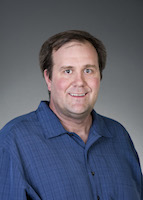
Mark Bedillion is an Associate Teaching Professor in the Department of Mechanical Engineering at Carnegie Mellon University (CMU), where he has been a faculty member since fall 2016. Prior to this, he served as an Associate Professor at the South Dakota School of Mines and Technology from 2011 to 2016. He earned all his degrees—B.S. (1998), M.S. (2001), and Ph.D. (2005)—in Mechanical Engineering from CMU. His industrial experience includes over seven years at Seagate Technology, focusing on servo-control systems for data storage. Current Position: Associate Teaching Professor, CMU Previous Position: Associate Professor, South Dakota School of Mines and Technology Education: All degrees from CMU in Mechanical Engineering Industry Experience: Seagate Technology (7+ years) His teaching focuses on dynamic systems, control theory, and mechatronics at both undergraduate and graduate levels. He has taught courses such as Multivariable Linear Control, Feedback Control Systems, and Electromechanical Systems Design. His research spans two main domains: (1) robotics and control, particularly distributed manipulation and brake-actuated mobile robots, and (2) STEM education, with a strong emphasis on systems thinking, systems engineering, and virtual laboratory development. His educational research aims to improve student learning outcomes through innovative curriculum design and assessment tools. The recent publications highlight a clear trend: a growing emphasis on educational research, particularly in systems thinking and systems engineering pedagogy. While earlier work focused on control algorithms and mechatronic design for robotics, the past five years have seen a significant shift toward developing and assessing educational tools, online modules, and inclusive teaching practices. This reflects his dual role as both a technical researcher and an educational innovator. Provost’s Inclusive Teaching Fellow, Carnegie Mellon University Mark Bedillion advises graduate students and is actively involved in curriculum development and educational grants, particularly in engineering education reform. He leads projects on virtual laboratories, systems thinking assessments, and outreach to underrepresented youth. His lab work includes experimental platforms for distributed manipulation and brake-actuated robots. He is also engaged in collaborative research on STEM education across multiple institutions, focusing on benchmarking and improving mechanical engineering curricula.
Dr. Ory Schnitzer is an Associate Professor in Applied Mathematics at Imperial College London's Department of Mathematics , within the Faculty of Natural Sciences. His research focuses on mathematical modeling, asymptotic analysis, and singular perturbation techniques applied to fluid dynamics, transport phenomena, and wave phenomena. He offers PhD projects in these areas and has contributed to understanding complex systems such as electrohydrodynamic instabilities, plasmonic resonances in nanomaterials, and superhydrophobic surface dynamics. Education & Affiliations: PhD (implied by academic rank) Affiliations: Applied Mathematics and Mathematical Physics; Fluid Dynamics Research Interests: Mathematical modeling of multiphase systems (e.g., droplets, bubbles) Asymptotic methods for singular perturbation problems Electrokinetic and thermocapillary phenomena Plasmonic resonances in nanostructures Superhydrophobic surfaces and slip flow Recent Article Trends: Recent work explores finite-time singularities in electrohydrodynamics, spontaneous locomotion of microswimmers, and plasmonic resonances in slender nanostructures. These studies bridge applied mathematics with fluid mechanics and nanophotonics, emphasizing analytical solutions and asymptotic approaches. Awards: 2024 John Ockendon Prize for outstanding contributions to applied mathematics Grants & Labs: Active in collaborative projects with researchers like E. Yariv and R. Brandão. Research funded through Imperial College's Department of Mathematics and UK-based grants. His work often involves experimental validation and industry partnerships in nanotechnology and fluid dynamics.
Yannick Carette is a Researcher at KU Leuven's Department of Mechanical Engineering, affiliated with the MaPS (Manufacturing, Assembly and Productivity in Sheet metal forming) division, which serves as a core lab for Flanders Make - the strategic research center for Flanders' manufacturing industry. His work bridges advanced manufacturing techniques with biomedical applications, focusing on precision sheet metal forming processes. Dr. Carette's research expertise spans several interconnected domains: Single Point Incremental Forming (SPIF) process optimization and accuracy enhancement Digital Image Correlation for real-time process monitoring Multi-stage forming strategies using geometric decomposition techniques Application of manufacturing processes to medical implant production Statistical analysis of anatomical structures for implant design His publication trajectory reveals an evolution from fundamental manufacturing process understanding toward specialized biomedical applications. Early work focused on core SPIF mechanics and multi-step forming strategies, while recent research integrates machine learning for accuracy prediction and applies statistical shape modeling to anatomical analysis. This interdisciplinary approach has produced innovations like using non-rigid registration techniques - adapted from medical imaging - to improve SPIF process planning. Dr. Carette's collaborative research with medical professionals has significantly advanced understanding of anatomical variations in bones like the clavicle and tibia, explaining why standard implants often fail to fit properly. His work on thin-shell titanium clavicle implants demonstrates how manufacturing flexibility can address challenges in patient-specific medical device production.
Prof. Dr. Ulrich Görtz is a full-time faculty member at the University of Duisburg-Essen, leading the Research Group Görtz in the field of Arithmetic Geometry and Number Theory. His work bridges abstract algebraic geometry with number-theoretic structures, focusing on topics like Shimura varieties, Frobenius traces, and abelian varieties in positive characteristic. Research Areas: Arithmetic Geometry, Number Theory, Abelian Varieties, Positive Characteristic Geometry Organized Workshops: Oberwolfach workshops (2015, 2019) on reduction of Shimura varieties His research group includes current PhD students Giulio Marazza and Thiago Solovera e Nery, along with former members such as Francesc Fité, Xavier Guitart, and Martin Kreidl. He has collaborated with institutions like the Mathematisches Forschungsinstitut Oberwolfach and the Hausdorff Center in Bonn. The group's publications span p-adic geometry, moduli spaces, and vector bundle theory, with contributions to the understanding of Iwahori level structures, Sato-Tate groups, and Demazure resolutions. His work has appeared in journals like Ann. Inst. Fourier , Compos. Math. , and Math. Z. Prof. Görtz is actively involved in mentoring students and postdocs, with a team including secretary Julia Schulte-Kellinghaus and former collaborators like Ulrich Terstiege and Christian Kappen. His contact details include an email address ulrich.goertz@uni-due.de .
Eric Y Ling is a Postdoctoral Researcher at the Department of Mathematical Sciences , University of Copenhagen. He is affiliated with research groups AG and GeoTop. Institution: University of Copenhagen Department: Mathematical Sciences Role: Researcher (Postdoc) Ling’s research focuses on Mathematical Physics , General Relativity , and Differential Geometry , particularly spacetime analysis and singularity theorems. His recent work explores causality, geometric rigidity, and quantum field theory in curved spacetime. His publications include studies on time separation functions in C0 spacetimes (2025), Dirac spectra for relativistic ions (2025), and Penrose’s singularity theorem (2025). These contributions span geometric analysis, cosmological models, and quantum gravity applications. Collaborations and trends in his work emphasize international partnerships in Mathematical Physics and General Relativity , with implications for theoretical cosmology and quantum field theory.