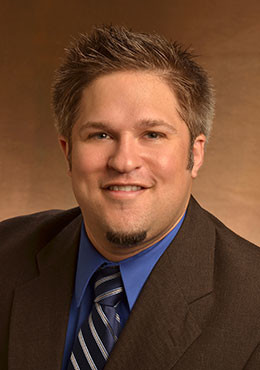
Allan Crowe is an Adjunct Professor in the School of Earth, Environment & Society at McMaster University. His academic work focuses on groundwater-surface water interactions , contaminant transport , and coastal ecosystem dynamics , with a particular emphasis on the Laurentian Great Lakes region. He has contributed extensively to studies on environmental remediation , hydrological modeling , and public health implications of groundwater quality . Research Interests : Crowe's work spans environmental hydrology , groundwater contamination , and wetland remediation . His studies often integrate field measurements with numerical modeling to address issues like nutrient loading , pesticide transport , and microbial pollution in coastal zones. Publication Trends : Over 35+ years, Crowe has published on topics including stochastic groundwater modeling , constructed wetland effectiveness , and DDT persistence . His recent work (2013-2018) emphasizes urban stormwater management , herbicide impacts , and microbial water quality in Great Lakes beaches. Methodological Contributions : Notable technical developments include Excel-based tools for trilinear plot generation and groundwater level animation , enhancing accessibility for hydrological data analysis.
Charles Taylor is an Assistant Professor of Public Policy at Harvard Kennedy School (HKS) and a Faculty Research Fellow at the National Bureau of Economic Research (NBER). He holds a PhD in Sustainable Development from Columbia University and a BA in Economics and Political & Social Thought from the University of Virginia. His research focuses on environmental economics, climate change, agriculture, land use policy, and migration patterns, often leveraging satellite data and remote sensing for policy analysis. Education: PhD in Sustainable Development, Columbia University BA in Economics and Political & Social Thought, University of Virginia Research Interests: Taylor’s work examines the intersection of environmental policy and economic outcomes, with a focus on climate adaptation, agricultural productivity, and migration driven by climate factors. He has pioneered the use of satellite data to assess environmental impacts, such as wetland regulation effects, algal blooms from fertilizer runoff, and irrigation-driven climate adaptation. His research also explores historical patterns, such as the role of cicadas in pesticide exposure and the economic drivers of global land use shifts since the 19th century. Key Projects: Analysis of Clean Water Act impacts on wetlands and rural economies Study of climate migration patterns and their health consequences Quantification of CO₂ fertilization effects on US crop yields Awards: wallace E. Oates Outstanding Dissertation Award in Environmental Economics (2021) Professional Activities: Taylor advises organizations like Gaveiro LLC and Sourcing and Produce Limited, and co-founded the Drylands Natural Resource Centre, a farmer-owned cooperative. His sponsored projects include research on wetland regulation, irrigation externalities, and climate policy. Labs/Teams: Taylor collaborates extensively with institutions like the Belfer Center for Science and International Affairs and the Malcolm Wiener Center for Social Policy at HKS. His work frequently involves interdisciplinary teams analyzing global environmental challenges.
Keita Nakayama is an Assistant Professor (non-tenure-track) at the School of Social Sciences, holding a PhD in Social Sciences from Waseda University. His work bridges administrative law, environmental policy, and risk governance, with emphasis on regulatory challenges posed by scientific uncertainty in emerging technologies and contaminants. Education PhD in Social Sciences, Waseda University Research Focus : Dr. Nakayama investigates legal frameworks for nano/microplastics, PFAS, and AI governance through the lens of the precautionary principle and behavioral 'nudges.' His scholarship addresses structural failures in risk administration, environmental decision-making under uncertainty, and ELSI dimensions of science-technology policy, with particular attention to Japan-EU regulatory comparisons. Publication Trends : His 2022-2025 output reveals concentrated analysis of plastic pollution and chemical contaminants, consistently framing regulatory gaps through administrative inaction theory. Key patterns include methodological integration of 'nudge' strategies with precautionary measures, case studies of municipal-level interventions, and proposals for risk-tiered regulatory approaches distinguishing 'legal management' from 'legal regulation.' Scientific Awards : No awards or fellowships were documented in the source material. Teaching & Research : He instructs courses including Lectures on Social Science (Law and Policy Studies on Risk and Uncertainty) and Global Learning (Science and Technology, and Society) . His funded projects include 'Legal precautions against risks associated with scientific uncertainty' (2022), which proposed technology/material-based regulatory categorization, and 'Correlation between precautionary principle and nudge' (2022), advocating phased risk governance combining behavioral and legal tools.
Qiuhua Liang is a FREng Professor of Water Engineering at Loughborough University and UNESCO Chair in Informatics and Multi-hazard Risk Reduction. She co-directs the EPSRC Centre for Doctoral Training Water-WISER and leads research in computational hydraulics, disaster risk reduction, and flood management. Her work focuses on high-performance numerical models for hydro systems affected by natural hazards like floods and landslides. Her research integrates AI, agent-based modeling, and crowd-sourced data to enhance real-time flood forecasting and resilience strategies. Notable projects include the PYRAMID platform for hyper-resolution flood risk assessment and the GCRF Living Deltas Hub addressing deltaic sustainability. Research Interests: Hydrodynamic modeling of fluvial, pluvial, and coastal floods Natural hazard dynamics (debris flows, tsunamis, glacial lake outbursts) AI-driven hydroinformatics and smart monitoring systems Climate change adaptation and nature-based solutions Key Projects (selective): EPSRC Water-WISER CDT (2019–2027) NERC-funded PYRAMID platform (2020–2023) Living Deltas Hub (UKRI GCRF, 2019–2024) CHANS frameworks for urban flood mitigation Awards: Fellow of the Royal Academy of Engineering (FREng) Grants & Collaborations: £9M+ research funding from NERC, EPSRC, and UKRI International partnerships in Bhutan, Vietnam, and China Industry engagement through smart infrastructure solutions Her research also explores multi-hazard interdependencies, SDG interlinkages, and innovative drainage systems using GPU-accelerated models.
Darrell Bosch is a retired Professor of Agricultural and Applied Economics at Virginia Tech. His research focuses on environmental and natural resource economics, particularly cost-effective strategies to reduce agricultural pollution, climate change impacts on water quality in the Chesapeake Bay, and sustainable water infrastructure. He also explored energy cost impacts on U.S. agriculture and international development through Ecuadorian research initiatives. Education: Ph.D. Agricultural Economics (University of Minnesota, 1984), M.S. Agricultural Economics (University of Tennessee, 1980), B.A. Political Science (Central College, 1971). Research interests include watershed management, agricultural sustainability, and policy analysis. Recent projects address urbanized agricultural landscapes, high tunnel strawberry production, and dairy/poultry farm emissions reduction. He led undergraduate research programs in Ecuador, emphasizing Spanish proficiency and cross-cultural collaboration. Publications span water quality modeling, irrigation recycling economics, and climate change adaptation. Awards include the 2018 Lifetime Achievement Award from the Southern Agricultural Economics Association and the 2016 AAEA Poster Honorable Mention. He advised graduate students and served as Co-Editor of the Journal of Agricultural and Applied Economics (2010–2013). Bosch’s work bridges theory and practice, prioritizing stakeholder engagement in watershed planning and fostering student independence through research mentorship.
Anne Rozan is a Professor at the École Nationale du Génie de l'Eau et de l'Environnement de Strasbourg (ENGEES), affiliated with the University of Strasbourg and the SAGE laboratory (Sociétés, acteurs, gouvernement en Europe). Her research bridges environmental economics, behavioral economics, and public policy, focusing on the valuation of ecosystem services, regulatory design, and sustainable environmental management. Her research interests include environmental economics, experimental economics, behavioral economics, contingent valuation, agro-climatic risk, and public goods. She employs experimental and stated preference methods to understand consumer and public behavior in environmental decision-making, with applications in water infrastructure, biodiversity conservation, and climate risk management. Her recent publications reflect a strong trend in interdisciplinary environmental valuation, combining economic modeling with ecological assessment tools. Key themes include the economic evaluation of constructed wetlands, biodiversity in agroforestry systems, flood vulnerability, and public preferences for infrastructure management. She frequently uses choice experiments and contingent valuation to inform policy. Anne Rozan has not been explicitly listed with scientific awards in the provided text. She teaches economics across the three-year engineering cycle at ENGEES and in co-accredited master’s programs such as the ISIE, Environmental Geography, and DGEDD masters at the University of Strasbourg. While no direct list of advisees is provided, her extensive publication record and supervisory role in collaborative research suggest active mentorship. She has contributed to national and international research programs on water governance, ecological restoration, and environmental policy evaluation. Her work is closely tied to the SAGE laboratory and ENGEES, where she contributes to research on environmental governance, risk management, and sustainable development. She has been involved in field experiments, policy evaluations, and interdisciplinary projects on topics ranging from brownfield reuse to agri-environmental contracts.
Professor Michel COUDERCHET is affiliated with the Faculty of Exact and Natural Sciences at the University of Reims Champagne-Ardenne, where he leads research at the Research Unit on Grapevine and Wines in Champagne (URVVC - EA 4707). His work bridges environmental science and viticulture with significant contributions to pesticide management. His research focuses on pesticide ecotoxicology , phytoremediation , and environmental fate of pollutants , primarily using aquatic plants and algae as model systems. Key interests include biomarker development for pollution assessment, grapevine bio-protection against Botrytis cinerea , and non-point source pollution control in agricultural landscapes. His technical expertise spans plant cell culture, chromatography, and enzyme activity analysis. Professor COUDERCHET coordinates the AQUAL research program (2007-2014) addressing rural pollution control and teaches ecology, environmental science, and crop protection across all university levels. He directs the Master's program in Natural and Industrial Environment Engineering (GENI). Scientific recognition includes: President of Groupe Français des Pesticides (French Pesticides Research Group) Editor In Chief of The Open Journal of Ecology His publication record demonstrates consistent focus on pesticide-soil interactions, phytoremediation mechanisms, and viticultural pollution challenges, with significant contributions to understanding molecular properties affecting pesticide adsorption and enzymatic remediation pathways in aquatic plants.
Yolanda Spairani Berrio is a Full Professor at the University of Alicante's Department of Architectural Constructions within the Higher Polytechnic School IV. She specializes in built heritage conservation, construction materials, and seismic vulnerability assessment of historic buildings. Her academic credentials include a PhD in Building Technology, Research and Development (University of Alicante, 2016), a Master's in Conservation of Built Heritage (Polytechnic University of Valencia, 2010), and a Technical Architect degree (University of Alicante, 1994). Research interests focus on heritage intervention projects, material diagnosis, seismic risk mitigation, and sustainable restoration techniques. She actively employs LiDAR, GIS, and HBIM technologies for 3D documentation and structural analysis of historic buildings. Scientific contributions include co-authoring over 15 recent publications covering topics such as bioconsolidation of calcarenites, salt crystallization damage, and climate change impacts on cultural heritage. Her work spans multiple subfields including conservation master plans, structural material behavior, and digital documentation technologies. She directs the Architectural Restoration Research Group (GIRA_UA) and collaborates with the University Institute for Research in Archaeology and Historical Heritage (INAPH). Her professional experience includes supervising numerous undergraduate, master's, and doctoral theses.
Dr. Andrew Green is a Research Fellow at the Agriculture and Environment Research Unit (AERU) within the School of Life and Medical Sciences at the University of Hertfordshire . His work spans environmental pollution mitigation, ecological recovery, and agricultural sustainability. Research interests include: Sustainable resource use in agriculture Non-point source pollution control Soil erosion management Agri-chemical property analysis EU environmental directive evaluation Recent work focuses on the Nitrates Directive (91/676/EEC) compliance, pesticide properties databases, and food ecolabeling frameworks. His research combines spatial analysis , policy evaluation , and agri-environmental metrics . Professional recognition includes Fellow of the Higher Education Academy (FHEA) . He teaches on agricultural water efficiency and soil conservation across undergraduate and postgraduate programs.
Charles W. Lindau is a Professor in the Department of Oceanography & Coastal Sciences at Louisiana State University. He holds a B.S. from Kearney State College (1969), M.S. from Texas A&M University (1974), and Ph.D. from Texas A&M University (1980). His research focuses on biogeochemical processes in aquatic environments with particular expertise in nitrogen transformations, greenhouse gas emissions, and pollution remediation. Research interests center on environmental chemistry of wetlands, including: Nitrogen cycling in flooded ecosystems Stable isotope applications in environmental science Oil spill impacts and mitigation strategies Agricultural non-point source pollution His publications predominantly investigate carbon and nitrogen dynamics in coastal systems, with recent work examining denitrification processes in cypress swamps and methane emissions from rice cultivation. The research demonstrates consistent focus on human impacts on aquatic biogeochemistry and practical remediation approaches. Dr. Lindau has led significant research projects including: USGS-funded studies on water quality restoration in the Atchafalaya Basin LDEQ-sponsored soybean BMP demonstration projects He teaches courses in Oceanography and Environmental Chemistry of Wetlands.
John F. Raffensperger is a Visiting Professor at the Simon Business School at the University of Rochester. Previously, he served as a Senior Lecturer in Management Science at the University of Canterbury (1998–2012) and a Senior Operations Researcher at RAND Corporation (2013–2021), focusing on national security, disaster recovery, and environmental policy. He holds a B.S. in Industrial Engineering from Northwestern University and an M.B.A. and Ph.D. from the University of Chicago's Graduate School of Business, where his doctoral research centered on U.S. Army training readiness. His research emphasizes smart markets for environmental resources (e.g., water, carbon, sediment), logistics optimization, risk analysis, and process improvement. Notable projects include designing water trading systems, analyzing military supply chain resilience during the COVID-19 pandemic, and addressing climate change through market mechanisms. He has contributed to policy frameworks for disaster recovery in Puerto Rico and water management in New Zealand and China. Raffensperger’s publications span over three decades, with recent work focusing on pandemic resource allocation, Army logistics efficiency, and climate-driven market solutions. His interdisciplinary approach bridges operations research, environmental economics, and public policy, with practical applications in both civilian and military contexts. His career includes roles such as RAND Summer Associate (1990) and collaborations with institutions like the U.S. Army, emphasizing his dual focus on academic rigor and real-world problem-solving.
Hüseyin Erdem Görgün is a Professor of Environmental Engineering at Istanbul Technical University's Department of Environmental Engineering. He has held academic roles since 1990, including Professor since 2007, and served in administrative positions like Vice President of the Department and Member of the Faculty Board of Directors. His research focuses on treatment plant design, climate change mitigation, and waste management. He earned his PhD in Environmental Engineering from Istanbul Technical University in 1996 after completing his MSc (1991) and BSc (1987) in the same field. His work emphasizes sustainable development through projects like the Ergene River Basin restoration and evaluation of CO2 emission scenarios in Turkey's electricity sector. He contributed to policy frameworks such as improving environmental permit processes and deposit refund systems for recyclables. His technical expertise spans mathematical modeling of wastewater treatment systems and optimization of nitrogen removal processes. Education: Bachelor of Science in Environmental Engineering, Istanbul Technical University (1983-1987) Master of Science (Thesis), Istanbul Technical University (1989-1991) Doctor of Philosophy (Dr), Environmental Engineering, Istanbul Technical University (1992-1996) Prof. Görgün's research interests include water pollution control, industrial wastewater treatment, and environmental policy implementation. He has advised on national projects like the TC Elbistan Municipality environmental management plan and contributed to international initiatives such as the UN-CP/RAC Clean Technologies Programme. His work bridges technical innovation with policy, addressing challenges in coastal zone management and sustainable industrial clustering. Notable administrative roles include serving as National Focal Point for the UN-CP/RAC and membership in key organizations like the Turkish National Committee on Water Pollution and Research (since 1990). His research spans over three decades, with publications focusing on wastewater treatment optimization, climate change mitigation strategies, and recycling systems.
Dr. Ioana Andreea Brezestean is a Scientific Researcher III (R2 rank) at the National Institute for Research and Development in Isotopic and Molecular Technologies (Cluj-Napoca, Romania). She holds a PhD in Physics (2022) and Master's degrees in Medical Physics (2013, 2015) from Babeș-Bolyai University . Her work focuses on nanomaterial synthesis , SERS substrate development , and environmental/health monitoring through advanced spectroscopic techniques. Current projects include NanedisSERS (bioinspired 3D nanoplatforms for neurodegenerative disease diagnostics) and AL-DIBI SERS (Alzheimer's biomarker detection using gold nanourchins). Her expertise spans nanoparticle fabrication (silver/gold), microfluidic sensor design , and multi-modal characterization (Raman, FT-Raman, SERS, TERS, microscopy). She contributes to eco-friendly nanocomposite development in projects like ECONANO4AUTO (bio-PA materials with chicken feather derivatives). Key collaborations include SINTEF AS (Norway), University of Medicine and Pharmacy 'Iuliu Hațieganu' , and NANOM MEMS SRL . Her methodology integrates DFT calculations , quantum chemistry modeling , and statistical pattern recognition for pathogen resistance analysis.
Ethan Frost is a faculty member in the Department of Geography at Millersville University, part of the College of Science and Technology. He teaches courses such as Introduction to Environmental Science, Physical Geography, GIS, Field Methods, and Water Resources Management. Education: Ph.D. in Climatology, University of Delaware, 2011 M.S. in Geography, University of Delaware, 2007 B.A. in Geography, Clark University, 2002 Dr. Frost's research centers on ecohydrology, particularly the interaction between forest canopies and precipitation, and how ecological disturbances impact the hydrologic cycle in forested ecosystems. He also investigates spatial data analysis, environmental field techniques, and water quality issues associated with non-point source pollution, with a regional focus on the Chesapeake Bay Watershed. His teaching interests align closely with his research, including Bioclimatology, Hydrology, GIS, and Physical Geography. While no publications are listed in the provided text, his research areas suggest a strong interdisciplinary focus on environmental systems, combining climatology, hydrology, and spatial analysis. His work contributes to understanding ecosystem resilience and water resource sustainability in the face of environmental change. Scientific Awards: No awards listed in the provided text. Dr. Frost advises students in geography and environmental science, though specific advisees are not named. There is no mention of external grants or funding in the text. He is actively engaged in teaching and research, with office hours available virtually and in person for Spring 2025. No specific research labs or teams are mentioned in the provided information.
Jon Hathaway is an Associate Professor in the Department of Civil and Environmental Engineering at the University of Tennessee at Knoxville, within the College of Engineering. His research focuses on sustainable urban water systems, green infrastructure, and the fate and transport of pollutants in urban environments. He leads a dynamic research group and teaches courses in hydrology and green infrastructure design. PhD in Biological and Agricultural Engineering, North Carolina State University, 2010 MS in Biological and Agricultural Engineering, North Carolina State University, 2005 BS in Environmental Engineering, North Carolina State University, 2002 Dr. Hathaway's research centers on green infrastructure , urban hydrology , and nature-based solutions for stormwater management. His work explores how urban development impacts water systems and how engineered natural systems can mitigate pollution and restore ecological function. He investigates pollutant fate and transport , environmental flows , and the spatial configuration of impervious surfaces in cities. His research integrates field measurements, modeling, and geospatial analysis to optimize stormwater control measures. His recent publications highlight a consistent focus on stormwater quality, green infrastructure performance, and climate resilience. Key themes include the role of urban forests in stormwater treatment, temperature dynamics in runoff, and bioretention under climate change. His work bridges environmental engineering, hydrology, and urban planning, emphasizing data-driven, sustainable solutions for urban water challenges. Dr. Hathaway has received notable recognition, including: National Science Foundation CAREER Award Service as Associate Editor, Journal of Environmental Engineering Elected member, ASCE EWRI Urban Water Resources Research Council Core Group Elected member, International Water Association Joint Committee on Urban Drainage He actively mentors students at all levels, from undergraduates to PhD candidates, and has guided numerous advisees into professional and academic careers. His research is supported by competitive grants from the National Science Foundation and the U.S. Environmental Protection Agency , including projects on reimagining urban watershed management, REU programs for underrepresented students, and restoring floodplain wetlands using regenerative stormwater conveyances. He emphasizes interdisciplinary collaboration and training the next generation of engineers. Dr. Hathaway leads the Hathaway Research Group , which conducts field, laboratory, and modeling studies on green infrastructure. The team works on projects involving smart stormwater systems, environmental flow restoration, and regenerative stormwater conveyances. The group fosters a collaborative environment with opportunities for professional development, cross-disciplinary learning, and engagement with regulators and practitioners.