Louise Lindbjerg is an Assistant Professor at Aalborg University Business School, affiliated with The Strategy, Organization and Management Group within the Faculty of Social Sciences and Humanities. Her research focuses on firm innovation dynamics, pay dispersion effects, and entrepreneurial human capital. She leads multiple research projects including 'Entrepreneurial team composition and startup success' (2022–present) and 'Research equipment and firm innovation' (2018–present). Her work explores how organizational structures, labor market dynamics, and technological investments influence innovation outcomes. Notable contributions include studies on non-linear pay dispersion impacts on technological knowledge production and the role of R&D equipment in fostering collaborative innovation. Received Outstanding reviewer award (2023) and multiple conference nominations Active in peer review and conference participation (over 45 activities since 2018) Led 5 research projects since 2017 including her PhD project 'Three Essays on Firm Innovation' (2017–2022) Lindbjerg's research integrates economic modeling with strategic management insights, addressing topics like fixed effects analysis, Gini coefficients, and machinery utilization patterns. She is part of interdisciplinary teams exploring labor market externalities and horizontal pay structures' impact on organizational innovation.
Enric Rodríguez Carbonell is a faculty member at the Department of Computer Sciences within the Faculty of Computer Science at Universitat Politècnica de Catalunya (UPC). He is a key member of the LOGPROG - Lògica i Programació research group, focusing on formal methods, automated reasoning, and combinatorial optimization. Research Interests: His work centers on satisfiability (SAT), satisfiability modulo theories (SMT), and their applications in program verification, constraint solving, and optimization. He investigates techniques such as conflict-driven learning, invariant generation, and Max-SMT for proving termination and safety. His research bridges theoretical foundations with practical applications in software analysis and industrial problem-solving. Publication Trends: His recent publications (2020–2024) show a sustained focus on enhancing SAT and SMT solvers, particularly in pseudo-Boolean reasoning, integer linear programming, and multi-conflict analysis. Earlier works established contributions in non-linear arithmetic, termination proofs, and efficient encodings for cardinality constraints, reflecting a long-term commitment to foundational and applied aspects of automated reasoning. Scientific Awards: Best student paper award at SAT 2024 Advising and Grants: Rodríguez Carbonell has contributed to multiple competitive R+D+i projects under Spain’s State Research Plans, indicating active grant involvement. He has co-authored doctoral theses and educational initiatives like Jutge.org, demonstrating engagement in academic supervision and pedagogical innovation. Labs and Teams: He is a core researcher in the LOGPROG group at UPC, which specializes in logic and programming, with strong collaborations across formal methods, verification, and constraint technologies.
Sonia Coriani is a Professor in Physical Chemistry at DTU Chemistry, Technical University of Denmark, since 2017. She leads a research group focused on theoretical chemistry and computational spectroscopy. Her academic journey includes a PhD from Aarhus University (2000), a permanent research scientist position at the University of Trieste (1999-2014), and associate professorship there since 2014. She held an adjunct associate professor position at the Centre for Theoretical and Computational Chemistry in Oslo (2007-2011) and was a Marie Curie IEF fellow (2010-2012) and AIAS-COFUND senior fellow (2015-2016). Education: Chemistry, University of Modena (1993) PhD in Theoretical Chemistry, Aarhus University (2000) Her research centers on developing quantum-chemical methodologies for static and dynamic molecular properties, particularly for systems with high dimensionality, complex environments, or novel spectroscopic phenomena. Key areas include non-linear optical experiments, magnetic circular dichroism, X-ray spectroscopies, and quantum computing applications in chemistry. Her recent publications highlight advancements in quantum linear response theory, polarizable embedding environments, X-ray absorption in water, and quantum algorithms for molecular properties. Collaborative work spans interdisciplinary projects with experimentalists, covering gas-phase molecules to biomolecular systems. Scientific Awards: Marie Curie IEF fellowship AIAS-COFUND senior fellowship Her work addresses challenges in ultrafast dynamics, photoionization, and the intersection of chemistry with physics and computational science, emphasizing accuracy and novel experimental guidance.
Thomas G. Hansford is a Professor of Political Science at the University of California, Merced, where he also currently serves as Vice Provost for Academic Personnel. He is affiliated with the School of Social Sciences, Humanities and Arts and the Department of Political Science. Hansford earned his Ph.D. in 2001 from the University of California, Davis and his B.A. in 1993 from St. Mary's College of Maryland. Hansford's research focuses on American politics with particular emphasis on judicial politics, interest group involvement in courts, Supreme Court precedent, public opinion on courts and law, and elections and voting behavior. His work examines how courts interact with other political institutions, how public perceptions of courts are formed, and how legal precedent evolves within judicial hierarchies. He has developed innovative methodologies for measuring interest group ideology through amicus brief analysis and has explored the dynamics of judicial agenda setting across court levels. His research reveals that precedent dynamics operate not just top-down but also bottom-up, with lower court implementation of precedent providing valuable information to higher courts. Hansford's publications span top political science journals including the American Political Science Review, American Journal of Political Science, Journal of Politics, and many others. His research reveals important insights about bottom-up influence in judicial hierarchies, the role of interest groups in Supreme Court decision making, and how public perceptions of the judiciary are shaped by various factors including state court structures. Hansford is the coauthor of "The Politics of Precedent on the U.S. Supreme Court" (Princeton University Press) and is a creator of the Amici Space Project, which develops spatial models of interest group ideology based on amicus briefs filed with the Supreme Court. Throughout his career, Hansford has conducted extensive research using survey experiments to understand public perceptions of courts and has employed sophisticated statistical methods to analyze judicial behavior and precedent dynamics. His work on the informational dynamics of vertical stare decisis has provided new insights into how lower court implementation of precedent informs Supreme Court decision making.
Michael Kunzinger is a Professor at the Department of Mathematics, Faculty of Mathematics, University of Vienna. His research spans generalized functions, differential geometry, and mathematical physics, with a focus on Colombeau algebras, Lorentzian length spaces, and non-smooth geometric structures. His recent work includes stochastic PDEs on manifolds, synthetic curvature bounds, and causality in Lorentzian geometry. Articles highlight applications to conservation laws, sectional curvature analysis, and rigidity theorems. Notably, he explores connections between generalized functions and smooth manifold theory, advancing geometric regularization techniques. 2024: 9 publications on singular limits, Ricci curvature, and synthetic geometry. 2022: Studies on null distance and singularity theorems in low-regularity spacetimes.
Stephen M. Miller is a Professor of Economics at the University of Nevada, Las Vegas, where he serves as Research Director for the Center for Business and Economic Research. He previously held positions at the University of Connecticut from 1970 to 2001, including serving as Department Head from 1989 to 2001, before joining UNLV as Department Chair from 2001 to 2012. Dr. Miller's research spans monetary, macroeconomic, and international finance theory and policy; economic growth empirics; financial institutions; and real estate lending. His work demonstrates particular expertise in time series analysis, long-memory processes, and econometric modeling of economic phenomena. He has developed significant economic indicators including the CBER-DETR Nevada Coincident and Leading Employment Indexes, which track contemporaneous and future movements in Nevada's employment situation. His extensive publication record includes over 190 journal articles in prestigious outlets such as the Journal of Macroeconomics , Journal of International Money and Finance , Journal of Real Estate Finance and Economics , and Empirical Economics . Recent work shows continued focus on income inequality dynamics, housing markets, monetary policy effects, and financial market interconnections using advanced econometric techniques including wavelet analysis and long-memory modeling. Dr. Miller has also been active in public discourse through numerous op-ed pieces in the Las Vegas Review Journal and other publications addressing economic issues relevant to Nevada and the broader U.S. economy. He has guided numerous graduate students to degree completion, with 16 MA students at UNLV and 18 PhD plus 2 MA students during his tenure at the University of Connecticut. His teaching portfolio includes courses in macroeconomics, money and banking, and mathematical economics at undergraduate, MA, and PhD levels.
Dr. Truong Vinh Hoang is a Researcher at the RWTH Aachen University , affiliated with the Chair of Mathematics for Uncertainty Quantification . His work focuses on integrating machine learning with data assimilation techniques for nonlinear dynamical systems . He has presented at multiple international conferences and seminars on these topics. Specializes in Bayesian methods and stochastic numerics Developed ML-EnCMF (Machine Learning-Ensemble Conditional Mean Filter) for non-linear data assimilation Applied techniques to Lorenz-63 and Lorenz-96 systems under chaotic regimes Contributed to localized neural network architectures for high-dimensional state tracking His research trends from 2020-2022 show increasing emphasis on deep learning-based filtering and Bayesian optimization for systems with non-Gaussian dynamics . Notably, he implemented variance reduction techniques to improve filter stability with small ensemble sizes. All publications demonstrate practical applications in computational science and stochastic modeling . Dr. Hoang is part of the MATH4UQ team at RWTH Aachen University, contributing to cutting-edge research in uncertainty quantification and nonlinear data assimilation .
Pedro Alexandre Simões dos Santos is an Associate Professor at Instituto Superior Técnico, with dual appointments in the Mathematics Department and Computer Science and Engineering Department. His work spans Machine Learning, Social Artificial Intelligence, and Game Design, focusing on convergence analysis of ML algorithms, Social AI, and AI for Games. He actively contributes to game design, both digital and analogic, with a special interest in historical themes. Affiliations: Mathematics Department, Instituto Superior Técnico Computer Science and Engineering Department, Instituto Superior Técnico INESC-ID Research Unit GAIPS - Group of AI for People and Society His research integrates theoretical and applied aspects, including reinforcement learning in non-stationary environments, neural network optimization, and socially intelligent agent authoring tools. He explores AI applications in games, mental health support systems, and legal domains. His recent publications highlight trends in NFT-based game ecosystems, dialogue systems for mental health, and multi-agent reinforcement learning frameworks. Pedro teaches subjects such as Mathematics for Machine Learning and the 1st Cycle Integrative Project in Applied Mathematics and Computing, bridging mathematical foundations with computational applications.
Dr. QUAN Chen is an Associate Professor at the School of Microelectronics, Southern University of Science and Technology (SUSTech), holding this position since May 2025 after serving as Assistant Professor (2019-2025) and Research Assistant Professor at the University of Hong Kong (2012-2018). A Shenzhen high-level overseas talent, he earned his PhD from the University of Hong Kong and conducts cutting-edge research in electronic design automation. His academic credentials include: Ph.D. from The University of Hong Kong (2010) Master's degree from The University of Hong Kong (2007) Bachelor's degree from Sun Yat-Sen University (2005) Dr. Chen's research pioneers advanced EDA algorithms for large-scale analog/RF circuit simulation, post-Moore multi-physics analysis, and AI-assisted design technologies. His work addresses critical challenges in nanodevice modeling and quantum computing circuits, resulting in over 50 publications in top venues like IEEE TCAD and DAC, plus four Chinese patents. Analysis of his recent publications reveals dominant trends in exponential integrator methods for transient simulation, model order reduction techniques, and physics-informed machine learning for reliability analysis. His work bridges numerical mathematics with practical EDA applications across analog circuits, quantum hardware, and emerging memory technologies. Key recognitions include: Wu Wenjun Artificial Intelligence Science and Technology Award, Second Prize (2020) ICCAD Best Paper Award Nomination (2012) Dr. Chen actively recruits Postdoctoral Fellows, Research Assistants, and Graduate Students while leading major funded projects including NSFC key/general programs and Guangdong Provincial R&D initiatives. His industry partnerships with Huawei, Empyrean, and Guowei Group translate theoretical advances into real-world EDA solutions. He directs a specialized research group at SUSTech focused on computational methods for next-generation circuit design, fostering innovation in simulation algorithms and multi-physics analysis through academic-industry collaboration.
Brady Thomas West is a Research Professor at the University of Michigan with joint appointments in the Department of Biostatistics at the School of Public Health and the Survey Research Center at the Institute for Social Research. His work bridges survey methodology, applied statistics, and public health research, providing technical expertise globally on research design and statistical analysis. Education: PhD in Survey Methodology, University of Michigan-Ann Arbor, 2011 MA in Applied Statistics, University of Michigan-Ann Arbor, 2002 BS in Statistics, University of Michigan-Ann Arbor, 2001 West's research focuses on critical challenges in survey methodology including measurement error in auxiliary variables and survey paradata, selection bias in non-probability samples, responsive/adaptive survey design, interviewer effects, and multilevel regression models for complex clustered and longitudinal data. His work directly addresses data quality issues in public health and social science research. His publication record (2016-2022) demonstrates sustained contributions to methodological advancements through influential textbooks on linear mixed models and survey data analysis, alongside high-impact journal articles. Key themes include improving survey estimation techniques, developing frameworks for assessing analytic errors, and synthesizing evidence on interviewer effects. His research consistently bridges theoretical innovation with practical applications in aging studies, public health surveillance, and social epidemiology. Scientific Awards: No specific awards mentioned in the provided information. West actively leads and contributes to major funded research initiatives including the Health and Retirement Study (as Associate Director), the Network for Innovative Methods in Longitudinal Aging Studies (as MPI), and the MAPS Center for SUD/HIV research. He also develops educational resources through Coursera specializations in Statistics with Python and Total Data Quality, demonstrating commitment to training the next generation of data scientists. He collaborates extensively through the Survey Research Center and Department of Biostatistics, contributing to teams focused on longitudinal aging studies, public health data infrastructure, and methodological innovation. His leadership in the Health and Retirement Study and NIMLAS network positions him at the forefront of aging research methodology.
Herke van Hoof serves as Associate Professor at the University of Amsterdam within the Informatics Institute, where he leads research in the AMLab at Science Park (Lab 42, L4.05). His academic journey spans from AI degrees at Groningen University through doctoral studies at TU Darmstadt under Professor Jan Peters to postdoctoral research at McGill University with Professors Joelle Pineau, Dave Meger, and Gregory Dudek. PhD: TU Darmstadt (2016), supervised by Prof. Jan Peters Postdoc: McGill University, Montreal AI Bachelor & Master: University of Groningen Van Hoof's research focuses on overcoming data inefficiency in reinforcement learning through modular and hierarchical approaches. His work explores how structured representations can enable knowledge transfer between tasks, improve learning efficiency, and facilitate applications in domains with complex state and action spaces. The lab investigates symmetry exploitation in multi-agent systems, gradient estimation techniques for discrete variables, and applications to combinatorial problem solving. His publication record shows consistent contributions to top AI venues including ICML, ICLR, NeurIPS, and JMLR over the past seven years. The research trajectory demonstrates evolution from foundational policy search methods toward increasingly sophisticated modular architectures, with recent emphasis on knowledge-assisted AI for critical infrastructure applications through the AI4REALNET project. Third place in ARC prize (Paper award) Van Hoof actively supervises PhD candidates and postdoctoral researchers, with current projects including human-robot collaboration using brain-computer interfaces (with Maryam Alimardani at VU) and interactive robot learning with flexible human input (through The Hybrid Intelligence Centre). His research receives support from multiple funding initiatives including the AI4REALNET project which focuses on applying AI to critical infrastructure systems. As co-organizer of the BeNeRL 2024 workshop and participant in the AI4REALNET consortium, van Hoof maintains strong connections with the broader European AI research community while directing the AMLab's research on modular reinforcement learning approaches.
Andrzej Nowak is a Professor at the Institute of Mathematics, University of Zielona Gora, specializing in game theory, mathematical economics, and applied mathematics with significant applications in economics and finance. His academic profile includes: Research on Nash equilibria in non-zero-sum stochastic games with constraints on player strategies Work on Recursive Utilities in Dynamic Economic Models and General Equilibrium Theory Investigations of Risk Measures in Dynamic Programming and Markovian Decision Processes Analysis of multivariate linear models and Inclusions and multivalued stochastic equations Studies of Preference models using graded and interval relations for decision support systems Professor Nowak teaches fundamental courses in game theory, mathematical economics, and mathematical foundations of economics in finance (including portfolio analysis, capital market lines, and time series). He also covers probability theory and stochastic processes with applications to economics and finance, particularly Markov chain theory and discrete-time martingales. His broader research encompasses: Approximation theory using Fourier series and summability methods Combinatorial geometry including partitions of n-dimensional space Mathematical means and their invariance properties Applications of computer science to secure data transmission and privacy standards
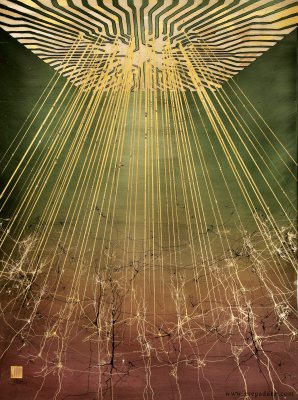
Marlene Cohen is a Professor in the Department of Neurobiology at the University of Chicago, where she leads the Cohen Lab as part of the Neuroscience Institute. Her research focuses on understanding how visual information is encoded in the brain and how cognitive processes like attention influence perception and decision-making. She employs a multidisciplinary approach combining electrophysiology, psychophysics, and computational modeling to investigate neural population coding across different stages of the visual pathway. Dr. Cohen's research interests center on visual neuroscience, particularly how the brain uses visual information to guide decisions. Her work examines how attention modulates neural activity to prioritize relevant information, how cognitive states affect perceptual abilities, and how populations of neurons collectively represent visual stimuli. She investigates these questions using single and multi-electrode recordings in non-human primates performing visual tasks, providing insights into the neural mechanisms underlying flexible behavior and perception. A key aspect of her research involves understanding how correlated variability among neurons affects information processing and behavioral performance. Analysis of Dr. Cohen's recent publications reveals a strong focus on neural population coding, attention mechanisms, and the relationship between neural activity and behavior. Her work increasingly incorporates topological and mathematical approaches to understand neural representations, while maintaining a strong foundation in experimental neuroscience. A consistent theme across her research is how cognitive processes like attention reshape neural representations to support flexible behavior, with particular emphasis on how information is multiplexed and processed across different cortical areas. Scientific Awards: Eppendorf winner (2012) Dr. Cohen has secured significant research funding as Principal Investigator on multiple NIH grants, including R01EY034723 (2022-2025), R01NS121913 (2021-2026), R01EY022930 (2013-2024), R00EY020844 (2010-2015), and K99EY020844 (2010-2011). These grants support her research on neuronal population coding, attention mechanisms, and the neural basis of flexible behavior. Her work demonstrates how attention improves performance by reshaping stimulus representations and reducing interneuronal correlations. The Cohen Lab at the University of Chicago employs a combination of electrophysiological recordings, behavioral experiments, and computational modeling to investigate how visual information is processed in the brain. The lab's work has been recognized through artistic representations such as "Deciphering Spikes" by Greg Dunn, which visually interprets the lab's research on neural coding and attention, depicting how attention affects neuronal firing patterns with higher fidelity on the attended side of the visual field.
Mine Menekse Yilmaz is an Associate Professor at Gaziantep University , Faculty of Arts and Sciences , Department of Mathematics , with a career spanning over two decades. She holds a PhD in Mathematics from Ankara University (2011) and has been actively researching approximation theory, singular integral operators, and functional analysis.
Dr. Anna Colin is Programme Director of the MFA Curating program at Goldsmiths, University of London, where she serves as a Lecturer in the Department of Art. With over twenty years of experience as a curator working both freelance and institutionally, her practice spans curatorial, pedagogical, social, and ecological fields. She has held significant positions including associate curator at Lafayette Anticipations in Paris (2014-2020), associate director of Bétonsalon – Centre for art and research in Paris (2011-2012), and curator at Gasworks, London (2007-2010). She co-curated British Art Show 8 (2015-2016) and has worked with numerous international institutions including CA2M in Madrid, Whitechapel Gallery in London, and Contemporary Image Collective in Cairo. PhD, School of Geography, University of Nottingham (2022) Permaculture Design Certificate, Permaculture Association UK (2024) Level 2 Practical Horticulture Certificate, Royal Horticultural Society (2022) MA Curating Contemporary Art, Royal College of Art (2005) BA Arts Management, London Southbank University (2003) Dr. Colin's research interests focus on the intersection of art, ecology, and alternative educational models. Her work explores how cultural practitioners can engage with human and non-human ecosystems, examining holistic and intersectional organizational models that resist chrononormativity. She investigates sustainability as a dynamic, cyclical process rather than a product-oriented goal, drawing inspiration from ecology, agroecology, and arboriculture to reconceptualize art institutions' relationship to waiting, slowness, rest, and longevity. Her current research examines regenerative artistic, curatorial, and institutional practices that serve ecosystems, with particular attention to the Black Atlantic, agricultural and digital commons, and colonialism's impact on the natural environment. Analysis of Dr. Colin's recent publications reveals a consistent thematic focus on ecological approaches to art and institutions, with increasing emphasis on practical applications of ecological principles. Her work demonstrates a clear trajectory from examining alternative educational spaces (as in her PhD research on multi-public educational and cultural spaces) toward developing concrete ecological frameworks for cultural institutions. The publications show growing integration of horticultural knowledge with curatorial practice, particularly evident in projects like 'Chaleur Humaine' and 'ĝardeno paradizo' which combine energy studies with landscape design and community engagement. Dr. Colin welcomes doctoral applicants seeking to work in cultural production at the service of ecosystems, regenerative artistic practices, alternative institutional models, and critical pedagogies. She has supervised numerous curatorial projects and community-based initiatives through Open School East, which she co-founded in 2013 as an alternative art school and community space in London and later Margate. Her collaborative approach extends to working with artists, horticulturalists, and community groups on projects that integrate art with practical ecological interventions. Dr. Colin has established several significant collaborative spaces and research groups, most notably Open School East which operated for eight years under her directorship. Her work with the Centre for Art and Ecology at Goldsmiths demonstrates her commitment to developing institutional frameworks that support ecological thinking in the arts. Current projects include 'The Ecosystemic Clock' research initiative exploring non-linear time in ecological contexts and 'ĝardeno paradizo,' a pedagogical and landscaping project in Sète, France that rehabilitates outdoor spaces to accommodate biodiversity and community needs.