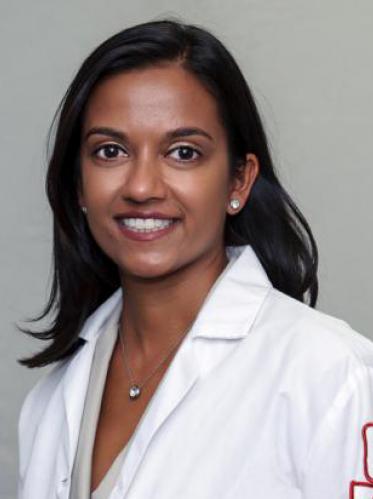
Meryem TEKİN EPİKView profile
Assistant Professor
Meryem TEKİN EPİK is an Assistant Professor in the Department of Labor Economics and Industrial Relations at Suleyman Demirel University's Faculty of Economics and Administrative Sciences. Her academic work bridges labor economics, industrial relations, and social policy with a critical focus on gender dynamics, psychosocial workplace risks, and vulnerable population groups in the Turkish context. Her educational foundation includes: Licence in Labor Economics and Industrial Relations from Suleyman Demirel University (2012) Master's degree in Labor Economics and Industrial Relations from Suleyman Demirel University (2015) Doctorate in Labor Economics and Industrial Relations from Suleyman Demirel University (2020) Dr. TEKİN EPİK's research investigates gender disparities in male-dominated occupations, psychosocial risks including workplace suicide and ergonomic challenges in remote work, and social policy applications for elderly populations and NEET youth. Her interdisciplinary approach integrates economics, psychology, and sociology to analyze labor market dynamics, civil society's role in disaster response (notably post-2023 Kahramanmaraş earthquakes), and positive management frameworks. She examines how historical family structures function as social policy tools and documents discrimination against working mothers in banking sectors. Publication trends from 2019-2024 reveal escalating focus on contemporary Turkish labor challenges: remote work ergonomics (2024), NEET youth interventions (2024), and earthquake disaster response (2024), alongside consistent examination of gender roles in labor (2021) and psychosocial risks in health services (2020). Her work predominantly employs qualitative methodologies with strong policy implications. She actively disseminates research through international conferences (Anadolu Social Sciences Congress, Marmara Science Congress) and edited volumes including the "Working Life Research" series (2021-2022) and "Emeğe Dair" (2022), while teaching courses on EU Social Policy, Working Models, and Social Policies for Risk Groups.