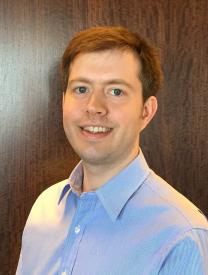
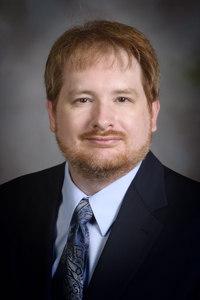
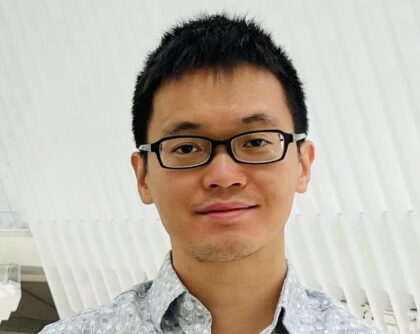
Clay Córdova is an Associate Professor at the University of Chicago, associated with the Enrico Fermi Institute, James Franck Institute, Kadanoff Center, and Kavli Institute. His research focuses on theoretical physics, particularly quantum field theory, non-invertible symmetries, and their applications in particle and condensed matter physics. Córdova’s work explores topological phases, gauge theories, and string theory, with recent contributions to non-invertible symmetry classification and their role in phase transitions. His research interests include categorical symmetries, topological defects, and anomaly matching in quantum field theories. He has pioneered studies on soliton-particle degeneracies, anyon condensation mechanisms, and anomalies in non-invertible symmetry frameworks. Córdova’s work bridges high-energy physics with condensed matter systems, often employing advanced mathematical techniques from category theory and algebraic topology. His 2023 Sloan Research Fellowship highlights recognition of his contributions. Key research trends span non-invertible symmetries across dimensions, topological field theory applications, and interdisciplinary methods combining machine learning with lattice gauge theory. Current projects include exploring duality defects, gapped phase obstructions, and symmetry-enriched phases in (3+1)D systems.
Edouard Oyallon is a CNRS Researcher at Sorbonne University's MLIA team within the Institute of Intelligent Systems and Robotics (ISIR). His research focuses on machine learning foundations, particularly the symmetries of deep neural networks, and large-scale distributed/decentralized training algorithms. He has contributed to frameworks like Kymatio for wavelet scattering transforms and collaborates on projects such as SHARP (Frugal Learning) and ADONIS (ANR-funded). He advises multiple PhD and postdoctoral researchers and teaches advanced deep learning courses at Institut Polytechnique de Paris (IPP). Grants include the ADONIS project (ANR/Sorbonne) and participation in VHS and CoCa4AI initiatives. His work spans theoretical and applied aspects, with recent emphasis on optimizing LLM training at exascale. He maintains active roles in academic service, including organizing workshops on federated learning and graph machine learning.
Hubert Saleur is a Professor of Physics and Astronomy at the University of Southern California and holds a Director of Research position at the IPhT CEA Saclay in France. His work bridges hard condensed matter physics and high-energy physics , with interdisciplinary focus on low-dimensional quantum field theories and statistical mechanics . He has led DOE-funded projects on quantum quench dynamics and non-equilibrium transport in nanostructures, and his research involves advanced mathematical techniques including non-semisimple representation theory . Education: Ph.D. in Physics, University of Paris (1987) Research interests span non-perturbative effects , transport out of equilibrium , topological defects , and AdS/CFT correspondence . Recent work includes geometrical correlation functions in Potts models and quantum simulation of conformal field theories on analog quantum computers. His scientific awards include: Jean Ricard Prize, French Physical Society (2018-2019) ERC Advanced Grant (2015-2016) Silver Medal, CNRS (2011-2012) Humboldt Senior Scientist Award (2001-2008) Packard Foundation Fellowship (1991-2001) Doisteau-Blutel Prize, French Academy of Sciences (1987) As an advisor, Saleur has mentored 15+ students/postdocs now in permanent research or academic roles at institutions like CNRS Paris , Imperial College , and Quantinuum Munich . He co-organizes international conferences such as Quantum Theory and Symmetry XI and serves on editorial boards for Physics Open , SIGMA , and SciPost . Recent courses include Introduction to Topological Phases and Criticality and the Renormalization Group .
Kenneth Intriligator is Distinguished Professor of Physics at UCSD, holding the Dan Broida Chair. PhD from Harvard University (1992). Research advances fundamental understanding of quantum field theory through symmetry-based methods exploring dualities, exact results, and mathematical connections. Investigates strongly coupled quantum fields, supersymmetry applications, and conformal symmetry. Current Simons Collaboration explores categorical symmetries bridging quantum field theory and advanced mathematics. Recognized with Sloan Fellowship and APS Fellowship for contributions revealing surprising phenomena in quantum fields. Publications develop frameworks for analyzing anomalies, RG flows, and AdS/CFT correspondences. Research connects particle physics with string theory and mathematical structures, generating novel insights into Nature's fundamental fabric.
Yi-Zhuang You is an Associate Professor in the Department of Physics at the University of California, San Diego (UCSD). He holds a Ph.D. from Tsinghua University (2013). His research focuses on theoretical investigations of correlated topological phases, quantum entanglement dynamics, and machine learning applications in many-body systems. Key areas include deconfined quantum criticality, symmetry-protected topological (SPT) phases, and the interplay between topology and quantum matter. His work bridges condensed matter physics and high-energy physics, exploring topics such as topological responses in gauge theories, entanglement holography, and quantum machine learning. Recent studies involve machine learning-driven approaches to quantum state preparation, symmetry discovery, and tomographic reconstruction of quantum systems. His contributions span theoretical frameworks for understanding topological transitions, fractionalization in lattice models, and the role of symmetry in quantum critical phenomena. Notable research highlights include the study of symmetric mass generation as a deconfined quantum criticality mechanism, the application of classical shadow tomography for efficient quantum state estimation, and the development of algorithms for self-similar dynamics modeling. His publications frequently intersect with experimental proposals for observing topological phases in materials like graphene and iridates. Dr. You’s affiliations include the UCSD Physics Department, with collaborations extending to institutions globally. His research is supported by grants focusing on quantum information, topological materials, and machine learning applications in physics. While no specific awards are listed, his work has been widely cited in high-impact journals across condensed matter and theoretical physics.
Robert Lipshitz is a Professor of Mathematics at the University of Oregon, specializing in low-dimensional topology and symplectic geometry. He is currently on leave for the 2025-2026 academic year to serve as the Minerva Visitor in the Mathematics Department at Princeton University, where he will deliver a series of lectures on recent techniques in low-dimensional topology. His research has significantly advanced the fields of Heegaard Floer homology and Khovanov homology, with numerous publications in top mathematics journals. Dr. Lipshitz's research primarily focuses on developing and applying bordered Heegaard Floer homology and Khovanov homology to solve problems in low-dimensional topology. His work bridges geometric topology with algebraic structures, providing powerful new invariants for studying 3- and 4-dimensional manifolds. He has made significant contributions to understanding connections between different homology theories and their applications to classical problems in knot theory and 4-dimensional topology, often combining deep geometric insights with sophisticated algebraic techniques. Dr. Lipshitz's recent publications demonstrate a consistent focus on refining and extending homological invariants in low-dimensional topology, particularly through the development of bordered techniques and stable homotopy refinements. His work shows increasing sophistication in connecting different branches of topology, with recent papers exploring applications to contact geometry, equivariant settings, and the detection of topological properties through algebraic invariants. Dr. Lipshitz has received numerous prestigious awards and fellowships supporting his research: NSF Graduate Research Fellowship NSF Mathematical Sciences Postdoctoral Research Fellowship Sloan Research Fellowship Simons Foundation Fellowship in Mathematics Multiple NSF research grants (DMS-0905796 through DMS-2505715) Dr. Lipshitz actively contributes to the mathematical community through editorial work as an editor for Quantum Topology and managing editor for Geometry & Topology. He serves as editor for chapter 3 of the K3 List, continuing Kirby's problem lists in low-dimensional topology. He has mentored numerous students, though specific names aren't listed on his website, and has developed computational tools including documentation for bfh_python, which implements algorithms for computing Heegaard Floer homology. Dr. Lipshitz is deeply involved in the topology community, frequently organizing the University of Oregon topology seminar. He has created educational resources on using Blender for mathematical illustrations and is developing tools for the mathematical community, including tutorials on creating line drawings for mathematics papers using 3D graphics software. He is also planning a conference at Princeton in Summer 2027 honoring Peter Ozsváth's 60th birthday.
Po-Shen Hsin is a Lecturer in the Department of Mathematics at King’s College London. He holds a BSc in Physics from National Taiwan University (2012), an MA in Physics from Princeton University (2016), and a PhD in Physics from Princeton University (2018). His research focuses on theoretical physics, particularly quantum field theory, strongly interacting systems, topological phases of matter, and the interplay of symmetries and anomalies. He explores topics such as non-invertible symmetries, higher-form anomalies, and their implications for topological phases and condensed matter systems. His work spans theoretical frameworks like gauge theories, topological defects, and quantum error correction codes, with applications to understanding exotic phenomena in materials and high-energy physics. Notable themes include symmetry-enriched topological phases, anomaly detection, and the classification of logical gates in quantum codes via cohomology operations. His research group at King’s College is part of the broader efforts in supersymmetry, string theory, and related areas within the Faculty of Natural, Mathematical & Engineering Sciences. His contributions bridge fundamental theoretical insights with potential applications in quantum technologies and condensed matter systems.
Ibrahima Bah is an Associate Professor in the Department of Physics & Astronomy at Johns Hopkins University (JHU), affiliated with the Krieger School of Arts and Sciences. His research focuses on theoretical high-energy physics, cosmology, and string theory, particularly exploring holography and the interplay between quantum field theories, gravity, and black holes. He joined JHU in 2017 after completing a PhD at the University of Michigan (2012), followed by postdoctoral positions at the University of Southern California, the Institut de Physique Théorique in France, and the University of California, San Diego. Education: PhD in Physics & Astronomy, University of Michigan, Ann Arbor (2012) Bachelor's/Master's degrees (not explicitly stated in text) His research interests include supergravity, non-invertible symmetries, brane dynamics, and the geometric resolution of black hole singularities. He actively investigates quantum gravity via holographic duals of superconformal field theories (SCFTs) and the role of black holes in fundamental physics. Recent articles highlight work on higher condensation defects, geometric resolutions of Schwarzschild horizons, and non-BPS bubbling geometries. His contributions bridge string theory and gravitational phenomena, with implications for understanding quantum entanglement and spacetime structure. Bah has no listed advising grants or scientific awards in the provided texts. His work often involves collaborations on AdS/CFT correspondence and M5-brane configurations, contributing to the broader field of physical mathematics.
Kevin Aguyar Brix is a mathematician at the University of Southern Denmark (Odense, Denmark), where he holds a Reintegration Fellowship from the Carlsberg Foundation (CF23-1328). Previously, he worked as a postdoc at Lund University (Sweden), the University of Glasgow (Scotland), and the University of Wollongong (Australia), funded by grants from the Swedish Research Council, the Independent Research Fund Denmark, and the Carlsberg Foundation. PhD in Mathematics (2019) from University of Copenhagen, Denmark Member of the Centre for Symmetry and Deformation Supervised by Søren Eilers Kevin's research focuses on the intersection of pure mathematics, particularly exploring the connections between topological dynamical systems, operator algebras, and group theory. He specializes in symbolic dynamical systems and their encoding into C*-algebras, investigating how much dynamical structure is preserved or lost in this process. His work often employs operator algebraic tools to derive properties of the original dynamical systems, with specific emphasis on shift equivalence, covers of dynamical systems, and ideal structures of C*-algebras. Kevin's publications reveal a consistent focus on the interplay between dynamical systems and operator algebras. His work spans symbolic dynamics, groupoids, C*-algebras, and their ideal structures. Recent papers explore unital shift equivalence, Hausdorff covers for non-Hausdorff groupoids, and maximal ideals of reduced group C*-algebras. His research often involves collaborations with leading mathematicians worldwide, addressing fundamental questions about the relationship between algebraic structures and dynamical properties. Carlsberg Foundation Reintegration Fellowship (CF23-1328) Swedish Research Council Starting Grant (2024-2028) for "Dynamics, Groups, and C*-algebras: from one to many dimensions" Swedish Research Council Starting Grant (previous) Independent Research Fund Denmark International postdoctoral grant Carlsberg Foundation Internationalisation Fellowship Though specific details about Kevin's advisees are not provided in the available information, his extensive publication record suggests active mentorship of junior researchers. His research is supported by prestigious grants including the Carlsberg Foundation Reintegration Fellowship and a Swedish Research Council Starting Grant. These grants fund his work on "Dynamics, Groups, and C*-algebras: from one to many dimensions," indicating significant recognition of his research potential and contributions to the field. Kevin's collaborative approach is evident in his numerous co-authored papers with established and emerging researchers in operator algebras and dynamical systems. Kevin is actively involved in the international mathematical community, participating in workshops and collaborations across Europe and Australia. He co-organized the Glasgow Late August Symbolic dynamics, Groups, and Operators Workshop in 2022, which aimed to include young mathematicians in the interactions between group theory, dynamical systems, and operator algebras. His research network includes prominent mathematicians from institutions worldwide, reflecting his position within a vibrant interdisciplinary research community. He has presented his work at numerous conferences including IWOTA in Kent, seminars in Florianopolis, and workshops in Oberwolfach, demonstrating his active engagement with the global mathematics community.
Daniel Robbins is an Associate Professor and Graduate Chair in the Department of Physics at the University at Albany (SUNY). He has held this position since 2016, having previously served as a Research Associate at the University of Texas at Austin (2006-2009), Texas A&M University (2009-2012, 2014-2016), and the University of Amsterdam (2012-2014). Dr. Robbins received his BSc from the University of Alberta in 2000 and his PhD from the University of Chicago in 2006. His educational background laid the foundation for his research in theoretical high-energy physics. Dr. Robbins' research focuses on high-energy theoretical physics, with particular emphasis on string theory, conformal field theory, and supersymmetry. His work explores the structures that arise in quantum field theory and string theory, with a primary goal of understanding the 'space of consistent theories.' He investigates how to determine which quantum field theories are self-consistent, the relationships between different classes of theories, and what quantum consistency conditions reveal about the fundamental laws of our universe. String theory serves as both a candidate for quantum gravity and a rich source of quantum field theory constructions relevant to his research questions. His recent publications (2021-2025) demonstrate a strong focus on non-invertible symmetries, symmetry topological field theory (SymTFT), anomaly resolution, and decomposition. These works reveal a trend toward exploring generalized symmetries beyond traditional group theory, with particular attention to categorical structures and topological aspects of quantum field theories. His research bridges mathematical physics with high-energy theory, contributing to our understanding of quantum consistency conditions and the landscape of possible physical theories. Dr. Robbins has established a productive research program with numerous collaborators, particularly with researchers from Virginia Tech, Texas A&M, and SUNY Albany. His work has appeared in prestigious journals including Journal of High Energy Physics (JHEP), Physical Review D, and SciPost Physics.
Clément Delcamp is a CNRS Researcher at the Institut des Hautes Etudes Scientifiques (IHES), focusing on theoretical physics at the intersection of condensed matter and algebraic topology. He was previously a Junior Professor at IHES since 2023, following postdoctoral fellowships at Ghent University, the Max Planck Institute for Quantum Optics (Munich), and the Max Planck Institute for the Physics of Complex Systems (Dresden). His academic journey includes a PhD from the University of Waterloo and the Perimeter Institute for Theoretical Physics, preceded by an MSc in Quantum Fields and Fundamental Forces at Imperial College London (2013–2015). Education: MSc in Quantum Fields and Fundamental Forces (Imperial College London, 2015), PhD (University of Waterloo & Perimeter Institute, 2018) His research explores the algebraic structures underlying quantum lattice systems, emphasizing generalized symmetries, dualities, and topological field theory applications. He has pioneered tensor network methods to study electromagnetic duality in (3+1)d systems and non-abelian Kramers-Wannier dualities in generalized Ising models. His work bridges abstract category theory with concrete physical models, particularly in topological phases and renormalization group techniques. Recent publications highlight his contributions to quantum lattice duality frameworks, defect calculus, and tensor network-based renormalization. His 2024 paper with Lootens and Verstraete demonstrates optimized DMRG simulations for gapped phases via dual models. At IHES, he leads research on non-invertible symmetries and solicits postdocs in theoretical physics. Scientific Awards: Walter Zellidja Scholarship (French Academy), FWO Postdoctoral Fellowship Delcamp's affiliations span leading institutions including the Perimeter Institute, Max Planck Institutes, Ghent University, and IHES. He actively promotes collaboration through seminars and lectures at venues like the Collège de France, Les Houches, and Queen Mary University.
Roles and Affiliations: Dan Freed holds the Shiing-Shen Chern Professorship in Mathematics at Harvard University and serves as Director of the Center of Mathematical Sciences and Applications (CMSA). His research bridges global analysis, topology, and mathematical physics, with particular focus on quantum field theory, string theory, and geometric quantization. He actively contributes to Harvard's academic community through seminars like the Geometry and Quantum Theory (GQT) seminar, which explores cutting-edge topics in topological field theories and non-invertible symmetries. Research Interests: His work centers on global geometric analysis, topological quantum field theories (TQFTs), and the interplay between geometry and physics. Key themes include the application of K-theory to string theory, the mathematical formulation of Chern-Simons theories, and the study of anomalies in quantum field theories. Freed collaborates with physicists to translate abstract mathematical concepts into physical frameworks, exemplified by his work on twisted K-theory and orientifold models. Teaching and Mentorship: Freed has taught advanced courses on differential geometry, index theory, Morse theory, and mathematical gauge theory. His mentorship is reflected in the list of students involved in seminar presentations and problem sets, covering topics like Dirac operators, Hodge theory, and boundary conditions in TQFTs. His courses emphasize rigorous foundations while connecting to modern research problems. Key Contributions: Through expository books and lecture series (e.g., CBMS lectures on Field Theory and Topology), Freed synthesizes complex ideas for broader academic audiences. His collaborations with Michael Hopkins and Constantin Teleman on loop groups and twisted K-theory have redefined connections between representation theory and topological invariants. Recent work explores topological symmetries and their implications in quantum systems, including particle-soliton degeneracies.
Jonathan Heckman is a Professor in the Department of Physics and Astronomy at the University of Pennsylvania, part of the College of Arts & Sciences. His academic career includes roles as Associate Professor (2020–2025) and Assistant Professor (2017–2020) at Penn, and earlier as an Assistant Professor at UNC Chapel Hill (2014–2017). He holds a Ph.D. in Physics from Harvard University (2009), an A.M. from Harvard (2005), and an A.B. from Princeton University (2004). His research focuses on theoretical high energy physics, addressing foundational questions such as the nature of quantum field theory (QFT), the building blocks of spacetime and matter, and the unification of quantum theory with gravity via string theory. Key areas include: (1) QFT in extra dimensions, (2) F-theory compactifications and their phenomenological implications, and (3) UV cutoffs in string theory. Recent work emphasizes non-invertible symmetries, holographic dualities, and swampland conjectures. He teaches advanced courses like Relativistic Quantum Field Theory (Physics 6632) and Introduction to Field Theory (Physics 6601), as well as introductory mechanics (Physics 0140/0150). His publications span topics from 6D superconformal field theories (SCFTs) to dark energy models and collider phenomenology of string-inspired scenarios. Notable contributions include frameworks for analyzing F-theory compactifications, studies of generalized symmetries in non-supersymmetric string backgrounds, and explorations of string theory’s implications for cosmology and particle physics. His work bridges formal string theory developments with experimental testability, particularly through collider signatures and cosmological observations.
Virginia Polytechnic Institute and State UniversityUnited States
Eric Sharpe is a Professor of Physics at Virginia Polytechnic Institute and State University (Virginia Tech), affiliated with the Department of Physics within the College of Science. His research focuses on Mathematical String Theory, exploring topics such as non-invertible symmetries, topological field theories, and algebraic geometry. He holds a Ph.D. from Princeton University. His work bridges advanced mathematical structures with foundational questions in quantum field theory and string theory. His research interests include categorified structures over moduli spaces, gauged linear sigma models (GLSMs), and decomposition techniques in topological and supersymmetric systems. He investigates anomalies, non-invertible symmetries, quantum K-theory, and geometric aspects of string compactifications. Recent articles highlight his contributions to understanding symmetries in topological field theories and their applications to string theory. Dr. Sharpe has contributed to foundational discussions on Bagger-Witten line bundles, Chern-Simons theories, and the interplay between algebraic geometry and quantum field theory. His work often emphasizes mathematical rigor, with applications to geometric engineering and duality structures in physics. Collaborations and theoretical frameworks he explores are central to advancing string theory's mathematical underpinnings.
Massachusetts Institute of TechnologyUnited States
Shu-Heng Shao is an Assistant Professor of Physics at the Massachusetts Institute of Technology (MIT). He is affiliated with the MIT Center for Theoretical Physics (CTP-LI) and focuses on generalizing symmetry principles in quantum field theories and lattice models, with applications in High Energy Physics, Condensed Matter Theory, and Quantum Gravity. His research explores non-invertible symmetries and their implications on renormalization group flows and phase classification. Shu-Heng Shao earned his B.S. in Physics from National Taiwan University (2010) and his Ph.D. from Harvard University (2016), under Prof. Xi Yin. He was a long-term member at the Institute for Advanced Study (IAS) in Princeton before joining Stony Brook University’s Yang Institute for Theoretical Physics (2021–2024) and MIT in 2024. His research interests include non-invertible symmetries in systems like the Ising model, Yang-Mills theories, and the Standard Model, leading to new conservation laws and phase classification principles. He has delivered lectures at TASI (2023) for field theorists and PiTP (2024) for condensed matter theorists. Awards : Frontiers of Science Award (2023 & 2025), Simons Collaboration (2023), NSF Award (2021), New World Mathematics Award (2017) Grants : Lead researcher in ultra-quantum matter collaborations Labs/Teams : MIT CTP-LI, part of interdisciplinary quantum gravity and field theory groups