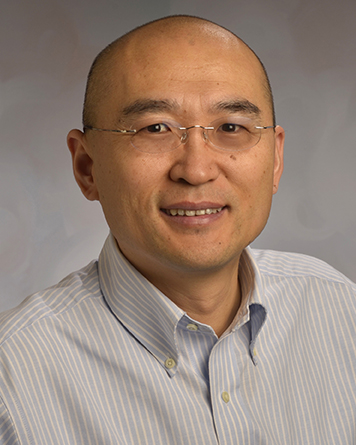
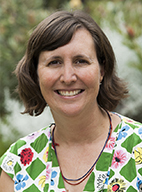
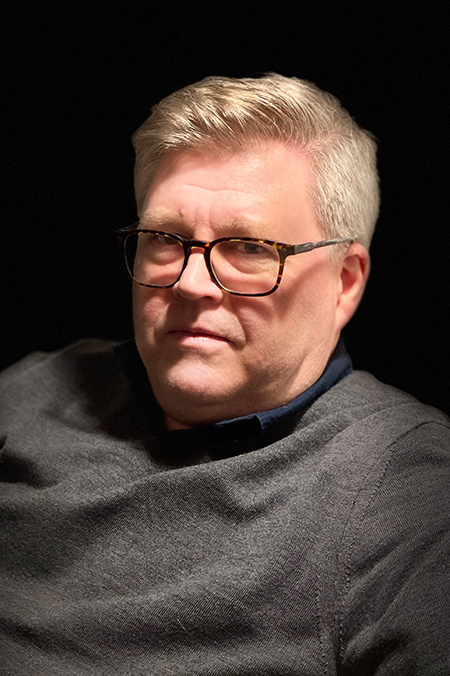
Artur W. Dubrawski is an Alumni Research Professor of Computer Science and Director of the Auton Lab at Carnegie Mellon University's School of Computer Science. He leads interdisciplinary research on Artificial Intelligence, Machine Learning, and Robotics with real-world applications in healthcare, nuclear safety, food safety, and counter-human trafficking. His work focuses on bridging gaps between data-driven AI and empirical sciences through probabilistic modeling, predictive analytics, and time-series intelligence. Lab: Auton Lab (founded 1993) Collaborations: Allegheny County Health Department, USDA, CDC, U.S. Army Research Impact: AI for wastewater-based COVID-19 forecasting, radiological inspection systems, and hospital infection detection His students and affiliates include current PhD candidates Angela Chen, Emma Erickson, Cecilia Morales, Willa Potosnak and past researchers like Benedikt Boecking (co-inventor of Interactive Weak Supervision). The lab has spun off startups like Marinus Analytics (IBM XPrize finalists) and developed open-source tools like auton-survival for survival analysis. Key Grants: $10.5M U.S. Army contract for AI-driven predictive maintenance research.
Elena Maria Baralis is a Full Professor at the Department of Control and Computer Science (DAUIN) at the Polytechnic University of Turin. She serves as Pro-Rector, member of the Board of Directors (without voting rights), member of the Academic Senate (without voting rights), and coordinator of the University's Permanent Observatory for Monitoring the Academic Sector. She chairs the Control and Computer Engineering Department and previously chaired the Computer Engineering School from October 2012 to October 2018. Her research interests focus on database systems and data mining, specifically explainable AI, bias detection in data analytics, and machine learning algorithms for big data. Her work spans various application domains including predictive maintenance, Industry 4.0, and healthcare. Recent publications demonstrate her expertise in speech processing, bias mitigation, and innovative neural network architectures like Kolmogorov-Arnold Networks. Her research output shows a clear trend toward addressing fairness and explainability in AI systems while exploring novel approaches to speech and language understanding. Professor Baralis has received significant recognition including becoming a Fellow of the Academy of Sciences of Turin in 2017. She has served as Editor-in-Chief for IEEE Internet of Things Journal (2016-2019) and Knowledge and Information Systems (2014-present). She actively mentors doctoral students including Claudio Savelli (researching Machine Unlearning), Eleonora Poeta, Giuseppe Gallipoli, Alkis Koudounas, and others. Her research is supported by numerous projects including AI4CTI (Artificial Intelligence for Cyber Threat Intelligence, 2025-2028), Smart manufacturing driven by Machine Learning in Industry 4.0 (2019-2020), and I-REACT (2016-2019).
Dr Dominic McCafferty is a Senior Lecturer in Physiology, Ageing & Welfare at the University of Glasgow, based at the Scottish Centre for Ecology and the Natural Environment. He holds academic roles including Editor-in-Chief of the Journal of Thermal Biology and previously Ibis . His research focuses on thermal adaptation, behavioral thermoregulation, and urban wildlife ecology, particularly using thermal imaging techniques. He has a Ph.D. and BSc in Ecological Science from the University of Edinburgh (1989–1993 and 1985–1989). His work spans physiological studies in mammals, birds, and marine species, emphasizing conservation applications. Notable projects include habitat suitability modeling for urban water voles and thermal physiology studies in elephant seals. His educational background includes advanced studies in ecological science, complemented by post-doctoral research at institutions like the British Antarctic Survey (1993–1998). He has contributed to over 99 publications, advancing methodologies in non-invasive wildlife monitoring and ecological field studies. His editorial roles reflect expertise in thermal biology and avian science. McCafferty has led projects on carrion dynamics, stress physiology, and behavioral adaptations in diverse species, with a focus on applying findings to conservation challenges. Labs/Teams: Scottish Centre for Ecology and the Natural Environment (SCENE), part of the broader University of Glasgow's ecological research network. Collaborations include the Muséum National d’Histoire Naturelle in France and the National Trust for Scotland.
Prof. Raffaello D'Andrea is a Full Professor at ETH Zürich's Department of Mechanical and Process Engineering, affiliated with the Institute for Dynamic Systems and Control. His research focuses on bridging digital and physical worlds through robotics, control systems, and autonomous systems. He has pioneered work in aerial robotics, swarm systems, tactile sensing, and soft robotics. His philosophy emphasizes solving 'easy' problems with scalable, robust solutions, prioritizing simplicity and replicability. Key research areas include UAV navigation, distributed control, tactile sensor design, and fault-tolerant systems. He has founded multiple organizations and led roles as CTO/CEO, emphasizing cross-disciplinary innovation. His work has commercial applications in logistics, healthcare, and automation, driven by a belief in technology's role in improving human life. Notable projects include the Cubli robotic cube, aerial vehicle swarms, and optical tactile sensors for robotics. His lab emphasizes collaboration and team leadership, aiming to translate theoretical insights into practical, scalable technologies. Scientific awards: None explicitly listed in the provided texts. Advising and grants: No students listed in the provided texts; grants information not detailed. Labs/Teams: Leads research at ETH Zurich's Institute for Dynamic Systems and Control, collaborating with industry and academic partners globally.
Dr. Shyh-Dar Li is a Professor and Tong Louie Chair in Pharmaceutical Sciences at the University of British Columbia's Faculty of Pharmaceutical Sciences, where he also serves as Chair of Nanomedicine and Chemical Biology. With a BSc in pharmacy from National Taiwan University (1998) and PhD in pharmaceutical sciences from UNC Chapel Hill (2008), followed by postdoctoral training at UC San Diego's Moores Cancer Center (2009), Dr. Li has established himself as a leading researcher in advanced drug delivery systems. His research focuses on developing innovative nanomedicine platforms for targeted delivery of biological therapeutics including peptides, proteins, antibodies, and nucleic acids. Dr. Li's laboratory has pioneered several novel drug delivery approaches, particularly in lipid-based nanoparticles, phospholipid-free vesicles, and polymer systems for cancer immunotherapy, pain management, and protein delivery. His work bridges fundamental nanotechnology with translational applications for difficult-to-treat diseases. Analysis of his recent publications reveals a strong emphasis on tumor microenvironment modulation, endosomal escape mechanisms for nucleic acid delivery, and non-invasive delivery routes for protein therapeutics. His research demonstrates increasing sophistication in nanocarrier engineering, with recent work incorporating machine learning approaches to optimize nanoparticle design and expanding into immunomodulatory therapies that harness the body's immune system to fight cancer. Scientific Recognition: 2014 AFPC New Investigator Award 2013 AAPS New Investigator Award in Pharmaceutics and Pharmaceutical Technologies 2013 CIHR New Investigator Award 2013 CSPS Early Career Award 2012 Prostate Cancer Foundation Young Investigator Award Dr. Li's research program has been consistently supported by major Canadian funding agencies including CIHR, NSERC, and MITACS. He actively collaborates across disciplines and accepts graduate students into his research program, focusing on cutting-edge approaches to overcome biological barriers in drug delivery. His laboratory, the Laboratory of Targeted Drug Delivery and Nanomedicine, serves as a hub for innovation in pharmaceutical nanotechnology.
Deborah Fox is Associate Professor in Midwifery at the University of Technology Sydney (UTS), Faculty of Health, and a core member of the Centre for Midwifery, Child and Family Health. She serves as Co-lead of the Maridulu Budyari Gumal SPHERE Maternal and Women's Clinical Theme and Chair of the National Publicly Funded Homebirth Consortium. In 2024, she received the Faculty of Health Dean's Academic Excellence Award for Research (Mid Career Researcher), following her 2021 award as Highest Performing Early Career Researcher from the School of Nursing and Midwifery. Her research focuses on optimizing physiological processes and positive experiences for women with complex pregnancies, with particular emphasis on the mediation of technology in midwifery practice. Current projects include evaluation of non-invasive fetal ECG beltless and wireless fetal monitoring in labor and birth, and examining the social, economic and environmental impacts of telemonitoring and telehealth in pregnancy and postpartum care. Dr. Fox's scholarly work demonstrates consistent focus on technology's role in maternity care, women's experiences of monitoring during labor, and innovative approaches to midwifery practice. Her recent publications show increasing emphasis on digital health solutions, AI applications in women's health, and pandemic impacts on maternal care systems globally. Faculty of Health Dean's Academic Excellence Award for Research (Mid Career Researcher) 2024 Highest Performing Early Career Researcher award from School of Nursing and Midwifery 2021 Editorial Board Member, Women and Birth journal Dr. Fox is actively involved in higher degree research supervision and has developed innovative teaching resources, including an Objective Structured Clinical Examination for perinatal mental healthcare. She is scheduled to spend three months as a Visiting Scholar at the University of Oxford in 2025.
Ankit Saxena serves as Assistant Professor in the Department of Mechanical Engineering at the University of Wyoming since 2024, focusing on innovative applications of additive manufacturing in structural engineering and materials science. His work bridges theoretical design with practical implementations in energy, aerospace, and robotics systems. Education: Ph.D. in Mechanical Engineering, Penn State University (2024) M.S. in Mechanical Engineering, Penn State University (2020) B.S. in Mechanical and Automotive Engineering, Delhi Technological University (2016) Dr. Saxena's research centers on developing adaptive stiffness structures , meta-materials , and functionally graded systems through advanced additive manufacturing techniques. His work specifically targets energy applications (nuclear, wind, hydrogen, oil/gas) and aerospace challenges, with emphasis on structural health monitoring and vibration damping. The SUMMIT Lab under his direction creates multi-functional materials enabling shape morphing and self-strengthening properties for next-generation engineering solutions. His publication record (2020-2024) reveals a consistent trajectory toward multi-physics meta-material design , with dominant themes in TPMS lattice optimization, fluid-structure interaction systems, and medical robotics applications. Key methodological contributions include novel fluid accumulator integration, laser powder bed fusion parameterization, and non-pneumatic tire architectures. Scientific Recognition: ASME Graduate Teaching Fellow (2022-2024) Harold F. Martin Graduate Assistant Outstanding Teaching Assistant Award (Penn State, 2023) Dr. Saxena teaches core materials courses (ME 3450: Properties of Materials; ME 4150: Mechanical Behavior of Materials) while expanding his research group through active recruitment of PhD candidates for 2026. His teaching philosophy emphasizes practical applications of theoretical concepts, recognized through multiple Penn State teaching fellowships. The SUMMIT Lab operates at the intersection of Wyoming's energy priorities and cutting-edge manufacturing research, maintaining strategic focus on renewable energy infrastructure and aerospace applications through metal additive manufacturing innovations.
Edward H. Adelson is the John and Dorothy Wilson Professor of Vision Science at MIT, affiliated with the Department of Brain and Cognitive Sciences and the Computer Science and Artificial Intelligence Laboratory (CSAIL). His research spans computer vision, human vision science, and robotics, with a focus on artificial touch sensing and tactile robotics. He has pioneered technologies like the GelSight tactile sensor, enabling high-resolution touch sensing for robots surpassing human skin sensitivity. Adelson holds a PhD in Experimental Psychology from the University of Michigan (1979) and a BA in Physics and Philosophy from Yale University (1974). His career includes roles at MIT since 1987, progressing from Associate Professor to Professor and later the Wilson Chair. He contributed to early vision theories, including the plenoptic function and motion energy models, and has been recognized with prestigious awards like the Helmholtz Prize (2013) and Rank Prize (1992). His research interests include material perception, optical sensing, and the integration of vision and touch. Key innovations include the plenoptic camera, layered representation techniques for motion analysis, and tactile sensors for robotics. Adelson has authored over 300 publications and holds numerous patents in imaging, vision, and robotics. Awards and honors include membership in the National Academy of Sciences and the American Academy of Arts and Sciences. His work bridges neuroscience and engineering, advancing both fundamental understanding and practical applications in robotics and computer vision.
Jindong Tan is a Professor in the Department of Mechanical, Aerospace, and Biomedical Engineering at the University of Tennessee, Knoxville (since 2015). Previously, he held roles at Michigan Technological University (2002–2015) and Northeastern University, China (1995–1998). He specializes in medical/surgical robotics, human-robot interactions, wearable sensors, control systems, and mechatronics. His research integrates robotics, biomedical engineering, and computer science to advance minimally invasive surgical tools, wearable technology, and autonomous systems. Education: Ph.D. in Mechanical Engineering from Michigan State University (2002), M.S. from Northeastern University (1995), and B.S. from Lanzhou University of Technology (1992). Research interests focus on developing innovative medical robotic systems, including laparoscopic camera robots, magnetic actuation mechanisms, and human-robot collaboration frameworks. He has contributed to advancements in wearable sensors for healthcare, sensor networks for dynamic environments, and calibration techniques for bio-inspired robots. Key projects include the design of an untethered laparoscopic camera robot (s-CAM), magnetic localization for surgical tools, and frameworks for controlled robot language in human-robot collaboration. His work emphasizes practical applications in surgical environments and wearable health monitoring. Professional service includes roles with the IEEE Robotics & Automation Society, Engineering in Medicine and Biology Society, and the Association for Computing Machinery. Contact: tan@utk.edu, Perkins Hall 315.
Dr. Anna Hopkins is a Senior Lecturer in conservation biology and molecular ecology at Edith Cowan University's School of Science. She is the Course Coordinator for postgraduate Environmental Science programs and has held academic positions since 2016. Her research focuses on soil microbial ecology, forest pathogens, eDNA applications, and climate change impacts. She has taught courses including Plant Pathology, Genetics, and Soil Processes. Education: PhD (University of Tasmania, 2007), Diploma of Modern Languages (UWA, 2002), BSc (Hons) (UWA, 2002) Her research interests include mycorrhizal-plant interactions, soil fungal responses to disturbances, and regenerative agriculture. Notable awards include the 2010 New Zealand Zonta Women in Science Award and the 2017 ECU Athena Swan Award. Recent articles highlight her work on soil microbial dynamics, invasive species management, and eDNA applications in ecology. She has led projects funded by organizations like the Australian Coal Association and WWF Australia, focusing on biodiversity restoration and ecosystem health. Awards: Multiple international and teaching awards, including recognition for poster presentations and research excellence. Advising & Grants: Supervises 5 PhD/MSc students and leads grants totaling over $1M in projects like eDNA tracking and Gilbert’s Potoroo conservation. Professional roles include Deputy Coordinator of the IUFRO Working Party on Forest Nurseries and Vice President of the Australasian Mycological Society.
Joseph Bentsman is a Professor in the Department of Mechanical Science and Engineering at the University of Illinois at Urbana-Champaign's Grainger College of Engineering. He also holds affiliate appointments in the Department of Aerospace Engineering (since 2015) and the Department of Electrical and Computer Engineering (since 2018). His academic journey began with an M.S. from Byelorussian Polytechnic Institute in Minsk, USSR (1979), followed by a Ph.D. in Electrical Engineering from Illinois Institute of Technology (1984). Professor Bentsman's research focuses on control of nonlinear and distributed parameter systems, nonlinear oscillations, network control, stability theory, and stochastic multiscale methods. He pioneered a new class of dynamical systems with active singularities that admit control actions during singular phases of motion, which represent a novel category of hybrid systems characterized by impulsively controlled discrete transitions. His recent work has expanded into biomedical applications, particularly thermophysical modeling of tissue during electrosurgery and control of phase change processes. His recent publications (2021-2024) reveal a strong trend toward biomedical applications of control theory, particularly in modeling heat conduction in biological tissues, electrosurgical processes, and phase change phenomena. Approximately 60% of his recent work focuses on biomedical applications, while the remainder continues his foundational work on nonlinear control systems, distributed parameter systems, and systems with active singularities. Key subfields include Stefan problems, enthalpy-based control, telegraph equation modeling, and PDE-based control of complex physical processes. NSF Presidential Young Investigator Award (1989) Life Fellow of American Society of Mechanical Engineers Life Senior Member of IEEE IEEE Control Systems Society Technical Committee Chair on Power Generation (2015-2019) International Society of Automation POWID Achievement Award (2014) 2018 AIST Computer Applications Best Paper Award Featured in 'People in Control', IEEE Control Systems Magazine (2018) Professor Bentsman has been instrumental in developing educational approaches that integrate signal processing, instrumentation, control, and machine learning, as evidenced by his two textbooks. His work on the steel continuous casting process, particularly the mold oscillation system, has led to practical industrial applications. He has also made significant contributions to power plant control systems and boiler/turbine control. His research group appears to focus on both theoretical control systems development and practical implementation in industrial and biomedical settings, with strong connections to steel manufacturing, power generation, and medical device industries.
Ian Frigaard is a Professor in the Department of Mechanical Engineering at the University of British Columbia (UBC), affiliated with the Faculty of Applied Science. He also holds an appointment in the Department of Mathematics. His research group operates in UBC's Complex Fluids Lab, focusing on interdisciplinary studies combining mathematical, experimental, and computational approaches. Education: B.Sc. (University of Wales) M.Sc. (University of Oxford) D.Phil. (University of Oxford) C.Math. (Certificate in Mathematics) Research Interests: Professor Frigaard specializes in non-Newtonian fluid mechanics, particularly the mechanics of visco-plastic (yield stress) fluids. His work addresses industrial challenges in petroleum engineering, including well cementing, leakage prevention, and abandonment techniques related to GHG emission control and environmental protection. Research methodologies span theoretical modeling, experimental validation, and computational simulations. Publication Trends: Recent work (2021–2023) emphasizes bubble dynamics in complex fluids, displacement flows in annular geometries, wellbore integrity modeling, and stochastic risk assessment for oil/gas operations. Publications frequently appear in top-tier journals like the Journal of Fluid Mechanics and Journal of Non-Newtonian Fluid Mechanics . Awards & Honors: CSME Fluid Mechanics Medal (2024) Stanley G. Mason Award, Canadian Society of Rheology (2022) Killam Research Prize, UBC (2019) Academic Leadership: Leads a research group of 10+ graduate students and postdocs. Provides summer internships and collaborates extensively with the petroleum industry. Research is supported by industrial partnerships and institutional grants. Facilities: Conducts experiments in UBC's Complex Fluids Lab, equipped for advanced rheological measurements and flow visualization.
Elif BAŞTÜRK is an Associate Professor at Kırşehir Ahi Evran University's Faculty of Arts and Sciences, Department of Archaeology, specializing in Settlement Archaeology, Hittite studies, and Early Bronze Age ceramics. With a PhD from Ege University (2014), she has led excavations at Tanır Yassıhöyük since 2022 and participated in major projects across Anatolia. Education: PhD in Protohistory and Near Eastern Archaeology, Ege University (2014) MA in Protohistory and Near Eastern Archaeology, Ege University (2006) BA in Archaeology, Ege University (2003) Research Focus: Her work examines archaeological transitions in Anatolia and the Near East, particularly ceramic traditions, settlement patterns, and Assyrian influence during the Bronze and Iron Ages. She employs statistical and technological methods to analyze material culture. Projects: Notable projects include the Tanır Yassıhöyük excavations (2021–present), Assyrian trade influence studies in Afşin-Elbistan plain, and documentation of Early Bronze Age ceramics in Siirt Başur Höyük. She has also led regional surveys threatened by the Ilısu Dam. Publications: Recent outputs include 2025 studies on Iron Age ceramics and Assyrian mill technology, alongside excavation reports from 2016–2024. Her work bridges field archaeology with material analysis, contributing to understanding cultural dynamics in ancient Anatolia.
Frank L. Hammond III serves as Assistant Professor at Georgia Tech's Woodruff School of Mechanical Engineering since April 2015, directing the Adaptation Robotic Manipulation (ARM) Laboratory. A Carnegie Mellon PhD graduate, he previously held postdoctoral positions at MIT and Harvard as a Ford Fellow. His interdisciplinary work bridges mechanical engineering, biomedical applications, and computational design. Education Ph.D. in Mechanical Engineering, Carnegie Mellon University M.S. in Mechanical Engineering, University of Pennsylvania M.S. in Electrical Engineering, University of Pennsylvania B.S. in Electrical Engineering & Biomedical Engineering, Drexel University Hammond's research pioneers adaptive robotic manipulation (ARM) systems that operate in unstructured human environments through bioinspired computational design. His lab develops xenomorphic (non-biomorphic) robots using soft pneumatic actuation, flexible electronics, and machine learning to achieve biological-level versatility. Key application domains include wearable human augmentation devices , haptic-enabled surgical teleoperation , and autonomous soft platforms for medical and industrial use. The ARM methodology integrates empirical biomechanics characterization with simulation-driven optimization and rapid prototyping. Analysis of his 15 most recent publications (2023-2025) reveals three dominant trends: (1) Medical rehabilitation breakthroughs through intention-driven exoskeletons with soft bioelectronics, (2) Novel locomotion strategies for soft robots in complex environments (sand, water, cluttered spaces), and (3) Advanced haptic feedback systems leveraging multimodal sensory substitution for proprioceptive restoration. These works consistently bridge biomechanics, control theory, and human factors. Awards Ford Postdoctoral Research Fellowship at Harvard School of Engineering Hammond actively mentors graduate researchers including PhD candidates Lucas Tiziani (soft actuators) and Bangyuan Liu (earthworm robotics), and Master's student Alex Hart (pediatric haptics). His lab secures research funding for projects like tunable mechanical interfaces for neuropathy treatment and cognition-focused wearable devices, with strong industry and clinical partnerships evident in co-authored medical device publications. The ARM Lab maintains robust collaborations across Georgia Tech's robotics, neuroscience, and biomedical engineering communities. The Adaptation Robotic Manipulation Laboratory operates from Whitaker Building Room 4102, housing specialized facilities for soft robot fabrication (3D printing, shape deposition manufacturing) and biomechanics testing. Current projects include pediatric haptic feedback displays, biomimetic swimming robots, and kirigami-skinned earthworm robots for subsurface locomotion. The lab emphasizes translational research with multiple pending medical device patents and active participation in K-12 STEM outreach programs.
Takako Fujioka is an Associate Professor of Music at Stanford University, affiliated with the Center for Computer Research in Music and Acoustics (CCRMA). Her research focuses on the neural mechanisms underlying auditory perception, auditory-motor coupling, and music-supported therapy for neurorehabilitation. She holds a Ph.D. in Physiology from the Graduate University for Advanced Studies, Japan, and M.Sc./B.Eng. degrees in Electrical Engineering from Waseda University. Her work combines neurophysiological techniques such as MEG and EEG to study brain plasticity in development, aging, and stroke recovery. Notable contributions include investigating how music influences motor and cognitive recovery in stroke patients, as well as exploring the neural basis of musical perception through rhythmic synchronization and pitch discrimination studies. Supported by awards from the Canadian Institutes of Health Research during her postdoctoral work at the Rotman Research Institute, her research bridges clinical neuroscience and music cognition. Dr. Fujioka’s expertise spans auditory neuroscience, neurorehabilitation, and technology-assisted music therapy. She has pioneered studies on tactile mapping for cochlear implant users and networked music performance systems, emphasizing cross-modal perception and human-technology interaction. Her findings contribute to both theoretical understanding of auditory processing and practical applications in medical and educational settings. Awards: Canadian Institutes of Health Research Awards (postdoctoral phase) Labs/Teams: CCRMA, Stanford Music Perception Laboratory, Rotman Research Institute collaborations Key Themes: Neuroplasticity, Music-Mediated Rehabilitation, Auditory-Motor Integration, Multisensory Processing Her recent work examines aging-related changes in binaural hearing and the role of beta/gamma oscillations in rhythmic processing. She advocates for translational research that connects neural mechanisms with real-world therapeutic interventions.