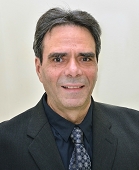
Robert R. Alfano is a Distinguished Professor of Physics and Psychology at The City College of New York. His research focuses on supercontinuum generation, ultrafast spectroscopy, biomedical optics, singular optics, and fiber optics. He has pioneered optical biopsy techniques using femtosecond lasers and Raman scattering for non-invasive tissue analysis, with applications in cancer diagnosis and material characterization. Key research areas include: Development of optical Kerr effect-based diagnostic methods for cancerous and healthy tissues Investigation of orbital angular momentum (OAM) and spin angular momentum interactions in materials Advances in ultra-supercontinuum and higher harmonic generation for microscopy and medical imaging Compact optical analyzers for detecting bio-particles and viral pathogens Quantum optics studies involving photon entanglement and Fano resonance effects His work bridges fundamental optics research with practical biomedical applications, including real-time spectroscopic imaging systems. Alfano's innovations in femtosecond laser technology have led to breakthroughs in attosecond/zeptosecond pulse generation and quantum nanostructured photosystems analysis.
Zervakis Michalis is a full Professor at the Technical University of Crete (TUC), serving as Rector and Director of the Digital Image and Signal Processing Laboratory (DISPLAY). He holds a Ph.D. in Electrical Engineering from the University of Toronto (1990) and has been a faculty member at TUC since 1995. His expertise spans Digital Image/Signal Processing, biomedical applications, and neural network implementations in automation. Education: Ph.D., Electrical Engineering, University of Toronto (1990) M.Sc., Electrical Engineering, University of Toronto (1985) B.Sc., Electrical Engineering, Aristotle University of Thessaloniki (1983) Research Interests: Signal/image processing for biomedical applications Machine learning for healthcare diagnostics EEG/ECG analysis and seizure detection Neural network architectures for automation Multi-sensor systems and aerial surveillance His research emphasizes clinical applications like epilepsy monitoring and cardiovascular diagnostics, leveraging deep learning and multimodal data fusion. He has led over 20 international projects and published >90 papers in image/signal processing. Current work focuses on AI-driven medical systems and UAV-based infrastructure monitoring. Labs/Teams: Director of the DISPLAY Lab, collaborating on projects like the BorderUAS semiautonomous surveillance platform and the Pulsense cardiovascular monitoring system. Grants/Contributions: Extensive involvement in EU-funded initiatives and industry partnerships, advancing smart farming, power line inspection, and emergency response systems.
Professor Daniel Brewer is a leading academic in Medical Bioinformatics and Genomics at the University of East Anglia, specifically within the Norwich Medical School . His roles include heading the Cancer Genetics Team, serving as Deputy Director of the Metabolic Health Research Centre, and leading bioinformatics initiatives in global prostate cancer consortia. Brewer holds a PhD in Computational Biology from University College London and has over a decade of experience in applying large-scale 'omics data to improve clinical outcomes for prostate cancer patients. His research focuses on genomic sequencing studies, cancer subtype classification, biomarker development (e.g., the Prostate Urine Risk score), and the role of bacteria in cancer. Notable contributions include leading the CRUK-ICGC Prostate UK group, expanding it into the Pan-Prostate Cancer Group (PPCG), and developing the SEPATH pipeline for pathogen detection in genomic data. He is also active in teaching, including Problem-Based Learning (PBL) tutoring and supervising 6 PhD students. Brewer has secured grants totaling millions from organizations like Prostate Cancer UK and the National Institute for Health. He chairs the bioinformatics committee for the Prostate UK group and contributes to global initiatives like Genomics England’s 100,000 Genomes Project. His work has yielded over 76 publications in journals like Nature and Science , and he received the 2022 European Urology Oncology SoMe Award. Education: MSci Physics (Imperial College London), MRes Biological Complexity (UCL), PhD Computational Biology (UCL) Key Projects: Leveraging PPCG data for prostate cancer prediction, PURSuiT biomarker validation, bacterial-in-cancer studies Grants: Prostate Cancer UK (£2.5M), Movember Foundation (£1.8M), Big C Appeal (£1.1M) Leadership: Norwich Cancer Research Network (NCRN) founder, UEA Biomedical Review Committee member Brewer’s lab focuses on translating genomic insights into clinical tools, with ongoing efforts to develop diagnostic tests and improve treatment strategies for aggressive prostate cancers.
Agapiou Agapios is an Associate Professor in the Department of Chemistry at the University of Cyprus, affiliated with the School of Natural and Applied Sciences. He holds a Ph.D. in Chemical Engineering from the National Technical University of Athens (2006) and a Diploma in Chemical Engineering from the same institution (2001). His research focuses on analytical methods for VOCs, environmental monitoring, biomedical diagnostics, and sustainable materials. He has held academic positions including Lecturer (2014), Assistant Professor (2019), and his current role since 2024. Research interests include VOC analysis in breath, environmental samples, and food products; development of biochar for pollution remediation; and electrochemical treatments for wastewater. His work bridges environmental science, biomedical applications, and sustainable technology. Over 50 publications span topics like VOC biomarkers for disease diagnosis, air quality assessment, and waste valorization. Key contributions include studies on breath analysis for smoking/e-cigarette effects, VOC mapping in soils, and biochar applications for VOC adsorption. His research emphasizes interdisciplinary approaches, integrating analytical chemistry with environmental and biomedical challenges.
George Athanassopoulos is a Visiting Professor in Cardiology at the Onassis Cardiac Surgery Centre in Athens, affiliated with the School of Medicine. He holds a doctoral degree in Medicine from Athens University Medical School (1996) and completed postgraduate training in Clinical Cardiology-Echocardiography at the Royal Postgraduate Medical School, London (1988-1989). His career includes roles such as Director of the Cardiology Section at Onassis Cardiac Surgery Centre (2018–2023) and National Coordinator for major European research registries. Research interests focus on echocardiography, pulmonary hypertension, cardiovascular imaging, and clinical cardiology. Key projects include the EACVI NORRE study (2008–2015) and the EURO-ENDO registry (2015–2018). He has authored over 30 peer-reviewed articles, with recent work addressing balloon pulmonary angioplasty and echocardiography's evolving role in pulmonary arterial hypertension. Editorial Contributions: Member of editorial boards for journals including European Journal of Echocardiography and Echo Research and Practice. Awards: Elected Fellow of the European Society of Cardiology (1993). Academic Leadership: President of the Scientific Association of Onassis Cardiac Surgery Centre (2014–2023). He has organized international symposiums on echocardiography and collaborates with institutions such as Imperial College London. His work bridges clinical practice, research, and education in cardiovascular medicine.
Daniel Fantus is a Clinical Associate Professor at the Department of Medicine, Faculty of Medicine, University of Montreal. His research focuses on non-invasive diagnostic methods for kidney transplant rejection, specifically leveraging acellular DNA and urinary CXCL10 markers. He leads a project funded by the Fondation du CHUM under pandemic-related initiatives. Education: Not explicitly stated in text. Research interests include advancing transplant medicine through molecular diagnostics and improving clinical outcomes via minimally invasive techniques. His work bridges immunology and nephrology to address challenges in organ transplantation. No scientific awards or grants beyond the listed project are mentioned. He has no listed advisees or students. No affiliated labs or teams are detailed in the provided text.
Gilles Fecteau is a Full Professor (Professeur titulaire) in the Department of Clinical Sciences at the Faculty of Veterinary Medicine (Faculté de médecine vétérinaire) of the Université de Montréal. He specializes in bovine internal medicine, infectious diseases, and dairy cattle health. His affiliations include the Op+lait research group for optimal milk quality, GRESABO (Groupe de recherche en santé bovine), and CERCL (Centre d’expertise et de recherche clinique en santé et bien être animal). Education: DVM from Université de Montréal (1986), followed by an internship in bovine medicine and surgery (1987). Completed a residency in veterinary internal medicine at the University of California, Davis (1993), earning Diplomate status from the American College of Veterinary Internal Medicine (ACVIM). Research Interests: Focus on infectious diseases in dairy cattle, biosafety measures, gastroenterology, and clinical biochemistry. His work includes investigating new syndromes in cattle and improving diagnostic methods for pathogens like Mycobacterium avium ssp. paratuberculosis. Recent projects address calf welfare, litter management, and herd health monitoring. Publications Trends: Over 50 peer-reviewed articles, with recent work targeting fecal microbiota dynamics in veal calves, herd-level pathogen detection, and impacts of recycled manure bedding on dairy cow health. Themes include microbiological profiling, disease transmission control, and sustainable agricultural practices. Awards: Recipient of the Pfizer Excellence Prize (1999, 2020) and the Université de Montréal Teaching Excellence Award (2003, 2021). Grants & Projects: Leads/co-leads multiple funded projects on dairy herd biosecurity, calf health, and milk quality optimization. Collaborates with organizations like MAPAQ, Novalait, and industry stakeholders. Labs/Teams: Active in Op+lait, a strategic research network for dairy innovation, and CERCL, focusing on clinical expertise in animal health and welfare.
Dr. Christian Vogt Dr. Christian Vogt is a Lecturer at the Department of Information Technology and Electrical Engineering within the Center for Project-Based Learning at ETH Zürich. His research focuses on IoT systems, embedded electronics, and wearable technology with applications in agriculture, healthcare, and urban computing. He specializes in energy-efficient sensor networks, flexible electronics, and real-time data transmission systems. Research Interests Vogt's work bridges hardware innovation and software optimization, emphasizing practical implementations through project-based learning. Key areas include: IoT and Wireless Sensor Networks Low-power embedded machine learning Wearable biomedical devices Flexible/stretchable electronics Ultra-wideband and radar-based sensing Publications Recent work highlights energy-efficient livestock monitoring systems using LoRa, battery-free sensor nodes powered by human body energy, and real-time gesture recognition with novel sensors. His research often involves interdisciplinary collaborations between computer science, electrical engineering, and biomedical applications. Affiliations ETH Zürich - Center for Project-Based Learning Department of Information Technology and Electrical Engineering Contact: christian.vogt@pbl.ee.ethz.ch
Alison Murray is an Associate Professor in the Department of Art History and Art Conservation at Queen's University at Kingston, Faculty of Arts and Science. She specializes in materials science applied to cultural heritage, focusing on modern materials (e.g., acrylic paints), paintings, and archaeological objects. Her work integrates mechanical testing, chemical analysis, and surface analysis to understand degradation mechanisms. Education: B.Sc. (Honours Chemistry, McGill University), M.Sc. and Ph.D. (Materials Science and Engineering, Johns Hopkins University, with a joint program with the Smithsonian Institution). Research Interests include: Metal ion migration in oil paints Environmental impacts on materials Teaching science to art conservation students Her articles highlight interdisciplinary approaches to conservation science, with recent work on teaching strategies and material degradation mechanisms. Notable collaborations include an international study on oil paint surface mechanisms. Awards: Fellow of the International Institute for Conservation. Advising and Grants: Collaborates with students across conservation science, art history, and engineering disciplines. Active in co-editing volumes like Failure Mechanisms in Picasso's Paintings .
Aly CHKEIR is an Associate Professor at the University of Technology of Troyes (UTT), holding the 'SilverTech' chair focused on technologies for healthy aging and elderly autonomy support. He earned his PhD in biomedical sciences from the University of Technology of Compiègne (UTC) in 2011, specializing in uterine electrical activity modeling. His research emphasizes biomedical signal processing, decision-making methodologies, and applications in frailty prevention among the elderly. Education: PhD in Biomedical Sciences, UTC, France (2011). Research interests include signal segmentation/classification, biomedical engineering, and solutions for aging populations. Notable projects include the SilverTech chair's holistic approach to aging technologies and the PiCADo initiative for in-home medical monitoring systems. Recent work focuses on AI-driven diagnostics (e.g., MRI segmentation, cough analysis), radar-based mobility assessment, and voice recognition for health monitoring. His contributions span sensor fusion, gait analysis, and non-invasive health tracking tools. His lab collaborations include Doppler radar systems for gait speed measurement, thermal imaging for health indicators, and AI-enhanced geriatric assessment tools. Projects like ARPEGE and PiCADo highlight his commitment to deploying innovative healthcare solutions for aging populations.
Dr David Corcoran is an Honorary Clinical Lecturer at the University of Glasgow, affiliated with the School of Cardiovascular & Metabolic Health. His research focuses on coronary artery disease, post-COVID-19 cardiovascular outcomes, and cardiac imaging techniques. He has contributed to major trials like CorMicA, investigating coronary physiology and microvascular dysfunction. Dr. Corcoran’s work spans clinical trials (e.g., serelaxin’s vascular effects), post-pandemic health trajectories, and diagnostic innovations (e.g., automated myocardial blood flow analysis via MRI). He has published widely on angina management, myocardial infarction mechanisms, and multisystem post-viral complications. His research integrates imaging (CMR, MRI) with clinical practice to improve cardiovascular diagnostics and therapies. Research Interests: Coronary Microvascular Dysfunction, Post-COVID-19 Cardiovascular Effects, Cardiac Imaging, Fractional Flow Reserve (FFR), and Clinical Trial Design. Key Projects: CorMicA trial (coronary physiology stratification), CISCO-19 imaging study (COVID-19 cardiopulmonary effects), and CABG-ACS trials (invasive/non-invasive management). Publications: Over 50 peer-reviewed articles, emphasizing clinical trials, diagnostic advancements, and pandemic-related cardiovascular sequelae.
Safieddin Safavi-Naeini was a Professor in the Department of Electrical and Computer Engineering and Director of the Centre for Intelligent Antenna and Radio Systems (CIARS) at his university. He specialized in advanced antenna systems, microwave engineering, radar technologies, and biomedical sensor design. His work emphasized high-frequency systems, phased array antennas, and mm-wave applications. Research Focus: His research spanned antenna design (e.g., defected ground structures, SIW-integrated arrays), mm-wave radar systems (including FMCW and SAR imaging), non-invasive biomedical sensors (e.g., glucose monitoring via microwave sensors), and satellite communication systems. He contributed to RFIC design, power amplifier technologies, and novel metamaterial-based components. Technological Contributions: Key innovations included tunable phase shifters, low-cost phased arrays for 5G/SATCOM, and compact high-gain antenna arrays. His work in graphene-based nonlinear optics and THz sources expanded into emerging applications like terahertz integrated circuits. Awards & Recognition: While no specific awards are listed, his prolific publication record and leadership in CIARS highlight his impactful contributions to the field. Advising & Labs: As director of CIARS, he oversaw research in intelligent antenna systems and radar imaging. His team developed cutting-edge systems like the 3D-printed scanning lens antenna and mm-wave FMCW target simulators.
Timothy Bardouille is an Associate Professor and Undergraduate Program Coordinator at Dalhousie University, affiliated with the Faculty of Science and cross-appointed with the School of Biomedical Engineering, Department of Diagnostic Radiology, Department of Psychology and Neuroscience, and the School of Physiotherapy. He holds a PhD from the University of Toronto, an MSc from Dalhousie University, and a BSc (Hon) from Queen's University, Kingston, ON. His research focuses on non-invasive neuroimaging technologies , including magnetoencephalography (MEG) with optically pumped magnetometers, and the development of advanced software/hardware for brain imaging and data analysis. The Biosignal Lab , which he leads, explores neural networks, brain plasticity post-injury, and machine learning applications in neuroimaging. Doctor of Philosophy, University of Toronto Master of Science, Dalhousie University Bachelor of Science (Hon), Queen's University, Kingston, ON
Dr. Leslie Scoutt is a Professor of Radiology and Biomedical Imaging at Yale School of Medicine, serving as Vice Chair for Education and Medical Director of the Non-Invasive Vascular Lab. She specializes in diagnostic ultrasound, particularly vascular and gynecologic imaging, with expertise in renal and liver transplant imaging. Her clinical practice includes first-trimester obstetric ultrasound, transrectal ultrasound for anal incontinence, and vascular assessments for conditions like abdominal aortic aneurysms. Education: BA in Biology, Wesleyan University (1974) MD, University of Rochester School of Medicine (1978) Residencies: Internal Medicine (University Hospital, 1979), Radiology (Beth Israel Hospital, Boston, 1985) Fellowship: Yale University School of Medicine (1987) MA in Arts, Yale University (2002) Her research focuses on optimizing ultrasound techniques for vascular and pelvic imaging, alongside initiatives in medical education. She has authored numerous peer-reviewed articles and book chapters, emphasizing imaging innovations and clinical guidelines. Dr. Scoutt’s awards include the RSNA Honored Educator Award (2014), multiple Mentor of the Year recognitions (YSM), and the Society of Radiologists in Ultrasound’s Distinguished Educator Award (2020). She has held leadership roles in national organizations like the American Board of Radiology and the American Registry of Radiologic Technologists. Administratively, she chairs educational committees and collaborates on translational research through Yale’s imaging studios. Her clinical and academic work bridges cutting-edge imaging with patient-centered care, emphasizing interdisciplinary teamwork and mentorship.
Vincent Mase, Jr., MD, FACS is an Assistant Professor of Surgery specializing in Thoracic Surgery at Yale School of Medicine. He serves as Program Director for the Cardiothoracic I-6 Residency and as site director of Bridgeport Hospital Thoracic Surgery. Dr. Mase treats patients across multiple Yale Medicine locations including Yale New Haven Hospital, Bridgeport Hospital, and Park Avenue Medical Center in Trumbull. Dr. Mase's educational background includes a BS in Neuroscience from Trinity College (1995), MD from University of Vermont College of Medicine (2002), General Surgery Internship at Walter Reed Army Medical Center (2003), General Surgery Residency at Fletcher Allen Healthcare (2012), and Thoracic Surgery Fellowship at Brigham and Women's Hospital (2016). He is board-certified in both general surgery (ACS) and thoracic surgery (ABTS). His clinical expertise focuses on the surgical treatment of lung cancer, chest wall deformities, and other chest-related conditions using minimally invasive techniques. Dr. Mase emphasizes patient education, ensuring patients and families understand both surgical and non-surgical options. His research interests include quality outcomes research and lung cancer screening processes, with numerous publications in leading journals examining lung cancer treatment approaches, surgical decision-making, and the impact of healthcare disruptions on cancer screening. Dr. Mase's work shows a consistent focus on improving thoracic surgical outcomes, particularly in lung cancer treatment where he has contributed to evidence-based guidelines for surgical resection approaches. His research demonstrates expertise in analyzing treatment options for stage I non-small cell lung cancer, evaluating the comparative effectiveness of different surgical approaches versus radiation therapy. Bronze Star Medal Meritorious Service Medal Combat Medical Badge Dr. Mase serves as a Lieutenant Colonel in the U.S. Army Reserves with nearly 20 years of combined active duty and reserve service. His military assignments have included postings in Schweinfurt, Germany; Seoul, South Korea; and a combat tour in Tikrit, Iraq. He maintains strong connections between his military and civilian medical careers, bringing his extensive operational experience to his clinical practice and research. At Yale, he collaborates extensively with colleagues in the Center for Thoracic Cancers and Lung Cancer Screening Program, contributing to multidisciplinary approaches to thoracic disease management. Dr. Mase operates within the Thoracic Surgery division of Yale's Department of Surgery, which is part of the Yale Cancer Center. His clinical work spans multiple sites across the Yale New Haven Health System, providing comprehensive thoracic surgical care to patients throughout Connecticut. He is particularly noted for his patient-centered approach, considering all patients as success stories and finding fulfillment in seeing them recover and resume normal life activities.