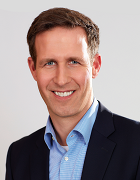
Prof. Dr. Mirko Hornung is a Professor of Aircraft Design at the TUM School of Engineering and Design, Technische Universität München. His research focuses on conceptual aircraft design, integration of propulsion systems, and evaluation of aviation technologies in operational contexts. Education and Career: PhD in Aeronautical Engineering from the University of the Bundeswehr (2003), awarded a research prize for work on reusable space transport systems. 2003–2009: Worked at Airbus Group (EADS) on military air systems, propulsion integration, and program management. Executive Director of Research & Technology at Bauhaus Luftfahrt, a think tank for long-term aviation developments. Research Interests: Aircraft design optimization, including hybrid energy systems, electric propulsion, and UAV technologies. Environmental sustainability in aviation, such as hydrogen-powered aircraft and lifecycle assessment. Aerodynamic and structural analysis, including flutter suppression and composite materials. Key Publications Highlight Trends: Focus on hybrid-electric and hydrogen propulsion for reducing environmental impact. Advancements in UAV design, including morphing wings and autonomous systems. Integration of AI-driven tools for propulsion optimization and lifecycle analysis. Scientific Awards: EADS Promotion Award (1995) Research Prize for Thesis on Reusable Space Transport Systems (2003) Advising & Grants: Directs research at Bauhaus Luftfahrt, collaborating on future aviation concepts. Engaged in interdisciplinary projects like FLEXOP UAV demonstrator and Ce-Liner eMobility studies. Labs/Teams: Active in the Aircraft Design Professorship at TUM and leadership roles at Bauhaus Luftfahrt, focusing on next-generation aviation technologies.
Dr. KN Sasidhar is a Researcher in the Department of Microstructure Physics and Alloy Design at Heinrich Heine University Düsseldorf. His work focuses on advanced materials science, particularly corrosion mechanisms, alloy design, and nanoscale structural analysis. He employs cutting-edge techniques like in situ synchrotron investigations and deep learning frameworks to study material behavior under extreme conditions. Current research emphasizes corrosion resistance in stainless steels, phase transformations during nitriding, and radiation effects on coatings. Key achievements include pioneering studies on nanoscale amorphization in metallic systems, data-centric approaches for materials discovery, and the development of predictive models for alloy performance. His work bridges experimental materials characterization with computational methods, addressing challenges in energy and aerospace applications. Publications span corrosion analysis, microstructural evolution under irradiation, and phase separation phenomena. Collaborative projects involve synchrotron facilities and interdisciplinary teams focusing on materials informatics. No formal awards or grants are explicitly listed in the provided texts, though his prolific publication record indicates active academic engagement.
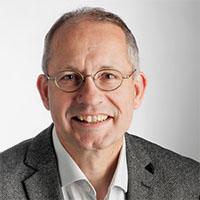
Prof. Dr.-Ing. Ahmad Osman is a Professor at the Saarland University of Applied Sciences (htw saar), specializing in Test Technologies and Test Methods within the Faculty of Engineering. He also holds an Adjunct Professor position at Laval University in Quebec, Canada, in the Department of Electrical Engineering and Computer Science. His research focuses on Artificial Intelligence applications in Signal and Image Processing for Non-destructive Testing (NDT) , with extensive work on Deep Learning , 3D Ultrasound Tomography , and Sensor Data Fusion in industrial contexts. Engineering Artificial Intelligence Signal Processing Image Processing Non-destructive Testing Quality Control Augmented Reality Osman leads the AutomaTiQ research group and serves as Head of the Algorithms/Signal and Data Processing Department at Fraunhofer IZFP . His recent publications (2017–2022) emphasize Deep Learning for defect detection in CFRP , Terahertz Imaging for artwork diagnostics, and Acoustic Sensors for agricultural quality control. He has organized international conferences on Structural Health Monitoring and contributed to Springer books on NDT technologies. His projects include ComforTex-AI (2024) and development of 3D positioners for ultrasound measurements. Collaborations span institutions in Germany, Canada, Italy, and Brazil, with advisory roles in the German Society for NDT and technical committees for conferences in Montreal and Egypt.
Prof. Dr.-Ing. Elisabeth Clausen is a Professor and Director of the Chair and Institute for Advanced Mining Technologies at RWTH Aachen University. She holds key roles in the Specialist Group for Raw Materials and Disposal Technology, serves as a rectorate representative, and leads the Commission for EU Research Funding. Her research spans Underground mining automation Acoustic emission diagnostics Sustainable mining systems Space resource extraction Advanced sensor technologies Her recent publications focus on autonomous mining machinery, underground communication systems, and acoustic emission analysis across 15+ studies from 2013–2025, with particular emphasis on Ultra-wideband positioning Thermographic detection Crack monitoring in planetary gearboxes Explosive atmosphere safety Mineral processing diagnostics Digitalization trends Prof. Clausen contributes to mining education reform through initiatives like CDIO™ and has developed innovative learning spaces in underground mines. She coordinates international educational labs and integrates sustainability into mining engineering curricula, with publications on Adaptive ventilation systems Mining education frameworks Future-proof mineral extraction Entrepreneurial mindset in engineering
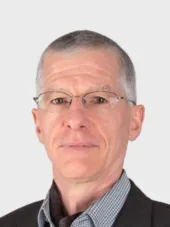
Prof. Bernhard U. Seeber is an Extraordinary Professor at the Technical University of Munich (TUM), leading the Chair of Audio Signal Processing within the TUM School of Computation, Information and Technology. His work bridges auditory neuroscience and engineering, focusing on improving hearing aids, cochlear implants, and virtual acoustic systems. He holds affiliations with the Bernstein Center for Computational Neuroscience, Munich Institute of Biomedical Engineering, and others. Education: Studied and earned his PhD (2003) in Electrical Engineering and Information Technology at TUM. Postdoctoral research included time at UC Berkeley and the MRC Institute of Hearing Research (UK), where he pioneered studies on binaural hearing and cochlear implant optimization. Research Interests: Combines experimental and theoretical approaches to explore auditory scene analysis, binaural unmasking, and spatial hearing. Key areas include signal coding for cochlear implants, virtual acoustics, and non-destructive acoustic monitoring. His work emphasizes interdisciplinary collaboration with industry and academia. Awards: Lothar Cremer Award (2010), Emmy Noether Fellowship (2007), and recognition from the German Acoustical Society. Teaching: Offers courses on audio communication, computational neuroscience, and technical acoustics. Projects: Leads initiatives like HAPPAA and Auralization, advancing sound field synthesis and hearing aid algorithms. Current Roles: Head of Chair of Audio Signal Processing, Board Member of DEGA, and spokesperson for the ITG Technical Committee on Hearing Acoustics.
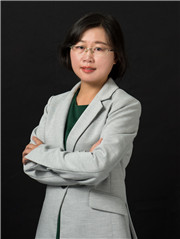
Associate Professor Hu Yunfei is affiliated with the School of New Materials and New Energy at Shenzhen University of Technology , where she leads the New Energy Systems and Smart Microgrids Laboratory . She is a member of the China Renewable Energy Society and Guangdong Solar Energy Association . PhD in Materials Processing Engineering (2005), South China University of Technology Bachelor of Engineering (2000), South China University of Technology Her research focuses on new energy systems , solar-storage direct-flexible systems , and high-efficiency photovoltaic devices , including perovskite solar cells , tandem solar cells , and transparent conductive oxides . Her work spans fundamental materials science and applied energy systems. The 15 most recent publications highlight her expertise in polycrystalline silicon thin films , transparent conductive oxides , perovskite solar cells , and optoelectronic materials . These works reflect trends in improving solar cell efficiency, stability, and manufacturing scalability. She has led projects such as the development of consumer solar power optimizers , optical performance testing for bifacial solar panels , and industrial collaborations on silicon ribbon substrates . Her projects are funded by institutions like the Norwegian Science Foundation and National Natural Science Foundation of China . At Shenzhen University of Technology, she oversees the New Energy Systems and Smart Microgrids Laboratory , integrating advanced materials and system design for renewable energy applications.
Jonas Schorlemer is a Researcher at the Department of High Frequency Systems within the Faculty of Electrical Engineering and Information Technology at Ruhr University Bochum. His work focuses on radar systems, AI integration in sensor technologies, and applications in humanitarian demining. He collaborates with Prof. Dr.-Ing. Ilona Rolfes and contributes to projects like KI-ROJAL and Terahertz-NRW. His research emphasizes radar echo simulation, GPR-based localization, and SAR algorithm development. Research interests include radar-based particle tracking, sensor fusion in indoor environments, and electromagnetic localization in granular materials. Recent work highlights AI-driven approaches for improving training data generation and scenario augmentation in demining applications. Publications span high-impact journals like Sensors and conferences such as IEEE MTT-S and ICEAA. He actively participates in academic events including the Faculty Colloquium and international workshops. He maintains a lab website at www.etit.ruhr-uni-bochum.de/hfs/ and holds an ORCID ID for scholarly tracking.
Prof. Dr. Ruming Zhang is a Tenure-Track Professor at TU Berlin's Faculty II - Mathematics and Natural Sciences, leading the Analysis and Applications group since May 2023. He specializes in numerical methods for partial differential equations and inverse problems, with a focus on wave scattering and periodic structures. His research bridges theoretical analysis and computational techniques, addressing challenges in areas like photonic crystals and non-destructive testing. Education & Career: PhD in Mathematics (Chinese Academy of Sciences, 2014) Postdoctoral Researcher at Michigan Technological University Marie-Curie Fellow (University of Bremen, 2015-2018) Junior Group Leader at KIT (Karlsruhe Institute of Technology, 2018-2023) Research Interests: Analysis and numerical methods for PDEs, inverse scattering problems, waveguide analysis, periodic structures, and their applications in nanotechnology and engineering. His work emphasizes high-order numerical schemes and theoretical frameworks for ill-posed problems. Key Contributions: Development of nonuniform mesh methods for periodic surface scattering, high-order numerical techniques for bi-periodic structures, and monotonicity-based shape reconstruction in waveguides. His methods address challenges in computational wave physics and mathematical modeling. Awards: Richard-von-Mises Prize (GAMM, 2023) Marie-Curie Fellowship (EU FP7-PEOPLE, 2015-2017) Teaching & Mentorship: Offers courses on inverse problems, scattering theory, boundary element methods, and applied analysis. Advises students on thesis topics in mathematical theory for photonic crystals and wave propagation. Actively promotes interdisciplinary collaboration between mathematicians and engineers. Grants & Projects: DFG Grant (2019-2024): Higher-order methods for acoustic scattering in periodic structures Marie-Curie COFUND Fellowship (Bremen TRAC, 2015-2017) Labs/Teams: Leads the Analysis and Applications research group at TU Berlin, focusing on interdisciplinary projects combining mathematical theory with computational tools for real-world applications.
Dr. Oliver Hampe serves as Scientific Director of the Vertebrate Paleontology and Geology Collections at the Museum für Naturkunde (Museum of Natural History), Leibniz Institute for Evolution and Biodiversity Research in Berlin, Germany. He also holds the position of Head of the Paleontological Preparation Laboratory. His expertise spans extinct aquatic vertebrates, paleopathology, and geoarchaeology, with significant contributions to cetacean evolution research. Hampe completed his studies in Chemistry and Geology-Paleontology from 1981-1987 at universities in Düsseldorf and Mainz, earning his Diploma in 1987. He received his PhD from Johannes Gutenberg University Mainz in 1991 and completed his habilitation for Palaeobiology and Zoology at Humboldt University Berlin in 2003, qualifying him as a Privatdozent. His research focuses on cetacean evolution, particularly Miocene whale fossils from German sites like Groß Pampau, with significant work on periotic bone anatomy. Hampe integrates traditional morphological analysis with advanced imaging techniques including CT scanning to study fossil specimens non-destructively. His paleopathological research examines diseases in fossils, such as osteomyelitis in Tyrannosaurus rex and bone tumors in whale specimens. He also maintains scholarly interest in the history of paleontology, particularly Werner Janensch's work and German expeditions to Tendaguru, Tanzania. Analysis of Hampe's recent publications reveals consistent focus on cetacean evolution, especially baleen whales from the Miocene epoch. His methodological approach frequently combines detailed morphological analysis with geological context to understand evolutionary patterns. He has made significant taxonomic contributions through studies of whale ear bone anatomy and has extended his research to pathological conditions in diverse fossil vertebrates. His interdisciplinary work bridges paleontology with medical imaging techniques and historical studies. As Head of the Paleontological Preparation Laboratory, Hampe oversees the curation and preparation of vertebrate fossil collections. His current research projects include cetacean studies from Groß Pampau, pathology research on dinosaurs and mammals, and investigations into aquatic adaptation in Cetartiodactyla supervised with PhD student Apolline Alfsen. His collaborative approach is evident in numerous publications with international researchers across Europe.
Dr. Kenneth Zick is a Research Professor at the University of Southern California's Information Sciences Institute (USC ISI), where he serves as Research Director of Transformational Computing. His work focuses on game-changing computer architectures, hardware, and systems for solving critical government problems, with expertise in unconventional computing, quantum computing, and bio-inspired systems. Ph.D. in Computer Science & Engineering, University of Michigan-Ann Arbor M.S. in Electrical Engineering, University of Texas at Dallas Bachelor's in Electrical Engineering, University of Michigan-Ann Arbor Dr. Zick's research interests span unconventional computing , bio-inspired systems , Ising machines , quantum annealing , FPGA-based solutions , and neuromorphic computing . His group develops hardware-centric algorithm discovery and Cosm, a heuristic algorithm for sparse Ising optimization. Current projects include superconducting digital architectures, analog-digital hybrid computing, and human-AI co-design for breakthrough hardware. His team leverages advanced facilities such as USC ISI's MOSIS 2.0 and the California DREAMS hub in the DoD Microelectronics Commons, with expertise in high-speed I/O, FPGA prototyping, and radiation-hardened systems. He has received a NASA Fellowship for his Ph.D. work and mentored students like Aditi, who won the USC ECE Outstanding Academic Achievement Award.
Rainald Loehner is a Distinguished Professor of Fluid Dynamics at George Mason University's Center for Computational Fluid Dynamics. Since 2003, he has led the Center for Computational Fluid Dynamics at George Mason University. He is currently a Hans Fischer Senior Fellow at the Technical University of Munich's Institute for Advanced Study (TUM-IAS) for 2023, hosted by Professors Kai-Uwe Bletzinger and Roland Wüchner in the 'Adjoint-Based System Identification of Large-Scale Structures' Focus Group. Loehner received his Diplom Ingenieur (Maschinenbau) degree from the Technical University of Braunschweig, and his PhD and a DSc in civil engineering from the University College of Swansea, Wales. After teaching at Swansea for a year, he worked at the Naval Research Laboratory in Washington, DC, followed by a research professorship at George Washington University. He joined George Mason University as an associate professor and was promoted to full professor in 1995 and distinguished professor in 2004. With over 35 years of experience, Professor Loehner's research spans the complete pipeline of numerical solvers and simulation tools. His expertise includes pre-processing, grid generation, numerical methods, field solvers, parallel computing, adaptive mesh refinement, fluid-structure interaction, shape optimization, system identification, and computational crowd dynamics. His current work focuses on developing advanced field solvers for compressible and incompressible flows, acoustics, electromagnetic wave propagation, heat and mass transfer, structural mechanics, and fluid-structure interaction. Key application areas include blast mitigation, ship hydrodynamics, blood flow, contaminant transport, and pedestrian safety. Loehner's recent research output (2020-2024) shows a strong trend toward digital twin technology and adjoint-based methods for structural analysis and optimization. His publications focus on high-fidelity digital twins for detecting structural weaknesses, risk assessment in engineering systems, and optimization of sensor placement. His work bridges computational mechanics with machine learning approaches, particularly in system identification and inverse problems, demonstrating how computational methods can solve complex real-world engineering challenges. 2020: Ranked #15119 in the Stanford List of Most Influential Scientists of the World; #8 in Aerospace and Aeronautics 2010: Distinguished International Career Award, Argentine Association of Computational Mechanics 2008: Fellow, International Association for Computational Mechanics 2006: Associate Fellow, AIAA 2005: Honorary Professor, University of Wales Swansea 2005: Advisory Professor, Shanghai Jiao Tong University 2004: Distinguished Professor of Fluid Dynamics, George Mason University 1999: Computational Mechanics Achievements Award, Japan Society of Mechanical Engineering 1993: Doctor of Science in Civil Engineering, University College of Swansea 1979-1983: Studienstiftung des Deutschen Volkes (Top 1% of German Students) Professor Loehner has mentored numerous students through his work at George Mason University and has supervised research in computational fluid dynamics, structural mechanics, and related fields. His research has been supported by various grants from government agencies and industry partners, enabling the development of advanced simulation tools applied in aerodynamics, hydrodynamics, shock-structure interaction, and medical applications. His codes and methods have been widely adopted in industry and academia for applications ranging from aircraft and ship design to medical simulations and urban pathogen transmission modeling. Loehner leads the Center for Computational Fluid Dynamics at George Mason University, which focuses on developing cutting-edge computational methods for fluid dynamics and related multiphysics problems. The center works on strategic application areas including blast mitigation, ship hydrodynamics, blood flow simulation, and pedestrian movement modeling. As a TUM-IAS Fellow, he collaborates with the Chair of Computational Modeling and Simulation at TUM on adjoint-based system identification of large-scale structures, bringing together expertise in computational mechanics and digital twin technology to address complex engineering challenges.
Christoph Gehlen is Professor and Chair of Materials and Materials Testing in Civil Engineering at the Technical University of Munich (TUM), based at Franz-Langinger-Str. 10 in Munich. His research group focuses on advanced concrete technologies, materials science, and digital construction methods, with significant contributions to additive manufacturing in civil engineering through the Collaborative Research Center TRR 277. His research spans concrete technology, durability assessment, and sustainable construction practices. Key interests include corrosion mechanisms in reinforced concrete, non-destructive testing methodologies, and additive manufacturing techniques like Selective Paste Intrusion (SPI). Recent work emphasizes 3D concrete printing for structural applications, life cycle assessment of printed elements, and fundamental studies on material behavior under environmental stressors including carbonation, chloride exposure, and freeze-thaw cycles. Analysis of his 15 most recent publications (2024-2025) reveals dominant research trajectories in digital fabrication of concrete structures, particularly SPI-based additive manufacturing. His work integrates materials science with structural engineering to develop functionally graded components, assess sustainability metrics, and solve reinforcement integration challenges. Significant interdisciplinary efforts address durability issues through electrochemical monitoring, coda wave interferometry, and advanced imaging techniques for concrete microstructure characterization. Gehlen leads the Chair of Materials and Materials Testing in Civil Engineering at TUM, which operates advanced laboratories for concrete characterization including confocal laser scanning microscopy and virtual testing environments. His team actively participates in TRR 277 (Additive Manufacturing in Construction), developing fabrication-aware design methods and experimental validation protocols for novel construction technologies.
Christoph Heinzl is a Professor of Cognitive Sensor Systems at the University of Passau since September 2022. He leads the Knowledge-based Image Processing research group at the Fraunhofer Development Center X-ray Technology (EZRT) . His academic background includes a PhD in Informatics and a Habilitation in 2022 , both from TU Wien . Research Focus: Scientific visualization, visual analytics, immersive analytics, virtual/augmented reality, machine learning, and X-ray computed tomography (XCT). Key Trends: Development of novel visualization techniques for complex volumetric data (e.g., dynamic volume lines, visual coherence frameworks), parameter space analysis, and cross-virtuality collaboration tools. Applications: Aerospace component inspection, defect analysis in composites (CFRP, GFRP), porosity quantification, and 4DCT time-series exploration.
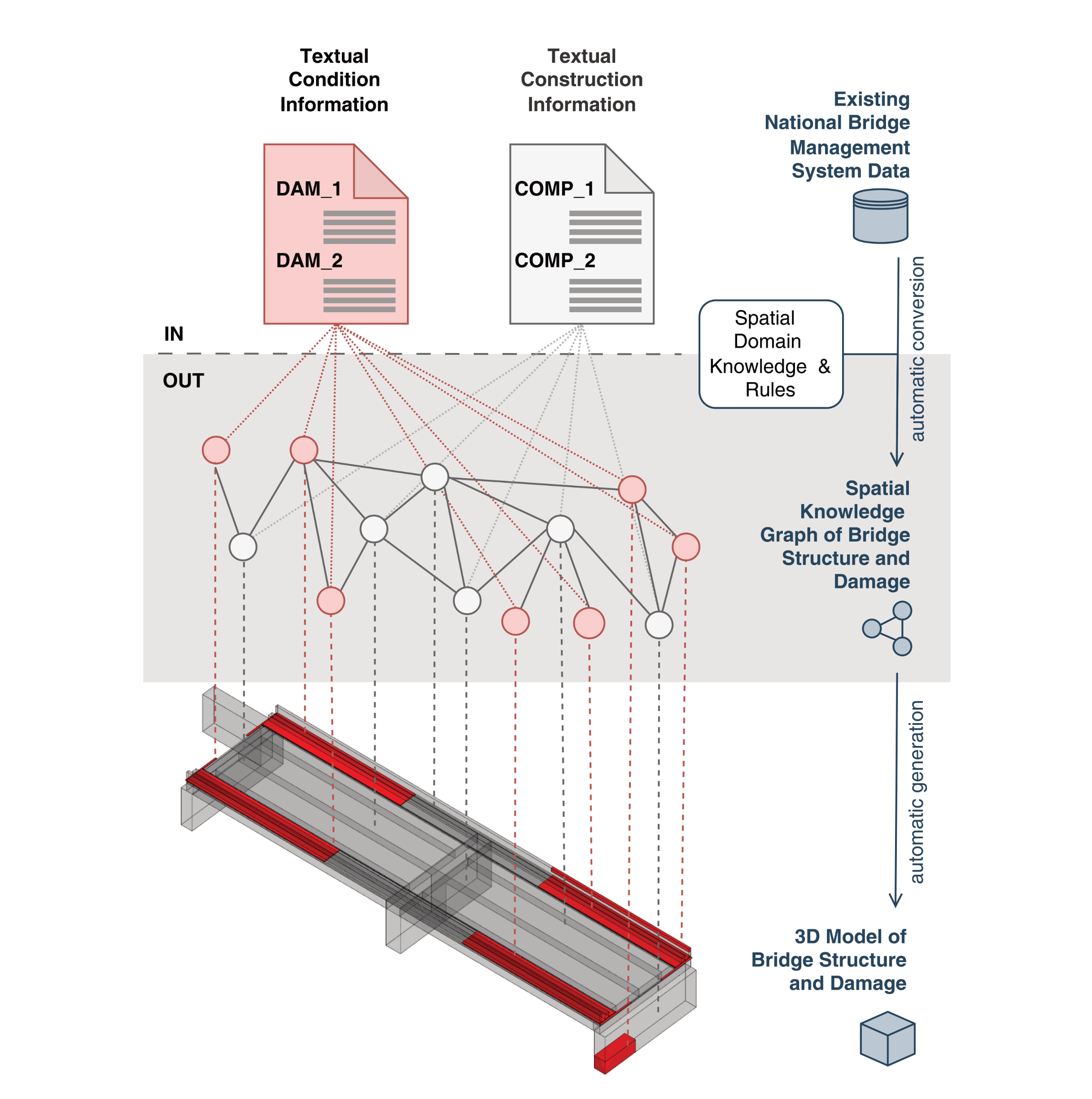
Prof. Dr. Jakob Beetz serves as a University Professor at RWTH Aachen University's Faculty of Architecture, leading the Design Computation (DC) research group. His work addresses critical challenges in sustainable built environments through digital innovation, focusing on integrating knowledge, information, and data across disciplines to reduce the sector's energy and material consumption—which accounts for over one-third of global totals—while advancing climate goals under the European Green Deal. His research spans Building Information Modeling (BIM), digital twins, and artificial intelligence, with emphasis on graph-based data federation, semantic web technologies, and large language models in construction. Key interests include evidence-based planning, parametric design optimization, building physics simulation, and networked knowledge modeling. Recent projects explore federated digital twin ecosystems for infrastructure management, intelligent damage assessment systems, and AI-driven solutions for wood structure preservation, directly contributing to sustainable development targets. Analysis of his 2024-2025 publications reveals a cohesive trajectory toward decentralized data environments and AI integration in Architecture, Engineering, and Construction (AEC). His work bridges theoretical foundations in knowledge representation with practical applications in bridge maintenance, road infrastructure, and timber construction, demonstrating consistent innovation in spatial data querying, federated issue management, and ontology-based process modeling. Prof. Beetz actively supervises PhD candidates, as evidenced by DC.Promotions 2024, and drives international collaboration through events like the Forum Construction Informatics 2025 and CIB W78 conferences. His research group engages with industry standards including Industry Foundation Classes (IFC) and Common Data Environments (CDEs), emphasizing open data principles and interoperability to transform construction workflows.
Prof. Dr. Franz Pfeiffer is a full professor at the Chair of Biomedical Physics within the Department of Physics at the Technical University of Munich (TUM) . He has served as director of the Munich School of BioEngineering since 2016. His research focuses on translating advanced X-ray physics concepts to biomedical imaging and clinical applications, particularly for early cancer and osteoporosis diagnostics. Research Interests: X-ray phase-contrast and dark-field imaging, synchrotron instrumentation, CT reconstruction algorithms, and medical imaging technology. Awards: Alfred Breit Prize (2017) ERC Advanced Grant (2016) Leibniz Prize (2011) National Latsis Prize (2010) ERC Starting Grant (2009) His work bridges fundamental X-ray physics with clinical translation, involving collaborations with radiologists, engineers, and medical researchers. Recent publications emphasize AI integration in CT, dark-field chest radiography, and spectral imaging applications.