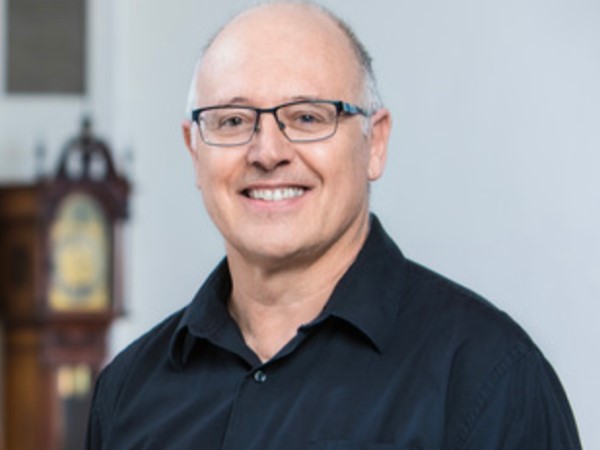
Nicola Di Cosmo is Henry Luce Foundation Professor of East Asian Studies at the Institute for Advanced Study in Princeton. He holds a Ph.D. in Central Asian History from Indiana University (1991) and graduated in Oriental Languages from Ca' Foscari University (1982). His career includes positions at Harvard University, University of Canterbury, and visiting professorships across Europe. Research integrates: Historical climate data analysis China-nomad frontier dynamics Cross-cultural Eurasian exchanges
Prof. Camilla Miglio is a full-time Professor of German Literature at the Department of European, American and Intercultural Studies , Sapienza University of Rome. She specializes in 20th-century German poetry, translation studies, and intercultural geopoetics. PhD in German Literature from Pisa (1996), focusing on Paul Celan Key research areas: Literary Geography, German-Italian Cultural Dialogue, Jewish-German Literature, and Poetics of Translation Her work interrogates the interplay between nature, memory, and poetic form in German literature from the 18th to 21st centuries. Recent projects include Europe as a Space of Translation (EACEA 2007-2013) and the ongoing PRIN A Physical Geography of German-speaking Literature (2023-2025). Scientific Awards include: Ladislao-Mittner-Preis (2005) Bundesverdienstkreuz (2010) Corresponding Member, Accademia Nazionale dei Lincei (2023) She leads seminars on German elegy, nature poetry, and intercultural translation , with guest collaborations from poets like Jan Wagner and scholars from Leipzig University. Classes held in Lab 4, Marco Polo Building, Rome.
Silvia Lucciari is an Associate Professor at the Department of Social and Economic Sciences at Sapienza University of Rome. She specializes in economic sociology, urban studies, and social policy, with particular focus on labor markets, creative industries, and urban development in Italy and Europe. Her research interests span several interconnected areas: Urban Sociology: Examining urban transformations, regeneration processes, and spatial inequalities in cities like Rome Labor Market Studies: Analyzing contemporary work patterns including gig economy, remote work, and creative labor Social Policy: Investigating welfare systems, social services, and institutional responses to social challenges Community Development: Studying bottom-up initiatives and creative practices in neighborhood contexts Professor Lucciari's publication record demonstrates consistent engagement with evolving social phenomena, particularly how urban spaces, labor markets, and social policies intersect. Her recent work shows increasing attention to digital transformations of work, urban sustainability challenges, and innovative community responses to social issues. She frequently employs comparative and multi-scalar analytical frameworks that connect micro-level experiences with broader structural conditions. Her scientific contributions include: Numerous peer-reviewed articles in international journals Book chapters in edited volumes on Mediterranean models and comparative social policy Research projects examining urban development and labor market transformations Professor Lucciari teaches courses including "Organization of Social Services" and "Economic Sociology" to students in Social Work Sciences and Sociology programs. Her research projects include "What's happening in the city?" which examines labor intermediaries in urban areas, and "NEREIDE New REGulation for Inclusive Development."
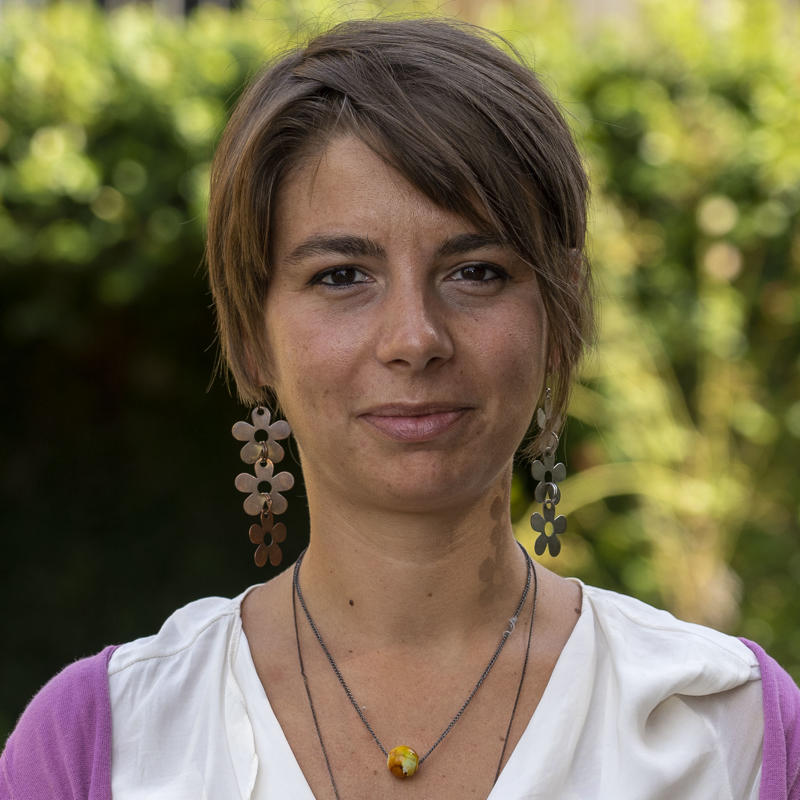
Greta Semplici is a Visiting Fellow at the Robert Schuman Centre for Advanced Studies, part of the European University Institute in Florence, Italy. Her academic work focuses on the intersection of mobility, resilience, and development, particularly in dryland regions of Africa. She brings extensive field experience from Northern Kenya and Somalia to her research on pastoralist communities and their adaptation strategies. Her educational background includes: D.Phil. (Ph.D.) in International Development from the University of Oxford M.Sc. in Development Economics from the University of Florence B.A. in Development Economics and International Cooperation from the University of Florence Greta's research explores the concept of resilience from the perspective of mobile pastoralists in Turkana County, Northern Kenya. Her work examines how nomadic communities understand and enact resilience in the face of climate change and development interventions. She investigates the relationship between humans, animals, and the environment, challenging conventional approaches to development and humanitarian aid in dryland regions. Her research bridges academic theory with practical development applications, emphasizing local knowledge systems. Her recent publications reveal a consistent focus on resilience, mobility, and development in dryland regions. Her work increasingly connects pastoralist knowledge systems with climate change adaptation, highlighting how traditional practices offer valuable insights for contemporary environmental challenges. She examines the tension between external development interventions and local realities, advocating for approaches that honor mobile communities' expertise and adaptability. Greta has taught development economics and qualitative research methods, sharing her expertise on development studies, livelihood studies, pastoralism, and rangeland research. Her professional experience includes work with FAO Somalia as a Monitoring and Evaluation International Consultant and collaborations with LAMA Development and Cooperation Agency, ODI, IMI, and the EUI. Currently, she is working on her book manuscript titled 'Moving Deserts: Resilience and Development in the Drylands,' which promises to synthesize her extensive fieldwork and theoretical contributions to the understanding of resilience in mobile communities.
Prof. Luisa Corazza is a Full Professor at the Department of Economics, University of Molise. Her research focuses on labor law, territorial development policies, smart working dynamics, migration integration, and socio-economic equity. She has extensively analyzed the impact of remote work on internal areas, gender dynamics in labor markets, and the intersection of public policy with regional revitalization efforts. Key research themes include: Smart working's transformative effects on rural economies, legal frameworks for migrant labor integration, sustainable development strategies for depopulated regions, and the evolution of work-life balance in post-pandemic societies. Her work critically examines how digital transformation reshapes labor markets and spatial economic patterns. Recent publications highlight the tension between labor flexibility and worker protection, the role of European employment directives, and innovative territorial development models. Despite no explicitly listed grants or awards here, her prolific scholarly output reflects sustained engagement with pressing socio-economic challenges.
Sabrina Tosi Cambini serves as Associate Professor in the Department of Humanities, Social Sciences and Cultural Enterprises at the University of Parma, where she previously held a Senior Researcher position. Her academic affiliations include teaching roles at the University of Florence, University of Verona, and University for Foreigners of Siena between 2004-2021, along with research appointments at the Michelucci Foundation (2005-2014). Her educational background features: PhD in Ethno-anthropological Research Methodologies (University of Siena) Research Fellow in Cultural Anthropology (University of Florence) Research Fellow in Cultural Anthropology (University of Verona) Professor Tosi Cambini specializes in anthropological investigations of urban environments, migration patterns, nomadic cultures, and Romani studies, with particular emphasis on decolonizing knowledge systems. Her research bridges anthropology and performing arts through fieldwork in Mongolia since 2017, examining nomadic cultures and alternative ecological frameworks. She actively promotes public anthropology through urban interventions and interdisciplinary collaborations. Her 2025 publication analyzing Western travelers' historical accounts of Mongolia exemplifies her research trajectory in nomadic studies and cultural representation. This work reflects broader scholarly trends connecting historical ethnography with contemporary decolonial approaches in anthropology. With over two decades of professional engagement, she provides supervision and coordination for social cooperation projects while leading international initiatives including the University of Parma's Scientific Coordination for UNESCO's International Institute for the Study of Nomadic Civilizations. She serves as affiliate researcher at Naples' CeRC Centre for Governmentality and Disability Studies. Professor Tosi Cambini co-directs the naMec Interuniversity Research Center (Asian, Nomadic Cultures, Mobility and Environment Study Center), participates in SIAA's College of Probi Viri and Probae Mulieres, and contributes to Antropologia Pubblica journal's Scientific Committee. Her community engagement includes ConcertAzioni's educational initiatives and CO.R.P.I.'s cultural projects.