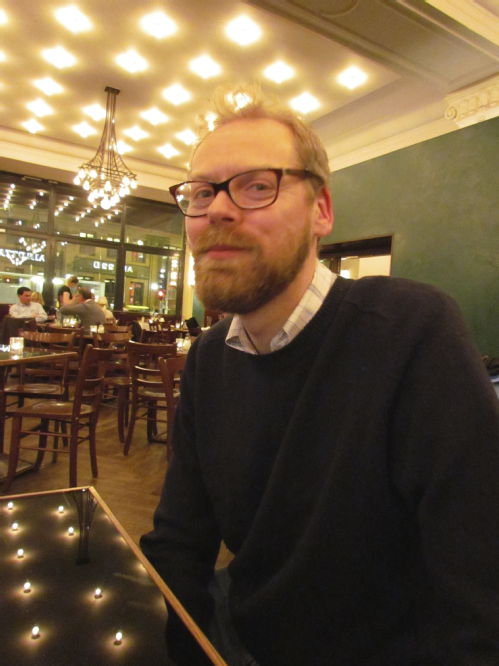
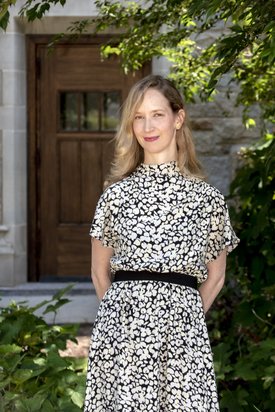
Prof. Dr. Philipp Schwab is a Professor of Philosophy at the University of Freiburg, specializing in classical German philosophy and its reception. He holds a doctorate (2009) and habilitation (2019/20), and has led major research projects like the DFG-funded 'Schelling in Munich (1811–1841)' edition. His academic career includes positions at universities in Germany, the U.S., and Denmark. Research focuses on metaphysics, existential philosophy, and the works of figures like Schelling, Hegel, Kierkegaard, and Nietzsche. He co-edits Schelling-Studien and has supervised numerous doctoral students. Key publications include monographs on Schelling-Hegel debates and Kierkegaard's indirect communication. His awards include the Eugen Fink Prize (2009). Current projects explore Schelling's legacy, Heidegger's interpretations, and dialectics in idealist systems.
Lusophone University of Humanities and TechnologiesPortugal
Henrique Varajidás is a lecturer at Universidade Lusófona (Lusophone University), with a focus on political science and historical analysis of totalitarianism. He holds a Licenciatura in Political Science and International Relations, a PhD in the same field with specialization in security and defense, and a Master’s in Law focused on cross-cultural business practice. Licenciatura: Political Science and International Relations PhD: Political Science and International Relations (Security and Defense) Master: Law (Cross-Cultural Business Practice) His research primarily examines totalitarianism through comparative frameworks, analyzing regimes like Nazi Germany, Stalinist USSR, and Khmer Rouge Cambodia. Key themes include: Historiographical methodology in totalitarian studies Counterfactual analysis of political violence Racial sciences in early Nazi ideology Philosophical foundations of authoritarian power Foreign policy villainization techniques Ends vs means in totalitarian governance His publications reveal a strong focus on circular causality in regime analysis, Kantian moral philosophy, and technological implications in authoritarian systems. Awards and recognition are not explicitly mentioned in available sources. Varajidás has advised students on topics related to totalitarianism and regime analysis. His work appears in journals like Frontiers in Political Science and Práticas da História . He maintains contact via email at hen***@ulusofona.pt .
Andrew Huddleston is Professor of Philosophy and Director of the Centre for Research in Post-Kantian Philosophy at the University of Warwick. He previously taught at Birkbeck College, University of London and Exeter College, Oxford. He holds a PhD from Princeton University. His research focuses on post-Kantian philosophy (Nietzsche, German Idealism, Romanticism) and intersects with aesthetics, social philosophy, and ethics. His 2019 monograph, Nietzsche on the Decadence and Flourishing of Culture , challenges individualist interpretations of Nietzsche, arguing for a more socially-oriented understanding of cultural flourishing. Current work explores the 'Religion of Art' concept in European thought, examining art's role as a religious substitute in a secular age. Education: BA from Brown University and Pembroke College, Cambridge; PhD from Princeton University (supervised by Alexander Nehamas). Research trends in recent articles emphasize Nietzschean moral psychology (ressentiment), narratives of cultural decadence, and the interplay between aesthetics and existential concerns. His work also engages with Adorno's critical theory and Hegel's philosophy of comedy. Editorial roles include serving as Book Reviews Editor for European Journal of Philosophy , Editorial Board member of British Journal for the History of Philosophy , and area editor for Ergo . He is also Treasurer of the Royal Musical Association Music & Philosophy Study Group. Teaching responsibilities include modules on Nietzsche's Beyond Good and Evil , the 'Religion of Art' in post-Kantian philosophy, and convening the MA in Continental Philosophy.
Jaime Rodriguez Matos is an Assistant Professor in the Department of Modern and Classical Languages and Literatures at California State University, Fresno, where he has been employed since 2018. His academic career includes prior roles as Lecturer at Fresno State (2016-2018) and Assistant Professor at the University of Michigan (2007-2016). Education: Ph.D., Spanish and Portuguese, Columbia University M.Phil., Spanish and Portuguese, Columbia University M.A., Spanish and Portuguese, Columbia University B.A., Spanish Language and Literature, University of New Hampshire Rodriguez Matos specializes in Latin American poetry, nihilism, infrapolitics, and temporal theory. His work interrogates the intersections of philosophy and literary form, particularly focusing on the deconstruction of time in works by José Lezama Lima, Eduardo Lalo, and Álvaro García Linera. Current research explores neo-revolutionary rhetoric and anarchic political thought in Latin America. His published and forthcoming articles address themes such as Lacanian critiques of hegemony, the ontologies of the present, and the formless in Caribbean politics. Rodriguez Matos has presented at international conferences including the Latin American Studies Association and the University of California, Irvine Humanities Commons cluster. Selected Publications: Writing of the Formless: José Lezama Lima and the End of Time (Fordham University Press, 2017)
The University of Tennessee at ChattanoogaUnited States
Thomas P. Balázs is an Associate Professor in the Department of English at the University of Tennessee at Chattanooga . He specializes in Creative Writing , Speculative Fiction , and Comics and Graphic Novels , blending literary craft with cultural and religious commentary. His teaching extends to Western Humanities , British Literature , and Modernism , with a focus on psychoanalytic themes in literature. Research Focus: Balázs explores intersections of Jewish identity, antisemitism, and cultural memory through fiction and nonfiction. His work often critiques contemporary societal issues, such as in Art Over Man: The Roger Waters Test Case (2024) and The Nihilism of Antisemitism (2023). Publications: He has authored the short story collection Omicron Ceti III (2012) and contributed to anthologies like Horror Library and journals such as Tablet Magazine and Quillette . His narratives frequently merge supernatural elements with Jewish theological concepts. Engagement: Balázs participates in literary conferences (e.g., StokerCon, Meacham Writers Conference) and community events, often discussing diversity in comics and horror fiction. His Substack features biweekly reflections on culture and identity.
Curtis Franks is an Associate Professor of Philosophy at the University of Notre Dame, affiliated with the Department of Philosophy in the College of Arts and Letters since 2006. He holds a PhD in Logic and Philosophy of Science from the University of California, Irvine. His research focuses on the history and philosophy of logic, proof theory, and the philosophy of mathematics, emphasizing conceptual problems and the beauty of logical systems. He has advised numerous graduate students on topics ranging from model theory to climate science epistemology. Franks teaches advanced courses in formal logic, including proof theory, Gödel's theorems, and pragmatism. His work often bridges historical analysis and contemporary debates, as seen in publications like Wittgenstein's wayward student (2024) and Disjunctive syllogism (2025, forthcoming). He contributes to interdisciplinary initiatives like the ND Journal of Formal Logic and collaborates on projects such as the Midwest Workshop. His teaching philosophy prioritizes historical interpretation of philosophical texts and formal rigor in logic education. Franks has also engaged in public scholarship, including poetry and literary projects reflecting his philosophical interests. Despite no listed scientific awards, his extensive publications and academic leadership affirm his scholarly impact.
Daniela Mairhofer is an Associate Professor of Classics at Princeton University, specializing in Latin language and literature across periods, with a focus on Late and Medieval Latin. Her research spans textual transmission, paleography, codicology, palimpsest studies, and the reception of classics in the Latin West. Education: Ph.D. (summa cum laude) in Classics from the University of Innsbruck, trained as a manuscript expert. Her current project involves a critical edition and monograph Totum Nihil (under contract with Oxford University Press) on a newly uncovered 13th-century Latin poem. She has published extensively on medieval manuscripts, including works on Würzburg, Mainz Charterhouse, and St. Catherine’s palimpsests. Her publications highlight interdisciplinary intersections between Classics, Medieval Studies, and Digital Humanities. She founded the Princeton Paleography Lab (PPLab) and contributes to cross-disciplinary programs at the Humanities Council. Scientific Award: 2024–25 Old Dominion Research Professor. Her teaching includes Latin paleography, classical reception, and the history of the book. She supervises undergraduate and graduate students and collaborates on projects analyzing Latin texts’ material and intellectual contexts. Labs/Teams: Founder and director of the Princeton Paleography Lab (PPLab), fostering manuscript studies and interdisciplinary research.
Rico Self is an Assistant Professor in the Department of Communication at North Carolina State University. He also serves as contributing faculty in Feminist Studies and Race and Ethnicity Studies Programs (cross-institutional affiliations noted in academic profiles). His work focuses on rhetorical studies, Black cultural analysis, queer methodologies, and intersections of media, race, and gender. Education: Ph.D. in Communication Studies, Louisiana State University, 2020 M.A. in Philosophy, Louisiana State University, 2019 Research Interests : Rico’s scholarship engages Black queer feminist frameworks, critical media analysis, and performative resistance strategies. He examines topics like HBCU advocacy through sport rhetoric, anti-Black state violence, and institutional DEI dynamics. His work bridges theoretical rigor with community-oriented praxis. Recent Article Trends : Recent publications analyze prophetic rhetoric in HBCU leadership (2025), Black nihilism in academia (2024), queer autocritography as survival strategy (2024), and Black queer feminist performance (2023). These works collectively interrogate systems of oppression while proposing emancipatory frameworks. Recognition : Has received institutional, regional, and national awards for teaching, research, and advocacy (specific awards unspecified). Active in public speaking and consultancy roles addressing social justice issues. Grants & Teams : No specific grants or lab affiliations listed in provided texts. Advises graduate students in communication studies and interdisciplinary programs.
Lara Green is a Lecturer in the Department of History at the Erasmus School of History, Culture and Communication, Erasmus University Rotterdam. She joined the department in 2021 after teaching at Durham University, UK. Her research focuses on modern and contemporary Russian history, particularly revolutionary movements, transnational networks, political violence, and gender. Her primary research interests include: Revolutionary emigration and transnational activism Gender and political violence in Russian history Anarchism and revolutionary terrorism Martyrdom and political sacrifice Publishing and intellectual networks in exile Imperial and Soviet history Lara's recent scholarly work explores the intersections of biography, exile, and revolutionary identity. Her publications span topics such as the transnational life of Peter Kropotkin, the representation of penal exile in memoirs, the British reception of Russian nihilism, and the response to revolutionary terrorism in imperial contexts. These studies reveal a consistent engagement with how political ideologies travel across borders and are reinterpreted in new cultural settings. Her recent articles, published in journals like Slavonic and East European Review , Anarchist Studies , and History of European Ideas , demonstrate a strong thematic focus on revolutionary subjectivity, transnational solidarity, and the gendered dimensions of resistance. The articles collectively highlight her methodological approach, combining intellectual history, cultural analysis, and transnational perspectives. Lara is currently working on two major projects: The Russian Free Press Fund and the Russian Revolutionary Emigration, 1881-1926 : A study of transnational information networks and publishing activities among Russian revolutionaries in exile. Violent Women in Russia, 1864-Present Day : An exploration of female political violence from the era of penal reform to contemporary movements like Pussy Riot. Her work contributes to the United Nations Sustainable Development Goals, particularly through her engagement with themes of heritage, identity, and global futures within the ERMeCHS research clusters (GFCP - Global Futures, Colonial Pasts; HI - Heritage & Identity). Lara has co-authored works with scholars such as D. Saunders, D. Laqua, and G. Brewis. While no formal advising or grant information is available, her collaborative research and publication record indicate active academic engagement. She also contributes to broader scholarly discourse, with her work being cited in Scopus, mentioned in news outlets, referenced on Wikipedia, and discussed on social media platforms like X (formerly Twitter).
Cristina Cerami is a Research Director (DR2) at the French National Centre for Scientific Research (CNRS), affiliated with the SPHERE laboratory (UMR 7219) and the Center for the History of Arab and Medieval Sciences and Philosophies (CHSPAM). She holds leadership roles as Deputy Director of SPHERE, Director of CHSPAM, and head of multiple research axes including 'History of Philosophy from Antiquity to the Classical Age' and 'Metaphysics and Science'. She has been a prominent figure in the French academic research landscape since 2008. Her research interests lie at the intersection of philology and theoretical philosophy, focusing on ancient and medieval Arabic philosophies. She specializes in Aristotle, Averroes, and Greco-Arab peripateticism, with particular expertise in physics, cosmology, metaphysics, logic, and the theory of demonstration. Her methodological approach combines meticulous textual analysis with deep philosophical interpretation, emphasizing the interplay between logic, natural philosophy, and metaphysics in reconstructing Aristotelian and post-Aristotelian systems. The trends in her publications show a sustained focus on reconstructing the philosophical systems of Averroes and Avicenna through detailed commentary and comparative analysis. Her work frequently explores the transmission and interpretation of Aristotelian texts in the Arabic tradition, the epistemological foundations of demonstration, and the metaphysical implications of physical theories. She has contributed extensively to understanding the structure of Aristotelian natural philosophy and its reception across Greek, Arabic, Hebrew, and Latin traditions. Scientific Awards: Gilberto Bernardini Prize for best doctoral thesis (2006/2007) Emilio Bocca Prize for best doctoral thesis (2006/2007) Cerami has been actively involved in research leadership and academic service , coordinating international projects like PHYSIKA, serving on editorial boards of major journals including Arabic Sciences and Philosophy and Documenti e Studi sulla Tradizione Filosofica Medievale , and participating in numerous national selection committees. She has organized several international colloquia and seminars, demonstrating strong academic networking and community building. Her teaching includes lecturing at Sorbonne University and the University of Paris. She is also Deputy Secretary of SIHSPAI (International Society for the History of Arab and Islamic Sciences and Philosophy). Her work is supported by major research institutions and centers, including CNRS and international collaborations, reflecting her standing as a leading scholar in the history of Arabic and medieval philosophy.
Douglas Morrey is an Associate Professor at the Faculty of Arts , University of Warwick , specializing in Contemporary French Literature and French Cinema . His email is D.J.Morrey@warwick.ac.uk , and he works in the Faculty of Arts Building, Fourth Floor. He holds degrees from the University of Warwick (BA, MA, PhD). His research spans Toxic Masculinity in post-1968 French literature, Neoliberalism and Cultural Critique , and Film Studies , particularly the works of Jean-Luc Godard, Claire Denis, and Jacques Rivette. Current Research: Toxic masculinity in French literature, neoliberalism's impact on French cultural discourse Collaborations: Co-organizing research networks on masculinities with Prof. Bradley Stephens and a neoliberal critique symposium with Prof. Oliver Davis His recent publications analyze Jean-Luc Godard's political cinema , Jacques Rivette's film theory , and Juliette Binoche's aging roles . He supervises PhD projects on topics like French horror cinema, neoliberalism in literature, and queer fiction. He teaches modules on French cinema and identity crises in French novels.
Christian Voller is a Research Associate at the Institute for Culture and Aesthetics of Digital Media (ICAM) and the Chair of Media Culture and Media Philosophy at Leuphana Universität Lüneburg. His work bridges critical theory, media philosophy, and digital culture. Institute for Culture and Aesthetics of Digital Media (ICAM) Chair of Media Culture and Media Philosophy Voller’s research focuses on: Media philosophy and historical critique Frankfurt School and critical theory genealogy Aesthetic strategies in digital contexts History of technology and post-fascist discourse Marxist theory and cultural informatics Recent publications analyze critical theory’s prehistory, media aesthetics, and technology’s philosophical underpinnings. His work spans Walter Benjamin’s political thought, Hans Blumenberg’s Zettelkasten, and financial metaphors in ideology critique. As a Research Associate, Voller teaches in Leuphana’s Bachelor and Master programs, including courses in Digital Media and Cultural Studies. He contributes to the Doctoral College’s research on media participation and knowledge cultures.
Armando J. Pego Puigbó is a Professor at the Faculty of Philosophy , Universitat Ramon Llull (La Salle-URL), affiliated with the Department of Philosophy and Humanities and the Hall Research Group on Smart Society . His work intersects philosophy, cultural studies, and technology, particularly examining postmodern and postsecular paradigms. Key Projects : FILOCULTURA (2017–2021): Philosophy and culture in Catalonia Transformacions metadiscursives (2024): Metadiscursive interactions in philosophy and literature Research Trends : Recent articles explore intersections of religion and modernity (e.g., El estallido del cristianismo , 2024), existential themes in Qohelet (2024), and foundational philosophical concepts in postmodern contexts (2020). Publications span critical theory, literary analysis, and cultural philosophy. Contact : armandojesus.pego@url.edu
Johanna Oksala is the Arthur J. Schmitt Professor of Philosophy at Loyola University Chicago, where she teaches in the Department of Philosophy within the College of Arts and Sciences. She maintains an additional affiliation as Docent in Theoretical Philosophy at the University of Helsinki, in the Department of Philosophy, History, Culture and Art Studies. Previously, she has taught at Pratt Institute, New School for Social Research, University of Helsinki, and University of Dundee. Oksala's research spans political philosophy, feminist philosophy, environmental philosophy, and phenomenology, with particular expertise in Foucault studies. Her work critically examines neoliberal governmentality, feminist politics, and the intersections of capitalism with ecological crisis. She approaches these topics through both Foucauldian and phenomenological frameworks, developing what she terms 'critical phenomenology' as a method for social critique. Her recent publications reveal a clear trajectory toward integrating feminist theory with ecological concerns in the context of capitalist critique. The 2023 book Feminism, Capitalism, and Ecology represents a major contribution to ecofeminist thought, arguing that neither feminists nor environmentalists can merely preserve an imagined 'nature' outside capitalism—they must challenge the capitalist system itself. Her conference presentations and articles increasingly focus on climate change as an existential threat, the subject of capitalism, and the possibilities for feminist politics in the Anthropocene. Oksala has been honored with the Arthur J. Schmitt Professorship at Loyola University Chicago and previously held a Research Fellowship from the Academy of Finland (2005-2007). She has participated in numerous prestigious research projects including 'Rethinking Feminist Politics: Gender, Globalization and Neoliberal Governmentality' (2012-2017) and the Centre of Excellence PolCon / Politics of Philosophy and Gender. With over 100 conference papers and invited talks internationally, Oksala is an active contributor to philosophical discourse. Her editorial work includes serving on the boards of several academic journals. Her research projects have received significant funding, particularly through the Academy of Finland, reflecting the importance of her interdisciplinary work bridging philosophy, gender studies, and environmental thought. Oksala's academic leadership extends to directing and participating in major research initiatives that bring together scholars across disciplines to examine the intersections of philosophy, politics, and gender. Her work with the Centre of Excellence PolCon demonstrates her commitment to collaborative, interdisciplinary research that addresses pressing contemporary issues through philosophical inquiry.
Karin Nisenbaum is an Associate Professor in the Philosophy Department at Syracuse University's College of Arts & Sciences. She specializes in Kant, German Idealism, and 19th & 20th Century Jewish Thought. Her educational background includes a Ph.D. in Philosophy from the University of Toronto (2014), an M.A. in Continental Philosophy from University College Dublin (2006), and a B.A. in Philosophy from the University of Chicago (2003). Nisenbaum's research focuses on the intersection of Kantian philosophy, German Idealism, and Jewish philosophical thought. Her work explores themes of metaphysics, ethics, freedom, and the highest good across thinkers including Kant, Fichte, Schelling, and Rosenzweig. She has made significant contributions to understanding the development of autonomy concepts in post-Kantian philosophy and the relationship between practical reason and religious thought. Her publications show a strong trend toward examining perfectionist interpretations of freedom in German Idealism, particularly how Fichte's philosophy addresses perceived tensions in Kant's moral theory. Her work frequently engages with questions of moral responsibility, the postulates of practical reason, and the relationship between theoretical and practical philosophy. Renée Crown Professorship in the Humanities, Syracuse University (2022-2025) Humboldt Research Fellowship for Advanced Researchers, Alexander von Humboldt-Foundation (2019-2022) Nisenbaum serves as Philosophy Director for the Society for German Idealism and Romanticism (2020-2022) and is on the Board of Advisors for Philosophisches Jahrbuch (2021-Present). She has been actively involved in numerous academic collaborations, including with the DFG-network on Classical German Anthropology (2022-2023). Her teaching portfolio includes courses on Kant, German Idealism, Existentialism, and Moral Theory.