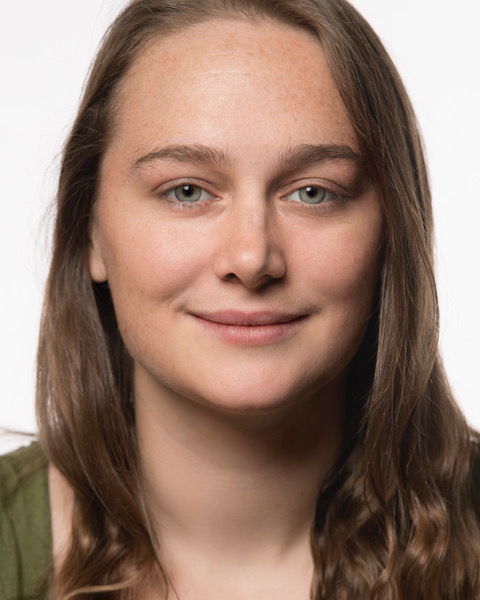
Dr. Andrew Blake is a Lecturer in Experimental Neutrino Physics at the Department of Physics, Lancaster University. His research focuses on experimental neutrino physics, particularly neutrino event reconstruction and oscillation analysis using Liquid Argon Time Projection Chamber (LAr-TPC) technology. He collaborates on major international experiments including MINOS, MicroBooNE, SBND, and the future DUNE project at Fermilab. His primary research interests include: Precision measurements of neutrino oscillations Development of LAr-TPC detection technology Search for new physics beyond the Standard Model Neutrino interaction cross-section measurements CP symmetry violation in the neutrino sector Blake's recent publications (2025) demonstrate strong focus on: Advanced neutrino interaction measurements using MicroBooNE data Development of reconstruction algorithms for LAr-TPCs DUNE experiment capabilities for supernova detection and CP violation studies Validation methods for neutrino-nucleus interaction models He currently advises three PhD students: Krittika Adhikari (Experimental Particle Physics) Rachel Coackley (Experimental Particle Physics) Bethany McCusker (Experimental Particle Physics)
Dr. Eleonora Di Valentino is a Senior Research Fellow at the University of Sheffield's School of Mathematical and Physical Sciences, specializing in cosmology and fundamental physics. Her research focuses on resolving cosmological tensions, particularly the Hubble constant discrepancy, by exploring dynamical dark energy models, dark matter interactions, and cosmic microwave background (CMB) anomalies. She leads analyses combining cutting-edge datasets like DESI BAO and gravitational wave observations to probe the universe's evolution. Key research interests include: Interacting dark energy models and their observational signatures CMB anisotropies and their implications for early universe physics Neutrino mass constraints and dark matter thermodynamics Modified gravity approaches to cosmological tensions Multimessenger cosmology using BAO and gravitational wave data Her work highlights trends in addressing the Hubble tension via late-time dark sector interactions and non-standard dark matter behavior. She actively contributes to collaborative projects like the CosmoVerse initiative and the Dark Energy Survey (DES). Dr. Di Valentino's research group affiliation is the Cosmology, Relativity, and Gravitation (CRAG) group, where she develops novel methodologies for cosmological parameter estimation and model testing.
Professor Jean Alexandre is a Professor of Physics at King's College London, affiliated with the Department of Physics within the Faculty of Natural, Mathematical & Engineering Sciences. His research focuses on non-perturbative quantum field theory, tunnelling phenomena, exact renormalization methods, and Lorentz symmetry violation. He has held positions including a Leverhulme Trust postdoc and temporary lectureship before his current role. Education: Doctor of Science in Theoretical Physics from University Louis Pasteur, Strasbourg (1998) Master of Physics in Theoretical Physics from École Normale Supérieure de Lyon (1994) Research Interests: Non-perturbative effects in QFT (dynamical mass generation, exact functional methods) Lorentz symmetry violation in particle physics and modified gravity Tunnelling mechanisms, cosmic bounce models, and null energy condition studies Non-Hermitian extensions of the Standard Model and PT-symmetric field theories Key contributions include work on magnetic monopole searches with the MoEDAL experiment at the LHC, finite volume effects in quantum field theory, and dynamical mass generation mechanisms. His recent articles explore topics like scalar high-electric-charge objects, vacuum decay rates, and cosmic bounce scenarios. He has supervised PhD theses on topics such as Lifshitz-type theories and gravitino condensation. Grants and Collaborations: Principal Investigator on Leverhulme Trust project 'Saving the Universe with finite volume effects in Quantum Field Theory' Co-Investigator on EPSRC and STFC-funded projects in particle physics and cosmology Labs/Teams: Active collaborator in the MoEDAL experiment and the Theoretical Particle Physics & Cosmology group at King's College London.
Nicola McConkey is an Ernest Rutherford Fellow and Lecturer in Particle Physics at the School of Physical and Chemical Sciences, Queen Mary University of London. She joined the Particle Physics Research Centre in 2024 and leads experimental work in neutrino interactions and detector development. Her affiliations include the Centre for Fundamental Physics and Centre for Experimental and Applied Physics. McConkey is an active member of international collaborations including SBND, DUNE, and MicroBooNE, where she contributed to the assembly of SBND and pioneered high-statistics measurements of electron-neutrino interactions using liquid argon detectors. Her research focuses on three primary domains: neutrino physics (particularly neutrino-argon scattering cross-sections), quantum technology applications for neutrino mass measurement, and liquid argon time projection chamber (LArTPC) detector development. McConkey's investigations aim to advance fundamental particle physics through precision measurements and technological innovation, with emphasis on improving detection capabilities for next-generation neutrino experiments. Publications predominantly explore neutrino interaction dynamics, cross-section measurements, and detector performance optimizations across MicroBooNE, SBND, and DUNE collaborations. Research trends demonstrate consistent focus on refining LArTPC technologies, developing machine learning applications for particle reconstruction, and probing beyond-Standard-Model physics through neutrino interactions. Scientific Awards: Ernest Rutherford Fellowship (2022) McConkey advises two PhD students (Oscar Chow, Yoshita Dabburi) and leads significant research funding including: STFC Grant: 'Piecing together the neutrino mass puzzle' (£431,666; 2024-2027) STFC Outreach Grant: 'Quantum Technologies for Neutrino Mass' (£99,999; 2024-2025) She coordinates research within the Particle Physics Research Centre laboratory and collaborates extensively within the SBND, DUNE, and MicroBooNE international teams, alongside leading the Quantum Technologies for Neutrino Mass collaboration developing novel measurement techniques.
Roger William Lewis Jones is a Professor and Head of the Department of Physics at Lancaster University . His career spans experimental high-energy particle physics, QCD research, and global computing infrastructure development for large-scale scientific projects like ATLAS and the Rubin Observatory. ATLAS experiment (LHC) for CP violation studies in B-physics NA62 experiment for strange quark physics LEGEND collaboration for neutrino research Leadership in GridPP and Worldwide LHC Computing Grid Research Focus : Experimental particle physics with emphasis on CP violation, QCD dynamics, and data-intensive computing systems. His work bridges hardware development (e.g., tracking detectors) and software innovation (e.g., Grid computing farms across UK institutions). Recent Publications highlight precision measurements in jet physics, Higgs decays, and searches for new particles like heavy neutral leptons. Articles span 2025 with collaborations on ATLAS and NA62, focusing on detector calibration, cross-section analysis, and beyond-Standard-Model signatures. Leadership Roles : Chair of NorthGrid Management Board Former Chair of STFC Particle Physics Advisory Panel (2019-2022) Chair of Institute of Physics Head of Department Forum Steering Committee (2019-2024) Key contributor to GridPP and Worldwide LHC Computing Grid
Dr. Sownak Bose is an Associate Professor (Research) at Durham University's Department of Physics and holds a UKRI Future Leaders Fellowship. His work focuses on computational cosmology, galaxy formation, and dark matter studies through large-scale simulations. Research Interests Cosmological simulations (MillenniumTNG, IllustrisTNG, AbacusSummit) Dark matter properties and modified gravity models Galaxy clustering and large-scale structure AGN feedback and baryonic effects His recent publications explore topics including: Accreted stellar halos in low-mass galaxies Impact of massive neutrinos on cosmic structure Multiwavelength mass accretion rate estimation Machine learning-based galaxy-halo connection Scientific Awards: UKRI Future Leaders Fellowship He supervises postgraduate research students and collaborates on major projects like DESI, eROSITA, and H3 survey. His work bridges theoretical models with observational data to constrain cosmological parameters.
Adrian Jenkins is a Professor at Durham University, jointly affiliated with the Department of Physics and the Institute for Computational Cosmology. His research spans computational cosmology, dark matter physics, galaxy formation, and the large-scale structure of the universe, leveraging advanced simulations to address fundamental questions in astrophysics. His research focuses on: Cosmological simulations of dark matter halos and galaxy evolution Impact of neutrinos and baryonic feedback on cosmic structure High-performance computing applications in astrophysics Development of public simulation datasets (e.g., FLAMINGO, Auriga, SIBELIUS) Recent publications (2022-2025) demonstrate a cohesive focus on refining cosmological simulations to resolve tensions in standard models, particularly through projects like MillenniumTNG and FLAMINGO. Key themes include neutrino physics, baryonic feedback effects, dark matter halo properties across mass scales, and machine learning-enhanced simulation techniques. Professor Jenkins supervises five PhD students: Alexander Menegas, Amal Alamri, Mac McMullan, Owen Jessop, and Yuchan Wang. He leads teams in large-scale collaborative projects including FLAMINGO (hydrodynamical simulations for cosmic surveys) and SIBELIUS (constrained simulations of the Local Universe).
Dr. Jessica Turner serves as an Associate Professor in the Department of Physics, specializing in theoretical particle physics and cosmology. Her research bridges high-energy phenomena with early universe dynamics, focusing on the interplay between fundamental particle interactions and cosmological evolution. Turner's primary research interests encompass neutrino physics, primordial black holes, leptogenesis mechanisms, gravitational wave signatures from cosmic phase transitions, and Grand Unified Theories. She investigates how primordial black holes influence dark matter production, explores baryogenesis through leptogenesis channels, and analyzes neutrino properties in both terrestrial experiments and astrophysical contexts. Her work frequently combines analytical field theory approaches with numerical simulations of early universe phenomena. Analysis of her recent publications (2021-2025) reveals consistent focus on primordial black hole dynamics and their cosmological implications, with significant contributions to neutrino physics and leptogenesis. She has developed computational tools like the ULYSSES solver for leptogenesis equations and frequently collaborates on multi-institutional projects examining gravitational wave signatures from domain walls and phase transitions. No scientific awards were mentioned in the available information. Turner currently supervises graduate student Joseph Tudor. While specific grant details are absent from the provided text, her extensive publication record in high-impact journals indicates sustained research funding for theoretical investigations in particle cosmology. Her work demonstrates strong collaborative patterns with international research groups focused on early universe physics.
Mario Ramos Hamud is a PhD candidate in Applied Mathematics and Theoretical Physics at the University of Cambridge's Department of Applied Mathematics and Theoretical Physics (DAMTP), affiliated with St. Edmund's College. He is supervised by Professor Fernando Quevedo and jointly funded by CONACyT and Cambridge Trust. His educational background includes: PhD in Applied Mathematics and Theoretical Physics (2022–present) at University of Cambridge MSc in Theoretical Physics (2019–2021) at Instituto de Física, UNAM BSc in Physics (2013–2018) at Facultad de Ciencias, UNAM Ramos Hamud's research focuses on cosmological implications of string theory, particularly the role of moduli fields in post-inflationary universe dynamics and their dominance in energy density. His work bridges high-energy theory with observational cosmology, exploring string compactifications and their phenomenological consequences. He has presented findings at international conferences including PASCOS 2021 and Mexicuerdas 2021. His publication record demonstrates expertise in both early-universe cosmology and particle physics flavor structures, with recent work on brane-antibrane inflation mechanisms and eclectic modular symmetries. Scientific recognition includes: CONACyT Fellowship Cambridge Trust Scholarship As an educator, he has served as supervisor for Cambridge's Part II Statistical Physics and Cosmology courses, and as teaching assistant for multiple physics courses at UNAM including Relativity, Quantum Field Theory, and Electromagnetism. His research group affiliation is the High Energy Physics group at DAMTP.
Dr. Farrukh Azfar is a Lecturer in Particle Physics at the University of Oxford, affiliated with the Denys Wilkinson Building. His primary research focuses on particle astrophysics, cosmology, and fundamental particle interactions, specifically investigating Dark Energy, Dark Matter, Neutrino Physics, and Precision Measurements. He is a key contributor to major international collaborations including the LSST/Rubin Telescope project (developing the world's largest 3.2 Gigapixel camera) and the Deep Underground Neutrino Experiment (DUNE) at Fermilab. His research bridges experimental efforts in multi-messenger physics. Previously, he worked on precision experiments such as the muon gyromagnetic ratio (g-2) experiment at Fermilab and beauty quark physics at CDF and CLEO-II collaborations. His work spans detector development, data analysis, and theoretical interpretation in particle astrophysics. Azfar's recent publications (2024-2025) focus on neutrino detection capabilities, advanced particle detector technologies (particularly Liquid Argon TPCs), and precision measurements of particle interactions, demonstrating his leadership in experimental particle physics instrumentation and analysis.
Professor Dame Alison Wolf, Baroness Wolf of Dulwich, is the Sir Roy Griffiths Professor of Public Sector Management at King’s Business School, King's College London. She is a cross-bench peer in the UK House of Lords and a leading expert on education policy, skills, and the relationship between education and the labor market. Her work integrates academic research with high-level policy influence, particularly in vocational education, higher education reform, and lifelong learning. Education: MA and MPhil from the University of Oxford, and studies at the University of Neuchâtel Early Career: Policy analyst in the U.S. federal government Professional Affiliation: Visiting Professor at the Institute of Education, University of London Alison Wolf’s research centers on public sector management, higher education policy, qualifications frameworks, and labor market skills. She has long-standing interests in assessment systems, mathematics education, and the role of universities in society. Her influential publications include The XX Factor (2013), which examines the societal transformation driven by working women, and numerous policy reports on vocational training, apprenticeships, and post-18 education. Her recent scholarly output reveals a sustained focus on the evolution of the UK’s education landscape, particularly the impact of funding models, reputation, and rankings on universities. She has also contributed to interdisciplinary efforts, including a 2023 publication with the IceCube-Gen2 Collaboration in astrophysics, indicating broad academic engagement. Her work emphasizes evidence-based policy, critiques of one-size-fits-all approaches, and the need for flexible, responsive education systems. CBE for services to education (2012 Queen’s Birthday Honours) Dame Commander of the Order of the British Empire (DBE) (2024 King’s Birthday Honours) Sam Aaronovitch Memorial Prize (2008) Alison Wolf has played a pivotal role in shaping national education policy. She led the 2011 Wolf Review of Vocational Education, contributed to the Augar Review (2019), advised the Prime Minister on skills policy (2020–2023), and helped draft the Skills and Post-16 Education Act 2022 and the Lifelong Learning Act 2023. She also served as a non-executive director for the Department for Science, Innovation and Technology (2023–2024) and advises on the UK’s Levelling Up strategy. She was the founding Chair of Governors of King's College London Mathematics School and remains a trustee of the University Maths School Network (U-Maths), supporting mathematics education for 16–18-year-olds. She has directed the MSc in Public Services Policy and Management and has been a specialist adviser to the House of Commons Education Committee, a BBC Radio 4 presenter, and an advisor to international bodies including the OECD, European Commission, and ministries of education in New Zealand, France, and South Africa.
Jen Coleman is an active researcher specializing in RNA-binding proteins and their role in cancer biology. Her work focuses on understanding the molecular mechanisms of LARP4 proteins in cell proliferation, tumor growth, and metastasis. Education: PhD in Molecular Biology/Biochemistry (June 2022) - Thesis: "Investigating the Functions and Mechanisms of the LARP4 RNA-Binding Proteins in Cancer" under supervisors A.E. Grigoriadis and M.R. Conte Dr. Coleman's research centers on RNA-binding proteins, particularly the LARP4 family, and their implications in cancer development and progression. Her work spans molecular mechanisms of cell proliferation, programmed cell death, tumor suppression pathways, and tissue repair. The fingerprint analysis of her research shows strong activity in RNA-binding Protein (100%), Cell Proliferation (44%), Tissue Repair (33%), Enzyme studies (33%), Tumor Suppressor Proteins (33%), Programmed Cell Death (33%), Paralogy (33%), and Messenger RNA (33%). Her publication record demonstrates a clear trajectory focusing on LARP4 proteins in cancer, with her most recent work (2025) examining LARP4's interaction with ribosome-associated RACK1 and translation promotion. She has also contributed to interdisciplinary research through the T2K Collaboration in particle physics, showing versatility across scientific domains. With 24 total citations across her 7 research outputs (4 articles, 2 preprints, and 1 short survey), Dr. Coleman's work contributes to UN Sustainable Development Goals related to good health and well-being.
Setsuko Kodama is a Senior Lecturer in Developmental Neurobiology , focusing on cortical development, glial progenitors, and transcriptional regulation. Her research spans neuroscience and molecular biology, with collaborations bridging particle physics. Key Research Themes : Cortical progenitor differentiation, tubulin modifications in neurodevelopment, genetic regulation of cortical area scaling. Projects : Linking mechanisms generating protein and cortical cell diversity (Leverhulme Trust, 2023–2026) Role of distinct cortical progenitor subtypes (BBSRC, 2023–2026) Zika virus-induced microcephaly (2016–2017) Molecular control of cortical progenitors (BBSRC, 2014–2018) Publications : 9 research outputs including studies on Tuba8's role in glial differentiation, Foxg1-Cre mouse models, and neutrino oscillations via the T2K Collaboration. Collaborations : Active in interdisciplinary research with contributions to particle physics (T2K) and neuroscience.
Dr. Sam Jenkins is a Research Fellow affiliated with the University of Tokyo, specializing in particle astrophysics and neutrino physics. He contributes to the Super-Kamiokande experiment and collaborates with the T2K accelerator neutrino program. Key research areas: Neutrino oscillations, cosmic ray interactions, proton decay searches Recent work focuses on neutron capture multiplicity analysis and gadolinium-doped detector optimization Scientific Contributions: Published multiple Physical Review articles on neutrino interactions (2024-2025) Presented at major conferences on detector technology advancements Awards: Gifu University Young Researcher Award
Dr. Adam Barton is a Senior Research Fellow in the Physics Department at Lancaster University, specializing in experimental high-energy physics through his work with the ATLAS detector at CERN's Large Hadron Collider (LHC). His research focuses on Higgs boson properties, top quark dynamics, and searches for new physics phenomena. Position: Senior Research Fellow Institution: Lancaster University Department: Physics Research Groups: Experimental Particle Physics Barton's research interests span: Heavy flavour production and decay mechanisms Electroweak interaction studies through W/Z boson analyses Jet physics and track reconstruction in high-energy collisions Searches for dark matter and magnetic monopoles ATLAS detector performance optimization His recent publications analyze jet-track correlations, Higgs boson decays, and top quark mass measurements using advanced reconstruction techniques. Barton contributes to ATLAS software development and detector commissioning for future LHC runs. He is based in the Physics Building (B043b, B-Floor) and can be contacted via a.barton1@lancaster.ac.uk .