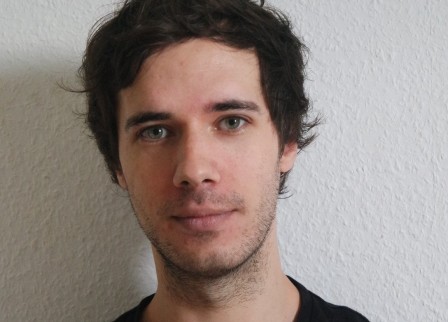
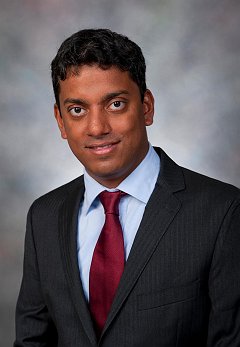
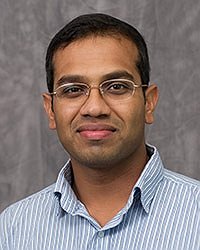
Stefano Teso is an Assistant Professor at the Interdepartmental Center for Mind/Brain Sciences (CIMeC) and the Department of Information Engineering and Computer Science, University of Trento. His research focuses on enhancing the reliability of machine learning models in high-stakes human-centric contexts through neurosymbolic integration, interactive learning, and constraint-based approaches. Master's in Computer Science, University of Trento Ph.D. in Information Engineering and Computer Science, University of Trento Teso's work combines conceptual modeling , novel neural architectures , and human-AI interaction via explanations and communication. He contributes to academic programs in Artificial Intelligence Systems (LM) and Data Science (LM) , teaching courses like Advanced Topics in Machine Learning and Machine Learning for NLP . He is affiliated with the Interdepartmental Center for Mind/Brain Sciences (CIMeC) , where he explores neurocognitive architectures and statistical relational learning frameworks.
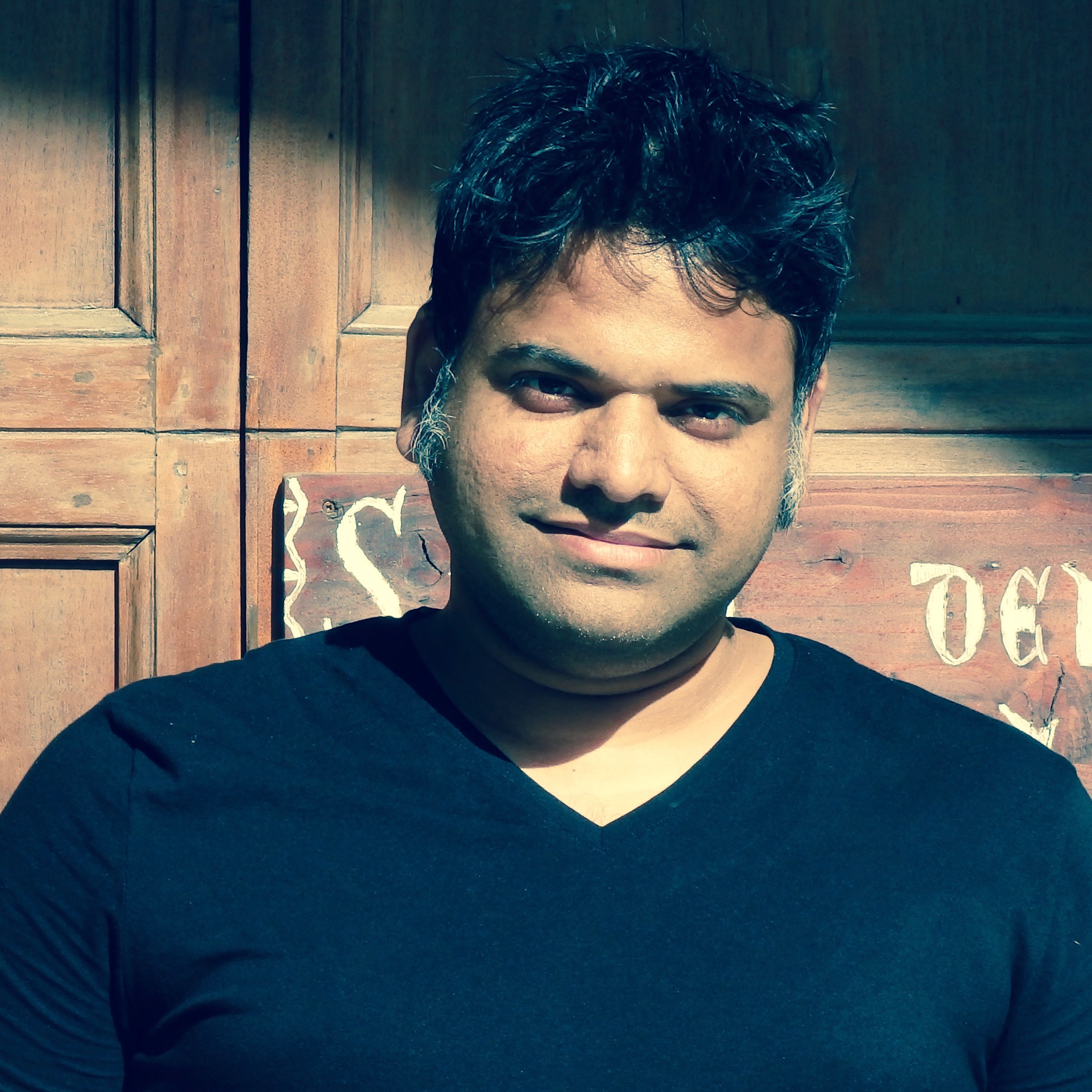
Ashutosh Trivedi is an Associate Professor of Computer Science at the University of Colorado Boulder, currently on leave from his position as Assistant Professor in the Department of Computer Science and Engineering at the Indian Institute of Technology Bombay. He is affiliated with multiple research initiatives including the Centre for Formal Design and Verification of Software (CFDVS) at IIT Bombay, Free and Open Source Software for Education (FOSSEE), and the Indo-French project on Algorithmic Verification of Real-Time Systems (AVeRTS). At CU Boulder, he leads the Programming Languages and Verification (CUPLV) research group focusing on trustworthy AI systems. Trivedi's research centers on bridging formal methods with artificial intelligence to create more trustworthy systems. His work spans formal verification of cyber-physical systems, reinforcement learning with formal guarantees, and developing techniques for ensuring software fairness and accountability. He specializes in using formal languages, automata, and logic to transform vague natural-language instructions into precise specifications for AI systems. His recent projects include developing reinforcement learning algorithms for cardiac pacemaker design based on formal safety requirements, using SAT solvers to ground large language model outputs in logical reasoning, and encoding state representations in reinforcement learning using formal languages. His publication trends reveal a strong focus on neurosymbolic approaches that combine neural networks with symbolic reasoning, particularly for safety-critical applications. Recent work demonstrates increasing integration of formal methods with reinforcement learning, with applications spanning medical devices, tax preparation software, and puzzle-solving AI. His research shows a clear trajectory toward making AI systems more explainable, accountable, and verifiable through principled mathematical frameworks. Distinguished Paper Award at CAV for Regular Reinforcement Learning (2024) NeuS 2025 Disruptive Idea Award for Stochastic Neural Simulation Relations for Transferring Control under Uncertainty ACM Senior Member recognition (2024) Royal Society Wolfson Visiting Fellowship (2024) Trivedi has successfully advised multiple PhD students to completion, including Shadi Tasdighi Kalat (2025), Mateo Perez (2025), John Komp (2024), Vishnu Murali (2024), and Taylor Dohmen (2024). His teaching portfolio includes foundational courses in automata theory, digital logic design, and cyber-physical systems at both IIT Bombay and CU Boulder. He has served on program committees for major conferences including FSTTCS, HSCC, and FORMATS, and organized workshops such as ICLA 2015 and ALC 2015. As leader of the CUPLV research group, Trivedi directs projects focused on formal verification of AI systems, reinforcement learning with safety guarantees, and software fairness. His group collaborates with medical researchers on cardiac device verification and with legal scholars on tax software accountability, reflecting his commitment to applying formal methods to real-world problems with significant societal impact.
Ziyang Li is an Assistant Professor of Computer Science at Johns Hopkins University and a member of the Data Science and AI Institute. He holds a Ph.D. in Computer Science from the University of Pennsylvania (2025) and dual bachelor's degrees in Computer Science and Mathematics from UCSD (2019). Research Areas: Neurosymbolic Programming, AI4Code His research bridges programming languages and machine learning, focusing on neurosymbolic methods that combine symbolic reasoning with learning-based techniques. Applications span software security, computer vision, natural language processing, bioinformatics, and clinical decision-making. He developed Scallop , a neurosymbolic programming language, and Lobster , a GPU-accelerated framework for neurosymbolic applications, with impacts in cybersecurity and biomedical domains. Recent publications highlight neurosymbolic approaches for RNA structure prediction, Long COVID modeling, and safety-critical systems. His work emphasizes data-efficient learning, weak supervision, and hybrid AI for scalable reasoning. Scientific Awards : AWS Fellowship (2023) KPCB Fellows, Engineering (2018) NIH L3C Honorable Mention Award Li has mentored students including Jason Liu, Felix Zhu, and Eric Zhao, and served as Teaching Assistant for courses at UPenn and UCSD. He co-organized the TACPS Workshop and reviewed for NeurIPS, ICLR, and ICML.
Tianmin Shu is an Assistant Professor in the Department of Computer Science at Johns Hopkins University's Whiting School of Engineering, with a secondary appointment in the Department of Cognitive Science. He directs the Social Cognitive AI (SCAI) Lab and is a member of the Data Science and AI Institute. Dr. Shu's educational background includes: PhD in Statistics, University of California, Los Angeles (2019) BS in Electronic Engineering, Fudan University (2014) Dr. Shu's research pioneers machine social intelligence to build human-centered AI systems. His work integrates: Embodied AI for physical-world human-robot collaboration Neurosymbolic methods for multimodal social reasoning Computational models of human social cognition Theory of Mind frameworks for mental state inference Continual learning for adaptive social agents Recent publications (2024-2025) reveal three dominant research thrusts: (1) Multimodal Theory of Mind systems like MMToM-QA for mental state reasoning, (2) Embodied assistance frameworks such as GOMA for goal-oriented human-robot alignment, and (3) Human feedback learning methods including pragmatic feature preferences. His work increasingly bridges language models with world models while exploring neural correlates of social cognition through fMRI studies. Dr. Shu's scientific contributions have been recognized with prestigious awards: Cognitive Science Society’s 2017 Computational Modeling Prize 2020 NeurIPS Best Paper Award (Cooperative AI Workshop) 2022 IROS Workshop Excellent Paper Award 2024 ACL Outstanding Paper Award (MMToM-QA) As director of the SCAI Lab, Dr. Shu leads research on socially intelligent systems through open-source platforms including VirtualHome 2 (multi-agent household simulator) and SimWorld (photorealistic interaction simulator). His lab develops computational frameworks that enable machines to perceive social dynamics, infer intentions, and provide context-aware assistance in complex environments.
Southern University of Science and Technology (SUSTech)China
Dr. LIU Quanying is an Associate Professor in the Department of Biomedical Engineering at the Southern University of Science and Technology (SUSTech), where she has been a faculty member since September 2019. She serves as the Principal Investigator of the Neural Computing and Control Laboratory (NCC lab) and is a doctoral supervisor. Prior to joining SUSTech, she earned her PhD in Biomedical Engineering from ETH Zurich and conducted postdoctoral research at Caltech. Education: PhD in Biomedical Engineering, ETH Zurich (2013-2017) Master in Computer Science, Lanzhou University (2010-2013) Bachelor in Electrical Engineering, Lanzhou University (2006-2010) Research Interests: Dr. Liu’s research integrates neuroscience, machine learning, and control theory. Her work focuses on multi-modal neural signal processing (EEG, sEEG, fMRI, DTI), explainable AI for neuroscience, and optimization techniques for neuromodulation (tES, TMS). She has developed high-density EEG source localization algorithms and data-driven brain network modeling frameworks, aiming to enhance precision in neural stimulation and control. Scientific Awards: The New Brain 30 (2023) AAIC Travel Award (2019) Estes Stars Award (2018) 深圳市孔雀人才计划C类 Laboratory and Team: As the PI of the NCC lab, Dr. Liu leads a team focused on machine learning algorithms, neurocomputational modeling, and neurofeedback control. The lab actively recruits graduate students, postdocs, and visiting researchers, emphasizing interdisciplinary collaboration in neuroscience and AI.
Rahul Chaudhari is a Senior Researcher at the Chair of Media Technology, Technical University of Munich (TUM), where he has been working since August 2019. He is affiliated with the Munich Institute of Robotics and Machine Intelligence (MIRMI) and contributes to research in human-computer interaction, particularly in human activity understanding. Dr. Chaudhari earned his doctoral degree (Summa cum Laude) in Communications and Signal Processing from TUM in 2015, following a Master's degree in Communications Engineering from TUM in 2009 and a Bachelor's degree in Electronics and Telecommunications from the University of Pune, India. His academic journey reflects a strong foundation in communications engineering and signal processing that has evolved into interdisciplinary research spanning haptics, computer vision, and artificial intelligence. His research focuses on Human Activity Understanding using Computer Vision, Sensor Fusion, and AI techniques. His current work centers on understanding Human-Object Interactions using camera data (RGB and Depth) recorded in indoor environments, with potential integration of wearable sensors or environmental sensors. His work has significant applications in improving human well-being, comfort, and convenience through intelligent environments and ambient assisted living systems. Dr. Chaudhari's publication record shows a clear evolution from foundational work in haptic communications to cutting-edge research in human-object interaction and 3D pose estimation. His recent publications demonstrate expertise across multiple domains including computer vision for activity recognition, synthetic data generation for training models, and neurosymbolic approaches to human-AI collaboration. This interdisciplinary approach reflects the increasingly connected nature of modern AI research. Best student paper award for Yujun Wang (2025) LMT Spin-off Wins Third Place at euRobotics Technology Transfer Award 2025 LMT featured in Süddeutsche Zeitung (2025) Diego Fernandez Prado selected as finalist for IEEE CASE Best Paper Award (2024) Dr. Chaudhari actively supervises student research, including Master's theses on advanced topics such as 'Simulation and Optimization for 6G Network Planning using Digital Twins.' His supervision work involves guiding students through complex technical challenges in simulation software evaluation, digital twin implementation, and network optimization. He also serves on thesis committees and provides mentorship to students working on related research topics. His research group operates within the broader context of TUM's initiatives in robotics and machine intelligence, contributing to projects like the Centre for Tactile Internet with Human-in-the-Loop (CeTI) and 5G Testbed Bayern. The group maintains a strong focus on both theoretical foundations and practical implementations, with research that bridges the gap between academic innovation and real-world applications in intelligent environments.
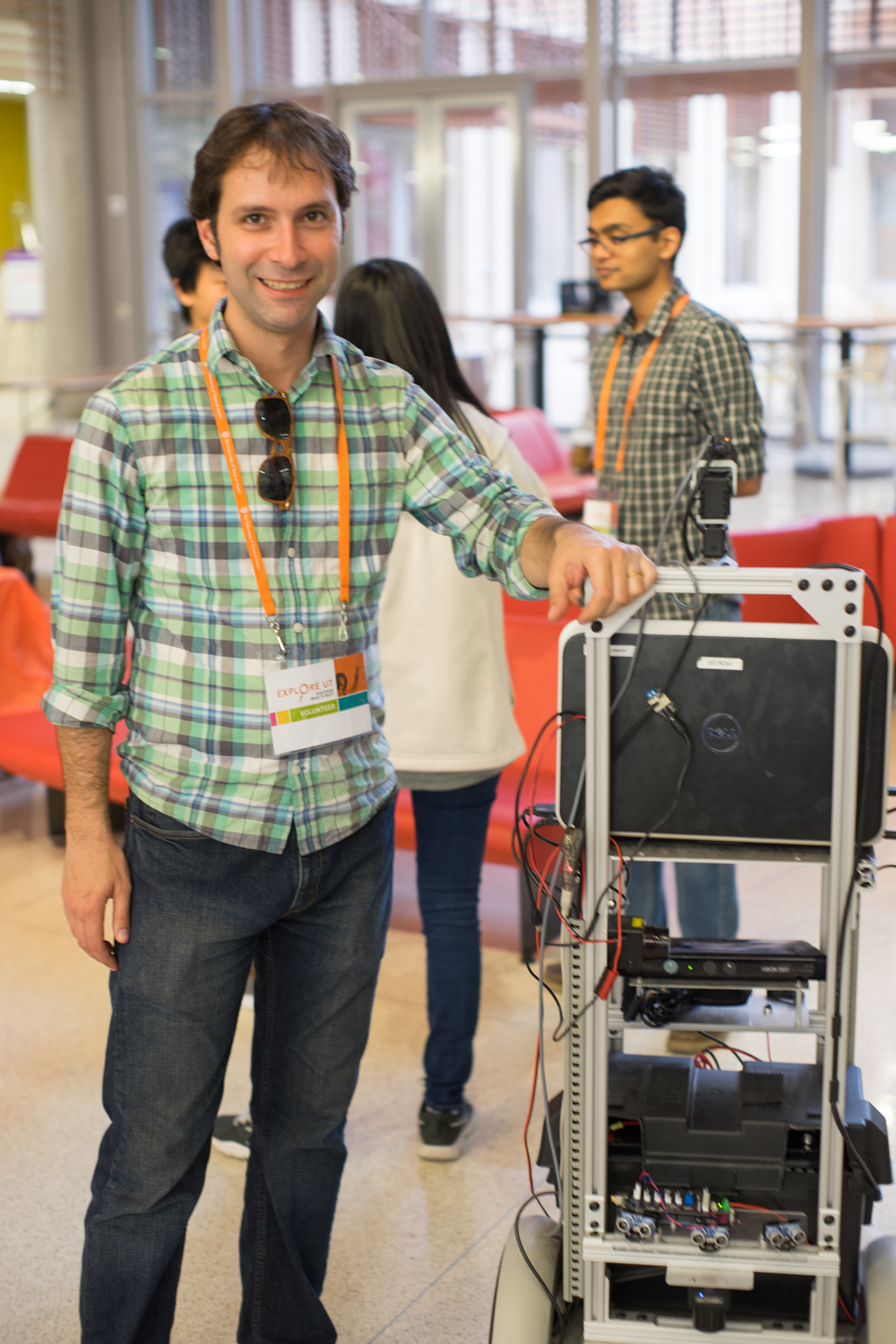
Jivko Sinapov is an Associate Professor with dual appointments in the Department of Computer Science and Department of Mechanical Engineering at Tufts University's School of Engineering. He also serves as a CEEO Fellow at the Center for Engineering Education Outreach. His research focuses on enabling physical robots to operate and learn in human-inhabited environments through developmental approaches. Education: PhD in Computer Science and Human-Computer Interaction, Iowa State University (2013) BSc in Computer Science and Mathematics, University of Rochester (2005) Professor Sinapov's research centers on Artificial Intelligence, Developmental Robotics, Computational Perception, and Human-Robot Interaction . His work addresses fundamental questions about implementing intelligence in physical robots, with emphasis on enabling extended operation in human environments. His laboratory develops methods for behavioral object exploration, multi-modal perception, and knowledge transfer between robots, with applications ranging from educational robotics to space exploration. Current research directions include neurosymbolic approaches for handling novelty in open worlds, multimodal object property learning, and augmented reality interfaces for improved human-robot collaboration. Scientific Awards and Recognition: Winner of the Verizon 100K 5G EdTech Challenge (Spring 2019) for AR-based robotics education NSF CAREER Award: "Learning and Sharing Transferable Grounded Object Knowledge for Collaborative Robots" (2023) CEEO Fellow at the Center for Engineering Education Outreach Professor Sinapov actively mentors graduate students in the Multimodal Learning, Interaction, and Perception (MLIP) Lab, currently advising five PhD students across Computer Science and Mechanical Engineering departments. His research has been supported by significant grants including his NSF CAREER award. He has co-organized prominent symposia including the AAAI Spring Symposium on "Interactive Multi-Sensory Perception for Embodied Agents" (2017) and the AAAI Fall Symposium on "AI for Human-Robot Interaction" (2019). He directs the Multimodal Learning, Interaction, and Perception (MLIP) Lab , which develops cognitive robotics systems capable of learning through environmental interaction. The lab's research spans robot learning, computational perception, and human-robot interaction, with applications in education, space technology, and collaborative robotics systems operating in complex human environments.
Southern Illinois University EdwardsvilleUnited States
Ranjit Jhala is a Professor of Computer Science Engineering at UC San Diego's Jacobs School of Engineering, where he leads the Programming Systems Group. His research spans Programming Languages and Software Engineering, focusing on building reliable systems through Type Systems, Model Checking, Program Analysis, and Automated Deduction. His current projects include Flux for Rust verification, Liquid Haskell refinement types, and techniques for analyzing timing channels. Professor Jhala teaches courses on Programming Languages (CSE 130) and Graduate Programming Languages (CSE 230), with extensive experience teaching compilers and verification topics. Professor Jhala advises several students including Alexander Bakst, Ben Cosman, and Marc Andrysco. Notable former students include Niki Vazou (Postdoc at Maryland), Ravi Chugh (University of Chicago), and Patrick Rondon (Google).
South Westphalia University of Applied SciencesGermany
Prof. Dr. Thomas Kopinski is a Professor at the Faculty of Engineering and Economics, South Westphalia University of Applied Sciences in Meschede, Germany. He leads the AI Safety and Collective Intelligence Lab, focusing on cutting-edge research in machine learning applications for industrial and automotive systems. His work bridges academic research and industry collaborations, notably with BMW AG. Research Focus: His team explores: Deep learning architectures for real-time gesture recognition and automotive HMI AI safety protocols and collective intelligence frameworks Industrial applications including predictive maintenance and anomaly detection 3D programming and sensor fusion techniques Team & Students: Current advisees include PhD candidates working on: Bayesian deep learning for predictive maintenance (Felix Neubürger) Generative models for image synthesis (Yasser Saeid) Object recognition in crash test videos (Daniel Gierse) Key Projects: Actively directs WiTraPres and Core Transformer initiatives, with upcoming R&D in AI Safety launching in 2025. Industrial collaborations focus on automotive safety systems and manufacturing optimization.
National and Kapodistrian University of AthensGreece
Swarat Chaudhuri is a Professor of Computer Science at the University of Texas at Austin and Senior Staff Research Scientist at Google Deepmind (currently on leave). He directs the Trishul laboratory, focusing on neurosymbolic AI at the intersection of programming languages, formal methods, and machine learning. His research aims to develop reliable, transparent intelligent systems capable of complex reasoning beyond contemporary AI. Education: Ph.D. in Computer Science, University of Pennsylvania (2007) Bachelor's in Computer Science, Indian Institute of Technology, Kharagpur (2001) Research Interests: Neurosymbolic programming, program synthesis, automated reasoning, and AI applications in code generation, mathematics, systems engineering, and scientific discovery. Key focuses include interpretability, safety certification, and robustness in learning-enabled systems. Honors & Awards: Guggenheim Fellow (2025) NSF CAREER Award ACM SIGPLAN John Reynolds Dissertation Award Multiple ACM Distinguished Paper Awards Meta/Google Research Awards Leadership & Advising: Directs Trishul Lab with 9 current PhD students. Alumni hold positions at Meta, Google, Penn State, and UC Berkeley. Served as Program Chair for ICLR 2024 and CAV 2016. Affiliations: Core faculty in UT's Machine Learning Laboratory, Programming Languages/Formal Methods group, and Texas Robotics affiliate.
National and Kapodistrian University of AthensGreece
Ranjit Jhala is a Professor of Computer Science Engineering in the Jacobs School of Engineering at the University of California, San Diego. His research focuses on building reliable computer systems through programming languages and software engineering techniques. His primary research interests include Programming Languages, Formal Verification, and Software Engineering. He draws from and contributes to areas such as Type Systems, Model Checking, Program Analysis, and Automated Deduction, bridging theoretical foundations with practical implementations for real-world software development. Prof. Jhala's publication record shows a consistent trajectory in refinement type systems, evolving from Liquid Haskell to Flux for Rust, while also exploring neurosymbolic approaches to error repair and type error diagnosis. His work demonstrates a commitment to making formal verification techniques accessible to practitioners. He leads the Programming Systems Group at UCSD, mentoring graduate students and collaborating with researchers across the programming languages community. His service includes General Chair roles for POPL 2018 and PLDI 2022, reflecting his leadership position in the field. Prof. Jhala is also known for his mentoring activities, including talks on academic presentation skills and participation in ICFP's mentoring programs for students and early-career researchers.
National and Kapodistrian University of AthensGreece
Mayur Naik is the Misra Family Professor in the Department of Computer and Information Science at the University of Pennsylvania's School of Engineering and Applied Science. He holds office in Room 642B, Amy Gutmann Hall and maintains an active research program focused on the intersection of programming languages and artificial intelligence. Before joining UPenn, he was faculty at Georgia Institute of Technology and a researcher at Intel Labs, Berkeley. Naik received his PhD in Computer Science from Stanford University in 2008 under Alex Aiken, a Masters from Purdue University in 2003 under Jens Palsberg, and a Bachelors from BITS Pilani in 1999. He grew up in Goa, India. His primary research interests center around neurosymbolic programming, which combines symbolic reasoning with machine learning to create more accurate, interpretable, and domain-aware AI systems. His group develops language design, learning algorithms, and compiler optimizations in this space, with their most mature effort being the Scallop neurosymbolic programming language and compiler toolchain. He also conducts research in trustworthy AI for healthcare applications and AI-enabled programming tools that improve programmer productivity. Analysis of his recent publications shows a strong trend toward neurosymbolic programming frameworks (Scallop, TorchQL), LLM-assisted program analysis (IRIS), and applications of these techniques to security, healthcare, and computer vision. His work consistently bridges theoretical foundations with practical implementations, often releasing open-source systems. Misra Family Professor (endowed chair, effective July 2024) Multiple distinguished paper awards (PLDI 2019, FSE 2015, PLDI 2014) Test-of-Time Paper Awards (FSE 2013, FSE 2012, EuroSys 2011) His student Elizabeth Dinella won the 2025 ACM SIGSOFT Outstanding Dissertation award Naik has advised numerous PhD students who have gone on to faculty positions at top institutions including Peking University, University of Toronto, Ashoka University, Bryn Mawr College, and Johns Hopkins University. His research is supported by grants from NSF, Google, Amazon, and other industry partners. His lab maintains active collaborations with clinicians and bioinformatics researchers to apply neurosymbolic programming to healthcare problems. His research group, which includes current PhD students and postdocs, develops practical open-source systems and applies them to diverse domains including computer vision, cybersecurity, medicine, and bioinformatics. The group maintains strong industry connections with Google, Microsoft, Amazon, and other tech companies.
Max Planck Institute for Security and PrivacyGermany
Osbert Bastani serves as an Associate Professor in the Department of Computer and Information Science at the University of Pennsylvania. He leads the trustml@Penn research group and holds affiliations with the ASSET, PRECISE, and PRiML research centers, as well as PLClub. His academic work centers on developing reliable and interpretable artificial intelligence systems through interdisciplinary approaches combining programming languages, formal methods, and machine learning. He earned his Ph.D. in Computer Science from Stanford University under the guidance of Alex Aiken, followed by a postdoctoral position at MIT working with Armando Solar-Lezama. This foundation in both theoretical computer science and practical systems has shaped his research trajectory. Bastani's primary research areas include Trustworthy Machine Learning (focusing on robustness against adversarial attacks, fairness in algorithmic decision-making, and explainable AI), program synthesis, and formal verification. His recent publications address critical challenges in large language models, such as defending against jailbreaking attacks and ensuring trustworthy retrieval-augmented generation. He also develops methods for conformal prediction under distribution shifts and neurosymbolic program synthesis for complex tasks like web question answering. His teaching portfolio features advanced courses including CIS 7000: Trustworthy Machine Learning and CIS 4190/5190: Applied Machine Learning, where he integrates cutting-edge research into the curriculum. Through his research group, he mentors graduate students on projects spanning neurosymbolic programming, uncertainty quantification, and fairness in sequential decision-making. As an active member of Penn's research ecosystem, Bastani contributes to the ASSET center's mission of building secure systems, PRECISE's work on cyber-physical systems, and PRiML's machine learning initiatives, while collaborating with PLClub on programming language innovations.