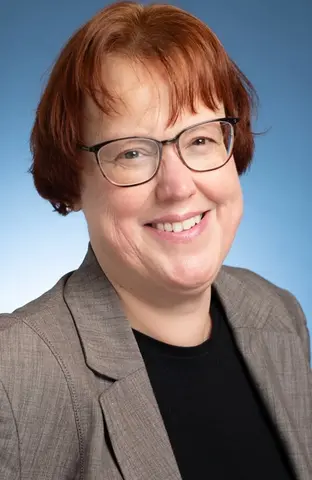
Huda Zoghbi is a Professor at the Department of Molecular and Human Genetics at Baylor College of Medicine , where she also serves as a Professor in Neuroscience and Pediatrics. She holds the Ralph Feigin, M.D. Endowed Chair , directs the Jan and Dan Duncan Neurological Research Institute , and is an investigator at the Howard Hughes Medical Institute . Her work focuses on identifying genetic mechanisms underlying neurological disorders such as Rett syndrome , spinocerebellar ataxia type 1 (SCA1) , and other neurodevelopmental and neurodegenerative conditions. Education : MD from Meharry Medical College (1979), with earlier studies at American University of Beirut and Baylor College of Medicine . Research Themes : Neurogenetics, epigenetics, disease modeling, and therapeutic development for Rett syndrome, SCA1, MECP2 duplication syndrome, and Alzheimer's disease. Her scientific awards include the Kavli Prize in Neuroscience (2022) Brain Prize (2020) Breakthrough Prize in Life Sciences (2017) Shaw Prize in Life Science and Medicine (2016) Gruber Prize in Neuroscience (2011) Texas Women's Hall of Fame (2008) Her lab at Baylor, affiliated with Texas Children's Hospital and HHMI, has pioneered studies on genes like MECP2 and ATXN1 , linking them to neurological disorders and exploring RNA-based therapeutics.
Prof. Assaf Tal is a faculty member in the Department of Bio-Medical Engineering at The Iby and Aladar Fleischman Faculty of Engineering, Tel Aviv University. His research focuses on developing advanced neuroimaging methodologies using magnetic resonance spectroscopy (MRS) and imaging (MRI) to investigate brain function and disease mechanisms. His primary research interests center on neuroimaging physics and brain disease monitoring , with specific emphasis on: Developing novel MRS/MRI techniques combining spin physics and signal processing Tracking neurochemical changes during cognitive processes Detecting and monitoring neurodegenerative diseases including multiple sclerosis, traumatic brain injury, and Alzheimer's Disease Understanding brain encoding mechanisms across neurochemical, electrophysiological, and structural levels His work bridges biomedical engineering with clinical neuroscience to create improved diagnostic and monitoring tools. Prof. Tal's recent publications (2022-2025) demonstrate strong focus on functional MRS and advanced spectral-temporal analysis , with significant contributions to motion correction, uncertainty estimation, and microstructural modeling in neuroimaging. His research shows increasing integration of computational methods like Bayesian inference and machine learning for precision neuroimaging. His laboratory develops specialized software tools including the Visual Display Interface (VDI) for MRS data processing and simulation, supporting both preclinical and clinical neuroimaging research.
Einat Couzin-Fuchs is an Affiliated Scientist and IMPRS Lecturer in the Department of Collective Behavior at the University of Konstanz, Germany, affiliated with the Centre for the Advanced Study of Collective Behaviour and Konstanz Neurobiology. Her research focuses on neural mechanisms of social plasticity in locusts, examining rapid transitions between solitary and gregarious states through sensory integration and decision-making processes. She employs neurophysiology, virtual reality, and quantitative behavior analysis to study odor representation in changing social environments and the emergence of collective behavior. Recent work reveals how crowding alters antennal lobe processing and how personal/social experiences integrate to drive foraging decisions. The Couzin-Fuchs Lab develops advanced calcium imaging and computer vision protocols for automated pose tracking, uncovering sensorimotor transformations underlying swarming behavior and group decision dynamics in locusts.
Claudia Steinbrink is a Professor of Developmental Psychology at the University of Erfurt's Faculty of Educational Sciences. She holds the professorship for Entwicklungspsychologie (Developmental Psychology) and serves as the speaker for the research project "Klang – Sprache – Schrift" (Sound – Language – Writing). Her work is situated within the Psychology department of the Faculty of Educational Sciences at the University of Erfurt, where she conducts research at the intersection of cognitive development, language acquisition, and literacy learning. Professor Steinbrink's research primarily focuses on developmental aspects of reading and writing acquisition, with particular emphasis on phonological and morphological awareness in early literacy development. Her work investigates the relationship between auditory processing capabilities and literacy skills, especially in children with developmental dyslexia. She has made significant contributions to understanding how temporal processing, phonological awareness, and morphological awareness impact reading and writing development in German-speaking children. Her research often employs both behavioral and neuroimaging methods to examine the cognitive and neural correlates of literacy development and disorders. Analysis of her recent publications reveals consistent research trends across developmental psychology and educational neuroscience. Her work demonstrates a clear trajectory from foundational studies on auditory processing in dyslexia toward more nuanced investigations of morphological awareness in literacy development. The publications show increasing sophistication in methodology, incorporating longitudinal designs, cross-sectional comparisons, and neuroimaging techniques. Her research maintains a strong focus on the German language context while addressing universal questions about literacy development. Professor Steinbrink has been actively involved in research projects since at least 2009, with a notable focus on developing and validating assessment tools for early literacy skills. She has collaborated extensively with researchers including Klatte, Lachmann, Bergström, and others on projects related to phonological processing, dyslexia, and literacy development. Her work on the computer-based training program "Lautarium" represents a significant contribution to evidence-based interventions for children with reading and writing difficulties.
Prof. Dr. Dirk Neumann is a faculty member at the Institute for Information Systems at the University of Freiburg, Germany. His research spans multiple interdisciplinary domains including business analytics, reinforcement learning applications, energy systems, and social policy analysis. He leads research initiatives including the Climate Action Research Lab (CARL) and Business Analytics Research group at the university. Dr. Neumann's research interests focus on the intersection of information systems, operations research, and societal challenges. His work particularly emphasizes: Application of reinforcement learning to operations research problems Energy systems analysis and smart grid optimization Social implications of technology adoption and policy Information processing of fake news and deep fakes Business analytics for social good His recent publications demonstrate a strong trend toward interdisciplinary research that combines technical methodologies with social impact assessment. The articles span fields from political science and environmental policy to operations research and cognitive science, highlighting his ability to bridge technical and social domains. A significant portion of his recent work focuses on energy systems, particularly smart grids and renewable energy integration, while maintaining strong connections to social equity considerations. Dr. Neumann is actively involved in multiple research collaborations as evidenced by his extensive publication record across diverse domains. His work often involves interdisciplinary teams combining expertise from computer science, economics, political science, and social sciences. His research group, the Climate Action Research Lab (CARL), focuses on applying analytical methods to climate-related challenges, while his Business Analytics research examines practical applications of data science in organizational contexts.
Dr. Alan Kania is a Postdoctoral Fellow at the Central Institute of Mental Health, Mannheim , affiliated with the Department of Neuropeptide Research in Psychiatry . His work focuses on neuropeptidergic signaling mechanisms in the brain, particularly oxytocin's role in social behavior and arousal regulation. Ranks: Research Fellow Education: PhD in Neurophysiology and Chronobiology from Jagiellonian University Research Interests: His studies employ in vivo and ex vivo electrophysiology to investigate how neuropeptides modulate: Forebrain structures (e.g., hippocampus) during social interactions Brainstem regions controlling arousal states Oxytocin's dual role in social behavior and pain modulation Recent Publications (2023): Explore oxytocin dynamics and analgesic pathways, with implications for understanding neuropsychiatric disorders. Technical Expertise: Genetically encoded sensors, neural circuit mapping, and behavioral electrophysiology.
Dr. Thomas T. G. Hahn is a researcher at the Central Institute of Mental Health Mannheim (ZI), affiliated with the Department of Theoretical Neuroscience. His work focuses on cortico-hippocampal interactions and neural dynamics in vivo. Current faculty at Central Institute of Mental Health Mannheim Specializes in Theoretical Neuroscience Research interests include neural circuit dynamics , functional connectivity , and computational modeling of cortical-hippocampal systems, particularly examining spontaneous persistent activity and UP-DOWN state transitions in vivo. His publications since 2006 demonstrate expertise in applying advanced statistical models like hidden Markov analysis to neurophysiological data, with a focus on cortico-entorhinal and corticocortical network dynamics. Key methodologies: In vivo electrophysiology Core research areas: Neural network interactions, cortical plasticity
Matthias Schwannauer is a coordinating investigator at the Central Institute of Mental Health (ZI) in Mannheim, Germany, within the Department of Public Mental Health. His research focuses on ecological translation in mental health provision, emphasizing digital tools like experience sampling methodology (ESM) and ecological momentary interventions (EMIs) for person-centered care. His recent work explores ESM as a digital clinical tool (2024), adverse event reporting in digital psychosis interventions (2024), implementation strategies for ESM in routine care (2024), and mechanisms underlying EMI acceptability (2024). These studies span keywords such as schizophrenia, digital health, implementation science, and public mental health. His 2018 research on gamma-band EEG abnormalities in schizophrenia underscores his long-standing interest in neurophysiological markers of mental disorders. He collaborates internationally, working with teams across Europe to improve mental health care delivery through digital innovation.
Colin Feldmann is a researcher at the Ludwig-Maximilians-Universität München (LMU Munich) within the Biomedical Center Munich, specializing in Cardiovascular Physiology and Pathophysiology. Institution: Ludwig-Maximilians-Universität München Department: Cardiovascular Physiology and Pathophysiology Email: colin.feldmann@med.uni-muenchen.de His research focuses on cardiovascular systems and disease mechanisms, with affiliations to the Wahl-Schott Group at Biomedical Center Munich. Work includes cellular signaling in cardiovascular contexts and neurophysiological aspects of heart function.
Eve Marder is the Victor and Gwendolyn Beinfield Professor of Neuroscience at Brandeis University. She is an esteemed academic with a focus on neuroscience research, particularly in neural circuits and neurophysiology. As a prominent figure in her field, she has been invited to participate in the 'Talking Science' event on April 25-26, 2024, following its postponement in November 2023. Institution: Brandeis University Department: Neuroscience Academic Rank: Professor Her research interests span neural circuits, neurophysiology, and computational biology, contributing significantly to systems neuroscience. While specific scientific awards and publications are not detailed in the provided text, her participation in 'Talking Science' underscores her active engagement in academic discourse.
Fabian H. Sinz is a Professor at the University of Tuebingen, leading the Neuronal Intelligence Group . His research focuses on understanding how biological neuronal networks leverage model biases through architecture, nonlinearities, and dynamics to enhance robust inference and accelerate learning. He employs deep learning and system identification techniques on large-scale neurophysiological and anatomical data. His work spans theoretical and applied domains, including system identification , neuroscience , reinforcement learning , and medical AI . Recent studies explore bidirectional coding in visual cortical neurons, contrastive learning for neuroscience time-series, and foundational models predicting neural responses to novel stimuli. Key publications highlight advancements in functional connectomics , invariance manifold learning , and neural likelihood estimation . Collaborations with institutions like the University of Texas and Max Planck Institute underscore his interdisciplinary impact. Tools like LAMINR (Learning and Aligning Manifolds of Single-Neuron Invariances) demonstrate his contributions to open-source neuroscience research.
Professor Robert J. Kittel is a leading neuroscientist at the University of Leipzig, holding the Chair of Animal and Behavioral Physiology within the Institute of Biology, Faculty of Life Sciences. His research program investigates molecular mechanisms of neuronal communication with a particular focus on the presynaptic active zone. He leads an active research group employing neuro- and optogenetic approaches, electrophysiology, behavioral analyses, and high-resolution light microscopy in Drosophila melanogaster models. Dr. Kittel's research interests center on synaptic plasticity, sensory physiology, and neuronal circuits in the context of adaptive behavior. His work spans three main areas: Plasticity (how active zone physiology is modified by activity-induced plasticity in behaving animals), Pathology (investigating nociception and therapeutic potential of receptors like Latrophilin/CIRL), and Evolution (exploring active zone properties across species to identify conserved features versus specializations). His team has made significant contributions to understanding molecular dynamics at single synapse resolution and neurotransmission in intact organisms. Analysis of his recent publications reveals a strong focus on connectomics, synaptic plasticity mechanisms, and molecular neuroscience. His work frequently appears in high-impact journals including Nature , with notable contributions to the fruit fly connectome project. The research demonstrates consistent integration of advanced imaging techniques with behavioral analysis to understand neural circuit function. Emmy Noether Fellowship Principal Investigator for DFG-funded Research Training Group NeuroTune Member of Clinical Research Unit KFO 5001 Co-leader of second funding phase for orthodontic research project 'ResolvePain' Professor Kittel actively mentors PhD and Master's students, with numerous alumni including Daniel Bidell, Kim Borstel, and Sven Dannhäuser. His research is supported by multiple DFG grants, including the NeuroTune Graduate School and the Priority Program SPP 2205 'Evolutionary Optimization of Neural Processing'. His laboratory collaborates extensively with clinical colleagues like Heike Rittner and Tobias Langenhan, bridging basic neuroscience with translational applications. The Kittel Lab maintains strong connections with the Pauls Lab and Selcho Lab, forming an integrated neuroscience research community at the University of Leipzig. The team has recently contributed to the publication of the fruit fly connectome in Nature and continues to investigate molecular mechanisms of active zone plasticity in the context of neuronal information coding and memory formation.
Dennis Pauls is a Research Professor in the Department of Animal and Behavioral Physiology at the Institute of Biology, University of Leipzig. He leads his own research group (PAULS LAB) focusing on neurobiological mechanisms underlying behavior, memory formation, and decision-making processes, primarily using Drosophila as a model organism. His work bridges molecular neuroscience, behavioral physiology, and systems neuroscience to understand fundamental neural processes. Dr. Pauls completed his biology studies (Diplom) at the University of Gießen and University of Würzburg (2001-2006), followed by a PhD (Dr. rer. nat.) at the University of Fribourg, Switzerland (2006-2010). He conducted postdoctoral research at the University of Marburg (2010-2011) before becoming a scientific staff member and later group leader at the Theodor-Boveri Institute, University of Würzburg (2011-2019). Since July 2019, he has been a group leader at the University of Leipzig, and completed his Habilitation (Dr. rer. nat. habil, PD) in December 2020. His research focuses on two primary areas: (1) the integration of time in memories, investigating how essential information is encoded as lasting physical changes through synaptic plasticity, and (2) the neurometabolic mechanisms underlying poor food decisions, exploring how animals overcome innate aversions to potentially harmful foods under hunger conditions. His laboratory employs neuro- and optogenetic approaches, electrophysiology, behavioral analyses, and high-resolution light microscopy to address these questions. Analysis of Dr. Pauls' recent publications reveals a strong emphasis on octopamine signaling in learning and memory circuits, time integration mechanisms in neural systems, and the metabolic regulation of feeding behavior. His work demonstrates how neuromodulators influence memory formation, how temporal information is incorporated into neural representations, and how metabolic states affect decision-making processes in Drosophila models. Dr. Pauls currently leads three major DFG-funded research projects: (1) The function of octopamine in reward processing in Drosophila larvae (2019-2023), (2) Neurobiological foundations of integrating time into memories (2023-2026), and (3) Metabolic signatures and neurophysiological mechanisms of poor food intake decisions (2024-2027). He collaborates extensively with the Kittel Lab and other neuroscience groups at the University of Leipzig, contributing to the NeuroTune Graduate School and other interdisciplinary initiatives focused on brain dynamics and neurological disorders. His laboratory is part of the Integrated Research and Treatment Center (IFB) for Adiposity-Related Disorders for his research on food decision-making, demonstrating the translational potential of his basic neuroscience research. Dr. Pauls' work provides fundamental insights into neural circuit function with implications for understanding memory disorders and eating behaviors in humans.
Prof. Dr. Carsten Duch is a Full Professor (W2) for Neurobiology at the Institute of Zoology, Johannes Gutenberg-University Mainz, Germany. His research focuses on the molecular mechanisms regulating neuronal properties and their functional consequences in health and disease, using Drosophila melanogaster as a model organism. 1990-1994: Biology study at Free University Berlin 1998: PhD in Neurobiology (Free University Berlin) 1998-2000: Postdoc in Neuroscience, University of Arizona 2005: Habilitation in Zoology His work bridges neurophysiology, developmental biology, and evolutionary genetics. Current projects investigate synaptic integration, ion channel regulation, and metamorphosis-related neural plasticity. Recent publications highlight his contributions to evolutionary biology, phylogenetics, and genomics, particularly in fireflies, Drosophila , and plant reproductive strategies. Contact: cduch@uni-mainz.de
Catholic University of Eichstätt-IngolstadtGermany
Prof. Dr. Tanja Rinker is an Associate Professor at the Professorship for German as a Second Language (DaZ)/German as a Foreign Language (DaF) within the Faculty of Languages and Literature at the Catholic University of Eichstätt-Ingolstadt. Her research bridges linguistics, neurophysiology, and pedagogical practices, focusing on multilingualism, language diagnostics, and educational outcomes in second-language acquisition. Research Focus : Neurophysiological correlates of bilingual/multilingual language development Language support and diagnostics for multilingual children Intersection of language development disorders and multilingualism Teacher attitudes toward multilingualism in classrooms Education : Habilitation (2017): "Erwerbs- und Verarbeitungsprozesse in der Zweitsprache Deutsch" at the University of Tübingen PhD in German Linguistics (2007): "Auditory processing in children with Specific Language Impairment (SLI)" at Albert-Ludwigs-Universität Freiburg 1. Staatsexamen (2004): German/English for secondary education Magister (2001): German and English Philology at Ludwig-Maximilians-Universität München and Albert-Ludwigs-Universität Freiburg Grants and Collaborative Projects : 2023-2026: €266,501.82 BMBF grant for "SPEAK - Language Diagnostics of Multilingual Children" 2018-2022: €220,000 Marie Sklodowska-Curie ITN funding for MultiMind 2016-2021: €926,750 Ministry of Science, Baden-Württemberg grant Leadership Roles : Co-Director of the Multilingualism Center in Tübingen (2018–present) Director of the Center for Multilingualism at the University of Konstanz (2014–2019)