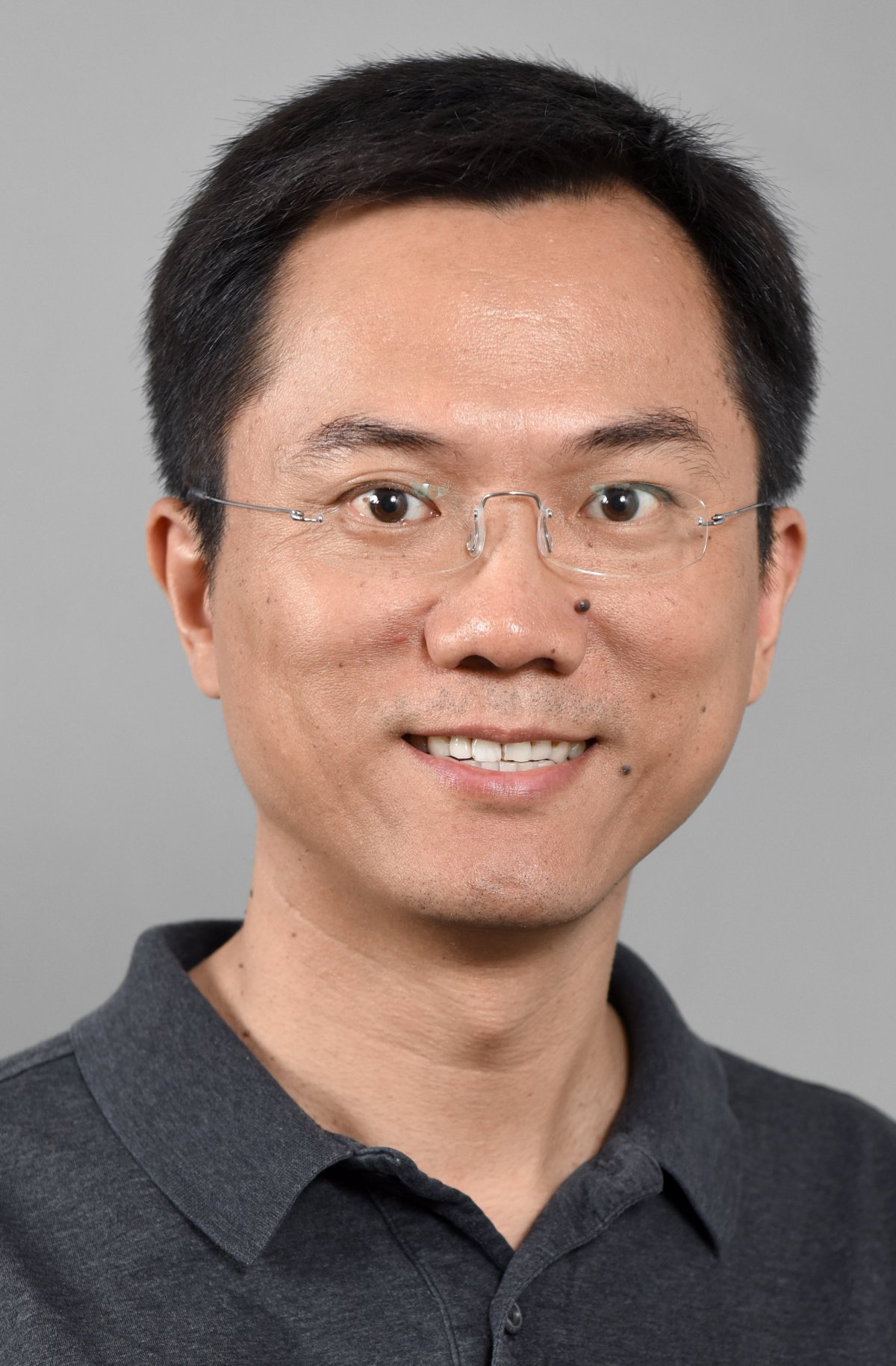
Dr. Richard Jiang is a Senior Lecturer (Associate Professor) at Lancaster University's School of Computing and Communications. His research focuses on Artificial Intelligence, Neurocomputing, Quantum AI, Privacy Computing, and Medical Computing. He has pioneered secure pattern recognition in encrypted domains and quantum neuromorphic computing. With over £1M in research grants from EPSRC and others, he has authored 100+ publications and supervised over 20 PhD students. Dr. Jiang's work includes the Face2Brain method for neurodegenerative assessment and explainable models for brain aging analysis. He contributes actively to academic committees, editorial boards, and conferences like the World Conference on eXplainable AI. His research spans ethical AI frameworks, quantum algorithms for medical imaging, and privacy-preserving biometric systems.
Professor Klaus McDonald-Maier is a full Professor in the School of Computer Science and Electronic Engineering (CSEE) at the University of Essex , where he leads the Embedded and Intelligent Systems (EIS) Research Laboratory and heads the Intelligent Embedded Systems and Environments Research Group . He is also Director of Impact , Visiting Professor at the University of Kent, and Visiting Research Affiliate at NASA Jet Propulsion Laboratory, California Institute of Technology. Education PhD in High-Performance Parallel Neural Network Architectures, Friedrich-Schiller-University Jena (Germany, 1999) Electronic Engineering studies, University of Ulm (Germany) Electronic Engineering studies, Cardiff University (Wales) Electronic Engineering studies, École Supérieur de Chimie Physique Électronique de Lyon (CPE-Lyon) (France) Research Interests Professor McDonald-Maier’s research integrates embedded systems , System-on-Chip (SoC) architectures , and AI-driven robotics . He pioneers visual place recognition techniques that remain robust under severe appearance and viewpoint changes, develops cybersecurity frameworks based on ICMetrics for autonomous vehicles and IoT, and designs approximate real-time computing solutions for energy-constrained multicore and FPGA platforms. His work on radiation-tolerant systems supports space and nuclear applications, while his bio-inspired algorithms enable lightweight, neuromorphic perception on resource-limited robots. Publication Trends Between 2022 and 2025 his output converges on FPGA-accelerated AI , secure edge intelligence , visual navigation for autonomous systems , and healthcare analytics . He repeatedly couples rigorous algorithmic innovation with practical hardware deployment, yielding energy-efficient, real-time systems validated in domains ranging from autonomous driving to post-stroke rehabilitation. Scientific Awards & Recognition Best Paper Award – IEEE Transactions on Sustainable Computing (2024) Best Paper Award – IEEE/ACM DATE (2024) Best Paper Award – IEEE Systems Journal (2022) Best Paper Award – IEEE Sensors Journal (2021) Best Paper Award – IEEE Access (2020) Research Grants & Industrial Collaboration He has secured major funding from EPSRC , EU Horizon 2020 , Innovate UK , and industry partners. Current projects span trustworthy autonomy, radiation-hardened edge AI, and AI-enhanced rehabilitation technologies. He is Chief Scientist of UltraSoC Technologies Ltd and CEO of Metrarc Ltd , commercialising University research in semiconductor debug and cybersecurity respectively. Laboratory & Team Leadership As Director of the Embedded and Intelligent Systems Laboratory (EIS Lab) , he oversees a multidisciplinary team of researchers and PhD students, providing state-of-the-art FPGA, robotics, and embedded-systems facilities. The lab collaborates closely with NASA JPL, UK Atomic Energy Authority, and leading semiconductor firms to translate fundamental research into high-impact industrial solutions.
Professor Emil Lupu is a Professor of Computer Systems at the Department of Computing , Imperial College London. He leads the Resilient Information Systems Security Group and serves as Co-Director of the National Research Institute in Trustworthy Inter-Connected Cyber-Physical Systems (RITICS) . As a Security Science Fellow at Imperial’s Institute for Security Science and Technology, his work bridges academic research with real-world security challenges. Education: PhD in Computing, Imperial College London (1994–1998) His research focuses on security and resilience of cyber-physical systems (CPS) , with emphasis on defending against data spoofing attacks , adversarial machine learning , and IoT vulnerabilities . He pioneered the Ponder policy systems for access control and the Self-Managed Cell framework for autonomic computing, and developed Bayesian Attack Graphs for scalable risk assessment in CPS. Recent publications highlight trends in adversarial robustness (2025–2022), including LIDAR spoofing defense for autonomous vehicles, LLM security , and attack graph analysis for IoT. His work explores the intersection of safety and security , applying model-checking to identify adversarial threats in train control, microgrids, and aviation systems. Scientific Awards: Security Science Fellowship, Imperial College London (2011–present) As co-founder of the PETRAS National Centre of Excellence in IoT Cybersecurity (2016–2021), he advanced security methodologies for interconnected systems. His collaborations with institutions like the Cyber Security Body of Knowledge (CyBoK) demonstrate his leadership in shaping cybersecurity research standards. Current projects include the RITICS Institute , focusing on trustworthy cyber-physical systems, and exploring generative AI for security poisoning with practical defenses against adversarial ML.
Professor Akram Hourani is a Discipline Leader and Professor in the Department of Electrical & Electronic Engineering at RMIT University's School of Engineering. He holds roles as Program Manager for the Master of Engineering (Telecom & Network Eng.) and Deputy Director of the Centre for Opto-electronic Materials and Sensors (COMAS). Prior to academia, he was an ICT Program Manager in the telecommunications industry, leading projects in satellite and telecommunications infrastructure. His research focuses on advanced signal processing, satellite communications, radar systems (including SAR), neuromorphic hardware, and IoT. He has secured grants from ARC, CRC, government departments, and DSTG, with over 130 publications. His work aligns with UN Sustainable Development Goals 9 (Industry, Innovation & Infrastructure), 11 (Sustainable Cities), and 10 (Reduced Inequalities). Education: PhD in Electronics & Telecommunications (2016, RMIT University) Non-academic roles: R&D Engineering Program Manager at Inteltec Emirates (2006–2013) Key research themes include interference mitigation, 5G/6G networks, neuromorphic sensing, and AI-driven satellite IoT. He is listed in Stanford's top 2% scientists for career-long and single-year impact. His teaching includes courses on satellite communications and wireless sensor networks. Grants & Funding: ARC, CRC, DSTG, and government-funded projects since 2017 Collaborations: CSIRO, industry partners in telecommunications and aerospace His lab focuses on next-generation communication systems, with active projects in mega satellite networks, neuromorphic hardware, and AI for IoT sensing. He supervises PhD/Masters research in areas like satellite connectivity and machine learning applications.
Professor Ole-Christoffer Granmo is a distinguished academic at the University of Agder, Norway, where he serves as Professor in the Department of Information and Communication Technology. He is the Founding Director of the Centre for Artificial Intelligence Research (CAIR) at the University of Agder, leading cutting-edge research in artificial intelligence and machine learning. Dr. Granmo obtained his master's degree in 1999 and his PhD in 2004, both from the University of Oslo. His academic journey has been marked by significant contributions to the field of AI, most notably the creation of the Tsetlin machine in 2018, for which he received the AI research paper of the decade award from the Norwegian Artificial Intelligence Consortium (NORA) in 2022. Professor Granmo's research primarily focuses on logical and causal world modeling across multiple modalities including images, sound, and natural language. His work spans logical auto-encoding, convolution, regression, transformer architectures, and reinforcement learning, all with the overarching goal of creating ultra-low-power artificial general intelligence through transparent logical learning and reasoning. His publications reveal a strong emphasis on interpretable AI systems, hardware implementations, and applications across diverse domains including cybersecurity, healthcare, social media analysis, and bioinformatics. AI Research Paper of the Decade (2022) - Norwegian Artificial Intelligence Consortium (NORA) Eight paper awards in machine learning Professor Granmo has coordinated over seven research projects and mentored 55+ master's students and nine PhD students. His leadership extends to co-founding the Norwegian Artificial Intelligence Consortium (NORA) and establishing two companies: Anzyz Technologies AS and Tsense Intelligent Healthcare AS. As an advisor at Literal Labs, he actively bridges academic research with practical industry applications, demonstrating his commitment to translating theoretical innovations into real-world solutions that address complex challenges across multiple sectors.
Garrett Rose is a Professor and Department Head in the Min H. Kao Department of Electrical Engineering and Computer Science at the University of Tennessee, Knoxville (UTK). He holds a B.S. in Computer Engineering from Virginia Tech (2001), and M.S. and Ph.D. in Electrical Engineering from the University of Virginia (2003/2006). Prior to UTK, he served as Assistant Professor at NYU Polytechnic (2006–2011) and Senior Electronics Engineer at the Air Force Research Lab (2011–2014). His research focuses on nanoelectronic circuit design, neuromorphic computing, hardware security, and memristor-based systems. He leads the SENECA Research Group and the TENNLab initiative, exploring applications in neuromorphic architectures, hardware security primitives (e.g., PUF devices), and device modeling. Recent work emphasizes memristor-driven neuromorphic systems, secure FPGA designs, and in-memory computing. Grants include projects on neuromorphic target detection and nanotechnology-based security solutions. Rose actively mentors students and collaborates on co-design methodologies for real-world neuromorphic applications. Education: Ph.D. Electrical Engineering, University of Virginia, 2006 M.S. Electrical Engineering, University of Virginia, 2003 B.S. Computer Engineering, Virginia Tech, 2001 Research Interests: Dr. Rose’s work spans neuromorphic hardware design, including memristor-based neural networks and spiking systems. He investigates hardware security through nanoscale devices like memristors for PUFs and side-channel resistant circuits. His team develops novel memristor models and explores applications in reconfigurable computing and energy-efficient architectures. Recent efforts focus on neuromorphic vision systems, robotic navigation, and neuromorphic processors with co-design frameworks. Grants & Projects: "Ground-roaming autonomous neuromorphic targeter" (2020) "Secure Backup and Restore for IoT using Nanotechnology" (2020) "Physically Unclonable Reconfigurable Computing System (PURCS)" (2020)
Enrico Macii is a Full Professor at the Politecnico di Torino, affiliated with the Interuniversity Department of Regional and Urban Studies and Planning (DIST) and the Department of Control and Computer Engineering (DAUIN). He leads the Electronic Design Automation (EDA) research group and holds key roles as Scientific Advisor for the Politecnico-STMicroelectronics partnership and Scientific Contact for the European Chips Joint Undertaking. Research Interests: His work spans digital circuits and systems, energy efficiency, smart cities, Industry 4.0, and smart manufacturing. He focuses on embedded and cyber-physical systems, low-power design, neuromorphic computing, AIoT, and sustainable urban development. Recent Publications: His recent research demonstrates strong trends in edge AI, neuromorphic computing, and smart energy systems. Articles highlight innovations in low-power hardware acceleration, federated learning, physics-informed AI, and digital twin applications for urban and industrial systems. There is a clear emphasis on deploying AI efficiently on constrained devices and integrating physical models with machine learning. J. William Fullbright Fellowship (1993) Best paper award IEEE European Design Automation Conference (1996) Best paper award ACM/IEEE Great Lakes Symposium on VLSI (2008) DAC Service Award (2014) IEEE Fellow (2006) DATE Fellow (2014) Advising and Grants: He has supervised over 25 PhD students in computer engineering, AI, and urban systems. His research is funded by major EU programs (Horizon 2020, PNRR, KDT JU), national (PRIN, FAR), and regional grants, as well as industrial contracts with STMicroelectronics, Michelin, and Cefriel. He leads numerous high-impact projects in smart manufacturing, energy efficiency, and digital twins. Labs and Teams: He is a core member of the EDA Group, an interdepartmental research team at Politecnico di Torino focusing on VLSI-CAD, bioinformatics, smart cities, and Industry 4.0. He also contributes to IAM@PoliTo (Integrated Additive Manufacturing) and leads multiple EU and national research consortia.
Riadul Islam serves as an Assistant Professor in the Department of Computer Science and Electrical Engineering at the University of Maryland, Baltimore County (UMBC), maintaining his primary office in room 316 of the Information Technology and Engineering (ITE) Building. His academic appointment focuses on hardware design and verification within the institution's engineering framework. His educational qualifications include: Ph.D. in Computer Engineering from UCSC (2017) M.A.Sc. in Electrical and Computer Engineering from Concordia University, Montreal (2011) B.Sc. in Electrical and Electronic Engineering from Bangladesh University of Engineering and Technology (2007) Professor Islam's research centers on VLSI CAD tools and low-power digital/mixed-signal IC design , with significant contributions to current-mode clock networks, vehicular security systems, and error-robust circuit architectures. His work increasingly integrates machine learning for design automation while exploring neuromorphic computing applications and secure hardware implementations. This multidisciplinary approach bridges traditional IC design with modern AI-driven optimization techniques. Analysis of his 2023-2025 publications reveals three dominant research thrusts: (1) Machine learning applications in early-stage Design Rule Checking (DRC) prediction and clock network optimization, (2) Graph-based intrusion detection systems for automotive networks (particularly CAN bus security), and (3) Event-based vision systems and neuromorphic computing architectures. These areas demonstrate consistent innovation in merging hardware design with AI/ML methodologies for enhanced system reliability and efficiency. He directs the UMBC VLSI and SoC Research Group , which develops energy-efficient clocking networks, secure vehicular communication protocols, and compute-in-memory architectures. The lab maintains active collaboration with industry partners on hardware security and neuromorphic computing initiatives while supporting graduate student research in cutting-edge IC design methodologies.
Dr. Salim Bouzerdoum is a Senior Professor of Computer Engineering at the University of Wollongong (UOW), affiliated with the School of Electrical, Computer & Telecommunications Engineering. He holds a Ph.D. and M.Sc. in Electrical Engineering from the University of Washington. His roles include former Associate Dean for Research (2007–2013) and Head of School (2004–2006). He has served on the Australian Research Council panels and held visiting professorships globally. Education: Ph.D. in Electrical & Computer Engineering, University of Washington, Seattle, USA M.Sc. in Electrical Engineering, University of Washington, Seattle, USA Research Interests: His work focuses on Artificial Intelligence , Machine Learning , and Signal & Image Processing , with applications in radar imaging, computer vision, and smart sensors. Key areas include neural networks, object detection/tracking, and compressive sensing. Recent projects include assistive navigation tools for vision-impaired individuals and underwater mine detection via sonar imaging. Grants & Funding: He leads or co-leads over 30 funded projects, including: AI-based SAR Satellite Imaging System for Oceanic Waves (AGO, 2024–2025) A portable AI-guided navigation tool for vision-impaired people (KONEKSI, 2024–2026) Deep Learning for Vessel Surveillance using Satellite Imagery (NSW Space Research Network, 2022–2023) Teaching & Supervision: With 30+ years of experience, he has supervised 38 Ph.D. and 22 master’s students, mentored 12 early-career researchers, and delivered courses like Applied Data Analytics and Neural Networks . Current supervision includes projects on deep learning for obstacle detection and semantic segmentation. Awards: Eureka Prize (2011) for Defence Science ARC College of Experts Member (2009–2011) Multiple Vice-Chancellor Research Awards (1998–1999)
Dr. Mathis Richter is a Postdoctoral Researcher at the Institute of Neuroinformatics (INI), part of the Faculty of Computer Science at Ruhr University Bochum, Germany. He has been affiliated with the INI since 2008, progressing from Research Assistant to Research Associate, and currently serves as a Postdoctoral Researcher since July 2018. At the INI, he contributes to both the Embodied Cognition group and the Autonomous Robotics group, led by Prof. Dr. Gregor Schöner. Dr. Richter earned his Dr.-Ing. (Ph.D. equivalent) in Engineering from Ruhr-Universität Bochum between 2011 and 2018, following an M.Sc. and B.Sc. in Applied Computer Science from the same institution. His academic journey includes an exchange year at the University of Birmingham, UK. His research centers on higher cognition, specifically concept representation, how concepts combine to form complex mental scenes, and the neural mechanisms organizing cognitive operations in time. Using Dynamic Field Theory as his primary framework, he develops mathematical models explaining how neural populations represent objects and concepts. His work demonstrates how these cognitive models connect to sensory-motor systems, often implemented on robotic platforms to validate their autonomy and functionality. Analysis of Dr. Richter's publications reveals a consistent focus on neural dynamic modeling of cognitive processes, with particular emphasis on spatial relations, language grounding, and embodied cognition. His research trajectory shows increasing sophistication in modeling complex cognitive phenomena while maintaining strong connections to robotic implementations. As an educator, Dr. Richter has taught Lab courses in Autonomous Robotics across multiple terms since Winter 2015/2016 and has delivered Lectures in Computational Neuroscience: Neural Dynamics since Winter 2018/2019. His teaching directly reflects his research expertise in neural dynamics and cognitive systems. Dr. Richter actively participates in interdisciplinary research that bridges cognitive science, neuroscience, computer science, and robotics, contributing to the INI's mission of understanding how organisms generate behavior and cognition through interaction with their environments.
Paul Siebert is a Reader in Computing Science at the University of Glasgow, specializing in computer vision and robotics. He leads the Computer Vision and Graphics research group and teaches Digital Image Processing and Computer Systems. His research focuses on 3D vision systems, biologically inspired vision, and cognitive robot vision, with applications in clinical and media domains. He has pioneered commercial 3D surface scanning technology and collaborated with clinical groups such as Glasgow Dental School. Affiliations: University of Glasgow (Computing Science Department) Roles: Reader, Group Leader (Computer Vision and Graphics) Research interests include active binocular robot vision, 2D/3D sensing, and visual perception for robotics. Notable projects include work on driver attention monitoring, virtual character creation, and clinical anatomical imaging. Siebert previously directed the 3D-MATIC Faraday Partnership and served as Chief Executive of the Turing Institute, developing commercial vision systems. Publications span over 140 works, emphasizing applications like rain removal algorithms, continual learning in robotics, and foveated imaging. His work integrates deep learning, biological vision models, and real-world robotics challenges. Awards and recognitions are not explicitly listed, but his contributions to 3D vision commercialization and robotics research highlight significant impact in the field.
Pieter Simoens is an Assistant Professor at Ghent University and affiliated with the imec research institute. He works at the intersection of distributed artificial intelligence, edge computing, and collective intelligence, with a focus on AI applications for resource-constrained environments and robotic systems. His research explores innovative approaches to machine learning deployment in heterogeneous infrastructures, task planning for IoT-integrated robotics, and modeling collective decision-making processes. He has contributed to frameworks like DIANNE for distributed deep learning and developed methods for cognitive modeling in reinforcement learning scenarios. With over 100 publications, his recent work spans adaptive neural networks, privacy-preserving surveillance, UAV hyperspectral data analysis, and computational fairness in AI systems. He leads research initiatives within the Internet Technology and Data Science Lab (IDLab) and contributes to educational programs in software engineering and applied machine learning. Responsible for courses on software engineering, mobile development, system design, and applied machine learning Active in edge computing and neuromorphic algorithms research Develops AI solutions for robotics, surveillance, and industrial IoT applications
Dr. Yi Wang is an Associate Professor and Department Chairperson of the Electrical and Computer Engineering Graduate Programs at Manhattan College, New York. He also serves as Director of the Electrical & Computer Engineering Graduate Program. His research focuses on machine learning, deep learning, cybersecurity, blockchain, and their applications in cyber-physical systems. Dr. Wang is an IEEE Senior Member (since 2021) and has secured NSF grants totaling over $149,000. Education: Ph.D. Computer Engineering, University of Alabama in Huntsville M.S. Computer Science, Wuhan University of Science and Technology B.S. Information Systems, Wuhan University of Science and Technology Research Interests: Machine learning and deep learning algorithms Cybersecurity for IoT and smart grids Blockchain applications in attribute-based access control Adversarial machine learning defense mechanisms Optical fiber communication systems Recent Publications Trends: His work spans blockchain platform comparisons, adversarial attack mitigation in power systems, and AI-driven smart home solutions. He frequently publishes in IEEE journals and conferences. Awards: Best Paper Award at 2017 IEEE UEMCON Best Paper Award at 2015 ICDIP Grants and Advising: Principal Investigator for NSF-funded UIRiSCS project (2022–2025). Co-Principal on NYC DOT Loading Zone Study. Recipient of Manhattan College Faculty Summer Grants (2021, 2017). Advises graduate students in cybersecurity and IoT research. Labs/Teams: Collaborates with the University of Zaragoza, Spain on smart systems research. Leads projects on plastic optical fiber networks and AI-driven smart home systems.
Radu Grosu is a Professor at Technische Universität Wien (TU Wien), leading the Forschungsbereich Cyber-Physical Systems . His research focuses on Cyber-Physical Systems (CPS), Machine Learning, and autonomous robotics, with notable contributions to neural network architectures like Liquid Time-Constant Networks (LTC) and their applications in robotics and medical imaging. He is affiliated with the Network Lab and has supervised numerous PhD and Master's students, including Sebastian Michael Bittner, Daniel Scheuchenstuhl, and Sophie Neubauer. His work spans topics such as reinforcement learning, autonomous driving, and IoT ecosystems. Recent projects include developing robust AI systems for healthcare and robotics, such as tumor delineation using PET imaging and neuromorphic IoT architectures for smart villages. Grosu has published extensively on CPS, with over 146 contributions across peer-reviewed journals and conferences. His research emphasizes bridging theory and practice, addressing challenges in safety, scalability, and real-time control in autonomous systems. Key research interests include robotic perception, neural network robustness, and CPS/IoT integration. He has pioneered methods like DeepSTL for translating temporal logic requirements into neural network training objectives and developed frameworks like NimbleAI for neuromorphic sensing-processing systems. His team also explores distributed control algorithms for multi-agent systems, such as flocking drones and formation control using relative distance measurements. Recent work examines the generalization properties of deep filters in CNNs and quantum-classical reinforcement learning models for game AI. Grosu has advised over 20 students on topics ranging from deep learning in wafer defect analysis to bio-inspired neural circuits for auditable autonomy. His lab collaborates on interdisciplinary projects, such as applying AI to battery health estimation and prostate cancer diagnostics. He actively contributes to academic communities, editing special issues on AI in healthcare and CPS resilience, and has organized summer schools on CPS and IoT systems.
Yu [Kevin] Cao is the Louis John Schnell Professor in the Department of Electrical and Computer Engineering at the University of Minnesota. His research focuses on microelectronics co-design for energy-efficient computing, spanning integrated circuit design, semiconductor physics, and machine learning methodologies. He leads the Microelectronics Co-design Research Group and actively collaborates with institutions like Georgia Institute of Technology, Sandia National Laboratories, and Notre Dame. His research interests include AI hardware acceleration , in-memory computing , cryogenic CMOS design , and 3D integration of heterogeneous chiplets . Current initiatives explore reconfigurable on-package systems for AI, spiking neural networks on neuromorphic hardware, and low-temperature logic technologies. Recent publications and projects highlight advancements in AI accelerators , RRAM-based compute-in-memory , graph convolutional networks , and 3D integration . His group develops tools like MN-SIM 2.0 for memristor modeling and investigates novel materials for neuromorphic systems. Grants include collaborative NSF funding for chiplet-based AI systems, CoCoSys center funding from SRC, and DOE/Sandia projects on neuromorphic hardware. Future work emphasizes scalable co-design frameworks for intelligent systems and heterogeneous integration challenges.