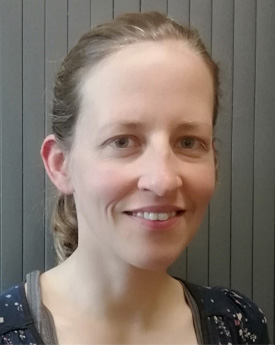
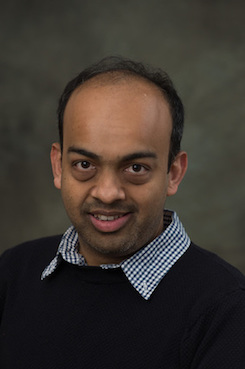
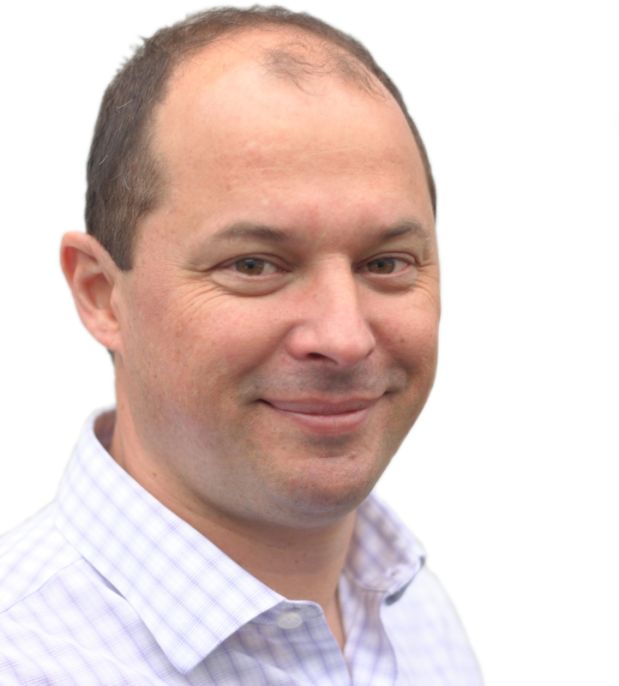
Dr. Patrick Maier is a Lecturer in Computing Science at the University of Stirling's Division of Computing Science and Mathematics. His research focuses on parallel computing, including parallel functional programming, symbolic computation, and resource analysis. He has contributed to projects such as AJITPar (2013-2017), HPC-GAP (2009-2013), and MOBIUS (2006-2009). His work spans parallel algorithm frameworks (e.g., YewPar), high-performance computing systems, and formal methods in software verification. Research interests include parallel functional programming, symbolic computation optimization, temporal logic, and compositional verification. Notable publications cover neuromorphic vision systems, antibiotic dosing optimization, scalable combinatorial search, and fault-tolerant functional computation. Collaborations include work on distributed memory parallel Haskell (HdpH) and formal verification techniques for resource management. He is affiliated with the Data Science and Intelligent Systems, and Computational Mathematics and Optimisation research groups. His recent work emphasizes reproducible parallel search algorithms and interdisciplinary applications like computational biology and neuromorphic engineering.
Dr Emma Wilson is a Lecturer in the Computing and Communications department at Lancaster University, focusing on systems and control theory applied to healthcare and biological systems. Her interdisciplinary research integrates engineering principles with biomedical challenges to improve health outcomes, including adaptive treatments, bio-inspired robotics, and muscle modeling. Her research spans multiple areas such as control theory, bio-inspired control mechanisms, brain-based robotics, and computational modeling of biological systems. A key theme is translating insights from biological systems into engineered solutions and vice versa, particularly in digital health applications like personalized treatment decisions and dynamic health modeling. Recent work includes developing robust control algorithms for anticoagulant therapies and neuro-inspired adaptive systems for robotics. She leads projects like DCQ (Cyber Security of Digital Medical Devices) and collaborates on initiatives like the Health Behavior Change research group. Her publications reflect a blend of theoretical control systems research with practical healthcare applications. Dr Wilson is affiliated with the Lancaster Intelligent, Robotic and Autonomous Systems Centre (LIRA) and the Data Science Centre (SCC), emphasizing her role in cutting-edge interdisciplinary research.
Nachiket Kapre is an Associate Professor in the Department of Electrical and Computer Engineering at the University of Waterloo, Canada (2023–present). He previously held positions as Associate Professor (2016–2021) and on leave as Research Director at Xilinx Labs (AMD Research, Singapore, 2022–2023). Before that, he was an Assistant Professor at Nanyang Technological University (NTU), Singapore (2012–2016) and a Junior Research Fellow at Imperial College London (2010–2012). He earned a Ph.D. and two M.S. degrees from the California Institute of Technology (2010), and a B.E. from the University of Pune (2002). His research focuses on Concurrent and Spatial Architectures , Parallel Processing , and Communication-Centric Design , with a strong emphasis on FPGA-based acceleration for applications like machine learning, graph algorithms, and embedded systems. Key contributions include Hoplite NoC architectures and CaffePresso for deep learning acceleration. Notable awards include the FPT Best Paper Award (2024), TRETS Best Paper Award (2023), and the CASES 2016 Best Paper Award. He has led multiple grants, including NSERC Discovery Grants and A*STAR-funded projects. His advising spans 15+ students across PhD and MSc levels, contributing to FPGA toolflows, NoC design, and hardware acceleration. He has authored over 50 publications in top venues like FPGA, FPL, and ACM TRETS, and serves as a program chair for FCCM 2023. His work bridges theory and practice, emphasizing energy-efficient computing and reconfigurable systems.
John McAllister is a Professor and Deputy Head of School at Queen's University Belfast's School of Electronics, Electrical Engineering and Computer Science. His research focuses on custom hardware design for FPGA-based embedded/edge computing, signal processing, and machine learning applications, with a particular emphasis on neuromorphic computing, quantum computing, and dataflow architectures. He leads projects such as FPGA Acceleration of SDR Algorithms and picoStream Streaming Multiprocessors, and has supervised work in embedded systems and wearables. Research Interests: Custom FPGA Hardware and High-Level Synthesis Edge Computing and Cyber-Physical Systems Signal Processing Systems Dataflow Computing Neuromorphic Computing Quantum Computing Notable Awards: Best Paper Prize (2011, 2007) Certificate of Merit (2017) Higher Education Academy Fellowship (2007) Grants & Collaborations: R3500ECS: Arm Morello UAV Security (2023–) R8848CSC: FPGA SDR Acceleration (2017–) R3797CSC: Exascale picoStream (2016–2018) Labs/Teams: Active in the Institute of Electronics, Communications & Information Technology, leading interdisciplinary projects in quantum circuit optimization and FPGA-based signal processing.
Sylvain Saïghi is a lecturer and researcher in electronics at the University of Bordeaux, affiliated with the IMS laboratory (Intégration du Matériel au Système), a joint unit of CNRS, the University of Bordeaux, and Bordeaux INP. He specializes in neuromorphic engineering and low-power artificial intelligence systems. His research focuses on developing hardware-based artificial intelligence solutions inspired by the human nervous system. He designs electronic circuits and chips that mimic neurons and synapses using memristors and spiking neural networks, enabling energy-efficient 'intelligent' sensors for edge computing applications such as speech and pedestrian recognition. His work lies at the intersection of electronics, neuroscience, and machine learning, aiming to reduce the energy footprint of AI technologies. The trends in his publications reveal a sustained focus on neuromorphic hardware, particularly in implementing plasticity and learning mechanisms in solid-state devices. His work spans from fundamental analog neuron modeling to advanced spintronic neural networks, consistently targeting energy-efficient, brain-inspired computing systems. Sylvain Saïghi leads the 5-year Green AI chair at the University of Bordeaux, launched in 2021, dedicated to designing frugal and sustainable AI solutions. He has secured significant research funding through this initiative and collaborates across disciplines and institutions. Multilayer spintronic neural networks with radiofrequency connections (Nature Nanotechnology, 2023) Learning through ferroelectric domain dynamics in solid-state synapses (Nature Communications, 2017) Plasticity in memristive devices for spiking neural networks (Frontiers in Neuroscience, 2015) Neuromorphic silicon neuron circuits (Frontiers in Neuroscience, 2011) A Library of Analog Operators Based on the Hodgkin-Huxley Formalism (IEEE TBioCAS, 2011) Sylvain Saïghi has advised several students in the fields of neuromorphic engineering and AI hardware, though specific names are not listed in the provided text. He actively participates in public science outreach, including events like the European Researchers’ Night, and has been featured in media outlets such as TV7, Sud Ouest, and Science et Vie. He is a key member of the IMS laboratory team, where he leads research in neuromorphic systems and contributes to interdisciplinary projects linking electronics, neuroscience, and sustainable computing. His lab focuses on designing and testing novel hardware architectures for intelligent edge devices.
Vannel Fabien is a Full Professor at the Haute école du paysage, d'ingénierie et d'architecture de Genève (HEPIA), part of the HES-SO University of Applied Sciences and Arts. He is affiliated with the Technical and IT School and the Department of Computer Science and Communication Systems. His research focuses on embedded systems, IoT, FPGA-based architectures, neuromorphic computing, and quantum communication technologies. Education: PhD in Bio-inspired Computing (2007), École Polytechnique Fédérale de Lausanne (EPFL), supervised by Daniel Mange Research Interests: Development of self-organizing neuromorphic hardware architectures (SOMA project) High-performance FPGA-based platforms for IoT security and random number generation Cellular computing inspired by biological systems 3D Network-on-Chip (NoC) architectures and dynamic resource allocation Quantum key distribution (QKD) systems for secure communication His work combines hardware design with bio-inspired algorithms, aiming to create adaptive, energy-efficient computing systems. Recent projects include SCALPsim (a 3D NoC modeling tool) and FPGA-based validation platforms for TRNGs. Grants & Projects: Principal investigator for SOMA (2018-2021, SNSF-funded CHF 461,238) Co-applicant for iNUIT-2014 ArchSensor (2014-2015, HES-SO-funded CHF 220,000) Contributor to heterogeneous computing platforms (AcceleRation, 2013-2014) Labs & Teams: Lead researcher in the SOMA team at HES-SO, collaborating with institutions like Université de Nice and INRIA.
Victor Manuel Brea Sánchez is a Professor at the University of Santiago de Compostela , affiliated with the Department of Electronics and Computing within the Higher Technical School of Engineering . He holds a PhD from the same university, completing his thesis on Design of a mixed-signal CMOS integrated circuit for pixel-level snakes in 2003 under the guidance of Dr. Diego Cabello Ferrer and Dr. David López Vilariño. His research focuses on Computer Vision , CMOS Sensors , and Embedded Systems , with particular emphasis on real-time vision systems , time-of-flight imaging , and deep learning . He leads the Artificial Vision research group and contributes to the Center for Research in Intelligent Technologies (CITIUS) . His recent work includes advancements in high dynamic range vision sensors , event-based cameras , and analog computing-in-memory architectures . He has pioneered energy-efficient algorithms for multi-object tracking and small object detection in videos, often implemented on low-power embedded systems. Key contributions include the HOPBAS10K CMOS vision sensor for background subtraction and the STDnet convolutional neural network for small target detection. His research bridges hardware design (e.g., CMOS sensor architectures) with software (e.g., deep learning algorithms), emphasizing algorithm-hardware co-design for real-world applications like traffic monitoring and biomedical systems. Notable projects include the iCaveats initiative integrating vision architectures for embedded systems and a low-power voltage reference circuit for implantable devices. He has also developed a capacitance-based wireless sensor network for agricultural pest monitoring.
Professor Otto Muskens is a faculty member in the Department of Physics and Astronomy at the University of Southampton , where he leads the Integrated Nanophotonics Group . His research spans nanophotonics , metamaterials , and AI-enabled design , with applications in space-based radiative cooling and defense technologies . His team focuses on programmable photonic circuits using ultra-low-loss phase change materials and ultrafast spectroscopy of nanophotonic systems. Recent work includes wafer-scale silicon photonic testing and machine learning-driven inverse design of optical components. Funding sources include EPSRC , EU projects , and Royal Society grants. Teaching: Module leader for Physics Skills 1&2 (PHYS1017, PHYS1019); Programme leader for MPhys with Nanotechnology Supervision: Currently advising nine PhD students in physics and electronic engineering Collaborations: Active projects with EPSRC, European Union, and European Space Agency
Oliver Cossairt is an Assistant Professor in the EECS Department at Northwestern University’s McCormick School of Engineering. His research focuses on computational imaging, combining optics, computer vision, and graphics to design novel imaging systems. He earned a Ph.D. in Computer Science from Columbia University under Prof. Shree Nayar, with prior work at MIT Media Lab and Actuality Systems. Key contributions include developing systems for extended depth-of-field cameras, spectral imaging, and 3D displays. Awards include the NSF CAREER Award (2015-2020) and Best Paper at ICCP 2011. Education: Ph.D. in Computer Science, Columbia University (2011) M.S. in Media Arts & Sciences, MIT Media Lab (2003) Bachelor’s degree details not explicitly stated Research Interests: Computational Imaging: Novel optical designs and image processing for enhanced camera functionality Computer Vision: Depth and spectral scene analysis for higher-level understanding Computational Displays: Realistic 3D visualization via optical innovations Awards and Service: Recipient of NSF CAREER Award and multiple patent grants Associate Editor for IEEE Transactions on Computational Imaging Organizer of IEEE ICCP, CVPR Workshops, and other conferences Teaching: Courses include Computational Photography, Computer Vision, and Python programming at Northwestern.
Professor Amanda Barnard is a Senior Professor of Computational Science at the ANU College of Engineering and Computer Science. She leads research in computational modeling, high-performance supercomputing, and AI applications in materials science. With a BSc (Hons) in applied physics (2000) and PhD in theoretical condensed matter physics (2003) from RMIT University, she has held prestigious roles including Distinguished Postdoctoral Fellow at Argonne National Lab (USA) and Violette & Samuel Glasstone Fellow at Oxford University (UK). Board member at BioViS (Garvan Institute), CTCMS (AIBN), Our Health in Our Hands (ANU), and NeSI (New Zealand eScience). Former Chair of the Australian National Computational Merit Allocation Scheme (NCMAS) and current Chair of the Australasian Leadership Computing Grants (ALCG). Research focuses on materials informatics, nanoinformatics, and AI-driven material discovery. Awards include the 2009 Malcolm McIntosh Physical Scientist of the Year, 2014 Feynman Prize in Nanotechnology, and 2019 AMMA Medal. Her work bridges computational science with real-world applications in energy storage, carbon removal, and hydrogen economy technologies. Collaborates with industry through ChoiceFlows Inc. and Data61 (CSIRO).
Grace Wang is an Associate Professor at the School of Psychology and Wellbeing, University of Southern Queensland. She holds a PhD in Psychology from the University of Auckland and has conducted interdisciplinary research at the intersection of addiction, mental health, cognitive neuroscience, and computational modeling. Her work integrates neuropsychological methods, EEG, and machine learning to explore the neurobiological mechanisms of addictive behaviors and stress-related conditions. BA(Psych), University of Auckland (2008) MSc, University of Auckland (2009) PhD, University of Auckland (2021) Her research focuses on substance use disorders, mental health, and the application of spiking neural networks and deep learning for EEG analysis. She has extensively studied the cognitive impacts of methamphetamine, e-cigarettes, and mindfulness interventions, while also examining cultural perspectives in chronic pain and traditional Chinese medicine. Recent publications highlight her expertise in neuroimaging, psychoneuroimmunology, and digital addiction. She serves as Associate Editor for the Journal of Ethnicity in Substance Abuse and on the Editorial Board of BMC Psychiatry.
Benn Henderson is a Researcher affiliated with the Faculty of Computing, Engineering and the Built Environment within the Department of Computer Science and Informatics Research. His work focuses on leveraging machine learning and motion capture technologies to analyze gait patterns for Autism Spectrum Disorder (ASD) detection and robotic teleoperation systems. Research Themes: Human Pose Estimation, Gait Analysis, Machine Learning Algorithms, Collaborative Robotics, Neuromorphic Computing Key Collaborations: S. Coleman, D. Kerr, J. Quinn, K. Madden, L. Lindsay Recent publications highlight trends in applying 3D pose estimation models to ASD diagnostics and cobot control systems, with subfields spanning robotic teleoperation, temporal variability analysis, and neuromorphic event suppression. His thesis on "Machine learning classification of autism spectrum disorder using gait and video analysis" underscores his focus on biomedical signal processing.
Yan Fang is an Assistant Professor at the Department of Electrical and Computer Engineering, Kennesaw State University. Her research focuses on brain-inspired computing, energy-efficient AI, and novel computing systems using emerging nanodevices. PhD in Electrical Engineering, University of Pittsburgh (2018) Postdoctoral Fellow, Georgia Tech (2018-2021) Research interests include: Neuromorphic computing for edge AI Dynamic systems analysis Computational neuroscience applications Robotics Scientific awards: SRC/DARPA Jump 2.0 Center Broad Participation Champion ($250k, 2023-2027) NSF CRII Award for neuromorphic processing framework ($173,894, 2022-2025) Kennesaw State Summer Undergraduate Research Mentor ($8,800, 2023) Georgia Tech Petit Scholar Mentor ($10,000, 2020)
Rachel Oliver is an Assistant Professor at the Air Force Institute of Technology (AFIT), located at Wright-Patterson Air Force Base, Ohio. She is affiliated with the Graduate School of Engineering and Management and the Department of Aeronautics and Astronautics. As a Major in the U.S. Air Force, she contributes to national space capabilities through education and research in Space Domain Awareness and spaceflight dynamics and controls. Education: Ph.D. in Aeronautical Engineering, Cornell University, 2024 M.S. in Aeronautical Engineering, Cornell University, 2022 M.S. in Astronautical Engineering, Air Force Institute of Technology, 2017 B.S. in Mechanical Engineering, United States Military Academy, 2015 Rachel Oliver's research focuses on advancing space surveillance through novel sensing technologies, particularly event-based vision sensors for space domain awareness. Her work spans thermal systems for spacecraft, satellite tracking, cislunar situational awareness, and infrared imaging. She applies computational modeling, sensor simulation, and heuristic algorithms to solve complex problems in space operations and spacecraft engineering. Her recent publications reflect a strong trend in leveraging neuromorphic and event-based vision sensors for space applications, including sensor modeling, noise analysis, tracking, and simulation frameworks. These works are consistently presented at the Advanced Maui Optical and Space Surveillance Technologies Conference and other high-impact venues, demonstrating sustained contributions to space surveillance and sensor technology development. Scientific Awards: No scientific awards explicitly listed in the provided text. Rachel Oliver advises graduate students and collaborates on research projects in satellite tracking and thermal systems. She leads research initiatives at AFIT and has been involved in significant projects such as infrared imaging of spacecraft and oscillating heat pipe technologies. She currently serves as deputy director for the Center of Space Research and Assurance, supporting institution-wide space research efforts. While specific grant details are not provided, her research scope suggests involvement in Department of Defense and Air Force Research Laboratory-sponsored programs. Rachel Oliver is actively involved in the Center of Space Research and Assurance at AFIT, where she contributes to strategic space research and assurance initiatives. Her work integrates academic research with military space operations, fostering innovation in space domain awareness and next-generation astronautical engineering education.
Prof. Markus Meinert is an Assistant Professor in the Department of New Materials Electronics at Technische Universität Darmstadt. He previously held a Junior Professorship for Spintronics at Bielefeld University (2014–2019), following roles as a Postdoctoral Researcher (2011–2014) and Ph.D. candidate (2008–2011) at the same institution, where he also earned his Diploma in Physics (2003–2008). His research focuses on advanced materials for spintronics, including thin film technology, spin-orbit effects, and neuromorphic computing. Key areas include developing antiferromagnetic materials for low-power electronics and optimizing spintronic devices for terahertz emission and magnetic resonance applications. His work frequently involves collaborations on material characterization (e.g., via x-ray spectroscopy) and high-throughput screening of spintronic candidates. Notable contributions include advancements in exchange bias systems, electrical switching of antiferromagnets, and the development of open-source tools like OpenFMR for material analysis. His research bridges fundamental materials science with applied device engineering, targeting energy-efficient and high-performance electronics. Labs and teams: His research group at TU Darmstadt focuses on experimental and theoretical studies of novel magnetic materials and spintronic devices, leveraging cutting-edge fabrication and characterization techniques. Collaborations often involve cross-disciplinary efforts to integrate antiferromagnetic materials into next-generation computing architectures.