Judith DriscollView profile
Professor
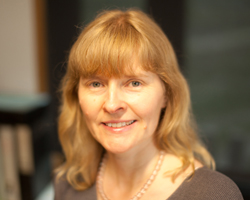
Judith Driscoll is Professor of Materials Science at the University of Cambridge in the Department of Materials Science & Metallurgy. She holds the prestigious Royal Academy of Engineering Chair in Emerging Technologies and serves as a Visiting Staff Member at Los Alamos National Laboratory. As the founding Editor-in-Chief of APL Materials, she has significantly contributed to the materials science community. Dr. Driscoll's research focuses on Energy Efficient Oxide Materials for Information and Communications Technologies and energy devices. Her work spans the development of non-volatile memory, resistive switching devices, and ferroelectric materials for neuromorphic computing applications. She investigates oxide thin films for applications ranging from data storage to energy generation and conversion, with particular emphasis on creating more energy-efficient device technologies to handle the exponential growth of data-centric applications. Her recent publications demonstrate strong trends in developing novel oxide-based memory devices with improved energy efficiency, particularly for AI applications. The work shows significant progress in hafnium-zirconium oxide ferroelectrics, resistive switching mechanisms, and vertically aligned nanocomposite structures for enhanced device performance. These innovations address critical challenges in reducing the unsustainable energy demands of modern computing, particularly for artificial intelligence systems. Fellow of the Royal Academy of Engineering Fellow of the Materials Research Society Fellow of the American Physical Society Fellow of IOM3, IOP, and Women Engineers Society Fellow of the American Academy of Arts and Sciences Recipient of ERC Advanced Grant Editor-in-Chief of APL Materials Dr. Driscoll leads a vibrant research group that has secured significant funding including her Royal Academy of Engineering Research Chair, an ERC Advanced Grant, and an ECCS-EPSRC grant in collaboration with researchers from the USA. She has founded the Cambridge Centre for Neuromorphic Computing (Neucam) in 2023. Her group operates world-leading growth equipment including pulsed laser deposition with RHEED control, high temperature oxide sputtering, and spatial ALD systems. She collaborates extensively across the University of Cambridge and with international partners to solve complex materials challenges, with her group's role often being to identify optimal materials for functional goals, predict fabrication methods, and then create and characterize these materials.