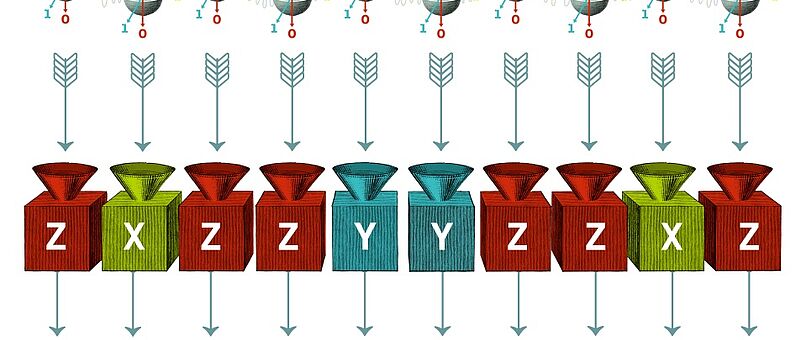
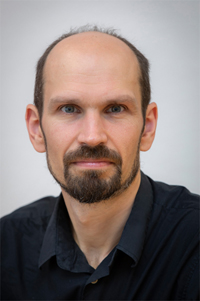
Dr. Borivoje Dakic is an Associate Professor at the University of Vienna , affiliated with the Faculty of Physics and the Quantum Optics, Quantum Nanophysics and Quantum Information department. His research spans foundational and applied aspects of quantum theory. Operational reconstruction of quantum formalism Quantum interference as a resource for communication Tomography of large-scale quantum systems Macroscopic quantum phenomena His work includes scalable verification techniques for quantum devices and collaborations with experimental teams like Philip Walther’s and Markus Aspelmeyer’s groups. He received the Marko Jarić Prize (2025) for his contributions. Recent projects focus on diagnostics of quantum devices (FWF BeyondC SFB), information-theoretic foundations of quantum interference (FWF P36994), and local operations in quantum field theory (Cluster of Excellence QuantA). His research on quantum coherence in networks and macroscopic entanglement challenges traditional assumptions about quantum-classical boundaries. Publications emphasize resource-efficient tomography, device-independent verification, and foundational frameworks for quantum statistics and field theory. Teaching: Quantum Information (2025W), Theory in Quantum Optics (2025S), VCQ Summerschool Labs: Dakić Group at University of Vienna
Atakan Aral serves as an Associate Professor at the Faculty of Computer Science, University of Vienna, where he leads research in edge computing, distributed systems, and environmental monitoring applications. His work focuses on developing efficient and resilient computing systems for environmental applications, with particular emphasis on neuromorphic edge AI and the cloud-edge continuum. He maintains an active teaching schedule offering courses in Distributed Systems Engineering, Cloud Computing, and Practical Software Courses with Bachelor's Thesis work across multiple semesters through 2025. Dr. Aral's research interests span several critical areas in modern computing including edge computing architectures, federated learning approaches, neuromorphic computing for environmental monitoring, and resilient systems design. His work addresses fundamental challenges in resource-constrained environments, particularly focusing on latency-sensitive applications and energy-efficient computation. The interdisciplinary nature of his research bridges theoretical computer science with practical environmental applications, developing systems that can operate effectively in remote or resource-limited settings. Analysis of his recent publication trajectory reveals a clear evolution from foundational cloud computing research toward increasingly specialized edge intelligence systems. Early work focused on resource allocation and scheduling in cloud environments, while his current research emphasizes neuromorphic approaches for sustainable environmental monitoring. His publications demonstrate growing interdisciplinary collaboration, particularly with environmental scientists, and increasing focus on practical implementations of theoretical concepts in real-world monitoring systems. Dr. Aral leads significant research projects including TROCI (Towards Resilient Operation of Critical Infrastructure), an ongoing initiative, and SWAIN (Sustainable Watershed Management Through IoT-Driven AI), which ran from February 2021 to February 2024. His work spans multiple dimensions of computing systems, from hardware-aware algorithms to application-level implementations, with consistent contributions to major conferences and journals in distributed systems and edge computing. He is an active member of the Scientific Computing research group at the University of Vienna, working from Room 6.49 at Währinger Straße 29. His research environment includes collaboration with the Environment and Climate Research Hub, reflecting the interdisciplinary nature of his work that bridges computer science with environmental applications. His publications indicate strong international collaboration across European institutions and research groups.
Georges Gielen is Full Professor in the Department of Electrical Engineering (ESAT) at KU Leuven, Belgium, and part-time Research Director at imec. He has held multiple leadership roles including Chair of ESAT Department (2012-2013, 2020-2024) and Vice-Rector for Science, Engineering & Technology (2013-2017). His academic career spans over 30 years at KU Leuven, progressing from Assistant to Full Professor. His research focuses on analog and mixed-signal integrated circuit design automation , with expertise in CAD tools, design optimization, sensor interfaces, and neuromorphic systems. His work bridges hardware design with machine learning, particularly in hardware-efficient AI implementations and biomedical applications. He has pioneered techniques for automated analog circuit sizing, topology synthesis, and reliability-aware design in nanometer CMOS. Gielen has received numerous accolades including the IEEE CAS Mac Van Valkenburg Award (2015), IEEE CAS Charles Desoer Award (2020), and EDAA Achievement Award (2021). He holds an ERC Advanced Grant AnalogCreate and is an IEEE Fellow since 2002. As a prolific scholar, he has chaired major conferences including DATE (2006), ICCAD (2007), and ESSCIRC (2017). He has graduated over 55 PhD students through the MICAS research group at KU Leuven, currently supervising 13 doctoral candidates. His research team collaborates extensively with imec and industry partners on cutting-edge projects in carbon-aware AI accelerators, uncertainty-aware design, and neuromorphic sensor interfaces.
Ansgar Jüngel is a Full Professor for Analysis of Nonlinear Partial Differential Equations (PDEs) at the Technische Universität Wien (TU Vienna), affiliated with the E101-Institute for Analysis and Scientific Computing. His academic journey includes roles at universities in Berlin, Konstanz, Mainz, and Vienna since 1991. He specializes in mathematical analysis of cross-diffusion systems, entropy methods, semiconductor models, and quantum fluid dynamics. Notable achievements include an ERC Advanced Grant (2021) and the Tsungming-Tu Award (2011). Research focuses on nonlinear PDEs with applications in physics, engineering, and biology, emphasizing rigorous existence theory, numerical methods, and entropy-based approaches. Recent projects include 'Emerging network structures and neuromorphic applications' and 'Taming complexity in partial differential systems.' His teaching includes courses on partial differential equations, calculus of variations, and computational finance. Publications span over 200 works, with key contributions on cross-diffusion models, quantum hydrodynamics, and energy-transport systems. He has supervised numerous PhD students and collaborates internationally on topics like semiconductor simulations and stochastic interacting particle systems. Grants include an FWF Special Research Programme and ERC funding.
Stephen B. Furber is an ICL Professor of Computer Engineering in the Department of Computer Science at the University of Manchester. His research spans advanced processor technologies, focusing on low-power system design, asynchronous digital systems, and neuromorphic computing systems like the million-core SpiNNaker platform. Research Focus: Systems-on-chip, Networks-on-chip, Neural systems engineering Academic Leadership: Head of Department of Computer Science (2001-2004) Scientific Recognition: CBE for services to computer science Fellow of the Royal Society and IEEE Faraday Medal recipient Wolfson Research Merit Award recipient
Yusuf Leblebici is a Turkish academic and current President of Sabanci University (2018-present), reappointed in December 2022. He previously served as a Chair Professor and Director of the Microelectronic Systems Laboratory at EPFL, Switzerland (2002-2018), and held academic roles at Worcester Polytechnic Institute (1997-1999), Istanbul Technical University (1993-1997), and the University of Illinois at Urbana-Champaign (1991-2000). His career spans microelectronics, VLSI design, and neuromorphic systems. BSc and MSc in Electrical Engineering from Istanbul Technical University (1984, 1986) PhD in Electrical and Computer Engineering from the University of Illinois at Urbana-Champaign (1990) His research focuses on low-power integrated circuits , VLSI design , sensor interfaces , semiconductor modeling , and neuromorphic computing . He has co-authored over 400 scientific articles and seven books, including two internationally acclaimed textbooks. Scientific Awards : 2020 ECE Distinguished Alumni Award (UIUC) 2009 IEEE Fellow 2009 IEEE Distinguished Lecturer 1999 WPI Satin Distinguished Fellow Award 1995 Turkish TUBITAK Young Investigator Award He has graduated 58 PhD students and over 100 MSc students, and played a pivotal role in establishing Sabanci University's Microelectronics Program (1999-2002) and directing EPFL's Microelectronic Systems Laboratory (2002-2018). As Sabanci University President, he has enhanced global visibility, attracted international talent, and strengthened global collaborations.
Ramin Hasani is a researcher at TU Wien's Cyber-Physical Systems department. He holds a Dr.techn. (Doctor of Engineering) and specializes in machine learning applications for robotics, control systems, and biologically-inspired neural networks. His work focuses on developing interpretable neural architectures like Liquid Time-Constant Networks and Neural Circuit Policies, emphasizing safety and stability in autonomous systems. Hasani's research bridges neural network theory with practical robotics challenges, including autonomous racing, medical data analysis, and adversarial robustness. Key research areas include continuous-time neural networks, formal verification of neural ODEs, and bio-inspired control mechanisms derived from biological neural circuits (e.g., Caenorhabditis elegans). He collaborates extensively with institutions like MIT and ETH Zurich, contributing to projects in health-monitoring systems and end-to-end robot learning frameworks. His publications consistently address real-world challenges such as sepsis prediction via reinforcement learning and robust CNN architectures for image classification. Recent work highlights include developing stable recurrent networks through Gershgorin loss functions and advancing zero-shot transfer learning for autonomous systems. Hasani's interdisciplinary approach integrates principles from neuroscience, control theory, and machine learning to create auditable, high-performance AI solutions for cyber-physical environments.
Radu Grosu is a Professor at Technische Universität Wien (TU Wien), leading the Forschungsbereich Cyber-Physical Systems . His research focuses on Cyber-Physical Systems (CPS), Machine Learning, and autonomous robotics, with notable contributions to neural network architectures like Liquid Time-Constant Networks (LTC) and their applications in robotics and medical imaging. He is affiliated with the Network Lab and has supervised numerous PhD and Master's students, including Sebastian Michael Bittner, Daniel Scheuchenstuhl, and Sophie Neubauer. His work spans topics such as reinforcement learning, autonomous driving, and IoT ecosystems. Recent projects include developing robust AI systems for healthcare and robotics, such as tumor delineation using PET imaging and neuromorphic IoT architectures for smart villages. Grosu has published extensively on CPS, with over 146 contributions across peer-reviewed journals and conferences. His research emphasizes bridging theory and practice, addressing challenges in safety, scalability, and real-time control in autonomous systems. Key research interests include robotic perception, neural network robustness, and CPS/IoT integration. He has pioneered methods like DeepSTL for translating temporal logic requirements into neural network training objectives and developed frameworks like NimbleAI for neuromorphic sensing-processing systems. His team also explores distributed control algorithms for multi-agent systems, such as flocking drones and formation control using relative distance measurements. Recent work examines the generalization properties of deep filters in CNNs and quantum-classical reinforcement learning models for game AI. Grosu has advised over 20 students on topics ranging from deep learning in wafer defect analysis to bio-inspired neural circuits for auditable autonomy. His lab collaborates on interdisciplinary projects, such as applying AI to battery health estimation and prostate cancer diagnostics. He actively contributes to academic communities, editing special issues on AI in healthcare and CPS resilience, and has organized summer schools on CPS and IoT systems.
Konstantin Selyunin is a researcher at TU Wien's Institut für Technische Informatik (Institute of Computer Engineering). He holds a Dr.techn. (PhD) in Computer Engineering from TU Wien, completed in 2017. His research focuses on neural models, runtime monitoring in automotive systems, and adaptive control in cyber-physical systems. Key areas include hardware-efficient neural networks, temporal logic monitoring, and mission-critical system design. **Education**: PhD in Computer Engineering (TU Wien, 2017). Research interests span automotive systems-of-systems, neuromorphic computing, and high-level synthesis for hardware monitoring. He collaborates on projects like HARMONIA, addressing hardware monitoring for automotive systems. His work integrates formal verification techniques with real-time systems and biophysical neural models. Publications emphasize applications in adaptive control, self-healing systems, and spiking-neuron models for monitoring. While no formal awards are listed, his contributions to runtime monitoring and cyber-physical systems are notable. Advising and grants: Colleagues include Thang Nguyen, Denise Ratasich, and Radu Grosu. Active in automotive electronic development and cyber-physical systems. Involved in the Network Lab at TU Wien.
Stephen B. Furber is the ICL Professor of Computer Engineering in the Department of Computer Science at the University of Manchester, UK. He previously served as Head of Department from 2001 to 2004. His educational background includes a PhD in aerodynamics from the University of Cambridge (1974-1980), followed by a Rolls-Royce Research Fellowship at Emmanuel College, Cambridge (1978-1981). Prior to his academic career, he worked at Acorn Computer Ltd in Cambridge from 1981 to 1990, where he progressed from hardware designer to head of Advanced R&D. Professor Furber's research focuses on computer engineering with specialization in low-power system design, asynchronous digital systems, systems-on-chip, networks-on-chip, and neural systems engineering. His work is primarily associated with the Advanced Processor Technologies (APT) group at Manchester, which conducts cutting-edge research in many-core systems and neuromorphic computing, including the development of the million-core SpiNNaker brain-modelling machine. His research has significant implications for energy-efficient computing, brain science, and improving the energy efficiency of machine learning and AI applications. The APT group's work addresses challenges posed by the impending end of Moore's Law through advanced architectural techniques. CBE (Commander of the Order of the British Empire), for services to computer science (2008) Member of Academia Europaea (2008) IET Faraday Medal (2007) Fellow of the IEEE (2005) Royal Society-Wolfson Research Merit Award (2004-2009) Royal Academy of Engineering Silver Medal (2003) Fellow of the Royal Society, UK (2002) Fellow of the Royal Academy of Engineering, UK (1999) Professor Furber leads research that bridges hardware design and neural systems engineering. His work on the SpiNNaker platform represents one of the world's largest neuromorphic computing systems, supporting an open service under the European Human Brain Project with global users. He actively collaborates with industry leaders to address challenges in energy-efficient computing at scale. The Advanced Processor Technologies group he is affiliated with conducts research across multiple domains including many-core systems, neuromorphic computing, and parallel and distributed computing. The group welcomes postgraduate students interested in MPhil or PhD studies and seeks collaborations with companies and academic groups.
Ulrich Pomper is a Researcher at the University of Vienna's Faculty of Psychology, Department of Basic Psychological Research and Research Methods. His work focuses on multisensory processing, attention mechanisms, and neural oscillations. He has held postdoctoral positions at UCL Ear Institute (London) and Charité Berlin, and completed his PhD on multisensory integration in 2014 at the University of Bremen. He has supervised multiple MSc students and received grants from ARO, Action on Hearing Loss, and the Organization for Computational Neuroscience. Education: Diploma in Psychology (University of Vienna, 2009, honors). Key training includes workshops on EEG/MEG analysis (Nijmegen), neuromorphic engineering (Telluride), and fMRI methods (Bremen). He has contributed to research on auditory neuroscience, cognitive control, and the impact of yoga on cognitive performance. Research interests include temporal orienting, auditory perception, and the neural bases of sensory integration. His recent work explores rhythmic sensory stimulation effects and yoga's impact on task-switching efficiency. He has published over 25 peer-reviewed articles and actively reviews for journals like NeuroImage and Journal of Neurophysiology. Notable achievements include public engagement with BBC Science in Action and TV appearances discussing music's emotional effects on the brain. He co-founded a state-of-the-art EEG lab at Charité Berlin in 2011-2012, featuring advanced neuroimaging setups.
Felix Resch is a PreDoc Researcher at the Cyber-Physical Systems department of Vienna University of Technology (TU Wien). His work focuses on neuromorphic computing and autonomous systems. Education: BSc, Technische Universität Wien Role: Project Assistant (Projektass. Dipl.-Ing.) and PreDoc Researcher Research interests include neuromorphic sensing-processing integration and attention-based neural networks for autonomous applications. Current work involves the NimbleAI project (2022–2026) and AI-driven autonomous racing systems. Recent publications highlight trends in 3D-integrated neuromorphic chips and attention-based neural networks for autonomous systems. He is affiliated with the Cyber-Physical Systems group (E191-01) at TU Wien. Contact: felix.resch@tuwien.ac.at | Phone: +43-1-58801-18225
John Van Opstal is a Professor of Biophysics at Radboud University's Faculty of Science, where he serves as Director of the Donders Centre for Neuroscience. His research combines psychophysics, electrophysiology, and computational modeling to study sensorimotor integration and auditory perception. PhD in Biophysics from Radboud University (1988) Van Opstal's work focuses on neurophysiology, auditory perception, and computational neuroscience, particularly in eye-head gaze control and multisensory integration. He pioneered the concept of sound localization as an action-perception problem, demonstrating its adaptability through visual input. His lab's systems-theoretical models have significantly influenced understanding of neural dynamics in the Superior Colliculus and Inferior Colliculus. He has secured major grants, including a 2016 ERC Advanced Grant (ORIENT; 2.6M€) and a 2005 NWO VICI grant (1.5M€), leading to impactful collaborations in neuromorphic robotics and hearing-aid technology. His achievements include a 2017 Academia Europaea membership and contributions to sensorineural feedback systems for cochlear implants. Member of Academia Europaea (2017) ERC Advanced Grant (2016): ORIENT (2017-2022; 2.6M€) STW Perspective Programme NeuroCIMT (2015; 500k€) EU Innovative Doctoral Programme Grant (2013; 3.5M€) EU Innovative Network Grants (2013-2012; iCARE, NETT) Advanced Bionics Research Grants (2012, 2017) NWO VICI Grant (2005; 1.5M€) Human Frontiers Science Grant (1998; 1.5M US$) 9M€+ in research grants (2010-2017) His lab is renowned for its h-index of 46 and 6,200+ citations, reflecting the impact of his work on sensorimotor control, auditory neuroscience, and neurotechnology applications.
Guillaume Bellec is an Assistant Professor at the Machine Learning Research Unit of TU Wien (Vienna, Austria). He holds a PhD from TU Graz (2019) and completed a postdoc at EPFL's Laboratory of Computational Neuroscience. His research focuses on biologically plausible machine learning models, neuromorphic computing, and spiking neural networks. He leads the lab studying brain-inspired AI systems. Developed the Chord ai app (2M+ users) for real-time chord recognition using deep learning Recipient of Vienna Science and Technology Fund (WWTF) grant (2025-2032) for AI and Neuroscience projects Published in top venues including NeurIPS, Nature Communications, and ICLR Research interests combine machine learning theory with neuroscience principles, emphasizing energy-efficient neuromorphic systems and biologically realistic neural network models. Key contributions include spike-based learning rules (E-Prop), sparse network training (Deep Rewiring), and neuromorphic hardware integration. Teaching experience includes Machine Learning (TU Graz) and courses on computational intelligence and reinforcement learning at bachelor/master levels.
Dr. Robert Legenstein is a Full Professor and Institute Head at the Institute of Machine Learning and Neural Computation , Graz University of Technology. He serves as Speaker of the Graz Center for Machine Learning and Action Editor for Transactions on Machine Learning Research (TMLR) . His research bridges computational neuroscience and machine learning, focusing on neuromorphic computing systems that mimic biological neural networks. Research Leadership: Leads EU-funded projects like Adaptive Optical Dendrites (FET-Open) , SYNCH (FET-Proactive) , and Stochastic Assemblies in SNNs (FWF) . Scientific Contributions: Develops learning algorithms for spiking neural networks (SNNs), with applications to memristive architectures, neuroprosthetics, and energy-efficient AI systems. Key Publications: 15+ recent works on topics including dendritic computing, hardware-aware training, and context-dependent neural processing. Teaching Roles: Offers courses like Deep Learning , Principles of Brain Computation , and Data Structures & Algorithms . Contact: robert.legenstein@tugraz.at | +43 316 873 5824 | Inffeldgasse 16b/I, 8010 Graz, Austria.