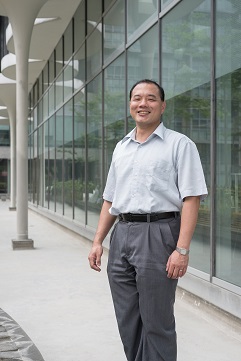
Changhuei Yang is the Thomas G. Myers Professor of Electrical Engineering, Bioengineering, and Medical Engineering at California Institute of Technology, serving as Executive Officer for Electrical Engineering and Investigator at Heritage Medical Research Institute. He holds a Ph.D. and three master's degrees from MIT, with appointments at Caltech since 2003. Research focuses on: Advanced microscopy techniques including Fourier Ptychography Wavefront shaping for biological tissue imaging Optical phase conjugation for deep-tissue applications Compact medical devices for cerebral monitoring Publications demonstrate leadership in computational imaging, with recent advances in stain-free embryo analysis, portable cerebral blood flow monitors, and high-resolution volumetric imaging techniques using neural representations. Honored as National Academy of Inventors member. Research applications span deep-tissue biochemical imaging, incisionless surgery, and optogenetic activation systems.
Dr. Frank Rudzicz is an Associate Professor in the Faculty of Computer Science at Dalhousie University. His research lies at the intersection of artificial intelligence, natural language processing, and healthcare, with a focus on developing machine learning systems that improve clinical decision-making, patient outcomes, and accessibility in medicine. He holds a BSc from Concordia University (2004), an MEng from McGill University (2006), and a PhD from the University of Toronto (2011). His research interests include Natural Language Processing, Machine Learning, Healthcare, Speech Technologies, Explainable AI, and Fairness in ML. Dr. Rudzicz's recent publications span a wide range of topics, including Alzheimer's detection through speech analysis, surgical outcome prediction, mental health monitoring, privacy in AI, and the application of large language models in clinical settings. His work consistently emphasizes ethical AI, patient privacy, and real-world clinical integration. He has received several awards, including a Best Paper award at EMNLP 2020, a Best Student Paper award at ICASSP 2021, and the ISCA Best Student Paper award in 2013. His research has been published in top-tier journals such as Nature Scientific Reports , JAMA Network Open , IEEE Access , and Frontiers in Human Neuroscience , as well as leading conferences including NeurIPS, ACL, ICML, and Interspeech. Dr. Rudzicz supervises a dynamic research group working on AI for health, with active projects in voice-based diagnostics, ambient clinical documentation, explainable AI for surgery, and wearable-based monitoring for chronic diseases. He collaborates widely across disciplines, including with clinicians, neuroscientists, ethicists, and public health experts. He is also involved in major initiatives such as the Genetics Navigator study and Bridge2AI-Voice, aiming to build ethically sourced, diverse biomedical datasets. His lab actively explores the societal implications of AI in healthcare, including fairness, trust, and resistance to malicious fine-tuning.
Jason Ritt is an Associate Professor of Brain Science (Research) and Scientific Director of Quantitative Neuroscience at the Robert J. and Nancy D. Carney Institute for Brain Science, Brown University. He holds affiliations with the Data Science Institute and collaborates across disciplines on quantitative research methods. Education : B.S., M.A., and Ph.D. in Neuroscience from Boston University (1997–2003). Research : Focuses on neural processing during active sensing and neuroengineering for neurostimulation. Combines electrophysiology, optogenetics, and theoretical approaches in rodent models. Develops closed-loop systems for studying sensory neural prosthetics and brain-machine interfaces. Key areas include synaptic diversity, neurocontrol algorithms, and sensory restoration. Teaching : Instructs NEUR 2100 NeuroPracticum, integrating hands-on neuroscience research training.
Massimo Mischi is a Full Professor at the Faculty of Electrical Engineering of the Eindhoven University of Technology (TU/e) and chairs the Signal Processing Systems (SPS) Division , the largest division at TU/e with over 250 researchers. He founded the Biomedical Diagnostics (BM/d) Lab in 2012, which now includes 180 researchers and clinical/industrial advisors, focusing on biomedical signal processing for diagnostics and monitoring.
Matthew B. Blaschko is a Professor in the Department of Electrical Engineering at KU Leuven, Belgium. He serves as director of the KU Leuven ELLIS unit and is a fellow in the ELLIS Health program. He is a Core PI in the Flanders AI Research Program, working as a workpackage lead for Decision Support Systems and Medical Imaging. Blaschko is also a member of the KU Leuven Institute for Artificial Intelligence and one of the leaders of the working group on Machine Learning and Data Science. Professor Blaschko received his B.S. from Columbia University, M.S. from the University of Massachusetts Amherst, and Dr. rer. nat. from Technische Universität Berlin (awarded for work at Max Planck Institutes Tübingen). He was a Newton International Fellow at the University of Oxford and received his Habilitation (HDR) from École Normale Supérieure de Cachan. Prior to joining KU Leuven, he was a Permanent Research Scientist in the INRIA Saclay Research Center and a Faculty Member at Ecole Centrale Paris. His research focuses on machine learning techniques applied to visual data, with particular emphasis on calibration in deep learning, medical image analysis, and federated learning. Blaschko's work bridges theoretical foundations with practical applications, as evidenced by technology developed in his research being incorporated into MONA, software for ophthalmic image analysis. His research group has made significant contributions to the fields of model calibration, uncertainty estimation, and medical imaging analysis, with recent publications showing strong trends toward improving reliability of AI systems in medical contexts and advancing theoretical understanding of calibration metrics. Professor Blaschko has been recognized with several awards including the Université Paris-Saclay STIC Doctoral School Best Scientific Contribution Award, Best Paper Award at CVPR 2008, Main Award at DAGM 2008, and Best Student Paper Award at ECCV 2008. Professor Blaschko has supervised numerous PhD and Master's students, with current and former students including Deniz Soysal, Claire Marchal, Dongli Xu, Sebastian Gruber, Jiameng Li, Marco Mezzina, and many others working on diverse topics from Alzheimer's disease analysis to surgical phase recognition. His research has been supported by various funding sources including the Flanders AI Research Program. He has co-organized several influential workshops including the "Another Brick in the AI Wall: Building Practical Solutions from Theoretical Foundations" at CVPR 2025, Commands 4 Autonomous Vehicles workshop at ECCV 2020, and the Learning from Limited Labeled Data workshop series at NIPS 2017 and ICLR 2019. His laboratory focuses on machine learning for medical image analysis, with applications in ophthalmology, neurology, and surgical robotics. The group maintains active collaborations with medical institutions and participates in international challenges such as the KNee OsteoArthritis Prediction (KNOAP2020) challenge.
Heping Zhang is the Susan Dwight Bliss Professor of Biostatistics at the Yale School of Public Health , with secondary appointments in the Child Study Center , Department of Statistics and Data Science , and Department of Obstetrics, Gynecology, and Reproductive Sciences . He directs the Collaborative Center for Statistics in Science (C²S²) and leads the Reproductive Medicine Network data coordinating center. Education: PhD in Statistics, Stanford University (1991) Postdoctoral Fellow, Mathematical Science Research Institute (1991) Research Focus : Zhang specializes in biostatistical methodology for genomic data analysis , clinical trials , and reproductive medicine . His work bridges genetics , mental health , and maternal-child health through innovative statistical approaches. Awards : 2023 Web of Science Highly Cited Researcher 2023 International Chinese Statistical Association Distinguished Achievement Award 2022 Institute of Mathematical Statistics Neyman Award and Lecture 2011 Royan Institute International Research Award 2011 Institute of Mathematical Statistics Medallion Award 2008 Harvard School of Public Health Myrto Lefokopoulou Distinguished Lecturer Professional Roles : He served as President of the International Chinese Statistical Association (2019) and Former Editor of the Journal of the American Statistical Association - Applications and Case Studies . His lab develops open-source software tools like ABESS , STREE , and modSaRa for genomic and clinical data analysis.
Craig H. Meyer is a Professor in Biomedical Engineering and Radiology & Medical Imaging at the University of Virginia. He holds a Ph.D. from Stanford University and leads the Rapid MRI Research Group, focusing on developing advanced MRI techniques for cardiovascular disease, neural disorders, and pediatrics. His work integrates physics, signal processing, and machine learning to improve MRI acquisition and processing speed. Education: Ph.D. in Biomedical Engineering, Stanford University. Research Interests: Medical and Molecular Imaging, Signal and Image Processing, Biomedical Data Sciences, Biomechanics, and Cardiovascular Engineering. His innovations include fast spiral imaging, conjugate phase reconstruction, and machine learning-enhanced MRI denoising. Awards: Notably includes the Dean’s Award for Excellence in Team Science (2014), Fellowships from NAI (2021), AIMBE (2015), and ISMRM (2013). He also authored two landmark MRI papers recognized as pivotal in the field. Teaching: Courses include BME 6310 (Computation and Modeling in Biomedical Engineering) and BME 8782 (Magnetic Resonance Imaging). He emphasizes translational research, with applications in clinical MRI advancements and collaborative interdisciplinary projects. Labs/Groups: Rapid MRI Research Group focuses on cutting-edge MRI technologies, including real-time cardiac imaging and artifact reduction through deep learning.
David Melcher is Professor of Psychology and Program Head in Psychology at New York University Abu Dhabi (NYUAD), where he also serves as a Global Network Professor. He is affiliated with the Division of Science and leads the Perception and Active Cognition Lab, focusing on the integration of perception, attention, memory, and action within a cognitive neuroscience framework. PhD in Psychology and Cognitive Science, Rutgers University (2001) Former researcher and professor in Italy and the UK Current leadership: Program Head, Psychology, NYUAD David Melcher's research centers on cognitive neuroscience , particularly how perception, attention, working memory, eye movements, and self-motion interact to shape cognition and behavior. His lab emphasizes active cognition —the idea that perception is not passive but dynamically shaped by action, context, and goals. He investigates how temporal dynamics in neural processing organize perceptual experiences and guide decision-making. His work spans both healthy and clinical populations, exploring individual differences in spatial and temporal processing across the lifespan. The 15 most recent publications reflect a consistent focus on temporal organization in cognition , perception-action coupling , and neural mechanisms of attention and memory . Keywords across these works include cognitive neuroscience, perception, and neuroimaging, with subfields ranging from eye movement research and neural synchrony to computational modeling and clinical neuropsychology. Collectively, they demonstrate a trajectory toward integrative models of brain function that bridge behavioral, neuroimaging, and computational approaches. Among his notable recognitions is the Distinguished Scientific Award for Early Career Contribution to Psychology from the American Psychological Association (2011), highlighting the early impact of his work in cognitive neuroscience. Distinguished Scientific Award for Early Career Contribution to Psychology, APA (2011) David Melcher has advised numerous students through capstone projects in psychology and computer science, fostering interdisciplinary research at the intersection of cognitive science and technology. His research has been generously supported by major funding agencies including the European Research Council , the US National Institutes of Health , the Italian Ministry of Research and Education , and the Chinese Ministry of Foreign Expert Affairs . He also contributes to the academic community as a member of the editorial boards of Journal of Vision , Psychonomic Bulletin & Review , Perception , and iPerception . He leads the Perception and Active Cognition Lab at NYUAD, which employs a multidisciplinary approach combining behavioral experiments, neuroimaging (fMRI, EEG, MEG), eye-tracking, computational modeling, and clinical assessments. The lab’s research aims to understand how the brain constructs stable percepts from dynamic sensory input, particularly during active engagement with the environment.
Chang S. (CS) Nam is a Professor of Industrial and Systems Engineering at North Carolina State University, with affiliations in the UNC/NCSU Joint Department of Biomedical Engineering and the Department of Psychology. He holds editorial roles as Editor-in-Chief of Brain-Computer Interfaces journal and is a Fellow of the Human Factors and Ergonomics Society. His research focuses on advancing human-centered technologies through neuroergonomics, brain-computer interfaces (BCIs), and rehabilitation engineering, supported by grants from NSF, AFRL, AFOSR, and the Laboratory for Analytic Sciences. Education: Ph.D. in Industrial Engineering, Virginia Tech (2003) MSIE in Industrial Engineering, State University of New York at Buffalo (2000) Research Interests: His work spans neurorehabilitation, haptic interaction design, and BCI applications, aiming to bridge human cognitive and neural processes with technological systems. Key areas include adaptive human-computer interaction, EEG-based emotion recognition, and spatial augmented reality for skill training. Grants & Awards: Recipient of NSF CAREER Award (2010), Air Force Summer Faculty Fellowship (2018), and the Leland S. Kollmorgen Spirit of Innovation Award (2019) Editor of Brain-Computer Interfaces Handbook: Technological and Theoretical Advances (CRC Press) Advising & Labs: Advises students like Lingchao Mao and Priscille Koutouan Leads the Brain-Computer Interface and Neuroergonomics Lab, developing BCI systems for communication in vegetative states and neurorehabilitation
Anthony D. Wagner is the Lucie Stern Professor in the Department of Psychology at Stanford University and Deputy Director of the Wu Tsai Neurosciences Institute. He holds affiliations with Stanford's Center for Cognitive and Neurobiological Imaging, Symbolic Systems Program, Human Biology Program, and Stanford Center on Longevity. His PhD (1997) is from Stanford University in Psychology. Research focuses on the neurobiology of learning, memory, and executive function across ages, with translational studies on aging, Alzheimer’s disease, multitasking, and neuroscience applications in law. Key themes include biomarker development for neurodegeneration, cognitive resilience, and the impact of attention on memory. Labs/teams include collaborations at the Wu Tsai Institute and neuroimaging centers. Recent work emphasizes tau PET imaging, proteomics of aging, and fluid biomarkers for Alzheimer’s prediction. He also explores societal impacts of neurotechnology and media on cognition.
Mohamed Bouri is a Senior Lecturer and Researcher at École Polytechnique Fédérale de Lausanne (EPFL), where he is affiliated with the School of Engineering (STI) and specifically the Microengineering Department (SCI-STI-MB). He is part of the ReHAssist research group (http://rehassist.epfl.ch), which focuses on rehabilitation robotics and human-robot interaction. His office is located in the MED Building (MED 3 1016) at Station 9, 1015 Lausanne. Dr. Bouri's research spans several key areas in robotics and rehabilitation engineering. His primary focus is on the development and control of exoskeleton systems for mobility assistance and rehabilitation. He has made significant contributions to hip exoskeleton technology, adaptive control strategies, and human-robot interaction paradigms. His work bridges engineering principles with clinical applications, particularly for individuals with mobility impairments and neurological conditions. Additional research interests include sensory substitution techniques, balance control systems, and astronomical instrumentation involving robotic fiber positioners for multi-object spectrographs. Analysis of Dr. Bouri's recent publications reveals a strong emphasis on practical applications of robotics in rehabilitation settings. His work increasingly focuses on user-centered design, adaptive control systems that respond to individual user needs, and ecological validity in testing environments. There's a clear trend toward developing systems that can function effectively in real-world scenarios rather than controlled laboratory settings. His research also shows growing integration of physiological feedback mechanisms and multimodal sensing to enhance human-robot cooperation, with applications spanning from Parkinson's disease rehabilitation to astronomical instrumentation. Dr. Bouri has supervised numerous doctoral students whose theses reflect the breadth of his research interests, including work on lower-limb exoskeletons, robotic control systems, and rehabilitation technologies. His collaborative approach is evident in the extensive list of co-authored publications across multiple institutions and disciplines, demonstrating his ability to bridge engineering with clinical and astronomical applications. Based at EPFL's Microengineering Department, Dr. Bouri leads research activities within the ReHAssist laboratory, which specializes in rehabilitation assistance technologies. The lab focuses on developing innovative robotic solutions for mobility assistance, with particular expertise in exoskeleton design, control algorithms, and human-robot interaction paradigms. His work on projects like TWIICE One has demonstrated real-world impact in assistive technology development.
Dr. Andrea Lecchini Visintini is an Associate Professor at the School of Electronics and Computer Science , University of Southampton. He specializes in systems modelling and control with applications in aerospace engineering and biomedical domains, utilizing Monte Carlo methods for stochastic optimization. Cyber-Physical Systems Research Group Institute for Life Sciences Research Focus: His work bridges computational methods with practical applications in: Neurovascular coupling and brain tissue pulsation analysis Advanced control strategies for aerospace systems Stochastic optimization in machine learning and fault detection Medical imaging and diagnostic protocol development Publication Trends: Recent work emphasizes interdisciplinary approaches combining computational neuroscience with engineering, focusing on brain hemodynamics, MIMO system control, and data augmentation techniques for imbalanced datasets. Supervision: Currently supervising PhD student Xuankun Cai in Computer Science.
Gaetano Valenza is an Associate Professor of Bioengineering at the University of Pisa, Italy, where he leads the Neuro-Cardiovascular Intelligence Lab at the Enrico Piaggio Research Centre. He holds affiliations with the Neuroscience Statistics Research Laboratory at MIT and has served as a Research Fellow at Harvard Medical School and Massachusetts General Hospital. His academic work spans bioengineering, computational physiology, and affective computing. His research focuses on statistical and nonlinear biomedical signal and image processing , cardiovascular and neural modeling , and physiologically interpretable artificial intelligence . He develops wearable systems for physiological monitoring, with applications in autonomic nervous system assessment, brain-heart interactions, and mental health. His work has led to novel metrics such as the Sympathetic and Parasympathetic activity indices derived from ECG. The 15 most recent publications reflect a consistent trend in brain-heart interplay , complexity analysis of physiological signals , explainable AI in healthcare , and virtual reality applications in mental health . His work integrates advanced signal processing, nonlinear dynamics, and machine learning to decode emotional and cognitive states from physiological data. Dr. Valenza is a Senior Member of IEEE and serves on several technical committees. He is an active editorial leader, currently serving as Associate Editor for IEEE-EMBC , Plos One , Complexity , and Scientific Reports , and has guest-edited special issues in Philosophical Transactions of the Royal Society A and IEEE Journal of Biomedical and Health Informatics . He has led or participated in numerous international research projects, including FP7 and H2020 initiatives such as NEVERMIND and EXPERIENCE. He teaches courses in Biostatistics, Probability & Biostatistics, and Advanced Image Processing at the University of Pisa. As lab head and project coordinator, he leads a multidisciplinary team working on neuro-cardiovascular intelligence, wearable systems, and AI-driven mental health interventions.
Joseph Tao-yi Wang is a Distinguished Professor in the Department of Economics at National Taiwan University (NTU). He holds a PhD from UCLA and previously served as a Postdoctoral Scholar and Visiting Associate at Caltech. His research spans experimental economics, neuroeconomics, game theory, and behavioral economics, with a focus on strategic decision-making, market design, and learning in games. Wang directs the Taiwan Social Sciences Experimental Laboratory (TASSEL), which hosts large-scale experimental research and conferences like the 2017 APESA. His work integrates eye-tracking, pupillometry, and machine learning to study cognitive processes in economic decisions. Wang is also active in educational innovation, developing flipped classroom models with experiments for economics courses. His publications consistently explore behavioral deviations from game-theoretic predictions, such as overcommunication in sender-receiver games and learning patterns in auctions. Recent work emphasizes reproducibility in management science and AI applications in education. Wang’s research uses diverse methodologies—from neuroimaging to field experiments—to test economic theories in real-world contexts. Wang mentors through NTU’s Berkeley Economics Student Assistant Program (BESAP) and organizes mini-courses for high school students. He has not received scientific awards per the available data.
Emily S. Cross is Professor at the University of Glasgow's School of Psychology & Neuroscience, where she co-directs the Social Brain in Action Lab (SoBA) and leads the ERC Starting Grant 'Social Robots' project. She completed her PhD at Dartmouth College and held positions at Bangor University, Radboud University, and the University of Western Australia before joining Glasgow. Her research explores: Experience-dependent plasticity through dance and motor learning Social cognition in human-robot interaction Emotional processing during action observation Aesthetic perception of movement Cross-cultural differences in technology acceptance Professor Cross uses neuroimaging (fMRI), neurostimulation (TMS, tDCS), and behavioral methods to study how we perceive and learn from human and artificial agents. Her work has been published in Trends in Cognitive Sciences, Journal of Neuroscience, and Philosophical Transactions of the Royal Society. She currently supervises projects on robot-assisted health interventions and develops VR paradigms to study social cognition.