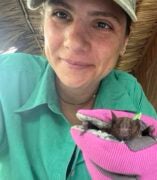
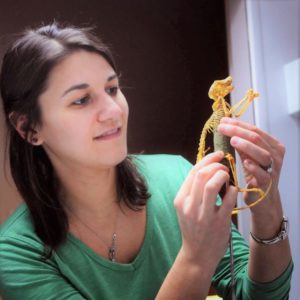
Angeles Salles is an Assistant Professor in Biological Sciences at UIC's College of Liberal Arts and Sciences, directing research on auditory neuroethology using bat models. Her lab investigates neural mechanisms of complex sound processing through electrophysiological and behavioral approaches. Research explores: Auditory processing hierarchies in mammalian brains Neurobiological basis of social behaviors Vocal learning mechanisms in echolocating species Publications demonstrate consistent focus on acoustic signal processing across behavioral contexts, with recent emphasis on computational neuroethology and biomimetic applications. Fieldwork complements laboratory studies examining bat communication in natural habitats.
Yoonsuck Choe is a Professor in the Department of Computer Science and Engineering at Texas A&M University and Director of the Brain Networks Laboratory. He has held roles including Corporate Vice President at Samsung Research (2017–2019) and served as a Fellow in the College of Engineering. His expertise spans computational neuroscience, brain imaging, neuroevolution, and deep learning, with a focus on temporal brain dynamics, sensorimotor learning, and AI-driven neuroimaging analysis. Education : Ph.D. (2001), M.A. (1995) from University of Texas at Austin; B.S. (1993) from Yonsei University. His research interests include predictive neural dynamics, consciousness, thalamocortical function, and biologically inspired AI systems. Recent publications emphasize energy-efficient neural networks, tool-use evolution, and connectomics. He has received awards for teaching excellence and research innovation, including the 30th Anniversary Distinguished Alumni Award from Yonsei University (2013). Advising and grants: Prof. Choe has guided over 20 students in their theses and dissertations, focusing on topics like motor learning, neural integration, and medical imaging. His Samsung tenure involved AI core team leadership and high-throughput brain dynamics automation. Grants include work on KESM brain atlas development and neurovascular modeling. Lab and teams: Directs the Brain Networks Lab (Choe Lab) at Texas A&M, exploring brain networks, predictive systems, and AI applications. Collaborates with interdisciplinary teams in neuroscience and biomedical engineering.
Thomas Morgan is an Associate Professor and Research Scientist at the Institute of Human Origins. His research focuses on cultural evolution, social learning strategies, and the intersection of human behavior with evolutionary principles. He investigates mechanisms like prestige-biased transmission, conformist behavior, and epistemic vigilance, contributing to understanding how cultural traits propagate and adapt. Recent work emphasizes scientific ethics, particularly the impact of publication systems and academic incentives on research integrity. He employs experimental methods, computational modeling, and archaeological analysis to explore topics ranging from cooperative behavior to ancient demographic inference through fingerprint studies. Key Research Themes: Cultural transmission dynamics, evolutionary psychology, science reform Institutional Affiliation: Institute of Human Origins His work bridges anthropology, psychology, and cognitive science, with notable contributions to debates on cumulative culture and the cognitive foundations of human sociality. Experimental studies with human participants and animal models (e.g., zebra finches) reveal parallels and differences in learning mechanisms across species. Current projects address how environmental and social factors shape cognitive evolution and cultural innovation.
Katerina Semendeferi is a Professor of Anthropology and Director of the Laboratory for Human Comparative Neuroanatomy at the University of California San Diego. She specializes in human brain evolution and neurodevelopmental disorders, with a focus on comparative studies between humans and great apes. Her work explores evolutionary reorganization of brain regions impacting social cognition and emotion regulation, particularly in conditions like Autism and Williams Syndrome. Education: Completed graduate/postgraduate training in Biological Anthropology, Neurosciences, and Cognitive Neuroscience at the University of Iowa. Established collaborations with primate centers globally to advance non-invasive brain imaging techniques on ape specimens. Spearheaded initiatives to curate ape brain tissue repositories, fostering large-scale comparative studies. Research Interests: Integrating structural MRI, postmortem histology, and stem cell-derived organoids to study human brain evolution. Key areas include amygdala and prefrontal cortex development, neuronal density alterations in neurodevelopmental disorders, and evolutionary mechanisms underlying human-specific cognitive traits. Recent work bridges induced pluripotent stem cell technologies with traditional neuroanatomical methods. Awards & Recognition: Recipient of the Faculty Outstanding Mentor Award (Marshall College), James Arthur Lecture honor (American Museum of Natural History), and AAAS Fellowship. Active in interdisciplinary training, mentoring diverse students in anthropology and neuroscience programs. Grants & Labs: Directs UCSD's Human Comparative Neuroanatomy Lab, collaborating with NIH-funded brain banks and the Kavli Institute for Brain and Mind. Leads CARTA (Center for Academic Research and Training in Anthropogeny) advisory efforts to integrate multiple disciplines in human origins research.
Professor Larry Bull is a faculty member at the University of the West of England (UWE Bristol), affiliated with the School of Computing & Creative Technologies and the Computer Science Research Centre . His academic rank is Professor of Artificial Intelligence , and he teaches and researches in AI, focusing on evolutionary systems in both natural and artificial contexts. His work bridges computational intelligence, biological systems, and engineering applications. Research Interests: Prof. Bull's research explores evolution-inspired algorithms, neural networks, and bio-inspired computing. He investigates topics such as evolutionary optimization (e.g., cancer treatment design via nanoparticles), coevolutionary dynamics, and the application of AI to complex systems like anaerobic digestion and medical image classification. Recent work includes studies on neural network architectures, genetic recombination mechanisms, and the integration of biological principles into machine learning frameworks. Publications: His 279+ publications reflect contributions to evolutionary computation, neural networks, and interdisciplinary applications. Recent highlights include advancements in ResNet-based image classification architectures, haploid-diploid evolutionary algorithms for medical treatments, and theoretical studies on recombination's evolutionary role. Labs & Teams: Active in the Computer Science Research Centre , he collaborates on projects spanning computational biology, AI-driven healthcare, and sustainable engineering solutions. His work often employs unconventional computing paradigms and evolutionary modeling techniques.
Dr. Emiliano Zaccarella is a cognitive neuroscientist and Research Group Leader at the Max Planck Institute for Human Cognitive and Brain Sciences in Leipzig, Germany, leading the Merge Computations Group. He holds a Substitute Professor role at Universität Potsdam (2020/21) and has been a Postdoc representative within the Max Planck Society's PostdocNet since 2018. His research focuses on the neural mechanisms underlying language combinatorial processes, using techniques like fMRI, EEG, and computational modeling. Education includes a PhD in Cognitive Sciences (2015) from Humboldt-Universität zu Berlin, a Master's in Linguistics (2009) from Università di Siena, and a Bachelor's in Communication Sciences (2006), also from Siena. He has conducted research at the University of Edinburgh (2007/2008) and the CISCL in Siena (2009). Research Interests: The neurobiology of syntax, modality-independent language processing, and the evolution of combinatorial abstraction. Methodologies include neuroimaging (fMRI/EEG), behavioral experiments, and computational modeling. Key topics: Merge mechanism, brain organization of syntax, cross-modal language analysis (spoken, signed, written), and developmental neurocognition. Awards: Otto Hahn Medal (2018), Mind and Brain Scholarship (2010). Active in postdoctoral advocacy through PostdocNet and historical research on Italian resistance movements. Labs/Teams: Merge Computations Group at MPI, collaborations in Leipzig and Berlin. Address: Stephanstraße 1A, Leipzig, Germany.
Prof. Dr. Stefan Pickl is a full Professor of Operations Research at Universität der Bundeswehr München, where he leads the Chair of Operations Research and the Core Competence Center COMTESSA. His research integrates operations research, risk management, and complex systems optimization, with applications in critical infrastructure resilience, disaster reduction, and network security. Education includes a diploma in Mathematics and Philosophy from TU Darmstadt (1993), a doctorate (1998), and habilitation (2005) from TU Darmstadt and Universität zu Köln. He was an ERASMUS scholar at EPFL Lausanne. Research focuses on: Optimization of stochastic systems and game-theoretic frameworks for decision support. Risk analysis in transportation security (e.g., BMBF projects RIKOV and REHSTRAIN). Resilience modeling for critical infrastructure against hybrid threats. His recent publications emphasize stochastic positional games, humanitarian logistics, and ethical infrastructure challenges, reflecting interdisciplinary collaboration across computer science, engineering, and social sciences. Awards include three Best Paper Awards (CASYS 2003, 2005, 2007) and the Acquisition Research Symposium Award (2013). He secured significant grants for projects like RIKOV (terrorism risk in rail transport) and REHSTRAIN (high-speed train resilience). Leads the COMTESSA research team with 15+ members, including junior professors, scientists, and engineers. Collaborates with international centers like MUNICH AEROSPACE, CENETIX-NPS, and CODE.
Dr. Lauren Sumner-Rooney serves as an Emmy Noether Junior Group Leader at the Museum of Natural History, Leibniz Institute for Evolution and Biodiversity Research in Berlin, Germany. Previously, she held research positions at the Oxford University Museum of Natural History (2017-2021) and Museum für Naturkunde (2016-2017). Her academic background includes: PhD from Queen's University Belfast (2012-2015) under Dr. Julia Sigwart Research Assistant position at Royal Veterinary College, London (2015-2016) Dr. Sumner-Rooney's research program focuses on the evolution and function of visual systems in invertebrates with multiple eyes, including molluscs, spiders, and echinoderms. She employs an interdisciplinary approach combining digital morphology, neuroethology, evolutionary developmental biology, and comparative phylogenetics to investigate how complex visual systems evolve and function across diverse taxa. Her recent publications demonstrate a consistent focus on visual system evolution, with particular emphasis on brittle stars, chitons, and spiders. The work integrates anatomical, behavioral, and molecular approaches to understand visual adaptations in challenging environments, including light-limited habitats and those affected by artificial light pollution. Her significant recognition includes: Emmy Noether Junior Group Leader fellowship Dr. Sumner-Rooney currently co-supervises three PhD students across the University of Bristol and Oxford Brookes University. At Oxford (2017-2021), she served as a Biological Sciences Tutor, teaching ecology, evolution, and animal development, while convening practical sessions in comparative morphology and digital imaging techniques. She leads the MultiplEye research group which investigates: Functional evolution of vision in many-eyed organisms Extraocular photoreception mechanisms Digital morphology and advanced imaging methods Evolutionary pathways of eye loss Ecological impacts of artificial light pollution
Aloysius K. Mok is a Professor in the Department of Computer Science at the University of Texas at Austin, affiliated with the College of Natural Sciences. His research focuses on distributed real-time systems, cyber-physical systems, and fault-tolerant hard-real-time systems, with applications in robotics, avionics, and industrial process control. He is funded by the Office of Naval Research to develop automated design environments for time-critical systems. Research interests include system architecture, computer-aided design tools, and software engineering for real-time systems. His work explores trade-offs between robustness and response times in time-critical applications. Recent publications highlight trends in robotic task automation, RT-WiFi reliability, cyber-physical design for autonomous robots, laser control systems, and skill-based programming for furniture assembly, reflecting interdisciplinary applications of real-time computing. Funding is provided by the Office of Naval Research to develop a formal framework for automating analysis and synthesis of robust real-time systems.
Luís Nunes is an Associate Professor at Iscte – Instituto Universitário de Lisboa, Department of Information Science and Technology (ISTA), since 1997. He is an integrated researcher at ISTAR-Iscte, focusing on Computational Modeling of Systems . His academic journey includes a PhD in Computer Engineering (2006) from the University of Porto, a Master’s in Electrical and Computer Engineering (1997) from the Technical University of Lisbon, and a Computer Science degree (1993) from the University of Lisbon. Luís Nunes’ research spans Artificial Intelligence, Machine Learning, Data Science , and their applications in public administration, hotel revenue management, mobile security , and human activity recognition . His work addresses predictive modeling for booking cancellations, automated security testing of Android apps, and AI-driven public policy analysis. His recent publications emphasize predictive analytics in tourism , malware detection , and human behavior modeling . Projects like ISDAPPP (Principal Investigator) and AIH (Researcher) highlight his focus on AI for public policy and healthcare data standards. He mentors numerous PhD and Master’s students, including Clara Nunes Barrancos and Miguel Lopes Valadares. Luís Nunes actively contributes to teaching, offering courses such as Introduction to Machine Learning , Autonomous Agents , and Big Data in Public Policies . He has coordinated courses like Applied Artificial Intelligence Project at the Master’s level.
Shylo Serhiy Ivanovych serves as a Senior Lecturer and head of the educational department at Zaporizhzhia Polytechnic National University's Electrical Engineering Faculty, Department of Electrical Machines. Holding a Candidate of Technical Sciences degree (PhD equivalent), he has been actively contributing to academia since 2004 after completing his Master's in Electromechanics at the same institution. His research spans Power Systems Engineering , Neural Network Applications in transformer diagnostics and medical imaging, and Air Traffic Control Systems . Notable collaborations include IEEE publications on university ecosystem development and predictive modeling for power oil-filled transformers. His work demonstrates strong interdisciplinary connections between electrical engineering, artificial intelligence, and transportation safety systems. Scientific contributions include: Neural network synthesis for medical diagnostics and CAD integration Information modeling for air traffic management Renewable energy integration models High-voltage equipment analysis As an educator, he teaches advanced courses including High Voltage Electrical Devices, Electromechanical Systems Modeling, and Power Electronics, while maintaining active research through ORCID, Scopus, and Web of Science profiles. His technical expertise bridges theoretical research with industrial applications in energy systems.
Tiberiu-Teodor COCIAȘ serves as Associate Professor in the Department of Automation and Information Technology at Transilvania University of Brașov's Faculty of Electrical Engineering and Computer Science. Based in Building V, Room VIII8 (Mihai Viteazul 5, Brașov), he maintains active research and teaching responsibilities with contact email tiberiu.cocias@unitbv.ro. His research program integrates Robotics, Computer Vision, and Artificial Intelligence to solve practical challenges in autonomous systems. Specialized expertise includes 3D volumetric reconstruction, embedded systems implementation, and computer programming for service robotics applications. Current work focuses on neural network solutions for real-world perception and navigation problems. Recent publications (2019-2020) demonstrate concentrated advancement in autonomous vehicle technologies, featuring deep learning frameworks for shape completion, cloud-edge AI deployment, and neuroevolutionary trajectory planning. This builds upon earlier foundational work in volumetric object segmentation (2013), showing consistent progression from theoretical computer vision to applied robotics systems.
Lauren Gonzales is an Assistant Professor at the University of North Texas Health Science Center , affiliated with the College of Biomedical and Translational Sciences and the Center for Anatomical Sciences . Her research bridges primate evolutionary anatomy , inner ear morphology , and field paleontology in tropical regions. Research Focus : Gonzales investigates how sensory anatomical changes in primates (particularly the semicircular canals and brain evolution ) influenced adaptive scenarios. She leads field projects in South American fossil recovery and Middle Miocene excavations on Maboko Island, Kenya . Her work incorporates digital fossil analysis and geogenomic collaborations through FESD. Publications demonstrate expertise across vertebrate paleontology , neuroanatomy , and comparative morphology , with methodological innovations in 3D imaging and functional reconstruction . Scientific Awards : Leakey Foundation Research Grant (2013) for intraspecific semicircular canal variation in platyrrhines Teaching : Lectures on special sensory anatomy in medical courses (MEDE 7811/7812) and teaches dissection-based anatomy to diverse health science students.
Kai Olav Ellefsen is an Associate Professor at the Department of Informatics (IFI), University of Oslo, specializing in biologically inspired artificial intelligence and robotics. He leads research within the Robotics and Intelligent Systems (ROBIN) research group, focusing on how biological principles can inform the development of more intelligent robotic systems. Ellefsen's research interests span multiple areas of artificial intelligence, with particular emphasis on evolutionary algorithms, reinforcement learning, and neuroevolution. His work explores how robots can learn from experience without disrupting previously acquired knowledge, adapt to new situations, interpret sensor data, and build environmental models. He investigates these challenges at various levels of abstraction, from simple simulations to real-world robotic implementations. His research often bridges computer science with biological inspiration to create more robust and adaptive intelligent systems. His recent publications demonstrate a strong focus on quality-diversity optimization, evolutionary robotics, and the application of AI to environmental monitoring and network quality assessment. The research shows a consistent pattern of exploring how diversity in evolutionary algorithms can lead to more robust solutions, how robots can adapt to changing environments, and how predictive models can be transferred across different tasks. There's a clear progression from theoretical exploration of evolutionary algorithms to practical applications in robotics and networking. Norwegian Artificial Intelligence Society Best Master Thesis Award (2010) Ellefsen actively supervises numerous PhD and Master's students, with a current focus on evolutionary robotics, neuroevolution, and AI safety. His supervision portfolio includes both theoretical work on evolutionary algorithms and practical applications in robotics. He has been involved in several research projects including the Predictive and Intuitive Robotic Assistant (PIRC) project. His teaching includes courses such as IN3050/4050 - Introduction to Artificial Intelligence and Machine Learning, and IN5490/9490 - Advanced Topics in Artificial Intelligence for Intelligent Systems. As part of the Robotics and Intelligent Systems (ROBIN) research group, Ellefsen collaborates with researchers working on various aspects of intelligent systems, from theoretical foundations to practical implementations. His work often involves interdisciplinary collaboration, particularly with researchers in mechanical engineering, biology, and environmental science to develop robotic systems with real-world applications.
Sari Saba-Sadiya is a Research Fellow at Goethe University Frankfurt, affiliated with the Frankfurt Institute of Advanced Studies (FIAS). She is part of Dr. Gemma Roig's Computational Vision & AI Lab and Dr. Radoslaw Cichy's Neural Dynamics of Visual Cognition Lab. Her research focuses on neural representations, bioinformatics, and digital humanities, with expertise in EEG signal processing and machine learning applications in neuroscience. She holds a dual Ph.D. in Cognitive Neuroscience and Computer Science from Michigan State University (MSU), preceded by a B.Sc. in Computer Science and Mathematics from the Technion, followed by engineering work at Apple and a Fulbright grant. Her recent work includes advancing artifact detection in EEG data, developing tools like the EEGExtract library, and exploring model-brain alignment through projects such as Net2Brain. She leads the ERC-funded TRANSFORM project investigating brain mechanisms of visual perception across lifespan development. Awards : ERC Consolidator Grant (2025), Fulbright grant (MSU). Labs/Teams : ARSU AI Lab, Computational Vision & AI Lab, and Neural Dynamics of Visual Cognition Lab. She collaborates on interdisciplinary projects blending AI, neuroscience, and cognitive science.