John Fitzpatrick is a Professor at the Department of Zoology, Stockholm University, leading the Fitzpatrick Lab. His research integrates experimental and phylogenetic comparative approaches to study sexual selection's role in animal evolution, focusing on pre-mating competition, mate choice, sperm competition, and co-evolutionary dynamics between sexes. Department of Zoology: Ethology Wallenberg Academy Fellow President-elect, International Society for Behavioral Ecology Co-organizer, Biology of Spermatozoa biennial meeting Key Research Areas: Trade-offs among sexual traits in halfbeak fishes Macroevolution of reproductive behaviors in sharks, rays, and mammals Sperm behavior evolution across animal phyla Coloration evolution under natural and sexual selection Scientific Leadership: Editor, Behavioral Ecology (2014-2018) Board of Reviewing Editors, Journal of Evolutionary Biology (2011-2015) Collaborative Networks: Collaborations with National University of Singapore, University of Manchester, University of Western Australia, and Stockholm University's Ecology, Environment and Plant Sciences department for pollen evolution studies. Awards: Wallenberg Academy Fellowship
Christodoulou Chris is a Professor at the Department of Computer Science, University of Cyprus. He joined in 2005 and holds a Visiting Research Fellowship at Birkbeck College, University of London. His educational background includes a BEng in Electronic Engineering from Queen Mary and Westfield College (1991), a PhD in Neural Networks from King's College London (1997), and a BA in German from Birkbeck College (2008). His research focuses on Computational Neuroscience, Neural Networks, and Machine Learning, with specific interests in neural coding, self-control modeling, computational neuronal modeling, multi-agent reinforcement learning, and practical machine learning applications. Recent publications (2013-2025) demonstrate interdisciplinary approaches combining neuroscience, computer science, and optimization techniques, with emerging emphasis on protein structure prediction and biomedical applications. Scientific awards include: Best Paper Award, ICSR 2015 Best Paper Award, MODELS 2008 Doctoral Symposium He leads the Computational Intelligence and Neuroscience (CIN) research group and has secured funding from European projects (SocioCoast, CYberSafety, TAMIT). He mentors students through Google Summer of Code and collaborates internationally.
Dr. Emili Balaguer-Ballester is an Associate Professor in Computational Neuroscience at Bournemouth University, UK. He co-champions the Interdisciplinary Neuroscience Research Centre and serves as Senior Fellow of the Higher Education Academy. His research spans computational neuroscience, machine learning, and virtual reality applications, with collaborations across Europe (University of Barcelona, Heidelberg University, IDIBAPS, Polyra) and North America (Indiana Purdue University, University of British Columbia). PhD in Physics (Cum Laude) from University of Valencia (2001) MSc in Neuroscience and Biology of Behaviour from University of Seville (2004) Research focuses on cortical network dynamics, mesoscopic auditory cortex modeling, top-down modulation in cognition, and affective computing in VR. His work combines nonlinear time series analysis with neurodynamic modeling to study spontaneous and task-related brain activity states. Recent publications demonstrate expertise in causal inference, neuroevolutionary optimization, and affective state detection using EMG/PPG sensors in VR environments. Collaborators include neuroscience labs (Sanchez-Vives, Durstewitz) and tech companies (Sony London, Emteq). PhD thesis award - Culture Institute 'Juan Gil-Albert', Spain (2001) Senior Fellow Higher Education Academy (2020) Secured major grants including Royal Society funding for cortical network modeling (2022), Human Brain Project ERC support for neuromorphic hardware (2022), and Santander Bank research travel grants (2016). Supervised 14 PhD students through projects involving data streams, VR immersion, and cortical dynamics. Labs include Balaguer Lab (GitHub), Interdisciplinary Neuroscience Research Centre, and collaborations with Human Brain Project. Teaching encompasses doctoral-level neuroscience, MSc data analytics, and undergraduate systems design courses.
Professor Angela D. Friederici is a leading cognitive neuroscientist and Director of the Max Planck Institute for Human Cognitive and Brain Sciences in Leipzig, Germany. She holds honorary professorships at the University of Leipzig, University of Potsdam, and Charité University Medicine Berlin. Her work focuses on the neural basis of language processing, syntax, and developmental cognitive neuroscience. Friederici has published over 500 peer-reviewed papers and received numerous accolades, including the APS William James Fellow Award (2023) and the Huttenlocher Award (2021). Education: PhD in Linguistics (1976, University of Bonn), Habilitation in Psychology (1986, Justus Liebig University Giessen). Affiliations: Founding Director of the Max Planck Institute for Human Cognitive and Brain Sciences since 1994. Served as Vice-President of the Max Planck Society (2014–2020). Research Interests: Evolution of language networks, syntax processing, neuroanatomical correlates of language, and developmental trajectories of cognitive abilities. Awards: Includes Leibniz Prize (1997), Wilhelm Wundt Medal (2018), and Gauss Medal (2011). Her recent work explores the neural underpinnings of syntax in humans and primates, with studies on chimpanzee communication and cross-linguistic brain plasticity. Friederici has pioneered methods in neuroimaging and electrophysiology to dissect language networks.
John M. Allman is the Frank P. Hixon Professor of Neurobiology at the California Institute of Technology. He holds a B.A. from the University of Virginia (1965), A.M. and Ph.D. from the University of Chicago (1968, 1971). Since 1974, he has held progressively senior roles at Caltech, culminating in his current Hixon Professorship since 1989. His research focuses on brain evolution through comparative neuroanatomy, with particular emphasis on the role of Von Economo neurons in social decision-making and economic behavior. The Allman Lab investigates these neurons' distribution in humans and apes, their potential role in rapid intuitive choices, and parallels in highly social species like African elephants. Collaborations include Prof. Barbara Wold (RNA-Seq analysis of Alzheimer's-related gene expression), Prof. Long Cai (FISH subcellular visualization), and Prof. David Bennett (Alzheimer's pathology studies). Publications highlight advancements in cortical microstructure imaging, THC neuroplasticity effects, and psychiatric disorder brain connectivity. His work bridges evolutionary biology, cognitive neuroscience, and clinical neurology, with contributions to understanding both normal and pathological brain function across species. Key collaborations include the Rush Alzheimer's Disease Center and ex vivo tractography studies in primates. Current projects extend from molecular gene expression studies to large-scale brain network analyses, maintaining a translational focus between basic research and clinical applications.
Daniel Field is a vertebrate paleontologist and evolutionary biologist affiliated with both the Department of Earth Sciences and Department of Zoology at the University of Cambridge. He oversees the University of Cambridge Museum of Zoology’s extensive ornithology collections and the Cambridge Biotomography Centre , a high-resolution microCT scanning facility. His research focuses on macroevolutionary transitions in birds and other vertebrates, particularly their survival and diversification after the Cretaceous-Paleogene (K-Pg) mass extinction. Key Research Areas: Avian biodiversity origins Evolutionary morphology Phylogenetic and divergence time analysis Developmental mechanisms of flightlessness Mass extinction impacts on vertebrates His lab employs digital morphology, geometric morphometrics, phylogenetics, and embryology. He collaborates with institutions like Yale University and the Milner Centre for Evolution at the University of Bath. Field’s work bridges fossil data with molecular and anatomical studies to resolve evolutionary mysteries.
Federico Divina is a Professor in the Department of Sports and Computer Science at Universidad Pablo de Olavide, Spain. His research focuses on evolutionary computation, machine learning, and bioinformatics. PhD in Artificial Intelligence from Vrije Universiteit Amsterdam Former postdoc at University of Tilburg (NEWTIES EU project) Research Interests : Bioinformatics, Evolutionary Computation, Machine Learning, Big Data, and Soft Computing. He specializes in knowledge extraction from massive datasets through genetic algorithms and heuristic optimization. Recent Publications span time series forecasting, feature selection in high-dimensional data, and biomedical image analysis. His work combines evolutionary algorithms with practical applications in energy consumption prediction, ocular disease diagnosis, and genomic data analysis. Labs & Collaborations : Leads the DS&BD Data Science & Big Data Lab and has collaborated with groups like DATAi and DASE. His projects include Differential (multi-university energy analysis), GALICIAME (SMA genetic data analysis), and NEWTIES (artificial society modeling).
Arend Hintze is a Professor of Microdata Analysis at Dalarna University's Department of Information and Technology. His research bridges artificial intelligence, evolutionary biology, and computational psychiatry, focusing on neuroevolution, cellular automata, and digital health applications for bipolar disorder. Key research themes include: Evolutionary dynamics in computational models AI for mental health prediction Cellular automata and self-replication Large language model behavior analysis Recent publications demonstrate interdisciplinary work across computer science, genetics, and psychiatry, with emphasis on: Neuroevolution and information transfer Fitness landscape navigation Bipolar disorder early warning systems Evolutionary game theory applications His work frequently employs agent-based modeling, digital evolution, and deep learning techniques.
Associate Professor Wei-Yu Chiu is an academic at Deakin University, affiliated with the Faculty of Science, Engineering and Built Environment/School of Information Technology. His research spans system optimization, multi-objective optimization, evolutionary computation, machine learning, and control theory, with applications in smart energy systems, control systems (bilinear matrix inequality), and robotics (warehouse automation). His work focuses on smart energy systems (demand response), control systems (bilinear matrix inequality), and robotics (warehouse automation). He actively supervises Masters and PhD students and seeks postdoctoral collaborators through the Deakin Fellowship. Recent publications (2023–2026) emphasize multiagent reinforcement learning for microgrid resilience, energy-efficient textile manufacturing with deep transfer learning, and bilinear matrix inequality optimization for control systems. Topics include blockchain-enabled energy trading, path planning in robotics, and risk-constrained battery utilization. Education: PhD in Mathematics, National Tsing Hua University, Hsinchu, Taiwan Collaborations are centered on multirobot systems, transactive energy, and synthetic data generation for energy networks.
Stanislas Dehaene is a Professor of Experimental Cognitive Psychology at the Collège de France. He holds a doctorate in cognitive psychology from EHESS (1989) and conducted early training in mathematics at École Normale Supérieure (ENS) in 1984. His research focuses on the neural bases of numerical cognition, reading, and consciousness, employing cognitive psychology experiments and advanced neuroimaging techniques. He pioneered studies on the parietal lobe’s role in arithmetic and demonstrated how symbolic systems like language and mathematics evolved from core "neuronal recycling" processes. Education: Bachelor’s in Mathematics, ENS (1984) Master’s in Mathematics, UPMC (1985) PhD in Psychology, EHESS (1989) Research Interests: Dehaene explores the brain’s mechanisms for processing numbers, reading, and conscious thought. His theories include the global neuronal workspace model of consciousness and the neuronal recycling hypothesis explaining how evolution repurposes neural circuits for symbolic thought. He also investigates educational applications of cognitive science, such as improving math and literacy instruction. Key Awards: Chevalier de la Légion d'Honneur (2011) Inserm Grand Prix (2013) Jean Rostand Prize (1997) American McDonnell Foundation Centennial Fellowship Labs/Teams: Leads the Cognitive Neuroimaging Unit (INSERM-CEA) and collaborates with neuroimaging centers like NeuroSpin (Saclay). His work integrates fMRI, MEG, and EEG to study human and primate cognition.
Professor Jörg Hähner holds the Chair of Organic Computing at the University of Augsburg's Faculty of Applied Computer Science within the Institute of Computer Science. He leads a research team focused on evolutionary computation, self-organizing systems, and intelligent computing approaches. His educational background includes computer science studies at TU Darmstadt. His academic career progression shows steady advancement in the field of organic and self-organizing computing systems. Prof. Hähner's research spans multiple interconnected domains in computational intelligence. His primary focus is on Organic Computing, which involves developing systems that can adapt and self-organize in complex environments. Within this framework, he has made significant contributions to Evolutionary Algorithms, particularly Cartesian Genetic Programming and Learning Classifier Systems. His work explores how these techniques can be applied to real-world problems such as predictive maintenance, energy systems optimization, and industrial automation. The research demonstrates a strong emphasis on both theoretical foundations and practical applications of self-adaptive systems. An analysis of his recent publications reveals a strong concentration on evolutionary computation techniques, particularly Cartesian Genetic Programming variants and Learning Classifier Systems. His research group has been actively developing frameworks like CRust_GP and GRAHF to advance modular construction of evolutionary algorithms. There's a clear trend toward applying these techniques to industrial problems including predictive maintenance, resource allocation in networks, and energy management systems. The publications show consistent exploration of fundamental questions about algorithm behavior while maintaining strong connections to practical applications. Prof. Hähner leads an active research group with numerous PhD students and collaborators, including Karen Poloczek, Henning Cui, Victor Gerling, Dr. Michael Heider, Marco Hüller, Neele Kemper, Helena Stegherr, Jonathan Wurth, and Roman Sraj. His team regularly publishes in top-tier conferences and journals in evolutionary computation, intelligent systems, and industrial applications. The Organic Computing research group maintains a strong presence in both theoretical and applied research, with projects spanning from foundational algorithm development to industrial applications in manufacturing, energy systems, and network optimization. The group's work demonstrates a cohesive research vision centered on creating adaptive, self-organizing computational systems that can operate effectively in complex real-world environments.
Sidney Pontes-Filho is a Postdoctoral Fellow at Simula Research Laboratory in Oslo, Norway, with a strong academic affiliation to the Norwegian University of Science and Technology (NTNU) where he completed his PhD in Computer Science. His primary departmental affiliation is with the Department of Computer Science at Oslo Metropolitan University (OsloMet). His research spans multiple institutions including Simula Research Laboratory where he works in the Numerical Analysis and Scientific Computing department. His educational background includes a B.Sc. in Computer Science from Federal University of Paraíba, Brazil (2013), an M.Sc. in Computer Science from Technical University of Kaiserslautern, Germany (2018), and a Ph.D. in Computer Science from NTNU. His research focuses on the intersection of complex systems, unconventional computing, computational neuroscience, and artificial general intelligence, with particular emphasis on neural cellular automata and criticality phenomena. Pontes-Filho's publication record reveals a consistent trajectory in exploring how critical systems can serve as substrates for intelligent behavior. His work demonstrates how neural cellular automata operating near critical points exhibit emergent properties relevant to artificial intelligence, including attention mechanisms, scalability, and robust control systems. His research spans theoretical frameworks like EvoDynamic, practical applications in soft robotics control, and medical imaging tools for brain extraction from fMRI data. His scientific contributions show an interdisciplinary approach merging concepts from statistical physics, neuroscience, and computer science to develop novel computational paradigms. The evolution of his work demonstrates increasing sophistication in connecting theoretical criticality concepts with practical AI applications, particularly in embodied systems and neuromorphic computing.
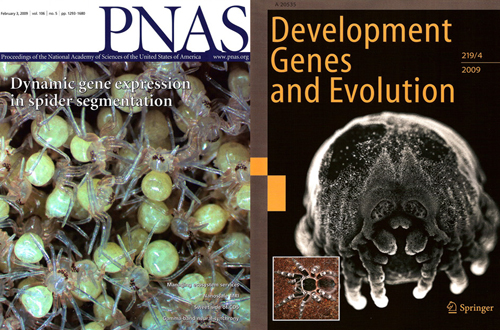
Dr. Matthias Pechmann is a researcher at the University of Cologne's Biocenter within the Faculty of Mathematics and Natural Sciences, specializing in developmental and evolutionary biology with a primary focus on spider embryology and arthropod evolution. His work investigates the mechanisms of segment and appendage formation in spiders, particularly using the common-house spider ( Parasteatoda tepidariorum ) and the Brazilian white-knee tarantula ( Acanthoscurria geniculata ) as model organisms, with additional research on cricket ( Gryllus bimaculatus ) development. Dr. Pechmann's research centers on understanding the evolutionary success of arthropods through their segmented body plans and articulated appendages. He investigates early embryonic development in spiders, with particular emphasis on the establishment of main body axes, dorsoventral axis patterning, and the genetic mechanisms underlying segment formation. His work combines molecular techniques including RNA interference, gene expression analysis, and comparative approaches to uncover conserved and divergent developmental pathways across arthropods. His most significant contributions involve the role of Ets4 in axis specification and cell migration, Toll genes in axis elongation, and Distal-less as a gap gene during spider segmentation. His publication record demonstrates expertise in developmental genetics and evolutionary biology, with numerous high-impact papers in journals such as eLife, BMC Biology, and Current Biology. His research has significantly advanced understanding of the genetic and cellular mechanisms that govern body plan development in arthropods, particularly revealing how conserved developmental genes have been co-opted for spider-specific morphological features. Dr. Pechmann has received research funding through a University of Cologne Postdoc Grant for his work on dorsoventral axis patterning in crickets, demonstrating his ability to secure competitive research funding. His collaborative approach is evident through extensive co-authorship with researchers across multiple institutions, particularly with Dr. Roth's research group at the University of Cologne as indicated by the website structure (Home > Research > Roth > Pechmann). His laboratory work involves advanced techniques including RNA interference, confocal microscopy, gene expression analysis, and comparative genomic approaches. The research group maintains spider cultures of Parasteatoda tepidariorum and Acanthoscurria geniculata as primary model organisms, with additional work on crickets for comparative studies of dorsoventral patterning.
Romain Claret is a Doctoral Assistant at the Institute of Information Management within the Faculty of Economics at the University of Neuchâtel, Switzerland. He is completing his PhD in Computer Science with 85% progress, focusing on evolving neural networks that mimic human collective intelligence. His research bridges computer science, neuroscience, and cognitive science to develop next-generation artificial intelligence systems. His research interests include: Evolving Neural Networks Neuromodulated Neural Networks Sparse Neural Networks Collective Computational Intelligence Knowledge representation and World models Neuroscience-inspired Artificial Life Claret's research focuses on developing AI systems that evolve rather than being explicitly engineered. His work on GEENNS (Compositional Intelligence Through Evolution) demonstrates how neural networks can be taught to think in components rather than patterns, leading to more adaptable and interpretable AI. His systematic optimization approach has achieved 29% MNIST accuracy with ES-HyperNEAT, surpassing previous benchmarks through exploration of 3+ billion configurations. His publications highlight advancements in hyperparameter optimization for evolutionary algorithms and their transferability across tasks. This research has implications for autonomous systems, personalized healthcare, and adaptive robotics where traditional AI approaches struggle with novel situations. His work proves that evolutionary approaches can yield transferable solutions between different problem domains. Claret has received training in human subjects research, entrepreneurship, and academic writing. He is also the founder of Artificialkind, a startup focused on evolving intelligence, and serves as a Visiting Researcher at University College Dublin since September 2023. As an educator, he has served as a Guest Lecturer at the University of Geneva and mentors students in computational thinking and evolutionary AI approaches. His teaching philosophy emphasizes that 'intelligence emerges, isn't programmed' and that 'adaptability > benchmark scores' in complex, changing environments.
Dr. Patrick Beckers is a PartTime Lecturer in Zoology at the University of Bonn, affiliated with the Department of Animal Biodiversity within the Bonn Institute for Organismic Biology. He teaches courses across the Bachelor of Biology, Biology Teacher Education, and Master's OEP programs, including Morphology and Evolution of Animals (BIO-02), Ecology with Identification Exercises (BIO-07), and specialized courses on Biodiversity of the Rocky Shore of Brittany and Histology/3D Reconstruction techniques. His research focuses on comparative neuroanatomy and evolutionary morphology of invertebrate nervous systems, particularly within Spiralia (annelids, mollusks, nemerteans). Employing advanced techniques like immunohistochemistry, electron microscopy, micro-CT scanning, and 3D reconstruction, he investigates how nervous systems evolve across taxa and adapt to environmental pressures. Key questions address structural differences between predators/prey, sessile/mobile species, and the evolutionary origins of neural complexity in annelids. Analysis of his 14 publications (2018-2022) reveals a concentrated focus on annelid neuroanatomy, with recurring themes in brain evolution, sensory organ development, and nervous system homology. His work consistently utilizes high-resolution imaging to reconstruct neural architectures, emphasizing comparative approaches across diverse annelid families including Myzostomida, Eunicida, and Chaetopteridae. Dr. Beckers serves as the teaching evaluation officer for the Biology department and collaborates extensively with researchers like Prof. Bartolomaeus and Dr. Helm. His work leverages the department's microscopy facilities for detailed anatomical studies, contributing to foundational understanding of nervous system evolution in lophotrochozoans.