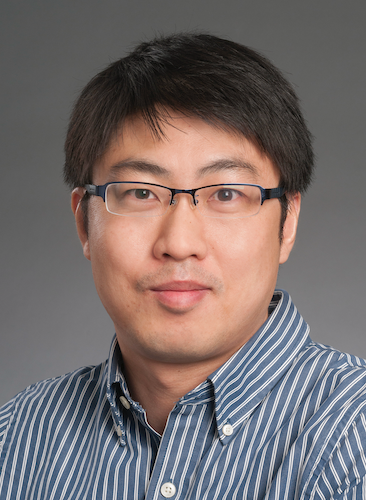
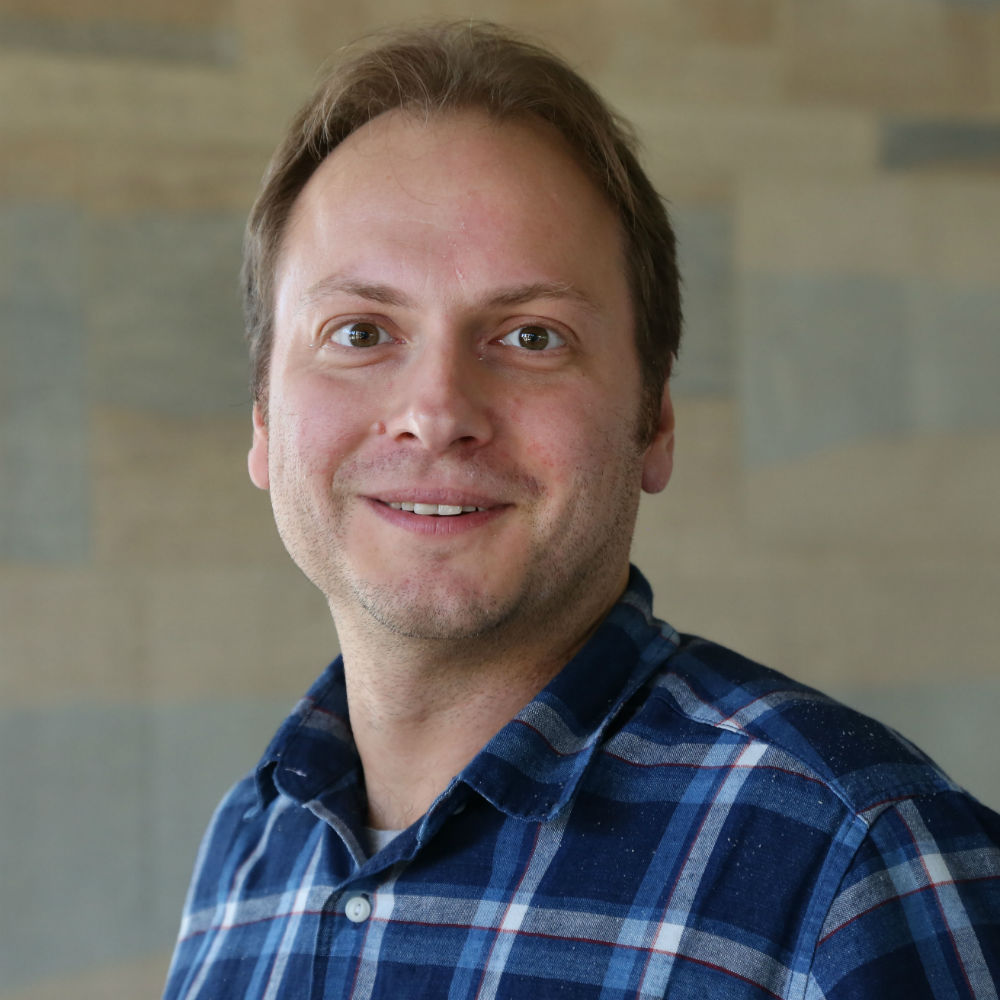
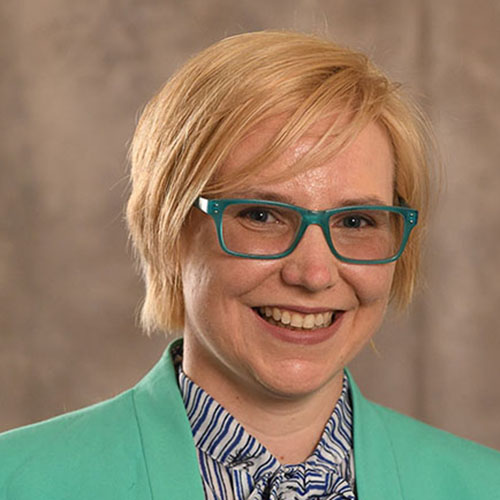
William McNally is a Professor at Wilfrid Laurier University's Lazaridis School of Business and Economics. His research focuses on insider trading, financial disclosure, and stock repurchases. He teaches finance pedagogy and explores interdisciplinary applications of machine learning in sports science and geophysics. McNally's recent work integrates physics-based models with deep learning for sports simulations (golf, hockey) and environmental systems. His articles emphasize practical computational solutions, from optimizing golf equipment to climate model calibration, reflecting a strong cross-disciplinary approach.
Jesse Gomez is an Assistant Professor at Princeton University's Princeton Neuroscience Institute. His research focuses on understanding the development of the human brain using multimodal approaches including functional MRI (fMRI), quantitative MRI (qMRI), and diffusion-weighted MRI (dMRI). His work examines how childhood experience shapes neural development and what happens when this development diverges in conditions like dyslexia, autism, or prosopagnosia. Research interests include: Cognitive neuroscience of brain development Experience-dependent plasticity in visual cortex organization Multimodal neuroimaging approaches Developmental trajectories in typical and atypical populations His publications demonstrate a consistent focus on visual system development, with recent work examining eccentricity gradients in visual cortex, cortical recycling during childhood, and cerebellar influences on cortical development in autism. The research employs advanced neuroimaging techniques to map structural and functional changes across development. Dr. Gomez leads the Brain Development Lab and advises graduate students including Priscilla Louis. His work integrates behavioral observations with translational techniques using postmortem tissue and spectroscopy to bridge brain development with cognitive function.
Dr. Min Long is an Associate Professor in the Department of Computer Science at Boise State University, affiliated with the College of Engineering. He holds a Ph.D. in Astrophysics from Cornell University and completed postdoctoral research at the University of Illinois and the Flash Center for Computational Sciences at the University of Chicago. His research focuses on interdisciplinary applications of computing and AI, including computational hydrodynamics, high-energy astrophysics, plasma dynamics, astroinformatics (AI-driven spectral analysis), X-ray emission studies, and multi-scale modeling of nuclear/irradiated materials. He is also affiliated with the Center for Advanced Energy Studies (CAES) at Idaho National Laboratory (INL). His expertise spans computational methods, high-performance computing, and AI algorithms such as evolutionary and neuroevolution approaches. His work bridges astrophysics, materials science, and computer science, emphasizing automated data analysis and large-scale simulations. For more details, visit his personal website .
Alexis Hill is an Assistant Professor and Neuroscience Program Director at Barnard College, Department of Neuroscience & Behavior. She also maintains an affiliation with the College of the Holy Cross, where she contributed to academic roles. Her research focuses on molecular mechanisms of neuronal activity and behavior using Drosophila melanogaster, with applications to human neurological diseases. She oversees the Hill Lab, which investigates gene-neurotransmission interactions and developmental processes. Education: Ph.D., Columbia University. Email contacts: ahill@barnard.edu (primary) and ahill@holycross.edu. Research interests include neurobiology, molecular genetics, and developmental biology. Students advised include Brendan Kelly (Holy Cross ’19) and Emily Hensley (Class of 2022, lab artwork contributor). Her research spans neurophysiological mechanisms in Drosophila, opioid research historiography, and STEM education innovation. Articles highlight ion channel roles in stress responses, synaptic transmission, and neurogenesis’s impact on mental health. Lab collaborations involve Barnard students and interdisciplinary approaches to neuroscience. No scientific awards explicitly noted, but contributions to neurobiology and education are notable.
Dr. Spyros Samothrakis is a Senior Lecturer and Chief Scientific Adviser at the School of Computer Science and Electronic Engineering, University of Essex. His primary roles include academic research and advisory work in artificial intelligence and machine learning. He holds a PhD in Computer Science from the University of Essex, an MSc in Intelligent Systems from the University of Sussex, and a BSc in Computer Science from the University of Sheffield. His research focuses on Reinforcement Learning (RL) , Machine Learning (ML) , Neural Networks , and Role-Playing Games (RPGs) . He explores applications in areas like causal inference, game theory, and supply chain management. Recent work includes developing frameworks for automated cost estimation in games and analyzing AI agents in complex socioeconomic systems. Notable contributions include studies on self-play algorithms, causal structure learning, and the societal implications of AI. His articles span topics from neurocontrol optimization to ethical considerations in AI deployment. Dr. Samothrakis advises PhD students in computer science and has supervised research on causal effect estimation, memory-driven exploration, and text generation. He has secured grants from organizations like the Alan Turing Institute and the ESRC for projects involving AI in micro-social change and data-driven decision-making. His collaborations extend to industry partners such as the National Theatre and NHS Trusts, applying AI to healthcare and cultural data analysis. He actively contributes to conferences and publishes in top-tier journals like Neural Networks and IEEE Transactions .
Angela Freeman is Assistant Professor of Biological Sciences at Salisbury University, specializing in neuroethology. Her research examines mammalian social behavior through neuroendocrine mechanisms, with focus areas including vampire bat cooperation, flying squirrel co-nesting, and neuropeptide functions. Education includes: PhD in Biological Sciences, Kent State University (2016) MS in Biological Sciences, University of Manitoba (2012) Research utilizes field neuroethology approaches to study brain-behavior relationships in wild mammals. Current collaborations include investigating vasopressin/oxytocin effects on vampire bat cooperation with Ohio State University. Recent publications demonstrate consistent focus on neuroendocrine regulation of rodent social behavior, olfactory communication, and reproductive strategies across species including giant pouched rats and ground squirrels.
Andrew Adamatzky is Professor in Unconventional Computing at the University of the West of England, Bristol, where he directs the Unconventional Computing Laboratory. His research spans reaction-diffusion computing, cellular automata, physarum computing, massive parallel computation, applied mathematics, collective intelligence and robotics, bionics, computational psychology, non-linear science, novel hardware, and future computation technologies. Research focuses on developing computing paradigms inspired by natural phenomena. Major areas include: Physarum machines and slime mould computing Reaction-diffusion chemical computers Cellular automata theory and implementations Unconventional computing materials (colloids, fungi, proteins) Biologically-inspired robotics and swarm intelligence Recent publications demonstrate strong emphasis on biomolecular computing systems, proteinoid-based computation, cellular automata advances, and hybrid bio-electronic systems. Work increasingly explores bio-electrical phenomena in unconventional substrates like sea mud and plant tissues.
Dr. Elaine Elizabeth Gomez Guevara is a Lecturer in Evolutionary Anthropology at Duke University's Trinity College of Arts & Sciences. Her research examines evolutionary mechanisms of aging, primate genomics, and human-chimpanzee epigenetic differences, with fieldwork focused on lemur adaptations in Madagascar. Her interdisciplinary work integrates genomics, epigenetics, and comparative anatomy to study brain evolution, dietary adaptations in primates, and conservation implications of genetic diversity. Current research includes NSF-funded projects on primate brain epigenetics and Alzheimer's pathology modeling in primates. She leads initiatives to increase diversity in evolutionary anthropology through community-building and mentorship. Publications demonstrate expertise in epigenetic clock development, neurogenetic evolution, and fieldwork methodologies. Recent work examines pedagogical approaches to combat racial essentialism in biology education.
Navjot Kaur is an Associate Research Scientist in the Department of Neuroscience at Yale School of Medicine, Yale University. Her work focuses on neurodevelopment, neuropsychiatric disorders, and molecular mechanisms in brain diseases. Education: PhD in Biotechnology from National Centre for Cell Science (2014), MS in Biotechnology from Panjab University (2006). Research Interests: Investigates neuronal circuit development, evolutionary neurobiology, and molecular pathways in neurological disorders. Key areas include brain architecture specification, neuropsychiatric risk factors, and oncogenic mechanisms in gliomas. Collaborations: Works with prominent researchers like Dr. Nenad Sestan (primary collaborator), Angus Nairn, and Hongyu Zhao. Research spans neurodevelopmental processes, gene regulatory networks, and translational applications in brain disorders.
Harvey Paul is a Professor of Zoology and former Head of the Department of Zoology at the University of Oxford. He holds a professorial fellowship at Jesus College, Oxford. His research focuses on evolution, ecology, and behaviour, with significant contributions to phylogenetics, molecular evolution, and epidemiology. He has pioneered methods for analyzing comparative data using phylogenetic approaches and has advanced understanding of evolutionary processes through null models and statistical innovations. Research Highlights Developed influential null models for ecological and evolutionary studies Explored phylogenetic relationships without fossil data Advanced methods linking viral phylogenies to epidemic history Examined brain structure evolution in mammals Awards & Honours Commander of the Order of the British Empire (CBE) (2008) Fellow of the Royal Society (1992) ISI Highly Cited Researcher Recipient of the Frink Medal and NAS Award for Scientific Reviewing Professional Contributions Harvey's work bridges ecology, evolution, and molecular biology. His lab has produced foundational studies on testes size evolution in primates, life history trade-offs in birds, and the fast-slow axis in mammalian life histories. He has collaborated extensively on viral phylogenetics projects, linking genetic data to epidemiological dynamics.
Chan Lin is a Lecturer at the University of Maryland, specializing in invertebrate neurobiology. Their research integrates brain-imaging techniques with field biology to study nervous system evolution, particularly in insects and crustaceans with unique sensory adaptations. They teach courses such as Principles of Neuroscience, Cellular and Molecular Neuroscience, and Origin and Evolution of Nervous Systems. Education: B.S. Entomology, National Chung Hsing University, Taiwan M.S. Entomology, National Taiwan University, Taiwan Ph.D. Insect Science & Neuroscience, University of Arizona Postdoctoral Research: University of Maryland Baltimore County; Smithsonian National Museum of Natural History Research focuses on optic lobe organization across species, emphasizing how sensory adaptations drive neural evolution. Recent work explores visual metamorphosis in crustaceans and insects transitioning between aquatic and terrestrial environments. No specific awards are listed, but their contributions to understanding neuroevolutionary principles are notable. Teaching responsibilities include undergraduate and graduate neuroscience courses, bridging laboratory research with educational outreach. No formal advising or grant details are provided in the text.
Dr. Rohitash Chandra is a Senior Lecturer in Data Science at the University of New South Wales (UNSW) School of Mathematics and Statistics. He leads research in AI methodologies (e.g., Bayesian deep learning, neuroevolution) with applications to climate extremes, geoscience models, mineral exploration, biomedicine, and ancient religious text analysis. He is the Data Theme Lead of the ARC ITTC Training Centre for Data Analytics in Minerals and Resources (2020–2025) and a Chief Investigator in NHMRC projects on AI-driven drug repurposing for COVID-19. Education: PhD in Artificial Intelligence (Victoria University of Wellington, 2012), MSc (University of Fiji, 2008), BSc (University of the South Pacific, 2006). Research Interests: His work spans AI-driven climate modeling (cyclone forecasting, paleoclimate analysis), geoscience applications (remote sensing for mineral exploration), medical diagnosis (skin cancer detection, drug repurposing), and AI in humanities (sentiment analysis of religious texts like the Bhagavad Gita). He pioneers methods like Bayeslands for geoscientific parameter estimation and Bayesreef for reef evolution modeling. Articles Trends: Recent work focuses on LLM applications in cultural analysis, economic forecasting frameworks, and Bayesian neural networks for uncertainty quantification. His publications bridge AI with interdisciplinary challenges in earth sciences, healthcare, and social sciences. Grants & Awards: Recipient of the UNSW Science Silverstar Award (2022), Sydney Fellowship (2017–2019), and over $10M in ARC/industry funding. He has supervised 40+ students across PhD, masters, and honours programs. Labs & Teams: Founder of the Transitional Artificial Intelligence Research Group (t-AI). Collaborates with EarthByte Group, UN agencies, and institutions like Imperial College London on projects ranging from Mars landscape modeling to Hindu philosophy LLMs like Vedanta-GPT.
Djai Heyer is a researcher affiliated with Vrije Universiteit Amsterdam under Amsterdam Neuroscience (Cellular & Molecular Mechanisms). Their work focuses on human neuroscience , particularly neuronal electrophysiology , cortical architecture , and genetic links to cognition . Key research areas: Human cognition, dendritic signaling, action potential dynamics, and neurogenetic networks. Recent research trends include studies on ion channel properties , neuronal diversity in the temporal lobe and hippocampus , and genetic expression patterns related to intelligence. Their work bridges biophysics and cognitive neuroscience . Collaborations span institutions like Zenodo and Unknown Publisher for datasets on human pyramidal neurons and intelligence-related cortical mechanisms .
Jim Tørresen is a senior researcher at the Department of Informatics , University of Oslo , with a focus on Robotics , Artificial Intelligence , and Human-Robot Interaction . His work spans autonomous systems, machine learning applications, and ethical considerations in AI. Current Affiliation : University of Oslo, Norway Research Interests : Robotics for elderly healthcare and assistive technologies Machine learning in multimodal sensing and personalization Explainable AI and ethical user modeling Adaptive control systems and motion planning Embodied intelligence in creative domains like dance Recent Article Trends include AI-driven healthcare monitoring, social robotics for senior engagement, reinforcement learning in constrained environments, and computational creativity applications. His work emphasizes privacy preservation , real-time interaction , and human-centered design . Collaborations : Frequent collaborations with researchers like Kai Olav Ellefsen , Diana Saplacan Lindblom , and Charles Martin across EU projects and robotics conferences.
Eric Medvet is an Associate Professor of Computer Engineering at the Department of Engineering and Architecture (DIA), University of Trieste, Italy. He leads the Evolutionary Robotics and Artificial Life Lab and co-leads the Machine Learning Lab. His research focuses on Evolutionary Computation, Machine Learning, and their applications to robotics, including Grammatical Evolution, Genetic Programming, and soft robotics. He received the Google Faculty Research Award 2019 for a project on modular soft robots and co-authored a best paper at EuroGP 2024. His recent work emphasizes interpretable control policies, quality-diversity optimization, and evolutionary learning of formal specifications. Medvet teaches advanced courses on machine learning, evolutionary robotics, and programming, consistently updating curricula to reflect cutting-edge research. His labs are hubs for interdisciplinary projects, blending theory with practical implementations in robotics and AI. Research Interests: Medvet’s research spans evolutionary algorithms applied to robotics, with a focus on modular systems. He explores how genetic programming and grammatical evolution can optimize robotic designs and controllers. His work on ‘totipotent neural controllers’ and ‘body-brain co-evolution’ exemplifies efforts to create adaptable, specialized robots. He also investigates formal methods (e.g., STL specifications) for system validation and interpretable AI models. Recent trends in his publications reflect a shift toward practical applications, such as wearable movement analysis and sim-to-real transfer in robotics. Awards: Google Faculty Research Award 2019, EuroGP 2024 Best Paper Award Labs: Evolutionary Robotics and Artificial Life Lab, Machine Learning Lab Teaching: Courses include Advanced Programming, Introduction to Machine Learning, and Evolutionary Robotics, with a focus on Java and practical software development. Medvet’s approach integrates theoretical rigor with hands-on experimentation, emphasizing open-source tools like JGEA and 2D-VSR-Sim. His work bridges computational intelligence and real-world robotics challenges, driving innovation in both fields.