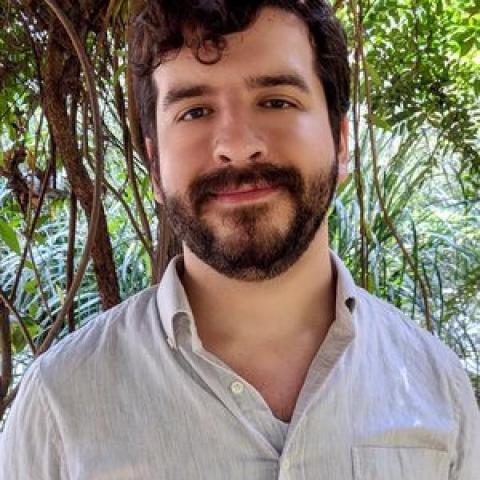
Nathan P. CramerView profile
Associate Professor
Nathan P. Cramer, PhD, serves as Associate Professor in the Department of Anatomy and Neurobiology at the University of Maryland School of Medicine, where he joined as Assistant Professor in February 2019. His research program investigates maladaptive central nervous system responses to injury and psychological stressors, with particular emphasis on chronic pain mechanisms and stress-pain interactions. Dr. Cramer's educational trajectory includes: BS in Physics from University of Maryland College Park (2001) PhD in Neuroscience from University of Maryland School of Medicine (2007) Postdoctoral training at Cornell University (2009) Additional postdoctoral studies at Uniformed Services University of the Health Sciences (2013) His laboratory employs multidisciplinary approaches to study the parabrachial nucleus as a critical hub for affective pain processing. Using rodent models, his team examines how noradrenergic modulation in this brain region contributes to pain chronicity under stress conditions through behavioral assays, in vivo imaging, and electrophysiological techniques. Current work focuses on identifying neural circuit mechanisms that transform acute pain into persistent conditions. Analysis of Dr. Cramer's 2020-2022 publications reveals consistent investigation of specific neural substrates in pain processing, with recurring emphasis on the parabrachial nucleus, stress modulation, and opioid system interactions. His work demonstrates technical sophistication through integration of fiber photometry, optogenetics, and circuit-level analyses to dissect pain pathways. Scientific Awards: No scientific awards documented in provided materials Dr. Cramer has secured significant research funding including a University of Maryland Center to Advance Chronic Pain Research Seed Grant (2022) and co-Principal Investigator role on an NINDS R01 grant (R01NS127827, 2023) investigating noradrenergic modulation in the parabrachial nucleus. No formal advisees are listed in available documentation. His research facility utilizes advanced methodologies including slice patch clamp electrophysiology, in vivo fiber photometry, rodent calcium imaging, and comprehensive behavioral phenotyping to investigate stress-pain interactions at molecular, cellular, and circuit levels.