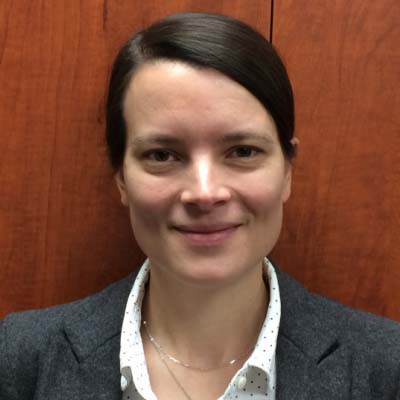
Lakhmi C. Jain is a distinguished academic affiliated with the University of South Australia. As a Professor, she has made significant contributions to the fields of Artificial Intelligence, Computational Intelligence, and Fuzzy Systems. Her research spans neural networks, decision support systems, robotics, and data analysis, with a focus on interdisciplinary applications. Her career includes over 445 publications, including books like Complex Networks in Software, Knowledge, and Social Systems (2019) and E-Learning Systems - Intelligent Techniques for Personalization (2017). She has held editorial roles in journals such as the International Journal of Intelligent Decision Technologies (IDT) and the Journal of Intelligent & Fuzzy Systems. Jain's work emphasizes practical applications of computational intelligence, including efforts in software development, biomedical signal processing, and multi-agent systems. She has collaborated extensively with researchers globally, contributing to advancements in AI-driven technologies and decision-making frameworks.
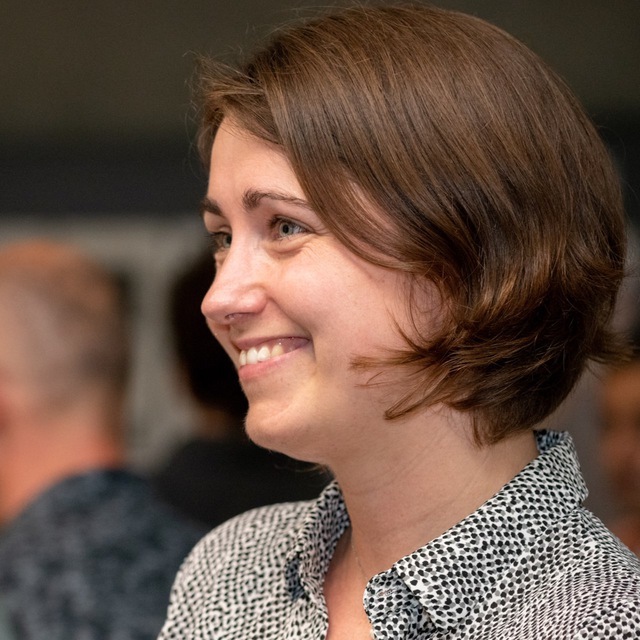
Dr Himashi Peiris is a Research Fellow in the Department of Data Science & AI at Monash University's Faculty of Information Technology in Australia. She holds a PhD in Biomedical Engineering from Monash University (2024) and a Bachelor's in Information Technology from the University of Moratuwa, Sri Lanka. Her work focuses on semi-supervised learning, medical image analysis, and AI-driven healthcare solutions. She has over three years of industry experience in software engineering. Research interests include developing machine learning algorithms for medical imaging challenges, particularly in scenarios with limited labeled data. Her innovations span neural networks, transformer architectures, and uncertainty-guided segmentation techniques applied to MRI, CT scans, and biomedical datasets. Her publications in Nature Machine Intelligence and MICCAI conference highlight contributions to semi-supervised segmentation and AI-driven diagnostic tools. Notable collaborations include the development of PINGU for perivascular space identification and adversarial networks for construction waste recognition. Awards include the 2023 Victorian Biomedical Imaging Capability Early Career Award and 2023 IEEE ACS Student Writing Award. Her work has been featured in media outlets and Mendeley platforms, emphasizing AI's role in medical decision-making.
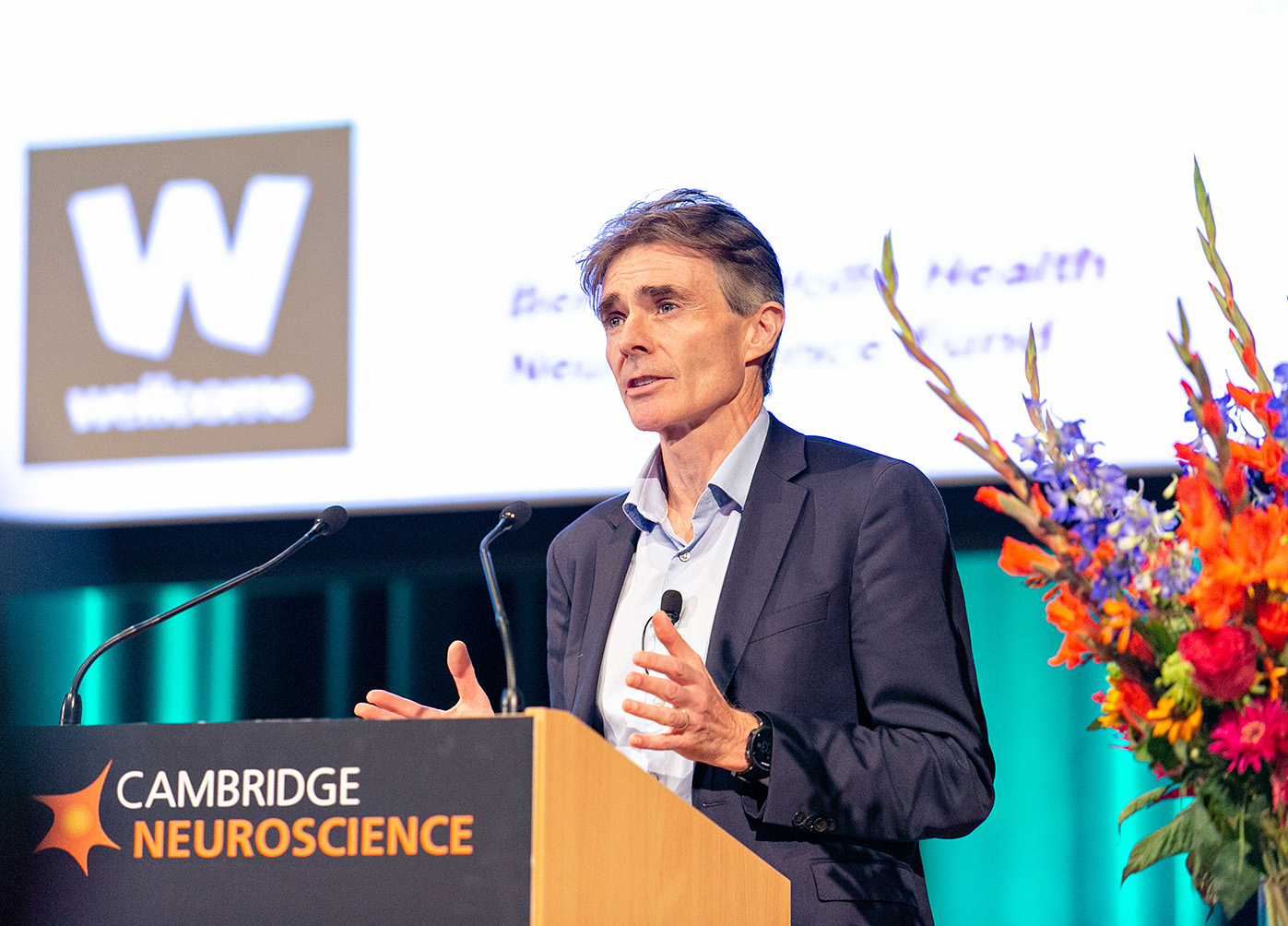
Professor Paul Fletcher serves as the Bernard Wolfe Professor of Health Neuroscience at the University of Cambridge Department of Psychiatry and Clinical Director of the Cambridge Neuroscience Interdisciplinary Research Centre. He holds concurrent appointments as a Wellcome Trust Investigator and Honorary Consultant Psychiatrist with the Cambridgeshire and Peterborough NHS Trust and Cambridge University Hospitals NHS Trust. His research centers on neurobiological mechanisms of psychosis , computational psychiatry , and appetite control in disordered eating . Fletcher pioneered influential theories linking prediction error signaling to psychotic symptoms, demonstrating how perturbations in frontal lobe responses explain hallucinations and delusions. His work integrates neuroimaging, psychopharmacology, and computational modeling to bridge clinical observations with neural mechanisms. Analysis of his recent publications reveals a dominant focus on prediction error computation in psychosis cortical structural changes in mental illness neurobiological correlates of eating disorders computational modeling of perceptual inference dopaminergic mechanisms in learning translational neuroscience approaches His work increasingly incorporates multimodal neuroimaging and real-world applications like the Hellblade: Senua's Sacrifice project. Key recognitions include: BAFTA Award for Games Beyond Entertainment (2017) James Bull Lectureship (2017) Election to Academy of Medical Sciences (2012) WFSP Research Award in Biological Psychiatry (2005) Fletcher maintains significant research funding through Wellcome Trust appointments spanning over two decades, including current status as a Wellcome Trust Investigator. His clinical neuroscience program bridges the Department of Psychiatry with NHS trusts, emphasizing translational pathways from basic mechanisms to clinical applications. The Fletcher Group operates within the Cambridge Neuroscience network, collaborating extensively across departments and healthcare systems.
Professor Georgi Dimitrov Mengov serves as a full-time faculty member at the Faculty of Economics, Sofia University "St. Kliment Ohridski" since 2005, heading the Center for Modeling Socioeconomic Systems. His interdisciplinary work bridges computational neuroscience and economic decision-making through affiliations including the editorial board of the International Journal of Neural Networks and Advanced Applications and advisory roles at Swiss Innovation Valley. His research focuses on human-oriented decision science , examining neural correlates of economic choices, emotional memory dynamics, and socioeconomic forecasting. Mengov develops computational models predicting intuitive economic behavior using neural network architectures, with particular emphasis on Behavioral economics and risk analysis Neurocomputational modeling of social systems Mathematical-psychological frameworks for decision processes His publication trends reveal consistent interdisciplinary integration: neural network methodologies applied to socioeconomic problems (2006-2018), behavioral economics of digital networks (2021-2025), and foundational work in human decision theory through monographs like Decision Science: A Human-Oriented Perspective (Springer, 2015). Recent work increasingly addresses turbulent economic environments and virtual social networking impacts. Scientific contributions include editorial leadership for major journals and program committee participation in the International Joint Conference on Neural Networks (2013-2019). Notable recognitions include ORCID registration (0000-0001-8157-3246) and ResearchGate profile. As academic advisor and center director, Mengov mentors emerging researchers while leading projects on socioeconomic modeling. His work demonstrates strong integration of theoretical neuroscience with practical economic applications, securing consistent publication output in high-impact journals including Neural Networks and Journal of Behavioral and Experimental Economics . Mengov maintains active research laboratories focused on neuroeconomic modeling and socioeconomic forecasting, with recent work exploring fractal social structures and virtual network economics. Current projects examine motivation dynamics in turbulent economic environments through the ACCESS Press publications.
Noortje Venhuizen is an Assistant Professor in the Department of Cognitive Science and Artificial Intelligence at the Tilburg School of Humanities and Digital Sciences, Tilburg University. She serves as Academic Director for the BSc Cognitive Science and Artificial Intelligence program since 2024, and has held academic positions at Saarland University (2015-2022) including roles as Scientific Staff member and Principal Investigator in SFB 1102 projects. PhD in Computational Semantics (University of Groningen, 2015) MSc in Logic (ILLC, University of Amsterdam, 2011) BSc in Artificial Intelligence (Utrecht University, 2009) Her research focuses on expectation-based language comprehension, neurocomputational modeling of semantic processing, distributional formal semantics, and pragmatic reasoning in discourse. Key contributions include PDRT-SANDBOX (Haskell NLP library) and DFS Tools (Prolog implementation of distributional formal semantics). Recent publications (2023-2025) explore multimodal word meaning, informativity in reference production, and neurocognitive models of surprisal processing. Her work combines formal semantics with cognitive neuroscience and computational modeling. LOT Grotevragenprijs essay contest - Second Prize She has presented research at major conferences including CogSci, AMLaP, and Sinn und Bedeutung. Current teaching includes courses on artificial intelligence, statistics, and semantic theory.
Professor Danilo P. Mandic, affiliated with Imperial College London, UK, is a leading researcher in signal processing, machine learning, and biomedical signal analysis. His work spans quaternion algebra, tensor networks, and neural networks for real-world applications. 2025: Published 11+ works on EEG/PPG analysis, quantum learning, and tensor-based LLM compression 2024: Active in interpretable transformers, graph learning for financial data, and hearable devices Research focuses on hypercomplex signal processing, graph neural networks, and medical AI applications. Recent work explores quaternion calculus for signal processing, tensor network structures for LLMs, and hearable device optimization. Key publication trends include: 2025 emphasis on quantum-aware learning, 2024 graph-based time series clustering, and 2023 foundational work on graph CNNs and matched filtering approaches. Collaborates extensively with Dongpo Xu, Sayed Pouria Talebi, Clive Cheong Took, and Tobias Reichenbach on projects involving ear-EEG, ECG enhancement, and financial sentiment analysis.
Professor Casimir Ludwig holds the position of Professor of Cognitive Science at the School of Psychological Science, University of Bristol. His research focuses on computational cognitive models, decision-making processes, reinforcement learning, and visual attention mechanisms. He has contributed significantly to understanding how humans integrate sensory information to make decisions, particularly in contexts involving uncertainty and environmental dynamics. Key research areas include the interplay between attention and decision-making, the impact of emotional and contextual factors on cognitive processes, and the development of datasets like the 'Epic-tent' egocentric video dataset for studying assembly tasks. His work bridges theoretical neuroscience, machine learning, and experimental psychology to address fundamental questions about human behavior and artificial intelligence. Notable contributions include studies on reinforcement learning under uncertainty, the role of background stimuli in decision policies, and the limitations of disentangled models in generalization tasks. His interdisciplinary approach integrates methodologies from psychology, computer science, and neuroscience to advance cognitive science as a field. Professor Ludwig collaborates with faculty across disciplines, including robotics and computer vision experts at the University of Bristol, to explore applied problems such as human-robot interaction and activity recognition from visual data.
David Terburg is Associate Professor in Social Neuroscience at Utrecht University's Department of Psychology (Faculty of Social and Behavioural Sciences). His research examines neurobiological mechanisms of social behavior using multimodal approaches including hormone administration, fMRI, and lesion studies. His research focuses on: Neural basis of social motivation and aggression Amygdala function in threat processing and escape behaviors Hormonal modulation of social decision-making Cross-species validation of social neuroscience findings Analysis of his publications shows strong emphasis on the basolateral amygdala's role in rapid threat responses, and hormonal influences (testosterone, oxytocin) on social cognition. Recent work develops neurocomputational models of cerebellum-amygdala interactions. Scientific awards include: NWO Veni Award (2013) for research on neuroendocrine mechanisms of defense behaviors He teaches courses in neuropsychology and social neuroscience, employing methods like eye-tracking and psychophysiology. His lab uses pharmacological interventions and neuroimaging to study clinical populations including psychopathy and social anxiety. Research is supported by Dutch Science Foundation grants and involves international collaborations across Europe and South Africa.
Nicolas Duchateau is an Associate Professor at Université Lyon 1 and researcher at the CREATIS lab in Lyon, France. He is also a Junior member of the prestigious Institut Universitaire de France (IUF) and serves as Associate Editor for the Neurocomputing journal. His academic career includes positions at Universitat Pompeu Fabra in Barcelona and INRIA Epione in Sophia-Antipolis, with his current role at Polytech Lyon's Biomedical Engineering department since 2016. His research focuses on characterizing diseases from medical imaging populations, with methodological development centered on statistical atlases and machine learning approaches to represent populations. On the applicative side, he concentrates on cardiac function and imaging modalities such as echocardiography and magnetic resonance. His work spans computational anatomy, pattern statistics, representation learning, manifold learning, auto-encoders, information fusion, cardiac imaging, shape and deformation analysis, risk stratification, and image synthesis. Duchateau's recent publications reveal strong trends in multimodal data fusion, particularly combining echocardiography with clinical records for patient stratification. He has made significant contributions to representation learning for cardiac population analysis, with increasing emphasis on diffusion models, uncertainty estimation, and domain adaptation techniques. His work bridges deep learning methodologies with clinical cardiology applications, focusing on interpretable AI solutions for cardiac function assessment. Junior Member of Institut Universitaire de France (2021) PhD prize for knowledge transfer from Universitat Pompeu Fabra (2014) Young Investigator Award at Euroecho conference (2010) Duchateau actively supervises numerous PhD and Master's students, including Anita Salvador, Thierry Judge, Pierre-Elliott Thiboud, and Romain Deleat-Besson. He has secured major research funding including a €75k grant from the Institut Universitaire de France (2021-2026), a €251k French ANR Young Researchers grant for the "MIC-MAC" project (2019-2024), and a €139k grant from the Fédération Française de Cardiologie for the "MI-MIX" project (2020-2023). He leads a vibrant research team at CREATIS lab focused on medical image analysis, where his group develops computational approaches to characterize cardiac diseases through population analysis. The team works at the intersection of machine learning, medical physics, and clinical cardiology, with ongoing projects spanning echocardiography analysis, MRI processing, synthetic data generation, and clinical decision support systems.
Richard Huskey is an Assistant Professor in the Department of Communication and the Cognitive Science Program at the University of California Davis. He leads the Cognitive Communication Science Lab , contributes to the Computational Communication Research Lab, and is affiliated with the Center for Mind and Brain and the Designated Emphasis in Computational Social Science. He also serves as Vice Chair of the International Communication Association’s Communication Science and Biology interest group. Ph.D., Communication (Cognitive Science Emphasis), University of California Santa Barbara, 2016 M.A., Communication, University of California Santa Barbara, 2014 B.S., Business Administration, California Polytechnic State University San Luis Obispo, 2006 Dr. Huskey’s research examines how motivation influences attitudes and behaviors, with a focus on media neuroscience and computational approaches. His work employs fMRI , mobile EEG hyperscanning , and drift diffusion modeling to explore phenomena like flow experiences , media selection dynamics , and neural predictors of message effectiveness . He advocates for integrating Marr’s tri-level framework across communication subfields and promotes open science initiatives. Recent publications address computational modeling of mood management, flow neurobiology, equity in doctoral admissions, and complexity science frameworks. His methodological innovations include using augmented reality and network neuroscience to study cooperation and attention dynamics. Dr. Huskey’s work bridges media psychology, cognitive neuroscience, and computational social science, emphasizing practical applications in health communication and digital media design.
Dilip K. Prasad is a Professor at the Department of Informatics, UiT The Arctic University of Norway. His work bridges Artificial Intelligence and Medical Imaging , with a focus on Interpretable AI , Scalable AI , and Life Science Applications . He has contributed to Maritime Technology and Biomedical Engineering . Ph.D. and B.Tech from Nanyang Technological University and IIT Dhanbad Senior Research Fellow at NTU (2015-2019), Research Fellow at NUS (2012-2015) Industry experience at IBM, Infosys, Mediatek, Philips His research explores Image Processing , Machine Learning , and AI Applications in Biomedicine . Recent work includes Dense Video Captioning , 3D Mitochondrial Modeling , and Physics-Guided Loss Functions . Articles span Neurocomputing , Optics Express , and top AI conferences like CVPR and NeurIPS . Prasad has received the Rolls-Royce Inventor Award (2016) and Best Paper Award (IJCIE 2017) . He has reviewed for 50+ journals and 30+ conferences, serving as Area Chair for NeurIPS 2022-23 and Organizer Chair for ICCV Workshop 2023 .
Caroline Runyan is an Associate Professor in the Department of Neuroscience at the University of Pittsburgh, affiliated with the Dietrich School of Arts and Sciences. Her research focuses on understanding the circuit mechanisms controlling information flow between brain regions, particularly how networks filter irrelevant sensory information and integrate inputs with internal brain states. She employs advanced techniques such as two-photon imaging, optogenetics, and genetic labeling in mice performing perceptual tasks. Key areas include state-dependent processing across cortical hierarchies, inhibitory subcircuit control, and neuromodulatory influences on sensory processing. Her work aims to elucidate disruptions in network communication relevant to disorders like schizophrenia and addiction. Education: Ph.D. in Neuroscience from the Massachusetts Institute of Technology (2012). Research Interests: Neuronal circuit dynamics in sensory and association cortices Role of inhibitory interneurons in information processing Neuromodulatory modulation of cortical activity Context-dependent neural signaling Lab Activities: The Runyan Lab is located in Langley Hall and actively investigates experimental approaches to map and manipulate neural circuits. Current projects explore excitatory-inhibitory population dynamics, sensory gating mechanisms, and state-dependent signal transmission. Lab Members: Includes PhD students (Constanza Bassi, Akhil Bandi), postbac researchers (Jordyn Miller, John McCann), and alumni contributors (Christian Potter, Christine Khoury).
Yan Li is a researcher with extensive contributions across interdisciplinary domains including Machine Learning , Signal Processing , and Environmental Science . Affiliated with institutions such as the University of Southern Queensland , Hebei University , and Shandong University , Li's work spans applications in Medical Informatics , Remote Sensing , and Operations Research . Recent publications highlight expertise in Deep Learning (e.g., hyperspectral classification, image fusion), Stochastic Modeling (e.g., chemotaxis models), and Federated Learning (e.g., vertical federated fuzzy clustering). Collaborative projects include 3D Reconstruction , Smart Grid Security , and Landslide Monitoring using satellite data. Li's 2025 work demonstrates a focus on Medical Imaging (segmentation algorithms with dual-frequency decoupling), AI in Education (ChatGPT adoption), and Industrial IoT (GPU-accelerated vessel trajectory visualization). While no explicit academic rank is provided, their prolific publication record suggests a Researcher role.
Geraint Rees is Vice-Provost (Research, Innovation and Global Engagement) at University College London (UCL), where he previously served as Dean of the Faculty of Life Sciences. His academic appointments include Professor of Cognitive Neurology and Director of the UCL Institute of Cognitive Neuroscience. His research focuses on understanding human cognition through advanced neuroimaging and machine learning techniques. Education: Doctor of Philosophy, University College London (1999) Master of Arts, University of Cambridge (1999) Bachelor of Medicine/Bachelor of Surgery, University of Oxford (1991) Bachelor of Arts, University of Cambridge (1988) Dr. Rees leads interdisciplinary research in cognitive neuroscience, investigating neural mechanisms of perception and decision-making using functional MRI and computational approaches. His work bridges clinical neurology with artificial intelligence to understand brain disorders. Research emphases include neuroplasticity, neurodegeneration biomarkers, and machine learning applications in healthcare. Recent publications (2023-2025) demonstrate strong research trends in computational neuroscience with applications to neurodegenerative diseases, particularly Huntington's and Alzheimer's. Key patterns include advanced neuroimaging techniques (7T MRI, fMRI), transformer-based deep learning models, and investigations into neuroplasticity and sensory system adaptations. Dr. Rees has extensive leadership experience in large-scale research initiatives, serving on the Executive Management Team of the Francis Crick Institute and as Non-Executive Director for UCL Business. He maintains active research collaborations with Google DeepMind and develops doctoral training programs.
Jaime S. Cardoso is a prominent researcher at the University of Porto and Institute for Systems and Computer Engineering, Technology and Science (INESC TEC) in Portugal. His extensive publication record spanning two decades demonstrates his leadership in computer vision, medical image analysis, and pattern recognition. His research primarily focuses on applying artificial intelligence to healthcare challenges, particularly in medical imaging and diagnostics. Cardoso's research interests center on explainable AI for medical applications, biometrics, and computer vision. His work bridges the gap between theoretical machine learning and practical medical solutions, with significant contributions to breast cancer diagnosis, medical image segmentation, and biometric security systems. He has developed innovative approaches to medical image analysis, including virtual staining techniques and privacy-preserving explanation methods for medical AI systems. His recent publications (2023-2025) reveal a strong emphasis on explainable AI in medical contexts, with multiple papers addressing how to make deep learning models more transparent and trustworthy for healthcare applications. He has also made significant contributions to face recognition technology, video anomaly detection, and specialized medical imaging techniques for breast cancer and neonatal EEG analysis. Among his scientific contributions are numerous collaborations with researchers across Portugal and internationally. His work has appeared in top-tier journals including IEEE Access, Medical Image Analysis, and Neurocomputing, reflecting the high impact of his research. Cardoso has supervised numerous students who have become established researchers in their own right, including Ricardo P. M. Cruz, Kelwin Fernandes, and Ana Filipa Sequeira. His research group appears to focus on the intersection of deep learning, medical imaging, and biometrics, with strong connections to clinical applications.