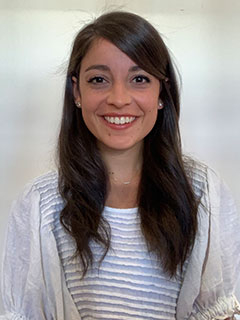
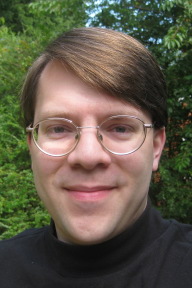
Dr. Melanie Franklin is a pediatric psychologist at Children's Hospital of Philadelphia with expertise in sleep disorders, treatment adherence, and pediatric psychology. She operates within the Department of Child and Adolescent Psychiatry and Behavioral Sciences and collaborates across multiple teams. BA in Psychology – Muhlenberg College PhD in School Psychology – Lehigh University Residency and Fellowship in Pediatric Psychology – Nemours/A.I. DuPont Children’s Hospital Her research focuses on: Sleep behavior in chronic illness populations Mental health communication barriers ADHD functional outcomes Treatment adherence strategies Recent publications demonstrate expertise in ADHD comorbidities , Cystic Fibrosis sleep interventions , and academic functioning analysis . Key collaborations include: Psychiatry and Behavioral Sciences Sleep Center Pulmonary and Sleep Medicine Division
University of Illinois Urbana-ChampaignUnited States
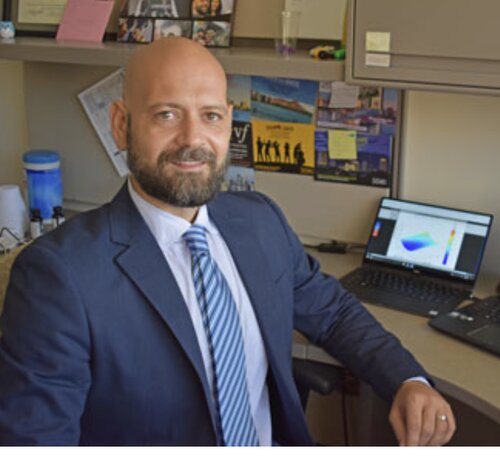
Pasquale Bottalico serves as Associate Professor in the Department of Speech and Hearing Science at the University of Illinois, with dual appointments as Associate Professor at the Center for Latin American and Caribbean Studies and Affiliate Faculty in the School of Music. His unique interdisciplinary profile bridges engineering, music performance, and speech science, reflecting his dual academic training and professional artistry. His educational foundation includes: Bachelor's in Telecommunications Engineering from Univeristà Mediterranea di Reggio Calabria, Italy Concurrent Opera Singing degree from F. Cilea Music Academy, Reggio Calabria Master's in Telecommunications Engineering from Politecnico di Torino, Italy Ph.D. in Metrology specializing in acoustics measurement uncertainty and classroom acoustics Dr. Bottalico's research centers on vocal load quantification and professional voice techniques , with significant contributions to understanding vocal fatigue in teachers and singers. His work spans Speech Intelligibility in educational environments, Room Acoustics for performance and learning spaces, and Musical Acoustics of historical vocal styles. A distinctive thread throughout his research examines how acoustic conditions modulate voice production and perception, increasingly incorporating virtual reality and bone conduction technologies for innovative assessment and intervention approaches. His Colombian vocal health study demonstrates cross-cultural applications of his work. Analysis of his 2023-2025 publications reveals three dominant research trajectories: (1) The impact of noise and dysphonia on children's speech processing in educational settings, using multimodal assessment including EEG; (2) Virtual reality applications for voice production research and therapeutic intervention; (3) Cross-cultural validation of vocal fatigue metrics and development of biofeedback systems. His work consistently bridges engineering precision with clinical applicability, particularly for professional voice users in challenging acoustic environments. No scientific awards were documented in the available information. While specific advising relationships aren't detailed, his research collaborations span international institutions including Colombian and Italian universities, suggesting graduate mentorship in interdisciplinary projects. No grant information was provided, though his systematic reviews and cross-cultural studies imply externally funded research activities. Though no dedicated laboratory is specified, his virtual reality voice studies and acoustic parameter assessments suggest affiliations with audio engineering facilities and voice clinics, likely through the Speech and Hearing Science department's research infrastructure.
Joe Kable, PhD, serves as the Baird Term Associate Professor of Psychology at the University of Pennsylvania, where his research investigates the neurophysiological basis of human decision-making through integrative approaches from experimental economics, cognitive neuroscience, and judgment psychology. His laboratory specializes in fMRI studies examining how subjective value representations guide choices involving immediate versus delayed rewards. Education: B.S. in Chemistry, Emory University PhD in Neuroscience, University of Pennsylvania Dr. Kable's research program centers on neural mechanisms of temporal discounting, risk assessment, and individual differences in choice behavior. His work demonstrates how socioeconomic status, aging, and clinical conditions modulate decision processes, with particular emphasis on hippocampal-prefrontal interactions during value computation. Recent studies reveal how time perception alterations affect neural activity in reward circuits and how social factors influence trust decisions across the lifespan. Analysis of his 15 most recent publications shows a strong methodological focus on fMRI and lesion studies, with growing clinical translation in depression, addiction, and dementia. Key thematic trends include the neural encoding of effort costs in social contexts, structural brain markers for impulsivity, and the dissociable roles of frontal subregions in persistence behaviors. His work consistently bridges basic decision neuroscience with real-world applications in mental health. Scientific Awards: No scientific awards mentioned in source material Dr. Kable leads an active research laboratory at Penn but the source text provides no details about graduate student advising or specific grant funding. His publications indicate collaboration with clinical researchers at the Penn Memory Center, particularly in aging-related decision studies. The laboratory employs multimodal neuroimaging techniques including resting-state fMRI, TMS, and lesion mapping to investigate decision circuits, with recent work extending to computational modeling of value representation and social cognition mechanisms.
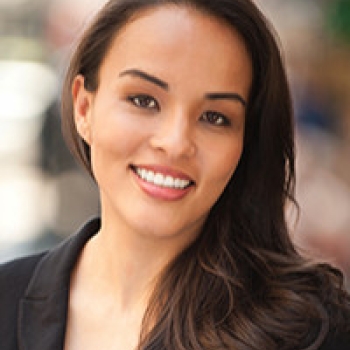
Natalie H. Brito is an Associate Professor of Applied Psychology at New York University (NYU), affiliated with the Steinhardt School of Culture, Education, and Human Development. Her research focuses on how early social and cultural contexts shape neurocognitive development in infants and toddlers, particularly in areas of attention, memory, and socio-emotional skills. Prior to NYU, she completed a postdoctoral fellowship at Columbia University Medical Center and was a Robert Wood Johnson Health and Society Scholar. Dr. Brito’s work bridges developmental psychology, neuroscience, and public policy, emphasizing the need for equitable environments that support healthy child development. She has received prestigious awards such as the APS Rising Star Award and NIH grants, reflecting her impactful contributions to understanding developmental trajectories. Her research also extends to policy implications, such as the effects of paid maternal leave on infant brain function and the role of structural inequities in maternal mental health. Key themes include early life stress, gut microbiome influences, and the neurobiological underpinnings of cognitive development. Dr. Brito has published extensively in journals like Child Development , Developmental Cognitive Neuroscience , and JAMA Psychiatry , with a focus on innovative methodologies (e.g., the OWLET gaze-tracking tool). She teaches courses on developmental psychology and the principles of applied psychology, fostering interdisciplinary approaches to human development. Her scientific accolades include recognition from the International Society of Developmental Psychobiology and the American Psychological Association, underscoring her leadership in advancing developmental science and equity-focused research.
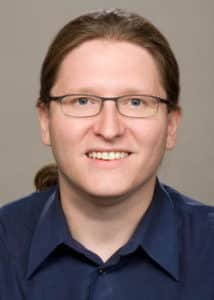
Dr. Tobias Hauser is a Professor of Computational Psychiatry at the University of Tübingen, Germany, and a Group Leader at the Max Planck UCL Centre for Computational Psychiatry and Ageing Research. His research spans clinical neuroscience, developmental psychiatry, and computational modeling, focusing on the neurocognitive mechanisms underlying psychiatric disorders like OCD and ADHD. MSc in Psychology (2010), University of Zurich PhD in Psychology (2014), University of Zurich Hauser's work employs a translational approach, integrating clinical, pharmacological, and basic neuroscience to characterize neural network deficiencies in mental health. His developmental perspective investigates how psychiatric symptoms emerge through deviations from canonical brain development trajectories. Recent publications highlight his focus on dopaminergic midbrain activity, frontostriatal myelination, and computational mechanisms of decision-making. These studies utilize techniques like fMRI, EEG, and computational modeling to explore compulsivity, impulsivity, and developmental neurocognitive processes. Sir Henry Dale Fellowship (Wellcome Trust & Royal Society) Research Fellowship (Jacobs Foundation) Kramer-Pollnow Award for ADHD research Hauser leads the Developmental Computational Psychiatry Group and co-founded the Brain Explorer app, a citizen science project investigating brain development and mental health. He actively seeks PostDocs and PhD students for collaborative research in computational psychiatry and cognitive neuroscience.
Prof. Albert Postma is a full professor in Experimental Psychology (Clinical Neuropsychology) at Utrecht University. He holds the chair in Clinical Neuropsychology and has served as department head of Experimental Psychology (2010–2017) and later as head of the Psychology Department (FSW, UU). His research focuses on spatial cognition, memory disorders, and sensory impairments, with notable contributions to understanding spatial navigation in neurological patients and the neurocognitive basis of spatial memory. Education: PhD in Psychology (1991, University of Nijmegen). Affiliations: Director of the Memory & Space Lab; Head of Research Committee at Korsakov Centrum Slingedael; Editorial roles in Cognitive Processing and Acta Psychologica . Research Interests: Spatial cognition, neuropsychology of memory (episodic, prospective), sensory deprivation effects (blindness/deafness), and neuroimaging studies of spatial processing. Key projects include EU-funded studies on spatial memory and the NWO Pioneer grant on spatial cognition development. Grants & Awards: Multiple EU Marie Curie grants, NWO Pioneer Grant (2000–2007), and coordination of the EU NEST Fp6 program on spatial orientation. His work emphasizes translational research in clinical settings, such as Korsakoff syndrome interventions. Labs & Teams: Leads the Memory & Space Lab, collaborating internationally on spatial cognition and neurological rehabilitation. Active in multidisciplinary initiatives like the Dynamics of Youth (DoY) research theme.
James J. Gross is the Ernest R. Hilgard Professor of Psychology at Stanford University, directing the Stanford Psychophysiology Laboratory. He specializes in emotion regulation, with affiliations in Philosophy (courtesy). His education includes a Ph.D. in Clinical Psychology from UC Berkeley (1993), a B.A. in Philosophy and Psychology from Yale (1987), and a visiting graduate year at Oxford (1988). Research focuses on emotion regulation mechanisms, psychopathology, neuroimaging, and cultural influences. His work bridges clinical, cognitive, and social psychology, examining how individuals manage emotions to influence mental health and behavior. Notable contributions include the Process Model of Emotion Regulation and interventions targeting emotion regulation deficits. Publications (~650, 250k citations) highlight studies on emotion regulation strategies, clinical applications, and neural underpinnings. Recent work explores transdiagnostic treatments, digital health interventions, and the interplay between beliefs and emotion regulation. Awards: Stanford Dean’s Teaching Award, Walter J. Gores Award (highest teaching honor), multiple mentoring awards, and honorary doctorates from UC Louvain and Tilburg. Professional Roles: Co-founding President of the Society for Affective Science, Founding Co-Editor-in-Chief of Affective Science , and Fellow of major psychological and scientific societies. Labs/Teams: Directs the Stanford Psychophysiology Lab, collaborating on projects involving neuroimaging, psychophysiological assessment, and computational modeling of emotion processes.
Douglas D. Ready is an Associate Professor of Education and Public Policy at Teachers College, Columbia University , where he serves as Director of the Consortium for Policy Research in Education (CPRE-TC). His research focuses on the intersections of education policy, social policy, and educational equity, particularly how policies influence socio-demographic disparities in cognitive development. Research Interests: Ready’s work examines the structural determinants of educational equity, including school choice architecture, personalized learning, early childhood education, and the impacts of technology on instruction. He has published extensively in journals such as Educational Evaluation and Policy Analysis and Sociology of Education . Editorial Roles: Ready contributes to the academic community as a member of the editorial boards of Educational Evaluation and Policy Analysis and American Educational Research Journal . Key Projects: He has led analyses of programs like Teach to One: Math and Pre-K for All , exploring their effects on student outcomes and equity.
Kyle Treiber is a University Professor in Neurocriminology at the Institute of Criminology, University of Cambridge , with a focus on integrating psychological, neuroscientific, and criminological theories to explain criminal behavior. She serves as Deputy Director of the Peterborough Adolescent and Young Adult Development Study (PADS+) and has developed its neurocognitive dimensions and theoretical foundation, Situational Action Theory (SAT) . Education: BS in Psychology (University of North Carolina at Chapel Hill, 2001, Phi Beta Kappa), MPhil (2003), and PhD (2008) in Criminology (University of Cambridge). Leadership: Director of Criminological Research Programmes (2016–2019), Editor-in-Chief of the European Journal of Criminology , and member of the European Society of Criminology Executive Board. Her research examines how neurocognitive machinery (e.g., prefrontal brain functioning, self-control) and social environments interact to shape crime propensities. She specializes in multi-method longitudinal studies, dual process models of decision-making, and cross-comparative research grounded in SAT. Key themes include: Neurocognitive and moral decision-making in criminal behavior Gene-environment interactions in crime causation Space-time budgets and criminogenic environments Policy implications of integrated biosocial frameworks Recent publications highlight SAT’s application to diverse contexts like corruption , intimate partner abuse during the pandemic , and gender gaps in juvenile crime . She emphasizes refining theoretical models through empirical testing and advancing analytical criminology. Awards: Lopez-Rey Graduate Prize (2008), Nigel Walker Prize (2008). Dr. Treiber contributes to teaching programs in criminological theory, research methods, and neurocriminology. She leads the Centre for Analytic Criminology and collaborates on international comparative studies of crime causation.
Dr. Robin Laycock is a Senior Lecturer in the Department of Health and Biomedical Sciences at RMIT University. He leads the Social and Cognitive Neuroscience (SoCoNeuro) Lab, focusing on behavioral and neural mechanisms of social perception in neurotypical and neurodivergent populations, including autism spectrum disorders and the neurocognitive effects of concussion. His research integrates methodologies such as eye-tracking, EEG, and fNIRS to study visual perception, face processing, and the impact of stress/anxiety on cognition. Dr. Laycock holds a PhD from La Trobe University, where he investigated visual processing pathways. His work also includes the BabyFace study, exploring social perception in pre-term infants using fNIRS. He is affiliated with RMIT’s Healthy Foundations Research Group and supervises research projects on topics like concussion neurocognition and social media’s neurobiological effects. Research interests span visual neuroscience, social neuroscience, and clinical applications of neuroimaging. He teaches undergraduate courses in Biological Psychology and supervises postgraduate research in vision science, neuropsychology, and affective neuroscience. His lab’s recent studies examine sex differences in sports-related concussion neuroimaging and the role of deepfakes in emotion perception research. He actively collaborates on projects addressing autism traits, stress effects on visual processing, and neuroimaging advancements.
Prof. Daniel Memmert is a Professor at the German Sport University Cologne, leading research in Sport Informatics and Sports Games within the Institute of Exercise Training and Sport Informatics. His work focuses on cognitive aspects of sports performance, decision-making, and data-driven analysis in football (soccer) and other sports. He has published extensively on topics like penalty kick strategies, home advantage dynamics, artificial intelligence applications in coaching, and route-setting in climbing. Memmert's research bridges sports science, computer science, and psychology, with over 550 publications and 41 projects to his name. He frequently engages with media, explaining complex sports phenomena to the public. Key Research Areas: Football analytics, cognitive psychology in sports, sports technology, decision-making under pressure Media Contributions: Over 50 media features discussing topics such as AI in coaching, referee bias, and athlete creativity Projects: Includes initiatives on sports data visualization, performance metrics, and prevention of sports betting addiction His work emphasizes translating academic findings into practical tools for athletes, coaches, and sports organizations, combining rigorous data analysis with real-world applications.
University of California, Los AngelesUnited States
David Clewett, Ph.D. , is an Assistant Professor of Psychology at University of California, Los Angeles (UCLA) , where he leads the Dynamic Arousal and Memory Lab. His research explores how emotional arousal, stress, and neuromodulatory systems like norepinephrine and dopamine shape the way we encode, organize, and retrieve memories. He joined UCLA in July 2020 after completing his Ph.D. in Neuroscience at the University of Southern California and a postdoctoral fellowship at NYU and Columbia University. Education: Ph.D. in Neuroscience, University of Southern California (2016) B.S. in Biopsychology with minor in English, University of California, Santa Barbara Research Focus: Dr. Clewett’s lab investigates how physiological arousal influences attention and memory, using a multimodal approach that includes fMRI, pupillometry, eye-tracking, and pharmacological methods. His work spans four major themes: The role of emotion and arousal in selective memory enhancement or suppression. How contextual shifts and emotional states structure episodic memory into meaningful events. Techniques to weaken or update traumatic or unwanted memories. The dynamic effects of attention and arousal states on neural and memory representations. Publications and Impact: His work has been published in top-tier journals such as Nature Communications , Journal of Neuroscience , Hippocampus , and Trends in Cognitive Sciences . His research has contributed to understanding how neuromodulators like norepinephrine and dopamine interact with memory systems to prioritize salient information, and how these processes can be leveraged for therapeutic intervention in PTSD, depression, and aging-related memory decline. Students and Lab Team: Dr. Clewett mentors a diverse team of graduate students and research assistants. Current graduate students include Jacinda Taggett, Ringo Huang, Erin Morrow, Bailey Harris, and Brandon Katerman. Former lab members have gone on to Ph.D. programs at Harvard, UC Berkeley, and other top institutions. Lab and Facilities: The lab is located in Pritzker Hall at UCLA, and is equipped with tools for fMRI, pupillometry, eye-tracking, and behavioral testing. The lab also collaborates with researchers across UCLA and other institutions, including NYU, Columbia, and USC.
Dr. J.P. de Ruiter is a Professor in both the Psychology and Computer Science departments at Tufts University. He holds a PhD from the Max Planck Institute for Psycholinguistics and a Drs (equivalent to MS) from Radboud University. His research focuses on the cognitive foundations of human communication, including how humans and artificial agents use language, gesture, and multimodal signals to communicate. He previously served as Chair of Psycholinguistics at Bielefeld University and founded the Natural Communication HD Lab there. Research Interests: Cognition and Psycholinguistics Computational models of conversation Artificial Intelligence applications in communication Social robotics and intention recognition Recent work investigates top-down effects of dialogue coherence on speaker identity perception and limitations of Large Language Models in conversational timing. His lab (Human Interaction Lab) explores human-machine interaction through datasets and algorithms enhancing social communication.
Westley Weimer is a Professor in the Department of Electrical Engineering and Computer Science (EECS) at the University of Michigan, College of Engineering. He teaches advanced courses such as EECS 590 (Advanced Programming Languages) and EECS 481 (Software Engineering), and has previously taught at the University of Virginia. His research integrates software engineering, programming languages, and cognitive science, focusing on automated program repair, program analysis, and the neuroscience of code comprehension. University: University of Michigan School: College of Engineering Department: Department of Electrical Engineering and Computer Science Academic Rank: Professor His research interests include automated program repair (e.g., GenProg), software quality, cognitive modeling of programming, neuroimaging studies of code review, and the application of medical imaging to software engineering. He explores deep questions at the intersection of consciousness, time, and computation, advocating for interdisciplinary approaches to understanding the mind through programming behavior. The most recent publications reflect a trend toward empirical and cognitive studies in software engineering, combining automated repair with human factors, neuroimaging (fMRI, TMS), and real-world software challenges. Themes include bias in code review, programming under cognitive influences, and the neurological basis of code comprehension. His work increasingly bridges computer science with psychology, neuroscience, and social science. Scientific awards include multiple Distinguished Paper Awards at ICSE, FSE, and ESEC/FSE, Best Paper and Runner-up awards, and several 10-Year Most Influential Paper Awards from ASE, GECCO, POPL, and ASPLOS, recognizing the lasting impact of his contributions to automated software repair and program analysis. He has advised numerous PhD and Master’s students, many of whom have gone on to faculty positions or industry research roles. He contributes to academic service through organizing diversity and inclusion initiatives, maintaining graduate career resources, and promoting ethical and inclusive practices in computing. He leads a vibrant research group focused on improving software quality through both technical and human-centered innovations, with ongoing projects in automated repair, cognitive modeling, and secure systems.
Dr. Ben Clarke is an Associate Professor and Department Head of Special Education and Clinical Sciences at the University of Oregon’s College of Education. His research focuses on mathematical development, assessment systems, and school-based interventions to support student achievement. He has led over 20 federally funded grants totaling ~$55 million, emphasizing early numeracy interventions and multi-tiered instructional models. Clarke’s work bridges theory and practice, with publications on mathematics instruction, assessment, and RTI frameworks. Education: PhD (2002), MA (2001) in School Psychology/Special Education from University of Oregon; BS (1997) in Psychology from Wabash College (Phi Beta Kappa). Research Interests: Mathematics intervention design and efficacy Early numeracy assessment Multi-tiered systems of support (MTSS) Technology in education Equity in mathematics education Publications highlight his focus on intervention fidelity, tiered models, and outcomes for students with learning difficulties. Awards include the AERA Special Education SIG Research Award and recognition for academic excellence. Grants and Advising: Principal Investigator on ~$55M in federal grants; advises graduate students in School Psychology and Special Education. His lab develops evidence-based tools like the KinderTEK iPad program and contributes to national practice guides (e.g., IES RTI for Mathematics). Labs/Teams: Leads research teams focused on early mathematics intervention and MTSS implementation, collaborating with schools and policymakers to scale effective practices.