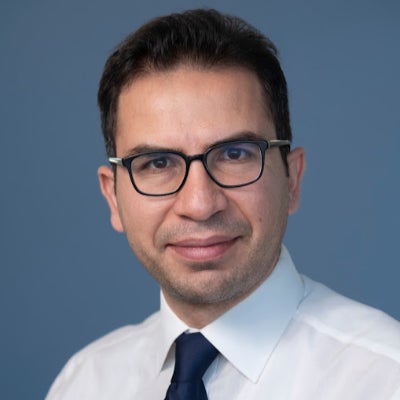
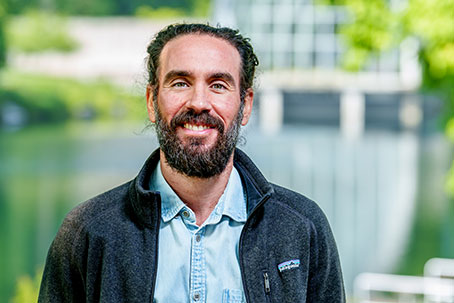
Oliver Lomp is a researcher at the Institute for Neuroinformatics (INI) within the Faculty of Computer Science at Ruhr University Bochum. His work focuses on integrating perception and object recognition into dynamic field theory frameworks for robotic systems. He actively contributes to publication and teaching in neurorobotics and cognitive systems. Contact details: Email: oliver.lomp@ini.rub.de Office: NB 02/77, Ruhr University Bochum Campus Research trends include: Dynamic Field Theory applications in robotics Neurodynamic architectures for autonomous systems Object recognition with concurrent pose estimation Development of cognitive frameworks like CEDAR
Silvia Tolu is an Associate Professor at the Technical University of Denmark's Department of Electrical and Photonics Engineering, specializing in Neurorobotics. She leads the NeuroRobotics Technology Lab (NRT-LAB), focusing on bio-mimetic control architectures for compliant robotic systems. Her research integrates neuroscience, computer science, and biology to develop solutions for assistive robotics and neurodegenerative disease diagnosis. Her research interests span: Neuro-robotics and neuromorphic engineering Bio-inspired control systems and adaptive motor control Machine learning for robotic applications Human-robot compliant interaction Cerebellar control models Publications primarily focus on neurorobotics, bio-inspired control, and human-robot interaction, with recent advances in learning-based control systems for soft robots and aerial manipulation. Awards include the AEG Elektrofonden Research Grant and funding for human-robot interaction safety research. Current projects include LOCOPD (Lundbeck Foundation), AEROTRAIN (EU Marie Curie ITN), and compliant human-robot interaction systems. She supervises multiple PhD students in neurorobotics and maintains international collaborations across Europe and Asia. Laboratory resources include advanced robotic platforms for musculoskeletal and soft robot control.
Yves Rybarczyk is a Professor at Nova University of Lisbon (Portugal). He holds a PhD in NeuroRobotics from the University of Evry (France), awarded in 2004 for his work on modeling human-like behaviors to enhance Human-Robot Cooperation in teleoperation. His research focuses on Human-Machine Interaction, Robotics, and Serious Games applied to health and education. His group develops adaptive games for science education and assistive technologies for motor and cognitive disabilities. Education: PhD in NeuroRobotics, University of Evry (France), 2004. Research Interests: Telepresence, Ergonomics, and Sensorimotor Loop Assistive & Rehabilitation Technologies Robotics (Biologically-inspired, Animal-Robot Interaction) Serious Games and Embodied Cognition Professional Roles: Steering committee member of eNTERFACE workshops on Multimodal Interactions; reviewer for top journals/conferences. Projects & Outputs: Over 50 peer-reviewed articles, interactive educational/rehabilitation tools, and participation in national/international research projects.
Qiang Zhang is an Assistant Professor in the Department of Mechanical Engineering and an Adjunct Faculty in the Department of Chemical and Biological Engineering at The University of Alabama, College of Engineering. He joined the Mechanical Engineering department in August 2023 after serving as an Advanced Rehabilitation Research and Training (ARRT) Post-Doctoral research fellow at the UNC/NCSU Joint Department of Biomedical Engineering. Dr. Zhang's educational background includes: B.S. in Mechanical Engineering from Wuhan University (2014) M.S. in Mechatronics Engineering from Wuhan University (2017) M.S. in Mechanical Engineering from The University of Pittsburgh (2019) Ph.D. in Biomedical Engineering from The University of North Carolina at Chapel Hill & North Carolina State University (2021) His research focuses on the intersection of robotics, biomechanics, and artificial intelligence to develop wearable robotic devices for rehabilitation. Key areas include biological signal-based neuromusculoskeletal modeling , human motion intent detection , nonlinear and adaptive control , and machine learning-based control . His work leverages surface electromyography and ultrasound imaging for real-time control of wearable robots, aiming to provide personalized assistance for individuals with mobility challenges such as stroke, spinal cord injury, and multiple sclerosis. Dr. Zhang's recent publications demonstrate a strong trend toward integrating advanced machine learning techniques, particularly reinforcement learning and deep learning, with wearable robotics. His research emphasizes closed-loop control systems that adapt to individual users, with applications in ankle, hip, and hand exoskeletons. He has pioneered the use of ultrasound imaging for prosthetic control and human-robot interaction. Among his notable scientific achievements: Finalist for the Best Student Paper Award, IEEE/RAS-EMBS ICORR 2019 UNC/NCSU BME Department Ph.D. Student Research Award 2021 ASME DSCD Rising Star Award 2022 Dean’s Distinguished Dissertation Award, UNC-Chapel Hill 2023 Finalist for the Journal of Biomechanics Award 2023 Diversity Travel Award at ASB 2023 Finalist at the NIDILRR-sponsored Early Career Investigator Symposium 2023 Dr. Zhang mentors graduate students including PhD candidates Yun Chen and Oluwasegun Akinniyi. His research is supported by grants including funding from the SEC Faculty Travel Program and the Office for Research and Economic Development (ORED) at The University of Alabama. He serves as an associate editor for the IEEE RAS EMBS 10th International Conference on Biomedical Robotics and Biomechatronics (BioRob 2024) and as the ASME DSCD Mechatronics TC Secretary for 2024. He leads the Enhanced NeuroRobotics Autonomy and Biomechanical Engineering (ENABLE) Lab, which brings together expertise in robotics, biomechanics, neuromuscular modeling, and artificial intelligence to create effective systems for improving quality of life. The lab utilizes multiple robotic platforms including Baxter manipulator, Kinova arm, and quadcopters for control development.
Anders Lansner is a Professor of Computer Science at Stockholm University and holds an affiliated professorship at KTH Royal Institute of Technology. He leads the Lansner Lab (Computational Biology and Neurocomputing) at the Department of Computational Science and Technology (CST) within the School of Computer Science and Communication (CSC) at KTH. His research focuses on computational neuroscience and brain-like computing, emphasizing mathematical and computational models of neuronal networks in the neocortex and basal ganglia. Key projects include developing neuromorphic algorithms for supercomputers and FPGA-based hardware implementations. Lansner manages the computational neuroscience platform for the Stockholm Brain Institute (SBI) and the neuroinformatics platform for StratNeuro (Karolinska Institutet). His lab contributes to EU projects such as FACETS and NEUROChem, and collaborates with KTH’s Electronics Department on modular brain-inspired FPGA designs. Research interests span synaptic plasticity mechanisms, memory systems (episodic, semantic, and working memory), and applications in neuromorphic computing. He supervises graduate students and teaches courses in computational neuroscience. Lansner’s work bridges theoretical neuroscience with engineering, aiming to advance brain-inspired AI and hardware systems. His lab’s StreamBrain framework supports heterogeneous computing architectures for brain-like neural networks. Notable collaborations include cross-disciplinary efforts in neuromorphic hardware development (e.g., memristor-based learning engines) and olfactory system modeling. Lansner’s research addresses both fundamental brain mechanisms and technical applications in data analysis and neurorobotics.
Arturo Deza is an Assistant Professor of Computer Science at Universidad de Ingeniería y Tecnología (UTEC) in Lima, Peru, and CEO of Artificio, a research-driven company advancing autonomous driving technology. His academic work bridges neuroscience, machine learning, and computer vision, focusing on adversarial robustness, foveated systems, and human-machine perception. He holds a PhD in Dynamical Neuroscience from UCSB and a B.S. in Mechatronics Engineering from Universidad Nacional de Ingenieria. His research has been recognized with awards like the EB-1A Green Card for Extraordinary Ability and the Harvard Brain Initiative Travel Award. Deza's interdisciplinary approach includes contributions to image virality analysis, peripheral representation modeling, and bio-inspired AI. His recent talks and publications address topics ranging from autonomous driving challenges to neuro-symbolic AI integration. Education : PhD in Dynamical Neuroscience, UCSB (Vision and Image Understanding Lab) B.S. in Mechatronics Engineering, Universidad Nacional de Ingenieria Research Interests : Adversarial Robustness in Deep Learning Foveated Vision Systems Human-Machine Perception Autonomous Driving Technology Bio-inspired AI Models Awards : EB-1A Green Card for Extraordinary Ability in the Sciences Harvard Brain Initiative Young Scientist Travel Award NVIDIA Best Poster Award (2015) Professional Roles : Assistant Professor, UTEC (since Aug 2023) CEO & Co-Founder, Artificio (Lima-based autonomous driving tech) His recent work emphasizes practical AI applications, including the Robusto-1 dataset for autonomous driving evaluation and studies on adversarial robustness in perception systems. Deza also actively contributes to academic reviewing (ICLR, NeurIPS, CVPR) and organizes workshops like the Shared Visual Representations in Human and Machine Intelligence (SVRHM) at NeurIPS.
Dr. Yulia Sandamirskaya is the Head of Research Center "Cognitive Computing in Life Sciences" at Zurich University of Applied Sciences (ZHAW), focusing on neuromorphic computing applications for embodied artificial intelligence. Her work bridges computational neuroscience and robotics, emphasizing neural-dynamic architectures for real-time decision-making, learning, and sensorimotor integration in autonomous agents. Key Research Areas: Neuromorphic hardware, dynamic neural fields, spiking neural networks, spatial language modeling, and autonomous sequence generation. Projects: Developed controllers for UAVs and robotic arms using event-based vision sensors, explored on-chip unsupervised learning, and designed models for spatial language interpretation in robots. Scientific Contributions: Her publications span robotics conferences and journals like Science Robotics and Frontiers in Neurorobotics , addressing topics such as path integration, obstacle avoidance, and cognitive architectures. Recent work (2024) includes visual odometry with resonator networks and hyperdimensional scene factorization on neuromorphic chips. Advising: Supervised multiple MSc theses at ETH Zurich and NSC/INI programs, mentoring students on neuromorphic navigation, spiking networks, and tactile learning. Collaborated with institutions like ETH Zurich, University of Queensland, and INI Bochum. Labs & Collaborations: Leads the "Neuromorphic Computing Applications: Embodied AI" group at ZHAW, partnering with INIvation (Zurich) and Jörg Conradt (KTH) on neuromorphic hardware implementations. Projects integrate cognitive models with robotic platforms, emphasizing energy efficiency and low-latency interaction.
Egidio Falotico is a Tenure Track Assistant Professor (RTD-B) at the BioRobotics Institute, Scuola Superiore Sant’Anna, Pisa, Italy. He leads the BRAin Inspired Robotics (BRAIR) Lab and holds roles such as Principal Investigator (PI) for the PROBOSCIS project and co-leader of Sub-Project 10 (Neurorobotics) in the Human Brain Project (HBP). His research focuses on brain-inspired motor control, soft robotics, and neurorobotics, integrating computational neuroscience with robotic systems. Education: Dual PhD in Biorobotics (Scuola Superiore Sant’Anna) and Cognitive Science (University Pierre et Marie Curie). Master’s in Computer Science (University of Pisa). Research interests include control mechanisms for soft robots using AI, bio-inspired motor control, and neuroscientific principles applied to robotics. He has contributed to projects like HBP, where he developed the Neurorobotics Platform, and PROBOSCIS, aiming to create elephant-trunk-inspired robots. Teaching includes leading PhD courses on Brain-Inspired Motor Control and Robotics at the University of Pisa. He has supervised EU-funded students and managed interdisciplinary teams in neurorobotics and soft robotics. Key projects involve HBP’s Neurorobotics Platform, soft robot control (e.g., PROBOSCIS), and collaborations in sensorized systems and adaptive learning algorithms. His work bridges neuroscience, AI, and robotics to advance soft robotic systems and bio-inspired models.
Dr. Reza Abiri is an Assistant Professor in the Department of Electrical, Computer and Biomedical Engineering at the University of Rhode Island's College of Engineering. His research focuses on translational neurorobotics, combining biosignal control systems with AI-enabled medical robotics to address neurorehabilitation challenges. He leads the Translational Neurorobotics Laboratory (TN Lab), established in Fall 2021 with NSF CAREER 2025 funding. Education: Postdoctoral Fellow, University of California, San Francisco and UC Berkeley (2021) Ph.D., Mechanical Engineering, University of Tennessee (2017) M.Sc., Mechanical Engineering, Amirkabir University of Technology, Iran (2011) B.Sc., Mechanical Engineering, K.N. Toosi University of Technology, Iran (2009) Dr. Abiri's research spans multiple disciplines including robotics, artificial intelligence, brain-machine interfaces, and biomedical engineering. His work addresses critical challenges in decoding neural activity for motor control, developing novel actuation mechanisms, and enhancing neurorehabilitation technologies through advanced signal processing and AI integration. Recent publications demonstrate a strong focus on brain-computer interfaces, attention training, and robotic rehabilitation systems. Key topics include EEG signal analysis, shared autonomy algorithms, multimodal AI frameworks, and magnetic actuation technologies. These works reveal a consistent pattern of innovation in connecting neural signals with robotic control systems. Scientific Recognition: NSF CAREER Award (2025) Dr. Abiri's TN Lab develops computational methods to overcome translational barriers in neurorehabilitation and motor control restoration. The lab's work integrates machine learning with biosignal processing to create advanced human-machine interaction systems, particularly focusing on noninvasive neural interfaces and their practical applications in healthcare robotics.
Hu Cao is a postdoctoral research associate at the Chair of Robotics, Artificial Intelligence and Real-Time Systems (Prof. Alois Knoll) at the Technical University of Munich (TUM) . Holding a Ph.D. from TUM, his research bridges autonomous driving , robotic grasping , medical image analysis , and dense prediction (classification, detection, segmentation). Education : Ph.D. from TUM Hu's work explores: Autonomous Driving : Perception under adverse conditions, multi-sensor fusion, and risk-based safety models Robotic Grasping : Vision-language integration for 6D pose estimation Medical Imaging : Transformer-based segmentation techniques (e.g., Swin-Unet) His recent publications include 15+ works at top venues like CVPR , ICCV , IEEE TPAMI , and IEEE TIV , with 6052+ Google Scholar citations . Notably, Swin-Unet ranks among the top 3 most cited ECCV papers in 5 years, and his work on event-based autonomous driving perception was featured in IEEE Xplore Innovation Spotlight . Editorial roles include: Associate Editor for Visual Intelligence and Frontiers in Neurorobotics Editorial Board member of Artificial Intelligence and Autonomous Systems (AIAS) Topic Editor for Frontiers in Robotics and AI and Frontiers in Neuroscience He has reviewed for 20+ top journals (e.g., Nature Computational Science , IEEE TRO ) and served on program committees for NeurIPS , CVPR , ICCV , and MICCAI .
Dr. Ken Valyear is a Lecturer at the School of Psychology and Sports Science, Bangor University, specializing in the neuroscience of human hand function and rehabilitation. His work bridges clinical applications with fundamental neuroimaging, focusing on peripheral nerve injury and stroke recovery. Research Interests: Understanding neural mechanisms of hand function and action planning Investigating brain plasticity following nerve injuries or stroke Developing rehabilitation strategies using fMRI and TMS Improving pediatric prostheses through movement science Methodology: Employs functional MRI, transcranial magnetic stimulation, motion capture, and clinical assessments to study sensorimotor integration and cortical reorganization. Article Trends: Recent publications emphasize cortical plasticity after limb reattachment, affordance judgment training, and neural substrates of hand choice. Disciplinary keywords span Neuroimaging , Neural Plasticity , and Motion Capture , with sub-fields like Parietal Cortex and Rehabilitation Neuroscience .
Eduardo Izquierdo Torres is an Associate Professor in the Department of Electrical and Computer Engineering at Rose-Hulman Institute of Technology. His academic work bridges multiple disciplines including Artificial Intelligence, Cognitive Science, Neuroscience, Robotics, and Electrical and Computer Engineering, contributing to the excellence of education at Rose-Hulman through his highly interdisciplinary approach. Dr. Izquierdo received his academic degrees from prestigious institutions: Ph.D. in Computer Science and AI (2008) from the Centre for Computational Neuroscience and Robotics at the University of Sussex, Brighton, UK Master of Science in Intelligent Systems (2004) from the University of Sussex, Brighton, UK Bachelor of Science in Computer Engineering (2002) from Universidad Simon Bolivar, Venezuela Dr. Izquierdo's research focuses on understanding intelligence in living organisms and developing artificial systems with similar robustness, flexibility, and adaptivity. His work spans Evolutionary and Adaptive Systems, including Evolutionary Robotics, Cognitive Science, Artificial Life, Evolutionary Computation, Morphological Computation, Embodied Intelligence, Evolutionary Hardware, Neuromorphic Engineering, BioRobotics, NeuroRobotics, and Biologically-Inspired Artificial Intelligence. He takes an integrated approach, studying how behavior arises from the interaction between brains, bodies, and environments through computational models of complete brain-body-environment systems. His recent publications demonstrate a strong trend toward understanding social interaction, neural plasticity, and multifunctional neural circuits, particularly using C. elegans as a model organism. His work combines computational neuroscience with artificial life principles to explore how complex behaviors emerge from neural circuits, with applications in robotics and artificial intelligence. Many of his recent papers focus on perceptual crossing, central pattern generation, and the role of homeostatic plasticity in neural networks. Dr. Izquierdo has received significant recognition for his research: NSF CAREER award: "From connectome to behavior: computational models of multifunctional neural circuits in C. elegans" (2019-2025), $882,772.00 as PI NSF Workshop grant: "Functional logic of neural circuits: diamonds in the rough" (Part 2, 2022-2023), $50,000.00 as Co-PI NSF Workshop grant: "Functional logic of neural circuits: diamonds in the rough" (Part 1, 2021-2022), $50,000.00 as Co-PI NSF Supplemental grant: "Reinforcement learning in dynamical recurrent neural networks" (2021), $50,683.00 as PI Winner of the 2021 ISAL (International Society of Artificial Life) Outstanding Student Paper Award Dr. Izquierdo has advised numerous graduate students, including PhD candidates Lindsay Stolting, Zachary Laborde, Andrew Claros, Josh Nunley, and Haily Merritt, as well as postdoctoral researchers Dr. Madhavun Candadai and Dr. Jason Yoder. His research has been consistently supported by multiple NSF grants totaling over $1.5 million, demonstrating the significance and impact of his work in computational neuroscience and bio-inspired AI. His grants have focused on understanding neural circuits in C. elegans, reinforcement learning in neural networks, and computational models of behavior. Dr. Izquierdo leads a research group focused on computational neuroethology and bio-inspired AI, with collaborative projects involving researchers from multiple institutions. His lab develops computational models of brain-body-environment systems, with particular expertise in neuromechanical models of C. elegans. He has created numerous open-source software tools for analysis and simulation, including packages for information theoretic analysis, connectome exploration, and neuromechanical modeling. His collaborative work with researchers like Dr. Erick Olivares, Prof. Randall Beer, and others has produced significant advances in understanding how neural circuits generate behavior.
Sebastian Otte is a Professor at the Institute for Robotics and Cognitive Systems at the University of Lübeck, where he leads the Adaptive AI research group. Prior to this, he was a postdoctoral researcher and substitute professor at the University of Tübingen, contributing significantly to the Cognitive Modeling and Distributed Intelligence groups. University of Lübeck, Professor (since 2023) University of Tübingen, Postdoc and Substitute Professor (2016–2023) Centrum Wiskunde & Informatica (CWI), Humboldt Fellow (2022–2023) His research focuses on recurrent and spiking neural networks, bio-inspired computing, efficient learning, and adaptive AI systems. He explores how neural models can perform online learning, handle multiple time scales, and solve complex cognitive tasks such as binding, prediction, and motor control. His work bridges machine learning with cognitive science and robotics. The recent publications show a strong trend toward physics-informed neural networks, finite volume methods for PDE modeling, and explainable AI via counterfactual reasoning. His work integrates deep learning with scientific computing, emphasizing robust, interpretable, and efficient models for real-world applications. Scientific awards include: Best Paper Award at ICANN 2019 Humboldt Research Fellowship Editor's Highlight in Water Resources Research He has supervised over 70 bachelor’s and master’s theses and actively mentors students in areas such as spiking neural networks, reservoir computing, and robotics. His teaching includes core computer science and advanced neural network courses. He has been involved in research projects with industry partners like Daimler AG and Mercedes-Benz AG. Otte leads the Adaptive AI research group, which focuses on developing next-generation AI systems that learn efficiently, adapt dynamically, and model complex cognitive and physical processes using biologically inspired architectures.
Dingguo Zhang is a Reader in Robotics Engineering at the Department of Electronic & Electrical Engineering, Faculty of Engineering & Design, University of Bath. He is affiliated with several interdisciplinary research centers including the UKRI Centre for Doctoral Training in Accountable, Responsible and Transparent AI, the Centre for Bioengineering & Biomedical Technologies (CBio), the Bath Institute for the Augmented Human, and IAAPS. His work bridges robotics, neuroscience, and biomedical engineering to develop advanced assistive and rehabilitative technologies. His research focuses on Rehabilitation Robotics, Neural Technologies, Brain-Computer Interfaces (BCIs), and Robotic Exoskeletons . He investigates how neural signals such as EEG and EMG can be used to control prosthetic devices, exoskeletons, and communication systems, particularly for individuals with neurological impairments. His work also involves signal processing, machine learning, and adaptive control strategies to improve human-machine interaction. Key themes include decoding motor and speech intentions, fatigue assessment, and closed-loop neuromodulation. The recent publications reflect a strong trend toward invasive and non-invasive neural interface development , especially in decoding speech from intracranial EEG and enhancing BCI performance through advanced preprocessing and deep learning. There is also significant focus on wearable robotics for stroke and spinal cord injury rehabilitation , with integration of soft actuators, hybrid control, and real-time adaptation. Multimodal sensing (e.g., EEG-fNIRS, EMG-force) and patient-centered design are recurring elements across his work. Dr. Zhang has received recognition through his status as an IEEE Senior Member (EMBS, RAS, SMC) and IFESS Lifetime Member . He serves on the editorial boards of five journals including IEEE Transactions on Neural Systems & Rehabilitation Engineering and Frontiers in Neurorobotics , and has held leadership roles such as co-chair of IFESS 2024. He is actively involved in research funding and supervision. He is Principal Investigator (PI) on the EPSRC-funded dSPEECH project, which aims to decode speech using invasive BCIs, and Co-Investigator on an NIHR-funded project developing an ear-switch-controlled exoskeleton for stroke rehabilitation . He welcomes PhD students and is committed to training the next generation of researchers in neurotechnology and robotics. Dr. Zhang leads or contributes to research within collaborative labs and teams focused on bioengineering, augmented human systems, and accountable AI . These include the Centre for Bioengineering & Biomedical Technologies and the Bath Institute for the Augmented Human, where interdisciplinary teams develop next-generation assistive technologies grounded in ethical and transparent AI principles.
Ganesh R. Naik is an Adjunct Professor at the College of Medicine and Public Health, Flinders University, and a Full Member of the Flinders Health and Medical Research Institute. He is ranked in the top 2% of researchers worldwide in Biomedical Engineering (Stanford University). His expertise lies in biomedical signal processing, algorithm design, and health technologies, with significant contributions to sleep research and global disease burden studies. PhD in Electronics Engineering (Biomedical Engineering, Data Science, Signal Processing), RMIT University, 2009 Dr. Naik's research focuses on advanced signal processing techniques such as independent component analysis, blind source separation, and machine learning applications in biomedical data. His work spans areas including electromyography, sleep disorders, and large-scale epidemiological modeling through the Global Burden of Disease (GBD) Study. The recent publications highlight a strong interdisciplinary trend, combining biomedical engineering with public health and artificial intelligence. Key themes include sleep apnea and diabetes, neurological disorders like epilepsy and Parkinson’s, wearable sensors, and AI-driven cybersecurity. His editorial leadership in journals like IEEE Access and Frontiers in Neurorobotics underscores his influence in the academic community. Scientific Awards and Honors: Bridge and BridgeTech Industry Fellowship (2023) Chancellor’s Postdoctoral Research Fellowship, UTS (2013–2016) ISSI Overseas Fellowship, Skills Victoria (2010) IEEE Victoria Travel Scholarship (2008) Baden-Württemberg PhD Scholarship, Germany (2006–2007) Dr. Naik has supervised numerous research students and led major projects, including a multimillion-dollar CRC project on sleep at Western Sydney University. He has edited 12 books and authored over 150 peer-reviewed publications, cited over 5,000 times. His current research involves wearable technologies, digital twins for health, and AI-based predictive models for chronic diseases. He is actively involved in editorial roles and international collaborations, contributing to advancements in biomedical engineering and public health policy. His lab work emphasizes real-world applications of signal processing in clinical and community settings.