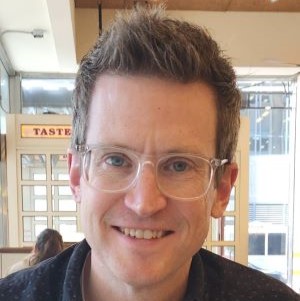
Janosch Haber is a Visiting Professor at Queen Mary University of London's School of Electronic Engineering and Computer Science. His research focuses on Natural Language Processing (NLP), Computational Linguistics, and Semantic Analysis, with emphasis on polysemy, word sense similarity, and contextualized language models. He has contributed to studies on anaphora resolution, dialogue systems, and neuro-linguistic modeling using tools like GPT-2. His work bridges cognitive science and machine learning, addressing challenges in multilingual NLP and social media analysis. Recent publications explore polysemy patterns, human ratings for word concreteness, and visual dialogue datasets like PhotoBook. His research aims to improve contextualized embeddings and collaborative dialogue systems, reflecting a commitment to interdisciplinary applications in AI and linguistics.
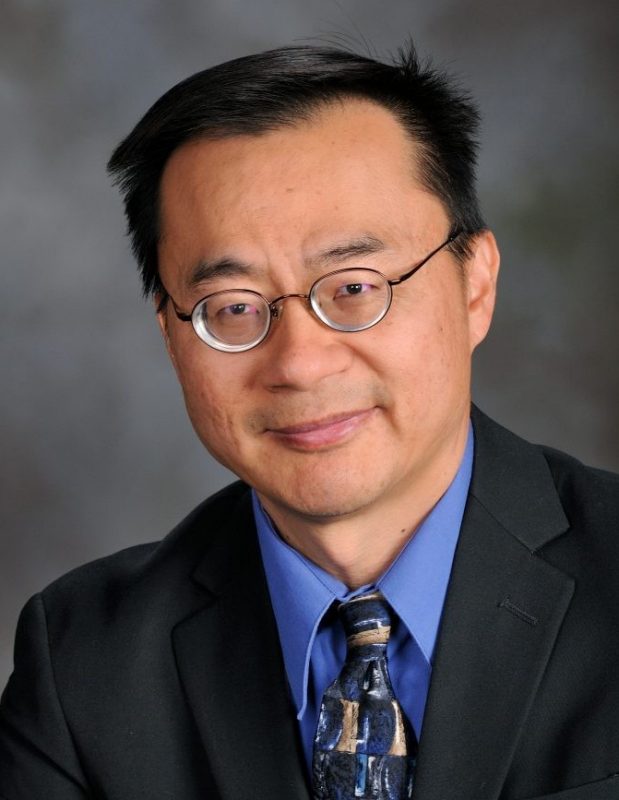
Professor David Williams is a leading academic in Developmental Psychology at the University of Kent , serving as Acting Director of the Division of Human Social Sciences. His research bridges developmental psychopathology, autism spectrum disorder (ASD), and cognitive neuroscience. Research Interests include understanding the neuro-cognitive bases of ASD and specific language impairments, with a focus on Episodic and Prospective Memory Metacognition and Mindreading Inner Speech Mechanisms Comorbidity in Developmental Disorders Scientific Recognition includes the 2010 Young Investigator Award from the International Society for Autism Research. He has supervised numerous students, including Mahsa Barzy Katie Carpenter Louise Malkin on topics like humor production in ASD and referential communication. Key Grants highlight his leadership in major projects, such as an ESRC grant (£661,196, 2022-2025) on autism and gender incongruence, and a Leverhulme Trust grant (£225,482, 2015-2019) on self-in-fictional-worlds in ASD.
Massachusetts Institute of TechnologyUnited States
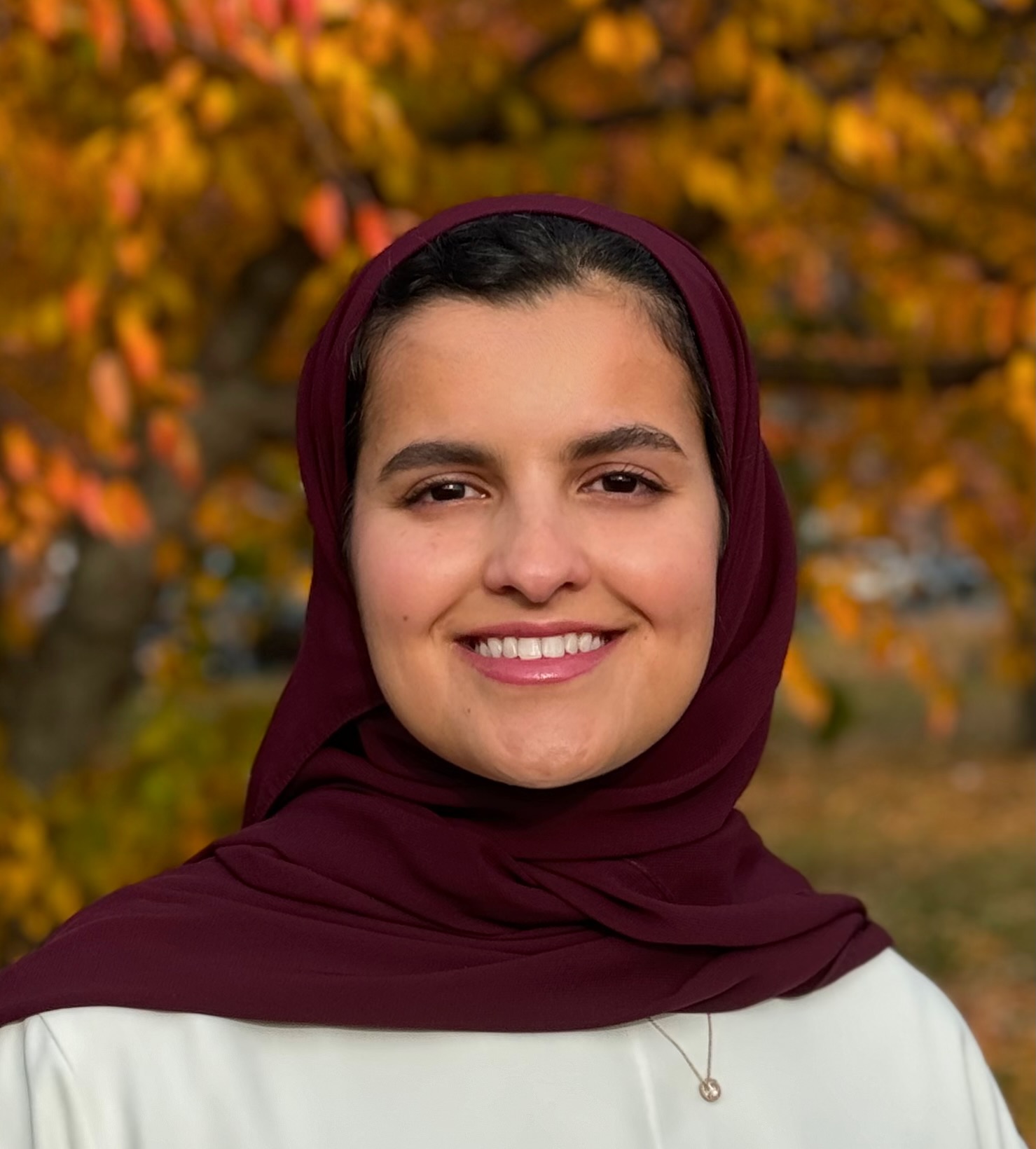
Hadeel Alnegheimish is a dual-affiliated academic serving as an Ibn Khaldun Postdoctoral Research Fellow at MIT's Computer Science and Artificial Intelligence Lab (CSAIL) and an Assistant Professor in the Department of Computer Science at King Saud University. Her research focuses on advancing machine learning and natural language processing, particularly in neuro-symbolic reasoning, model interpretability, and robust numerical reasoning. She holds a PhD from Imperial College London, advised by Alessandra Russo and Pranava Madhyastha, and completed an internship at DeepMind's Cognition team. Education: PhD in Computer Science, Imperial College London (2023) M.Sc. in Artificial Intelligence, Imperial College London B.Sc. in Computer and Information Sciences, King Saud University Research Interests: Compositional reasoning, model evaluation, and neuro-symbolic integration. She emphasizes transparent and reliable systems that demonstrate how answers are derived, alongside advancing evaluation methodologies. Current projects explore symbolic rule learning for LLMs and preserving word order sensitivity in neural models. Grants & Advising: Currently recruiting MIT UROPs for summer 2025. Collaborates actively with peers in neuro-symbolic NLP and evaluates model behavior through initiatives like Forced Invalidation. Labs & Teams: Participates in CSAIL's machine learning initiatives and leads pedagogical efforts at King Saud University, fostering interdisciplinary research in computational linguistics and AI.
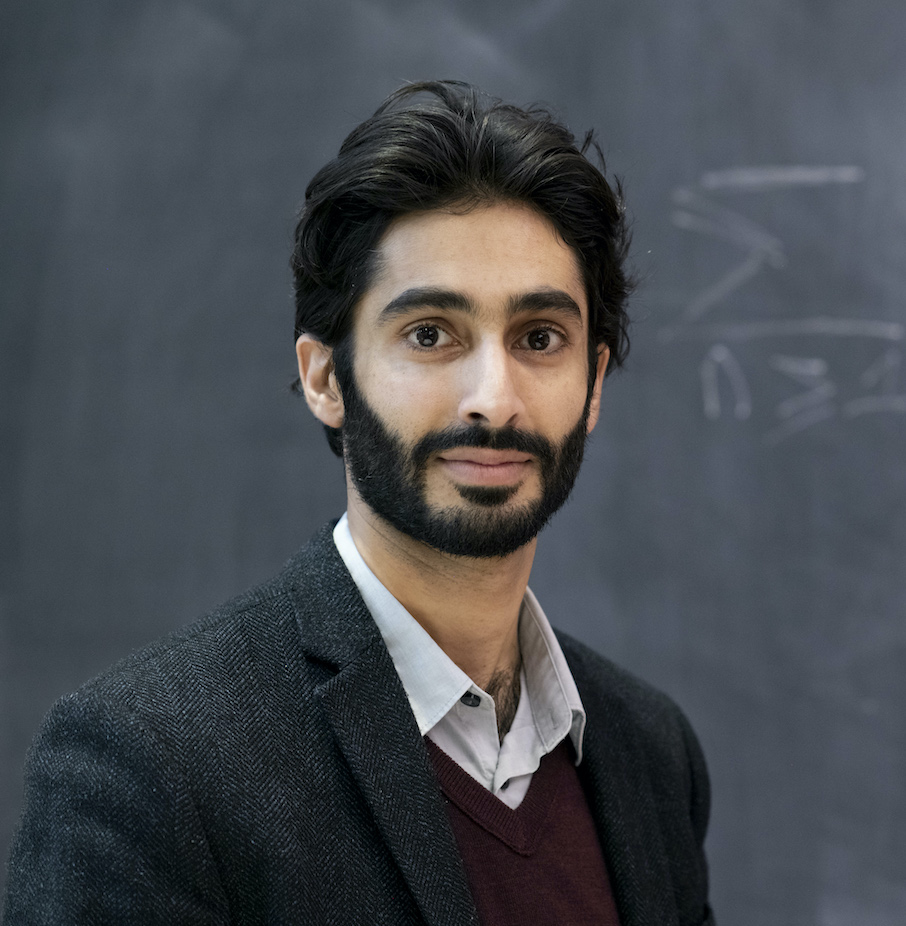
Vasanth Sarathy is a Research Assistant Professor of Computer Science at Tufts University, specializing in the intersection of Artificial Intelligence and Natural Language Processing. His work combines neuro-symbolic machine learning techniques with social and cognitive sciences to develop socially-competent and safe AI systems. Education: Ph.D. in Computer Science and Cognitive Science, Tufts University (2020) Juris Doctor (J.D.), Boston University School of Law (2010) M.S. in Electrical Engineering and Computer Science, MIT (2005) B.S. in Electrical Engineering, University of Arkansas (2003) His research spans three interconnected themes: Social NLP, Reasoning with Social Norms, and Sense-making and Problem-Solving. Through Social NLP, he develops computational methods to uncover patterns in human social behavior using qualitative texts. His work on Reasoning with Social Norms focuses on building AI architectures that can understand and apply social norms in reasoning and language interpretation. His Sense-making research explores how humans and AI systems simplify complex worlds for efficient problem-solving. His recent publications demonstrate a growing trend toward integrating Large Language Models with symbolic reasoning for more trustworthy AI. His work spans applications including automated writing assistance, intelligent tutoring, fact-checking, social media content moderation, and embodied social robots. His research shows particular strength in developing methods that combine neural and symbolic approaches to address complex social reasoning tasks that neither approach could solve alone. Previously, Dr. Sarathy worked as a Senior Researcher of AI at Smart Information Flow Technologies, collaborating with the U.S. Department of Defense and Intelligence Community. Before his AI career, he practiced intellectual property law at Ropes and Gray for nearly a decade. His unique interdisciplinary background bridges technology, law, and cognitive science. He advises students in AI, NLP, and cognitive systems, with research supported by grants from DARPA and other government agencies. His work has applications in human-robot interaction, social media analysis, and educational technologies. Outside academia, he creates single-panel cartoons, practices martial arts, plays chess, and designs puzzle video games. His interdisciplinary journey from law to AI has been featured in a BU Law article.
Shahin Tavakoli is a Senior Lecturer in the Research Institute for Statistics and Information Science at the Geneva School of Economics and Management (University of Geneva). He holds a PhD in Mathematical Statistics from EPFL and has held positions as a University Research Fellow at the University of Cambridge and a tenure-track Assistant Professor at the University of Warwick. His research focuses on functional data analysis with applications in neuroimaging, phonetics, biophysics, econometrics, and genomics. Education: BSc/MSc in Mathematics (EPFL), PhD in Mathematical Statistics (EPFL). Key roles include Associate Editor for the Journal of Statistical Planning and Inference and proposer for a JRSS B discussion paper. Teaching includes Applied Bayesian Statistics, Multivariate Analysis, and Mathematics courses at the University of Geneva. Research interests emphasize statistical methodologies for complex data structures, including high-dimensional functional time series and spatial modeling of linguistic data. Notable recent publications address phonetic analysis, brain imaging, and econometric factor models. Collaborations span institutions like the University of Cambridge, University of Warwick, and LMU Munich. Advising includes PhD students Marco Palma and Beatrice Matteo, with contributions to projects such as functional regression clustering and normative brain mapping. His work bridges theoretical statistics with applied domains, reflecting interdisciplinary impact across natural and social sciences.
Dr. Shuki Cohen is an Associate Professor at John Jay College of Criminal Justice, CUNY. He holds a PhD in Clinical Psychology from New York University, a postdoctoral fellowship at Yale Medical School, and advanced degrees from institutions in Israel, including the Weizmann Institute of Science. His research focuses on psychological processes underlying ideological extremism, violence, and prejudice, with a particular emphasis on linguistic analysis of narratives and cognitive rigidity. Dr. Cohen has clinical training at NYU’s Psychodynamic Outpatient Clinic, the Albert Ellis Institute, and hospitals like Bellevue. His work bridges neuroscience, psychoanalysis, and social psychology to address complex societal conflicts. Education: PhD in Clinical Psychology, New York University Postdoctoral Fellowship, Yale Medical School, Department of Psychiatry MSc in Brain Sciences, Weizmann Institute of Science, Israel BSc in Biochemistry (Cum Laude), Ben Gurion University, Israel Research Interests: Dr. Cohen explores how unconscious processes influence ideological extremism, violence, and prejudice. His methodologies include psycholinguistic analysis of terrorist propaganda, statistical algorithms for detecting interaction patterns in psychoanalytic dialogues, and developing scales to measure cognitive rigidity and fanaticism. His work often intersects with geopolitical conflicts, such as the Israeli-Palestinian context, and examines trauma’s impact on mental flexibility and healing. Recent Work Trends: His articles span terrorism analysis, cognitive processes in radicalization, and linguistic markers of aggression. Notable projects include decoding Al-Qaeda’s propaganda and analyzing suicide bomber farewell letters. He also investigates implicit dehumanization in military narratives and develops tools for assessing sexual coercion. Labs/Teams: Collaborations include work with the late Enrico Jones on psychoanalytic archives and interdisciplinary projects at Yale and NYU.
Dr. Christian Scharinger is an Associated Scientist and Principal Investigator at the Leibniz-Institut für Wissensmedien (IWM) in Tübingen, Germany, where he has been actively engaged in research since 2010. He is a member of the Multimodal Interaction Lab and leads a DFG-funded project on neurophysiological measures in instructional design. His research integrates cognitive psychology with educational technology, focusing on how digital learning environments affect cognitive processes. Christian Scharinger earned his M.A. in Linguistics, Informatics, and Media Sciences from the University of Trier and the University of Konstanz in 2007. He completed his doctoral thesis in Cognitive Science at the University of Tübingen in 2015. From February to September 2017, he served as a postdoctoral researcher at the University of Tübingen’s Chair of Applied Cognitive Psychology and Media Psychology. His research interests center on the cognitive and neurophysiological mechanisms underlying learning in digital environments. He employs advanced methodologies such as combined EEG and eye-tracking to investigate cognitive load, working memory, and the effects of multimedia elements like decorative pictures and virtual reality. He is particularly interested in how seductive details influence learning and how user-friendly digital interfaces can be designed based on neurocognitive data. The recent publications of Christian Scharinger reflect a strong trend in using neurophysiological indicators—especially EEG frequency band power and pupil dilation—to assess cognitive load across various learning contexts, including text reading, VR, and gamified tasks. His work bridges cognitive theory with practical applications in educational design, often evaluating the validity of multimedia learning principles through empirical neurocognitive data. Task-irrelevant decorative pictures increase cognitive load (2024) Effects of emotional decorative pictures on cognitive load (2023) Gamification of n-back tasks (2023) EEG and eye-tracking in text-picture learning (2020) Cross-subject cognitive load classification (2018) Christian Scharinger has been involved in multiple DFG and interdisciplinary research projects, including those on virtual reality, working memory load, and perception of historical sites. He has taught seminars at Hochschule Tuttlingen and Hochschule Fresenius Heidelberg, contributing to academic training in psychology and technology. He is also a member of the IWM postdoc network 'Cognitive Conflicts During Media Use', indicating active engagement in collaborative research. While no formal advisees are listed, his role as a PI and lab member suggests mentorship responsibilities. He has contributed to setting up and operating a combined EEG-eye-tracking laboratory at IWM, demonstrating technical leadership. His work spans both basic and applied research, with implications for instructional design, human-computer interaction, and educational technology. He regularly presents at major conferences such as EARLI, TeaP, and ETRA, and has organized symposia and workshops, reflecting strong academic leadership.
Nathan Schneider is an Associate Professor jointly appointed in the Departments of Linguistics and Computer Science at Georgetown University, where he teaches and leads interdisciplinary research at the intersection of computational linguistics and natural language processing. He earned a B.A. in Computer Science and Linguistics from UC Berkeley (2004–2008) and a Ph.D. in Language Technologies from Carnegie Mellon University (2008–2014) under advisor Noah Smith. After post-doctoral research at the University of Edinburgh ILCC with Mark Steedman (2014–2016), he joined Georgetown as Assistant Professor (2016–2022) and was promoted to Associate Professor in 2022. His research centers on the linguistic foundations of NLP, focusing on computational, corpus-based approaches to meaning construction. Key themes include: Linguistic Structure: Design, annotation, parsing, and evaluation of syntactic and semantic frameworks such as UD, CCG, AMR, UCCA, and FrameNet. Adposition Semantics: Cross-linguistic description and computational modeling of prepositions and postpositions via the SNACS framework. Metalanguage: Analysis of explicit language about language in linguistics, education, and law, and leveraging such data for NLP. Uncertainty, Rarity, and Noise: Modeling sparse and noisy linguistic phenomena to improve robustness and interpretability. Across more than 100 peer-reviewed publications since 2015, Schneider’s work exhibits a steady trajectory from foundational annotation schemes (e.g., SNACS, CGELBank, UCCA) to neural-era evaluations using transformer models and large language models, with increasing attention to legal and cross-lingual applications. His 2025 corpus of papers demonstrates a focus on legal language processing, child language acquisition corpora, multilingual supervision, and probing LLMs. Scientific Awards & Honors NSF CAREER Award (publicized Dec 2022) Recognition of undergraduate mentee for research achievement (Aug 2023) Invited keynotes and distinguished talks at NASSLLI, MWE Workshop, Georgetown Law SOLID Symposium, UT Austin, Charles University, Allen Institute for AI, Mila-Quebec AI Institute, University of Toronto, Saarland University, Dagstuhl Seminar, and many others. Advising, Teaching & Service Schneider advises Ph.D. and master’s students in both Linguistics and Computer Science and leads the NERT lab. He has served as Program Co-Chair for LAW-MWE-CxG@COLING 2018, Area Chair for COLING 2018, Program Co-Chair for LAW@EACL 2017, and Tutorial Co-Chair for EMNLP 2017, and regularly teaches graduate courses such as LING/COSC-672 Advanced Semantic Representation. Labs & Teams He heads the NERT (Nathan’s Empirical Research Team) lab at Georgetown, an interdisciplinary group developing corpora, models, and tools for multilingual and cross-domain NLP, with current projects on legal text, child language, and adposition semantics.
Kai Alter is a Senior Lecturer in Auditory Cognitive Neuroscience at Newcastle University's Faculty of Medical Sciences, affiliated with the Biosciences Institute. They also serve as an Affiliated Lecturer at the University of Cambridge's Faculty of Modern and Medieval Languages and Linguistics and maintain collaborations with institutions including the University of Lisbon and Tuebingen University. Their educational background includes: Habilitation from University of Leipzig (2002) PhD in Linguistics from University of Leipzig (1994) Post-grade in Linguistics from University of Geneva (1993) Post-grade in Phonetics from University of Lausanne (1993) Master in Linguistics from University of Leipzig (1990) Master in Russian Language from University of Belgorod (1988) Dr. Alter's research focuses on auditory neuroscience, particularly speech and language processing using behavioral and neuro-imaging methods (EEG, MEG, fMRI) in both healthy volunteers and patients. Their work spans cognitive neuroscience, examining the comparison between language and music processing, neurocognition of prosody and intonation in children, turn taking in communication, tinnitus research, dyslexia and working memory, and laughter and brain interactions. They also investigate developmental aspects of speech & language processing, speech segmentation on phrase and discourse level, and processing of durational, tonal, and spectral properties related to voice. Dr. Alter's publications reveal a strong focus on tinnitus research, emotional processing in laughter, and speech processing in neurological conditions. Their work combines multiple neuroimaging techniques to understand auditory processing mechanisms, with recent publications showing increasing interest in tinnitus as a neurological condition and its relationship to brain responses, as well as the neural basis of emotional vocalizations like laughter. Notable scientific achievements include: Oxford Visiting Senior Research Fellowship (2015-2017) Honorary appointment as Research Associate in Neurology by the NHS Trust Associate Member of Laboratorio de Fonetica & Lisbon Baby Lab Research Associate at the Tuebingen University Hospital for Psychiatry Dr. Alter has co-supervised 22 PhD students and 8 PDRAs, and currently co-supervises 5 PhD students and 1 PDRA. They have secured international and national grants totaling £1.8 million over the past 12 years. As a reviewer, they have evaluated proposals for numerous national and international Research Foundations including Human Frontier Science Program, ERC, German Research Foundation, Netherlands Organisation of Scientific Research, Austrian Research Foundation, French Research Foundation, MRC, ASRC, ESRC, and Wellcome Trust. Dr. Alter co-convenes the cross-Faculty Research Group on Phonetics and Phonology at Newcastle University and maintains an active research program investigating the neural basis of speech and emotional vocalizations. Their work bridges cognitive neuroscience, linguistics, and clinical applications, particularly in understanding speech processing disorders and tinnitus.
Yukio Gunji is a Professor at Waseda University's School of Fundamental Science and Engineering since 2014, with prior 27-year tenure at Kobe University. Holding a Ph.D. in Science from Tohoku University, he bridges Cognitive Science Quantum Logic Bio-inspired Computing Swarm Dynamics through interdisciplinary research. His work reveals quantum-like cognitive structures via Orthomodular lattices from rough set analysis Inverse Bayesian inference systems Asynchronous cellular automata models explaining phenomena like free will paradoxes , virtual agent persuasion , and Physarum plasmodium decision-making . Analysis of 15 recent articles shows strong focus on Lévy walk patterns in ants and fish schools, self-avoiding walk algorithms , and nonlocal cognitive models . Key contributions include Developing Extended Bayesian Inference frameworks Formalizing trilemma structures in consciousness studies Creating heterarchical market models with critical behavior while his Virtual Hand experiments challenge ownership perception boundaries through squeeze machine studies.
Dr. Esther Mondragón is a Senior Lecturer in the Department of Computer Science at City St George's, University of London, within the School of Science and Technology. She is a member of CitAI (the Artificial Intelligence Research Centre at City) and directs the virtual Centre for Computational and Animal Learning Research. Her academic leadership includes serving as Chair of the School of Science and Technology Research Degrees Committee and former Director of the MSc in Artificial Intelligence. PhD Psychology, University of the Basque Country, Spain MSc Psychology, University of the Basque Country, Spain BSc Psychology, University of the Basque Country, Spain Dr. Mondragón is a computational cognitive neuroscientist whose research lies at the intersection of artificial intelligence and cognitive neuroscience. Her primary focus is on bio-inspired AI, particularly reinforcement learning models of cognition grounded in associative learning principles. She develops computational frameworks that bridge natural and artificial cognition, including influential models like the Double Error Dynamic Asymptote (DDA) and the Rescorla-Wagner Drift-Diffusion Model (RWDDM). Her work extends to deep learning integration, Hebbian learning, representational learning, and episodic memory in AI. She has also contributed to understanding perceptual learning, rule acquisition in animals, and timing mechanisms in conditioning. The 15 most recent publications reflect a strong trend in computational modeling of learning, with increasing integration of deep learning and neuro-inspired architectures. Her work spans theoretical cognitive science, applied AI, and software development for simulation. Key themes include associative mechanisms in representation, temporal modeling, and biologically plausible neural networks. She frequently collaborates with researchers like Eduardo Alonso and others across disciplines. Member, Spanish Society for Comparative Psychology (SEPC) Member, Cognitive Science Society International Affiliate, Pavlovian Society Member, Division 6: Society for Behavioral Neuroscience and Comparative Psychology, American Psychological Association (APA) Senior member, The Society for the Study of Artificial Intelligence and the Simulation of Behaviour (AISB) Dr. Mondragón actively supervises PhD students including Corina Cătărău-Cotuțau, Alexander Dean, and Mpagi Kironde. She has supervised several to completion, such as Esther Mulwa, André Luzardo, and Niklas Kokkola. She has secured significant research funding as PI/Co-PI on projects like 'INDUSTRIAL PhD SCHOLARSHIP, BOSCH AASS' (£140,000, Innovate UK), 'DEEPSYNC: AUTOMATED VFX FOR VIDEO DUBBING' (£143,000, Innovate UK), and 'FREE ENERGY PRINCIPLE FOR ADAPTIVE COGNITIVE ARCHITECTURES' (£98,000, DSTL). She also serves as a reviewer for the US National Science Foundation, BBSRC, NCN Poland, and numerous high-impact journals. She directs the virtual Centre for Computational and Animal Learning Research, which fosters interdisciplinary collaboration among cognitive scientists, neuroscientists, biologists, mathematicians, and computer scientists. She also leads the Knowledge Graphs Interest Group at The Alan Turing Institute.
Jakob Prange is a Researcher (Akademischer Rat auf Zeit) at the Chair for Natural Language Understanding / Digital Humanities within the Faculty of Applied Computer Science at the University of Augsburg. He holds a Ph.D. in Computer Science with a concentration in Cognitive Science from Georgetown University, where his dissertation focused on neuro-symbolic models for syntactic and semantic representations. Education: Ph.D. in Computer Science (Cognitive Science), Georgetown University B.Sc. in Computational Linguistics, Saarland University His research lies at the intersection of computational linguistics and theoretical linguistics, emphasizing formal and distributional semantics, meaning representation, deep learning, and neuro-symbolic integration. He prioritizes model efficiency and explainability, often combining neural models with structured linguistic representations. His recent work includes projects on cross-lingual QA in migration contexts and Bayesian modeling of L2 preposition learning. His publications span top venues such as ACL, NAACL, TACL, and COLING, with a focus on semantic parsing, supersense tagging, UCCA, neuro-symbolic modeling, and robust NLP for German. He has contributed to multilingual annotation frameworks and low-resource language modeling. Scientific Awards: No awards explicitly mentioned. He has supervised M.Sc. student Steffen Kleinle on a QA project and contributes to teaching at the University of Augsburg, including Python for language processing and NLP tutorials. He is part of the HLT@Augsburg research group led by Prof. Annemarie Friedrich, focusing on natural language understanding and digital humanities.
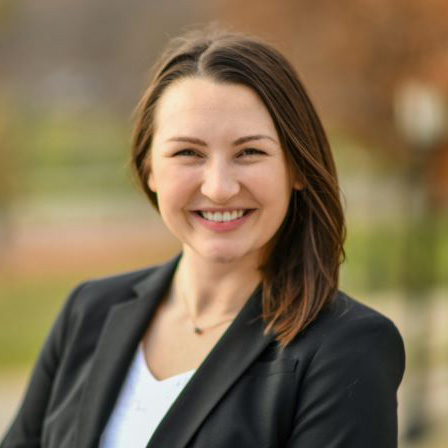
Caitlin Ward, PhD is an Assistant Professor at the University of Minnesota's Division of Biostatistics & Health Data Science. Her work bridges methodological development and interdisciplinary collaboration. Education : PhD/MSc in Biostatistics (University of Iowa), BS in Statistics (Iowa State) Methodologically, she specializes in Bayesian modeling for complex systems, particularly infectious disease dynamics , spatio-temporal analysis , and multiplex imaging data . Collaboratively, she engages with: Nursing (dementia care communication) Neuroradiology (brain tumor classification) Veterinary medicine (Mycoplasma bovis transmission) Public health (vaccine hesitancy) Education (open educational resources) Her 15 most recent publications span epidemiological modeling , healthcare communication , and machine learning applications . Key contributions include: Bayesian SEIR models for behavioral change Network analysis of care coalitions Evaluation of elderspeak communication impacts Development of open-source BayesSEIR R package Statistical methods for imperfect diagnostics Recognitions include the CANSSI Distinguished Postdoctoral Fellowship and Outstanding Teaching Assistant Award . Current projects focus on making biostatistics education more accessible through open resources.
Joseph 'Beau' Stephens is a Professor in the School of Psychology at Xavier University. He holds a Ph.D. in Psychology from Carnegie Mellon University where he trained at the Center for the Neural Basis of Cognition, and a B.A. in Germanic Studies from Indiana University. Previously, he served for 16 years as faculty at North Carolina A&T State University. Dr. Stephens' research examines cognitive and neural mechanisms underlying auditory/visual perception, speech/language processing, memory systems, decision-making, and cognitive aging. His collaborative work has been funded by the National Institutes of Health, National Science Foundation, and Air Force Research Laboratory. His recent publications demonstrate a strong interdisciplinary focus spanning cybersecurity behavior (2024-2025), memory mechanisms (2013-2021), auditory processing disorders (2020), and cognitive aging (2013-2018). This reflects a consistent integration of experimental psychology with neuroscience and applied human factors research. He directs the Neuro-mechanX Lab and maintains active collaborations across institutions. Current funding sources include federal grants supporting his investigations into sensory processing, learning mechanisms, and age-related cognitive changes.
Virginia Polytechnic Institute and State UniversityUnited States
Michael S. Hsiao is a Professor in the Bradley Department of Electrical and Computer Engineering at Virginia Tech. His research focuses on design, test, verification, and diagnosis of complex hardware and software systems. He earned his Ph.D., M.S., and B.S. in Electrical Engineering from the University of Illinois. Notably, he was elected an IEEE Fellow in 2013 for contributions to automatic test pattern generation. His work spans natural language processing in hardware verification, hybrid AI systems, and formal methods. He has authored over 80 peer-reviewed publications and led significant research projects. Education: Ph.D., University of Illinois, 1997 M.S., University of Illinois, 1993 B.S., University of Illinois, 1992 Research Interests: Testing and Verification of Hardware Systems Computer Architecture and Digital Design Algorithm Development for Hardware Diagnostics Natural Language Processing in Design Automation Recent Article Trends: Recent work emphasizes integrating NLP with formal verification (e.g., translating English specifications to SystemVerilog assertions), hybrid AI systems for intent clarification, and robotic path-finding using natural language. These contributions bridge abstract language-based specifications with rigorous engineering validation. Awards: IEEE Fellow (2013) – For contributions to automatic test pattern generation of integrated circuits Advising & Grants: While specific student names are not listed here, his research has been supported by over 160 projects. He has also contributed to industry collaborations, including work on anti-counterfeit ICs and hardware security.