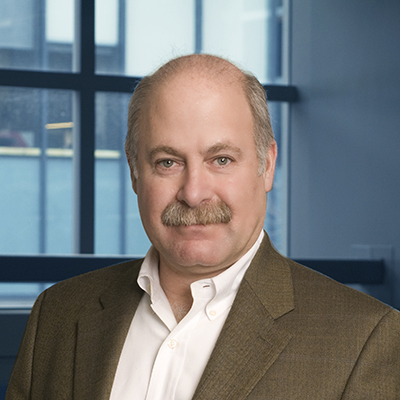
Jonathan Britt is an Associate Professor in the Department of Psychology at McGill University, affiliated with the Faculty of Science. He leads the Britt Lab, focusing on neural circuitry underlying motivated behaviors, particularly in the context of addiction and neuropsychiatric disorders. His work combines optogenetics, electrophysiology, and behavioral tasks to study the basal ganglia's role in reinforcement learning and compulsive behavior. Research interests include the neural mechanisms of drug addiction, Tourette’s Syndrome, and obsessive-compulsive disorder, with a focus on dopamine pathways and synaptic modifications. Key methodologies involve all-optical approaches and optogenetic interrogation of neural circuits. His recent studies highlight topics like alcohol palatability, serotonergic regulation of attention, and LSD’s effects on social behavior. Articles often explore the nucleus accumbens and hippocampal interactions in reward processing. No scientific awards are explicitly listed, though his contributions to addiction neuroscience are notable. He advises no listed students and has no mentioned grants in the provided text. The Britt Lab serves as a central hub for his research activities.
Auguste Genovesio is a Research Director (DR INSERM) leading the Computational Bioimaging and Bioinformatics team at the Centre for Computational Biology within the École Normale Supérieure (ENS) in Paris. His work focuses on large-scale cellular morphology analysis, integrating machine learning, microscopy, and computational modeling to study cellular responses to perturbations. His team develops algorithms for analyzing high-dimensional biological data, with applications in drug discovery, functional genomics, and neuroscience. Education and Affiliations: Genovesio’s research is anchored at ENS and collaborates with institutions like Institut Curie, Collège de France, and ESPCI. His lab develops open-source tools such as PySpacell and ALFA , advancing spatial analysis and genomic data processing. Research Interests: His group combines deep learning, bioinformatics, and experimental biology to tackle challenges in cellular dynamics, morphological heterogeneity, and predictive modeling. Recent work includes applying diffusion models to reveal subtle phenotypes and optimizing microscopy image analysis pipelines. Key Projects: Cross-modal knowledge distillation for transcriptomics, latent diffusion models for small datasets, and super-resolution microscopy via StyleGAN regularization. Applications: Collaborations in drug screening, neurobiology (e.g., Drosophila memory studies), and cancer cell analysis. Publications: Over 50 peer-reviewed articles since 2007, including work in Nature Communications , Developmental Cell , and NeurIPS . Recent focus on generative AI for biological image analysis and self-supervised learning biases. Grants & Awards: While specific grants aren’t listed, his lab’s cutting-edge research suggests significant institutional and collaborative support. No explicit awards mentioned in texts. Labs/Teams: Director of the Computational Bioimaging group, part of the Functional Genomics section at ENS. Supervises PhD students and postdocs in AI-driven biology and computational microscopy.
Professor Bruno A. Olshausen is affiliated with the Helen Wills Neuroscience Institute and the School of Optometry at the University of California, Berkeley. He also serves as the Director of the Redwood Center for Theoretical Neuroscience , focusing on computational models of sensory coding and visual perception. Ph.D. in Computation and Neural Systems (Caltech, 1994) M.S. and B.S. in Electrical Engineering (Stanford, 1987 and 1986) His research investigates how the brain processes sensory information by developing probabilistic models of natural images and neural circuits. Key contributions include sparse coding models that replicate receptive field properties of the primary visual cortex (V1), and work on extending these models to learn invariances and hierarchical structures. He has also collaborated with electrical engineers to design low-power analog memory systems inspired by brain computation, and developed software tools like SPARSENET and SPARSEPYR for neural signal processing. His work spans computational neuroscience, theoretical modeling, and interdisciplinary applications in vision science. As an educator, he has co-instructed courses such as Vision Science 206D (Neuroanatomy of the visual system) and Vision Science 212B (Visual neurophysiology), and independently taught Vision Science 265: Neural Computation at Berkeley and Psychology 290 at UC Davis. He co-edited the book Probabilistic Models of the Brain: Perception and Neural Function (MIT Press, 2002) and organized workshops at institutions like the Gordon Research Conference and Nature Neuroscience .
Dr. Wei Dai is a Senior Lecturer (Associate Professor) in the Department of Electrical and Electronic Engineering at Imperial College London, part of the Faculty of Engineering. He holds affiliations with the EPSRC Centre for Maths of Precision Healthcare and the Communications and Signal Processing group. His research focuses on sparse signal processing, machine learning applications in signal processing, linear and bilinear inverse problems, wireless communications, and random matrix theory. Notably, he contributed to the first compressive sensing DNA microarray prototype and has a highly cited 2009 paper on compressive sensing reconstruction. Dr. Dai's educational background includes a Ph.D. in Electrical and Computer Engineering from the University of Colorado at Boulder (2007) and postdoctoral research at the University of Illinois at Urbana-Champaign (2007-2010). His work bridges theoretical signal processing with practical applications in sensing, communication systems, and biomedical signal analysis. He leads research initiatives in gridless DOA estimation, robust beamforming, and cortico-muscular coupling analysis using advanced optimization techniques. His research outputs span topics like spectral compressed sensing, Bayesian methods for integrated sensing-communication systems, and dictionary learning for causal discovery. Ongoing work emphasizes low-rank matrix recovery, distributed compressed sensing, and mathematical frameworks for super-resolution localization. Dr. Dai collaborates across disciplines, leveraging signal processing innovations for healthcare technology and next-generation wireless systems.
Dr. Mingyan Li is an Adjunct Research Fellow at The University of Queensland's School of Electrical Engineering and Computer Science. Their research focuses on advanced imaging and sensing technologies with applications in biomedical engineering, particularly in MRI system development, RF coil design, and medical signal processing. They hold a PhD from The University of Queensland (2015). Research interests include high-field MRI systems, rotating RF coil technologies, MRI-Linac integration, and electrical properties tomography (EPT). Key contributions include innovations in MRI-Linac distortion correction, RF shielding for SAR reduction, and deep learning approaches for cardiac arrhythmia classification. Publications span MRI hardware optimization, image reconstruction algorithms, and biomedical signal analysis. Collaborations include work on metamaterial-inspired RF shielding and multi-modal antenna systems for body MRI.
Professor Maria Wimber is a faculty member in the School of Psychology & Neuroscience at the University of Glasgow. Her research focuses on understanding how the human brain reconstructs memories, with a particular emphasis on neural oscillations (e.g., theta rhythms) and the adaptive nature of memory. She employs techniques such as EEG, MEG, fMRI, and direct hippocampal recordings from epilepsy patients to study memory dynamics, interference, and reconsolidation. Key achievements include receiving an ERC Starting Grant and a British Academy Fellowship. Her work is funded by grants from the ESRC, BBSRC, and Stiftelsen Olle Enkvist. She supervises postgraduate students like Stratos Koukouvinis and Christopher Postzich, and collaborates with researchers on projects involving neuroimaging tools like the Brain Time Toolbox. Her research highlights how memory retrieval can both stabilize and disrupt competing memories, with findings published in journals like Nature Neuroscience and Current Biology. She explores mechanisms like theta phase separation, cortical pattern suppression, and the hippocampus's role as a 'switchboard' between perception and memory. Recent studies include reconstructing visual memory trajectories and investigating how theta oscillations coordinate memory reactivation. Her lab's work bridges cognitive psychology and neuroscience, with implications for understanding memory disorders and cognitive aging.
Lu Yin is an Assistant Professor in the School of Computer Science and Electronic Engineering at the University of Surrey. He holds affiliations as a long-term visiting researcher at Eindhoven University of Technology (TU/e) and collaborator with the Visual Informatics Group (VITA) at the University of Texas at Austin. Previously, he served as a Postdoctoral Fellow at TU/e and worked as a research scientist intern at Google's New York City office. His work bridges academic and industrial research, focusing on AI Efficiency, AI for Science, and Large Language Models. His research emphasizes optimizing neural networks through sparsity techniques, including pruning strategies for LLMs and vision models. Notable contributions include the OWL method for LLM pruning and Lottery Pools for improving sparse network performance. Yin actively collaborates with institutions like TU/e, Google Research, and Intel Research, and has organized conferences such as CAPBS 2025 and CAI 2025 Workshops. Yin has secured significant grants, including a 10,000,000 NWO-funded grant for NVIDIA A100 GPU resources. He has delivered invited talks at prestigious institutions like Carnegie Mellon University and City University of Hong Kong. His work has been recognized with the Best Paper Award from LoG 2022.
Dr. Arwa Dabbech is an Assistant Professor at Heriot-Watt University's School of Engineering & Physical Sciences, affiliated with the Institute of Sensors, Signals & Systems. Her research focuses on radio interferometric imaging, combining machine learning, optimization algorithms, and computational methods to advance astronomical data analysis. Key areas include high-dynamic range imaging, algorithm scalability, and deep neural networks like R2D2 for precision imaging. Her work emphasizes innovative techniques such as Faceted HyperSARA and parallel processing frameworks, addressing challenges in wideband imaging and large-scale data handling. Collaborations involve advanced telescopes like the VLA and ASKAP, contributing to datasets that validate novel algorithms. Dr. Dabbech’s research bridges theoretical developments with practical applications, enhancing the resolution and accuracy of radio astronomical observations. Notable projects include R2D2’s application to Cygnus A imaging and uncertainty quantification, demonstrating real-time imaging capabilities. Her contributions span algorithm design, AI integration, and scalable solutions for modern radio interferometry, positioning her at the forefront of computational astrophysics.
Miroslaw Bober is Professor of Video Processing at the University of Surrey, where he joined in 2011. He leads the Visual Media Analysis team within the Centre for Vision, Speech and Signal Processing (CVSSP) in the School of Computer Science and Electronic Engineering. His extensive industry experience includes 15 years as General Manager of the Mitsubishi Electric R&D Centre Europe and Head of Research for its Visual & Sensing Division. BSc and MSc in Electrical Engineering from AGH University of Science and Technology, Krakow, Poland (1990) MSc in Machine Intelligence with distinction from Surrey University (1991) PhD in Computer Vision from Surrey University (1995) Professor Bober's research focuses on novel techniques in signal processing, computer vision and machine learning with applications in industry, healthcare, big-data and security. His expertise particularly lies in image and video analysis and retrieval, including visual search, object recognition, and analysis of motion, shape and texture. His algorithms for shape analysis, image/video fingerprinting, and visual search are considered world-leading and have been selected for ISO International standards within MPEG, with applications used by organizations like the Metropolitan Police. His recent publication trends show a strong focus on hybrid network architectures, scene graph generation, medical imaging applications, and augmented reality publishing systems. His work spans both theoretical advancements in computer vision and practical implementations addressing real-world challenges in media, healthcare, and security domains. The research demonstrates a consistent pattern of bridging academic innovation with industrial applications, particularly in visual search technology and media analysis. Presidential Award for strengthening the TV business in Japan via innovative 'Visual Navigation' content access technology (2010) Mitsubishi Best Invention Award for Image Signature Technology (2008) Professor Bober serves as Programme Director for the MSc in Multimedia Signal Processing and Communications and holds various teaching and mentoring roles. He has secured over 30 research and industrial grants totaling more than £16M, including the BRIDGET FP-7 project (5.28 M€) as coordinator and PI, and the CODAM project (£1.05 M) as PI. His work with the BBC, Huawei, and other industry partners demonstrates strong industry-academia collaboration. As chair of MPEG technical work on Compact Descriptors for Visual Search (CDVS) and Compact Descriptors for Video Analysis (CDVA), Professor Bober leads international standardization efforts. His Visual Media Analysis team develops cutting-edge visual search and media analysis algorithms with applications across broadcast, security, and healthcare domains.
Eamonn O'Neill is a Professor and Head of the Department of Computer Science at the University of Bath. His research focuses on innovative human-technology interaction, including mixed/augmented/virtual reality, and interaction with intelligent systems. His work emphasizes applied science, deriving design principles grounded in theory and empirical testing. He leads the UKRI CDT in Accountable, Responsible and Transparent AI and is affiliated with multiple centers, including the Centre for the Analysis of Motion, Entertainment Research & Applications (CAMERA) and the REal and Virtual Environments Augmentation Labs (REVEAL). His projects span EU-funded initiatives such as EMIL and UNREST, addressing topics like embodied interaction, AI regulation, and social cohesion. Recent research explores emotion recognition in VR exergaming, EEG-based brain-computer interfaces, and regulatory frameworks for AI. His work contributes to UN Sustainable Development Goals related to innovation and infrastructure. Collaborations include academic institutions and industry partners across Europe.
Tony Lindeberg is a Professor of Computer Science—Computational Vision at KTH Royal Institute of Technology, affiliated with the Division of Computational Science and Technology. He teaches the course Image Analysis and Computer Vision (DD2423). His research focuses on scale-space theory, early vision, and computational modeling of biological and auditory vision systems. Key contributions include theories on receptive fields, time-causal spatio-temporal models, and feature detection algorithms. Research interests span computational neuroscience, medical image analysis, and spatio-temporal recognition. Lindeberg has pioneered work on scale-invariant image features, affine transformations, and Galilean diagonalization for motion analysis. He is the author of the foundational book Scale-Space Theory in Computer Vision (1993). His work bridges computer vision and biological vision systems, with applications in gesture recognition, dynamic texture analysis, and neural networks. He leads the Vision Lab and Computational Brain Science Lab at KTH, emphasizing theoretical rigor and practical algorithms for visual perception tasks.
Behrouz Far is a Professor at the University of Calgary’s Schulich School of Engineering, Department of Electrical and Software Engineering. He holds a PhD in Artificial Intelligence from Chiba University, Japan (1990) and degrees from the University of Teheran including a B.S. in Electrical Engineering (1983) and M.S. in Electrical Engineering (1986). His research focuses on AI applications in medical imaging, software engineering, transportation systems, and data mining. He has contributed to advancements in fundus image analysis, deep learning models for disease detection, and intelligent traffic management systems. Dr. Far has received notable awards such as the 2017 SSE Achievement Award and the AITF-AMA Tier-2 Chair in Smart Multimodal Transportation Systems (2013). His work bridges theoretical AI with practical healthcare solutions, including tools like LETTA for traffic management systems and methodologies for detecting ocular lesions using CNNs. He teaches courses on software testing, reliability engineering, and agent-based systems. His publications highlight contributions to medical diagnostics (e.g., choroidal nevi classification), transportation optimization (e.g., real-time traffic signal control), and machine learning explainability. Collaborative research includes projects on biopotentiostat biosensors for SARS-CoV-2 detection and data mining for cancer patient stratification.
Stephen H. Lane is a Teaching Professor at the University of Pennsylvania's School of Engineering and Applied Science, Department of Computer and Information Science. He serves as Director of the Computer Graphics and Game Technology (CGGT) Master's Program and teaches courses such as Computer Animation (CIS462/562), Advanced Topics in Computer Graphics and Animation (CIS660), and Game Design and Development (CIS564). He also supervises the Game Design Practicum (CIS568) capstone course. Education: B.S. in Mechanical and Aerospace Engineering from Cornell University (1980) M.S. in Systems Engineering from UCLA (1982) Ph.D. in Mechanical and Aerospace Engineering from Princeton University (1988) Dr. Lane's research focuses on the intersection of robotics, physically-based character animation, embodied intelligent agents, and virtual reality user interfaces. His work integrates control theory, artificial intelligence, and computer animation techniques to develop advanced simulation and training systems. His publications since 1987 cover topics such as inverse kinematics, neural networks for motion control, B-spline receptive fields, robotic skill acquisition, and gesture recognition systems. His recent work (2010-2011) emphasizes sensor fusion for gesture recognition and immersive training interfaces. Scientific Awards: Co-inventor of four US patents related to robotic animation and motion control systems Contributions to hybrid controller hierarchies and neural network training methods As founder of soVoz, Inc., Dr. Lane commercializes behavioral animation technology for virtual environments. His academic-industry collaboration includes contracts with Microsoft, Disney, and the US Army. He has developed tools like ProScena™ to integrate interactive 3D simulation capabilities into gaming and training applications.
Prof. Dr. Andreas Stadlbauer is a medical physicist affiliated with the Clinical Institute for Diagnostic and Interventional Radiology at St. Pölten University Hospital and the Department of Neurosurgery at Friedrich-Alexander University Erlangen-Nuremberg. He holds an adjunct professorship at the University of Erlangen-Nuremberg and contributes to both clinical and academic research in biomedical imaging and AI applications in oncology. University: Friedrich-Alexander University Erlangen-Nuremberg Hospital Affiliation: St. Pölten University Hospital Department: Department of Neurosurgery Academic Rank: Adjunct Professor His research focuses on advanced MRI techniques, particularly physio-metabolic imaging of brain tumors, oxygen metabolism, and the integration of artificial intelligence in clinical diagnostics. He has led research on glioma classification, tumor microenvironment characterization, and deep learning models for radiomic analysis. The recent publications highlight a strong trend toward AI-driven diagnostic tools in neuro-oncology, particularly in differentiating glioblastomas from metastases and predicting genetic mutations using machine learning. His work emphasizes the clinical translation of complex imaging data into actionable insights. Artificial Intelligence in Oncology Medical Imaging and Radiomics Brain Tumor Metabolism Deep Learning for MRI Analysis Oxygen Metabolism Imaging Clinical Decision Support Systems Prof. Stadlbauer has been involved in seed-funded research projects developing deep learning algorithms for clinical integration. He collaborates extensively with neurosurgeons, radiologists, and oncologists across institutions, contributing to multidisciplinary tumor boards and translational research initiatives. He completed his doctorate in medical physics in 2004, habilitation in 2008, and an MBA in Health Management in 2010. His academic journey reflects a blend of technical expertise and leadership in healthcare innovation.
Per Gunnar Kjeldsberg is a Professor at the Department of Electronic Systems, Norwegian University of Science and Technology (NTNU), and currently serves as acting head of the institute. His research focuses on embedded heterogeneous multi-processor systems , particularly in multimedia and digital signal processing applications . He has led and participated in numerous national and international projects, including EU Horizon 2020 initiatives like READEX (as work package leader) and Tulipp (as principal researcher), and supervises the MSCA-IF project Palmera . Kjeldsberg is a Senior Member of IEEE and part of the European Network of Excellence HiPEAC . Education : Sivilingeniør (MSc) in Electrical Engineering (1992), PhD (2001) from Norwegian Institute of Technology (NTH)/NTNU His work spans energy-efficient computing , radiation-hardened memory design for space applications, and dynamic hardware management . Publications include co-authoring three books and over 150 peer-reviewed articles in journals and conferences. He leads the Circuit and Radio Systems group and drives a strategic NTNU initiative on Energy Efficient Computing Systems . Kjeldsberg has held visiting researcher roles at imec (Belgium), University of California, Irvine, imec Netherlands (Holst Centre), and University of New South Wales (Australia). Scientific Awards : Senior Member of IEEE Mikroelektronikkprisen (2006–2015)