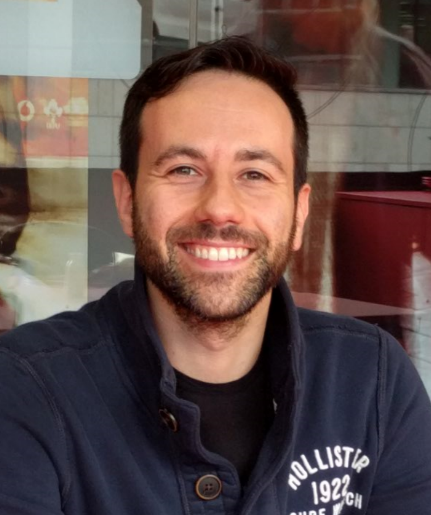
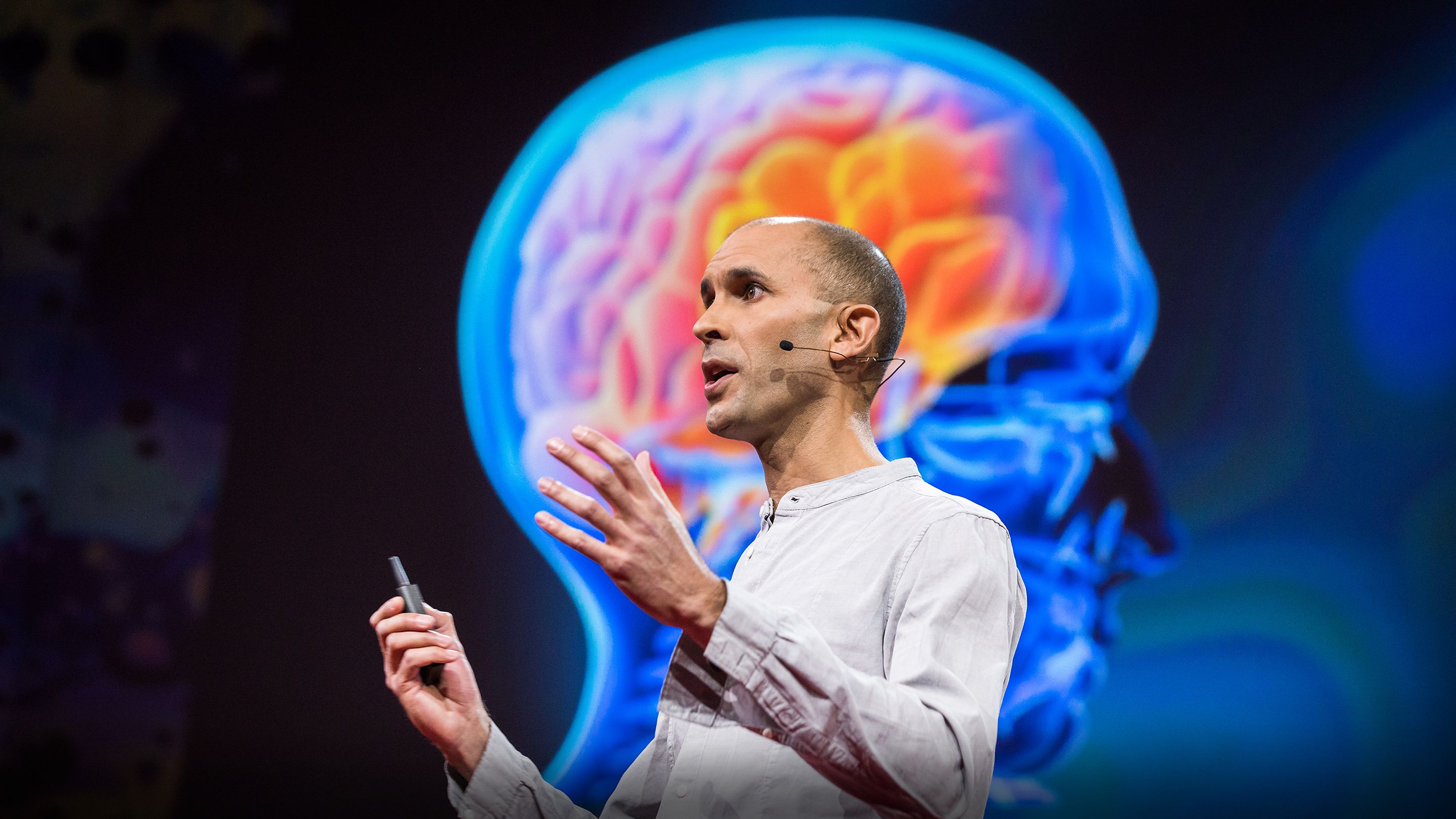
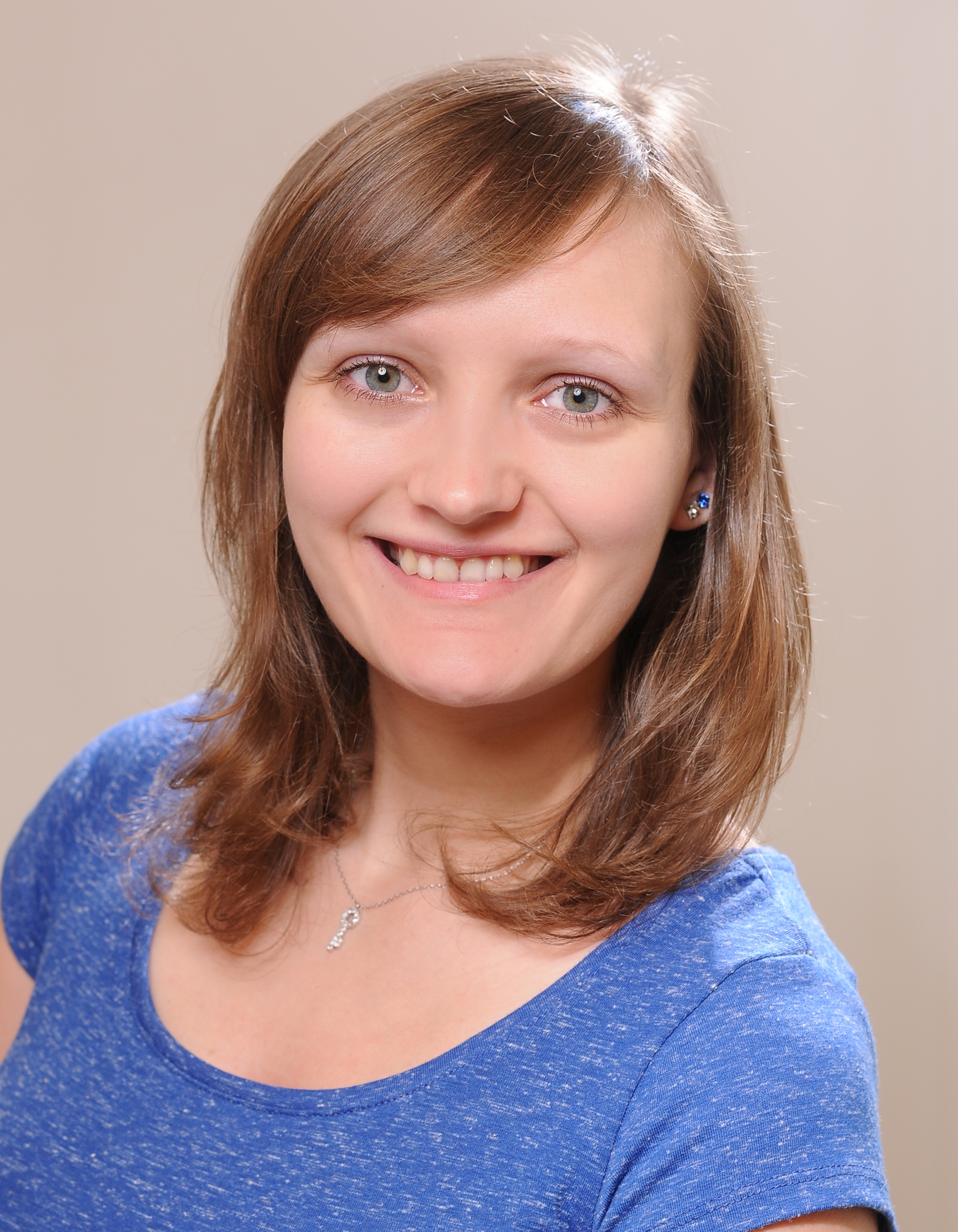
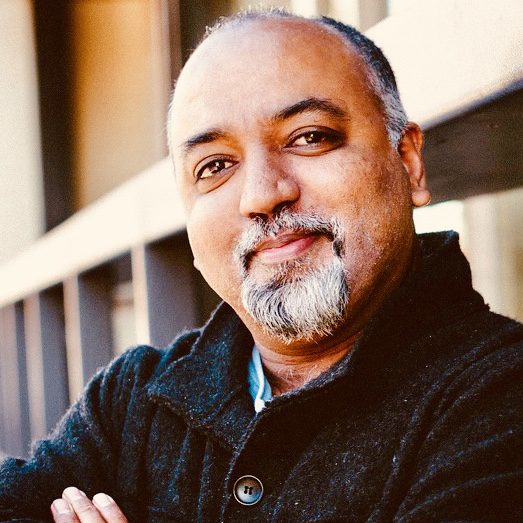
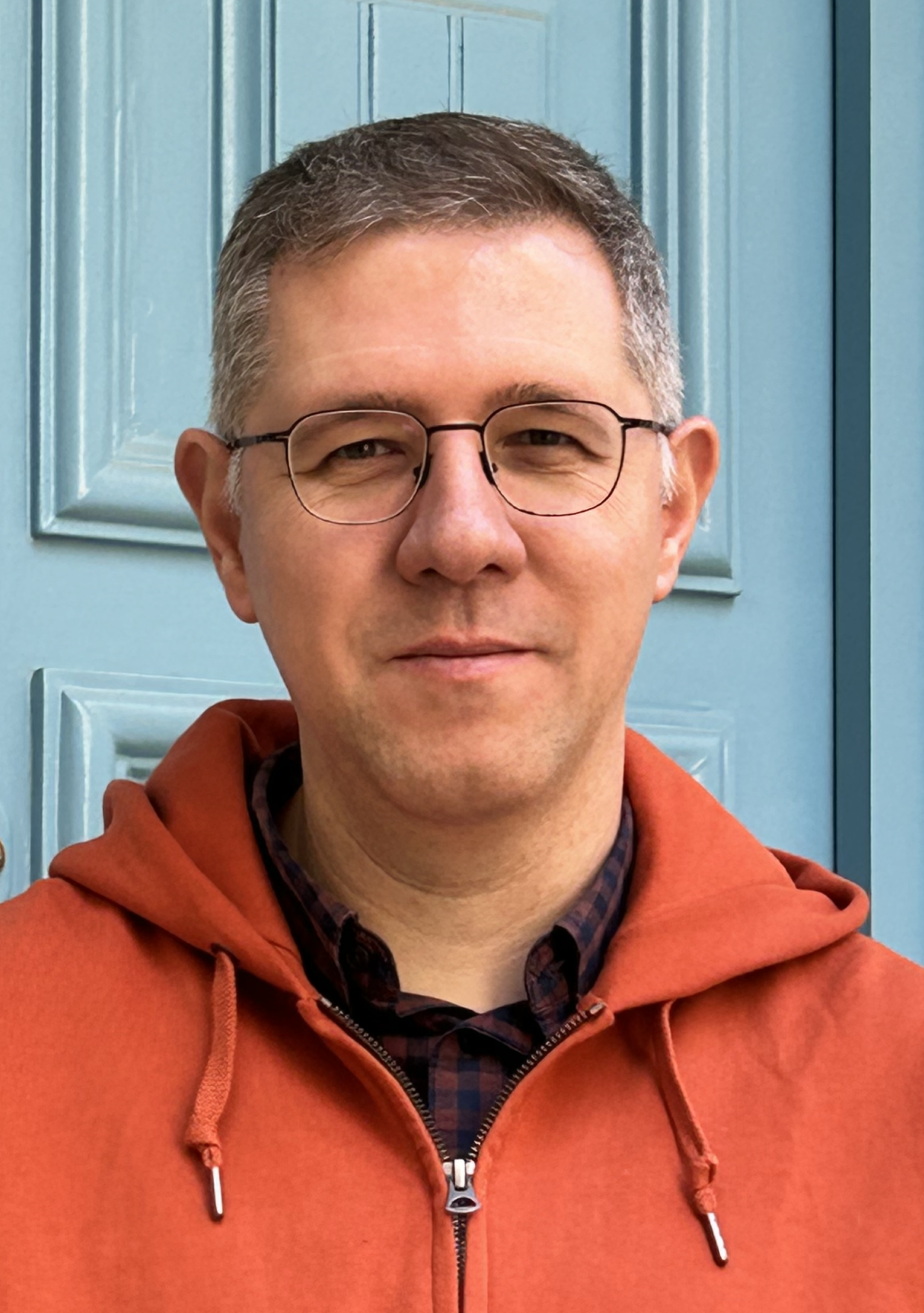
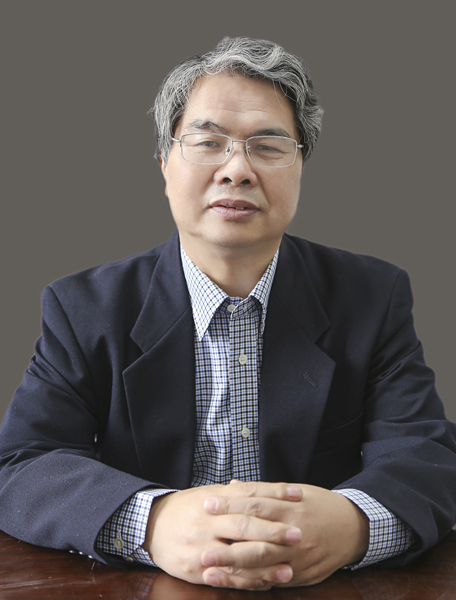
Aykut Erdem is an Associate Professor of Computer Engineering at Koç University, affiliated with the KUIS AI Center. He earned his PhD, MSc, and BSc in Computer Engineering from Middle East Technical University (METU), with visiting researcher experiences at Virginia Tech (2004) and MIT (2007). His research focuses on learning-based approaches for visual data understanding, including image editing, visual saliency estimation, and vision-language integration. Research Interests: Vision and Graphics, Machine Learning, Artificial Intelligence, Computer Vision, Natural Language Processing, Generative Artificial Intelligence. Recent work includes text-guided image/video editing, diffusion models for object removal, and GAN-based frameworks for domain adaptation. Scientific Awards: Young Scientist Award (BAGEP 2021) by Science Academy in Computer Engineering Best Paper Award at 5th Multimodal Learning and Applications Workshop (2022) Collaborations and Funding: Principal investigator for TUBITAK 1001 project on generative AI for visual data (2021-2024), Adobe Research Gift (2023), and co-investigator for multiple TUBITAK grants. Serves as Associate Editor for IEEE Transactions on Image Processing (2022-present).
Carme Torras Genís is a Research Professor at the Spanish National Research Council (CSIC), affiliated with the Institute of Robotics and Industrial Informatics (IRI) in Barcelona and the Technical University of Catalonia (UPC). Her career spans over three decades, focusing on robotics, neurocomputing, and artificial intelligence with applications in healthcare and deformable object manipulation. M.Sc. in Mathematics (University of Barcelona, 1978) M.Sc. in Computer Science (University of Massachusetts, 11981) Ph.D. in Computer Science (UPC, 1984) Research Interests : Robotic manipulation of deformable objects (especially textiles) Neurocomputing and machine learning for robotic control Human-robot interaction and assistive robotics Computational topology for cloth state representation Ethics in social robotics and AI Medical applications of robotics for neuromuscular disease assessment Scientific Leadership : ERC Advanced Grant recipient (2016) IEEE and EurAI Fellow Coordinator of Horizon Europe project SoftEnable and former ERC project CLOTHILDE Editorial leadership in IEEE Transactions on Robotics and multiple journals Active in ethics committees and AI policy advisory boards Advisory Committee of Ethics in AI (Catalan Government) Vice-President of CSIC Ethics Committee Member of Royal Academy of Engineering (Spain)
Gian Antonio Susto is an Associate Professor at the Department of Information Engineering , University of Padova . With a Ph.D. in Information Technology and post-doctoral experience at National University of Ireland, Maynooth, he leads research in Machine Learning , Semiconductor Manufacturing , and Industrial IoT . His work bridges Anomaly Detection , Continual Learning , and Algorithmic Fairness with applications in Hydroelectric Power Plants , Particle Accelerators , and Smart Mobility . B.Sc. and M.Sc. in Controls Engineering, University of Padova (cum laude) Ph.D. in Information Technology, University of Padova (2013) Post-Doc at National University of Ireland, Maynooth (2012-2013) Assistant Professor at University of Padova (2013-2021) His research focuses on Explainable AI , Virtual Metrology , and Deep Learning for manufacturing and infrastructure monitoring. Recent projects include the AIMS5.0 (AI for Manufacturing Sustainability) and MICS (Circular Economy in Italy) initiatives. His publications span Engineering Applications of Artificial Intelligence , IEEE Transactions , and Information Processing & Management , with 15+ recent papers on topics like Fault Diagnosis , Continual Learning , and Fair Ranking . Key scientific awards include: IEEE CCTA Best Student Paper Award (2021) IP&M 2020 Ph.D Paper Award Best Industry Paper Award, European Workshop on Advanced Control and Diagnosis (ACD 2019) He has supervised Ph.D. students on projects involving Particle Accelerators , Plant Behavior Modeling , and Explainable AI , with alumni now at institutions like Max Planck Institute , IBM , and Scripps Research . Current teaching includes Reinforcement Learning and Explainable Machine Learning at graduate and Ph.D. levels.
Thomas Bäck is a Professor at the Leiden Institute of Advanced Computer Science (LIACS) , Leiden University , Netherlands, and a member of the interdisciplinary programme Society, Artificial Intelligence and Life Sciences (SAILS) . His academic career spans roles at Leiden University (1996–present) and leadership positions at the Center for Applied Systems Analysis in Dortmund (1994–2000). Education : Diplom-Informatiker (Computer Science), Technische Universität Dortmund (1990) Dr. rer. nat. (Computer Science), Technische Universität Dortmund (1994) Research Interests : Dr. Bäck specializes in evolutionary computation , machine learning , and their applications in sustainable smart industry and healthcare . Recent work focuses on integrating large language models (LLMs) and quantum computing into optimization frameworks, with projects like CIMPLO (predictive maintenance), ECOLE (experience-based optimization), and SAPPAO (airline operations optimization). Scientific Contributions : His 526+ publications cover evolutionary algorithms, quantum optimization, and LLM-driven design, with recent trends including: Quantum computing (e.g., quantum approximate optimization, quantum advantage challenges) LLM integration (e.g., hyperparameter tuning, mutation control, code evolution graphs) Healthcare and industry (e.g., predictive maintenance, anomaly detection, melt quality prediction) Algorithm benchmarking (e.g., IOHprofiler, MA-BBOB, explainable benchmarking) Scientific Awards : IEEE Fellow (2022) Royal Netherlands Academy of Arts and Sciences (KNAW) member (2021) Academia Europaea member (2022) IEEE Computational Intelligence Society Evolutionary Computation Pioneer Award (2015) Fellow, International Society of Genetic and Evolutionary Computation (2003) Best Ph.D. thesis award, German Society of Computer Science (GI) (1995) Advising and Grants : He supervises Ph.D. candidates in evolutionary computation and machine learning and has secured 7 major grants from organizations like the Dutch Research Council , European Commission , and The Research Council of Norway . His editorial roles include Editor-in-Chief of the Evolutionary Computation Journal and associate editorships in leading AI journals.
Berrak Sisman is an Assistant Professor in the Department of Electrical and Computer Engineering at Johns Hopkins University, affiliated with the Data Science and AI Institute and the Center for Language and Speech Processing (CLSP). She leads the Speech & Machine Learning Lab (SmILe Lab), focusing on AI-driven speech technologies. She received her PhD from the National University of Singapore in 2020 and was previously a tenure-track faculty member at the University of Texas at Dallas (2022–2024). Research Interests: Her work spans artificial intelligence, speech synthesis, voice conversion, emotion analysis in speech, medical speech applications, and secure speech technology. She develops neural models for expressive and adaptive speech processing. Publications: Her recent articles (2024–2025) emphasize speech emotion recognition, zero-shot prosody control, accent conversion, and disentangled representations in TTS, reflecting a focus on cross-modal learning, robustness, and real-world applications. Awards & Grants: NSF CAREER Award (2024) Amazon Faculty Research Award (2022) Singapore Ministry of Education Award (2021) A*STAR Singapore International Graduate Award (2016–2020) Leadership: She directs the SmILe Lab, recruiting PhD/Master’s students for projects in neural speech modeling. Her grants include NSF and Amazon funding for voice conversion and emotion synthesis research.
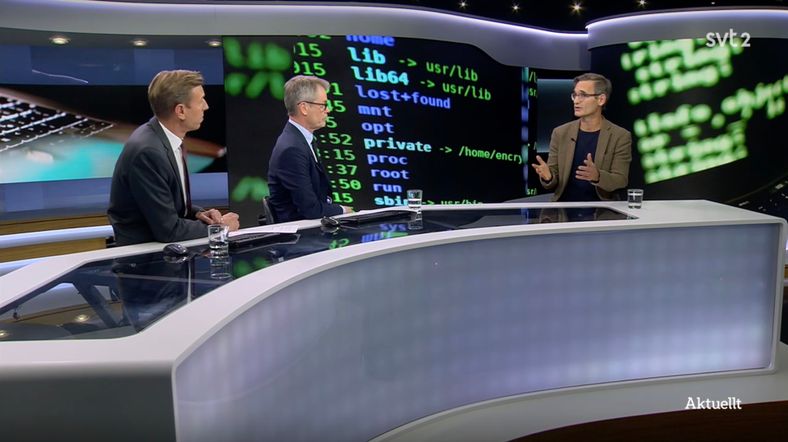
Pontus Johnson is a Professor at the KTH Royal Institute of Technology in Stockholm, Sweden. He leads the Center for Cyber Defense and Information Security (collaborating with Swedish Armed Forces, FRA, MSB, FOI, FHS) and serves as vice director of Cybercampus Sweden since 2024. His research focuses on cybersecurity , enterprise architecture analysis , and probabilistic threat modeling , particularly through his development of the Meta Attack Language (MAL) for simulating cyber attacks on networked systems. Education: MSc in Computer Science, Lund Institute of Technology (1997) PhD in Computer Science, KTH (2002) Docent title, KTH (2007) Leadership Roles: Director, Center for Cyber Defense and Information Security (2013–present) Vice Director, Cybercampus Sweden (2024–present) Board Member, Swedish Research Council (2025–present) Deputy Chair, Swedish Royal Academy of Engineering Sciences (IVA) Board (2024–present) His work spans cybersecurity research , attack simulation methodologies , and enterprise architecture frameworks . He has developed tools like securiCAD (acquired by Google) and pwnPr3d for probabilistic threat modeling. His 15 most recent publications highlight advancements in graph-based attack simulations , automated security assessments , and AI applications in cyber defense . Scientific recognition includes: Listed among Tech Awards Sweden's 50 Most Influential People in Swedish Tech (2022, 2023) Discovery of vulnerability in the Universal Turing Machine (2021) He supervises 16 PhD students and alumni (2005–2024), including Simon Gökstorp , Jakob Nyberg , and Sotirios Katsikeas . His academic service includes over 50 program committee roles and leadership positions in international conferences. He contributes to both academic and public domains through media appearances (SVT, Aftonbladet), courses in ethical hacking , and industry collaboration via his role at Google (20% of his time). His research group Software Systems Architecture and Security (SSAS) focuses on predictive security frameworks and system-of-systems analysis.
Cezary Kaliszyk is a Professor in Theoretical Computer Science at the University of Melbourne, previously affiliated with the University of Innsbruck. He is actively involved in research and leadership in formal methods, automated reasoning, and machine learning for theorem proving. Research Interests: Automated Reasoning and Interactive Theorem Proving Formalized Mathematics and Proof Automation Machine Learning for Logic and Theorem Proving Integration of AI with Proof Assistants (Coq, Isabelle) Dependent Type Theory and Higher-Order Logic His recent publications (2023–2025) span topics in dependently-typed logic, learning for proof guidance, formalization of surreal numbers, and blockchain-based formal methods. The works consistently bridge formal logic with machine learning, emphasizing automation, explainability, and cross-system integration. Scientific Leadership and Projects: Principal Investigator, ERC project FormalWeb3 Lead Developer, CoqHammer , Tactician , ProofWeb WG5 Leader, COST Action EuroProofNet (until 2024) Contributor to HOL(y)Hammer , Isabelle Enigma He supervises multiple PhD students and has mentored several graduates in formal methods and AI. He teaches courses in theoretical computer science, logic, and machine learning. There are no listed awards in the provided data, but his extensive publication record and project leadership indicate significant recognition in the field. Labs and Research Groups: He leads a research group focused on formal methods and learning-based reasoning, collaborating internationally on projects involving proof automation, formal libraries, and semantic technologies.
Professor Anil Seth is a leading cognitive and computational neuroscientist at the University of Sussex, where he holds a professorship in the School of Engineering and Informatics. He is Director of the Sussex Centre for Consciousness Science and Co-Director of the CIFAR Program on Brain, Mind, and Consciousness and the Leverhulme Doctoral Scholarship Programme. His research bridges neuroscience, psychology, philosophy, and AI to investigate the biological basis of consciousness and selfhood. His research interests include: Predictive processing approaches to perception Virtual and augmented reality in self-experience studies Mathematical modeling of perception and emergence Machine learning applications in subjective perception modeling Interoception and selfhood Neural mechanisms of conscious experience The recent publications reflect a strong focus on consciousness, neural dynamics, predictive models, and interdisciplinary approaches. Trends include the use of computational modeling, neurophenomenology, causal analysis, and the ethical implications of emerging neurotechnologies. His work increasingly integrates large language models and data-driven methods for analyzing subjective experience. His scientific awards include: Segerfalk Award Perspectives Award Highly Cited Researcher (Web of Science, 2019–2022) Royal Society Michael Faraday Prize (2023) Seth has secured substantial research funding from the European Research Council (ERC), EPSRC, Wellcome Trust, CIFAR, and the Sackler Foundation. He has supervised numerous research projects and doctoral students through interdisciplinary programs. He leads the Dreamachine project and has been an Engagement Fellow with the Wellcome Trust. He serves on editorial boards including Philosophical Transactions of the Royal Society B and is Editor-in-Chief of Neuroscience of Consciousness . He leads a multidisciplinary research group at the Sackler Centre, bringing together psychologists, mathematicians, neuroscientists, computer scientists, and philosophers. His team conducts innovative research using virtual reality, neuroimaging, and computational modeling to explore the nature of consciousness and self.
Raquel Urtasun is a Full Professor in the Department of Computer Science at the University of Toronto and a co-founder of the Vector Institute for AI. She is also the Founder and CEO of Waabi, an autonomous vehicle company. Previously, she was Chief Scientist and Head of R&D at Uber ATG (2017–2021) and held faculty positions at the Toyota Technological Institute at Chicago (TTIC) and as a visiting professor at ETH Zurich. Her research spans machine learning, computer vision, robotics, and AI with a strong focus on autonomous driving and 3D perception. Education: Bachelor's degree, Universidad Pública de Navarra, 2000 Ph.D., Computer Science, École Polytechnique Fédérale de Lausanne (EPFL), 2006 Postdoctoral studies, MIT and UC Berkeley Raquel Urtasun's research focuses on developing AI systems for self-driving cars, emphasizing efficient perception using minimal sensors. Her work includes 3D scene understanding, stereo vision, optical flow, semantic segmentation, and object detection. She has developed the KITTI benchmark suite, widely used in autonomous driving research. Her lab is an NVIDIA NVAIL lab, reflecting its leadership in AI innovation. Her recent publications show a consistent trend in deep learning for visual perception, particularly in stereo matching, optical flow, 3D object detection, and semantic segmentation. These works integrate deep neural networks with structured models like CRFs and MRFs, pushing the boundaries of accuracy and efficiency in scene understanding for autonomous systems. Scientific Awards: NSERC E.W.R. Steacie Fellowship NVIDIA Pioneers of AI Award Google Faculty Research Awards (multiple) Amazon Faculty Research Award Connaught New Researcher Award Fallona Family Research Award Best Paper Runner Up at CVPR 2013 and 2017 UPNA Alumni Award Chatelaine 2018 Woman of the Year Adweek 2018 Toronto's Top Influencers Urtasun has advised numerous PhD and Master’s students, many of whom now hold faculty or research scientist positions at institutions like UIUC, NYU, UBC, MIT, and companies including Google, Amazon, NVIDIA, and Apple. She has secured significant research grants from NSERC, Google, Amazon, and NVIDIA. Her leadership extends to organizing workshops and serving as Area Chair and Program Chair at top conferences like CVPR, ICML, and NeurIPS. Labs and Teams: She leads a research group at the University of Toronto focused on AI for autonomous systems. Her team has been recognized as an NVIDIA NVAIL lab, and she continues to mentor students and postdocs working on cutting-edge problems in robotics and machine learning, both at UofT and through her company Waabi.
Ismael Castillo is a Professor of Statistics at Sorbonne Université , affiliated with the Laboratoire de Probabilités, Statistique et Modélisation (LPSM) and its Statistics, Data, Algorithms team. He serves as Associate Editor for Annals of Statistics , Bernoulli , and co-Editor for Bayesian Analysis . Research Interests : Mathematical statistics with emphasis on Bayesian nonparametrics , inference in high-dimensional structures , uncertainty quantification , and applications in signal processing and life sciences . Recent Work spans deep neural networks with heavy-tailed weights , posterior and variational inference , fractional posteriors in semiparametric models , and deep Gaussian processes . His publications demonstrate expertise in multiple testing procedures , Spike and Slab priors , and nonparametric Bayesian methods . Awards : IMS Fellow , Honorary Fellow of Institut Universitaire de France , and Best Paper Prize (2021) for research on Pólya tree posterior distributions. Students : Supervised PhD candidates Paul Egels , Thibault Randrianarisoa , and co-supervised Bo Ning (FSMP postdoc) and Kweku Abraham (Hadamard postdoc). Grants : ANR BACKUP (2023-2027, coordinator) and ANR GAP (2021-2025, member).
Franziska Mueller is a Research Scientist at Google Zurich , specializing in Augmented Perception . Prior to joining Google, she earned her Ph.D. in Computer Science at Saarland University under the supervision of Prof. Dr. Christian Theobalt, focusing on real-time hand reconstruction from RGB and depth images. Ph.D. in Computer Science (2016-2020) at Saarland University Master’s and Bachelor’s in Computer Science at Saarland University Research visits at Stanford University (2018) and Reality Labs Research (2019) Her research emphasizes the integration of model-based techniques and machine learning components for real-time 3D hand pose estimation, occlusion handling, and hand-object interaction tracking. Key contributions include methods for single-camera reconstruction and datasets like HandSeg. Scientific Awards : Dr. Eduard Martin Award (2021) Google PhD Fellowship (2017) Günter-Hotz-Medal (2016) Bachelor Award (2015) Völklinger Abiturpreis (2012)
Harish Ravichandar is an Assistant Professor at the School of Interactive Computing , Georgia Institute of Technology, and a core faculty member of the Institute for Robotics and Intelligent Machines (IRIM) . He leads the Structured Techniques for Algorithmic Robotics (STAR) Lab , focusing on structured computational frameworks and learning algorithms with inductive biases to enhance robot efficiency, reliability, and self-sufficiency in human-robot collaboration and complex applications like dexterous manipulation and multi-agent coordination. His research bridges robot learning , human-robot interaction , and multi-agent systems , emphasizing stable, frugal, and safe skill acquisition from human demonstrations. Key themes include intention inference , trajectory optimization , and heterogeneous team coordination , often leveraging Koopman operators , hypernetworks , and graph-based methods . Scientific recognition includes the NSF CAREER Award , IEEE MRS Best Paper Award , and Georgia Tech’s College of Computing Outstanding Post-Doctoral Research Award . His work also received the ASME DSCC Best Student Paper Award and P&W Institute Graduate Fellowship . Harish’s educational background includes a Ph.D. in Electrical and Computer Engineering from the University of Connecticut (2018) , an M.S. from the University of Florida (2014) , and a B.E. in Instrumentation and Control Engineering from Anna University (2012) . He previously held postdoctoral and research scientist roles at Georgia Tech before his current position.
Sai Ravela is a Principal Research Scientist in the Department of Earth, Atmospheric and Planetary Sciences (EAPS) at the Massachusetts Institute of Technology (MIT). His research focuses on nonlinear stochastic dynamics, coherent fluid systems, uncertainty quantification, and autonomous observing technologies. He specializes in developing data-driven methodologies for natural hazard detection, climate change impacts, and environmental risk assessment. Ravela’s work integrates computational science with geophysical applications, including storm surge modeling, extreme rainfall analysis, and geothermal exploration. He pioneers techniques like neural dynamical systems and adversarial learning to improve predictive accuracy in nonstationary climate regimes. His contributions span environmental monitoring systems, autonomous aircraft resilience frameworks, and policy-informed climate vulnerability assessments. Key research areas include: Coastal flood risk in Bangladesh and Vietnam Dynamic data-driven applications systems (DDDAS) Machine learning for geosciences and environmental systems Uncertainty quantification in complex fluid dynamics He leads interdisciplinary projects at MIT’s Computational Science and Engineering (CSE) program, advancing methods for data assimilation, surrogate modeling, and real-time environmental observatories. His innovations bridge theoretical frameworks with practical solutions for climate adaptation and disaster resilience.
Erkut Erdem is a Professor in the Department of Computer Engineering at Hacettepe University, where he leads the Computer Vision Laboratory (HUCVL). His research focuses on computer vision and machine learning, particularly on incorporating different kinds of context (spatial, temporal and cross-modal) into visual processing across all levels from low to high-level vision. He received his Ph.D. (2008), M.Sc. (2003), and B.Sc. (2001) from Middle East Technical University. Prior to joining Hacettepe University in 2010, he completed a post-doctoral fellowship at Ecole Nationale Supérieure des Télécommunications (2009-2010) and held visiting researcher positions at UCLA (2007) and Virginia Tech (2004). His current research interests include Visual Saliency Prediction, Automatic Image Description, Video/Photoset Summarization, Image Filtering, and Image Editing. Recent work has focused on multimodal learning with video-language models, diffusion-based image editing, and event-based vision for low-light conditions. His research has been published in top venues including NeurIPS, ICLR, ICCV, SIGGRAPH, and ACL. He has received significant recognition including The Young Researcher Award from Turkish Academy of Sciences and being named a 2022 Outstanding Associate Editor of IEEE Transactions on Multimedia. He has secured multiple research projects funded by TUBITAK and received gift funds from Adobe Research for text-guided image synthesis work. Current Teaching: BBM202: Algorithms, AIN434/BBM444: Fundamentals of Computational Photography Graduate Supervision: 6 current Ph.D. students, numerous recent graduates including Burak Ercan (2024) and Aysun Kocak (2023) Professional Affiliations: Co-affiliated with Koç University and İş Bank AI Center (KUIS AI)
Jiao Licheng is a Distinguished Professor and Doctoral Supervisor at Xidian University, leading the School of Artificial Intelligence and the Department of Computer Science and Technology. He holds prominent roles such as Director of the Key Laboratory of Intelligent Perception and Image Understanding (Ministry of Education) and the International Joint Research Center for Intelligent Perception and Computing. His research focuses on Artificial Intelligence, Deep Learning, Evolutionary Computation, and Remote Sensing, with significant contributions to image understanding and brain-inspired computing. Education: B.E. (1982) from Shanghai Jiao Tong University, M.E. (1984) and Ph.D. (1990) from Xi'an Jiaotong University. Postdoctoral research at Xidian University (1990–1992). Research Interests include AI, Machine Learning, Image Processing, and Big Data Analysis. His work bridges theoretical advancements and practical applications, such as medical imaging, SAR image analysis, and autonomous systems. Recent articles emphasize innovations in remote sensing, deep learning architectures, and evolutionary algorithms. Awards include IEEE Fellow, IET Fellow, and the Wu Wenjun Artificial Intelligence Outstanding Contribution Award. Labs/Teams: Key Lab of Intelligent Perception, International Joint Research Center, and leadership in national innovation bases. Active in academic societies, including editorial roles in IEEE Transactions on Cybernetics and Geoscience and Remote Sensing.